 Add to Chrome
 Add to Firefox
 Add to Edge
Dual Modality Prompted Diffusion Priors for Zero Shot Hyperspectral Pansharpening
Aug 12, 2026
Hyperspectral pansharpening aims to reconstruct a high resolution hyperspectral (HRHS) image from a panchromatic (PAN) image and a low resolution hyperspectral (LRHS) image while preserving both spatial details and spectral fidelity. Recent diffusion based methods exploit pretrained image priors by generating a low dimensional representation and subsequently mapping it to the hyperspectral domain. However, the observed panchromatic and hyperspectral images are typically imposed only through external reconstruction objectives, limiting their direct interaction with the diffusion prior. To address this issue, we propose dual-modality image-prompted diffusion model (DIDM) for zero shot hyperspectral pansharpening. DIDM encodes the low resolution hyperspectral and panchromatic observations into spectral and spatial prompt tokens, respectively, and injects them into intermediate features of a frozen remote sensing diffusion model through cross attention, allowing complementary spectral and spatial information to directly guide diffusion feature evolution. In addition, we introduce a panchromatic guided weighted pixel aware total variation regularizer that combines low resolution hyperspectral degradation fidelity and panchromatic response fidelity with gradient adaptive structural regularization, thereby preserving structural discontinuities while suppressing spurious variations in homogeneous regions. Extensive experiments on Pavia, Chikusei, and Houston under reduced resolution protocols show that DIDM achieves the best performance across all evaluated metrics, while full resolution evaluation on FR1 yields the highest HQNR among the compared methods. These results demonstrate that internal dual modality prompting and panchromatic guided structural regularization provide an effective balance between spatial detail enhancement and spectral preservation.

GSPan: A Continuous Gaussian Primitive Representation for Arbitrary-Scale Pansharpening
Jun 16, 2026Pansharpening aims to generate high-resolution multispectral (HRMS) images by fusing low-resolution multispectral (LRMS) and panchromatic (PAN) observations. Most existing deep learning methods treat pansharpening as fixed-grid prediction, which limits scale adaptation. To address this, we propose GSPan, a framework that introduces 2D Gaussian Splatting (GS) into pansharpening. Instead of directly predicting pixels, GSPan represents band-wise residual details as continuous and learnable 2D Gaussian primitives. We design a Dual-Stream Hierarchical Interaction (DSHI) architecture with a Spatial-Spectral Interactive Attention (SSIA) module to estimate these primitives from complementary PAN and MS observations. The predicted primitives are rendered as a residual detail field and injected into the upsampled MS image. This continuous representation allows GSPan to render fused images on arbitrary target sampling grids without scale-specific retraining. It further enables a Scale-Decoupled Asymmetric Inference (SDAI) strategy, which estimates primitives at a reduced resolution and renders the fused image at the target resolution for efficient large-scene pansharpening. Experiments on QuickBird, GaoFen-2, WorldView-3, and WorldView-3-4K datasets show that GSPan delivers state-of-the-art fusion performance. Moreover, SDAI markedly accelerates inference, achieving a favorable trade-off between computational efficiency and fusion quality. Our results demonstrate the potential of continuous Gaussian residual representations as a flexible and scale-decoupled alternative to fixed-grid prediction.
SoDa2: Single-Stage Open-Set Domain Adaptation via Decoupled Alignment for Cross-Scene Hyperspectral Image Classification
May 05, 2026Cross-scene hyperspectral image (HSI) classification stands as a fundamental research topic in remote sensing, with extensive applications spanning various fields. Owing to the inclusion of unknown categories in the target domain and the existence of domain shift across different scenes, open-set domain adaptation techniques are commonly employed to address cross-scene HSI classification. However, existing open-set cross-scene HSI classification methods still face two critical challenges: (1) domain shift issues arising from the direct alignment of mixed spectral-spatial features; (2) high computational costs caused by two-stage training strategies. To address these issues, this paper proposes a single-stage open-set domain adaptation method with decoupled alignment (SoDa$^2$) for cross-scene HSI classification. A contribution-aware dual-modality feature extraction is customized to disentangle the characteristics from spectral sequence signals and spatial details, selectively and adaptively enhancing discriminative features. The decoupled alignment module minimizes the Maximum Mean Discrepancy to independently reduce the spectral discrepancy and the spatial discrepancy between the source and target domains, extracting more fine-grained domain-invariant features. A cost-effective single-stage dual-branch framework is designed to learn MMD-constrainted aligned features and constraint-free intrinsic features for adaptive distinction between known and unknown classes. This framework employs a Gaussian Mixture Model to model the squared cosine similarity distribution between the two feature types, enabling open-set recognition without prior knowledge of unknown classes. Extensive experiments on three groups of HSI datasets demonstrate that SoDa$^2$ outperforms state-of-the-art methods, achieving superior classification accuracy and model transferability for open-set cross-scene tasks.
Fast Model-guided Instance-wise Adaptation Framework for Real-world Pansharpening with Fidelity Constraints
Apr 10, 2026Pansharpening aims to generate high-resolution multispectral (HRMS) images by fusing low-resolution multispectral (LRMS) and high-resolution panchromatic (PAN) images while preserving both spectral and spatial information. Although deep learning (DL)-based pansharpening methods achieve impressive performance, they require high training cost and large datasets, and often degrade when the test distribution differs from training, limiting generalization. Recent zero-shot methods, trained on a single PAN/LRMS pair, offer strong generalization but suffer from limited fusion quality, high computational overhead, and slow convergence. To address these issues, we propose FMG-Pan, a fast and generalizable model-guided instance-wise adaptation framework for real-world pansharpening, achieving both cross-sensor generality and rapid training-inference. The framework leverages a pretrained model to guide a lightweight adaptive network through joint optimization with spectral and physical fidelity constraints. We further design a novel physical fidelity term to enhance spatial detail preservation. Extensive experiments on real-world datasets under both intra- and cross-sensor settings demonstrate state-of-the-art performance. On the WorldView-3 dataset, FMG-Pan completes training and inference for a 512x512x8 image within 3 seconds on an RTX 3090 GPU, significantly faster than existing zero-shot methods, making it suitable for practical deployment.
Robust Principal Component Completion
Mar 26, 2026Robust principal component analysis (RPCA) seeks a low-rank component and a sparse component from their summation. Yet, in many applications of interest, the sparse foreground actually replaces, or occludes, elements from the low-rank background. To address this mismatch, a new framework is proposed in which the sparse component is identified indirectly through determining its support. This approach, called robust principal component completion (RPCC), is solved via variational Bayesian inference applied to a fully probabilistic Bayesian sparse tensor factorization. Convergence to a hard classifier for the support is shown, thereby eliminating the post-hoc thresholding required of most prior RPCA-driven approaches. Experimental results reveal that the proposed approach delivers near-optimal estimates on synthetic data as well as robust foreground-extraction and anomaly-detection performance on real color video and hyperspectral datasets, respectively. Source implementation and Appendices are available at https://github.com/WongYinJ/BCP-RPCC.
Hyperspectral Anomaly Detection Fused Unified Nonconvex Tensor Ring Factors Regularization
May 23, 2025In recent years, tensor decomposition-based approaches for hyperspectral anomaly detection (HAD) have gained significant attention in the field of remote sensing. However, existing methods often fail to fully leverage both the global correlations and local smoothness of the background components in hyperspectral images (HSIs), which exist in both the spectral and spatial domains. This limitation results in suboptimal detection performance. To mitigate this critical issue, we put forward a novel HAD method named HAD-EUNTRFR, which incorporates an enhanced unified nonconvex tensor ring (TR) factors regularization. In the HAD-EUNTRFR framework, the raw HSIs are first decomposed into background and anomaly components. The TR decomposition is then employed to capture the spatial-spectral correlations within the background component. Additionally, we introduce a unified and efficient nonconvex regularizer, induced by tensor singular value decomposition (TSVD), to simultaneously encode the low-rankness and sparsity of the 3-D gradient TR factors into a unique concise form. The above characterization scheme enables the interpretable gradient TR factors to inherit the low-rankness and smoothness of the original background. To further enhance anomaly detection, we design a generalized nonconvex regularization term to exploit the group sparsity of the anomaly component. To solve the resulting doubly nonconvex model, we develop a highly efficient optimization algorithm based on the alternating direction method of multipliers (ADMM) framework. Experimental results on several benchmark datasets demonstrate that our proposed method outperforms existing state-of-the-art (SOTA) approaches in terms of detection accuracy.
Zero-Shot Hyperspectral Pansharpening Using Hysteresis-Based Tuning for Spectral Quality Control
May 22, 2025Hyperspectral pansharpening has received much attention in recent years due to technological and methodological advances that open the door to new application scenarios. However, research on this topic is only now gaining momentum. The most popular methods are still borrowed from the more mature field of multispectral pansharpening and often overlook the unique challenges posed by hyperspectral data fusion, such as i) the very large number of bands, ii) the overwhelming noise in selected spectral ranges, iii) the significant spectral mismatch between panchromatic and hyperspectral components, iv) a typically high resolution ratio. Imprecise data modeling especially affects spectral fidelity. Even state-of-the-art methods perform well in certain spectral ranges and much worse in others, failing to ensure consistent quality across all bands, with the risk of generating unreliable results. Here, we propose a hyperspectral pansharpening method that explicitly addresses this problem and ensures uniform spectral quality. To this end, a single lightweight neural network is used, with weights that adapt on the fly to each band. During fine-tuning, the spatial loss is turned on and off to ensure a fast convergence of the spectral loss to the desired level, according to a hysteresis-like dynamic. Furthermore, the spatial loss itself is appropriately redefined to account for nonlinear dependencies between panchromatic and spectral bands. Overall, the proposed method is fully unsupervised, with no prior training on external data, flexible, and low-complexity. Experiments on a recently published benchmarking toolbox show that it ensures excellent sharpening quality, competitive with the state-of-the-art, consistently across all bands. The software code and the full set of results are shared online on https://github.com/giu-guarino/rho-PNN.
Hyperspectral Pansharpening: Critical Review, Tools and Future Perspectives
Jul 01, 2024Hyperspectral pansharpening consists of fusing a high-resolution panchromatic band and a low-resolution hyperspectral image to obtain a new image with high resolution in both the spatial and spectral domains. These remote sensing products are valuable for a wide range of applications, driving ever growing research efforts. Nonetheless, results still do not meet application demands. In part, this comes from the technical complexity of the task: compared to multispectral pansharpening, many more bands are involved, in a spectral range only partially covered by the panchromatic component and with overwhelming noise. However, another major limiting factor is the absence of a comprehensive framework for the rapid development and accurate evaluation of new methods. This paper attempts to address this issue. We started by designing a dataset large and diverse enough to allow reliable training (for data-driven methods) and testing of new methods. Then, we selected a set of state-of-the-art methods, following different approaches, characterized by promising performance, and reimplemented them in a single PyTorch framework. Finally, we carried out a critical comparative analysis of all methods, using the most accredited quality indicators. The analysis highlights the main limitations of current solutions in terms of spectral/spatial quality and computational efficiency, and suggests promising research directions. To ensure full reproducibility of the results and support future research, the framework (including codes, evaluation procedures and links to the dataset) is shared on https://github.com/matciotola/hyperspectral_pansharpening_toolbox, as a single Python-based reference benchmark toolbox.
A Comprehensive Survey for Hyperspectral Image Classification: The Evolution from Conventional to Transformers
May 09, 2024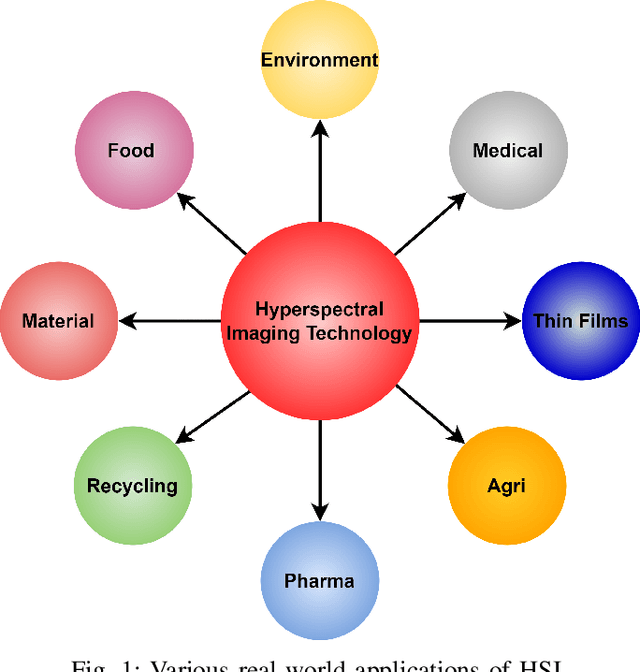
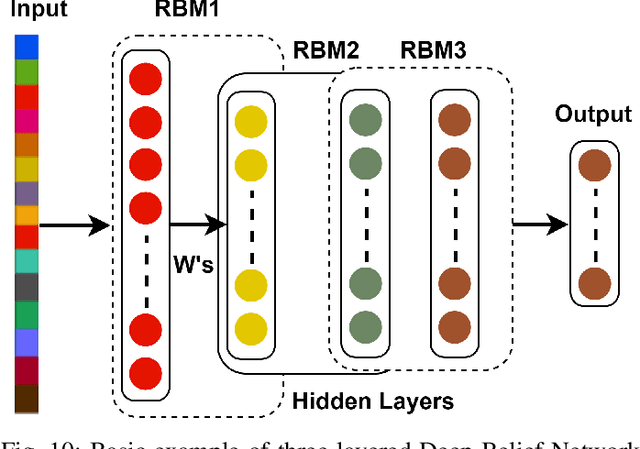
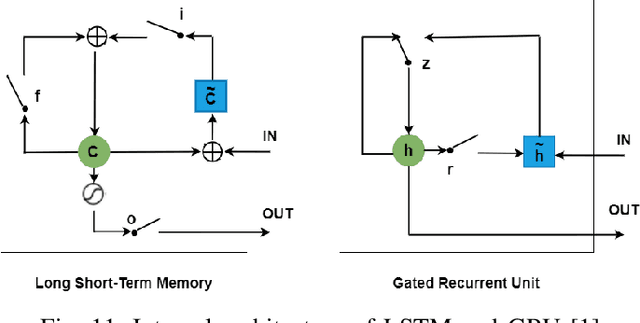
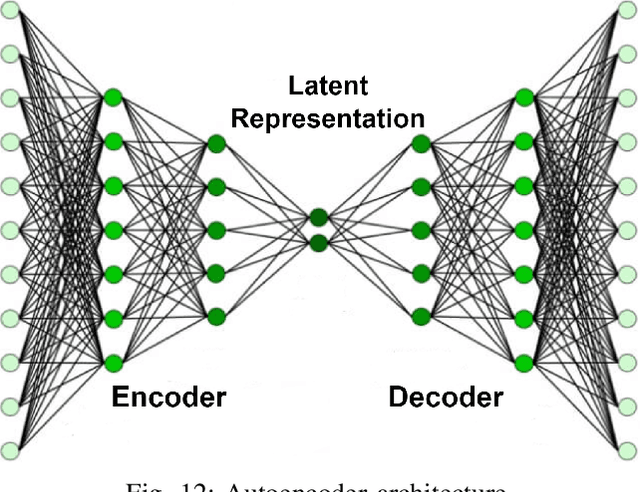
Hyperspectral Image Classification (HSC) is a challenging task due to the high dimensionality and complex nature of Hyperspectral (HS) data. Traditional Machine Learning approaches while effective, face challenges in real-world data due to varying optimal feature sets, subjectivity in human-driven design, biases, and limitations. Traditional approaches encounter the curse of dimensionality, struggle with feature selection and extraction, lack spatial information consideration, exhibit limited robustness to noise, face scalability issues, and may not adapt well to complex data distributions. In recent years, Deep Learning (DL) techniques have emerged as powerful tools for addressing these challenges. This survey provides a comprehensive overview of the current trends and future prospects in HSC, focusing on the advancements from DL models to the emerging use of Transformers. We review the key concepts, methodologies, and state-of-the-art approaches in DL for HSC. We explore the potential of Transformer-based models in HSC, outlining their benefits and challenges. We also delve into emerging trends in HSC, as well as thorough discussions on Explainable AI and Interoperability concepts along with Diffusion Models (image denoising, feature extraction, and image fusion). Lastly, we address several open challenges and research questions pertinent to HSC. Comprehensive experimental results have been undertaken using three HS datasets to verify the efficacy of various conventional DL models and Transformers. Finally, we outline future research directions and potential applications that can further enhance the accuracy and efficiency of HSC. The Source code is available at \href{https://github.com/mahmad00/Conventional-to-Transformer-for-Hyperspectral-Image-Classification-Survey-2024}{github.com/mahmad00}.
Band-wise Hyperspectral Image Pansharpening using CNN Model Propagation
Nov 11, 2023
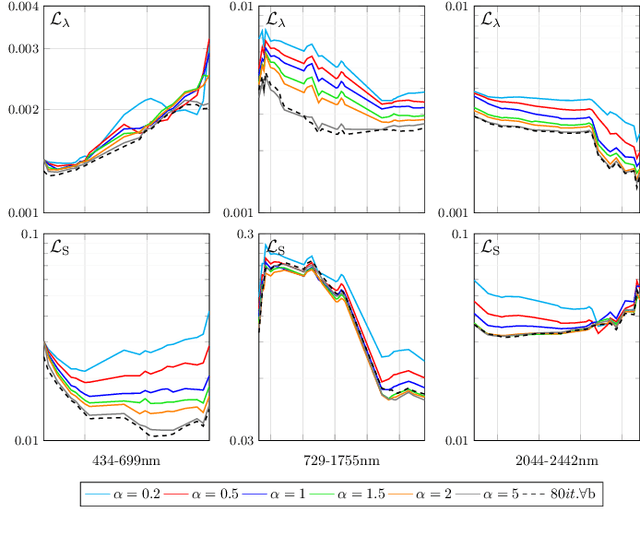
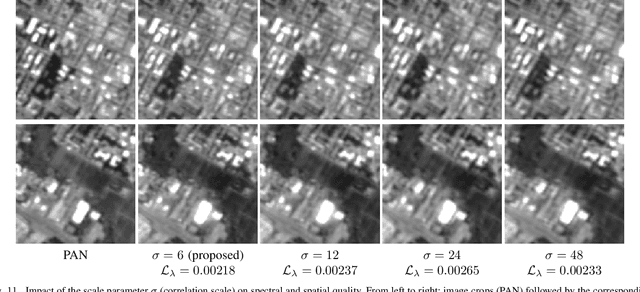
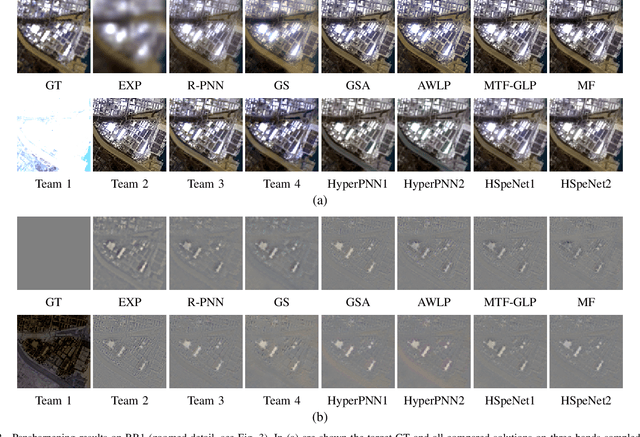
Hyperspectral pansharpening is receiving a growing interest since the last few years as testified by a large number of research papers and challenges. It consists in a pixel-level fusion between a lower-resolution hyperspectral datacube and a higher-resolution single-band image, the panchromatic image, with the goal of providing a hyperspectral datacube at panchromatic resolution. Thanks to their powerful representational capabilities, deep learning models have succeeded to provide unprecedented results on many general purpose image processing tasks. However, when moving to domain specific problems, as in this case, the advantages with respect to traditional model-based approaches are much lesser clear-cut due to several contextual reasons. Scarcity of training data, lack of ground-truth, data shape variability, are some such factors that limit the generalization capacity of the state-of-the-art deep learning networks for hyperspectral pansharpening. To cope with these limitations, in this work we propose a new deep learning method which inherits a simple single-band unsupervised pansharpening model nested in a sequential band-wise adaptive scheme, where each band is pansharpened refining the model tuned on the preceding one. By doing so, a simple model is propagated along the wavelength dimension, adaptively and flexibly, with no need to have a fixed number of spectral bands, and, with no need to dispose of large, expensive and labeled training datasets. The proposed method achieves very good results on our datasets, outperforming both traditional and deep learning reference methods. The implementation of the proposed method can be found on https://github.com/giu-guarino/R-PNN