 Add to Chrome
 Add to Firefox
 Add to Edge
Low-Rank Tensor Completion Based on Fractional Regularization with Ky Fan p-k Norm
Jun 17, 2026
This paper addresses low-rank tensor completion (LRTC) by proposing a novel nonconvex surrogate, namely the ratio of the tensor nuclear norm to the tensor Ky Fan p-k norm (TNPK), to accurately approximate the tensor tubal rank. The TNPK possesses appealing properties, including scale invariance, parameter flexibility, and the existence of closed-form solutions under specific choices of p and k. With specific parameter settings of p and k, it reduces to the ratio of the tensor nuclear norm to the tensor Ky Fan k norm (TNK) or the ratio of the tensor nuclear norm to the tensor Frobenius norm (TNF). We construct a LRTC model and, under the tensor null space property (NSP), prove that low-rank tensors are local minimizers of the proposed model. Moreover, we derive the proximal operator of the Ky Fan p-k inverse-norm and further develop an efficient alternating direction method of multipliers (ADMM) algorithm with guaranteed subsequential convergence under mild conditions. Extensive experiments on synthetic and real-world datasets validate the superior performance of our method against state-of-the-art competitors.

Disentangled Point Diffusion for Precise Object Placement
Apr 13, 2026Recent advances in robotic manipulation have highlighted the effectiveness of learning from demonstration. However, while end-to-end policies excel in expressivity and flexibility, they struggle both in generalizing to novel object geometries and in attaining a high degree of precision. An alternative, object-centric approach frames the task as predicting the placement pose of the target object, providing a modular decomposition of the problem. Building on this goal-prediction paradigm, we propose TAX-DPD, a hierarchical, disentangled point diffusion framework that achieves state-of-the-art performance in placement precision, multi-modal coverage, and generalization to variations in object geometries and scene configurations. We model global scene-level placements through a novel feed-forward Dense Gaussian Mixture Model (GMM) that yields a spatially dense prior over global placements; we then model the local object-level configuration through a novel disentangled point cloud diffusion module that separately diffuses the object geometry and the placement frame, enabling precise local geometric reasoning. Interestingly, we demonstrate that our point cloud diffusion achieves substantially higher accuracy than a prior approach based on SE(3)-diffusion, even in the context of rigid object placement. We validate our approach across a suite of challenging tasks in simulation and in the real-world on high-precision industrial insertion tasks. Furthermore, we present results on a cloth-hanging task in simulation, indicating that our framework can further relax assumptions on object rigidity.
Temporally Decoupled Diffusion Planning for Autonomous Driving
Mar 26, 2026Motion planning in dynamic urban environments requires balancing immediate safety with long-term goals. While diffusion models effectively capture multi-modal decision-making, existing approaches treat trajectories as monolithic entities, overlooking heterogeneous temporal dependencies where near-term plans are constrained by instantaneous dynamics and far-term plans by navigational goals. To address this, we propose Temporally Decoupled Diffusion Model (TDDM), which reformulates trajectory generation via a noise-as-mask paradigm. By partitioning trajectories into segments with independent noise levels, we implicitly treat high noise as information voids and weak noise as contextual cues. This compels the model to reconstruct corrupted near-term states by leveraging internal correlations with better-preserved temporal contexts. Architecturally, we introduce a Temporally Decoupled Adaptive Layer Normalization (TD-AdaLN) to inject segment-specific timesteps. During inference, our Asymmetric Temporal Classifier-Free Guidance utilizes weakly noised far-term priors to guide immediate path generation. Evaluations on the nuPlan benchmark show TDDM approaches or exceeds state-of-the-art baselines, particularly excelling in the challenging Test14-hard subset.
Multi-Dimensional Visual Data Recovery: Scale-Aware Tensor Modeling and Accelerated Randomized Computation
Feb 13, 2026The recently proposed fully-connected tensor network (FCTN) decomposition has demonstrated significant advantages in correlation characterization and transpositional invariance, and has achieved notable achievements in multi-dimensional data processing and analysis. However, existing multi-dimensional data recovery methods leveraging FCTN decomposition still have room for further enhancement, particularly in computational efficiency and modeling capability. To address these issues, we first propose a FCTN-based generalized nonconvex regularization paradigm from the perspective of gradient mapping. Then, reliable and scalable multi-dimensional data recovery models are investigated, where the model formulation is shifted from unquantized observations to coarse-grained quantized observations. Based on the alternating direction method of multipliers (ADMM) framework, we derive efficient optimization algorithms with convergence guarantees to solve the formulated models. To alleviate the computational bottleneck encountered when processing large-scale multi-dimensional data, fast and efficient randomized compression algorithms are devised in virtue of sketching techniques in numerical linear algebra. These dimensionality-reduction techniques serve as the computational acceleration core of our proposed algorithm framework. Theoretical results on approximation error upper bounds and convergence analysis for the proposed method are derived. Extensive numerical experiments illustrate the effectiveness and superiority of the proposed algorithm over other state-of-the-art methods in terms of quantitative metrics, visual quality, and running time.
Accelerating Large-Scale Regularized High-Order Tensor Recovery
Jun 11, 2025Currently, existing tensor recovery methods fail to recognize the impact of tensor scale variations on their structural characteristics. Furthermore, existing studies face prohibitive computational costs when dealing with large-scale high-order tensor data. To alleviate these issue, assisted by the Krylov subspace iteration, block Lanczos bidiagonalization process, and random projection strategies, this article first devises two fast and accurate randomized algorithms for low-rank tensor approximation (LRTA) problem. Theoretical bounds on the accuracy of the approximation error estimate are established. Next, we develop a novel generalized nonconvex modeling framework tailored to large-scale tensor recovery, in which a new regularization paradigm is exploited to achieve insightful prior representation for large-scale tensors. On the basis of the above, we further investigate new unified nonconvex models and efficient optimization algorithms, respectively, for several typical high-order tensor recovery tasks in unquantized and quantized situations. To render the proposed algorithms practical and efficient for large-scale tensor data, the proposed randomized LRTA schemes are integrated into their central and time-intensive computations. Finally, we conduct extensive experiments on various large-scale tensors, whose results demonstrate the practicability, effectiveness and superiority of the proposed method in comparison with some state-of-the-art approaches.
Hyperspectral Anomaly Detection Fused Unified Nonconvex Tensor Ring Factors Regularization
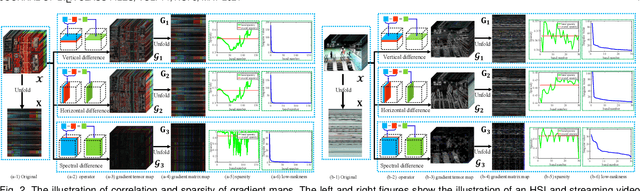
May 23, 2025In recent years, tensor decomposition-based approaches for hyperspectral anomaly detection (HAD) have gained significant attention in the field of remote sensing. However, existing methods often fail to fully leverage both the global correlations and local smoothness of the background components in hyperspectral images (HSIs), which exist in both the spectral and spatial domains. This limitation results in suboptimal detection performance. To mitigate this critical issue, we put forward a novel HAD method named HAD-EUNTRFR, which incorporates an enhanced unified nonconvex tensor ring (TR) factors regularization. In the HAD-EUNTRFR framework, the raw HSIs are first decomposed into background and anomaly components. The TR decomposition is then employed to capture the spatial-spectral correlations within the background component. Additionally, we introduce a unified and efficient nonconvex regularizer, induced by tensor singular value decomposition (TSVD), to simultaneously encode the low-rankness and sparsity of the 3-D gradient TR factors into a unique concise form. The above characterization scheme enables the interpretable gradient TR factors to inherit the low-rankness and smoothness of the original background. To further enhance anomaly detection, we design a generalized nonconvex regularization term to exploit the group sparsity of the anomaly component. To solve the resulting doubly nonconvex model, we develop a highly efficient optimization algorithm based on the alternating direction method of multipliers (ADMM) framework. Experimental results on several benchmark datasets demonstrate that our proposed method outperforms existing state-of-the-art (SOTA) approaches in terms of detection accuracy.
Nonconvex Robust High-Order Tensor Completion Using Randomized Low-Rank Approximation
May 19, 2023Within the tensor singular value decomposition (T-SVD) framework, existing robust low-rank tensor completion approaches have made great achievements in various areas of science and engineering. Nevertheless, these methods involve the T-SVD based low-rank approximation, which suffers from high computational costs when dealing with large-scale tensor data. Moreover, most of them are only applicable to third-order tensors. Against these issues, in this article, two efficient low-rank tensor approximation approaches fusing randomized techniques are first devised under the order-d (d >= 3) T-SVD framework. On this basis, we then further investigate the robust high-order tensor completion (RHTC) problem, in which a double nonconvex model along with its corresponding fast optimization algorithms with convergence guarantees are developed. To the best of our knowledge, this is the first study to incorporate the randomized low-rank approximation into the RHTC problem. Empirical studies on large-scale synthetic and real tensor data illustrate that the proposed method outperforms other state-of-the-art approaches in terms of both computational efficiency and estimated precision.
Guaranteed Tensor Recovery Fused Low-rankness and Smoothness
Feb 04, 2023

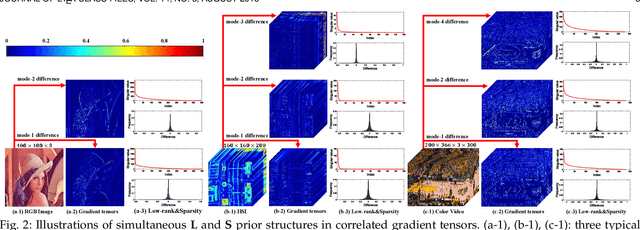

The tensor data recovery task has thus attracted much research attention in recent years. Solving such an ill-posed problem generally requires to explore intrinsic prior structures underlying tensor data, and formulate them as certain forms of regularization terms for guiding a sound estimate of the restored tensor. Recent research have made significant progress by adopting two insightful tensor priors, i.e., global low-rankness (L) and local smoothness (S) across different tensor modes, which are always encoded as a sum of two separate regularization terms into the recovery models. However, unlike the primary theoretical developments on low-rank tensor recovery, these joint L+S models have no theoretical exact-recovery guarantees yet, making the methods lack reliability in real practice. To this crucial issue, in this work, we build a unique regularization term, which essentially encodes both L and S priors of a tensor simultaneously. Especially, by equipping this single regularizer into the recovery models, we can rigorously prove the exact recovery guarantees for two typical tensor recovery tasks, i.e., tensor completion (TC) and tensor robust principal component analysis (TRPCA). To the best of our knowledge, this should be the first exact-recovery results among all related L+S methods for tensor recovery. Significant recovery accuracy improvements over many other SOTA methods in several TC and TRPCA tasks with various kinds of visual tensor data are observed in extensive experiments. Typically, our method achieves a workable performance when the missing rate is extremely large, e.g., 99.5%, for the color image inpainting task, while all its peers totally fail in such challenging case.
Exact Decomposition of Joint Low Rankness and Local Smoothness Plus Sparse Matrices
Jan 29, 2022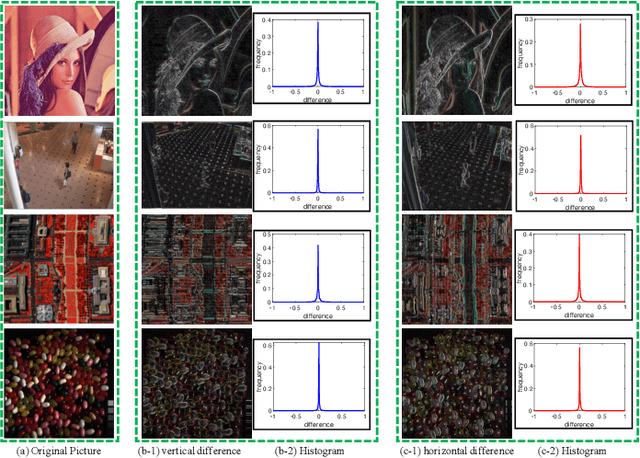
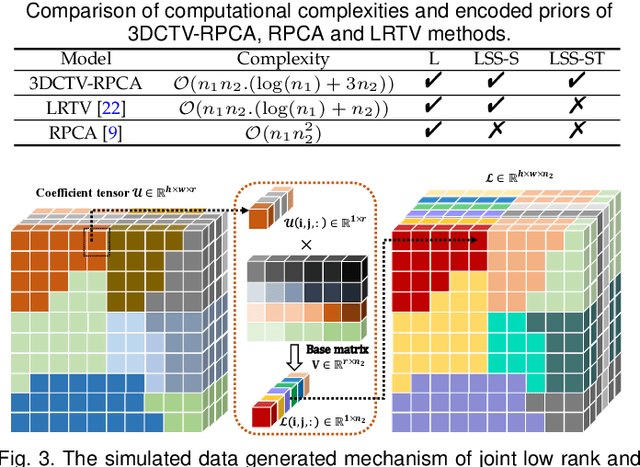
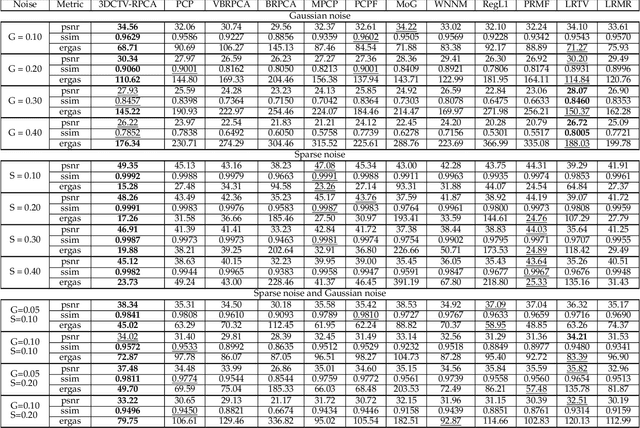
It is known that the decomposition in low-rank and sparse matrices (\textbf{L+S} for short) can be achieved by several Robust PCA techniques. Besides the low rankness, the local smoothness (\textbf{LSS}) is a vitally essential prior for many real-world matrix data such as hyperspectral images and surveillance videos, which makes such matrices have low-rankness and local smoothness properties at the same time. This poses an interesting question: Can we make a matrix decomposition in terms of \textbf{L\&LSS +S } form exactly? To address this issue, we propose in this paper a new RPCA model based on three-dimensional correlated total variation regularization (3DCTV-RPCA for short) by fully exploiting and encoding the prior expression underlying such joint low-rank and local smoothness matrices. Specifically, using a modification of Golfing scheme, we prove that under some mild assumptions, the proposed 3DCTV-RPCA model can decompose both components exactly, which should be the first theoretical guarantee among all such related methods combining low rankness and local smoothness. In addition, by utilizing Fast Fourier Transform (FFT), we propose an efficient ADMM algorithm with a solid convergence guarantee for solving the resulting optimization problem. Finally, a series of experiments on both simulations and real applications are carried out to demonstrate the general validity of the proposed 3DCTV-RPCA model.
Tensor Restricted Isometry Property Analysis For a Large Class of Random Measurement Ensembles
Jun 04, 2019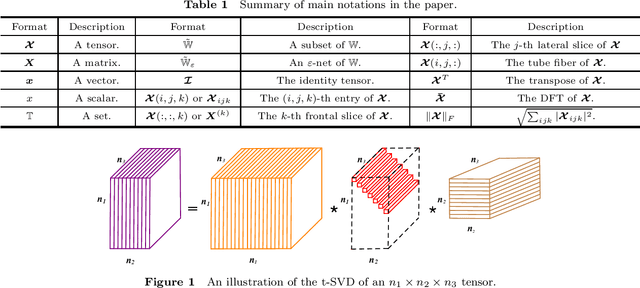
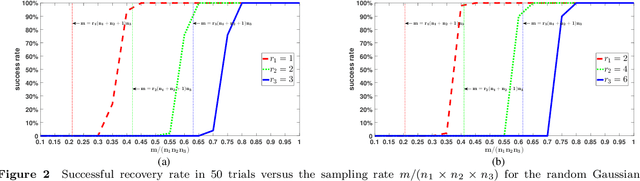
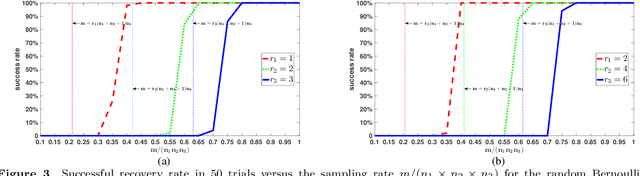
In previous work, theoretical analysis based on the tensor Restricted Isometry Property (t-RIP) established the robust recovery guarantees of a low-tubal-rank tensor. The obtained sufficient conditions depend strongly on the assumption that the linear measurement maps satisfy the t-RIP. In this paper, by exploiting the probabilistic arguments, we prove that such linear measurement maps exist under suitable conditions on the number of measurements in terms of the tubal rank r and the size of third-order tensor n1, n2, n3. And the obtained minimal possible number of linear measurements is nearly optimal compared with the degrees of freedom of a tensor with tubal rank r. Specially, we consider a random sub-Gaussian distribution that includes Gaussian, Bernoulli and all bounded distributions and construct a large class of linear maps that satisfy a t-RIP with high probability. Moreover, the validity of the required number of measurements is verified by numerical experiments.