 Add to Chrome
 Add to Firefox
 Add to Edge
Hierarchical Topology Isomorphism Expertise Embedded Graph Contrastive Learning
Dec 25, 2023
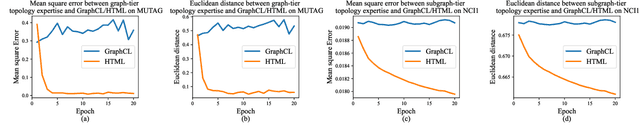
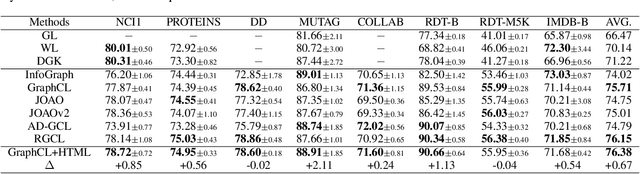
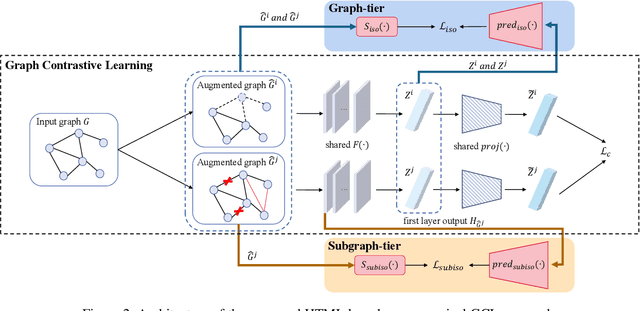
Graph contrastive learning (GCL) aims to align the positive features while differentiating the negative features in the latent space by minimizing a pair-wise contrastive loss. As the embodiment of an outstanding discriminative unsupervised graph representation learning approach, GCL achieves impressive successes in various graph benchmarks. However, such an approach falls short of recognizing the topology isomorphism of graphs, resulting in that graphs with relatively homogeneous node features cannot be sufficiently discriminated. By revisiting classic graph topology recognition works, we disclose that the corresponding expertise intuitively complements GCL methods. To this end, we propose a novel hierarchical topology isomorphism expertise embedded graph contrastive learning, which introduces knowledge distillations to empower GCL models to learn the hierarchical topology isomorphism expertise, including the graph-tier and subgraph-tier. On top of this, the proposed method holds the feature of plug-and-play, and we empirically demonstrate that the proposed method is universal to multiple state-of-the-art GCL models. The solid theoretical analyses are further provided to prove that compared with conventional GCL methods, our method acquires the tighter upper bound of Bayes classification error. We conduct extensive experiments on real-world benchmarks to exhibit the performance superiority of our method over candidate GCL methods, e.g., for the real-world graph representation learning experiments, the proposed method beats the state-of-the-art method by 0.23% on unsupervised representation learning setting, 0.43% on transfer learning setting. Our code is available at https://github.com/jyf123/HTML.

AnimatableDreamer: Text-Guided Non-rigid 3D Model Generation and Reconstruction with Canonical Score Distillation
Dec 20, 2023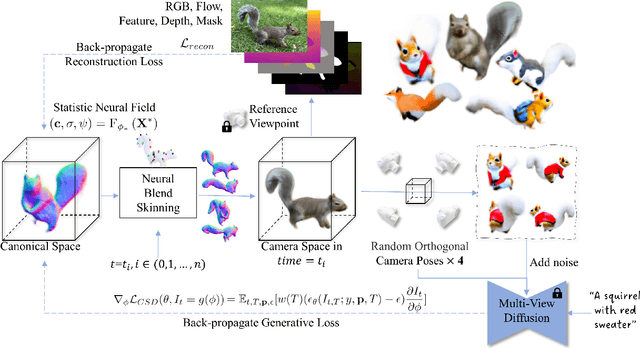
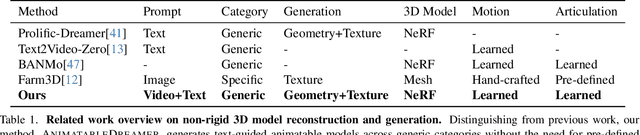
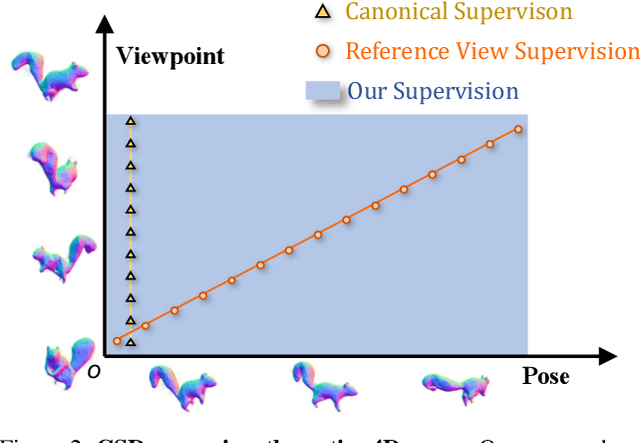

Text-to-3D model adaptations have advanced static 3D model quality, but sequential 3D model generation, particularly for animatable objects with large motions, is still scarce. Our work proposes AnimatableDreamer, a text-to-4D generation framework capable of generating diverse categories of non-rigid objects while adhering to the object motions extracted from a monocular video. At its core, AnimatableDreamer is equipped with our novel optimization design dubbed Canonical Score Distillation (CSD), which simplifies the generation dimension from 4D to 3D by denoising over different frames in the time-varying camera spaces while conducting the distillation process in a unique canonical space shared per video. Concretely, CSD ensures that score gradients back-propagate to the canonical space through differentiable warping, hence guaranteeing the time-consistent generation and maintaining morphological plausibility across different poses. By lifting the 3D generator to 4D with warping functions, AnimatableDreamer offers a novel perspective on non-rigid 3D model generation and reconstruction. Besides, with inductive knowledge from a multi-view consistent diffusion model, CSD regularizes reconstruction from novel views, thus cyclically enhancing the generation process. Extensive experiments demonstrate the capability of our method in generating high-flexibility text-guided 3D models from the monocular video, while also showing improved reconstruction performance over typical non-rigid reconstruction methods. Project page https://AnimatableDreamer.github.io.
UIEDP:Underwater Image Enhancement with Diffusion Prior
Dec 11, 2023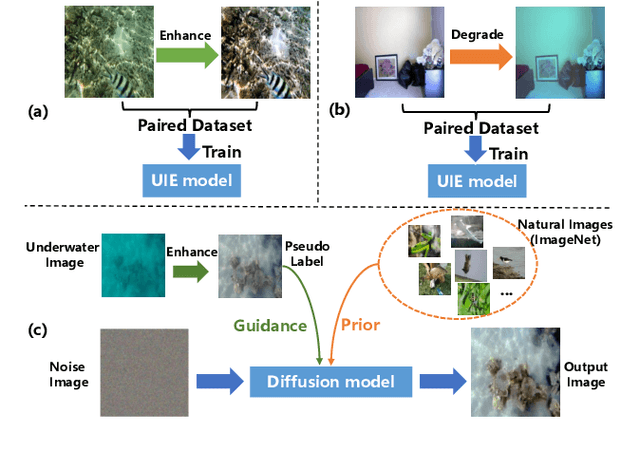
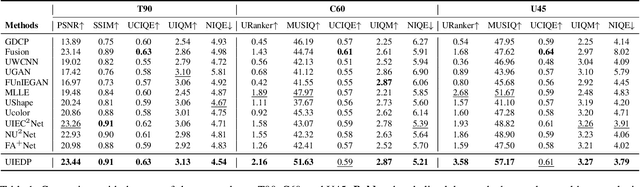
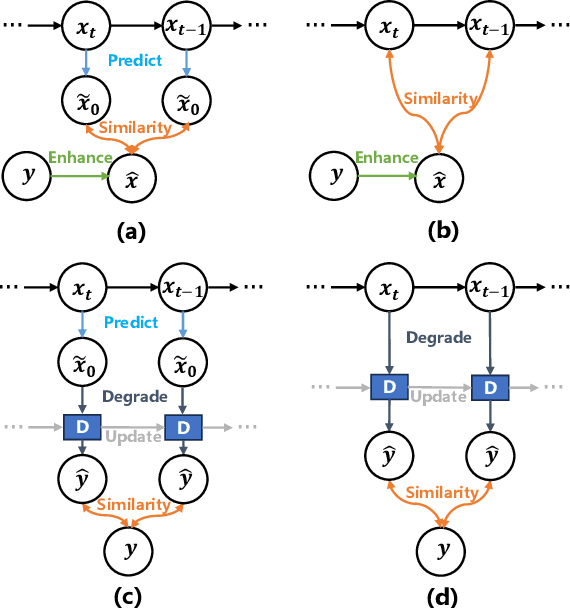
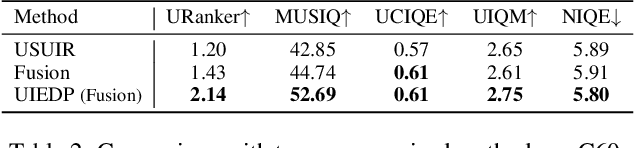
Underwater image enhancement (UIE) aims to generate clear images from low-quality underwater images. Due to the unavailability of clear reference images, researchers often synthesize them to construct paired datasets for training deep models. However, these synthesized images may sometimes lack quality, adversely affecting training outcomes. To address this issue, we propose UIE with Diffusion Prior (UIEDP), a novel framework treating UIE as a posterior distribution sampling process of clear images conditioned on degraded underwater inputs. Specifically, UIEDP combines a pre-trained diffusion model capturing natural image priors with any existing UIE algorithm, leveraging the latter to guide conditional generation. The diffusion prior mitigates the drawbacks of inferior synthetic images, resulting in higher-quality image generation. Extensive experiments have demonstrated that our UIEDP yields significant improvements across various metrics, especially no-reference image quality assessment. And the generated enhanced images also exhibit a more natural appearance.
RobotGPT: Robot Manipulation Learning from ChatGPT
Dec 03, 2023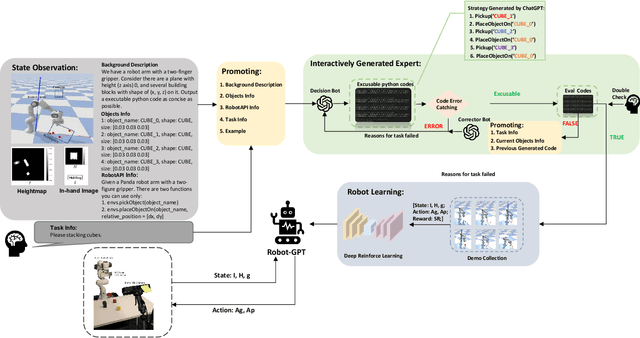
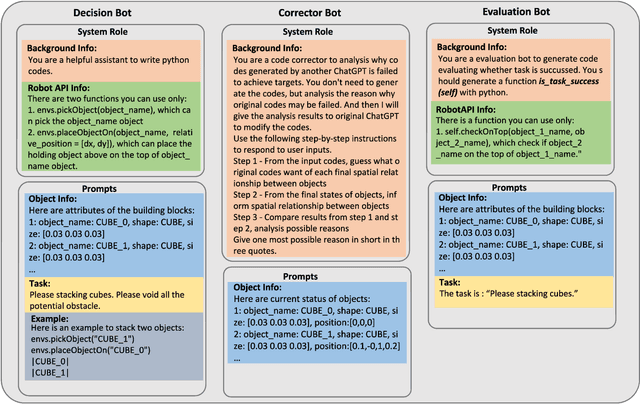
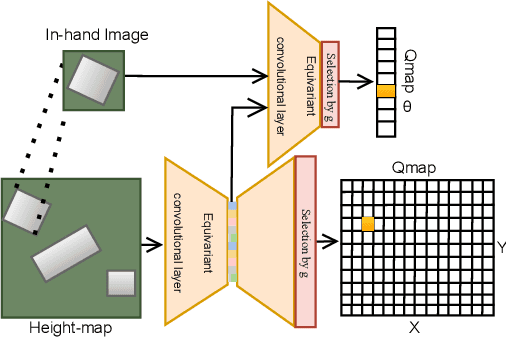
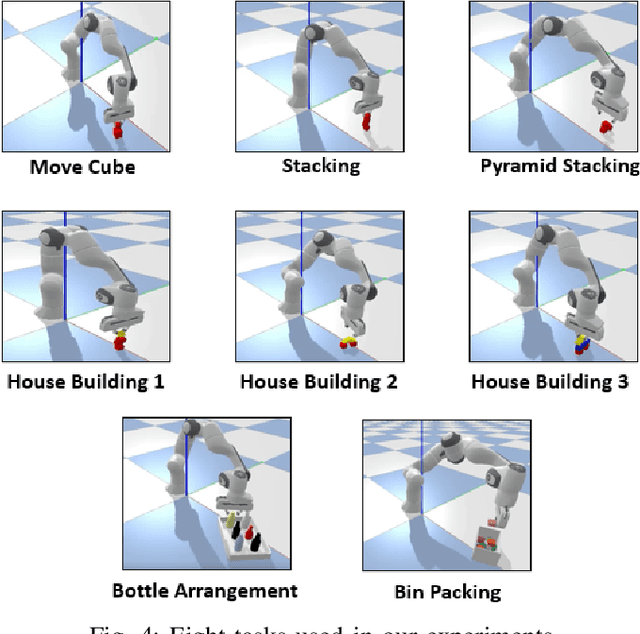
We present RobotGPT, an innovative decision framework for robotic manipulation that prioritizes stability and safety. The execution code generated by ChatGPT cannot guarantee the stability and safety of the system. ChatGPT may provide different answers for the same task, leading to unpredictability. This instability prevents the direct integration of ChatGPT into the robot manipulation loop. Although setting the temperature to 0 can generate more consistent outputs, it may cause ChatGPT to lose diversity and creativity. Our objective is to leverage ChatGPT's problem-solving capabilities in robot manipulation and train a reliable agent. The framework includes an effective prompt structure and a robust learning model. Additionally, we introduce a metric for measuring task difficulty to evaluate ChatGPT's performance in robot manipulation. Furthermore, we evaluate RobotGPT in both simulation and real-world environments. Compared to directly using ChatGPT to generate code, our framework significantly improves task success rates, with an average increase from 38.5% to 91.5%. Therefore, training a RobotGPT by utilizing ChatGPT as an expert is a more stable approach compared to directly using ChatGPT as a task planner.
Measuring Acoustics with Collaborative Multiple Agents
Oct 09, 2023As humans, we hear sound every second of our life. The sound we hear is often affected by the acoustics of the environment surrounding us. For example, a spacious hall leads to more reverberation. Room Impulse Responses (RIR) are commonly used to characterize environment acoustics as a function of the scene geometry, materials, and source/receiver locations. Traditionally, RIRs are measured by setting up a loudspeaker and microphone in the environment for all source/receiver locations, which is time-consuming and inefficient. We propose to let two robots measure the environment's acoustics by actively moving and emitting/receiving sweep signals. We also devise a collaborative multi-agent policy where these two robots are trained to explore the environment's acoustics while being rewarded for wide exploration and accurate prediction. We show that the robots learn to collaborate and move to explore environment acoustics while minimizing the prediction error. To the best of our knowledge, we present the very first problem formulation and solution to the task of collaborative environment acoustics measurements with multiple agents.
PrototypeFormer: Learning to Explore Prototype Relationships for Few-shot Image Classification
Oct 05, 2023Few-shot image classification has received considerable attention for addressing the challenge of poor classification performance with limited samples in novel classes. However, numerous studies have employed sophisticated learning strategies and diversified feature extraction methods to address this issue. In this paper, we propose our method called PrototypeFormer, which aims to significantly advance traditional few-shot image classification approaches by exploring prototype relationships. Specifically, we utilize a transformer architecture to build a prototype extraction module, aiming to extract class representations that are more discriminative for few-shot classification. Additionally, during the model training process, we propose a contrastive learning-based optimization approach to optimize prototype features in few-shot learning scenarios. Despite its simplicity, the method performs remarkably well, with no bells and whistles. We have experimented with our approach on several popular few-shot image classification benchmark datasets, which shows that our method outperforms all current state-of-the-art methods. In particular, our method achieves 97.07% and 90.88% on 5-way 5-shot and 5-way 1-shot tasks of miniImageNet, which surpasses the state-of-the-art results with accuracy of 7.27% and 8.72%, respectively. The code will be released later.
Root Pose Decomposition Towards Generic Non-rigid 3D Reconstruction with Monocular Videos
Aug 19, 2023This work focuses on the 3D reconstruction of non-rigid objects based on monocular RGB video sequences. Concretely, we aim at building high-fidelity models for generic object categories and casually captured scenes. To this end, we do not assume known root poses of objects, and do not utilize category-specific templates or dense pose priors. The key idea of our method, Root Pose Decomposition (RPD), is to maintain a per-frame root pose transformation, meanwhile building a dense field with local transformations to rectify the root pose. The optimization of local transformations is performed by point registration to the canonical space. We also adapt RPD to multi-object scenarios with object occlusions and individual differences. As a result, RPD allows non-rigid 3D reconstruction for complicated scenarios containing objects with large deformations, complex motion patterns, occlusions, and scale diversities of different individuals. Such a pipeline potentially scales to diverse sets of objects in the wild. We experimentally show that RPD surpasses state-of-the-art methods on the challenging DAVIS, OVIS, and AMA datasets.
Towards the Sparseness of Projection Head in Self-Supervised Learning
Jul 19, 2023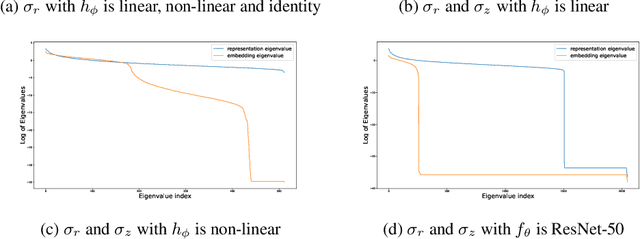
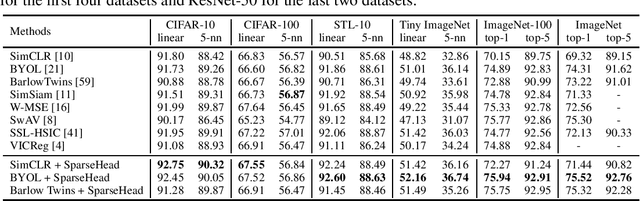
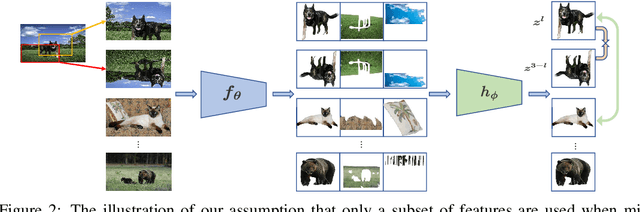

In recent years, self-supervised learning (SSL) has emerged as a promising approach for extracting valuable representations from unlabeled data. One successful SSL method is contrastive learning, which aims to bring positive examples closer while pushing negative examples apart. Many current contrastive learning approaches utilize a parameterized projection head. Through a combination of empirical analysis and theoretical investigation, we provide insights into the internal mechanisms of the projection head and its relationship with the phenomenon of dimensional collapse. Our findings demonstrate that the projection head enhances the quality of representations by performing contrastive loss in a projected subspace. Therefore, we propose an assumption that only a subset of features is necessary when minimizing the contrastive loss of a mini-batch of data. Theoretical analysis further suggests that a sparse projection head can enhance generalization, leading us to introduce SparseHead - a regularization term that effectively constrains the sparsity of the projection head, and can be seamlessly integrated with any self-supervised learning (SSL) approaches. Our experimental results validate the effectiveness of SparseHead, demonstrating its ability to improve the performance of existing contrastive methods.
A Dimensional Structure based Knowledge Distillation Method for Cross-Modal Learning
Jun 28, 2023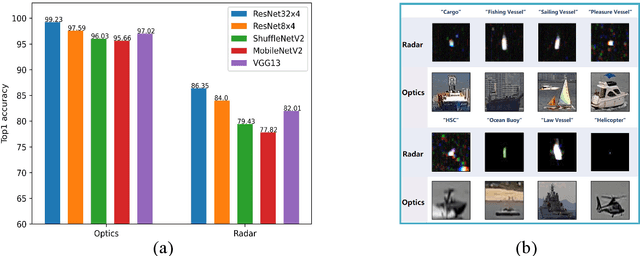
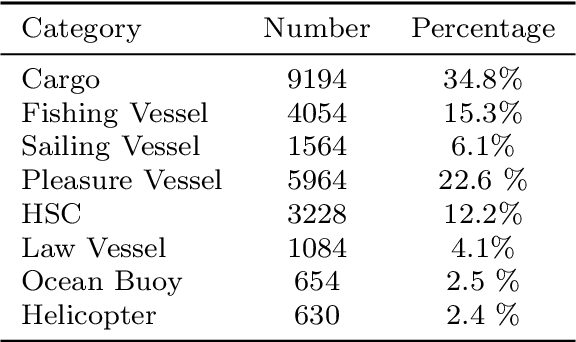
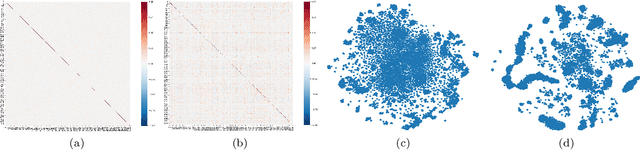
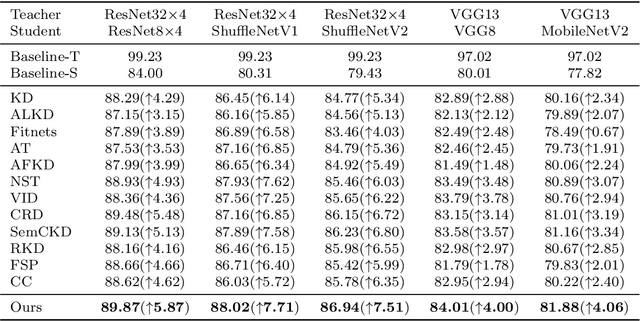
Due to limitations in data quality, some essential visual tasks are difficult to perform independently. Introducing previously unavailable information to transfer informative dark knowledge has been a common way to solve such hard tasks. However, research on why transferred knowledge works has not been extensively explored. To address this issue, in this paper, we discover the correlation between feature discriminability and dimensional structure (DS) by analyzing and observing features extracted from simple and hard tasks. On this basis, we express DS using deep channel-wise correlation and intermediate spatial distribution, and propose a novel cross-modal knowledge distillation (CMKD) method for better supervised cross-modal learning (CML) performance. The proposed method enforces output features to be channel-wise independent and intermediate ones to be uniformly distributed, thereby learning semantically irrelevant features from the hard task to boost its accuracy. This is especially useful in specific applications where the performance gap between dual modalities is relatively large. Furthermore, we collect a real-world CML dataset to promote community development. The dataset contains more than 10,000 paired optical and radar images and is continuously being updated. Experimental results on real-world and benchmark datasets validate the effectiveness of the proposed method.
Structure-Aware DropEdge Towards Deep Graph Convolutional Networks
Jun 21, 2023


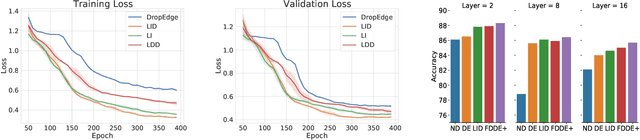
It has been discovered that Graph Convolutional Networks (GCNs) encounter a remarkable drop in performance when multiple layers are piled up. The main factor that accounts for why deep GCNs fail lies in over-smoothing, which isolates the network output from the input with the increase of network depth, weakening expressivity and trainability. In this paper, we start by investigating refined measures upon DropEdge -- an existing simple yet effective technique to relieve over-smoothing. We term our method as DropEdge++ for its two structure-aware samplers in contrast to DropEdge: layer-dependent sampler and feature-dependent sampler. Regarding the layer-dependent sampler, we interestingly find that increasingly sampling edges from the bottom layer yields superior performance than the decreasing counterpart as well as DropEdge. We theoretically reveal this phenomenon with Mean-Edge-Number (MEN), a metric closely related to over-smoothing. For the feature-dependent sampler, we associate the edge sampling probability with the feature similarity of node pairs, and prove that it further correlates the convergence subspace of the output layer with the input features. Extensive experiments on several node classification benchmarks, including both full- and semi- supervised tasks, illustrate the efficacy of DropEdge++ and its compatibility with a variety of backbones by achieving generally better performance over DropEdge and the no-drop version.