 Add to Chrome
 Add to Firefox
 Add to Edge
Self-Improving is Often Sudden: Enlightenment-style Finetuning for Large-Scale Models
Jul 15, 2026
The pursuit of autonomously self-improving models has attracted growing interest in the era of large-scale foundation models. Drawing inspiration from the concept of "enlightenment" or "aha moment" in human brain, we hypothesize that large models exhibit an analogous enlightenment phenomenon-a latent capacity for sudden capability boost. Then, we propose Enlightenment, a novel training-free post-tuning paradigm for large-scale models. Our approach modifies shortcuts for key modules/layers without weight updates, while existing training-free ones predominantly manipulate attention weights. We introduce two architecture-specific instantiations: i) For large language models, we propose attention head-mixing shortcuts that recalibrate attention weights by linking the initial attention head's output to all other target heads, modulated by an adaptive scaling factor initialization strategy. ii) For vision-language models, we apply a lightweight scalar-modulated factor to residual connections in the decoder layers, regulating information flow. Extensive experiments show that Enlightenment efficiently unlocks the latent potential of pre-trained networks, yielding remarkable performance improvements across diverse benchmarks and models.

On Explicit Super-Expressive Approximation for Neural Networks
Jul 07, 2026In this work, we investigate the fixed-architecture neural network approximation with explicit parameter bounds and elementary activations. While prior work demonstrated super-expressive approximation using fixed-size networks, they lack quantitative and non-asymptotic characterizations of parameter magnitude with respect to the approximation error. We resolve this issue by introducing the Chinese Remainder Theorem as a constructive encoding mechanism. For Lipschitz continuous functions on $[0,1]^D$, we construct a width-$\max\{D,4\}$, depth-$5$ network with explicit parameter-error trade-offs. For Hölder-smooth functions in $C^{r,γ}_A\left([0,1]^D\right)$, our fixed network of width $\max\{2D,\ D+5N+1\}$ and depth $r + 9$ achieves the parameter magnitude $\mathcal{P}$ bounded by $\log_2 \mathcal{P}=\mathcal{O}\bigl(\varepsilon^{-2D/(r+γ)}\log(1/\varepsilon)\bigr)$. This is the dual result compared to those in the parameter-bounded and architecture-unbounded paradigm.
Big2Small: A Unifying Neural Network Framework for Model Compression
Mar 31, 2026With the development of foundational models, model compression has become a critical requirement. Various model compression approaches have been proposed such as low-rank decomposition, pruning, quantization, ergodic dynamic systems, and knowledge distillation, which are based on different heuristics. To elevate the field from fragmentation to a principled discipline, we construct a unifying mathematical framework for model compression grounded in measure theory. We further demonstrate that each model compression technique is mathematically equivalent to a neural network subject to a regularization. Building upon this mathematical and structural equivalence, we propose an experimentally-verified data-free model compression framework, termed \textit{Big2Small}, which translates Implicit Neural Representations (INRs) from data domain to the domain of network parameters. \textit{Big2Small} trains compact INRs to encode the weights of larger models and reconstruct the weights during inference. To enhance reconstruction fidelity, we introduce Outlier-Aware Preprocessing to handle extreme weight values and a Frequency-Aware Loss function to preserve high-frequency details. Experiments on image classification and segmentation demonstrate that \textit{Big2Small} achieves competitive accuracy and compression ratios compared to state-of-the-art baselines.
COLI: A Hierarchical Efficient Compressor for Large Images
Jul 15, 2025The escalating adoption of high-resolution, large-field-of-view imagery amplifies the need for efficient compression methodologies. Conventional techniques frequently fail to preserve critical image details, while data-driven approaches exhibit limited generalizability. Implicit Neural Representations (INRs) present a promising alternative by learning continuous mappings from spatial coordinates to pixel intensities for individual images, thereby storing network weights rather than raw pixels and avoiding the generalization problem. However, INR-based compression of large images faces challenges including slow compression speed and suboptimal compression ratios. To address these limitations, we introduce COLI (Compressor for Large Images), a novel framework leveraging Neural Representations for Videos (NeRV). First, recognizing that INR-based compression constitutes a training process, we accelerate its convergence through a pretraining-finetuning paradigm, mixed-precision training, and reformulation of the sequential loss into a parallelizable objective. Second, capitalizing on INRs' transformation of image storage constraints into weight storage, we implement Hyper-Compression, a novel post-training technique to substantially enhance compression ratios while maintaining minimal output distortion. Evaluations across two medical imaging datasets demonstrate that COLI consistently achieves competitive or superior PSNR and SSIM metrics at significantly reduced bits per pixel (bpp), while accelerating NeRV training by up to 4 times.
Retinal Vessel Segmentation via Neuron Programming
Nov 17, 2024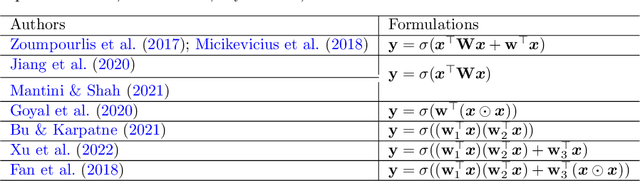


The accurate segmentation of retinal blood vessels plays a crucial role in the early diagnosis and treatment of various ophthalmic diseases. Designing a network model for this task requires meticulous tuning and extensive experimentation to handle the tiny and intertwined morphology of retinal blood vessels. To tackle this challenge, Neural Architecture Search (NAS) methods are developed to fully explore the space of potential network architectures and go after the most powerful one. Inspired by neuronal diversity which is the biological foundation of all kinds of intelligent behaviors in our brain, this paper introduces a novel and foundational approach to neural network design, termed ``neuron programming'', to automatically search neuronal types into a network to enhance a network's representation ability at the neuronal level, which is complementary to architecture-level enhancement done by NAS. Additionally, to mitigate the time and computational intensity of neuron programming, we develop a hypernetwork that leverages the search-derived architectural information to predict optimal neuronal configurations. Comprehensive experiments validate that neuron programming can achieve competitive performance in retinal blood segmentation, demonstrating the strong potential of neuronal diversity in medical image analysis.
Don't Fear Peculiar Activation Functions: EUAF and Beyond
Jul 12, 2024


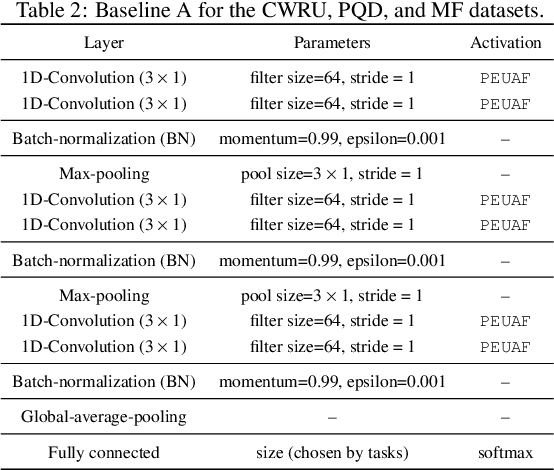
In this paper, we propose a new super-expressive activation function called the Parametric Elementary Universal Activation Function (PEUAF). We demonstrate the effectiveness of PEUAF through systematic and comprehensive experiments on various industrial and image datasets, including CIFAR10, Tiny-ImageNet, and ImageNet. Moreover, we significantly generalize the family of super-expressive activation functions, whose existence has been demonstrated in several recent works by showing that any continuous function can be approximated to any desired accuracy by a fixed-size network with a specific super-expressive activation function. Specifically, our work addresses two major bottlenecks in impeding the development of super-expressive activation functions: the limited identification of super-expressive functions, which raises doubts about their broad applicability, and their often peculiar forms, which lead to skepticism regarding their scalability and practicality in real-world applications.
No One-Size-Fits-All Neurons: Task-based Neurons for Artificial Neural Networks
May 03, 2024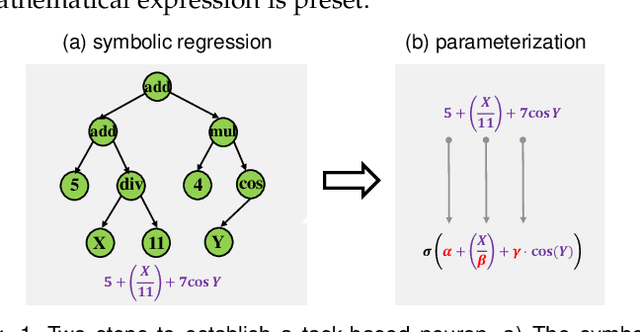
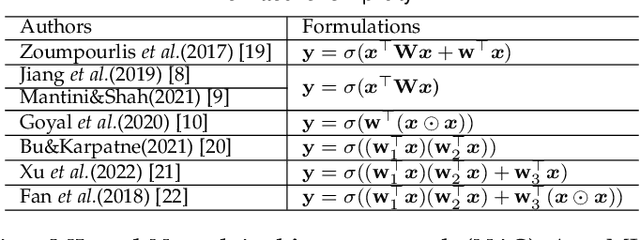
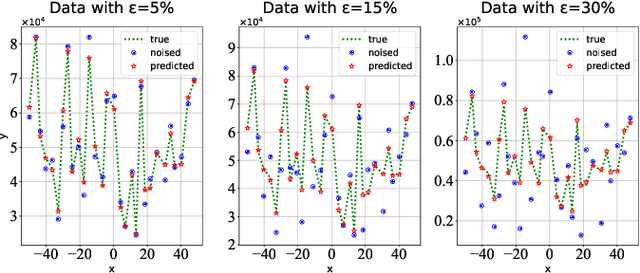
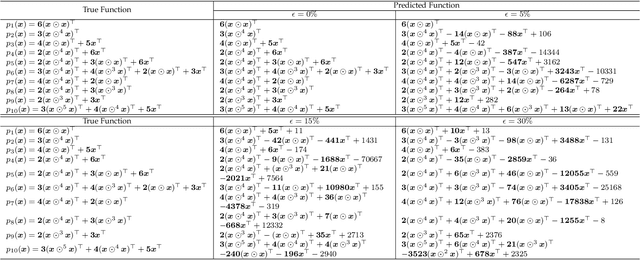
Biologically, the brain does not rely on a single type of neuron that universally functions in all aspects. Instead, it acts as a sophisticated designer of task-based neurons. In this study, we address the following question: since the human brain is a task-based neuron user, can the artificial network design go from the task-based architecture design to the task-based neuron design? Since methodologically there are no one-size-fits-all neurons, given the same structure, task-based neurons can enhance the feature representation ability relative to the existing universal neurons due to the intrinsic inductive bias for the task. Specifically, we propose a two-step framework for prototyping task-based neurons. First, symbolic regression is used to identify optimal formulas that fit input data by utilizing base functions such as logarithmic, trigonometric, and exponential functions. We introduce vectorized symbolic regression that stacks all variables in a vector and regularizes each input variable to perform the same computation, which can expedite the regression speed, facilitate parallel computation, and avoid overfitting. Second, we parameterize the acquired elementary formula to make parameters learnable, which serves as the aggregation function of the neuron. The activation functions such as ReLU and the sigmoidal functions remain the same because they have proven to be good. Empirically, experimental results on synthetic data, classic benchmarks, and real-world applications show that the proposed task-based neuron design is not only feasible but also delivers competitive performance over other state-of-the-art models.
EEG-DG: A Multi-Source Domain Generalization Framework for Motor Imagery EEG Classification
Nov 09, 2023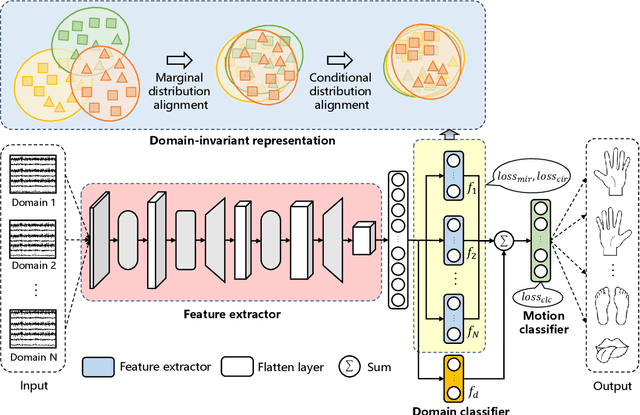
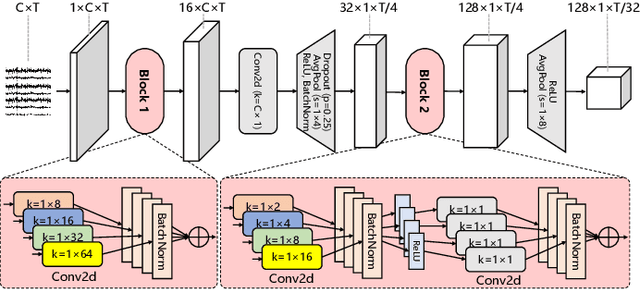

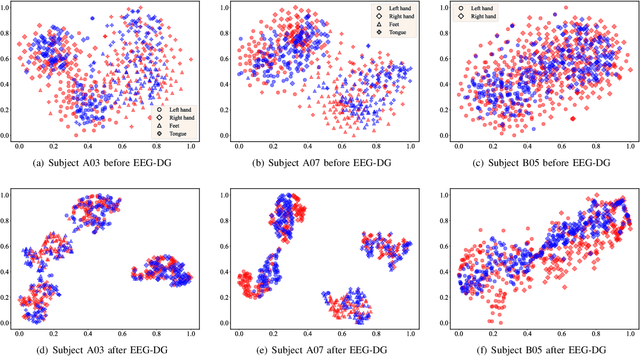
Motor imagery EEG classification plays a crucial role in non-invasive Brain-Computer Interface (BCI) research. However, the classification is affected by the non-stationarity and individual variations of EEG signals. Simply pooling EEG data with different statistical distributions to train a classification model can severely degrade the generalization performance. To address this issue, the existing methods primarily focus on domain adaptation, which requires access to the target data during training. This is unrealistic in many EEG application scenarios. In this paper, we propose a novel multi-source domain generalization framework called EEG-DG, which leverages multiple source domains with different statistical distributions to build generalizable models on unseen target EEG data. We optimize both the marginal and conditional distributions to ensure the stability of the joint distribution across source domains and extend it to a multi-source domain generalization framework to achieve domain-invariant feature representation, thereby alleviating calibration efforts. Systematic experiments on a simulative dataset and BCI competition datasets IV-2a and IV-2b demonstrate the superiority of our proposed EEG-DG over state-of-the-art methods. Specifically, EEG-DG achieves an average classification accuracy/kappa value of 81.79%/0.7572 and 87.12%/0.7424 on datasets IV-2a and IV-2b, respectively, which even outperforms some domain adaptation methods. Our code is available at https://github.com/XC-ZhongHIT/EEG-DG for free download and evaluation.
VDIP-TGV: Blind Image Deconvolution via Variational Deep Image Prior Empowered by Total Generalized Variation
Oct 30, 2023
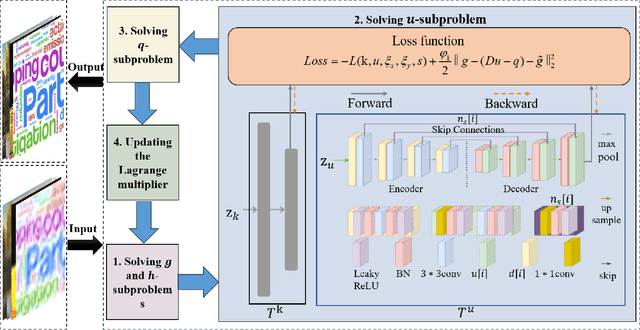
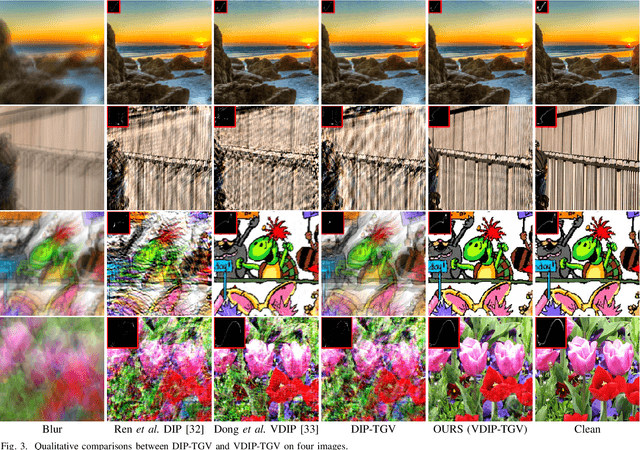
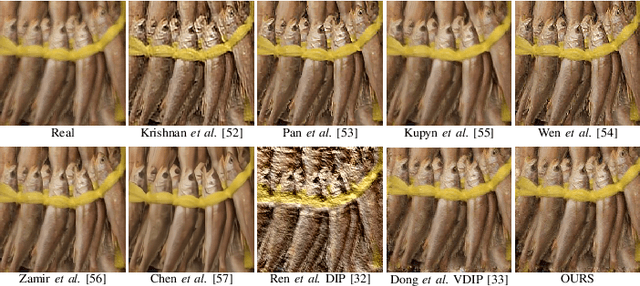
Recovering clear images from blurry ones with an unknown blur kernel is a challenging problem. Deep image prior (DIP) proposes to use the deep network as a regularizer for a single image rather than as a supervised model, which achieves encouraging results in the nonblind deblurring problem. However, since the relationship between images and the network architectures is unclear, it is hard to find a suitable architecture to provide sufficient constraints on the estimated blur kernels and clean images. Also, DIP uses the sparse maximum a posteriori (MAP), which is insufficient to enforce the selection of the recovery image. Recently, variational deep image prior (VDIP) was proposed to impose constraints on both blur kernels and recovery images and take the standard deviation of the image into account during the optimization process by the variational principle. However, we empirically find that VDIP struggles with processing image details and tends to generate suboptimal results when the blur kernel is large. Therefore, we combine total generalized variational (TGV) regularization with VDIP in this paper to overcome these shortcomings of VDIP. TGV is a flexible regularization that utilizes the characteristics of partial derivatives of varying orders to regularize images at different scales, reducing oil painting artifacts while maintaining sharp edges. The proposed VDIP-TGV effectively recovers image edges and details by supplementing extra gradient information through TGV. Additionally, this model is solved by the alternating direction method of multipliers (ADMM), which effectively combines traditional algorithms and deep learning methods. Experiments show that our proposed VDIP-TGV surpasses various state-of-the-art models quantitatively and qualitatively.
BearingPGA-Net: A Lightweight and Deployable Bearing Fault Diagnosis Network via Decoupled Knowledge Distillation and FPGA Acceleration
Jul 31, 2023


Deep learning has achieved remarkable success in the field of bearing fault diagnosis. However, this success comes with larger models and more complex computations, which cannot be transferred into industrial fields requiring models to be of high speed, strong portability, and low power consumption. In this paper, we propose a lightweight and deployable model for bearing fault diagnosis, referred to as BearingPGA-Net, to address these challenges. Firstly, aided by a well-trained large model, we train BearingPGA-Net via decoupled knowledge distillation. Despite its small size, our model demonstrates excellent fault diagnosis performance compared to other lightweight state-of-the-art methods. Secondly, we design an FPGA acceleration scheme for BearingPGA-Net using Verilog. This scheme involves the customized quantization and designing programmable logic gates for each layer of BearingPGA-Net on the FPGA, with an emphasis on parallel computing and module reuse to enhance the computational speed. To the best of our knowledge, this is the first instance of deploying a CNN-based bearing fault diagnosis model on an FPGA. Experimental results reveal that our deployment scheme achieves over 200 times faster diagnosis speed compared to CPU, while achieving a lower-than-0.4\% performance drop in terms of F1, Recall, and Precision score on our independently-collected bearing dataset. Our code is available at \url{https://github.com/asdvfghg/BearingPGA-Net}.