 Add to Chrome
 Add to Firefox
 Add to Edge
Auditing Data Provenance in LLM Fine-tuning via Intrinsic Distributional Fingerprints
Aug 03, 2026
The proliferation of customized Large Language Models (LLMs) poses critical risks of Data Intellectual Property (Data IP) infringement via unauthorized fine-tuning on proprietary data. Existing audit techniques are limited, as they require intervention during data preparation or training and remain fragile under malicious obfuscations such as data paraphrasing and knowledge distillation. We propose \textit{Distribution Provenance Audit (DPA)}, a post-hoc framework for auditing data IP infringement in LLM fine-tuning under black-box and malicious settings. DPA is grounded in a critical insight: regardless of fine-tuning tactics to evade provenance, the practical necessity of maintaining utility constrains the model to preserve the fundamental intersection of semantic substance and lexical form. Accordingly, DPA captures this persistent lexical-semantic intersection as intrinsic distributional fingerprints. The framework formulates the audit as a statistical hypothesis test, effectively quantifying these fingerprints via unbiased output sampling to reliably reject the null hypothesis of non-usage. Extensive experiments on medical and legal fine-tuning tasks show that DPA consistently outperforms existing baselines, remaining robust against adversarial trainers employing paraphrasing and knowledge distillation. We further highlight a fundamental dual-use tension: the same high-fidelity distributional fingerprints enabling reliable auditing may also facilitate privacy attacks.

The Turning Point of 3D Plant Phenotyping: 3D Foundation Models Enable Minute-to-Second Cross-Crop Reconstruction and Beyond
Jul 02, 20263D plant phenotyping is notoriously known to be procedure-complicated and of low throughput due to the extensive multi-view imaging, the fragile 3D reconstruction pipeline, and the additional cost from reconstructed geometry to phenotypic extraction. These limitations are further amplified in low-cost data acquisition, where smartphone videos or sparsely sampled multi-view images provide limited view overlap and self-occlusion. In this work, we show that the conventional 3D plant phenotyping pipeline could be streamlined and significantly accelerated with 3D Foundation Models (3DFMs), and particularly, present one of the first cross-crop 3D phenotyping frameworks powered by 3DFMs. The framework replaces COLMAP-style sparse initialization with 3DFM-based feed-forward geometric recovery, combines geometry-constrained 3D Gaussian Splatting for dense reconstruction, enables few-view reconstruction through iterative view synthesis and refinement, and converts reconstructed geometry into measurable organs through 2D-to-3D semantic transfer, metric scale recovery, and organ instance separation. We further construct a cross-crop dataset with smartphone-based image acquisition, diverse plant morphologies, and manual annotations for segmentation and phenotypic evaluation. Experiments across 26 plant sequences show that 3D Foundation Models reduce the average reconstruction time from 6.52 minutes to 1.58 seconds while maintaining high reconstruction quality and phenotyping accuracy. These results suggest a fresh technical route for high-throughput 3D plant phenotyping, from low-cost image acquisition to fast reconstruction, perception, scale recovery, and phenotypic measurement.
DepthCropSeg++: Scaling a Crop Segmentation Foundation Model With Depth-Labeled Data
Jan 18, 2026DepthCropSeg++: a foundation model for crop segmentation, capable of segmenting different crop species under open in-field environment. Crop segmentation is a fundamental task for modern agriculture, which closely relates to many downstream tasks such as plant phenotyping, density estimation, and weed control. In the era of foundation models, a number of generic large language and vision models have been developed. These models have demonstrated remarkable real world generalization due to significant model capacity and largescale datasets. However, current crop segmentation models mostly learn from limited data due to expensive pixel-level labelling cost, often performing well only under specific crop types or controlled environment. In this work, we follow the vein of our previous work DepthCropSeg, an almost unsupervised approach to crop segmentation, to scale up a cross-species and crossscene crop segmentation dataset, with 28,406 images across 30+ species and 15 environmental conditions. We also build upon a state-of-the-art semantic segmentation architecture ViT-Adapter architecture, enhance it with dynamic upsampling for improved detail awareness, and train the model with a two-stage selftraining pipeline. To systematically validate model performance, we conduct comprehensive experiments to justify the effectiveness and generalization capabilities across multiple crop datasets. Results demonstrate that DepthCropSeg++ achieves 93.11% mIoU on a comprehensive testing set, outperforming both supervised baselines and general-purpose vision foundation models like Segmentation Anything Model (SAM) by significant margins (+0.36% and +48.57% respectively). The model particularly excels in challenging scenarios including night-time environment (86.90% mIoU), high-density canopies (90.09% mIoU), and unseen crop varieties (90.09% mIoU), indicating a new state of the art for crop segmentation.
* 13 pages, 15 figures and 7 tables
Investigating Large Language Models for Code Vulnerability Detection: An Experimental Study
Dec 24, 2024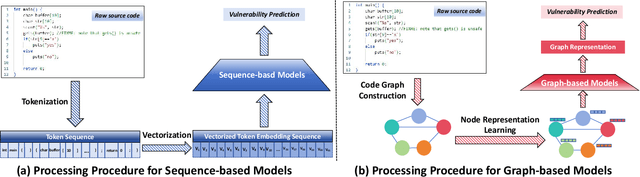
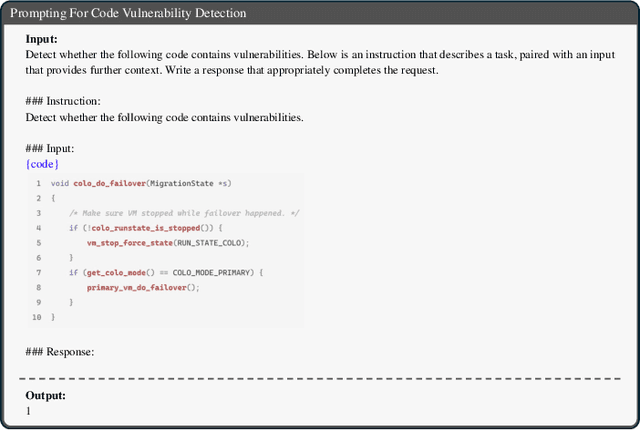


Code vulnerability detection (CVD) is essential for addressing and preventing system security issues, playing a crucial role in ensuring software security. Previous learning-based vulnerability detection methods rely on either fine-tuning medium-size sequence models or training smaller neural networks from scratch. Recent advancements in large pre-trained language models (LLMs) have showcased remarkable capabilities in various code intelligence tasks including code understanding and generation. However, the effectiveness of LLMs in detecting code vulnerabilities is largely under-explored. This work aims to investigate the gap by fine-tuning LLMs for the CVD task, involving four widely-used open-source LLMs. We also implement other five previous graph-based or medium-size sequence models for comparison. Experiments are conducted on five commonly-used CVD datasets, including both the part of short samples and long samples. In addition, we conduct quantitative experiments to investigate the class imbalance issue and the model's performance on samples of different lengths, which are rarely studied in previous works. To better facilitate communities, we open-source all codes and resources of this study in https://github.com/SakiRinn/LLM4CVD and https://huggingface.co/datasets/xuefen/VulResource.
Retinal Vessel Segmentation via Neuron Programming
Nov 17, 2024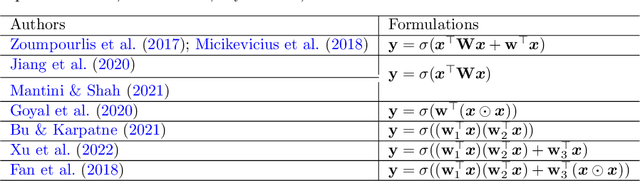


The accurate segmentation of retinal blood vessels plays a crucial role in the early diagnosis and treatment of various ophthalmic diseases. Designing a network model for this task requires meticulous tuning and extensive experimentation to handle the tiny and intertwined morphology of retinal blood vessels. To tackle this challenge, Neural Architecture Search (NAS) methods are developed to fully explore the space of potential network architectures and go after the most powerful one. Inspired by neuronal diversity which is the biological foundation of all kinds of intelligent behaviors in our brain, this paper introduces a novel and foundational approach to neural network design, termed ``neuron programming'', to automatically search neuronal types into a network to enhance a network's representation ability at the neuronal level, which is complementary to architecture-level enhancement done by NAS. Additionally, to mitigate the time and computational intensity of neuron programming, we develop a hypernetwork that leverages the search-derived architectural information to predict optimal neuronal configurations. Comprehensive experiments validate that neuron programming can achieve competitive performance in retinal blood segmentation, demonstrating the strong potential of neuronal diversity in medical image analysis.
A New Cross-Space Total Variation Regularization Model for Color Image Restoration with Quaternion Blur Operator
May 20, 2024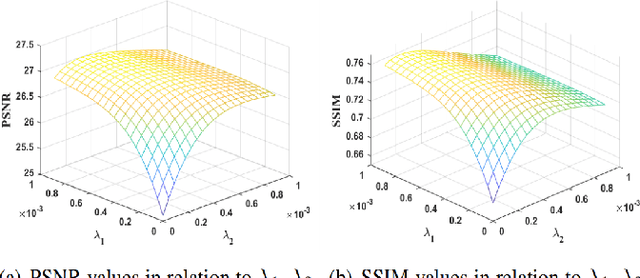
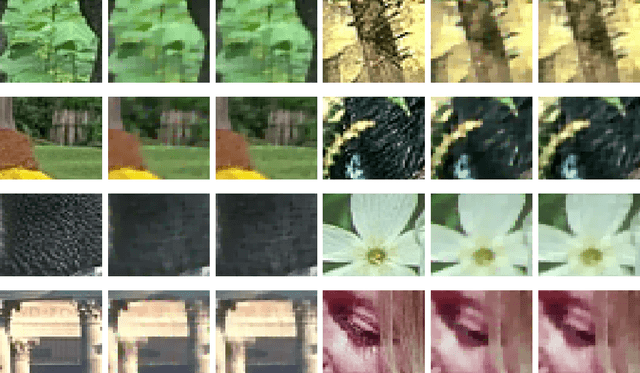
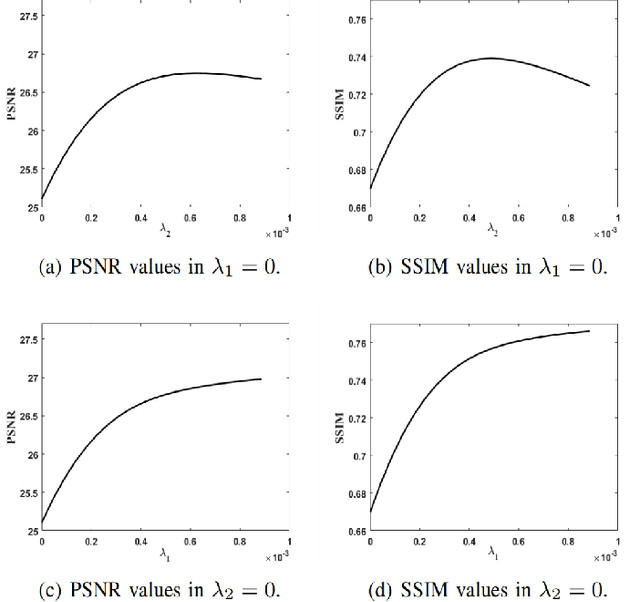
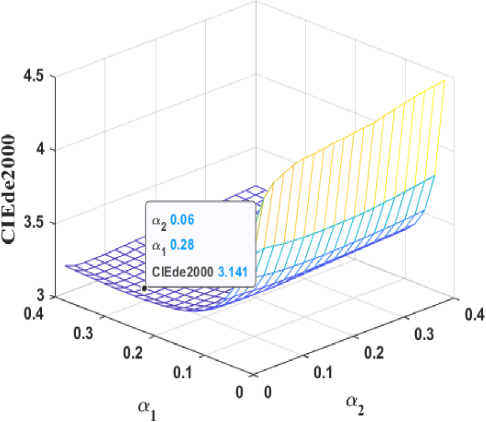
The cross-channel deblurring problem in color image processing is difficult to solve due to the complex coupling and structural blurring of color pixels. Until now, there are few efficient algorithms that can reduce color infection in deblurring process. To solve this challenging problem, we present a novel cross-space total variation (CSTV) regularization model for color image deblurring by introducing a quaternion blur operator and a cross-color space regularization functional. The existence and uniqueness of the solution is proved and a new L-curve method is proposed to find a sweet balance of regularization functionals on different color spaces. The Euler-Lagrange equation is derived to show that CSTV has taken into account the coupling of all color channels and the local smoothing within each color channel. A quaternion operator splitting method is firstly proposed to enhance the ability of color infection reduction of the CSTV regularization model. This strategy also applies to the well-known color deblurring models. Numerical experiments on color image databases illustrate the efficiency and manoeuvrability of the new model and algorithms. The color images restored by them successfully maintain the color and spatial information and are of higher quality in terms of PSNR, SSIM, MSE and CIEde2000 than the restorations of the-state-of-the-art methods.
VDIP-TGV: Blind Image Deconvolution via Variational Deep Image Prior Empowered by Total Generalized Variation
Oct 30, 2023
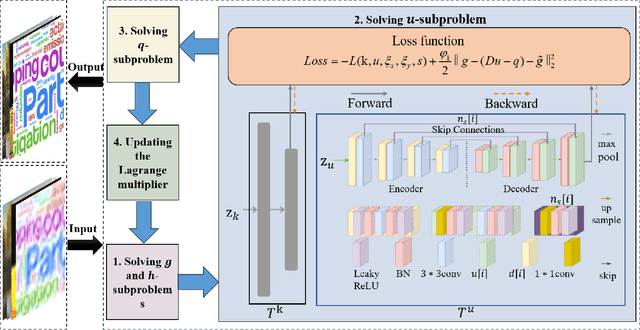
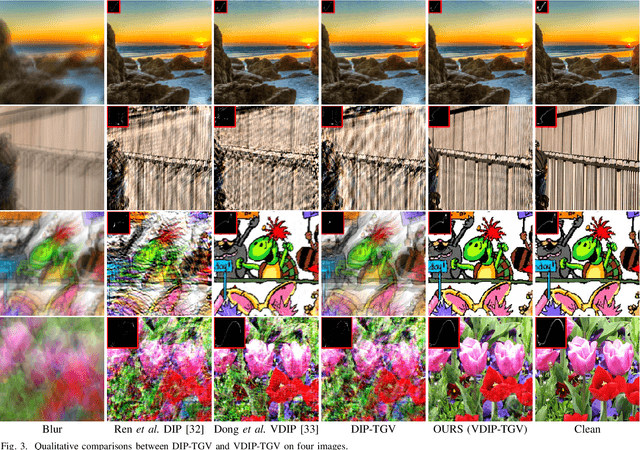
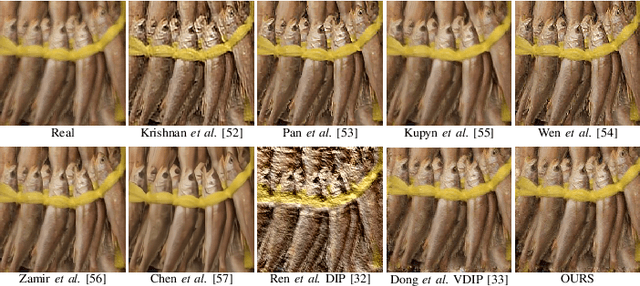
Recovering clear images from blurry ones with an unknown blur kernel is a challenging problem. Deep image prior (DIP) proposes to use the deep network as a regularizer for a single image rather than as a supervised model, which achieves encouraging results in the nonblind deblurring problem. However, since the relationship between images and the network architectures is unclear, it is hard to find a suitable architecture to provide sufficient constraints on the estimated blur kernels and clean images. Also, DIP uses the sparse maximum a posteriori (MAP), which is insufficient to enforce the selection of the recovery image. Recently, variational deep image prior (VDIP) was proposed to impose constraints on both blur kernels and recovery images and take the standard deviation of the image into account during the optimization process by the variational principle. However, we empirically find that VDIP struggles with processing image details and tends to generate suboptimal results when the blur kernel is large. Therefore, we combine total generalized variational (TGV) regularization with VDIP in this paper to overcome these shortcomings of VDIP. TGV is a flexible regularization that utilizes the characteristics of partial derivatives of varying orders to regularize images at different scales, reducing oil painting artifacts while maintaining sharp edges. The proposed VDIP-TGV effectively recovers image edges and details by supplementing extra gradient information through TGV. Additionally, this model is solved by the alternating direction method of multipliers (ADMM), which effectively combines traditional algorithms and deep learning methods. Experiments show that our proposed VDIP-TGV surpasses various state-of-the-art models quantitatively and qualitatively.
Dipole-Spread Function Engineering for 6D Super-Resolution Microscopy
Oct 09, 2023Fluorescent molecules are versatile nanoscale emitters that enable detailed observations of biophysical processes with nanoscale resolution. Because they are well-approximated as electric dipoles, imaging systems can be designed to visualize their 3D positions and 3D orientations, so-called dipole-spread function (DSF) engineering, for 6D super-resolution single-molecule orientation-localization microscopy (SMOLM). We review fundamental image-formation theory for fluorescent di-poles, as well as how phase and polarization modulation can be used to change the image of a dipole emitter produced by a microscope, called its DSF. We describe several methods for designing these modulations for optimum performance, as well as compare recently developed techniques, including the double-helix, tetrapod, crescent, and DeepSTORM3D learned point-spread functions (PSFs), in addition to the tri-spot, vortex, pixOL, raPol, CHIDO, and MVR DSFs. We also cover common imaging system designs and techniques for implementing engineered DSFs. Finally, we discuss recent biological applications of 6D SMOLM and future challenges for pushing the capabilities and utility of the technology.
NoisywikiHow: A Benchmark for Learning with Real-world Noisy Labels in Natural Language Processing
May 18, 2023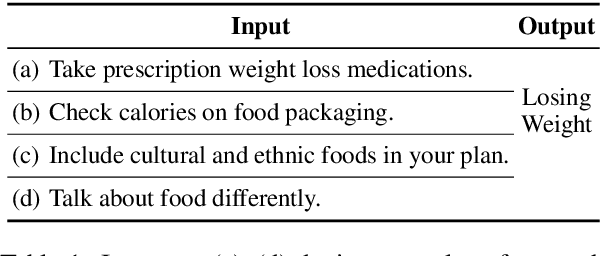
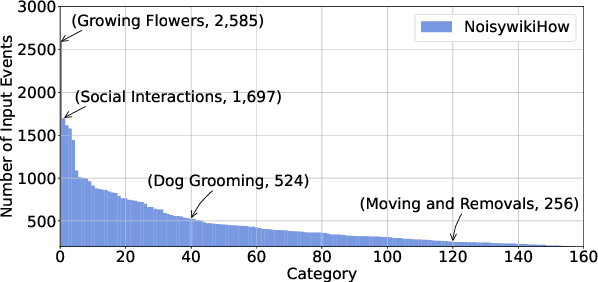
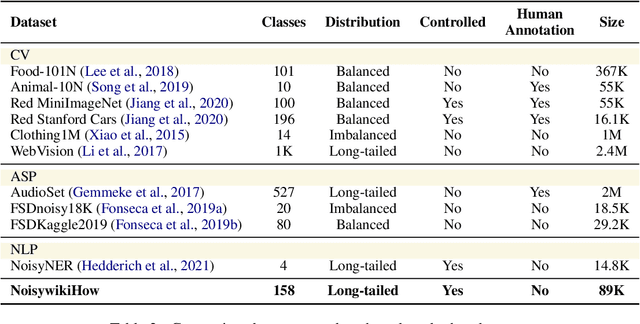
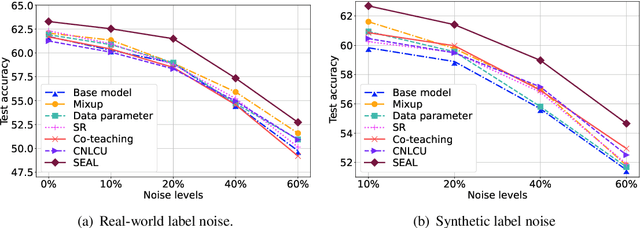
Large-scale datasets in the real world inevitably involve label noise. Deep models can gradually overfit noisy labels and thus degrade model generalization. To mitigate the effects of label noise, learning with noisy labels (LNL) methods are designed to achieve better generalization performance. Due to the lack of suitable datasets, previous studies have frequently employed synthetic label noise to mimic real-world label noise. However, synthetic noise is not instance-dependent, making this approximation not always effective in practice. Recent research has proposed benchmarks for learning with real-world noisy labels. However, the noise sources within may be single or fuzzy, making benchmarks different from data with heterogeneous label noises in the real world. To tackle these issues, we contribute NoisywikiHow, the largest NLP benchmark built with minimal supervision. Specifically, inspired by human cognition, we explicitly construct multiple sources of label noise to imitate human errors throughout the annotation, replicating real-world noise, whose corruption is affected by both ground-truth labels and instances. Moreover, we provide a variety of noise levels to support controlled experiments on noisy data, enabling us to evaluate LNL methods systematically and comprehensively. After that, we conduct extensive multi-dimensional experiments on a broad range of LNL methods, obtaining new and intriguing findings.
CCFL: Computationally Customized Federated Learning
Dec 28, 2022Federated learning (FL) is a method to train model with distributed data from numerous participants such as IoT devices. It inherently assumes a uniform capacity among participants. However, participants have diverse computational resources in practice due to different conditions such as different energy budgets or executing parallel unrelated tasks. It is necessary to reduce the computation overhead for participants with inefficient computational resources, otherwise they would be unable to finish the full training process. To address the computation heterogeneity, in this paper we propose a strategy for estimating local models without computationally intensive iterations. Based on it, we propose Computationally Customized Federated Learning (CCFL), which allows each participant to determine whether to perform conventional local training or model estimation in each round based on its current computational resources. Both theoretical analysis and exhaustive experiments indicate that CCFL has the same convergence rate as FedAvg without resource constraints. Furthermore, CCFL can be viewed of a computation-efficient extension of FedAvg that retains model performance while considerably reducing computation overhead.