 Add to Chrome
 Add to Firefox
 Add to Edge
Luna-TTS Family Technical Report
Aug 12, 2026
Modern text-to-speech (TTS) is dominated by autoregressive (AR) codec language models, whose left-to-right decoding brings latency that grows with utterance length, error accumulation along the committed prefix, and an artificial generation order imposed on the Residual Vector Quantization (RVQ) token grid. We propose Luna-TTS Family, diffusion-language-model-based TTS systems pretrained on 1 million hours of speech across Chinese, English, Japanese, and Korean. The family is built by progressive adaptation of a pretrained AR text LLM, from causal to bidirectional and finally to block-causal attention, and comprises two variants sharing a single tokenizer, data pipeline, and 0.6B backbone lineage. Luna-TTS is fully non-autoregressive: it generates the entire RVQ token grid in a fixed number of parallel refinement steps, with zero-shot voice cloning and speech editing arising natively as infilling. Luna-TTS Realtime, derived by continual training, is autoregressive over blocks of 32 codec frames (1.28s) while denoising each block in parallel; it supports KV-cached blockwise generation and incremental audio delivery, achieving an end-to-end RTF of 0.0240 and 41.6 ms local first-block latency under the warmed serving protocol. An annealed fine-tuning stage adds explicit control over emotion and non-verbal vocalizations (NVVs), and a reinforcement-learning stage applies GRPO with policy ratios computed over the realized denoising trajectory. On Seed-TTS-Eval, Luna-TTS achieves the best results on all four metrics among compared open-source and commercial systems (0.73 CER / 79.7 SIM on test-zh, 1.49 WER / 76.8 SIM on test-en); on the harder in-the-wild CV3-Eval, it posts the lowest Mandarin and English error rates in our comparison. Against leading commercial systems, it achieves the best results on most objective, model-based, and human-rated metrics for NVV and emotion control.

LayersReg: A Layer-by-Layer Progressive Regressor for Reliable Intraoperative 3D/2D Registration
Jun 25, 20263D/2D registration serves as a cornerstone technique in surgical navigation. Traditional iterative optimization algorithms suffer from low efficiency and high failure rates in intraoperative settings. Deep learning-based methods reformulate registration from iterative optimization to a regression problem that maps image appearance features to spatial pose, typically achieving improved real-time performance and accuracy. However, such learnable methods are confined to memory-driven retrieval of specific pose features rather than understanding the task of image alignment itself, which limits their generalization in complex scenarios. We propose LayersReg, a pioneering regression paradigm that endows the model with 3D anatomical awareness and searches for the correct pose in a progressive, layer-by-layer manner. Inspired by the iterative pose-searching optimization criterion of classical registration, LayersReg searches for correlations between the moving and fixed images in feature space, capturing the trend of pixel flow and thereby converging iteratively toward the correct spatial pose transformation. We further design a coupling of node-wise regression with the progressive registration framework to enhance the model's perception of spatial pose changes. Experimental results demonstrate that under large offsets and multimodality conditions, LayersReg achieves high accuracy on both X-ray/CT registration (0.68°, 1.41 mm) and slice localization (0.73°, 1.55 mm) tasks, outperforming existing state-of-the-art methods while meeting the intraoperative demands for precision and real-time capability.
Unsupervised Layer-Wise Dynamic Test Time Adaptation for LLMs
Feb 10, 2026Test-time adaptation (TTA) for large language models (LLMs) updates model parameters at inference time using signals available at deployment. This paper focuses on a common yet under-explored regime: unsupervised, sample-specific TTA, where the model adapts independently for each prompt using only the prompt itself, without gold answers or external supervision. Although appealing, naive unsupervised TTA with a fixed, handcrafted learning rate can be unstable: updates may overfit to prompt-specific statistics, drift from the desired answer distribution, and ultimately degrade generation quality. This failure mode is not surprising, as in this case TTA must adapt to a single prompt within only a few gradient steps, unlike standard training that averages updates over large datasets and long optimization horizons. Therefore, we propose layer-wise dynamic test-time adaptation, a framework which explicitly modulates TTA strength as a function of prompt representation, LLM structure and adaptation step. In our setting, TTA updates only LoRA parameters, and a lightweight hypernetwork predicts per-layer, per-step learning-rate multipliers, enabling fine-grained control. Experiments across various datasets and LLMs consistently show that our method substantially strengthens TTA by learning effective scaling patterns over adaptation steps and transformer layer projections, improving stability while delivering better performance.
PEMNet: Towards Autonomous and Enhanced Environment-Aware Mobile Networks
Jan 16, 2026With 5G deployment and the evolution toward 6G, mobile networks must make decisions in highly dynamic environments under strict latency, energy, and spectrum constraints. Achieving this goal, however, depends on prior knowledge of spatial-temporal variations in wireless channels and traffic demands. This motivates a joint, site-specific representation of radio propagation and user demand that is queryable at low online overhead. In this work, we propose the perception embedding map (PEM), a localized framework that embeds fine-grained channel statistics together with grid-level spatial-temporal traffic patterns over a base station's coverage. PEM is built from standard-compliant measurements -- such as measurement report and scheduling/quality-of-service logs -- so it can be deployed and maintained at scale with low cost. Integrated into PEM, this joint knowledge supports enhanced environment-aware optimization across PHY, MAC, and network layers while substantially reducing training overhead and signaling. Compared with existing site-specific channel maps and digital-twin replicas, PEM distinctively emphasizes (i) joint channel-traffic embedding, which is essential for network optimization, and (ii) practical construction using standard measurements, enabling network autonomy while striking a favorable fidelity-cost balance.
When Bayesian Tensor Completion Meets Multioutput Gaussian Processes: Functional Universality and Rank Learning
Dec 25, 2025Functional tensor decomposition can analyze multi-dimensional data with real-valued indices, paving the path for applications in machine learning and signal processing. A limitation of existing approaches is the assumption that the tensor rank-a critical parameter governing model complexity-is known. However, determining the optimal rank is a non-deterministic polynomial-time hard (NP-hard) task and there is a limited understanding regarding the expressive power of functional low-rank tensor models for continuous signals. We propose a rank-revealing functional Bayesian tensor completion (RR-FBTC) method. Modeling the latent functions through carefully designed multioutput Gaussian processes, RR-FBTC handles tensors with real-valued indices while enabling automatic tensor rank determination during the inference process. We establish the universal approximation property of the model for continuous multi-dimensional signals, demonstrating its expressive power in a concise format. To learn this model, we employ the variational inference framework and derive an efficient algorithm with closed-form updates. Experiments on both synthetic and real-world datasets demonstrate the effectiveness and superiority of the RR-FBTC over state-of-the-art approaches. The code is available at https://github.com/OceanSTARLab/RR-FBTC.
AsyncDiff: Asynchronous Timestep Conditioning for Enhanced Text-to-Image Diffusion Inference
Dec 21, 2025Text-to-image diffusion inference typically follows synchronized schedules, where the numerical integrator advances the latent state to the same timestep at which the denoiser is conditioned. We propose an asynchronous inference mechanism that decouples these two, allowing the denoiser to be conditioned at a different, learned timestep while keeping image update schedule unchanged. A lightweight timestep prediction module (TPM), trained with Group Relative Policy Optimization (GRPO), selects a more feasible conditioning timestep based on the current state, effectively choosing a desired noise level to control image detail and textural richness. At deployment, a scaling hyper-parameter can be used to interpolate between the original and de-synchronized timesteps, enabling conservative or aggressive adjustments. To keep the study computationally affordable, we cap the inference at 15 steps for SD3.5 and 10 steps for Flux. Evaluated on Stable Diffusion 3.5 Medium and Flux.1-dev across MS-COCO 2014 and T2I-CompBench datasets, our method optimizes a composite reward that averages Image Reward, HPSv2, CLIP Score and Pick Score, and shows consistent improvement.
Attentional Graph Meta-Learning for Indoor Localization Using Extremely Sparse Fingerprints
Apr 07, 2025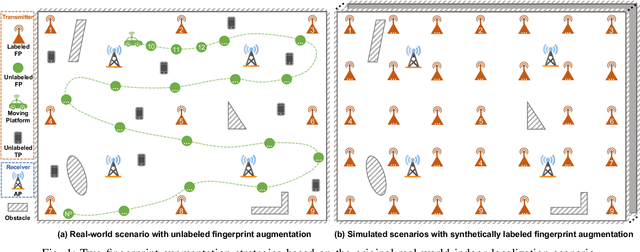
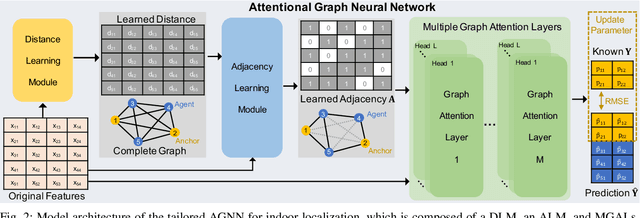
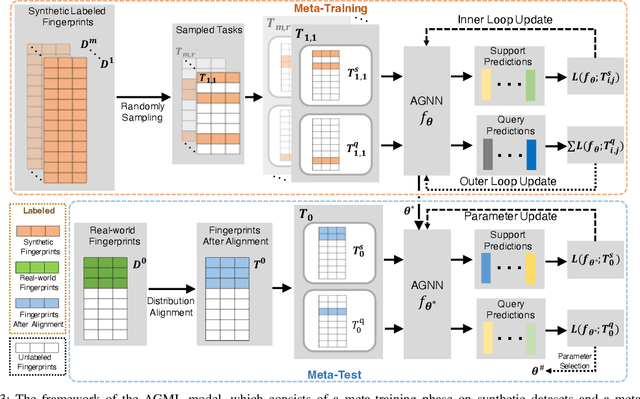
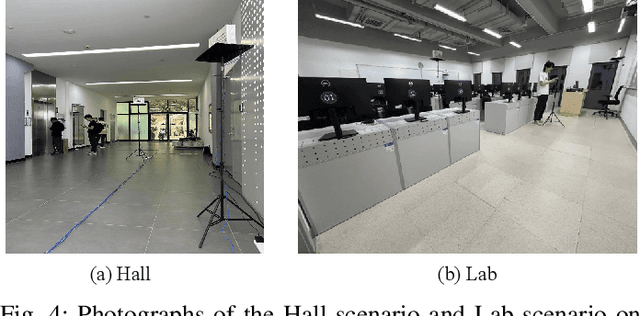
Fingerprint-based indoor localization is often labor-intensive due to the need for dense grids and repeated measurements across time and space. Maintaining high localization accuracy with extremely sparse fingerprints remains a persistent challenge. Existing benchmark methods primarily rely on the measured fingerprints, while neglecting valuable spatial and environmental characteristics. In this paper, we propose a systematic integration of an Attentional Graph Neural Network (AGNN) model, capable of learning spatial adjacency relationships and aggregating information from neighboring fingerprints, and a meta-learning framework that utilizes datasets with similar environmental characteristics to enhance model training. To minimize the labor required for fingerprint collection, we introduce two novel data augmentation strategies: 1) unlabeled fingerprint augmentation using moving platforms, which enables the semi-supervised AGNN model to incorporate information from unlabeled fingerprints, and 2) synthetic labeled fingerprint augmentation through environmental digital twins, which enhances the meta-learning framework through a practical distribution alignment, which can minimize the feature discrepancy between synthetic and real-world fingerprints effectively. By integrating these novel modules, we propose the Attentional Graph Meta-Learning (AGML) model. This novel model combines the strengths of the AGNN model and the meta-learning framework to address the challenges posed by extremely sparse fingerprints. To validate our approach, we collected multiple datasets from both consumer-grade WiFi devices and professional equipment across diverse environments. Extensive experiments conducted on both synthetic and real-world datasets demonstrate that the AGML model-based localization method consistently outperforms all baseline methods using sparse fingerprints across all evaluated metrics.
Hybrid Data-Driven SSM for Interpretable and Label-Free mmWave Channel Prediction
Nov 18, 2024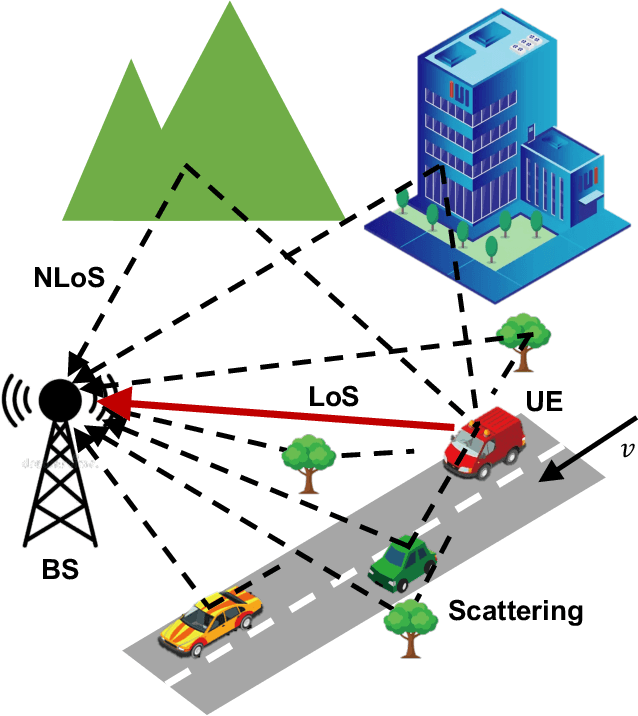
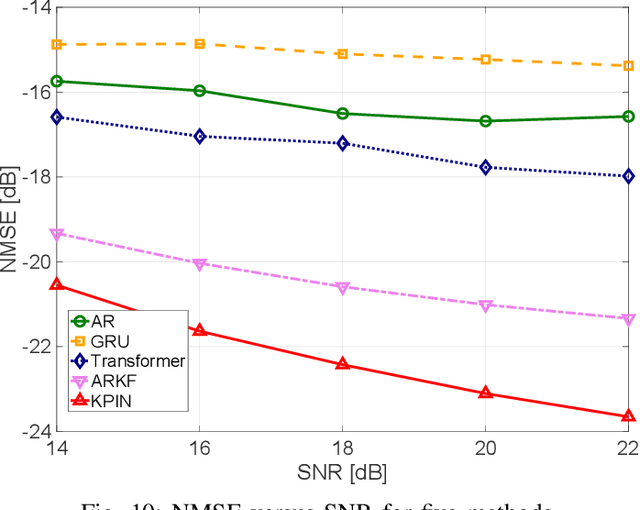
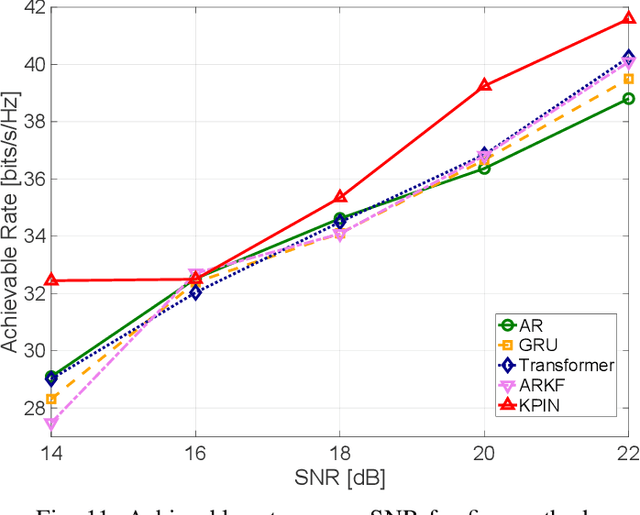
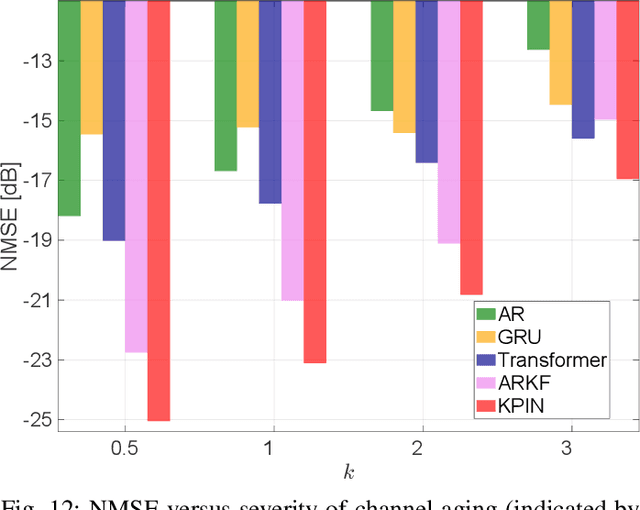
Accurate prediction of mmWave time-varying channels is essential for mitigating the issue of channel aging in complex scenarios owing to high user mobility. Existing channel prediction methods have limitations: classical model-based methods often struggle to track highly nonlinear channel dynamics due to limited expert knowledge, while emerging data-driven methods typically require substantial labeled data for effective training and often lack interpretability. To address these issues, this paper proposes a novel hybrid method that integrates a data-driven neural network into a conventional model-based workflow based on a state-space model (SSM), implicitly tracking complex channel dynamics from data without requiring precise expert knowledge. Additionally, a novel unsupervised learning strategy is developed to train the embedded neural network solely with unlabeled data. Theoretical analyses and ablation studies are conducted to interpret the enhanced benefits gained from the hybrid integration. Numerical simulations based on the 3GPP mmWave channel model corroborate the superior prediction accuracy of the proposed method, compared to state-of-the-art methods that are either purely model-based or data-driven. Furthermore, extensive experiments validate its robustness against various challenging factors, including among others severe channel variations and high noise levels.
Preventing Model Collapse in Gaussian Process Latent Variable Models
Apr 02, 2024Gaussian process latent variable models (GPLVMs) are a versatile family of unsupervised learning models, commonly used for dimensionality reduction. However, common challenges in modeling data with GPLVMs include inadequate kernel flexibility and improper selection of the projection noise, which leads to a type of model collapse characterized primarily by vague latent representations that do not reflect the underlying structure of the data. This paper addresses these issues by, first, theoretically examining the impact of the projection variance on model collapse through the lens of a linear GPLVM. Second, we address the problem of model collapse due to inadequate kernel flexibility by integrating the spectral mixture (SM) kernel and a differentiable random Fourier feature (RFF) kernel approximation, which ensures computational scalability and efficiency through off-the-shelf automatic differentiation tools for learning the kernel hyperparameters, projection variance, and latent representations within the variational inference framework. The proposed GPLVM, named advisedRFLVM, is evaluated across diverse datasets and consistently outperforms various salient competing models, including state-of-the-art variational autoencoders (VAEs) and GPLVM variants, in terms of informative latent representations and missing data imputation.
Regularization-Based Efficient Continual Learning in Deep State-Space Models
Mar 15, 2024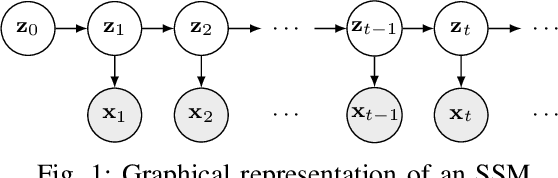
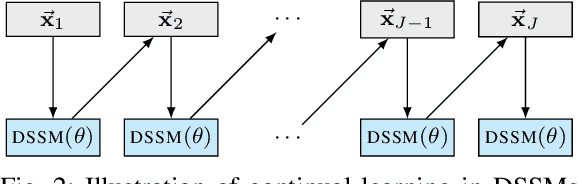
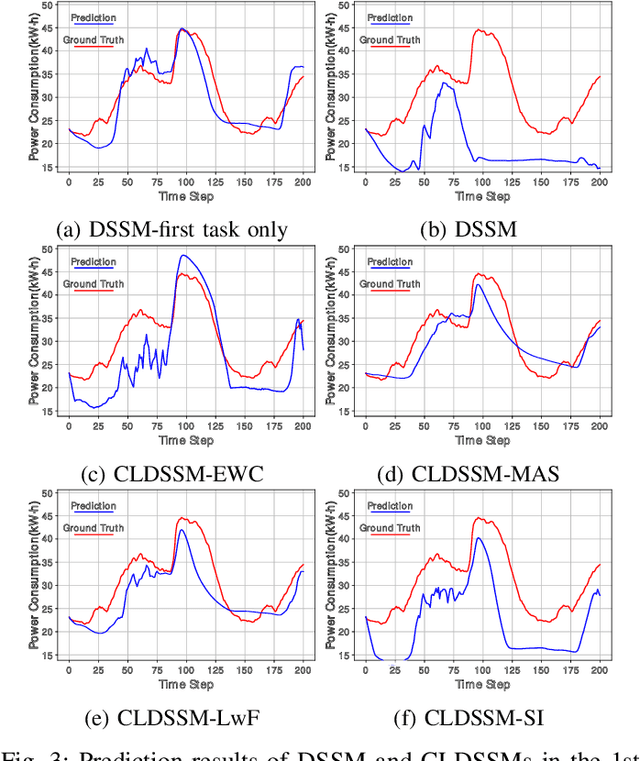
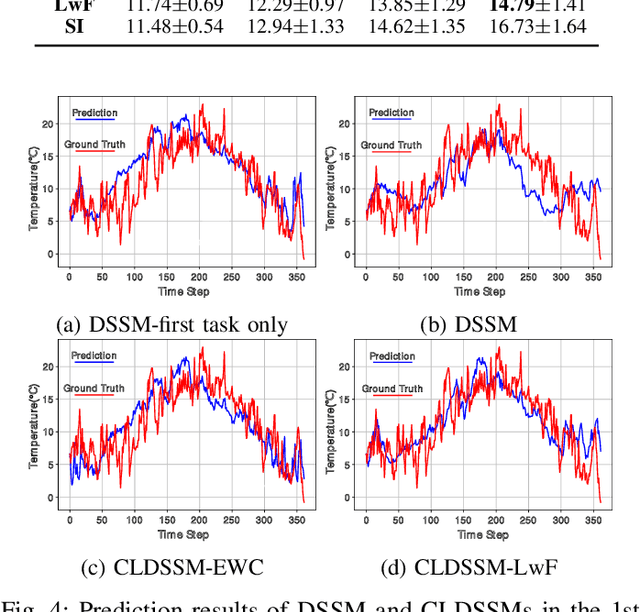
Deep state-space models (DSSMs) have gained popularity in recent years due to their potent modeling capacity for dynamic systems. However, existing DSSM works are limited to single-task modeling, which requires retraining with historical task data upon revisiting a forepassed task. To address this limitation, we propose continual learning DSSMs (CLDSSMs), which are capable of adapting to evolving tasks without catastrophic forgetting. Our proposed CLDSSMs integrate mainstream regularization-based continual learning (CL) methods, ensuring efficient updates with constant computational and memory costs for modeling multiple dynamic systems. We also conduct a comprehensive cost analysis of each CL method applied to the respective CLDSSMs, and demonstrate the efficacy of CLDSSMs through experiments on real-world datasets. The results corroborate that while various competing CL methods exhibit different merits, the proposed CLDSSMs consistently outperform traditional DSSMs in terms of effectively addressing catastrophic forgetting, enabling swift and accurate parameter transfer to new tasks.