 Add to Chrome
 Add to Firefox
 Add to Edge
VIP: Visual-guided Prompt Evolution for Efficient Dense Vision-Language Inference
May 13, 2026
Pursuing training-free open-vocabulary semantic segmentation in an efficient and generalizable manner remains challenging due to the deep-seated spatial bias in CLIP. To overcome the limitations of existing solutions, this work moves beyond the CLIP-based paradigm and harnesses the recent spatially-aware dino$.$txt framework to facilitate more efficient and high-quality dense prediction. While dino$.$txt exhibits robust spatial awareness, we find that the semantic ambiguity of text queries gives rise to severe mismatch within its dense cross-modal interactions. To address this, we introduce Visual-guided Prompt evolution (VIP) to rectify the semantic expressiveness of text queries in dino$.$txt, unleashing its potential for fine-grained object perception. Towards this end, VIP integrates alias expansion with a visual-guided distillation mechanism to mine valuable semantic cues, which are robustly aggregated in a saliency-aware manner to yield a high-fidelity prediction. Extensive evaluations demonstrate that VIP: 1. surpasses the top-leading methods by 1.4%-8.4% average mIoU, 2. generalizes well to diverse challenging domains, and 3. requires marginal inference time and memory overhead.

TreeGaussian: Tree-Guided Cascaded Contrastive Learning for Hierarchical Consistent 3D Gaussian Scene Segmentation and Understanding
Mar 31, 20263D Gaussian Splatting (3DGS) has emerged as a real-time, differentiable representation for neural scene understanding. However, existing 3DGS-based methods struggle to represent hierarchical 3D semantic structures and capture whole-part relationships in complex scenes. Moreover, dense pairwise comparisons and inconsistent hierarchical labels from 2D priors hinder feature learning, resulting in suboptimal segmentation. To address these limitations, we introduce TreeGaussian, a tree-guided cascaded contrastive learning framework that explicitly models hierarchical semantic relationships and reduces redundancy in contrastive supervision. By constructing a multi-level object tree, TreeGaussian enables structured learning across object-part hierarchies. In addition, we propose a two-stage cascaded contrastive learning strategy that progressively refines feature representations from global to local, mitigating saturation and stabilizing training. A Consistent Segmentation Detection (CSD) mechanism and a graph-based denoising module are further introduced to align segmentation modes across views while suppressing unstable Gaussian points, enhancing segmentation consistency and quality. Extensive experiments, including open-vocabulary 3D object selection, 3D point cloud understanding, and ablation studies, demonstrate the effectiveness and robustness of our approach.
Probe-to-Grasp Manipulation Using Self-Sensing Pneumatic Variable-Stiffness Joints
Mar 29, 2026Grasping deformable objects with varying stiffness remains a significant challenge in robotics. Estimating the local stiffness of a target object is important for determining an optimal grasp pose that enables stable pickup without damaging the object. This paper presents a probe-to-grasp manipulation framework for estimating the relative stiffness of objects using a passive soft-rigid two-finger hybrid gripper equipped with self-sensing pneumatic variable-stiffness joints. Each finger of the gripper consists of two rigid links connected by a soft pneumatic ring placed at the joint, enabling both compliant interaction and controllable joint stiffness via internal pressurization. By measuring the pressure inside the pneumatic ring, we can estimate the interaction force during contact. Building on this, we propose a practical probing strategy to infer relative object stiffness by correlating the estimated normal force with known gripper closing displacement. We validate the self-sensing model through stiffness characterization experiments across bending angles and pressure ranges, and demonstrate stiffness-aware probing-and-grasping in real-life applications: selecting grasp locations on fruits with spatially varying stiffness. The proposed system offers a minimal, low-cost sensing approach for stiffness-aware soft manipulation while retaining probing and grasping capability.
Max-Min Neural Network Operators For Approximation of Multivariate Functions
Jan 12, 2026In this paper, we develop a multivariate framework for approximation by max-min neural network operators. Building on the recent advances in approximation theory by neural network operators, particularly, the univariate max-min operators, we propose and analyze new multivariate operators activated by sigmoidal functions. We establish pointwise and uniform convergence theorems and derive quantitative estimates for the order of approximation via modulus of continuity and multivariate generalized absolute moment. Our results demonstrate that multivariate max-min structure of operators, besides their algebraic elegance, provide efficient and stable approximation tools in both theoretical and applied settings.
TEA: Temporal Adaptive Satellite Image Semantic Segmentation
Jan 08, 2026Crop mapping based on satellite images time-series (SITS) holds substantial economic value in agricultural production settings, in which parcel segmentation is an essential step. Existing approaches have achieved notable advancements in SITS segmentation with predetermined sequence lengths. However, we found that these approaches overlooked the generalization capability of models across scenarios with varying temporal length, leading to markedly poor segmentation results in such cases. To address this issue, we propose TEA, a TEmporal Adaptive SITS semantic segmentation method to enhance the model's resilience under varying sequence lengths. We introduce a teacher model that encapsulates the global sequence knowledge to guide a student model with adaptive temporal input lengths. Specifically, teacher shapes the student's feature space via intermediate embedding, prototypes and soft label perspectives to realize knowledge transfer, while dynamically aggregating student model to mitigate knowledge forgetting. Finally, we introduce full-sequence reconstruction as an auxiliary task to further enhance the quality of representations across inputs of varying temporal lengths. Through extensive experiments, we demonstrate that our method brings remarkable improvements across inputs of different temporal lengths on common benchmarks. Our code will be publicly available.
RAGNet: Large-scale Reasoning-based Affordance Segmentation Benchmark towards General Grasping
Jul 31, 2025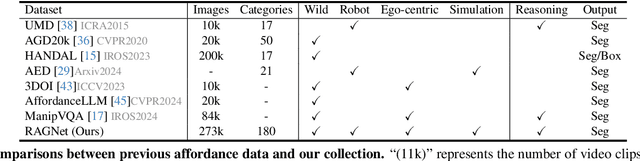
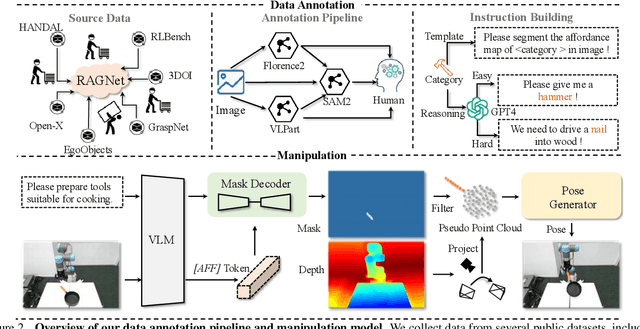
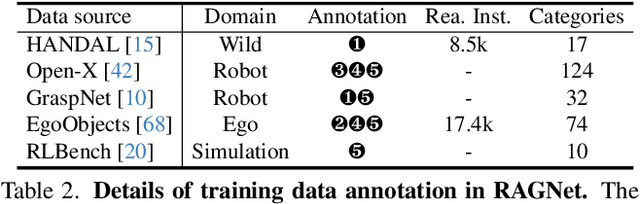
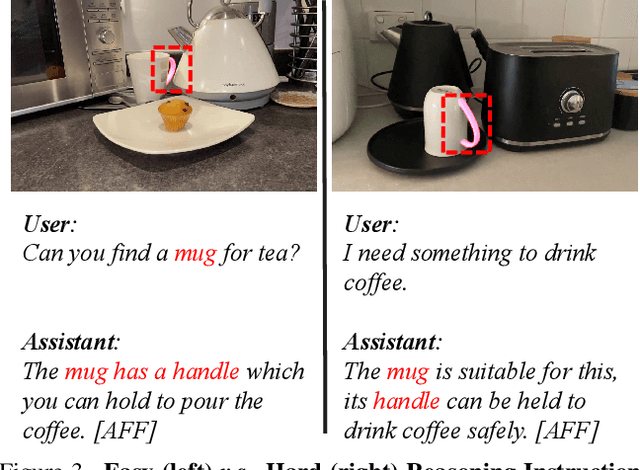
General robotic grasping systems require accurate object affordance perception in diverse open-world scenarios following human instructions. However, current studies suffer from the problem of lacking reasoning-based large-scale affordance prediction data, leading to considerable concern about open-world effectiveness. To address this limitation, we build a large-scale grasping-oriented affordance segmentation benchmark with human-like instructions, named RAGNet. It contains 273k images, 180 categories, and 26k reasoning instructions. The images cover diverse embodied data domains, such as wild, robot, ego-centric, and even simulation data. They are carefully annotated with an affordance map, while the difficulty of language instructions is largely increased by removing their category name and only providing functional descriptions. Furthermore, we propose a comprehensive affordance-based grasping framework, named AffordanceNet, which consists of a VLM pre-trained on our massive affordance data and a grasping network that conditions an affordance map to grasp the target. Extensive experiments on affordance segmentation benchmarks and real-robot manipulation tasks show that our model has a powerful open-world generalization ability. Our data and code is available at https://github.com/wudongming97/AffordanceNet.
Semantic-decoupled Spatial Partition Guided Point-supervised Oriented Object Detection
Jun 12, 2025Recent remote sensing tech advancements drive imagery growth, making oriented object detection rapid development, yet hindered by labor-intensive annotation for high-density scenes. Oriented object detection with point supervision offers a cost-effective solution for densely packed scenes in remote sensing, yet existing methods suffer from inadequate sample assignment and instance confusion due to rigid rule-based designs. To address this, we propose SSP (Semantic-decoupled Spatial Partition), a unified framework that synergizes rule-driven prior injection and data-driven label purification. Specifically, SSP introduces two core innovations: 1) Pixel-level Spatial Partition-based Sample Assignment, which compactly estimates the upper and lower bounds of object scales and mines high-quality positive samples and hard negative samples through spatial partitioning of pixel maps. 2) Semantic Spatial Partition-based Box Extraction, which derives instances from spatial partitions modulated by semantic maps and reliably converts them into bounding boxes to form pseudo-labels for supervising the learning of downstream detectors. Experiments on DOTA-v1.0 and others demonstrate SSP\' s superiority: it achieves 45.78% mAP under point supervision, outperforming SOTA method PointOBB-v2 by 4.10%. Furthermore, when integrated with ORCNN and ReDet architectures, the SSP framework achieves mAP values of 47.86% and 48.50%, respectively. The code is available at https://github.com/antxinyuan/ssp.
TopoPoint: Enhance Topology Reasoning via Endpoint Detection in Autonomous Driving
May 23, 2025Topology reasoning, which unifies perception and structured reasoning, plays a vital role in understanding intersections for autonomous driving. However, its performance heavily relies on the accuracy of lane detection, particularly at connected lane endpoints. Existing methods often suffer from lane endpoints deviation, leading to incorrect topology construction. To address this issue, we propose TopoPoint, a novel framework that explicitly detects lane endpoints and jointly reasons over endpoints and lanes for robust topology reasoning. During training, we independently initialize point and lane query, and proposed Point-Lane Merge Self-Attention to enhance global context sharing through incorporating geometric distances between points and lanes as an attention mask . We further design Point-Lane Graph Convolutional Network to enable mutual feature aggregation between point and lane query. During inference, we introduce Point-Lane Geometry Matching algorithm that computes distances between detected points and lanes to refine lane endpoints, effectively mitigating endpoint deviation. Extensive experiments on the OpenLane-V2 benchmark demonstrate that TopoPoint achieves state-of-the-art performance in topology reasoning (48.8 on OLS). Additionally, we propose DET$_p$ to evaluate endpoint detection, under which our method significantly outperforms existing approaches (52.6 v.s. 45.2 on DET$_p$). The code is released at https://github.com/Franpin/TopoPoint.
Exact: Exploring Space-Time Perceptive Clues for Weakly Supervised Satellite Image Time Series Semantic Segmentation
Dec 05, 2024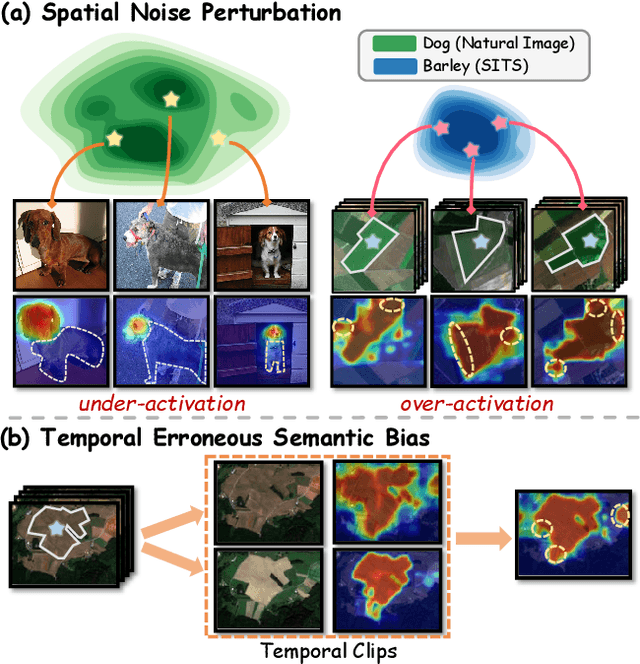
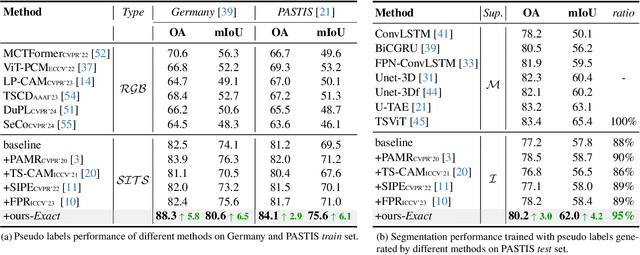
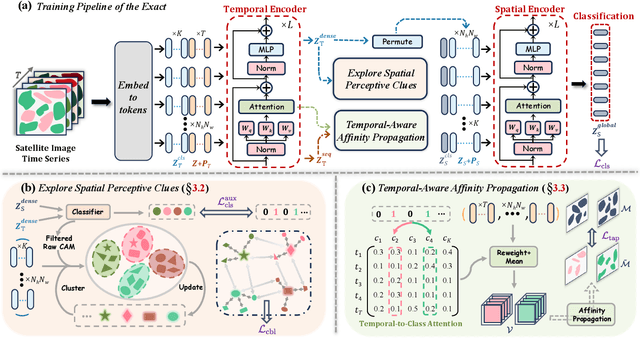
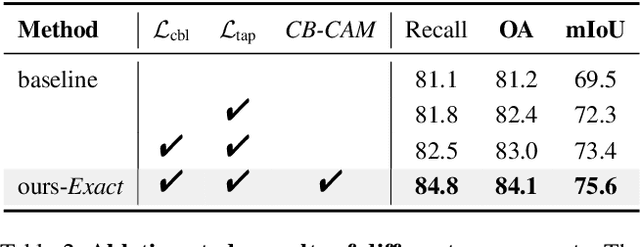
Automated crop mapping through Satellite Image Time Series (SITS) has emerged as a crucial avenue for agricultural monitoring and management. However, due to the low resolution and unclear parcel boundaries, annotating pixel-level masks is exceptionally complex and time-consuming in SITS. This paper embraces the weakly supervised paradigm (i.e., only image-level categories available) to liberate the crop mapping task from the exhaustive annotation burden. The unique characteristics of SITS give rise to several challenges in weakly supervised learning: (1) noise perturbation from spatially neighboring regions, and (2) erroneous semantic bias from anomalous temporal periods. To address the above difficulties, we propose a novel method, termed exploring space-time perceptive clues (Exact). First, we introduce a set of spatial clues to explicitly capture the representative patterns of different crops from the most class-relative regions. Besides, we leverage the temporal-to-class interaction of the model to emphasize the contributions of pivotal clips, thereby enhancing the model perception for crop regions. Build upon the space-time perceptive clues, we derive the clue-based CAMs to effectively supervise the SITS segmentation network. Our method demonstrates impressive performance on various SITS benchmarks. Remarkably, the segmentation network trained on Exact-generated masks achieves 95% of its fully supervised performance, showing the bright promise of weakly supervised paradigm in crop mapping scenario. Our code will be publicly available.
TopoLogic: An Interpretable Pipeline for Lane Topology Reasoning on Driving Scenes
May 23, 2024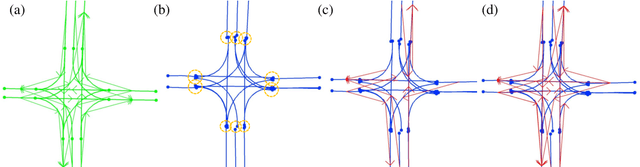

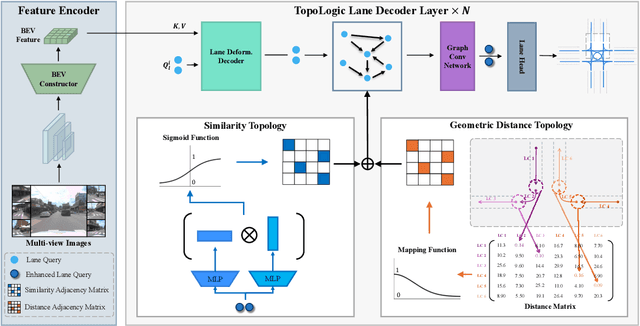
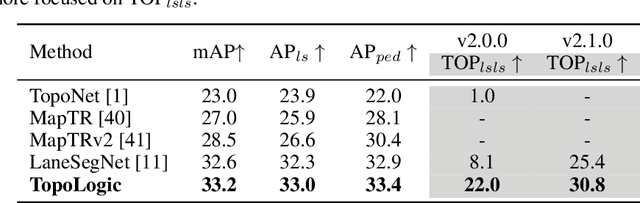
As an emerging task that integrates perception and reasoning, topology reasoning in autonomous driving scenes has recently garnered widespread attention. However, existing work often emphasizes "perception over reasoning": they typically boost reasoning performance by enhancing the perception of lanes and directly adopt MLP to learn lane topology from lane query. This paradigm overlooks the geometric features intrinsic to the lanes themselves and are prone to being influenced by inherent endpoint shifts in lane detection. To tackle this issue, we propose an interpretable method for lane topology reasoning based on lane geometric distance and lane query similarity, named TopoLogic. This method mitigates the impact of endpoint shifts in geometric space, and introduces explicit similarity calculation in semantic space as a complement. By integrating results from both spaces, our methods provides more comprehensive information for lane topology. Ultimately, our approach significantly outperforms the existing state-of-the-art methods on the mainstream benchmark OpenLane-V2 (23.9 v.s. 10.9 in TOP$_{ll}$ and 44.1 v.s. 39.8 in OLS on subset_A. Additionally, our proposed geometric distance topology reasoning method can be incorporated into well-trained models without re-training, significantly boost the performance of lane topology reasoning. The code is released at https://github.com/Franpin/TopoLogic.