 Add to Chrome
 Add to Firefox
 Add to Edge
MassSpecGym: A benchmark for the discovery and identification of molecules
Oct 30, 2024
The discovery and identification of molecules in biological and environmental samples is crucial for advancing biomedical and chemical sciences. Tandem mass spectrometry (MS/MS) is the leading technique for high-throughput elucidation of molecular structures. However, decoding a molecular structure from its mass spectrum is exceptionally challenging, even when performed by human experts. As a result, the vast majority of acquired MS/MS spectra remain uninterpreted, thereby limiting our understanding of the underlying (bio)chemical processes. Despite decades of progress in machine learning applications for predicting molecular structures from MS/MS spectra, the development of new methods is severely hindered by the lack of standard datasets and evaluation protocols. To address this problem, we propose MassSpecGym -- the first comprehensive benchmark for the discovery and identification of molecules from MS/MS data. Our benchmark comprises the largest publicly available collection of high-quality labeled MS/MS spectra and defines three MS/MS annotation challenges: \textit{de novo} molecular structure generation, molecule retrieval, and spectrum simulation. It includes new evaluation metrics and a generalization-demanding data split, therefore standardizing the MS/MS annotation tasks and rendering the problem accessible to the broad machine learning community. MassSpecGym is publicly available at \url{https://github.com/pluskal-lab/MassSpecGym}.

RSNet: A Light Framework for The Detection of Multi-scale Remote Sensing Targets
Oct 30, 2024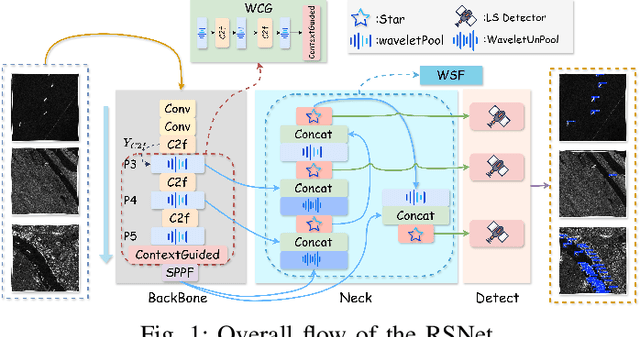
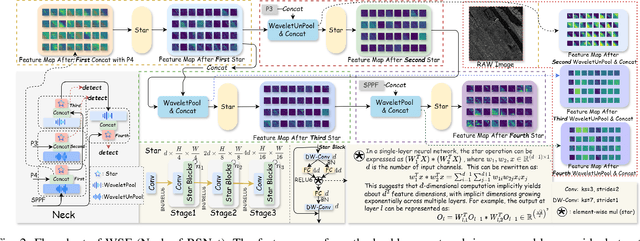
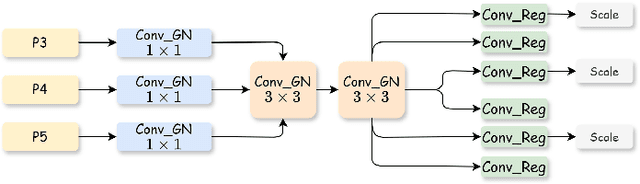
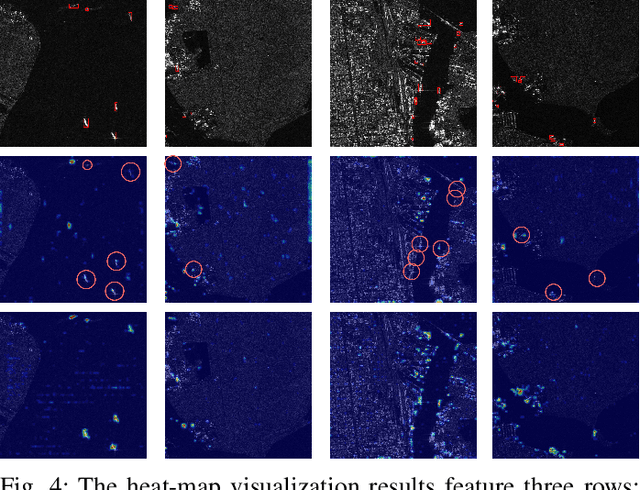
Recent developments in synthetic aperture radar (SAR) ship detection have seen deep learning techniques achieve remarkable progress in accuracy and speed. However, the detection of small targets against complex backgrounds remains a significant challenge. To tackle these difficulties, this letter presents RSNet, a lightweight framework aimed at enhancing ship detection capabilities in SAR imagery. RSNet features the Waveletpool-ContextGuided (WCG) backbone for enhanced accuracy with fewer parameters, and the Waveletpool-StarFusion (WSF) head for efficient parameter reduction. Additionally, a Lightweight-Shared (LS) module minimizes the detection head's parameter load. Experiments on the SAR Ship Detection Dataset (SSDD) and High-Resolution SAR Image Dataset (HRSID) demonstrate that RSNet achieves a strong balance between lightweight design and detection performance, surpassing many state-of-the-art detectors, reaching 72.5\% and 67.6\% in \textbf{\(\mathbf{mAP_{.50:95}}\) }respectively with 1.49M parameters. Our code will be released soon.
DualMAR: Medical-Augmented Representation from Dual-Expertise Perspectives
Oct 25, 2024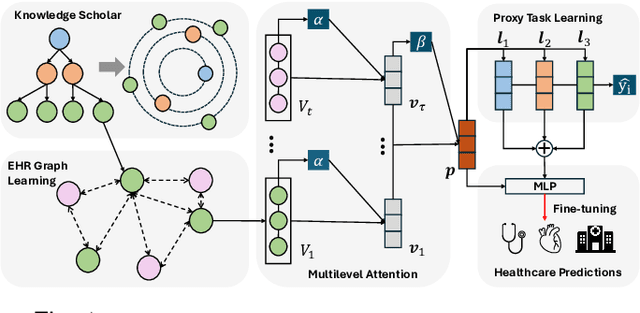
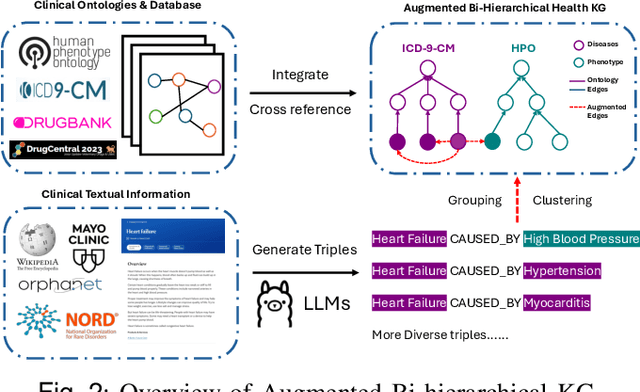
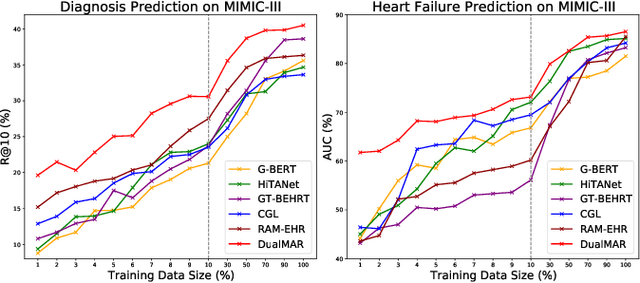
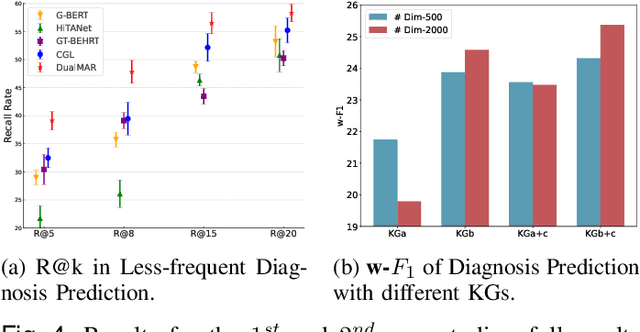
Electronic Health Records (EHR) has revolutionized healthcare data management and prediction in the field of AI and machine learning. Accurate predictions of diagnosis and medications significantly mitigate health risks and provide guidance for preventive care. However, EHR driven models often have limited scope on understanding medical-domain knowledge and mostly rely on simple-and-sole ontologies. In addition, due to the missing features and incomplete disease coverage of EHR, most studies only focus on basic analysis on conditions and medication. We propose DualMAR, a framework that enhances EHR prediction tasks through both individual observation data and public knowledge bases. First, we construct a bi-hierarchical Diagnosis Knowledge Graph (KG) using verified public clinical ontologies and augment this KG via Large Language Models (LLMs); Second, we design a new proxy-task learning on lab results in EHR for pretraining, which further enhance KG representation and patient embeddings. By retrieving radial and angular coordinates upon polar space, DualMAR enables accurate predictions based on rich hierarchical and semantic embeddings from KG. Experiments also demonstrate that DualMAR outperforms state-of-the-art models, validating its effectiveness in EHR prediction and KG integration in medical domains.
Deep Learning for Weather Forecasting: A CNN-LSTM Hybrid Model for Predicting Historical Temperature Data
Oct 19, 2024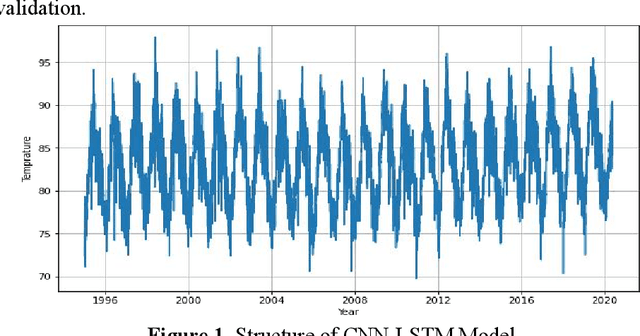
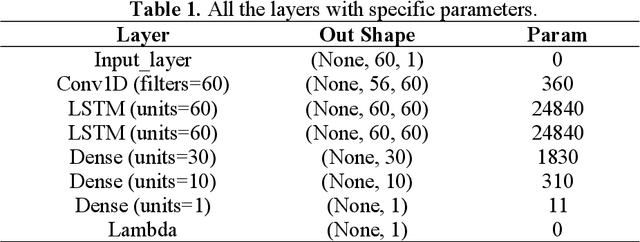
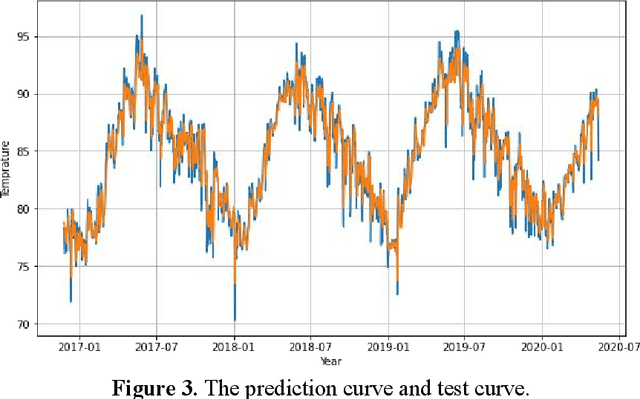
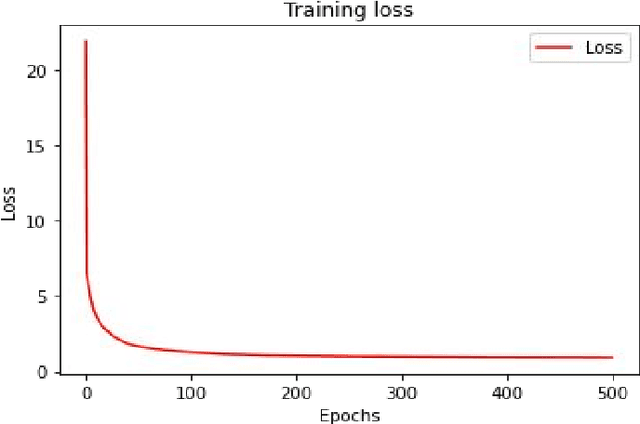
As global climate change intensifies, accurate weather forecasting has become increasingly important, affecting agriculture, energy management, environmental protection, and daily life. This study introduces a hybrid model combining Convolutional Neural Networks (CNNs) and Long Short-Term Memory (LSTM) networks to predict historical temperature data. CNNs are utilized for spatial feature extraction, while LSTMs handle temporal dependencies, resulting in significantly improved prediction accuracy and stability. By using Mean Absolute Error (MAE) as the loss function, the model demonstrates excellent performance in processing complex meteorological data, addressing challenges such as missing data and high-dimensionality. The results show a strong alignment between the prediction curve and test data, validating the model's potential in climate prediction. This study offers valuable insights for fields such as agriculture, energy management, and urban planning, and lays the groundwork for future applications in weather forecasting under the context of global climate change.
SudoLM: Learning Access Control of Parametric Knowledge with Authorization Alignment
Oct 18, 2024Existing preference alignment is a one-size-fits-all alignment mechanism, where the part of the large language model (LLM) parametric knowledge with non-preferred features is uniformly blocked to all the users. However, this part of knowledge can be useful to advanced users whose expertise qualifies them to handle these information. The one-size-fits-all alignment mechanism undermines LLM's utility for these qualified users. To address this problem, we propose SudoLM, a framework that lets LLMs learn access control over specific parametric knowledge for users with different credentials via authorization alignment. SudoLM allows authorized users to unlock their access to all the parametric knowledge with an assigned SUDO key while blocking access to non-qualified users. Experiments on two application scenarios demonstrate that SudoLM effectively controls the user's access to the parametric knowledge and maintains its general utility.
Context-Enhanced Multi-View Trajectory Representation Learning: Bridging the Gap through Self-Supervised Models
Oct 17, 2024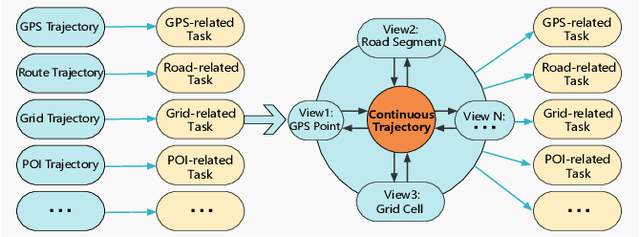
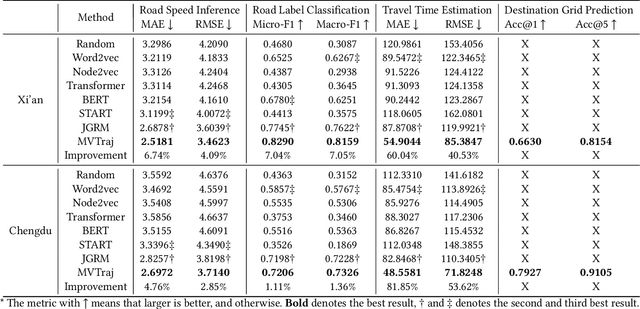
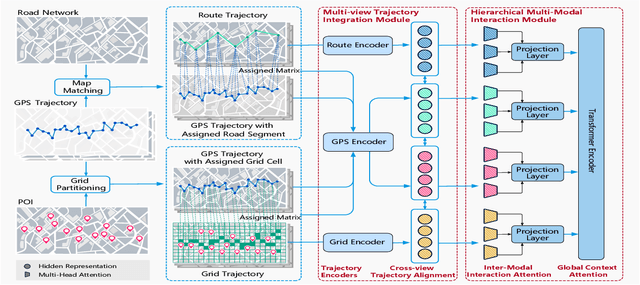

Modeling trajectory data with generic-purpose dense representations has become a prevalent paradigm for various downstream applications, such as trajectory classification, travel time estimation and similarity computation. However, existing methods typically rely on trajectories from a single spatial view, limiting their ability to capture the rich contextual information that is crucial for gaining deeper insights into movement patterns across different geospatial contexts. To this end, we propose MVTraj, a novel multi-view modeling method for trajectory representation learning. MVTraj integrates diverse contextual knowledge, from GPS to road network and points-of-interest to provide a more comprehensive understanding of trajectory data. To align the learning process across multiple views, we utilize GPS trajectories as a bridge and employ self-supervised pretext tasks to capture and distinguish movement patterns across different spatial views. Following this, we treat trajectories from different views as distinct modalities and apply a hierarchical cross-modal interaction module to fuse the representations, thereby enriching the knowledge derived from multiple sources. Extensive experiments on real-world datasets demonstrate that MVTraj significantly outperforms existing baselines in tasks associated with various spatial views, validating its effectiveness and practical utility in spatio-temporal modeling.
Simultaneous Computation and Memory Efficient Zeroth-Order Optimizer for Fine-Tuning Large Language Models
Oct 13, 2024
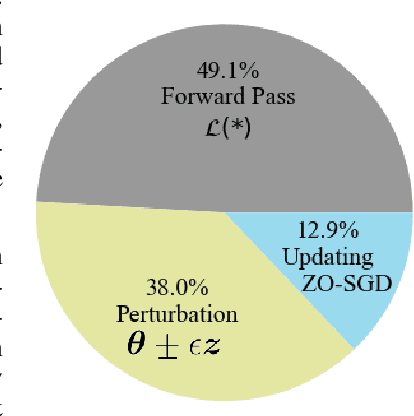
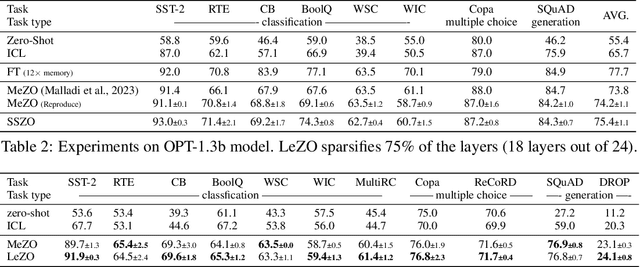
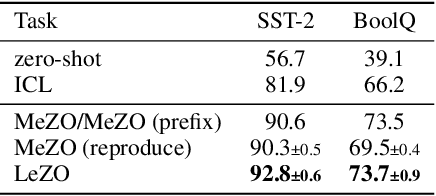
Fine-tuning is powerful for adapting large language models to downstream tasks, but it often results in huge memory usages. A promising approach to mitigate this is using Zeroth-Order (ZO) optimization, which estimates gradients to replace First-Order (FO) gradient calculations, albeit with longer training time due to its stochastic nature. By revisiting the Memory-efficient ZO (MeZO) optimizer, we discover that the full-parameter perturbation and updating processes consume over 50% of its overall fine-tuning time cost. Based on these observations, we introduce a novel layer-wise sparse computation and memory efficient ZO optimizer, named LeZO. LeZO treats layers as fundamental units for sparsification and dynamically perturbs different parameter subsets in each step to achieve full-parameter fine-tuning. LeZO incorporates layer-wise parameter sparsity in the process of simultaneous perturbation stochastic approximation (SPSA) and ZO stochastic gradient descent (ZO-SGD). It achieves accelerated computation during perturbation and updating processes without additional memory overhead. We conduct extensive experiments with the OPT model family on the SuperGLUE benchmark and two generative tasks. The experiments show that LeZO accelerates training without compromising the performance of ZO optimization. Specifically, it achieves over 3x speedup compared to MeZO on the SST-2, BoolQ, and Copa tasks.
Unraveling Cross-Modality Knowledge Conflicts in Large Vision-Language Models
Oct 11, 2024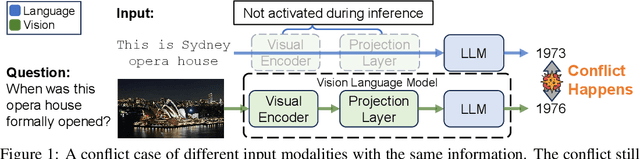
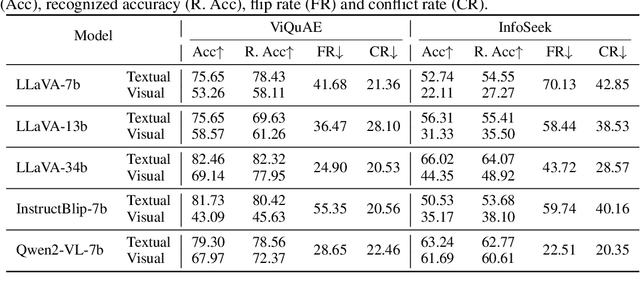
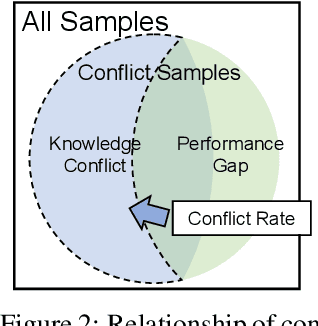
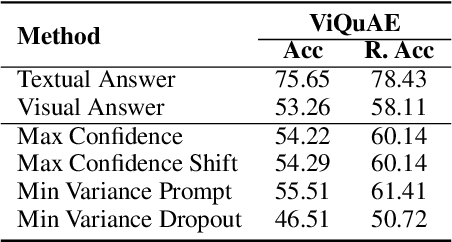
Large Vision-Language Models (LVLMs) have demonstrated impressive capabilities for capturing and reasoning over multimodal inputs. However, these models are prone to parametric knowledge conflicts, which arise from inconsistencies of represented knowledge between their vision and language components. In this paper, we formally define the problem of $\textbf{cross-modality parametric knowledge conflict}$ and present a systematic approach to detect, interpret, and mitigate them. We introduce a pipeline that identifies conflicts between visual and textual answers, showing a persistently high conflict rate across modalities in recent LVLMs regardless of the model size. We further investigate how these conflicts interfere with the inference process and propose a contrastive metric to discern the conflicting samples from the others. Building on these insights, we develop a novel dynamic contrastive decoding method that removes undesirable logits inferred from the less confident modality components based on answer confidence. For models that do not provide logits, we also introduce two prompt-based strategies to mitigate the conflicts. Our methods achieve promising improvements in accuracy on both the ViQuAE and InfoSeek datasets. Specifically, using LLaVA-34B, our proposed dynamic contrastive decoding improves an average accuracy of 2.24%.
Relational Diffusion Distillation for Efficient Image Generation
Oct 10, 2024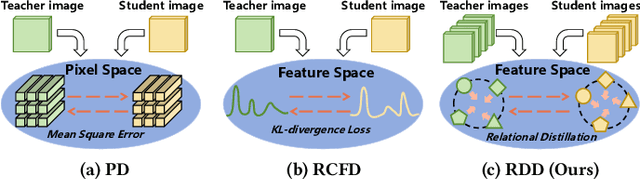
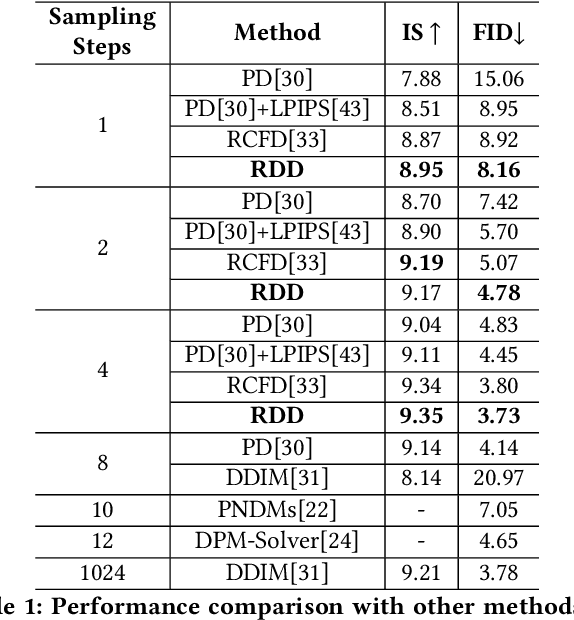

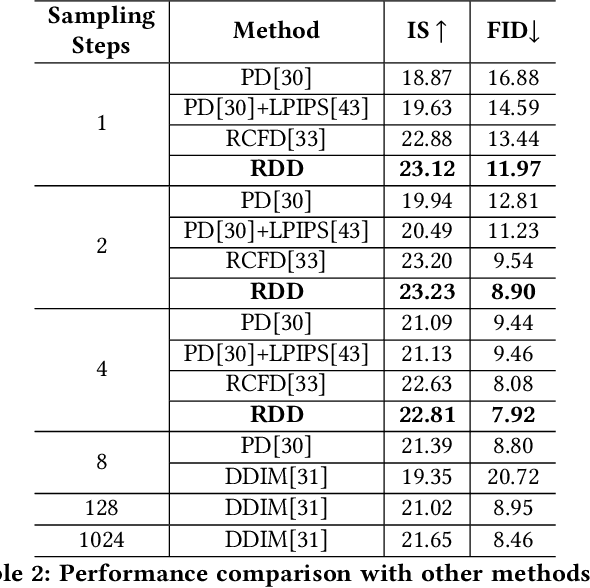
Although the diffusion model has achieved remarkable performance in the field of image generation, its high inference delay hinders its wide application in edge devices with scarce computing resources. Therefore, many training-free sampling methods have been proposed to reduce the number of sampling steps required for diffusion models. However, they perform poorly under a very small number of sampling steps. Thanks to the emergence of knowledge distillation technology, the existing training scheme methods have achieved excellent results at very low step numbers. However, the current methods mainly focus on designing novel diffusion model sampling methods with knowledge distillation. How to transfer better diffusion knowledge from teacher models is a more valuable problem but rarely studied. Therefore, we propose Relational Diffusion Distillation (RDD), a novel distillation method tailored specifically for distilling diffusion models. Unlike existing methods that simply align teacher and student models at pixel level or feature distributions, our method introduces cross-sample relationship interaction during the distillation process and alleviates the memory constraints induced by multiple sample interactions. Our RDD significantly enhances the effectiveness of the progressive distillation framework within the diffusion model. Extensive experiments on several datasets (e.g., CIFAR-10 and ImageNet) demonstrate that our proposed RDD leads to 1.47 FID decrease under 1 sampling step compared to state-of-the-art diffusion distillation methods and achieving 256x speed-up compared to DDIM strategy. Code is available at https://github.com/cantbebetter2/RDD.
Astute RAG: Overcoming Imperfect Retrieval Augmentation and Knowledge Conflicts for Large Language Models
Oct 09, 2024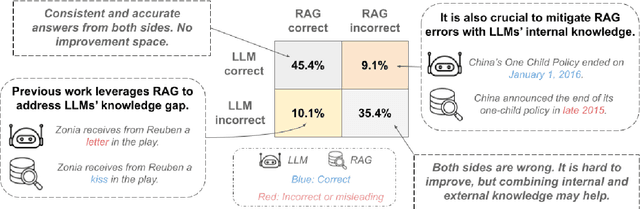
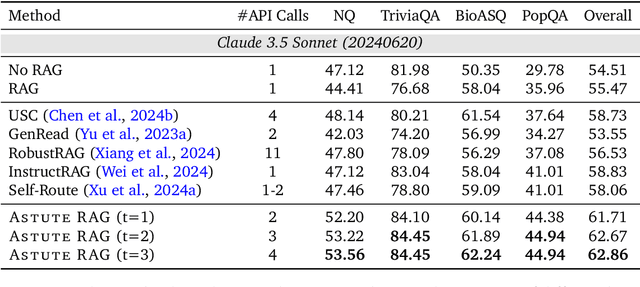
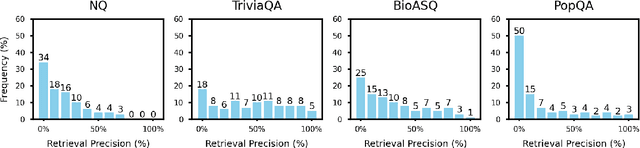
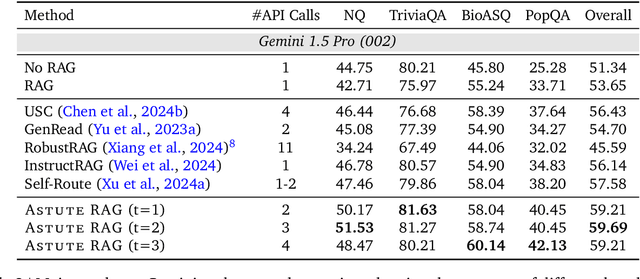
Retrieval-Augmented Generation (RAG), while effective in integrating external knowledge to address the limitations of large language models (LLMs), can be undermined by imperfect retrieval, which may introduce irrelevant, misleading, or even malicious information. Despite its importance, previous studies have rarely explored the behavior of RAG through joint analysis on how errors from imperfect retrieval attribute and propagate, and how potential conflicts arise between the LLMs' internal knowledge and external sources. We find that imperfect retrieval augmentation might be inevitable and quite harmful, through controlled analysis under realistic conditions. We identify the knowledge conflicts between LLM-internal and external knowledge from retrieval as a bottleneck to overcome in the post-retrieval stage of RAG. To render LLMs resilient to imperfect retrieval, we propose Astute RAG, a novel RAG approach that adaptively elicits essential information from LLMs' internal knowledge, iteratively consolidates internal and external knowledge with source-awareness, and finalizes the answer according to information reliability. Our experiments using Gemini and Claude demonstrate that Astute RAG significantly outperforms previous robustness-enhanced RAG methods. Notably, Astute RAG is the only approach that matches or exceeds the performance of LLMs without RAG under worst-case scenarios. Further analysis reveals that Astute RAG effectively resolves knowledge conflicts, improving the reliability and trustworthiness of RAG systems.