 Add to Chrome
 Add to Firefox
 Add to Edge
FAST: A Synergistic Framework of Attention and State-space Models for Spatiotemporal Traffic Prediction
Apr 15, 2026
Traffic forecasting requires modeling complex temporal dynamics and long-range spatial dependencies over large sensor networks. Existing methods typically face a trade-off between expressiveness and efficiency: Transformer-based models capture global dependencies well but suffer from quadratic complexity, while recent selective state-space models are computationally efficient yet less effective at modeling spatial interactions in graph-structured traffic data. We propose FAST, a unified framework that combines attention and state-space modeling for scalable spatiotemporal traffic forecasting. FAST adopts a Temporal-Spatial-Temporal architecture, where temporal attention modules capture both short- and long-term temporal patterns, and a Mamba-based spatial module models long-range inter-sensor dependencies with linear complexity. To better represent heterogeneous traffic contexts, FAST further introduces a learnable multi-source spatiotemporal embedding that integrates historical traffic flow, temporal context, and node-level information, together with a multi-level skip prediction mechanism for hierarchical feature fusion. Experiments on PeMS04, PeMS07, and PeMS08 show that FAST consistently outperforms strong baselines from Transformer-, GNN-, attention-, and Mamba-based families. In particular, FAST achieves the best MAE and RMSE on all three benchmarks, with up to 4.3\% lower RMSE and 2.8\% lower MAE than the strongest baseline, demonstrating a favorable balance between accuracy, scalability, and generalization.

Task-Specific Efficiency Analysis: When Small Language Models Outperform Large Language Models
Mar 22, 2026Large Language Models achieve remarkable performance but incur substantial computational costs unsuitable for resource-constrained deployments. This paper presents the first comprehensive task-specific efficiency analysis comparing 16 language models across five diverse NLP tasks. We introduce the Performance-Efficiency Ratio (PER), a novel metric integrating accuracy, throughput, memory, and latency through geometric mean normalization. Our systematic evaluation reveals that small models (0.5--3B parameters) achieve superior PER scores across all given tasks. These findings establish quantitative foundations for deploying small models in production environments prioritizing inference efficiency over marginal accuracy gains.
HyperEdit: Unlocking Instruction-based Text Editing in LLMs via Hypernetworks
Dec 14, 2025Instruction-based text editing is increasingly critical for real-world applications such as code editors (e.g., Cursor), but Large Language Models (LLMs) continue to struggle with this task. Unlike free-form generation, editing requires faithfully implementing user instructions while preserving unchanged content, as even minor unintended modifications can break functionality. Existing approaches treat editing as generic text generation, leading to two key failures: they struggle to faithfully align edits with diverse user intents, and they often over-edit unchanged regions. We propose HyperEdit to address both issues. First, we introduce hypernetwork-based dynamic adaptation that generates request-specific parameters, enabling the model to tailor its editing strategy to each instruction. Second, we develop difference-aware regularization that focuses supervision on modified spans, preventing over-editing while ensuring precise, minimal changes. HyperEdit achieves a 9%--30% relative improvement in BLEU on modified regions over state-of-the-art baselines, despite utilizing only 3B parameters.
CATCH: A Modular Cross-domain Adaptive Template with Hook
Oct 30, 2025
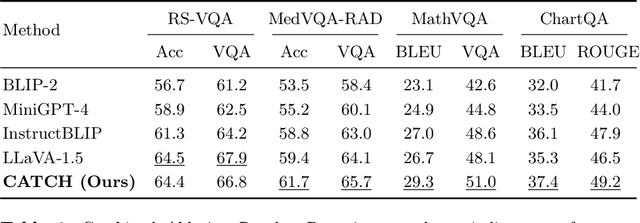
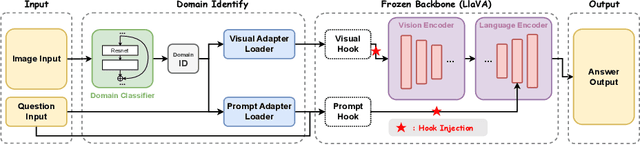
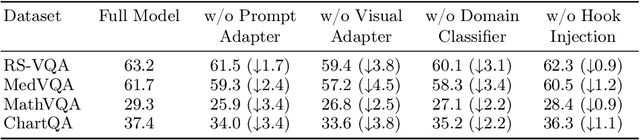
Recent advances in Visual Question Answering (VQA) have demonstrated impressive performance in natural image domains, with models like LLaVA leveraging large language models (LLMs) for open-ended reasoning. However, their generalization degrades significantly when transferred to out-of-domain scenarios such as remote sensing, medical imaging, or math diagrams, due to large distributional shifts and the lack of effective domain adaptation mechanisms. Existing approaches typically rely on per-domain fine-tuning or bespoke pipelines, which are costly, inflexible, and not scalable across diverse tasks. In this paper, we propose CATCH, a plug-and-play framework for cross-domain adaptation that improves the generalization of VQA models while requiring minimal changes to their core architecture. Our key idea is to decouple visual and linguistic adaptation by introducing two lightweight modules: a domain classifier to identify the input image type, and a dual adapter mechanism comprising a Prompt Adapter for language modulation and a Visual Adapter for vision feature adjustment. Both modules are dynamically injected via a unified hook interface, requiring no retraining of the backbone model. Experimental results across four domain-specific VQA benchmarks demonstrate that our framework achieves consistent performance gains without retraining the backbone model, including +2.3 BLEU on MathVQA, +2.6 VQA on MedVQA-RAD, and +3.1 ROUGE on ChartQA. These results highlight that CATCH provides a scalable and extensible approach to multi-domain VQA, enabling practical deployment across diverse application domains.
Hy-Facial: Hybrid Feature Extraction by Dimensionality Reduction Methods for Enhanced Facial Expression Classification
Sep 30, 2025Facial expression classification remains a challenging task due to the high dimensionality and inherent complexity of facial image data. This paper presents Hy-Facial, a hybrid feature extraction framework that integrates both deep learning and traditional image processing techniques, complemented by a systematic investigation of dimensionality reduction strategies. The proposed method fuses deep features extracted from the Visual Geometry Group 19-layer network (VGG19) with handcrafted local descriptors and the scale-invariant feature transform (SIFT) and Oriented FAST and Rotated BRIEF (ORB) algorithms, to obtain rich and diverse image representations. To mitigate feature redundancy and reduce computational complexity, we conduct a comprehensive evaluation of dimensionality reduction techniques and feature extraction. Among these, UMAP is identified as the most effective, preserving both local and global structures of the high-dimensional feature space. The Hy-Facial pipeline integrated VGG19, SIFT, and ORB for feature extraction, followed by K-means clustering and UMAP for dimensionality reduction, resulting in a classification accuracy of 83. 3\% in the facial expression recognition (FER) dataset. These findings underscore the pivotal role of dimensionality reduction not only as a pre-processing step but as an essential component in improving feature quality and overall classification performance.
Bridging the Editing Gap in LLMs: FineEdit for Precise and Targeted Text Modifications
Feb 19, 2025Large Language Models (LLMs) have transformed natural language processing, yet they still struggle with direct text editing tasks that demand precise, context-aware modifications. While models like ChatGPT excel in text generation and analysis, their editing abilities often fall short, addressing only superficial issues rather than deeper structural or logical inconsistencies. In this work, we introduce a dual approach to enhance LLMs editing performance. First, we present InstrEditBench, a high-quality benchmark dataset comprising over 20,000 structured editing tasks spanning Wiki articles, LaTeX documents, code, and database Domain-specific Languages (DSL). InstrEditBench is generated using an innovative automated workflow that accurately identifies and evaluates targeted edits, ensuring that modifications adhere strictly to specified instructions without altering unrelated content. Second, we propose FineEdit, a specialized model trained on this curated benchmark. Experimental results demonstrate that FineEdit achieves significant improvements around {10\%} compared with Gemini on direct editing tasks, convincingly validating its effectiveness.
Optimization and Scalability of Collaborative Filtering Algorithms in Large Language Models
Dec 25, 2024With the rapid development of large language models (LLMs) and the growing demand for personalized content, recommendation systems have become critical in enhancing user experience and driving engagement. Collaborative filtering algorithms, being core to many recommendation systems, have garnered significant attention for their efficiency and interpretability. However, traditional collaborative filtering approaches face numerous challenges when integrated into large-scale LLM-based systems, including high computational costs, severe data sparsity, cold start problems, and lack of scalability. This paper investigates the optimization and scalability of collaborative filtering algorithms in large language models, addressing these limitations through advanced optimization strategies. Firstly, we analyze the fundamental principles of collaborative filtering algorithms and their limitations when applied in LLM-based contexts. Next, several optimization techniques such as matrix factorization, approximate nearest neighbor search, and parallel computing are proposed to enhance computational efficiency and model accuracy. Additionally, strategies such as distributed architecture and model compression are explored to facilitate dynamic updates and scalability in data-intensive environments.
A survey on fairness of large language models in e-commerce: progress, application, and challenge
May 15, 2024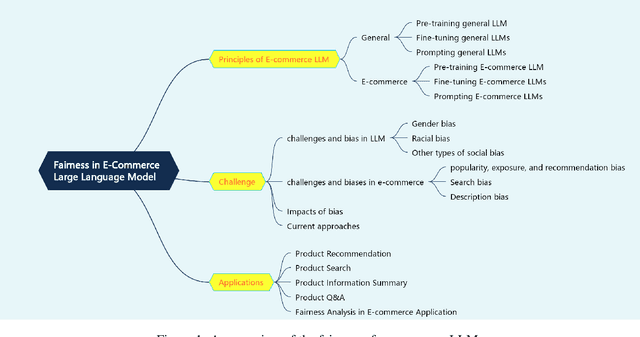
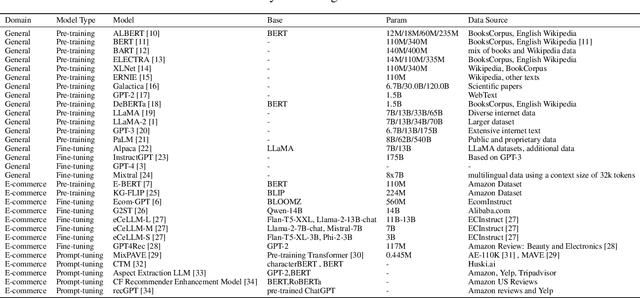
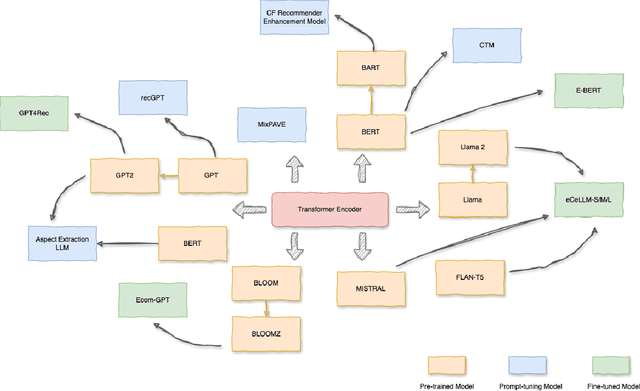
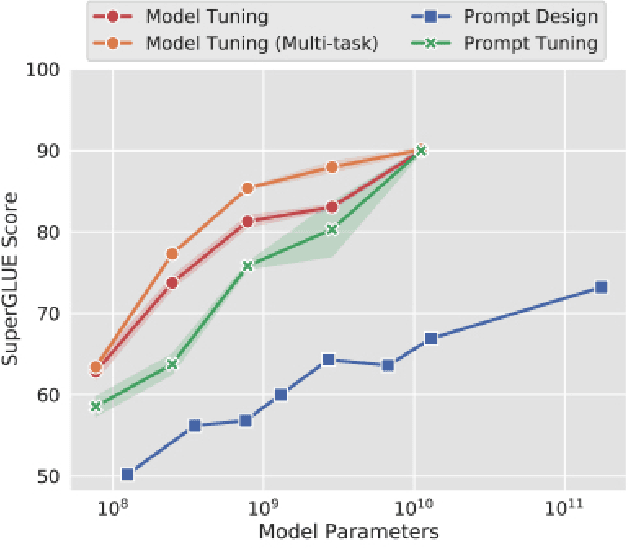
This survey explores the fairness of large language models (LLMs) in e-commerce, examining their progress, applications, and the challenges they face. LLMs have become pivotal in the e-commerce domain, offering innovative solutions and enhancing customer experiences. This work presents a comprehensive survey on the applications and challenges of LLMs in e-commerce. The paper begins by introducing the key principles underlying the use of LLMs in e-commerce, detailing the processes of pretraining, fine-tuning, and prompting that tailor these models to specific needs. It then explores the varied applications of LLMs in e-commerce, including product reviews, where they synthesize and analyze customer feedback; product recommendations, where they leverage consumer data to suggest relevant items; product information translation, enhancing global accessibility; and product question and answer sections, where they automate customer support. The paper critically addresses the fairness challenges in e-commerce, highlighting how biases in training data and algorithms can lead to unfair outcomes, such as reinforcing stereotypes or discriminating against certain groups. These issues not only undermine consumer trust, but also raise ethical and legal concerns. Finally, the work outlines future research directions, emphasizing the need for more equitable and transparent LLMs in e-commerce. It advocates for ongoing efforts to mitigate biases and improve the fairness of these systems, ensuring they serve diverse global markets effectively and ethically. Through this comprehensive analysis, the survey provides a holistic view of the current landscape of LLMs in e-commerce, offering insights into their potential and limitations, and guiding future endeavors in creating fairer and more inclusive e-commerce environments.