 Add to Chrome
 Add to Firefox
 Add to Edge
Building Low-Altitude Communication Networks: A Digital Twin-Based Optimization Framework
Apr 20, 2026
Low-altitude communication networks (LACNs) serve as the critical infrastructure of the emerging low-altitude economy (LAE), supporting services such as drone delivery and infrastructure inspection. However, LACNs operate in highly dynamic three-dimensional (3D) environments characterized by high mobility and predominantly line-of-sight (LoS) propagation, creating strong coupling among key performance objectives including coverage, interference mitigation, handover management, and sensing capability. Isolated tuning of individual objectives cannot capture these cross-objective interactions, rendering conventional approaches based on experience-driven tuning and repeated field trials inefficient and costly. To address these challenges, we propose DT-MOO, a Digital Twin-based Multi-Objective Optimization framework for LACNs. By constructing a high-fidelity virtual replica that integrates realistic environmental models, electromagnetic (EM) propagation, and traffic dynamics within a unified environment, DT-MOO enables joint evaluation and systematic optimization of interdependent network parameters, scoring candidate configurations by their combined effect on multiple objectives. As the foundational validation of the framework, we report real-world experiments in a 5G-enabled LACN focusing on coverage-interference co-optimization, where DT-MOO increases the high-quality coverage rate from 14.0% to 52.9% across all evaluated altitudes compared to an operator-provisioned, experience-based baseline, while achieving a net SINR gain under stringent criteria despite local spatial trade-offs, confirming its ability to handle coupled objectives in practical LACN deployment.

Integrated Sensing and Semantic Communication with Adaptive Source-Channel Coding
Jan 19, 2026Semantic communication has emerged as a new paradigm to facilitate the performance of integrated sensing and communication systems in 6G. However, most of the existing works mainly focus on sensing data compression to reduce the subsequent communication overheads, without considering the integrated transmission framework for both the SemCom and sensing tasks. This paper proposes an adaptive source-channel coding and beamforming design framework for integrated sensing and SemCom systems by jointly optimizing the coding rate for SemCom task and the transmit beamforming for both the SemCom and sensing tasks. Specifically, an end-to-end semantic distortion function is approximated by deriving an upper bound composing of source and channel coding induced components, and then a hybrid Cramér-Rao bound (HCRB) is also derived for target position under imperfect time synchronization. To facilitate the joint optimization, a distortion minimization problem is formulated by considering the HCRB threshold, channel uses, and power budget. Subsequently, an alternative optimization algorithm composed of successive convex approximation and fractional programming is proposed to address this problem by decoupling it into two subproblems for coding rate and beamforming designs, respectively. Simulation results demonstrate that our proposed scheme outperforms the conventional deep joint source-channel coding -water filling-zero forcing benchmark.
Inertial Magnetic SLAM Systems Using Low-Cost Sensors
Dec 10, 2025Spatially inhomogeneous magnetic fields offer a valuable, non-visual information source for positioning. Among systems leveraging this, magnetic field-based simultaneous localization and mapping (SLAM) systems are particularly attractive because they can provide positioning information and build a magnetic field map on the fly. Moreover, they have bounded error within mapped regions. However, state-of-the-art methods typically require low-drift odometry data provided by visual odometry or a wheel encoder, etc. This is because these systems need to minimize/reduce positioning errors while exploring, which happens when they are in unmapped regions. To address these limitations, this work proposes a loosely coupled and a tightly coupled inertial magnetic SLAM (IM-SLAM) system. The proposed systems use commonly available low-cost sensors: an inertial measurement unit (IMU), a magnetometer array, and a barometer. The use of non-visual data provides a significant advantage over visual-based systems, making it robust to low-visibility conditions. Both systems employ state-space representations, and magnetic field models on different scales. The difference lies in how they use a local and global magnetic field model. The loosely coupled system uses these models separately in two state-space models, while the tightly coupled system integrates them into one state-space model. Experiment results show that the tightly coupled IM-SLAM system achieves lower positioning errors than the loosely coupled system in most scenarios, with typical errors on the order of meters per 100 meters traveled. These results demonstrate the feasiblity of developing a full 3D IM-SLAM systems using low-cost sensors and the potential of applying these systems in emergency response scenarios such as mine/fire rescue.
CloseUpShot: Close-up Novel View Synthesis from Sparse-views via Point-conditioned Diffusion Model
Nov 17, 2025Reconstructing 3D scenes and synthesizing novel views from sparse input views is a highly challenging task. Recent advances in video diffusion models have demonstrated strong temporal reasoning capabilities, making them a promising tool for enhancing reconstruction quality under sparse-view settings. However, existing approaches are primarily designed for modest viewpoint variations, which struggle in capturing fine-grained details in close-up scenarios since input information is severely limited. In this paper, we present a diffusion-based framework, called CloseUpShot, for close-up novel view synthesis from sparse inputs via point-conditioned video diffusion. Specifically, we observe that pixel-warping conditioning suffers from severe sparsity and background leakage in close-up settings. To address this, we propose hierarchical warping and occlusion-aware noise suppression, enhancing the quality and completeness of the conditioning images for the video diffusion model. Furthermore, we introduce global structure guidance, which leverages a dense fused point cloud to provide consistent geometric context to the diffusion process, to compensate for the lack of globally consistent 3D constraints in sparse conditioning inputs. Extensive experiments on multiple datasets demonstrate that our method outperforms existing approaches, especially in close-up novel view synthesis, clearly validating the effectiveness of our design.
Adaptive Source-Channel Coding for Semantic Communications
Aug 11, 2025Semantic communications (SemComs) have emerged as a promising paradigm for joint data and task-oriented transmissions, combining the demands for both the bit-accurate delivery and end-to-end (E2E) distortion minimization. However, current joint source-channel coding (JSCC) in SemComs is not compatible with the existing communication systems and cannot adapt to the variations of the sources or the channels, while separate source-channel coding (SSCC) is suboptimal in the finite blocklength regime. To address these issues, we propose an adaptive source-channel coding (ASCC) scheme for SemComs over parallel Gaussian channels, where the deep neural network (DNN)-based semantic source coding and conventional digital channel coding are separately deployed and adaptively designed. To enable efficient adaptation between the source and channel coding, we first approximate the E2E data and semantic distortions as functions of source coding rate and bit error ratio (BER) via logistic regression, where BER is further modeled as functions of signal-to-noise ratio (SNR) and channel coding rate. Then, we formulate the weighted sum E2E distortion minimization problem for joint source-channel coding rate and power allocation over parallel channels, which is solved by the successive convex approximation. Finally, simulation results demonstrate that the proposed ASCC scheme outperforms typical deep JSCC and SSCC schemes for both the single- and parallel-channel scenarios while maintaining full compatibility with practical digital systems.
Joint Magnetometer-IMU Calibration via Maximum A Posteriori Estimation
May 22, 2025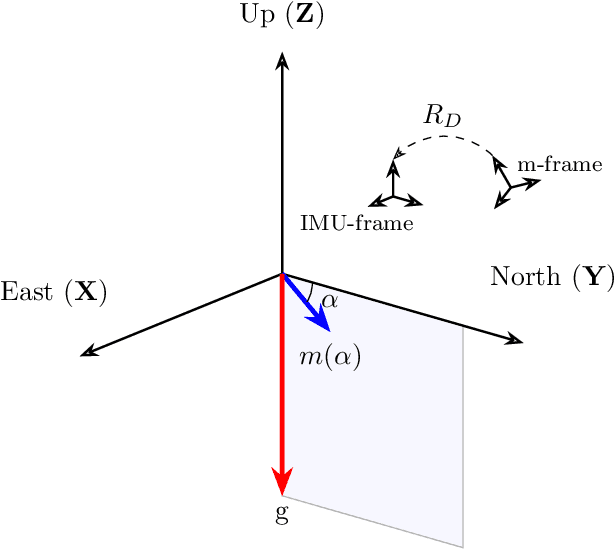
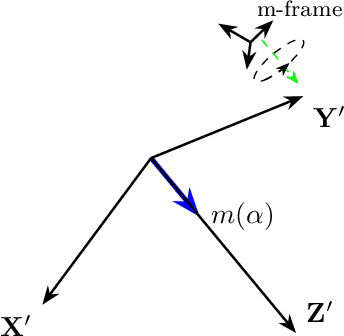
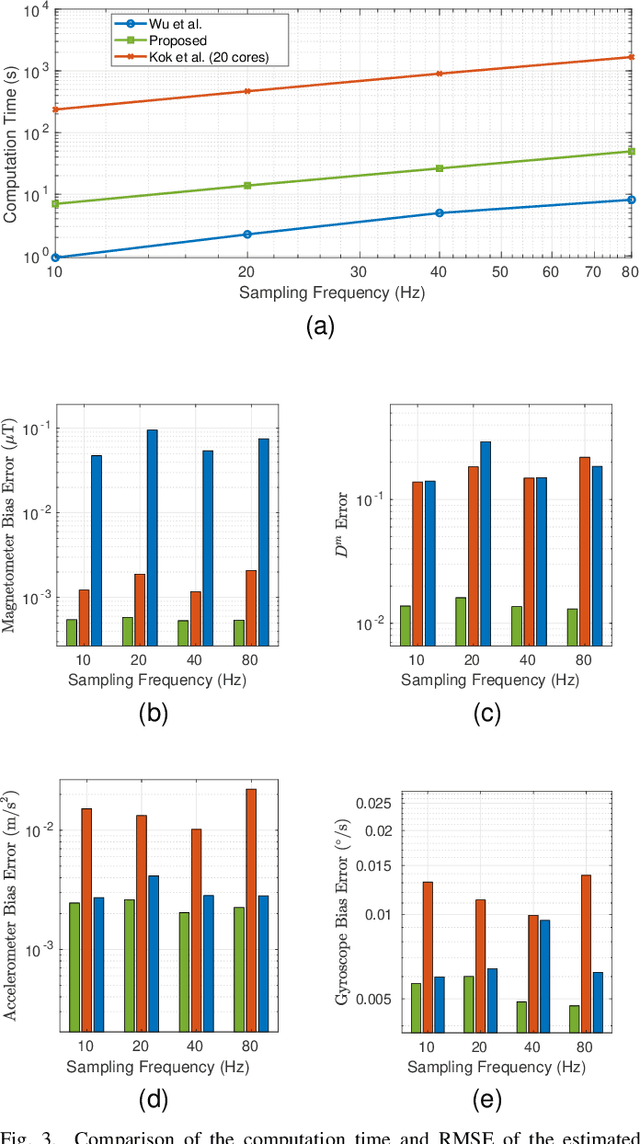
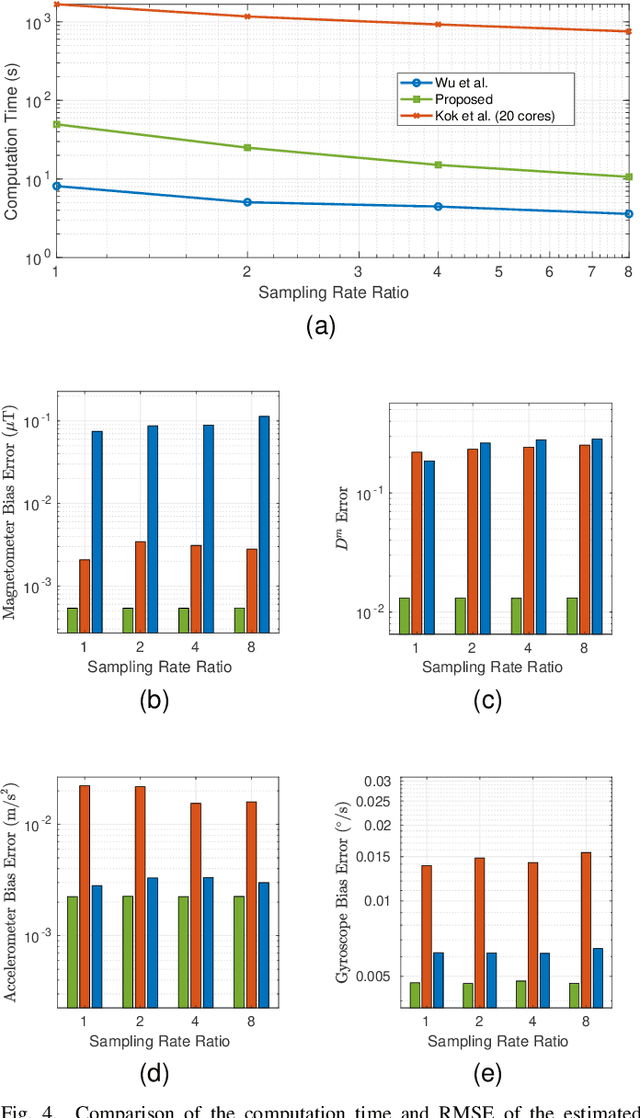
This paper presents a new approach for jointly calibrating magnetometers and inertial measurement units, focusing on improving calibration accuracy and computational efficiency. The proposed method formulates the calibration problem as a maximum a posteriori estimation problem, treating both the calibration parameters and orientation trajectory of the sensors as unknowns. This formulation enables efficient optimization with closed-form derivatives. The method is compared against two state-of-the-art approaches in terms of computational complexity and estimation accuracy. Simulation results demonstrate that the proposed method achieves lower root mean square error in calibration parameters while maintaining competitive computational efficiency. Further validation through real-world experiments confirms the practical benefits of our approach: it effectively reduces position drift in a magnetic field-aided inertial navigation system by more than a factor of two on most datasets. Moreover, the proposed method calibrated 30 magnetometers in less than 2 minutes. The contributions include a new calibration method, an analysis of existing methods, and a comprehensive empirical evaluation. Datasets and algorithms are made publicly available to promote reproducible research.
Mixture-of-Experts for Distributed Edge Computing with Channel-Aware Gating Function
Apr 01, 2025In a distributed mixture-of-experts (MoE) system, a server collaborates with multiple specialized expert clients to perform inference. The server extracts features from input data and dynamically selects experts based on their areas of specialization to produce the final output. Although MoE models are widely valued for their flexibility and performance benefits, adapting distributed MoEs to operate effectively in wireless networks has remained unexplored. In this work, we introduce a novel channel-aware gating function for wireless distributed MoE, which incorporates channel conditions into the MoE gating mechanism. To train the channel-aware gating, we simulate various signal-to-noise ratios (SNRs) for each expert's communication channel and add noise to the features distributed to the experts based on these SNRs. The gating function then utilizes both features and SNRs to optimize expert selection. Unlike conventional MoE models which solely consider the alignment of features with the specializations of experts, our approach additionally considers the impact of channel conditions on expert performance. Experimental results demonstrate that the proposed channel-aware gating scheme outperforms traditional MoE models.
On the Connection Between Magnetic-Field Odometry Aided Inertial Navigation and Magnetic-Field SLAM
Mar 06, 2025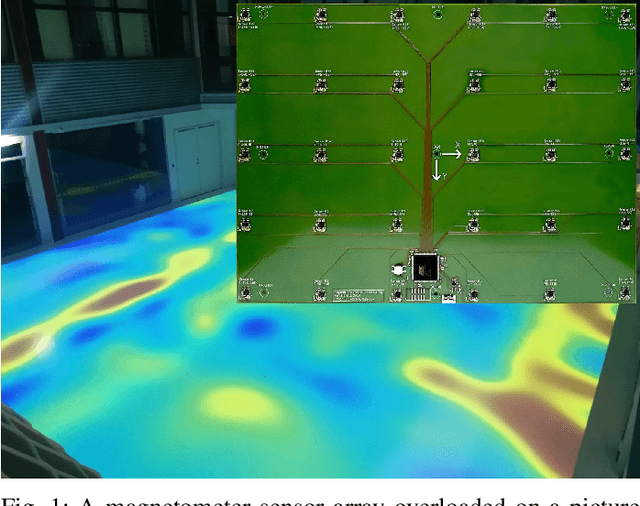
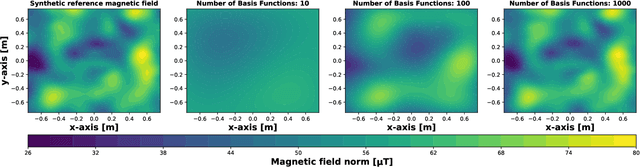
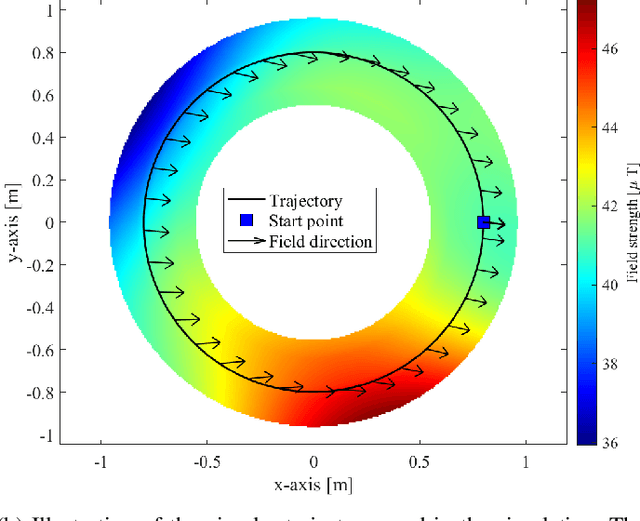
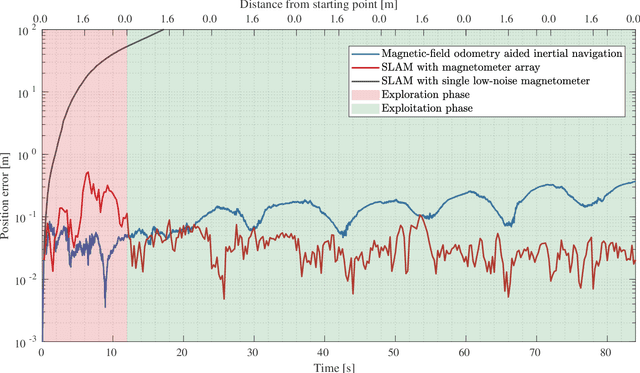
Magnetic-field simultaneous localization and mapping (SLAM) using consumer-grade inertial and magnetometer sensors offers a scalable, cost-effective solution for indoor localization. However, the rapid error accumulation in the inertial navigation process limits the feasible exploratory phases of these systems. Advances in magnetometer array processing have demonstrated that odometry information, i.e., displacement and rotation information, can be extracted from local magnetic field variations and used to create magnetic-field odometry-aided inertial navigation systems. The error growth rate of these systems is significantly lower than that of standalone inertial navigation systems. This study seeks an answer to whether a magnetic-field SLAM system fed with measurements from a magnetometer array can indirectly extract odometry information -- without requiring algorithmic modifications -- and thus sustain longer exploratory phases. The theoretical analysis and simulation results show that such a system can extract odometry information and indirectly create a magnetic field odometry-aided inertial navigation system during the exploration phases. However, practical challenges related to map resolution and computational complexity remain significant.
TopoTxR: A topology-guided deep convolutional network for breast parenchyma learning on DCE-MRIs
Nov 05, 2024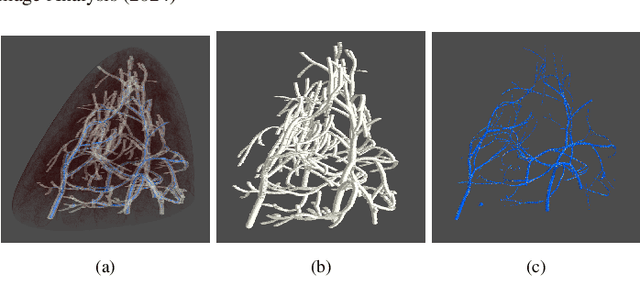
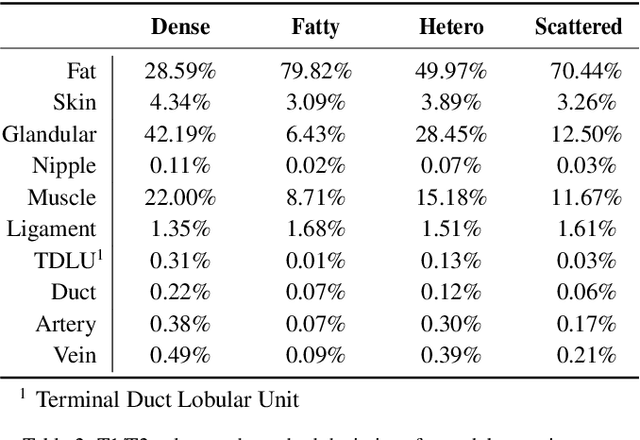


Characterization of breast parenchyma in dynamic contrast-enhanced magnetic resonance imaging (DCE-MRI) is a challenging task owing to the complexity of underlying tissue structures. Existing quantitative approaches, like radiomics and deep learning models, lack explicit quantification of intricate and subtle parenchymal structures, including fibroglandular tissue. To address this, we propose a novel topological approach that explicitly extracts multi-scale topological structures to better approximate breast parenchymal structures, and then incorporates these structures into a deep-learning-based prediction model via an attention mechanism. Our topology-informed deep learning model, \emph{TopoTxR}, leverages topology to provide enhanced insights into tissues critical for disease pathophysiology and treatment response. We empirically validate \emph{TopoTxR} using the VICTRE phantom breast dataset, showing that the topological structures extracted by our model effectively approximate the breast parenchymal structures. We further demonstrate \emph{TopoTxR}'s efficacy in predicting response to neoadjuvant chemotherapy. Our qualitative and quantitative analyses suggest differential topological behavior of breast tissue in treatment-na\"ive imaging, in patients who respond favorably to therapy as achieving pathological complete response (pCR) versus those who do not. In a comparative analysis with several baselines on the publicly available I-SPY 1 dataset (N=161, including 47 patients with pCR and 114 without) and the Rutgers proprietary dataset (N=120, with 69 patients achieving pCR and 51 not), \emph{TopoTxR} demonstrates a notable improvement, achieving a 2.6\% increase in accuracy and a 4.6\% enhancement in AUC compared to the state-of-the-art method.
* 22 pages, 8 figures, 8 tables, accepted by Medical Image Analysis ( https://www.sciencedirect.com/science/article/abs/pii/S1361841524002986 )
Receiver Selection and Transmit Beamforming for Multi-static Integrated Sensing and Communications
Jul 08, 2024Next-generation wireless networks are expected to develop a novel paradigm of integrated sensing and communications (ISAC) to enable both the high-accuracy sensing and high-speed communications. However, conventional mono-static ISAC systems, which simultaneously transmit and receive at the same equipment, may suffer from severe self-interference, and thus significantly degrade the system performance.To address this issue, this paper studies a multi-static ISAC system for cooperative target localization and communications, where the transmitter transmits ISAC signal to multiple receivers (REs) deployed at different positions. We derive the closed-form Cram\'{e}r-Rao bound (CRB) on the joint estimations of both the transmission delay and Doppler shift for cooperative target localization, and the CRB minimization problem is formulated by considering the cooperative cost and communication rate requirements for the REs. To solve this problem, we first decouple it into two subproblems for RE selection and transmit beamforming, respectively. Then, a minimax linkage-based method is proposed to solve the RE selection subproblem, and a successive convex approximation algorithm is adopted to deal with the transmit beamforming subproblem with non-convex constraints. Finally, numerical results validate our analysis and reveal that our proposed multi-static ISAC scheme achieves better ISAC performance than the conventional mono-static ones when the number of cooperative REs is large.