 Add to Chrome
 Add to Firefox
 Add to Edge
SL(C)AMma: Simultaneous Localisation, (Calibration) and Mapping With a Magnetometer Array
Apr 21, 2026
Indoor localisation techniques suffer from attenuated Global Navigation Satellite System (GNSS) signals and from the accumulation of unbounded drift by integration of proprioceptive sensors. Magnetic field-based Simultaneous Localisation and Mapping (SLAM) reduces drift through loop closures by revisiting previously seen locations, but extended exploration of unseen areas remains challenging. Recently, magnetometer arrays have demonstrated significant benefits over single magnetometers, as they can directly estimate the odometry. However, inconsistencies between magnetometer measurements negatively affect odometry estimates and complicate loop closure detection. We propose two filtering algorithms: The first focuses on magnetic field-based SLAM using a magnetometer array (SLAMma). The second extends this to jointly estimate the magnetometer calibration parameters (SLCAMma). We demonstrate, using Monte Carlo simulations, that the calibration parameters can be accurately estimated when there is sufficient orientation excitation, and that magnetometers achieve inter-sensor measurement consistency regardless of the type of motion. Experimental validation on ten datasets confirms these results, and we demonstrate that in cases where single magnetometer SLAM fails, SLAMma and SLCAMma provide good trajectory estimates with, more than 80% drift reduction compared to integration of proprioceptive sensors.

On the Connection Between Magnetic-Field Odometry Aided Inertial Navigation and Magnetic-Field SLAM
Mar 06, 2025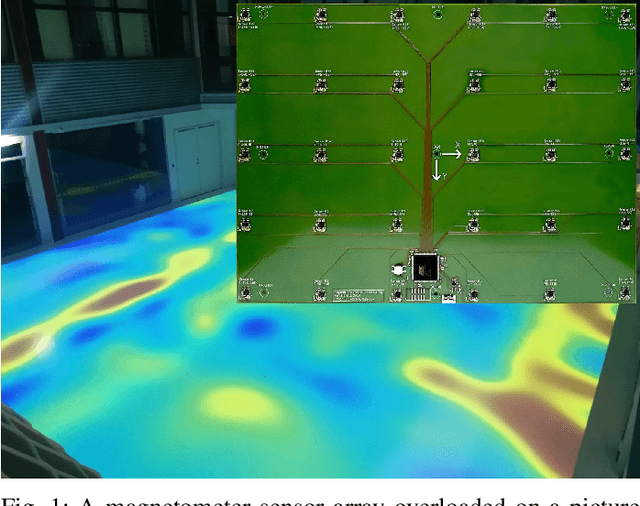
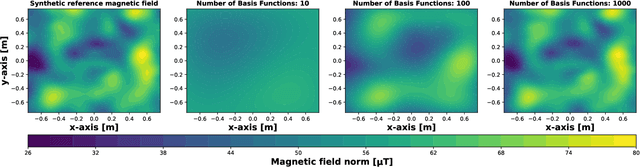
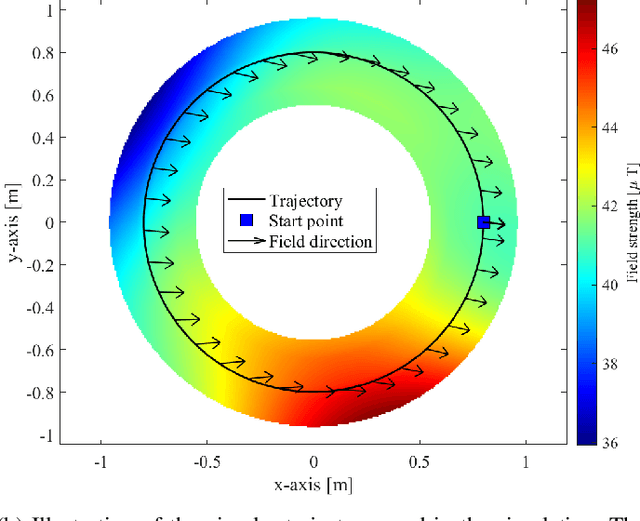
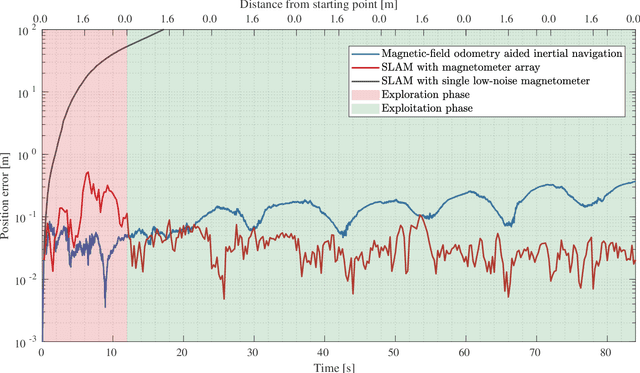
Magnetic-field simultaneous localization and mapping (SLAM) using consumer-grade inertial and magnetometer sensors offers a scalable, cost-effective solution for indoor localization. However, the rapid error accumulation in the inertial navigation process limits the feasible exploratory phases of these systems. Advances in magnetometer array processing have demonstrated that odometry information, i.e., displacement and rotation information, can be extracted from local magnetic field variations and used to create magnetic-field odometry-aided inertial navigation systems. The error growth rate of these systems is significantly lower than that of standalone inertial navigation systems. This study seeks an answer to whether a magnetic-field SLAM system fed with measurements from a magnetometer array can indirectly extract odometry information -- without requiring algorithmic modifications -- and thus sustain longer exploratory phases. The theoretical analysis and simulation results show that such a system can extract odometry information and indirectly create a magnetic field odometry-aided inertial navigation system during the exploration phases. However, practical challenges related to map resolution and computational complexity remain significant.
Mapping the magnetic field using a magnetometer array with noisy input Gaussian process regression
Oct 25, 2023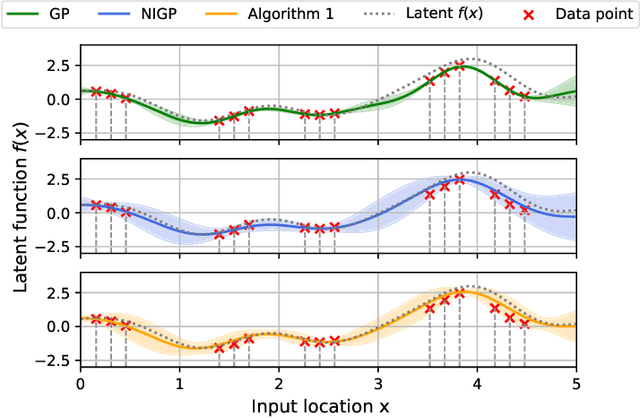
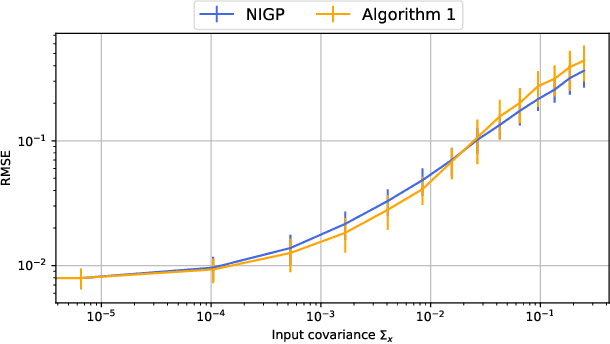
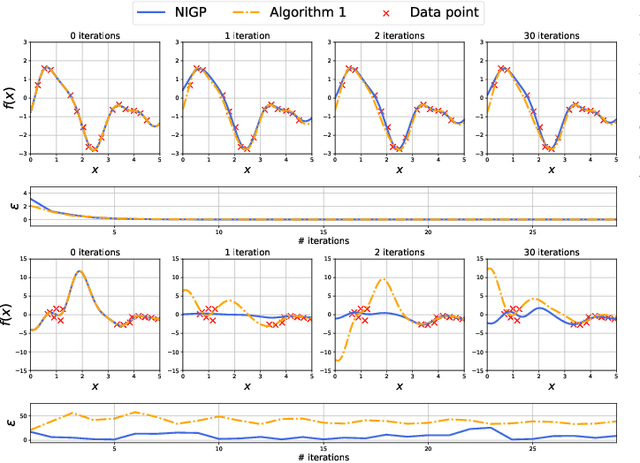
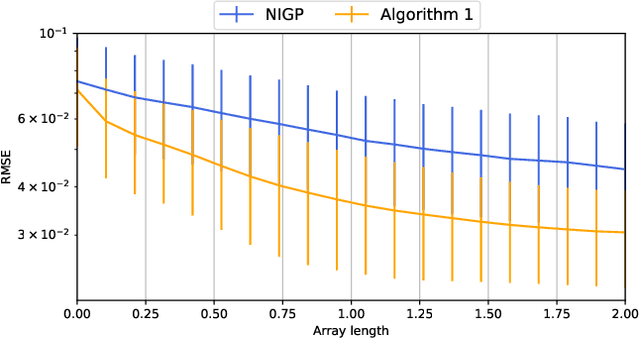
Ferromagnetic materials in indoor environments give rise to disturbances in the ambient magnetic field. Maps of these magnetic disturbances can be used for indoor localisation. A Gaussian process can be used to learn the spatially varying magnitude of the magnetic field using magnetometer measurements and information about the position of the magnetometer. The position of the magnetometer, however, is frequently only approximately known. This negatively affects the quality of the magnetic field map. In this paper, we investigate how an array of magnetometers can be used to improve the quality of the magnetic field map. The position of the array is approximately known, but the relative locations of the magnetometers on the array are known. We include this information in a novel method to make a map of the ambient magnetic field. We study the properties of our method in simulation and show that our method improves the map quality. We also demonstrate the efficacy of our method with experimental data for the mapping of the magnetic field using an array of 30 magnetometers.