 Add to Chrome
 Add to Firefox
 Add to Edge
GroundNLQ @ Ego4D Natural Language Queries Challenge 2023
Jun 27, 2023
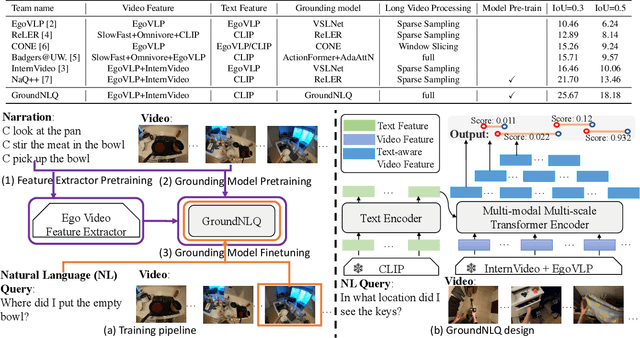
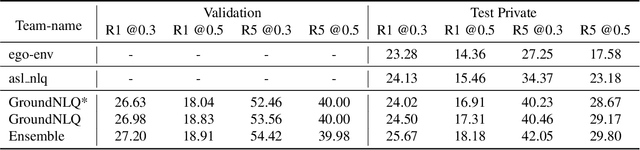
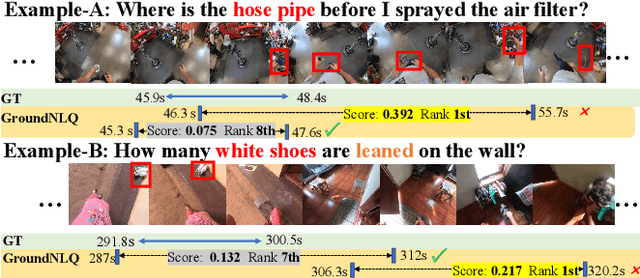
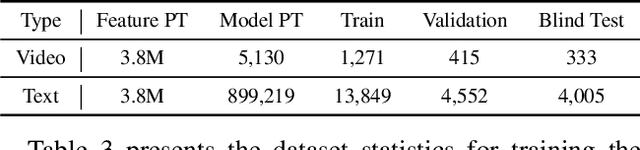
In this report, we present our champion solution for Ego4D Natural Language Queries (NLQ) Challenge in CVPR 2023. Essentially, to accurately ground in a video, an effective egocentric feature extractor and a powerful grounding model are required. Motivated by this, we leverage a two-stage pre-training strategy to train egocentric feature extractors and the grounding model on video narrations, and further fine-tune the model on annotated data. In addition, we introduce a novel grounding model GroundNLQ, which employs a multi-modal multi-scale grounding module for effective video and text fusion and various temporal intervals, especially for long videos. On the blind test set, GroundNLQ achieves 25.67 and 18.18 for R1@IoU=0.3 and R1@IoU=0.5, respectively, and surpasses all other teams by a noticeable margin. Our code will be released at\url{https://github.com/houzhijian/GroundNLQ}.

Optimized Vectorizing of Building Structures with Swap: High-Efficiency Convolutional Channel-Swap Hybridization Strategy
Jun 26, 2023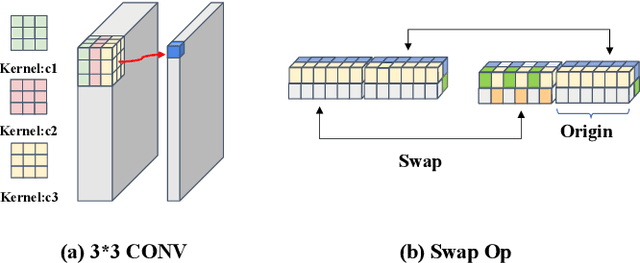
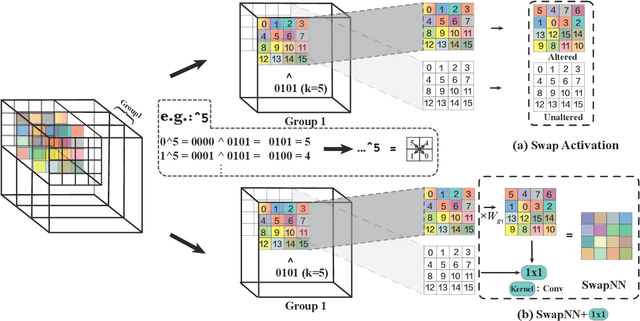
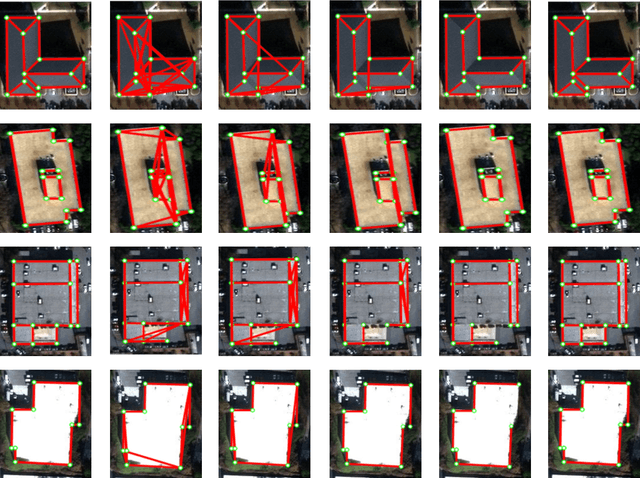
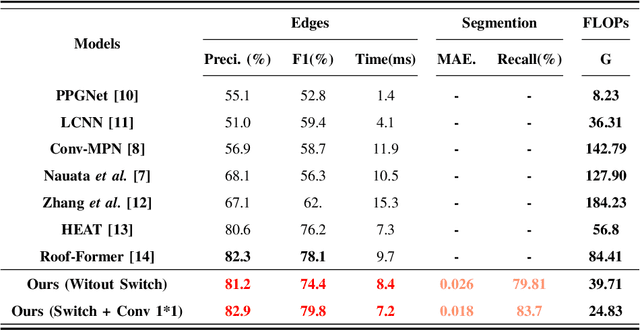
The building planar graph reconstruction, a.k.a. footprint reconstruction, which lies in the domain of computer vision and geoinformatics, has been long afflicted with the challenge of redundant parameters in conventional convolutional models. Therefore, in this paper, we proposed an advanced and adaptive shift architecture, namely the Swap operation, which incorporates non-exponential growth parameters while retaining analogous functionalities to integrate local feature spatial information, resembling a high-dimensional convolution operator. The Swap, cross-channel operation, architecture implements the XOR operation to alternately exchange adjacent or diagonal features, and then blends alternating channels through a 1x1 convolution operation to consolidate information from different channels. The SwapNN architecture, on the other hand, incorporates a group-based parameter-sharing mechanism inspired by the convolutional neural network process and thereby significantly reducing the number of parameters. We validated our proposed approach through experiments on the SpaceNet corpus, a publicly available dataset annotated with 2,001 buildings across the cities of Los Angeles, Las Vegas, and Paris. Our results demonstrate the effectiveness of this innovative architecture in building planar graph reconstruction from 2D building images.
A Novel Driver Distraction Behavior Detection Based on Self-Supervised Learning Framework with Masked Image Modeling
Jun 13, 2023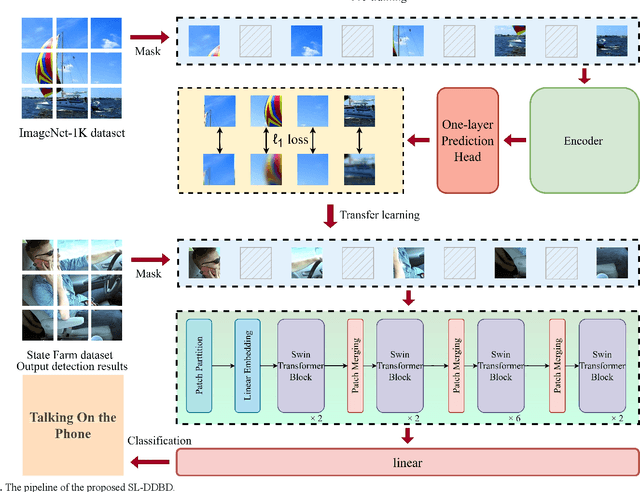
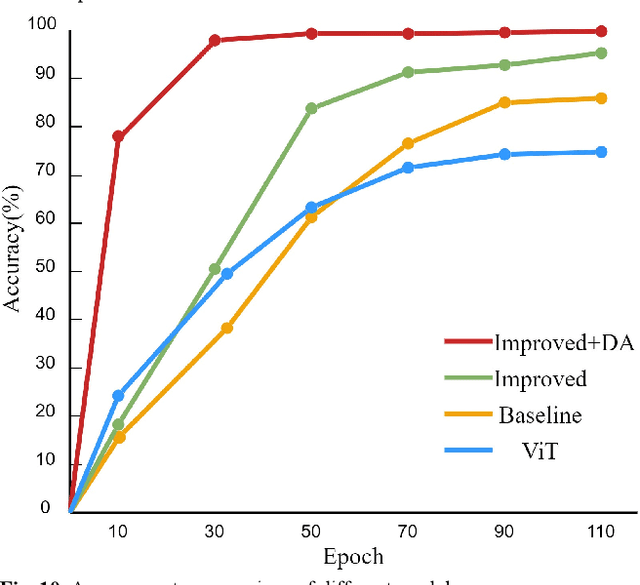
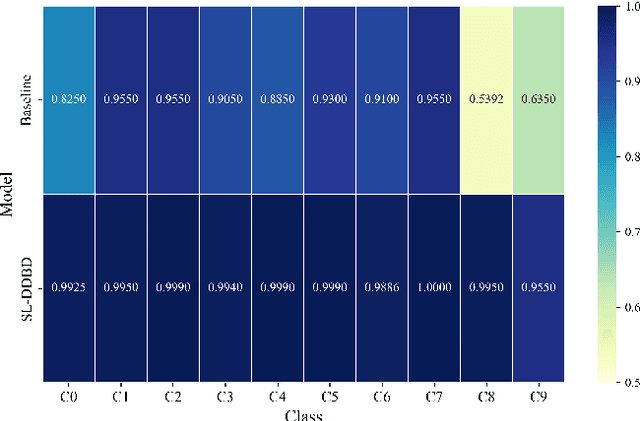
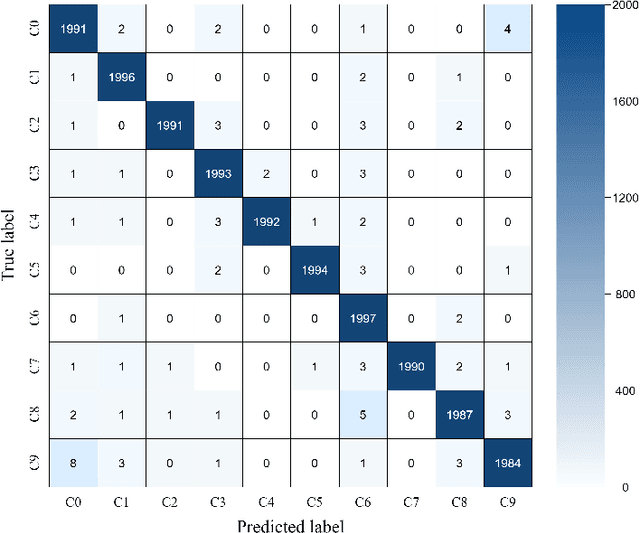
Driver distraction causes a significant number of traffic accidents every year, resulting in economic losses and casualties. Currently, the level of automation in commercial vehicles is far from completely unmanned, and drivers still play an important role in operating and controlling the vehicle. Therefore, driver distraction behavior detection is crucial for road safety. At present, driver distraction detection primarily relies on traditional Convolutional Neural Networks (CNN) and supervised learning methods. However, there are still challenges such as the high cost of labeled datasets, limited ability to capture high-level semantic information, and weak generalization performance. In order to solve these problems, this paper proposes a new self-supervised learning method based on masked image modeling for driver distraction behavior detection. Firstly, a self-supervised learning framework for masked image modeling (MIM) is introduced to solve the serious human and material consumption issues caused by dataset labeling. Secondly, the Swin Transformer is employed as an encoder. Performance is enhanced by reconfiguring the Swin Transformer block and adjusting the distribution of the number of window multi-head self-attention (W-MSA) and shifted window multi-head self-attention (SW-MSA) detection heads across all stages, which leads to model more lightening. Finally, various data augmentation strategies are used along with the best random masking strategy to strengthen the model's recognition and generalization ability. Test results on a large-scale driver distraction behavior dataset show that the self-supervised learning method proposed in this paper achieves an accuracy of 99.60%, approximating the excellent performance of advanced supervised learning methods.
PGformer: Proxy-Bridged Game Transformer for Multi-Person Extremely Interactive Motion Prediction
Jun 12, 2023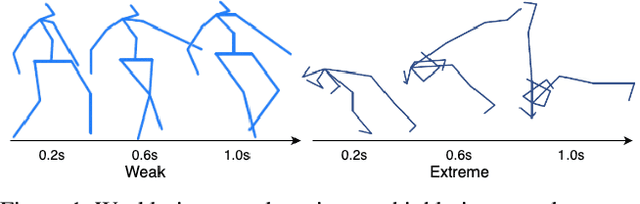
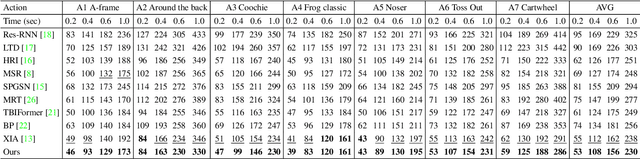
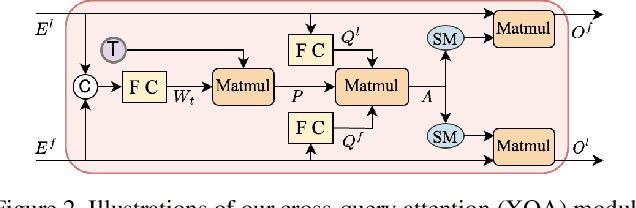
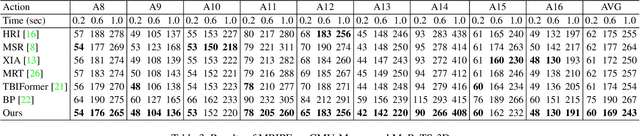
Multi-person motion prediction is a challenging task, especially for real-world scenarios of densely interacted persons. Most previous works have been devoted to studying the case of weak interactions (e.g., hand-shaking), which typically forecast each human pose in isolation. In this paper, we focus on motion prediction for multiple persons with extreme collaborations and attempt to explore the relationships between the highly interactive persons' motion trajectories. Specifically, a novel cross-query attention (XQA) module is proposed to bilaterally learn the cross-dependencies between the two pose sequences tailored for this situation. Additionally, we introduce and build a proxy entity to bridge the involved persons, which cooperates with our proposed XQA module and subtly controls the bidirectional information flows, acting as a motion intermediary. We then adapt these designs to a Transformer-based architecture and devise a simple yet effective end-to-end framework called proxy-bridged game Transformer (PGformer) for multi-person interactive motion prediction. The effectiveness of our method has been evaluated on the challenging ExPI dataset, which involves highly interactive actions. We show that our PGformer consistently outperforms the state-of-the-art methods in both short- and long-term predictions by a large margin. Besides, our approach can also be compatible with the weakly interacted CMU-Mocap and MuPoTS-3D datasets and achieve encouraging results. Our code will become publicly available upon acceptance.
Adaptive Contextual Biasing for Transducer Based Streaming Speech Recognition
Jun 01, 2023By incorporating additional contextual information, deep biasing methods have emerged as a promising solution for speech recognition of personalized words. However, for real-world voice assistants, always biasing on such personalized words with high prediction scores can significantly degrade the performance of recognizing common words. To address this issue, we propose an adaptive contextual biasing method based on Context-Aware Transformer Transducer (CATT) that utilizes the biased encoder and predictor embeddings to perform streaming prediction of contextual phrase occurrences. Such prediction is then used to dynamically switch the bias list on and off, enabling the model to adapt to both personalized and common scenarios. Experiments on Librispeech and internal voice assistant datasets show that our approach can achieve up to 6.7% and 20.7% relative reduction in WER and CER compared to the baseline respectively, mitigating up to 96.7% and 84.9% of the relative WER and CER increase for common cases. Furthermore, our approach has a minimal performance impact in personalized scenarios while maintaining a streaming inference pipeline with negligible RTF increase.
SVDinsTN: An Integrated Method for Tensor Network Representation with Efficient Structure Search
May 24, 2023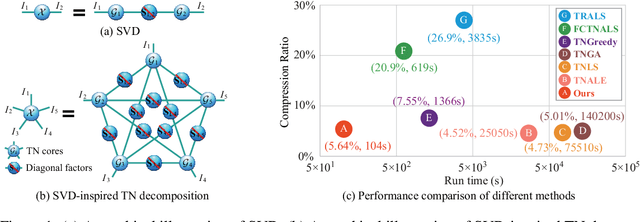


Tensor network (TN) representation is a powerful technique for data analysis and machine learning. It practically involves a challenging TN structure search (TN-SS) problem, which aims to search for the optimal structure to achieve a compact representation. Existing TN-SS methods mainly adopt a bi-level optimization method that leads to excessive computational costs due to repeated structure evaluations. To address this issue, we propose an efficient integrated (single-level) method named SVD-inspired TN decomposition (SVDinsTN), eliminating the need for repeated tedious structure evaluation. By inserting a diagonal factor for each edge of the fully-connected TN, we calculate TN cores and diagonal factors simultaneously, with factor sparsity revealing the most compact TN structure. Experimental results on real-world data demonstrate that SVDinsTN achieves approximately $10^2\sim{}10^3$ times acceleration in runtime compared to the existing TN-SS methods while maintaining a comparable level of representation ability.
Impact of Light and Shadow on Robustness of Deep Neural Networks
May 23, 2023Deep neural networks (DNNs) have made remarkable strides in various computer vision tasks, including image classification, segmentation, and object detection. However, recent research has revealed a vulnerability in advanced DNNs when faced with deliberate manipulations of input data, known as adversarial attacks. Moreover, the accuracy of DNNs is heavily influenced by the distribution of the training dataset. Distortions or perturbations in the color space of input images can introduce out-of-distribution data, resulting in misclassification. In this work, we propose a brightness-variation dataset, which incorporates 24 distinct brightness levels for each image within a subset of ImageNet. This dataset enables us to simulate the effects of light and shadow on the images, so as is to investigate the impact of light and shadow on the performance of DNNs. In our study, we conduct experiments using several state-of-the-art DNN architectures on the aforementioned dataset. Through our analysis, we discover a noteworthy positive correlation between the brightness levels and the loss of accuracy in DNNs. Furthermore, we assess the effectiveness of recently proposed robust training techniques and strategies, including AugMix, Revisit, and Free Normalizer, using the ResNet50 architecture on our brightness-variation dataset. Our experimental results demonstrate that these techniques can enhance the robustness of DNNs against brightness variation, leading to improved performance when dealing with images exhibiting varying brightness levels.
NORM: Knowledge Distillation via N-to-One Representation Matching
May 23, 2023Existing feature distillation methods commonly adopt the One-to-one Representation Matching between any pre-selected teacher-student layer pair. In this paper, we present N-to-One Representation (NORM), a new two-stage knowledge distillation method, which relies on a simple Feature Transform (FT) module consisting of two linear layers. In view of preserving the intact information learnt by the teacher network, during training, our FT module is merely inserted after the last convolutional layer of the student network. The first linear layer projects the student representation to a feature space having N times feature channels than the teacher representation from the last convolutional layer, and the second linear layer contracts the expanded output back to the original feature space. By sequentially splitting the expanded student representation into N non-overlapping feature segments having the same number of feature channels as the teacher's, they can be readily forced to approximate the intact teacher representation simultaneously, formulating a novel many-to-one representation matching mechanism conditioned on a single teacher-student layer pair. After training, such an FT module will be naturally merged into the subsequent fully connected layer thanks to its linear property, introducing no extra parameters or architectural modifications to the student network at inference. Extensive experiments on different visual recognition benchmarks demonstrate the leading performance of our method. For instance, the ResNet18|MobileNet|ResNet50-1/4 model trained by NORM reaches 72.14%|74.26%|68.03% top-1 accuracy on the ImageNet dataset when using a pre-trained ResNet34|ResNet50|ResNet50 model as the teacher, achieving an absolute improvement of 2.01%|4.63%|3.03% against the individually trained counterpart. Code is available at https://github.com/OSVAI/NORM
Alternating Local Enumeration (TnALE): Solving Tensor Network Structure Search with Fewer Evaluations
May 08, 2023
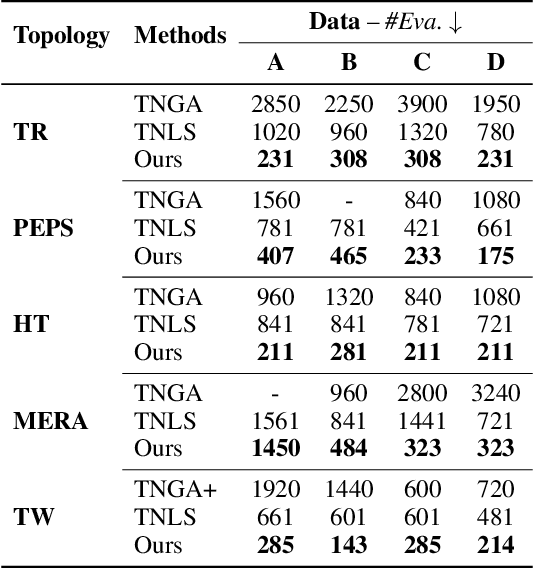
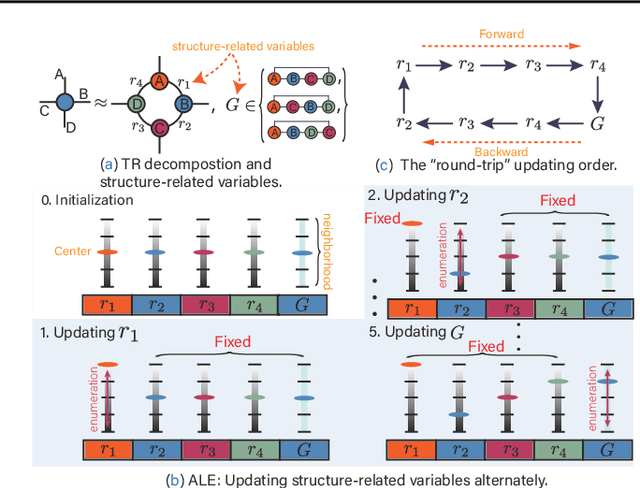
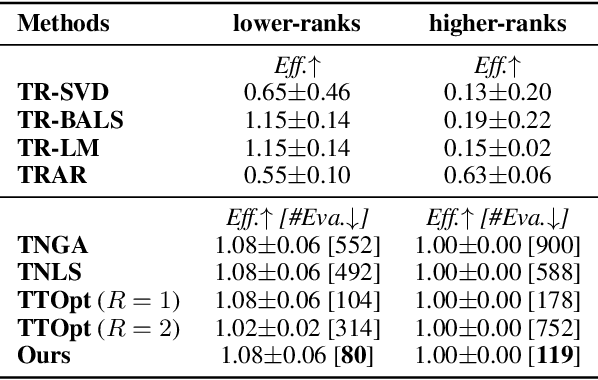
Tensor network (TN) is a powerful framework in machine learning, but selecting a good TN model, known as TN structure search (TN-SS), is a challenging and computationally intensive task. The recent approach TNLS~\cite{li2022permutation} showed promising results for this task, however, its computational efficiency is still unaffordable, requiring too many evaluations of the objective function. We propose TnALE, a new algorithm that updates each structure-related variable alternately by local enumeration, \emph{greatly} reducing the number of evaluations compared to TNLS. We theoretically investigate the descent steps for TNLS and TnALE, proving that both algorithms can achieve linear convergence up to a constant if a sufficient reduction of the objective is \emph{reached} in each neighborhood. We also compare the evaluation efficiency of TNLS and TnALE, revealing that $\Omega(2^N)$ evaluations are typically required in TNLS for \emph{reaching} the objective reduction in the neighborhood, while ideally $O(N^2R)$ evaluations are sufficient in TnALE, where $N$ denotes the tensor order and $R$ reflects the \emph{``low-rankness''} of the neighborhood. Experimental results verify that TnALE can find practically good TN-ranks and permutations with vastly fewer evaluations than the state-of-the-art algorithms.
Physics-based network fine-tuning for robust quantitative susceptibility mapping from high-pass filtered phase
May 05, 2023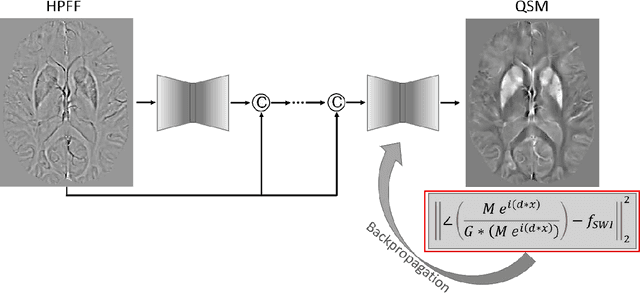
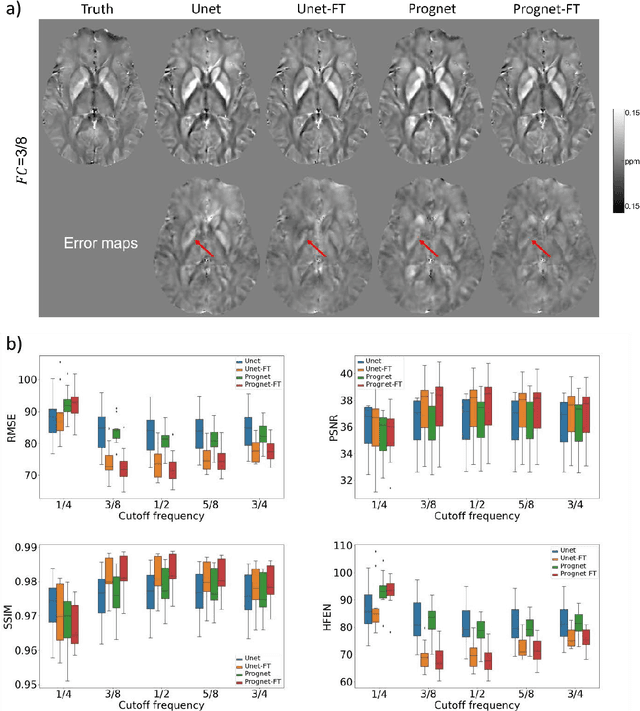
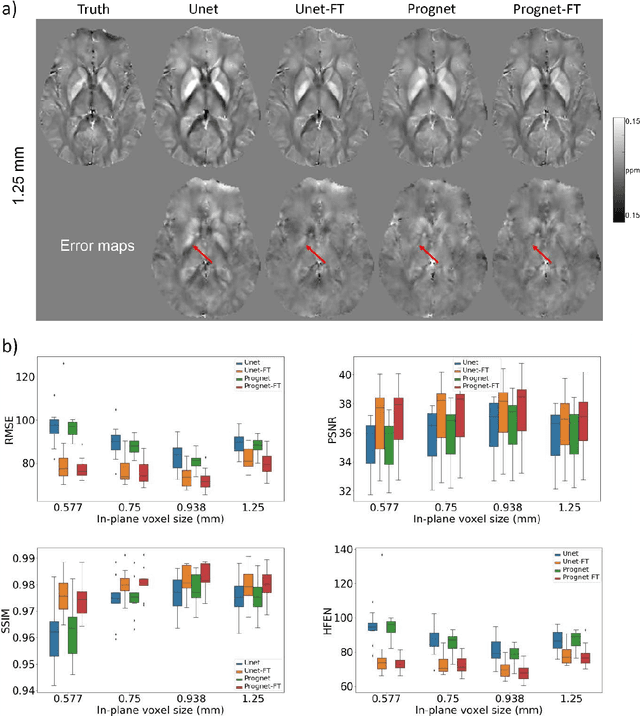
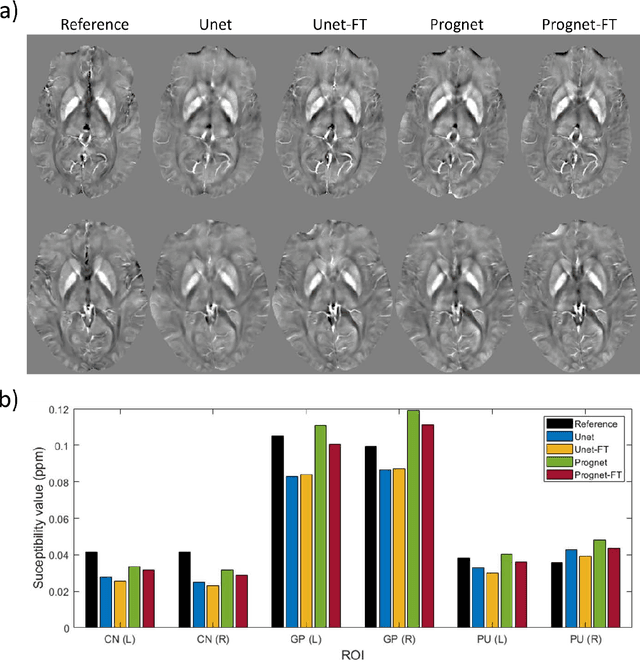
Purpose: To improve the generalization ability of convolutional neural network (CNN) based prediction of quantitative susceptibility mapping (QSM) from high-pass filtered phase (HPFP) image. Methods: The proposed network addresses two common generalization issues that arise when using a pre-trained network to predict QSM from HPFP: a) data with unseen voxel sizes, and b) data with unknown high-pass filter parameters. A network fine-tuning step based on a high-pass filtering dipole convolution forward model is proposed to reduce the generalization error of the pre-trained network. A progressive Unet architecture is proposed to improve prediction accuracy without increasing fine-tuning computational cost. Results: In retrospective studies using RMSE, PSNR, SSIM and HFEN as quality metrics, the performance of both Unet and progressive Unet was improved after physics-based fine-tuning at all voxel sizes and most high-pass filtering cutoff frequencies tested in the experiment. Progressive Unet slightly outperformed Unet both before and after fine-tuning. In a prospective study, image sharpness was improved after physics-based fine-tuning for both Unet and progressive Unet. Compared to Unet, progressive Unet had better agreement of regional susceptibility values with reference QSM. Conclusion: The proposed method shows improved robustness compared to the pre-trained network without fine-tuning when the test dataset deviates from training. Our code is available at https://github.com/Jinwei1209/SWI_to_QSM/