 Add to Chrome
 Add to Firefox
 Add to Edge
Bootstrapping Audio-Visual Segmentation by Strengthening Audio Cues
Feb 06, 2024


How to effectively interact audio with vision has garnered considerable interest within the multi-modality research field. Recently, a novel audio-visual segmentation (AVS) task has been proposed, aiming to segment the sounding objects in video frames under the guidance of audio cues. However, most existing AVS methods are hindered by a modality imbalance where the visual features tend to dominate those of the audio modality, due to a unidirectional and insufficient integration of audio cues. This imbalance skews the feature representation towards the visual aspect, impeding the learning of joint audio-visual representations and potentially causing segmentation inaccuracies. To address this issue, we propose AVSAC. Our approach features a Bidirectional Audio-Visual Decoder (BAVD) with integrated bidirectional bridges, enhancing audio cues and fostering continuous interplay between audio and visual modalities. This bidirectional interaction narrows the modality imbalance, facilitating more effective learning of integrated audio-visual representations. Additionally, we present a strategy for audio-visual frame-wise synchrony as fine-grained guidance of BAVD. This strategy enhances the share of auditory components in visual features, contributing to a more balanced audio-visual representation learning. Extensive experiments show that our method attains new benchmarks in AVS performance.

TCI-Former: Thermal Conduction-Inspired Transformer for Infrared Small Target Detection
Feb 03, 2024


Infrared small target detection (ISTD) is critical to national security and has been extensively applied in military areas. ISTD aims to segment small target pixels from background. Most ISTD networks focus on designing feature extraction blocks or feature fusion modules, but rarely describe the ISTD process from the feature map evolution perspective. In the ISTD process, the network attention gradually shifts towards target areas. We abstract this process as the directional movement of feature map pixels to target areas through convolution, pooling and interactions with surrounding pixels, which can be analogous to the movement of thermal particles constrained by surrounding variables and particles. In light of this analogy, we propose Thermal Conduction-Inspired Transformer (TCI-Former) based on the theoretical principles of thermal conduction. According to thermal conduction differential equation in heat dynamics, we derive the pixel movement differential equation (PMDE) in the image domain and further develop two modules: Thermal Conduction-Inspired Attention (TCIA) and Thermal Conduction Boundary Module (TCBM). TCIA incorporates finite difference method with PMDE to reach a numerical approximation so that target body features can be extracted. To further remove errors in boundary areas, TCBM is designed and supervised by boundary masks to refine target body features with fine boundary details. Experiments on IRSTD-1k and NUAA-SIRST demonstrate the superiority of our method.
WiOpen: A Robust Wi-Fi-based Open-set Gesture Recognition Framework
Feb 01, 2024Recent years have witnessed a growing interest in Wi-Fi-based gesture recognition. However, existing works have predominantly focused on closed-set paradigms, where all testing gestures are predefined during training. This poses a significant challenge in real-world applications, as unseen gestures might be misclassified as known classes during testing. To address this issue, we propose WiOpen, a robust Wi-Fi-based Open-Set Gesture Recognition (OSGR) framework. Implementing OSGR requires addressing challenges caused by the unique uncertainty in Wi-Fi sensing. This uncertainty, resulting from noise and domains, leads to widely scattered and irregular data distributions in collected Wi-Fi sensing data. Consequently, data ambiguity between classes and challenges in defining appropriate decision boundaries to identify unknowns arise. To tackle these challenges, WiOpen adopts a two-fold approach to eliminate uncertainty and define precise decision boundaries. Initially, it addresses uncertainty induced by noise during data preprocessing by utilizing the CSI ratio. Next, it designs the OSGR network based on an uncertainty quantification method. Throughout the learning process, this network effectively mitigates uncertainty stemming from domains. Ultimately, the network leverages relationships among samples' neighbors to dynamically define open-set decision boundaries, successfully realizing OSGR. Comprehensive experiments on publicly accessible datasets confirm WiOpen's effectiveness. Notably, WiOpen also demonstrates superiority in cross-domain tasks when compared to state-of-the-art approaches.
HiCMAE: Hierarchical Contrastive Masked Autoencoder for Self-Supervised Audio-Visual Emotion Recognition
Jan 11, 2024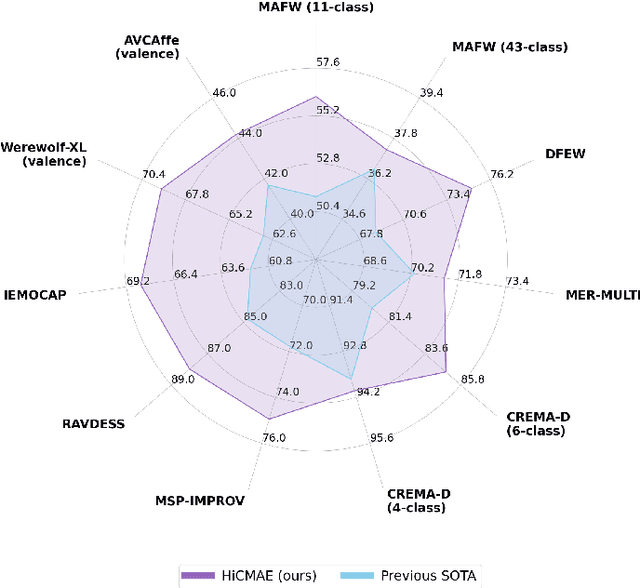
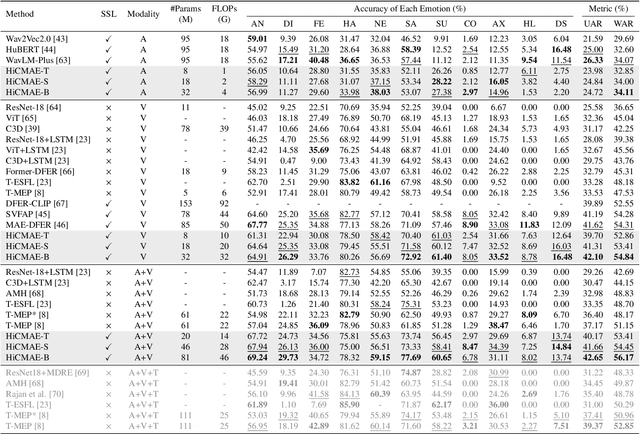
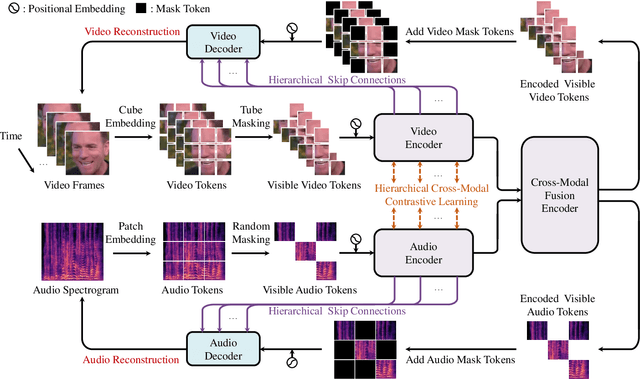
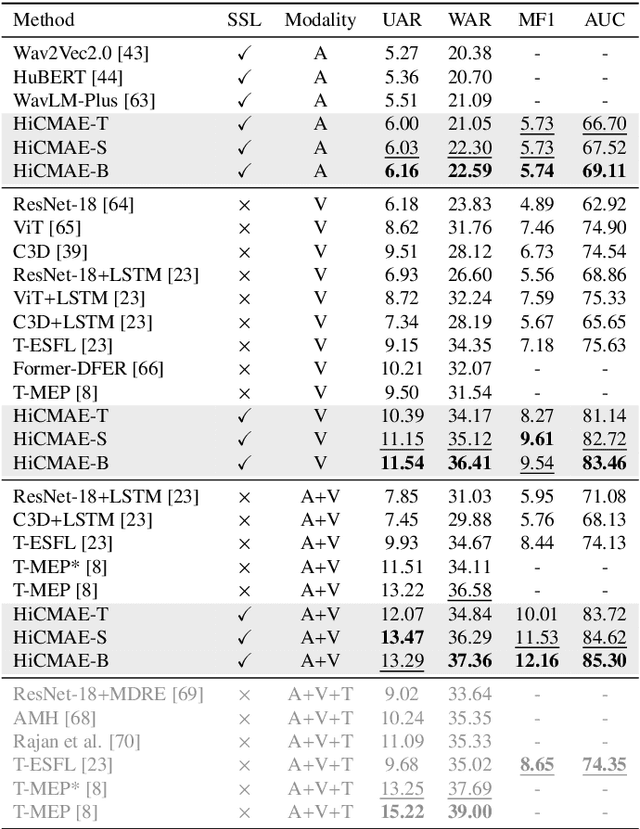
Audio-Visual Emotion Recognition (AVER) has garnered increasing attention in recent years for its critical role in creating emotion-ware intelligent machines. Previous efforts in this area are dominated by the supervised learning paradigm. Despite significant progress, supervised learning is meeting its bottleneck due to the longstanding data scarcity issue in AVER. Motivated by recent advances in self-supervised learning, we propose Hierarchical Contrastive Masked Autoencoder (HiCMAE), a novel self-supervised framework that leverages large-scale self-supervised pre-training on vast unlabeled audio-visual data to promote the advancement of AVER. Following prior arts in self-supervised audio-visual representation learning, HiCMAE adopts two primary forms of self-supervision for pre-training, namely masked data modeling and contrastive learning. Unlike them which focus exclusively on top-layer representations while neglecting explicit guidance of intermediate layers, HiCMAE develops a three-pronged strategy to foster hierarchical audio-visual feature learning and improve the overall quality of learned representations. To verify the effectiveness of HiCMAE, we conduct extensive experiments on 9 datasets covering both categorical and dimensional AVER tasks. Experimental results show that our method significantly outperforms state-of-the-art supervised and self-supervised audio-visual methods, which indicates that HiCMAE is a powerful audio-visual emotion representation learner. Codes and models will be publicly available at https://github.com/sunlicai/HiCMAE.
SVFAP: Self-supervised Video Facial Affect Perceiver
Dec 31, 2023
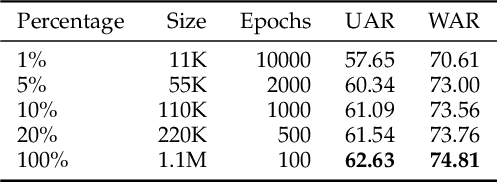
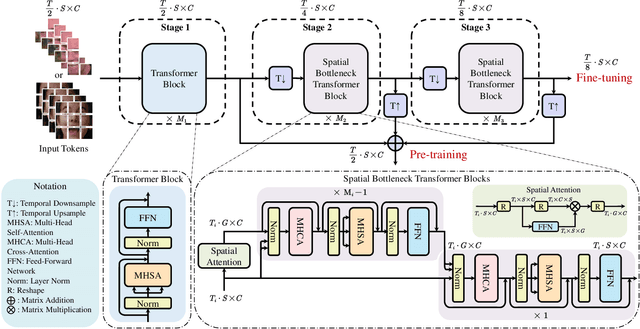
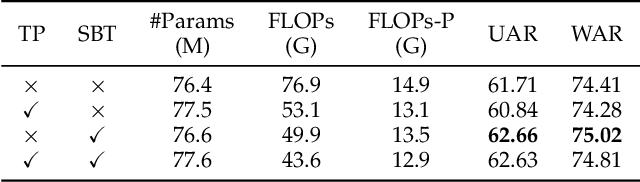
Video-based facial affect analysis has recently attracted increasing attention owing to its critical role in human-computer interaction. Previous studies mainly focus on developing various deep learning architectures and training them in a fully supervised manner. Although significant progress has been achieved by these supervised methods, the longstanding lack of large-scale high-quality labeled data severely hinders their further improvements. Motivated by the recent success of self-supervised learning in computer vision, this paper introduces a self-supervised approach, termed Self-supervised Video Facial Affect Perceiver (SVFAP), to address the dilemma faced by supervised methods. Specifically, SVFAP leverages masked facial video autoencoding to perform self-supervised pre-training on massive unlabeled facial videos. Considering that large spatiotemporal redundancy exists in facial videos, we propose a novel temporal pyramid and spatial bottleneck Transformer as the encoder of SVFAP, which not only enjoys low computational cost but also achieves excellent performance. To verify the effectiveness of our method, we conduct experiments on nine datasets spanning three downstream tasks, including dynamic facial expression recognition, dimensional emotion recognition, and personality recognition. Comprehensive results demonstrate that SVFAP can learn powerful affect-related representations via large-scale self-supervised pre-training and it significantly outperforms previous state-of-the-art methods on all datasets. Codes will be available at https://github.com/sunlicai/SVFAP.
Coordinated Navigation Control of Cross-Domain Unmanned Systems via Guiding Vector Fields
Dec 18, 2023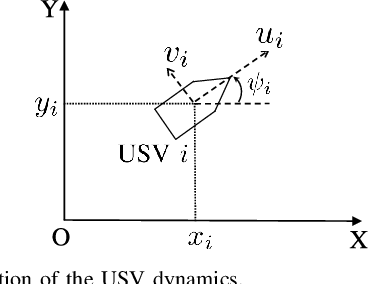
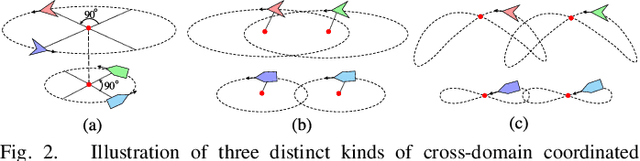
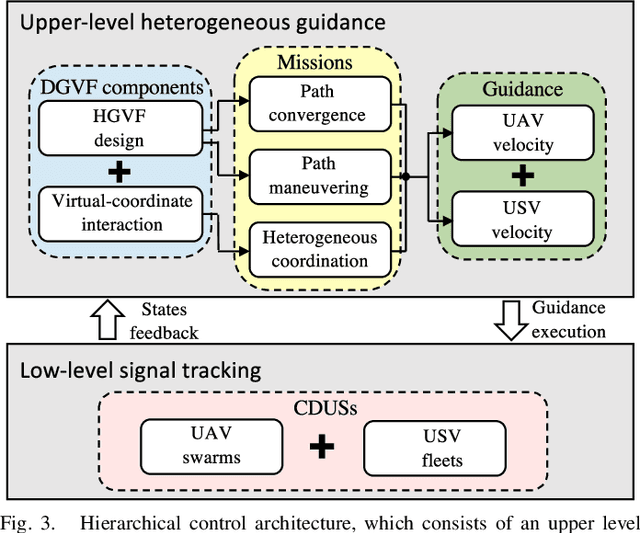
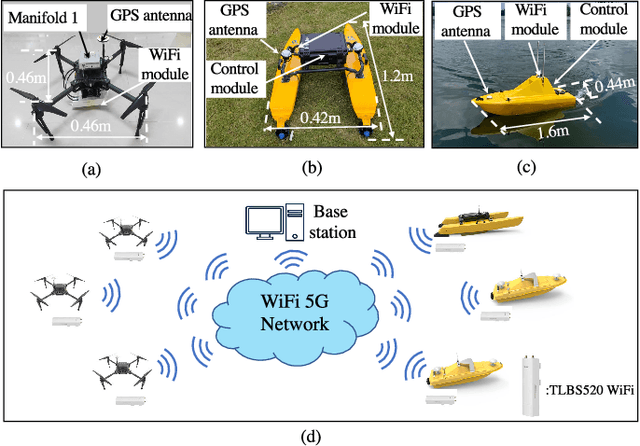
This paper proposes a distributed guiding-vector-field (DGVF) controller for cross-domain unmanned systems (CDUSs) consisting of heterogeneous unmanned aerial vehicles (UAVs) and unmanned surface vehicles (USVs), to achieve coordinated navigation whereas maneuvering along their prescribed paths. In particular, the DGVF controller provides a hierarchical architecture of an upper-level heterogeneous guidance velocity controller and a lower-level signal tracking regulator. Therein, the upper-level controller is to govern multiple heterogeneous USVs and UAVs to approach and maneuver along the prescribed paths and coordinate the formation simultaneously, whereas the low-level regulator is to track the corresponding desired guidance signals provided by the upper-level module. Significantly, the heterogeneous coordination among neighboring UAVs and USVs is achieved merely by the lightweight communication of a scalar (i.e., the additional virtual coordinate), which substantially decreases the communication and computational costs. Sufficient conditions assuring asymptotical convergence of the closed-loop system are derived in presence of the exponentially vanishing tracking errors. Finally, real-lake experiments are conducted on a self-established cross-domain heterogeneous platform consisting of three M-100 UAVs, two HUSTER-16 USVs, a HUSTER-12C USV, and a WiFi 5G wireless communication station to verify the effectiveness of the present DGVF controller.
* 14 pages
GPT-4V with Emotion: A Zero-shot Benchmark for Multimodal Emotion Understanding
Dec 07, 2023


Recently, GPT-4 with Vision (GPT-4V) has shown remarkable performance across various multimodal tasks. However, its efficacy in emotion recognition remains a question. This paper quantitatively evaluates GPT-4V's capabilities in multimodal emotion understanding, encompassing tasks such as facial emotion recognition, visual sentiment analysis, micro-expression recognition, dynamic facial emotion recognition, and multimodal emotion recognition. Our experiments show that GPT-4V exhibits impressive multimodal and temporal understanding capabilities, even surpassing supervised systems in some tasks. Despite these achievements, GPT-4V is currently tailored for general domains. It performs poorly in micro-expression recognition that requires specialized expertise. The main purpose of this paper is to present quantitative results of GPT-4V on emotion understanding and establish a zero-shot benchmark for future research. Code and evaluation results are available at: https://github.com/zeroQiaoba/gpt4v-emotion.
Towards More Unified In-context Visual Understanding
Dec 05, 2023
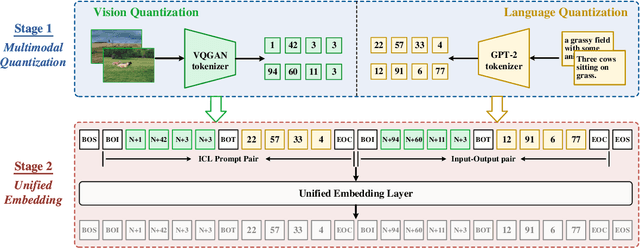
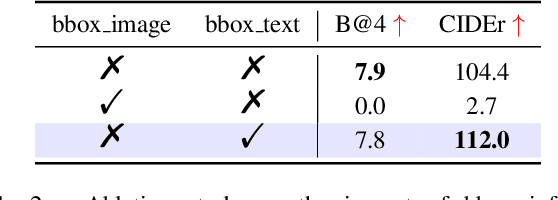
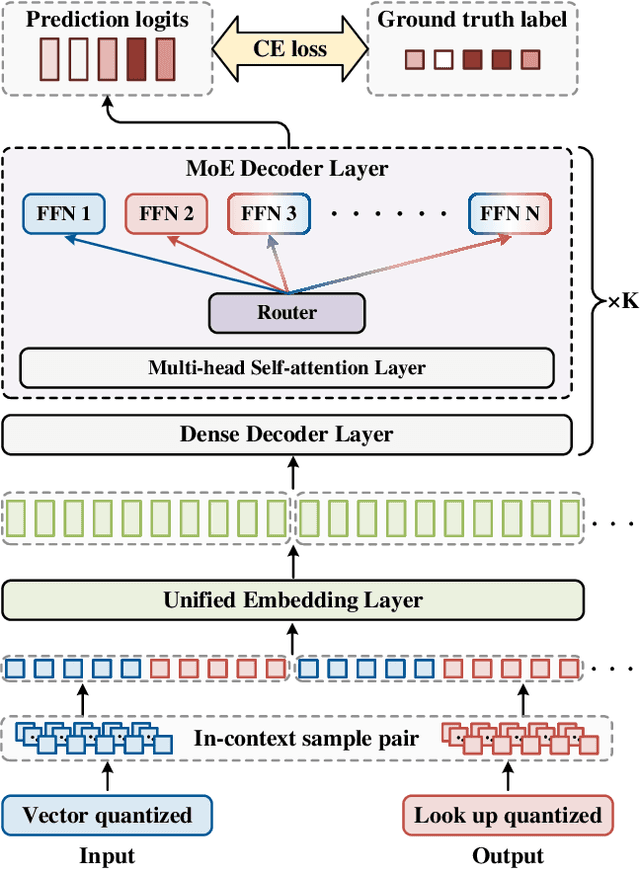
The rapid advancement of large language models (LLMs) has accelerated the emergence of in-context learning (ICL) as a cutting-edge approach in the natural language processing domain. Recently, ICL has been employed in visual understanding tasks, such as semantic segmentation and image captioning, yielding promising results. However, existing visual ICL framework can not enable producing content across multiple modalities, which limits their potential usage scenarios. To address this issue, we present a new ICL framework for visual understanding with multi-modal output enabled. First, we quantize and embed both text and visual prompt into a unified representational space, structured as interleaved in-context sequences. Then a decoder-only sparse transformer architecture is employed to perform generative modeling on them, facilitating in-context learning. Thanks to this design, the model is capable of handling in-context vision understanding tasks with multimodal output in a unified pipeline. Experimental results demonstrate that our model achieves competitive performance compared with specialized models and previous ICL baselines. Overall, our research takes a further step toward unified multimodal in-context learning.
Large Language Model is a Good Policy Teacher for Training Reinforcement Learning Agents
Nov 29, 2023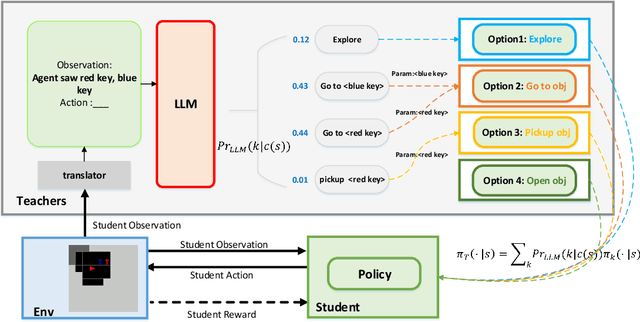
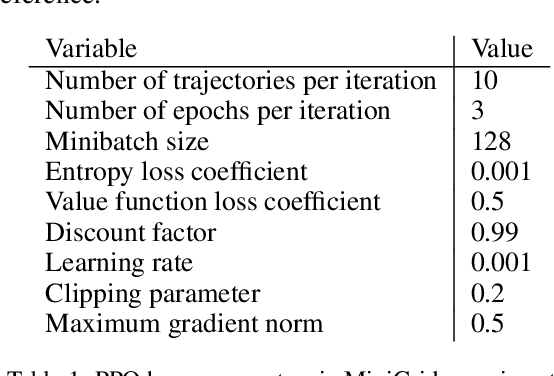
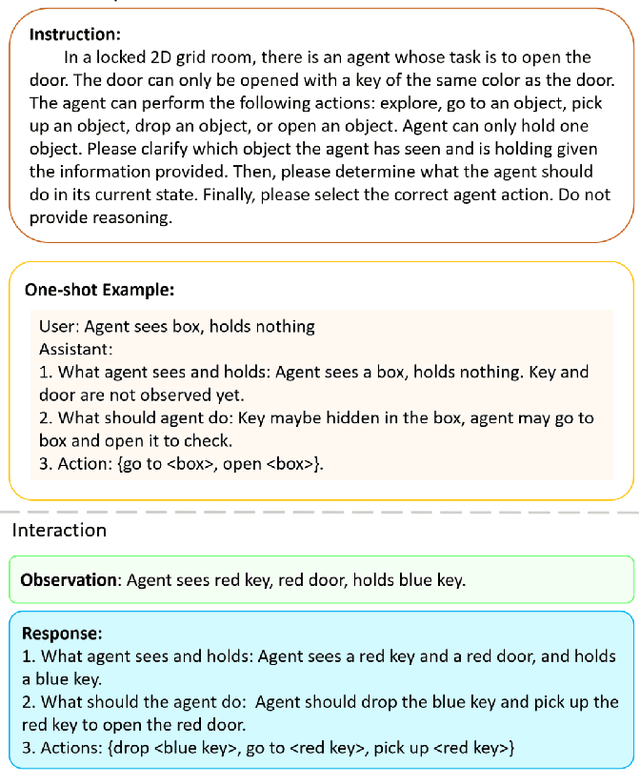
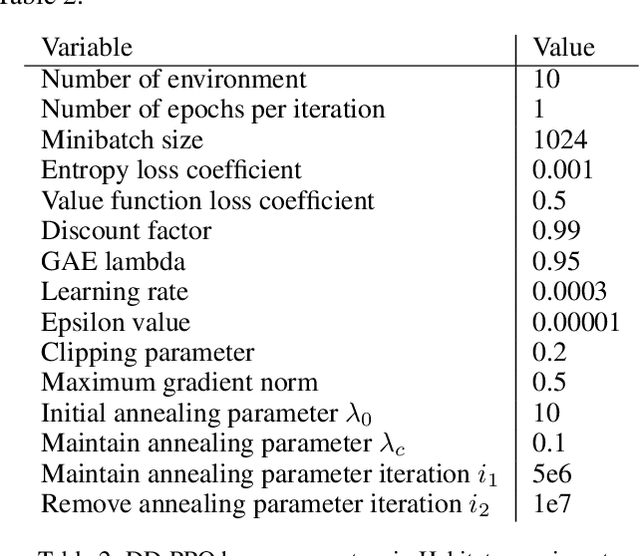
Recent studies have shown that Large Language Models (LLMs) can be utilized for solving complex sequential decision-making tasks by providing high-level instructions. However, LLM-based agents face limitations in real-time dynamic environments due to their lack of specialization in solving specific target problems. Moreover, the deployment of such LLM-based agents is both costly and time-consuming in practical scenarios. In this paper, we introduce a novel framework that addresses these challenges by training a smaller scale specialized student agent using instructions from an LLM-based teacher agent. By leveraging guided actions provided by the teachers, the prior knowledge of the LLM is distilled into the local student model. Consequently, the student agent can be trained with significantly less data. Furthermore, subsequent training with environment feedback empowers the student agents to surpass the capabilities of their teachers. We conducted experiments on three challenging MiniGrid environments to evaluate the effectiveness of our framework. The results demonstrate that our approach enhances sample efficiency and achieves superior performance compared to baseline methods. Our code is available at https://github.com/ZJLAB-AMMI/LLM4Teach.
Filter Pruning For CNN With Enhanced Linear Representation Redundancy
Oct 10, 2023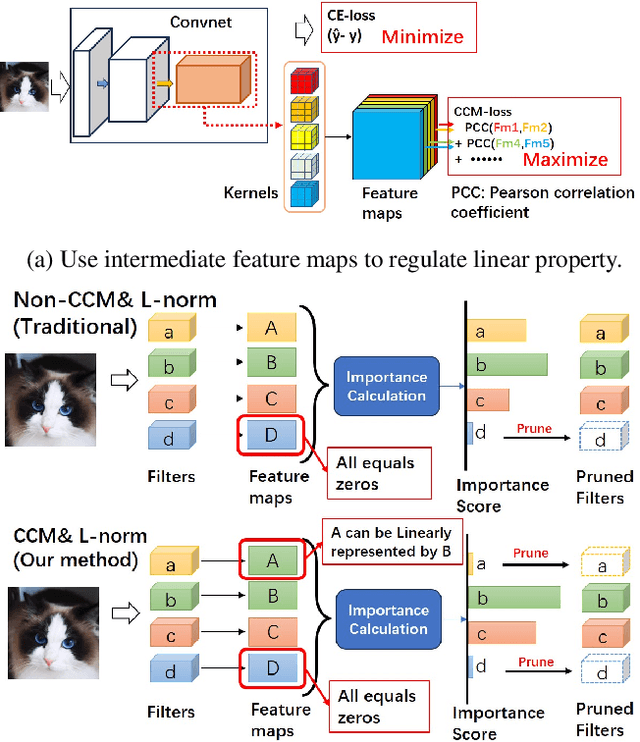
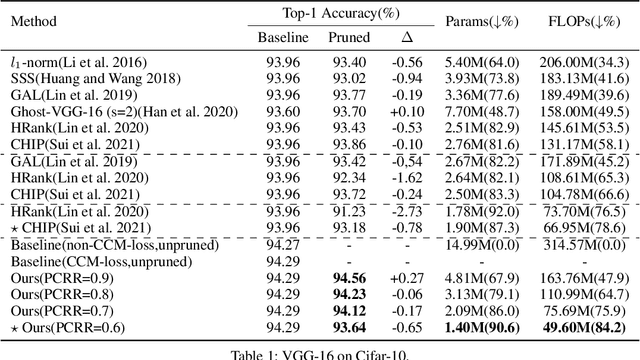
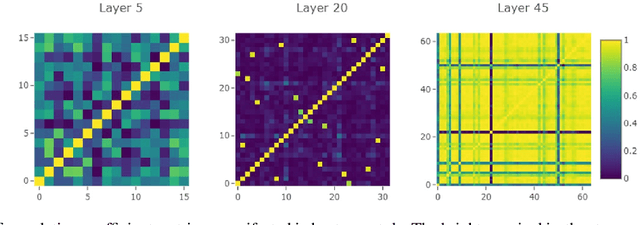

Structured network pruning excels non-structured methods because they can take advantage of the thriving developed parallel computing techniques. In this paper, we propose a new structured pruning method. Firstly, to create more structured redundancy, we present a data-driven loss function term calculated from the correlation coefficient matrix of different feature maps in the same layer, named CCM-loss. This loss term can encourage the neural network to learn stronger linear representation relations between feature maps during the training from the scratch so that more homogenous parts can be removed later in pruning. CCM-loss provides us with another universal transcendental mathematical tool besides L*-norm regularization, which concentrates on generating zeros, to generate more redundancy but for the different genres. Furthermore, we design a matching channel selection strategy based on principal components analysis to exploit the maximum potential ability of CCM-loss. In our new strategy, we mainly focus on the consistency and integrality of the information flow in the network. Instead of empirically hard-code the retain ratio for each layer, our channel selection strategy can dynamically adjust each layer's retain ratio according to the specific circumstance of a per-trained model to push the prune ratio to the limit. Notably, on the Cifar-10 dataset, our method brings 93.64% accuracy for pruned VGG-16 with only 1.40M parameters and 49.60M FLOPs, the pruned ratios for parameters and FLOPs are 90.6% and 84.2%, respectively. For ResNet-50 trained on the ImageNet dataset, our approach achieves 42.8% and 47.3% storage and computation reductions, respectively, with an accuracy of 76.23%. Our code is available at https://github.com/Bojue-Wang/CCM-LRR.