 Add to Chrome
 Add to Firefox
 Add to Edge
Controllable Prompt Tuning For Balancing Group Distributional Robustness
Mar 05, 2024
Models trained on data composed of different groups or domains can suffer from severe performance degradation under distribution shifts. While recent methods have largely focused on optimizing the worst-group objective, this often comes at the expense of good performance on other groups. To address this problem, we introduce an optimization scheme to achieve good performance across groups and find a good solution for all without severely sacrificing performance on any of them. However, directly applying such optimization involves updating the parameters of the entire network, making it both computationally expensive and challenging. Thus, we introduce Controllable Prompt Tuning (CPT), which couples our approach with prompt-tuning techniques. On spurious correlation benchmarks, our procedures achieve state-of-the-art results across both transformer and non-transformer architectures, as well as unimodal and multimodal data, while requiring only 0.4% tunable parameters.

Fine-Tuned Language Models Generate Stable Inorganic Materials as Text
Feb 06, 2024We propose fine-tuning large language models for generation of stable materials. While unorthodox, fine-tuning large language models on text-encoded atomistic data is simple to implement yet reliable, with around 90% of sampled structures obeying physical constraints on atom positions and charges. Using energy above hull calculations from both learned ML potentials and gold-standard DFT calculations, we show that our strongest model (fine-tuned LLaMA-2 70B) can generate materials predicted to be metastable at about twice the rate (49% vs 28%) of CDVAE, a competing diffusion model. Because of text prompting's inherent flexibility, our models can simultaneously be used for unconditional generation of stable material, infilling of partial structures and text-conditional generation. Finally, we show that language models' ability to capture key symmetries of crystal structures improves with model scale, suggesting that the biases of pretrained LLMs are surprisingly well-suited for atomistic data.
Position Paper: Bayesian Deep Learning in the Age of Large-Scale AI
Feb 06, 2024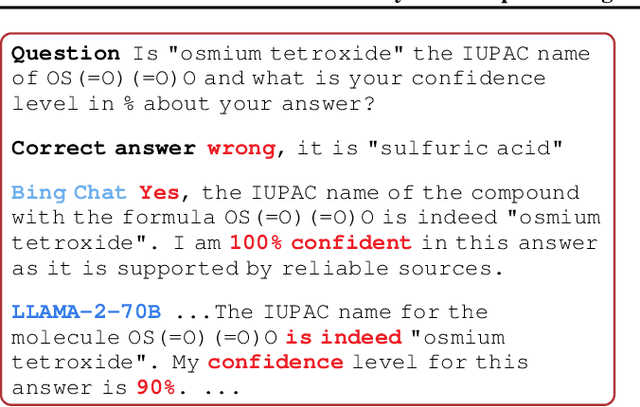

In the current landscape of deep learning research, there is a predominant emphasis on achieving high predictive accuracy in supervised tasks involving large image and language datasets. However, a broader perspective reveals a multitude of overlooked metrics, tasks, and data types, such as uncertainty, active and continual learning, and scientific data, that demand attention. Bayesian deep learning (BDL) constitutes a promising avenue, offering advantages across these diverse settings. This paper posits that BDL can elevate the capabilities of deep learning. It revisits the strengths of BDL, acknowledges existing challenges, and highlights some exciting research avenues aimed at addressing these obstacles. Looking ahead, the discussion focuses on possible ways to combine large-scale foundation models with BDL to unlock their full potential.
Function-Space Regularization in Neural Networks: A Probabilistic Perspective
Dec 28, 2023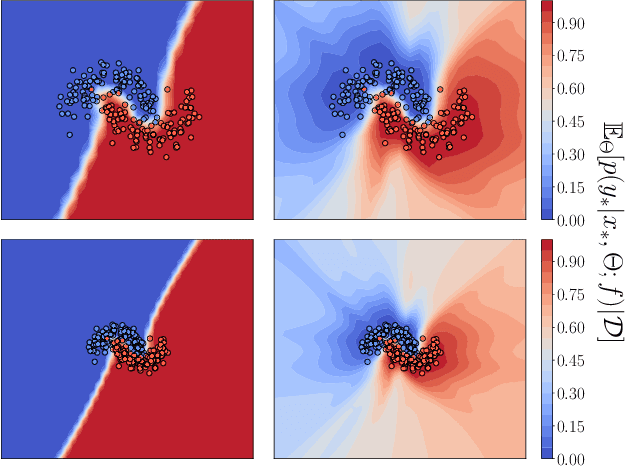
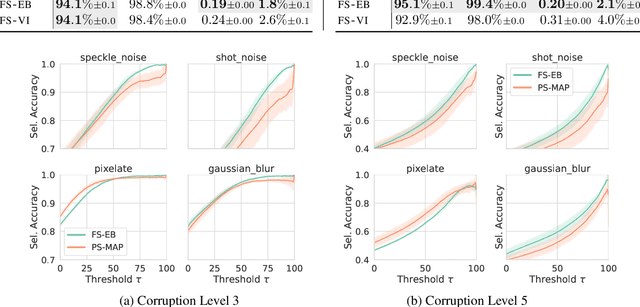
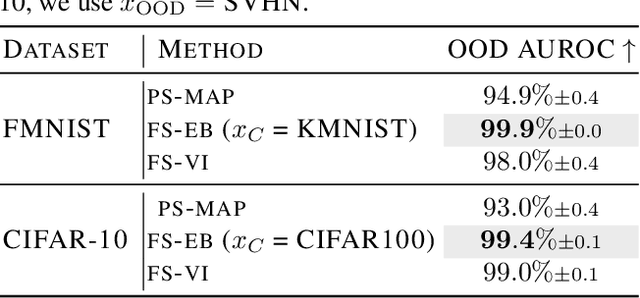
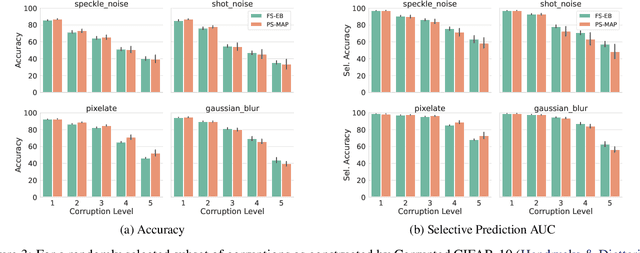
Parameter-space regularization in neural network optimization is a fundamental tool for improving generalization. However, standard parameter-space regularization methods make it challenging to encode explicit preferences about desired predictive functions into neural network training. In this work, we approach regularization in neural networks from a probabilistic perspective and show that by viewing parameter-space regularization as specifying an empirical prior distribution over the model parameters, we can derive a probabilistically well-motivated regularization technique that allows explicitly encoding information about desired predictive functions into neural network training. This method -- which we refer to as function-space empirical Bayes (FSEB) -- includes both parameter- and function-space regularization, is mathematically simple, easy to implement, and incurs only minimal computational overhead compared to standard regularization techniques. We evaluate the utility of this regularization technique empirically and demonstrate that the proposed method leads to near-perfect semantic shift detection, highly-calibrated predictive uncertainty estimates, successful task adaption from pre-trained models, and improved generalization under covariate shift.
Visual Explanations of Image-Text Representations via Multi-Modal Information Bottleneck Attribution
Dec 28, 2023Vision-language pretrained models have seen remarkable success, but their application to safety-critical settings is limited by their lack of interpretability. To improve the interpretability of vision-language models such as CLIP, we propose a multi-modal information bottleneck (M2IB) approach that learns latent representations that compress irrelevant information while preserving relevant visual and textual features. We demonstrate how M2IB can be applied to attribution analysis of vision-language pretrained models, increasing attribution accuracy and improving the interpretability of such models when applied to safety-critical domains such as healthcare. Crucially, unlike commonly used unimodal attribution methods, M2IB does not require ground truth labels, making it possible to audit representations of vision-language pretrained models when multiple modalities but no ground-truth data is available. Using CLIP as an example, we demonstrate the effectiveness of M2IB attribution and show that it outperforms gradient-based, perturbation-based, and attention-based attribution methods both qualitatively and quantitatively.
Non-Vacuous Generalization Bounds for Large Language Models
Dec 28, 2023Modern language models can contain billions of parameters, raising the question of whether they can generalize beyond the training data or simply regurgitate their training corpora. We provide the first non-vacuous generalization bounds for pretrained large language models (LLMs), indicating that language models are capable of discovering regularities that generalize to unseen data. In particular, we derive a compression bound that is valid for the unbounded log-likelihood loss using prediction smoothing, and we extend the bound to handle subsampling, accelerating bound computation on massive datasets. To achieve the extreme level of compression required for non-vacuous generalization bounds, we devise SubLoRA, a low-dimensional non-linear parameterization. Using this approach, we find that larger models have better generalization bounds and are more compressible than smaller models.
Perspectives on the State and Future of Deep Learning - 2023
Dec 19, 2023The goal of this series is to chronicle opinions and issues in the field of machine learning as they stand today and as they change over time. The plan is to host this survey periodically until the AI singularity paperclip-frenzy-driven doomsday, keeping an updated list of topical questions and interviewing new community members for each edition. In this issue, we probed people's opinions on interpretable AI, the value of benchmarking in modern NLP, the state of progress towards understanding deep learning, and the future of academia.
Materials Expert-Artificial Intelligence for Materials Discovery
Dec 05, 2023
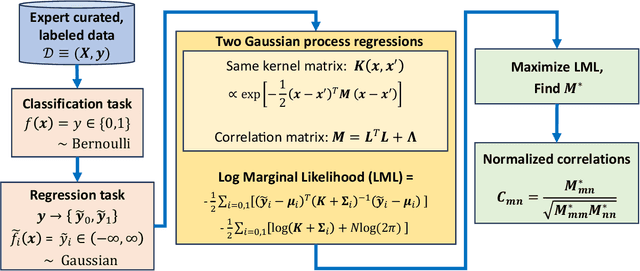

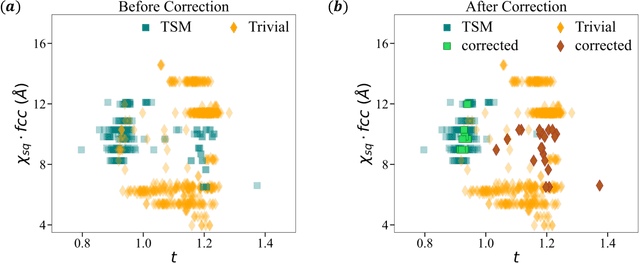
The advent of material databases provides an unprecedented opportunity to uncover predictive descriptors for emergent material properties from vast data space. However, common reliance on high-throughput ab initio data necessarily inherits limitations of such data: mismatch with experiments. On the other hand, experimental decisions are often guided by an expert's intuition honed from experiences that are rarely articulated. We propose using machine learning to "bottle" such operational intuition into quantifiable descriptors using expertly curated measurement-based data. We introduce "Materials Expert-Artificial Intelligence" (ME-AI) to encapsulate and articulate this human intuition. As a first step towards such a program, we focus on the topological semimetal (TSM) among square-net materials as the property inspired by the expert-identified descriptor based on structural information: the tolerance factor. We start by curating a dataset encompassing 12 primary features of 879 square-net materials, using experimental data whenever possible. We then use Dirichlet-based Gaussian process regression using a specialized kernel to reveal composite descriptors for square-net topological semimetals. The ME-AI learned descriptors independently reproduce expert intuition and expand upon it. Specifically, new descriptors point to hypervalency as a critical chemical feature predicting TSM within square-net compounds. Our success with a carefully defined problem points to the "machine bottling human insight" approach as promising for machine learning-aided material discovery.
Simplifying Neural Network Training Under Class Imbalance
Dec 05, 2023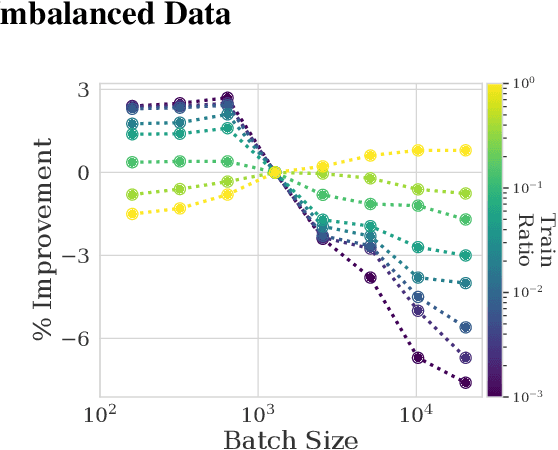
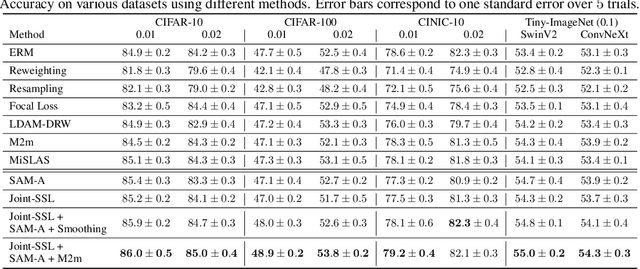
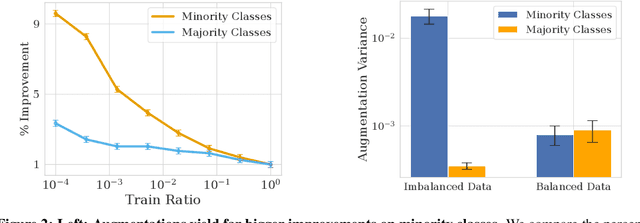
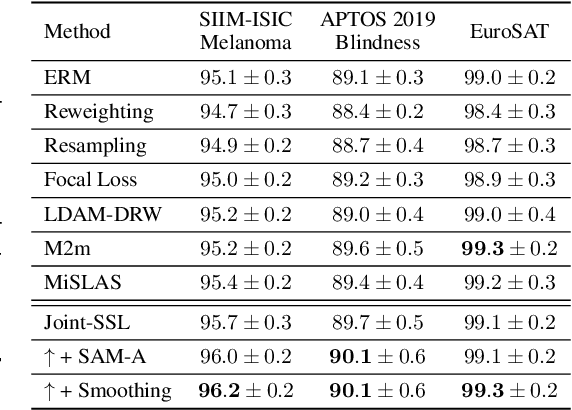
Real-world datasets are often highly class-imbalanced, which can adversely impact the performance of deep learning models. The majority of research on training neural networks under class imbalance has focused on specialized loss functions, sampling techniques, or two-stage training procedures. Notably, we demonstrate that simply tuning existing components of standard deep learning pipelines, such as the batch size, data augmentation, optimizer, and label smoothing, can achieve state-of-the-art performance without any such specialized class imbalance methods. We also provide key prescriptions and considerations for training under class imbalance, and an understanding of why imbalance methods succeed or fail.
Should We Learn Most Likely Functions or Parameters?
Nov 27, 2023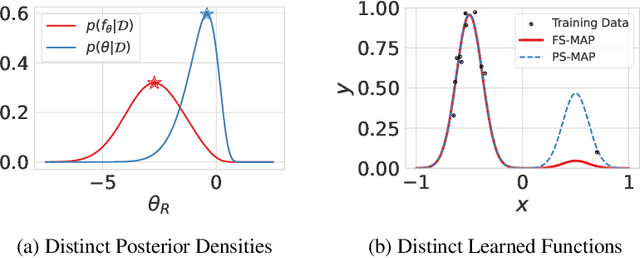

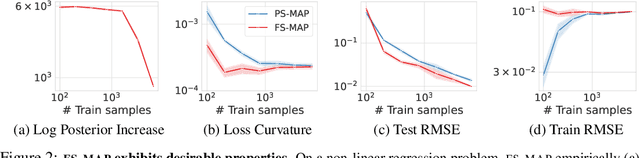
Standard regularized training procedures correspond to maximizing a posterior distribution over parameters, known as maximum a posteriori (MAP) estimation. However, model parameters are of interest only insomuch as they combine with the functional form of a model to provide a function that can make good predictions. Moreover, the most likely parameters under the parameter posterior do not generally correspond to the most likely function induced by the parameter posterior. In fact, we can re-parametrize a model such that any setting of parameters can maximize the parameter posterior. As an alternative, we investigate the benefits and drawbacks of directly estimating the most likely function implied by the model and the data. We show that this procedure leads to pathological solutions when using neural networks and prove conditions under which the procedure is well-behaved, as well as a scalable approximation. Under these conditions, we find that function-space MAP estimation can lead to flatter minima, better generalization, and improved robustness to overfitting.