 Add to Chrome
 Add to Firefox
 Add to Edge
Le Critique: Privileged Value Functions for LLM Reinforcement Learning
Aug 17, 2026
Reinforcement learning algorithms for Large Language Models (LLMs) are largely distinguished by their variance reduction strategy. Group-relative methods like GRPO reduce gradient variance by sampling multiple rollouts per prompt, but provide only sequence-level credit. Training is also blocked by straggler rollouts, reducing throughput and increasing off-policyness. Learned value functions theoretically address both problems, providing token-level advantages without requiring large groups. However, additional infrastructure engineering challenges combined with the practical success of critic-free methods have made it difficult to justify their inclusion in RL pipelines. We propose two complementary strategies to improve the performance of value function RL: 1) Privileged Value Functions (PVF) which provide an elegant mechanism to inject additional task-relevant token-level signal without biasing the policy objective; 2) TETHER, a baseline that adaptively interpolates between group-relative and value baselines depending on the value function accuracy. Across several reasoning tasks, both strategies consistently improve over the standard value function baseline, and are competitive with or outperform mean-baseline GRPO.

Robostral Navigate
Jul 24, 2026Deploying navigation systems at scale requires a recipe that minimizes sensor assumptions, generalizes across robot embodiments, and trains efficiently. Yet, today's best systems depend on depth sensors, multi-camera rigs, or pre-built maps, limiting the hardware they support and increasing deployment cost. We introduce Robostral Navigate, an 8B vision-language model built around this scalability objective. The model consumes only a stream of monocular RGB images - the most ubiquitous sensor across robotic platforms and predicts waypoints by pointing to the next target location in the current camera view. Operating purely in image space, rather than robot-specific coordinates, makes the policy naturally robust to changes in camera intrinsics and scene scale, enabling deployment across wheeled, legged, and aerial robots without recalibration. We generate 2.4 million trajectories across 350k simulated scenes to reduce the reliance on real-world data collection and scale easily. We further introduce a prefix-caching training recipe that packs entire episodes into single training sequences, reducing training tokens by 22x and cutting training time from months to days. A tree-based attention mask prevents conditioning on previous ground-truth actions, encouraging visually grounded action prediction, and reinforcement learning is used to further improve exploration and recovery capabilities. On the Room-to-Room and Room-Across-Room in Continuous Environments (R2R-CE and RxR-CE) benchmarks, Robostral Navigate sets a new state of the art. On R2R-CE, it achieves a 77.4% success rate, surpassing the best monocular method by 10.5 points and the strongest depth- or multi-camera system by 5.3 points despite using only a single RGB camera. On RxR-CE, it reaches 75.1% success rate, outperforming all monocular baselines.
Reasoning Arena: Trace Tournaments When Verifiable Rewards Fall Short
Jun 08, 2026Reinforcement learning with verifiable rewards (RLVR) has become a leading paradigm for improving the reasoning ability of large language models through outcome-based supervision. However, verifiable rewards frequently become uninformative at the group level: when all sampled traces of a given prompt receive identical rewards, group-relative advantage estimation provides no gradient signal, even though the traces may differ substantially in reasoning quality. We propose Reasoning Arena, an adaptive training framework that routes such non-diverse reward groups to a judge system instead of discarding them. Beyond examining the final answer, Reasoning Arena constructs trace tournaments, where reasoning traces are compared head-to-head to expose finer-grained preferences within the group, converting reasoning quality into rich relative reward signals. To make reward estimation efficient, rather than exhaustively comparing every pair, each new trace is evaluated against a small, dynamically updated pool of previously generated traces as anchors to efficiently establish a relative ranking. We then fit a Bradley-Terry model on the incomplete comparison graph, enabling scalable RL integration without quadratic pairwise comparisons. Empirical results demonstrate that Reasoning Arena consistently outperforms the RLVR baseline by 7.6% on average in competition mathematics and coding benchmarks. By converting otherwise wasted zero-advantage samples into useful gradient updates, our method accelerates training by 27% to 41%, saving nearly 50% of generation compute, and substantially improves overall reasoning performance.
Inverse-Free Sparse Variational Gaussian Processes
Apr 01, 2026Gaussian processes (GPs) offer appealing properties but are costly to train at scale. Sparse variational GP (SVGP) approximations reduce cost yet still rely on Cholesky decompositions of kernel matrices, ill-suited to low-precision, massively parallel hardware. While one can construct valid variational bounds that rely only on matrix multiplications (matmuls) via an auxiliary matrix parameter, optimising them with off-the-shelf first-order methods is challenging. We make the inverse-free approach practical by proposing a better-conditioned bound and deriving a matmul-only natural-gradient update for the auxiliary parameter, markedly improving stability and convergence. We further provide simple heuristics, such as step-size schedules and stopping criteria, that make the overall optimisation routine fit seamlessly into existing workflows. Across regression and classification benchmarks, we demonstrate that our method 1) serves as a drop-in replacement in SVGP-based models (e.g., deep GPs), 2) recovers similar performance to traditional methods, and 3) can be faster than baselines when well tuned.
Voxtral TTS
Mar 26, 2026We introduce Voxtral TTS, an expressive multilingual text-to-speech model that generates natural speech from as little as 3 seconds of reference audio. Voxtral TTS adopts a hybrid architecture that combines auto-regressive generation of semantic speech tokens with flow-matching for acoustic tokens. These tokens are encoded and decoded with Voxtral Codec, a speech tokenizer trained from scratch with a hybrid VQ-FSQ quantization scheme. In human evaluations conducted by native speakers, Voxtral TTS is preferred for multilingual voice cloning due to its naturalness and expressivity, achieving a 68.4\% win rate over ElevenLabs Flash v2.5. We release the model weights under a CC BY-NC license.
Learning Generation Orders for Masked Discrete Diffusion Models via Variational Inference
Feb 27, 2026Masked discrete diffusion models (MDMs) are a promising new approach to generative modelling, offering the ability for parallel token generation and therefore greater efficiency than autoregressive counterparts. However, achieving an optimal balance between parallel generation and sample quality remains an open problem. Current approaches primarily address this issue through fixed, heuristic parallel sampling methods. There exist some recent learning based approaches to this problem, but its formulation from the perspective of variational inference remains underexplored. In this work, we propose a variational inference framework for learning parallel generation orders for MDMs. As part of our method, we propose a parameterisation for the approximate posterior of generation orders which facilitates parallelism and efficient sampling during training. Using this method, we conduct preliminary experiments on the GSM8K dataset, where our method performs competitively against heuristic sampling strategies in the regime of highly parallel generation. For example, our method achieves 33.1\% accuracy with an average of only only 4 generation steps, compared to 23.7-29.0\% accuracy achieved by standard competitor methods in the same number of steps. We believe further experiments and analysis of the method will yield valuable insights into the problem of parallel generation with MDMs.
Voxtral Realtime
Feb 11, 2026We introduce Voxtral Realtime, a natively streaming automatic speech recognition model that matches offline transcription quality at sub-second latency. Unlike approaches that adapt offline models through chunking or sliding windows, Voxtral Realtime is trained end-to-end for streaming, with explicit alignment between audio and text streams. Our architecture builds on the Delayed Streams Modeling framework, introducing a new causal audio encoder and Ada RMS-Norm for improved delay conditioning. We scale pretraining to a large-scale dataset spanning 13 languages. At a delay of 480ms, Voxtral Realtime achieves performance on par with Whisper, the most widely deployed offline transcription system. We release the model weights under the Apache 2.0 license.
Ministral 3
Jan 13, 2026We introduce the Ministral 3 series, a family of parameter-efficient dense language models designed for compute and memory constrained applications, available in three model sizes: 3B, 8B, and 14B parameters. For each model size, we release three variants: a pretrained base model for general-purpose use, an instruction finetuned, and a reasoning model for complex problem-solving. In addition, we present our recipe to derive the Ministral 3 models through Cascade Distillation, an iterative pruning and continued training with distillation technique. Each model comes with image understanding capabilities, all under the Apache 2.0 license.
Scale-invariant Attention
May 20, 2025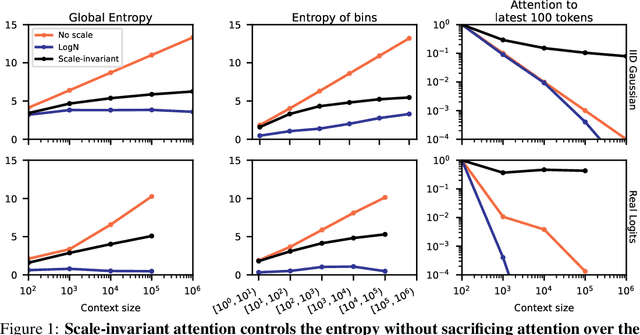
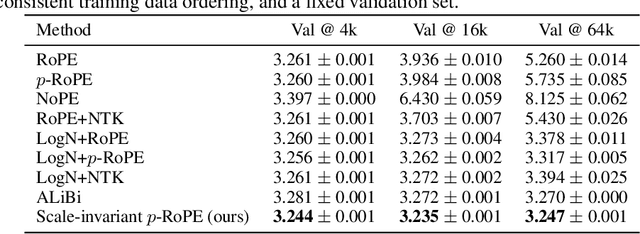
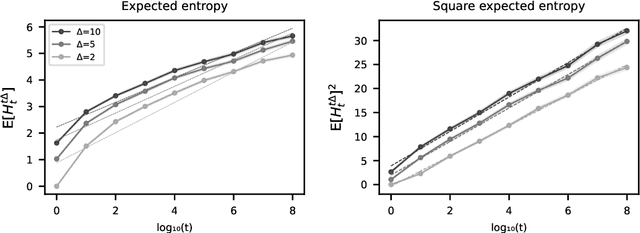
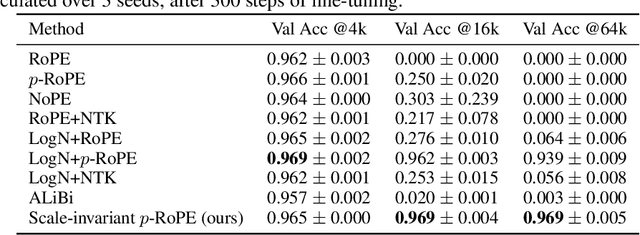
One persistent challenge in LLM research is the development of attention mechanisms that are able to generalise from training on shorter contexts to inference on longer contexts. We propose two conditions that we expect all effective long context attention mechanisms to have: scale-invariant total attention, and scale-invariant attention sparsity. Under a Gaussian assumption, we show that a simple position-dependent transformation of the attention logits is sufficient for these conditions to hold. Experimentally we find that the resulting scale-invariant attention scheme gives considerable benefits in terms of validation loss when zero-shot generalising from training on short contexts to validation on longer contexts, and is effective at long-context retrieval.
A Self-Improving Coding Agent
Apr 21, 2025We demonstrate that an LLM coding agent, equipped with basic coding tools, can autonomously edit itself, and thereby improve its performance on benchmark tasks. We find performance gains from 17% to 53% on a random subset of SWE Bench Verified, with additional performance gains on LiveCodeBench, as well as synthetically generated agent benchmarks. Our work represents an advancement in the automated and open-ended design of agentic systems, and provides a reference agent framework for those seeking to post-train LLMs on tool use and other agentic tasks.