 Add to Chrome
 Add to Firefox
 Add to Edge
Salient Object Detection
Papers and Code
United Domain Cognition Network for Salient Object Detection in Optical Remote Sensing Images
Nov 11, 2024
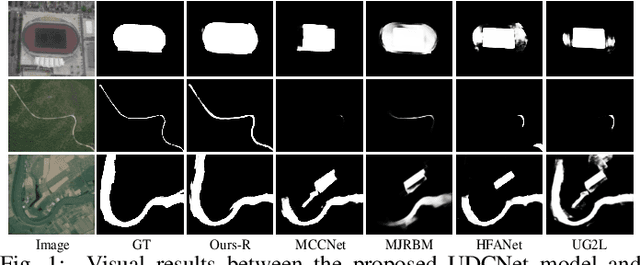
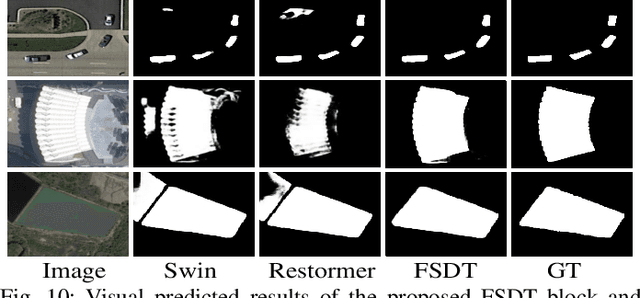
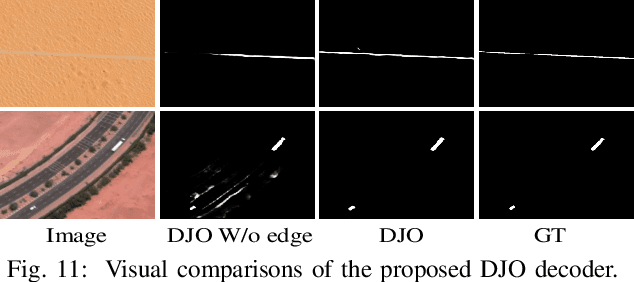
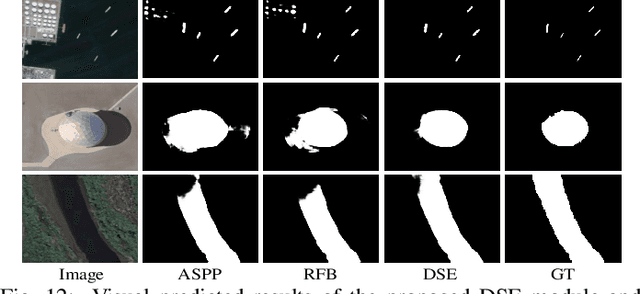
Recently, deep learning-based salient object detection (SOD) in optical remote sensing images (ORSIs) have achieved significant breakthroughs. We observe that existing ORSIs-SOD methods consistently center around optimizing pixel features in the spatial domain, progressively distinguishing between backgrounds and objects. However, pixel information represents local attributes, which are often correlated with their surrounding context. Even with strategies expanding the local region, spatial features remain biased towards local characteristics, lacking the ability of global perception. To address this problem, we introduce the Fourier transform that generate global frequency features and achieve an image-size receptive field. To be specific, we propose a novel United Domain Cognition Network (UDCNet) to jointly explore the global-local information in the frequency and spatial domains. Technically, we first design a frequency-spatial domain transformer block that mutually amalgamates the complementary local spatial and global frequency features to strength the capability of initial input features. Furthermore, a dense semantic excavation module is constructed to capture higher-level semantic for guiding the positioning of remote sensing objects. Finally, we devise a dual-branch joint optimization decoder that applies the saliency and edge branches to generate high-quality representations for predicting salient objects. Experimental results demonstrate the superiority of the proposed UDCNet method over 24 state-of-the-art models, through extensive quantitative and qualitative comparisons in three widely-used ORSIs-SOD datasets. The source code is available at: \href{https://github.com/CSYSI/UDCNet}{\color{blue} https://github.com/CSYSI/UDCNet}.

Efficient Fourier Filtering Network with Contrastive Learning for UAV-based Unaligned Bi-modal Salient Object Detection
Nov 06, 2024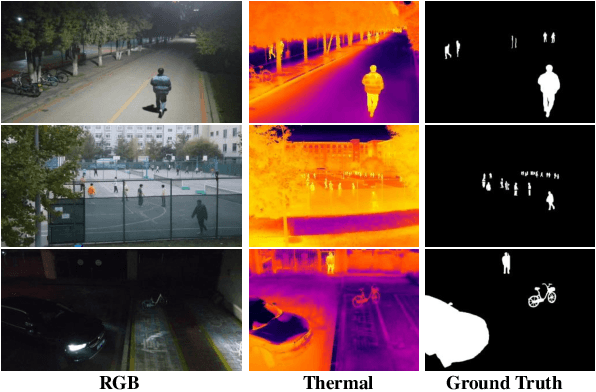
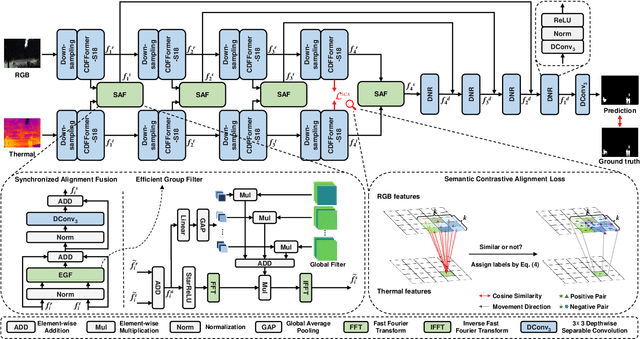
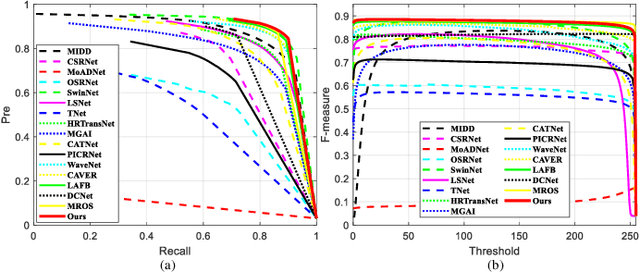
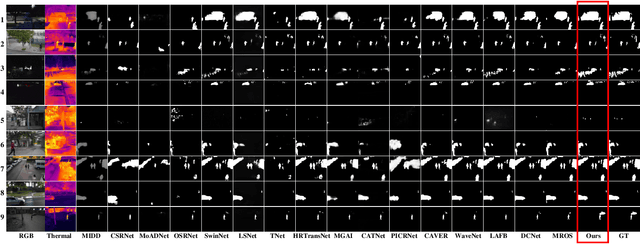
Unmanned aerial vehicle (UAV)-based bi-modal salient object detection (BSOD) aims to segment salient objects in a scene utilizing complementary cues in unaligned RGB and thermal image pairs. However, the high computational expense of existing UAV-based BSOD models limits their applicability to real-world UAV devices. To address this problem, we propose an efficient Fourier filter network with contrastive learning that achieves both real-time and accurate performance. Specifically, we first design a semantic contrastive alignment loss to align the two modalities at the semantic level, which facilitates mutual refinement in a parameter-free way. Second, inspired by the fast Fourier transform that obtains global relevance in linear complexity, we propose synchronized alignment fusion, which aligns and fuses bi-modal features in the channel and spatial dimensions by a hierarchical filtering mechanism. Our proposed model, AlignSal, reduces the number of parameters by 70.0%, decreases the floating point operations by 49.4%, and increases the inference speed by 152.5% compared to the cutting-edge BSOD model (i.e., MROS). Extensive experiments on the UAV RGB-T 2400 and three weakly aligned datasets demonstrate that AlignSal achieves both real-time inference speed and better performance and generalizability compared to sixteen state-of-the-art BSOD models across most evaluation metrics. In addition, our ablation studies further verify AlignSal's potential in boosting the performance of existing aligned BSOD models on UAV-based unaligned data. The code is available at: https://github.com/JoshuaLPF/AlignSal.
A Deep Learning Framework for Visual Attention Prediction and Analysis of News Interfaces
Mar 21, 2025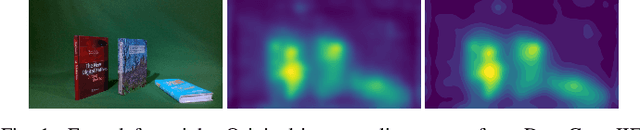
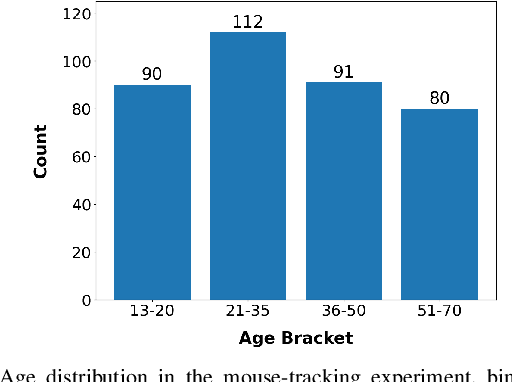
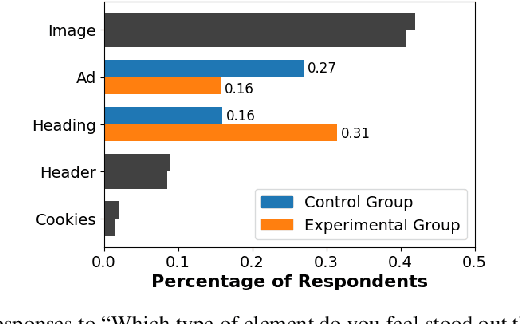
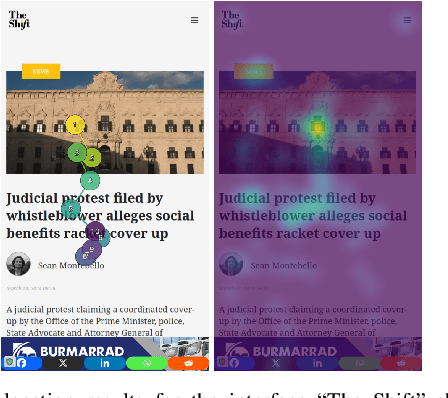
News outlets' competition for attention in news interfaces has highlighted the need for demographically-aware saliency prediction models. Despite recent advancements in saliency detection applied to user interfaces (UI), existing datasets are limited in size and demographic representation. We present a deep learning framework that enhances the SaRa (Saliency Ranking) model with DeepGaze IIE, improving Salient Object Ranking (SOR) performance by 10.7%. Our framework optimizes three key components: saliency map generation, grid segment scoring, and map normalization. Through a two-fold experiment using eye-tracking (30 participants) and mouse-tracking (375 participants aged 13--70), we analyze attention patterns across demographic groups. Statistical analysis reveals significant age-based variations (p < 0.05, {\epsilon^2} = 0.042), with older users (36--70) engaging more with textual content and younger users (13--35) interacting more with images. Mouse-tracking data closely approximates eye-tracking behavior (sAUC = 0.86) and identifies UI elements that immediately stand out, validating its use in large-scale studies. We conclude that saliency studies should prioritize gathering data from a larger, demographically representative sample and report exact demographic distributions.
Self-Mixing Laser Interferometry for Robotic Tactile Sensing
Feb 21, 2025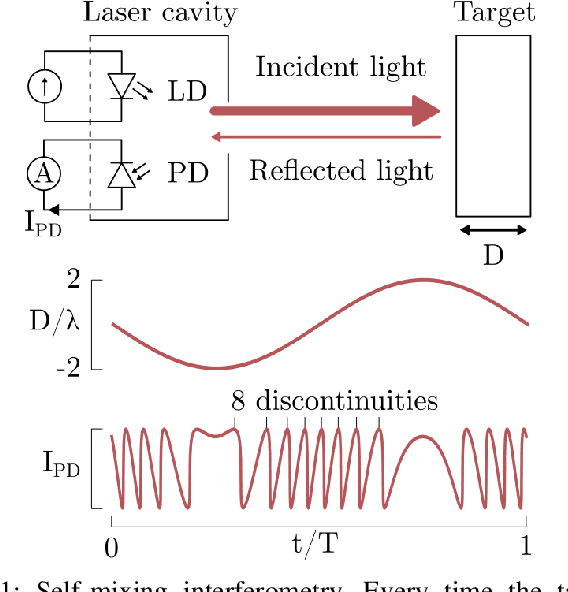
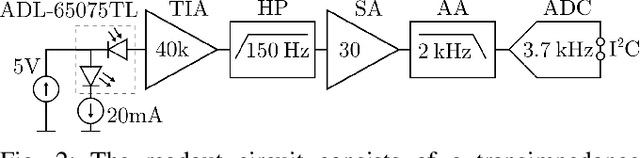

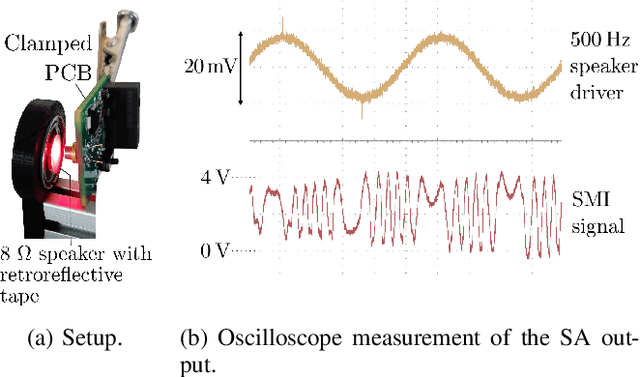
Self-mixing interferometry (SMI) has been lauded for its sensitivity in detecting microvibrations, while requiring no physical contact with its target. In robotics, microvibrations have traditionally been interpreted as a marker for object slip, and recently as a salient indicator of extrinsic contact. We present the first-ever robotic fingertip making use of SMI for slip and extrinsic contact sensing. The design is validated through measurement of controlled vibration sources, both before and after encasing the readout circuit in its fingertip package. Then, the SMI fingertip is compared to acoustic sensing through three experiments. The results are distilled into a technology decision map. SMI was found to be more sensitive to subtle slip events and significantly more robust against ambient noise. We conclude that the integration of SMI in robotic fingertips offers a new, promising branch of tactile sensing in robotics.
MambaSOD: Dual Mamba-Driven Cross-Modal Fusion Network for RGB-D Salient Object Detection
Oct 19, 2024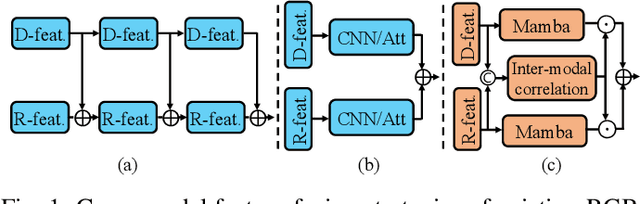
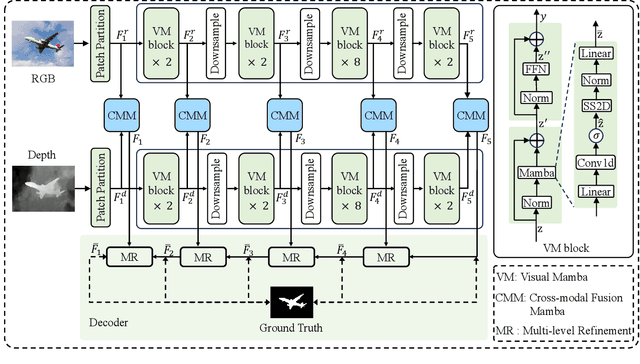
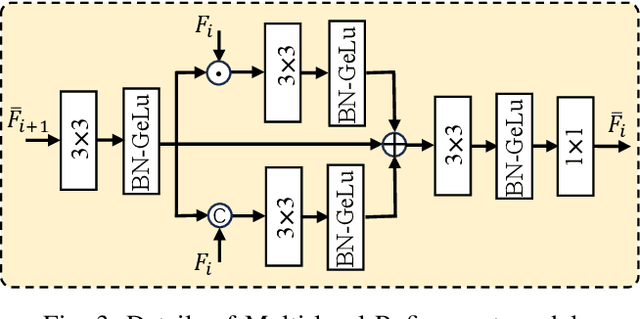
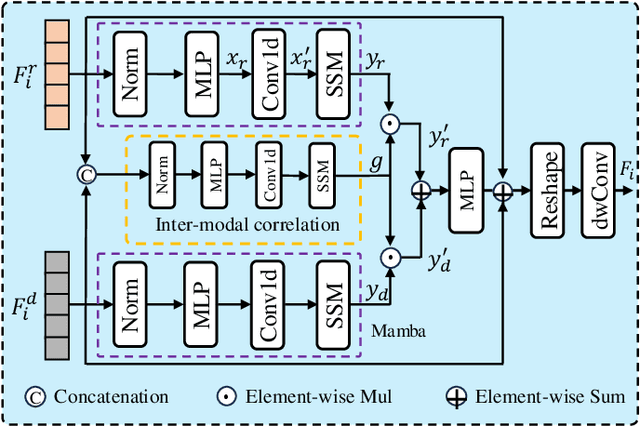
The purpose of RGB-D Salient Object Detection (SOD) is to pinpoint the most visually conspicuous areas within images accurately. While conventional deep models heavily rely on CNN extractors and overlook the long-range contextual dependencies, subsequent transformer-based models have addressed the issue to some extent but introduce high computational complexity. Moreover, incorporating spatial information from depth maps has been proven effective for this task. A primary challenge of this issue is how to fuse the complementary information from RGB and depth effectively. In this paper, we propose a dual Mamba-driven cross-modal fusion network for RGB-D SOD, named MambaSOD. Specifically, we first employ a dual Mamba-driven feature extractor for both RGB and depth to model the long-range dependencies in multiple modality inputs with linear complexity. Then, we design a cross-modal fusion Mamba for the captured multi-modal features to fully utilize the complementary information between the RGB and depth features. To the best of our knowledge, this work is the first attempt to explore the potential of the Mamba in the RGB-D SOD task, offering a novel perspective. Numerous experiments conducted on six prevailing datasets demonstrate our method's superiority over sixteen state-of-the-art RGB-D SOD models. The source code will be released at https://github.com/YueZhan721/MambaSOD.
Instruction-Driven Fusion of Infrared-Visible Images: Tailoring for Diverse Downstream Tasks
Nov 14, 2024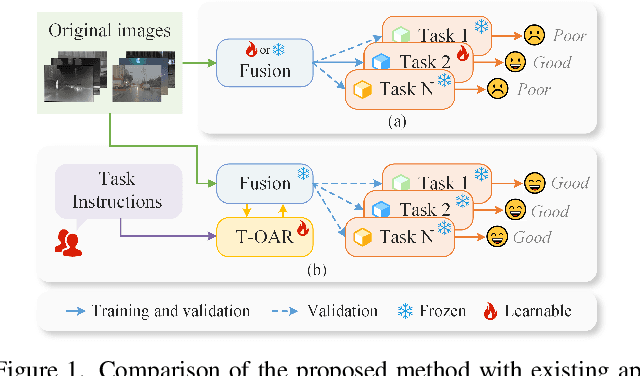
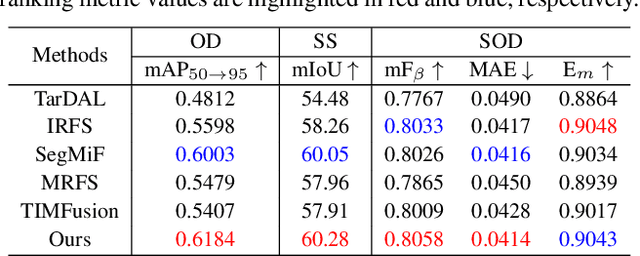
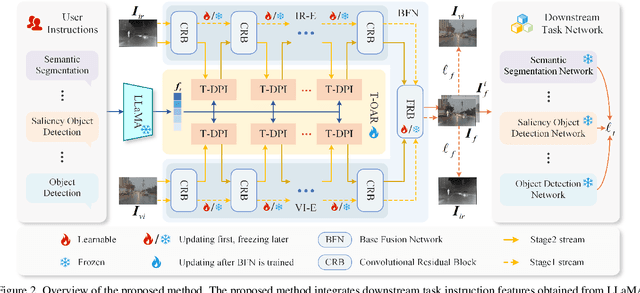
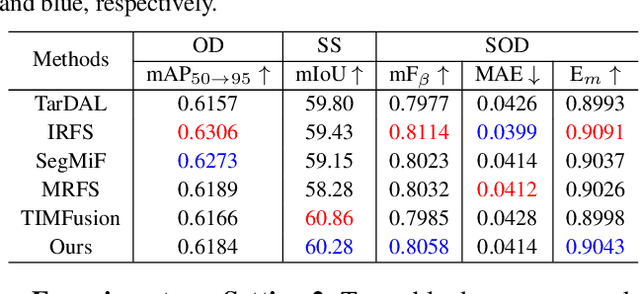
The primary value of infrared and visible image fusion technology lies in applying the fusion results to downstream tasks. However, existing methods face challenges such as increased training complexity and significantly compromised performance of individual tasks when addressing multiple downstream tasks simultaneously. To tackle this, we propose Task-Oriented Adaptive Regulation (T-OAR), an adaptive mechanism specifically designed for multi-task environments. Additionally, we introduce the Task-related Dynamic Prompt Injection (T-DPI) module, which generates task-specific dynamic prompts from user-input text instructions and integrates them into target representations. This guides the feature extraction module to produce representations that are more closely aligned with the specific requirements of downstream tasks. By incorporating the T-DPI module into the T-OAR framework, our approach generates fusion images tailored to task-specific requirements without the need for separate training or task-specific weights. This not only reduces computational costs but also enhances adaptability and performance across multiple tasks. Experimental results show that our method excels in object detection, semantic segmentation, and salient object detection, demonstrating its strong adaptability, flexibility, and task specificity. This provides an efficient solution for image fusion in multi-task environments, highlighting the technology's potential across diverse applications.
Concept Guided Co-saliency Objection Detection
Dec 21, 2024The task of co-saliency object detection (Co-SOD) seeks to identify common, salient objects across a collection of images by examining shared visual features. However, traditional Co-SOD methods often encounter limitations when faced with diverse object variations (e.g., different postures) and irrelevant background elements that introduce noise. To address these challenges, we propose ConceptCoSOD, a novel concept-guided approach that leverages text semantic information to enhance Co-SOD performance by guiding the model to focus on consistent object features. Through rethinking Co-SOD as an (image-text)-to-image task instead of an image-to-image task, ConceptCoSOD first captures shared semantic concepts within an image group and then uses them as guidance for precise object segmentation in complex scenarios. Experimental results on three benchmark datasets and six corruptions reveal that ConceptCoSOD significantly improves detection accuracy, especially in challenging settings with considerable background distractions and object variability.
Localization, balance and affinity: a stronger multifaceted collaborative salient object detector in remote sensing images
Oct 31, 2024
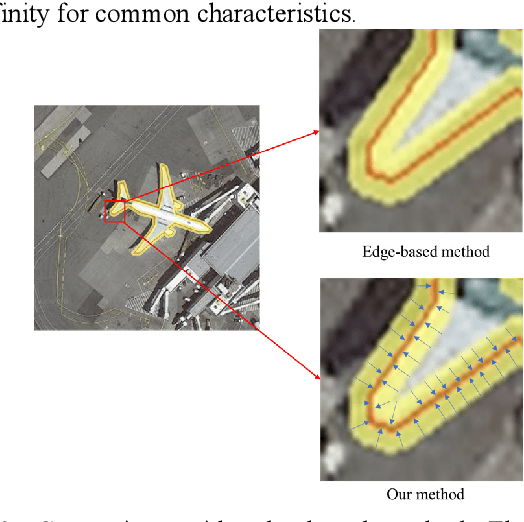
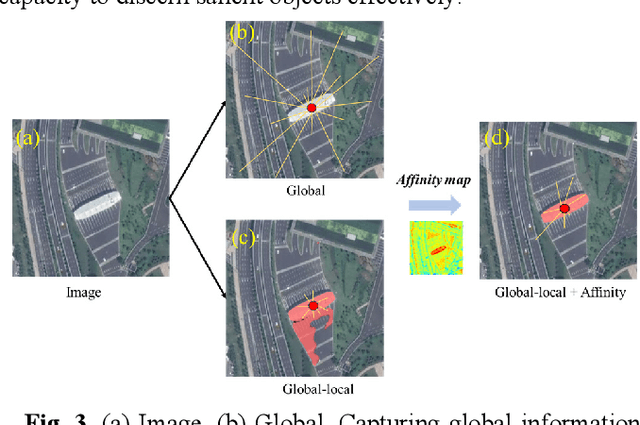

Despite significant advancements in salient object detection(SOD) in optical remote sensing images(ORSI), challenges persist due to the intricate edge structures of ORSIs and the complexity of their contextual relationships. Current deep learning approaches encounter difficulties in accurately identifying boundary features and lack efficiency in collaboratively modeling the foreground and background by leveraging contextual features. To address these challenges, we propose a stronger multifaceted collaborative salient object detector in ORSIs, termed LBA-MCNet, which incorporates aspects of localization, balance, and affinity. The network focuses on accurately locating targets, balancing detailed features, and modeling image-level global context information. Specifically, we design the Edge Feature Adaptive Balancing and Adjusting(EFABA) module for precise edge localization, using edge features to guide attention to boundaries and preserve spatial details. Moreover, we design the Global Distributed Affinity Learning(GDAL) module to model global context. It captures global context by generating an affinity map from the encoders final layer, ensuring effective modeling of global patterns. Additionally, deep supervision during deconvolution further enhances feature representation. Finally, we compared with 28 state of the art approaches on three publicly available datasets. The results clearly demonstrate the superiority of our method.
SSFam: Scribble Supervised Salient Object Detection Family
Sep 07, 2024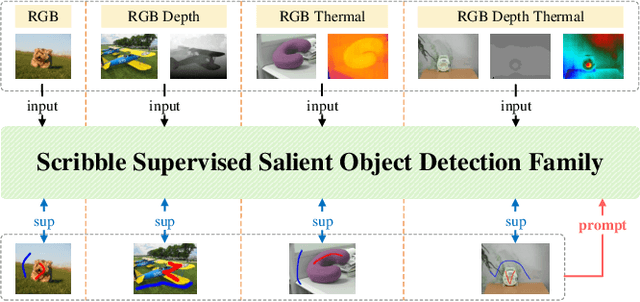
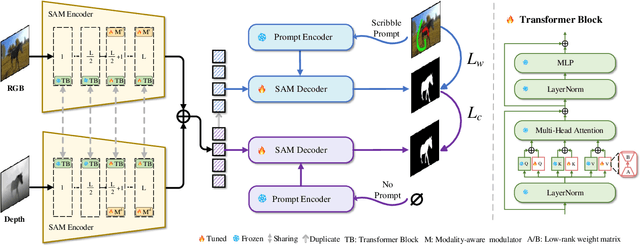
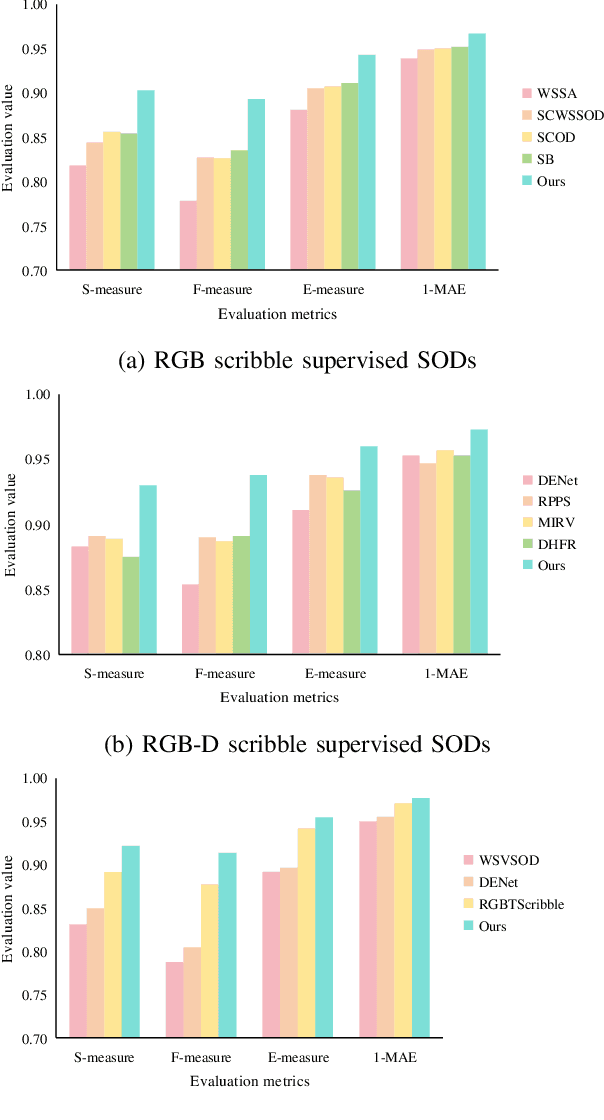
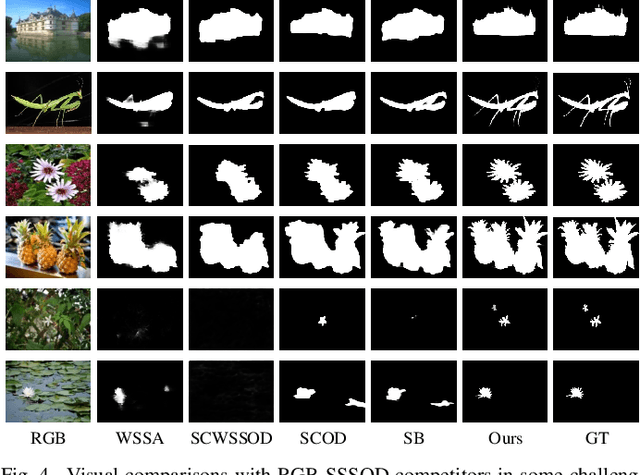
Scribble supervised salient object detection (SSSOD) constructs segmentation ability of attractive objects from surroundings under the supervision of sparse scribble labels. For the better segmentation, depth and thermal infrared modalities serve as the supplement to RGB images in the complex scenes. Existing methods specifically design various feature extraction and multi-modal fusion strategies for RGB, RGB-Depth, RGB-Thermal, and Visual-Depth-Thermal image input respectively, leading to similar model flood. As the recently proposed Segment Anything Model (SAM) possesses extraordinary segmentation and prompt interactive capability, we propose an SSSOD family based on SAM, named SSFam, for the combination input with different modalities. Firstly, different modal-aware modulators are designed to attain modal-specific knowledge which cooperates with modal-agnostic information extracted from the frozen SAM encoder for the better feature ensemble. Secondly, a siamese decoder is tailored to bridge the gap between the training with scribble prompt and the testing with no prompt for the stronger decoding ability. Our model demonstrates the remarkable performance among combinations of different modalities and refreshes the highest level of scribble supervised methods and comes close to the ones of fully supervised methods. https://github.com/liuzywen/SSFam
SODAWideNet++: Combining Attention and Convolutions for Salient Object Detection
Aug 29, 2024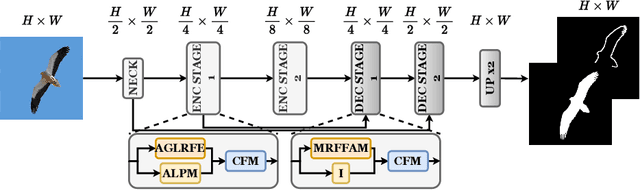
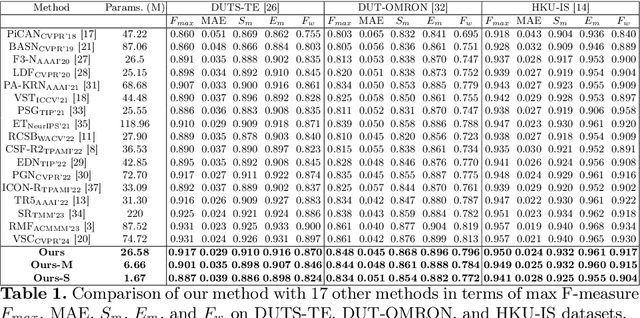
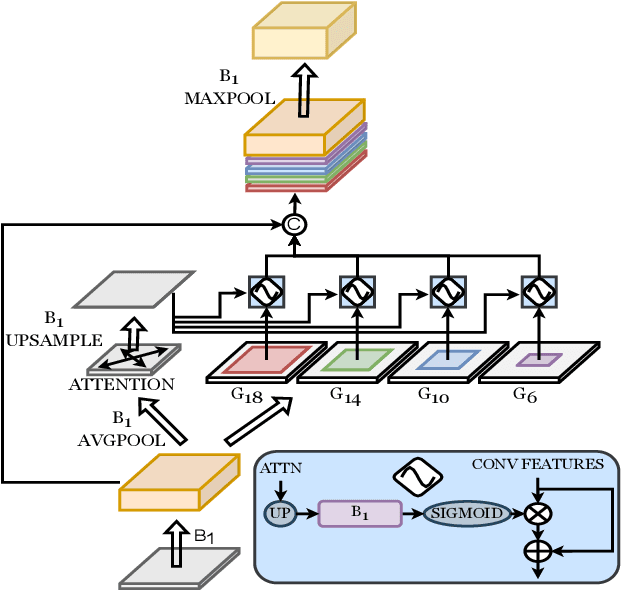
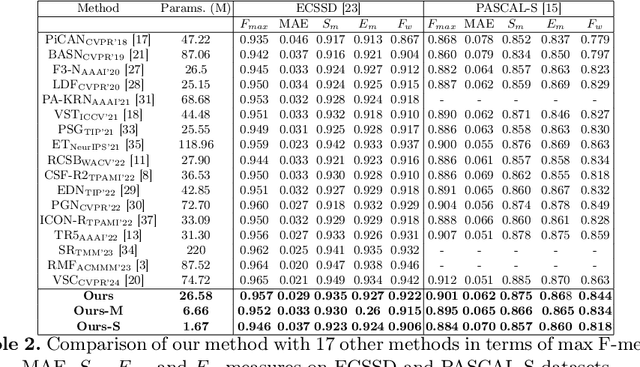
Salient Object Detection (SOD) has traditionally relied on feature refinement modules that utilize the features of an ImageNet pre-trained backbone. However, this approach limits the possibility of pre-training the entire network because of the distinct nature of SOD and image classification. Additionally, the architecture of these backbones originally built for Image classification is sub-optimal for a dense prediction task like SOD. To address these issues, we propose a novel encoder-decoder-style neural network called SODAWideNet++ that is designed explicitly for SOD. Inspired by the vision transformers ability to attain a global receptive field from the initial stages, we introduce the Attention Guided Long Range Feature Extraction (AGLRFE) module, which combines large dilated convolutions and self-attention. Specifically, we use attention features to guide long-range information extracted by multiple dilated convolutions, thus taking advantage of the inductive biases of a convolution operation and the input dependency brought by self-attention. In contrast to the current paradigm of ImageNet pre-training, we modify 118K annotated images from the COCO semantic segmentation dataset by binarizing the annotations to pre-train the proposed model end-to-end. Further, we supervise the background predictions along with the foreground to push our model to generate accurate saliency predictions. SODAWideNet++ performs competitively on five different datasets while only containing 35% of the trainable parameters compared to the state-of-the-art models. The code and pre-computed saliency maps are provided at https://github.com/VimsLab/SODAWideNetPlusPlus.