 Add to Chrome
 Add to Firefox
 Add to Edge
DeTracker: Motion-decoupled Vehicle Detection and Tracking in Unstabilized Satellite Videos
Jan 14, 2026
Satellite videos provide continuous observations of surface dynamics but pose significant challenges for multi-object tracking (MOT), especially under unstabilized conditions where platform jitter and the weak appearance of tiny objects jointly degrade tracking performance. To address this problem, we propose DeTracker, a joint detection-and-tracking framework tailored for unstabilized satellite videos. DeTracker introduces a Global--Local Motion Decoupling (GLMD) module that explicitly separates satellite platform motion from true object motion through global alignment and local refinement, leading to improved trajectory stability and motion estimation accuracy. In addition, a Temporal Dependency Feature Pyramid (TDFP) module is developed to perform cross-frame temporal feature fusion, enhancing the continuity and discriminability of tiny-object representations. We further construct a new benchmark dataset, SDM-Car-SU, which simulates multi-directional and multi-speed platform motions to enable systematic evaluation of tracking robustness under varying motion perturbations. Extensive experiments on both simulated and real unstabilized satellite videos demonstrate that DeTracker significantly outperforms existing methods, achieving 61.1% MOTA on SDM-Car-SU and 47.3% MOTA on real satellite video data.

Localization, balance and affinity: a stronger multifaceted collaborative salient object detector in remote sensing images
Oct 31, 2024
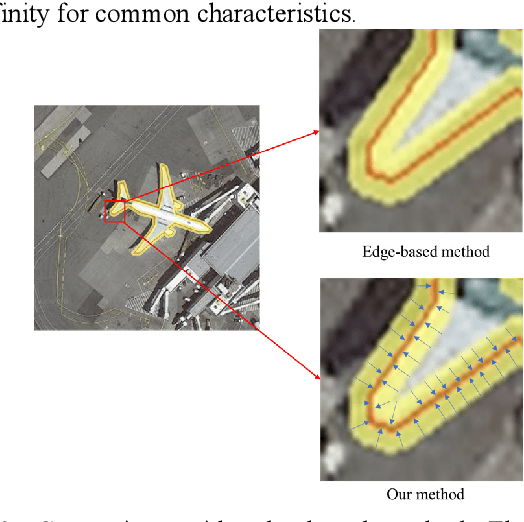
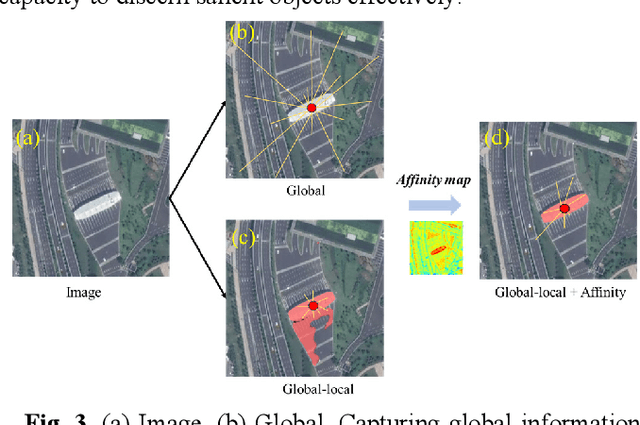

Despite significant advancements in salient object detection(SOD) in optical remote sensing images(ORSI), challenges persist due to the intricate edge structures of ORSIs and the complexity of their contextual relationships. Current deep learning approaches encounter difficulties in accurately identifying boundary features and lack efficiency in collaboratively modeling the foreground and background by leveraging contextual features. To address these challenges, we propose a stronger multifaceted collaborative salient object detector in ORSIs, termed LBA-MCNet, which incorporates aspects of localization, balance, and affinity. The network focuses on accurately locating targets, balancing detailed features, and modeling image-level global context information. Specifically, we design the Edge Feature Adaptive Balancing and Adjusting(EFABA) module for precise edge localization, using edge features to guide attention to boundaries and preserve spatial details. Moreover, we design the Global Distributed Affinity Learning(GDAL) module to model global context. It captures global context by generating an affinity map from the encoders final layer, ensuring effective modeling of global patterns. Additionally, deep supervision during deconvolution further enhances feature representation. Finally, we compared with 28 state of the art approaches on three publicly available datasets. The results clearly demonstrate the superiority of our method.