 Add to Chrome
 Add to Firefox
 Add to Edge
autonomous cars
Autonomous cars are self-driving vehicles that use artificial intelligence (AI) and sensors to navigate and operate without human intervention, using high-resolution cameras and lidars that detect what happens in the car's immediate surroundings. They have the potential to revolutionize transportation by improving safety, efficiency, and accessibility.
Papers and Code
IIT Bombay Racing Driverless: Autonomous Driving Stack for Formula Student AI
Aug 12, 2024
This work presents the design and development of IIT Bombay Racing's Formula Student style autonomous racecar algorithm capable of running at the racing events of Formula Student-AI, held in the UK. The car employs a cutting-edge sensor suite of the compute unit NVIDIA Jetson Orin AGX, 2 ZED2i stereo cameras, 1 Velodyne Puck VLP16 LiDAR and SBG Systems Ellipse N GNSS/INS IMU. It features deep learning algorithms and control systems to navigate complex tracks and execute maneuvers without any human intervention. The design process involved extensive simulations and testing to optimize the vehicle's performance and ensure its safety. The algorithms have been tested on a small scale, in-house manufactured 4-wheeled robot and on simulation software. The results obtained for testing various algorithms in perception, simultaneous localization and mapping, path planning and controls have been detailed.

Invariant filtering for wheeled vehicle localization with unknown wheel radius and unknown GNSS lever arm
Sep 11, 2024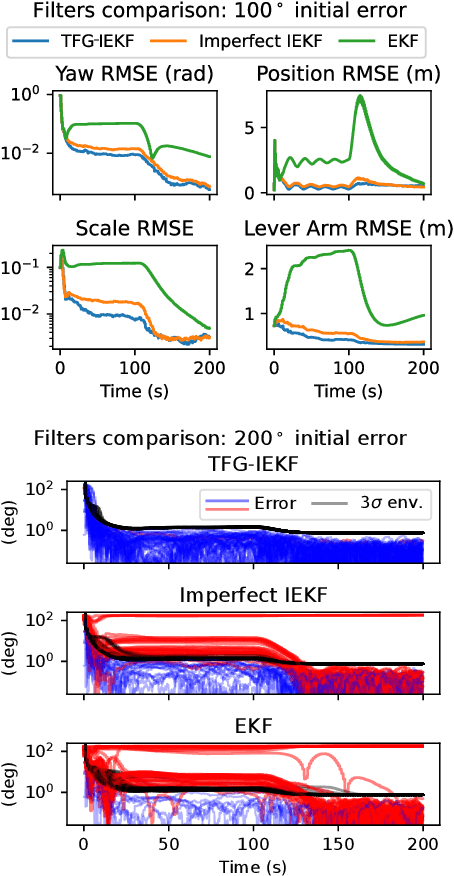

We consider the problem of observer design for a nonholonomic car (more generally a wheeled robot) equipped with wheel speeds with unknown wheel radius, and whose position is measured via a GNSS antenna placed at an unknown position in the car. In a tutorial and unified exposition, we recall the recent theory of two-frame systems within the field of invariant Kalman filtering. We then show how to adapt it geometrically to address the considered problem, although it seems at first sight out of its scope. This yields an invariant extended Kalman filter having autonomous error equations, and state-independent Jacobians, which is shown to work remarkably well in simulations. The proposed novel construction thus extends the application scope of invariant filtering.
An Online Self-learning Graph-based Lateral Controller for Self-Driving Cars
Oct 15, 2024
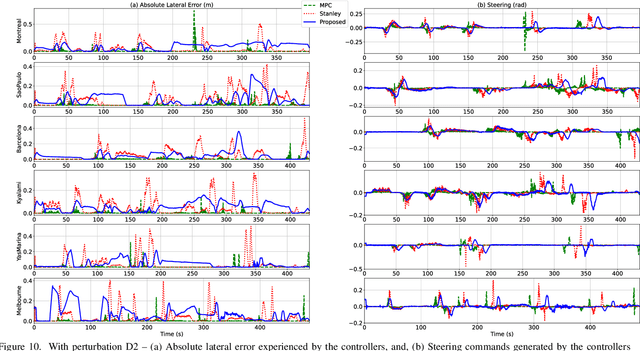
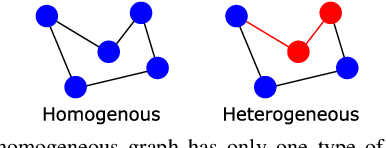
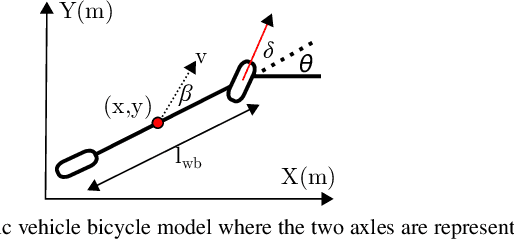
The hype around self-driving cars has been growing over the past years and has sparked much research. Several modules in self-driving cars are thoroughly investigated to ensure safety, comfort, and efficiency, among which the controller is crucial. The controller module can be categorized into longitudinal and lateral controllers in which the task of the former is to follow the reference velocity, and the latter is to reduce the lateral displacement error from the reference path. Generally, a tuned controller is not sufficient to perform in all environments. Thus, a controller that can adapt to changing conditions is necessary for autonomous driving. Furthermore, these controllers often depend on vehicle models that also need to adapt over time due to varying environments. This paper uses graphs to present novel techniques to learn the vehicle model and the lateral controller online. First, a heterogeneous graph is presented depicting the current states of and inputs to the vehicle. The vehicle model is then learned online using known physical constraints in conjunction with the processing of the graph through a Graph Neural Network structure. Next, another heterogeneous graph - depicting the transition from current to desired states - is processed through another Graph Neural Network structure to generate the steering command on the fly. Finally, the performance of this self-learning model-based lateral controller is evaluated and shown to be satisfactory on an open-source autonomous driving platform called CARLA.
Learning autonomous driving from aerial imagery
Oct 18, 2024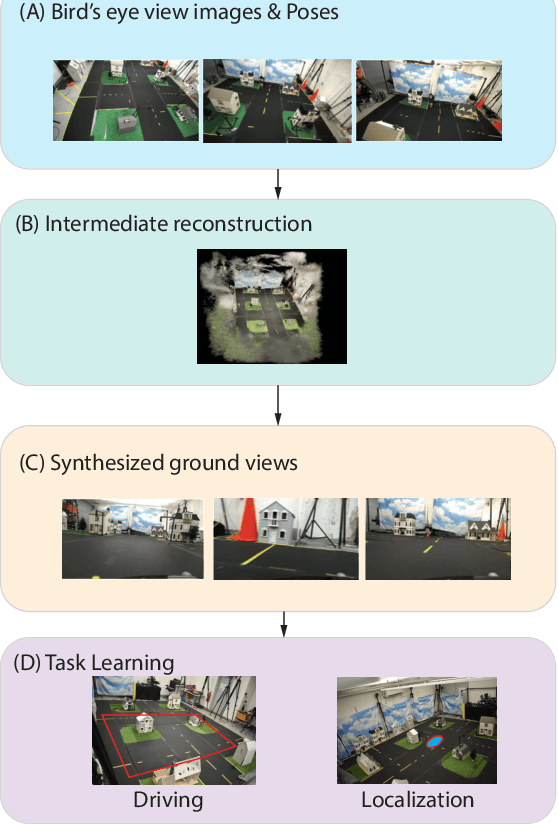

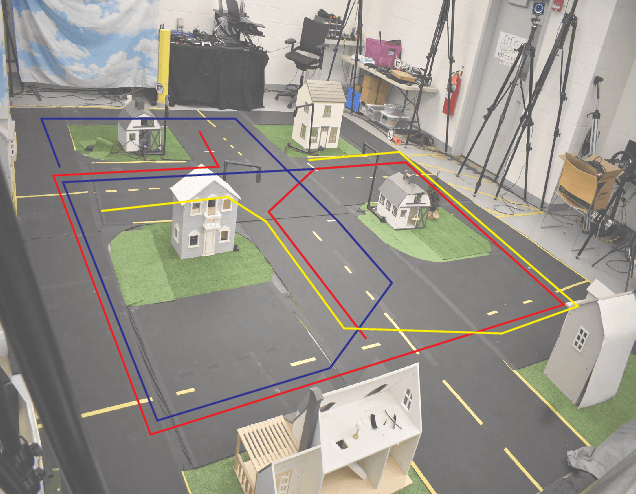
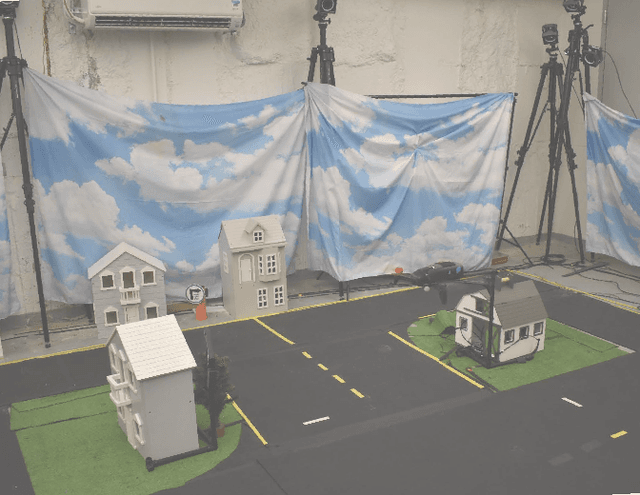
In this work, we consider the problem of learning end to end perception to control for ground vehicles solely from aerial imagery. Photogrammetric simulators allow the synthesis of novel views through the transformation of pre-generated assets into novel views.However, they have a large setup cost, require careful collection of data and often human effort to create usable simulators. We use a Neural Radiance Field (NeRF) as an intermediate representation to synthesize novel views from the point of view of a ground vehicle. These novel viewpoints can then be used for several downstream autonomous navigation applications. In this work, we demonstrate the utility of novel view synthesis though the application of training a policy for end to end learning from images and depth data. In a traditional real to sim to real framework, the collected data would be transformed into a visual simulator which could then be used to generate novel views. In contrast, using a NeRF allows a compact representation and the ability to optimize over the parameters of the visual simulator as more data is gathered in the environment. We demonstrate the efficacy of our method in a custom built mini-city environment through the deployment of imitation policies on robotic cars. We additionally consider the task of place localization and demonstrate that our method is able to relocalize the car in the real world.
Lab2Car: A Versatile Wrapper for Deploying Experimental Planners in Complex Real-world Environments
Sep 14, 2024
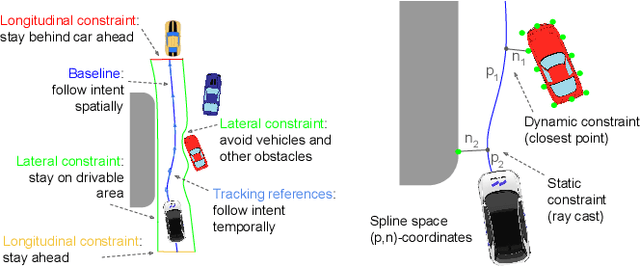
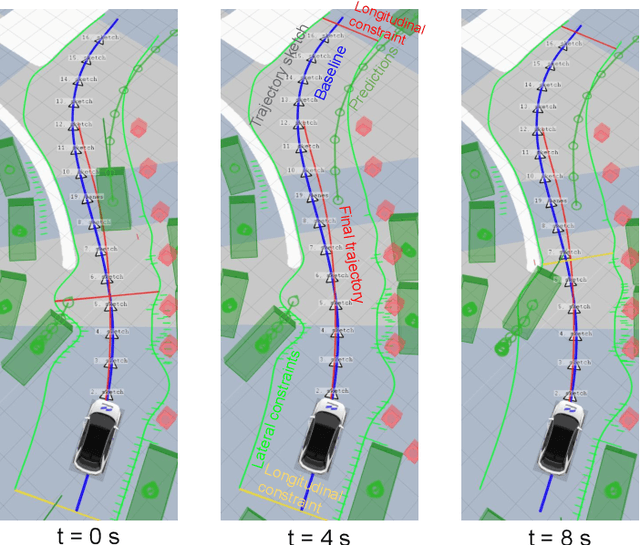
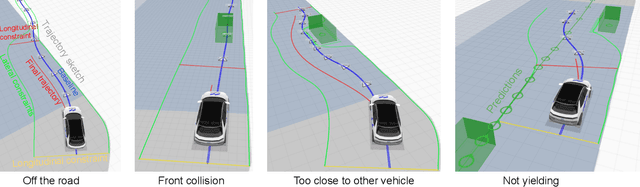
Human-level autonomous driving is an ever-elusive goal, with planning and decision making -- the cognitive functions that determine driving behavior -- posing the greatest challenge. Despite a proliferation of promising approaches, progress is stifled by the difficulty of deploying experimental planners in naturalistic settings. In this work, we propose Lab2Car, an optimization-based wrapper that can take a trajectory sketch from an arbitrary motion planner and convert it to a safe, comfortable, dynamically feasible trajectory that the car can follow. This allows motion planners that do not provide such guarantees to be safely tested and optimized in real-world environments. We demonstrate the versatility of Lab2Car by using it to deploy a machine learning (ML) planner and a search-based planner on self-driving cars in Las Vegas. The resulting systems handle challenging scenarios, such as cut-ins, overtaking, and yielding, in complex urban environments like casino pick-up/drop-off areas. Our work paves the way for quickly deploying and evaluating candidate motion planners in realistic settings, ensuring rapid iteration and accelerating progress towards human-level autonomy.
Multi-V2X: A Large Scale Multi-modal Multi-penetration-rate Dataset for Cooperative Perception
Sep 08, 2024


Cooperative perception through vehicle-to-everything (V2X) has garnered significant attention in recent years due to its potential to overcome occlusions and enhance long-distance perception. Great achievements have been made in both datasets and algorithms. However, existing real-world datasets are limited by the presence of few communicable agents, while synthetic datasets typically cover only vehicles. More importantly, the penetration rate of connected and autonomous vehicles (CAVs) , a critical factor for the deployment of cooperative perception technologies, has not been adequately addressed. To tackle these issues, we introduce Multi-V2X, a large-scale, multi-modal, multi-penetration-rate dataset for V2X perception. By co-simulating SUMO and CARLA, we equip a substantial number of cars and roadside units (RSUs) in simulated towns with sensor suites, and collect comprehensive sensing data. Datasets with specified CAV penetration rates can be obtained by masking some equipped cars as normal vehicles. In total, our Multi-V2X dataset comprises 549k RGB frames, 146k LiDAR frames, and 4,219k annotated 3D bounding boxes across six categories. The highest possible CAV penetration rate reaches 86.21%, with up to 31 agents in communication range, posing new challenges in selecting agents to collaborate with. We provide comprehensive benchmarks for cooperative 3D object detection tasks. Our data and code are available at https://github.com/RadetzkyLi/Multi-V2X .
Human-in-the-loop Reasoning For Traffic Sign Detection: Collaborative Approach Yolo With Video-llava
Oct 07, 2024
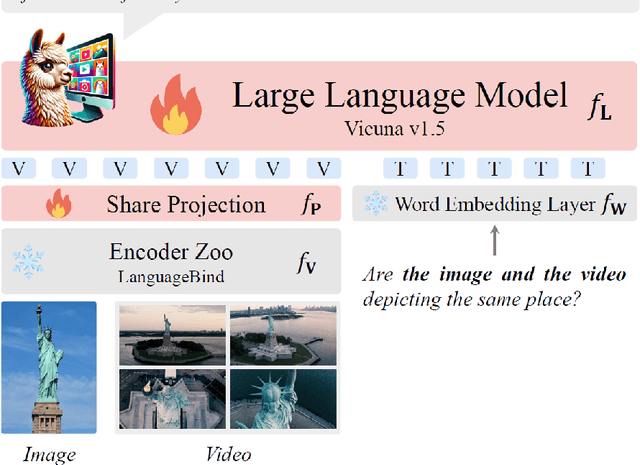
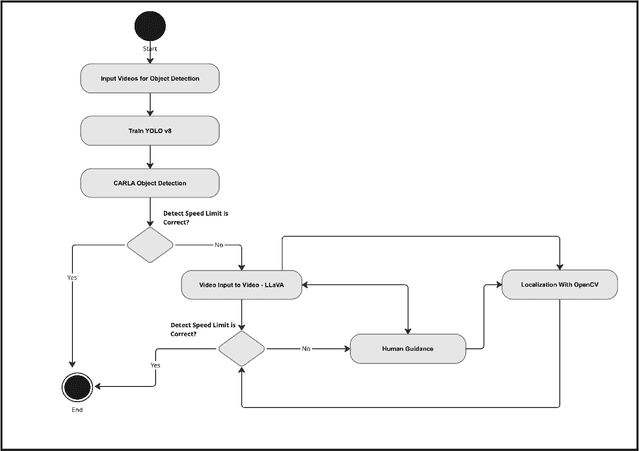
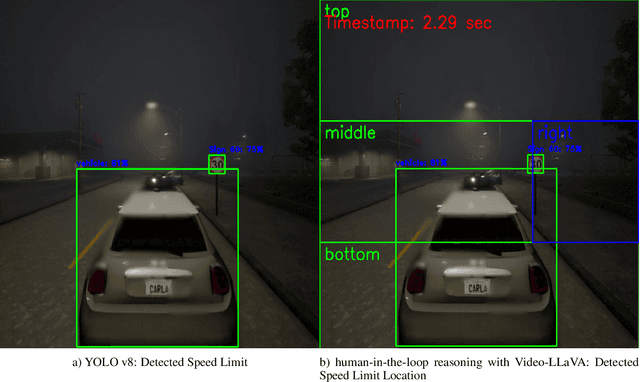
Traffic Sign Recognition (TSR) detection is a crucial component of autonomous vehicles. While You Only Look Once (YOLO) is a popular real-time object detection algorithm, factors like training data quality and adverse weather conditions (e.g., heavy rain) can lead to detection failures. These failures can be particularly dangerous when visual similarities between objects exist, such as mistaking a 30 km/h sign for a higher speed limit sign. This paper proposes a method that combines video analysis and reasoning, prompting with a human-in-the-loop guide large vision model to improve YOLOs accuracy in detecting road speed limit signs, especially in semi-real-world conditions. It is hypothesized that the guided prompting and reasoning abilities of Video-LLava can enhance YOLOs traffic sign detection capabilities. This hypothesis is supported by an evaluation based on human-annotated accuracy metrics within a dataset of recorded videos from the CARLA car simulator. The results demonstrate that a collaborative approach combining YOLO with Video-LLava and reasoning can effectively address challenging situations such as heavy rain and overcast conditions that hinder YOLOs detection capabilities.
Integrating Naturalistic Insights in Objective Multi-Vehicle Safety Framework
Aug 19, 2024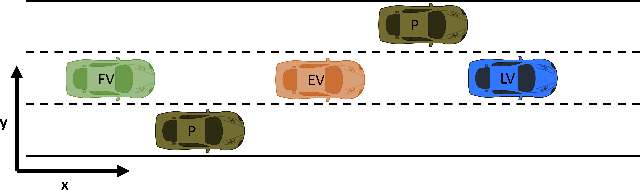
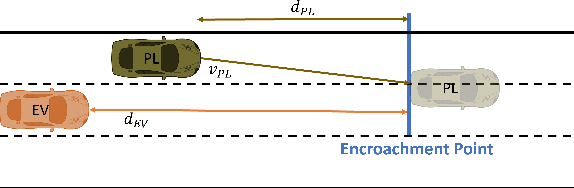
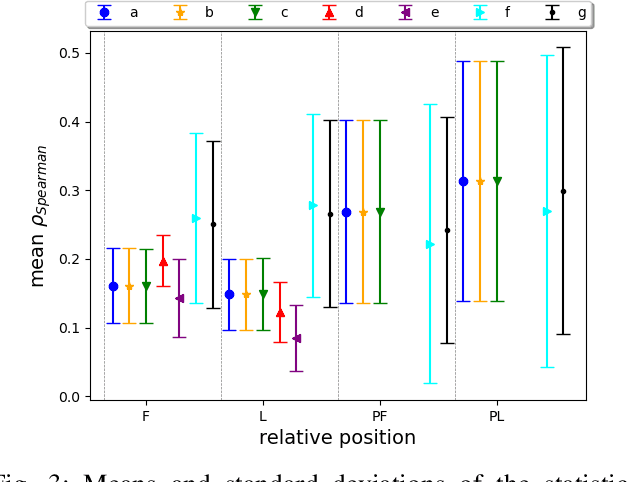
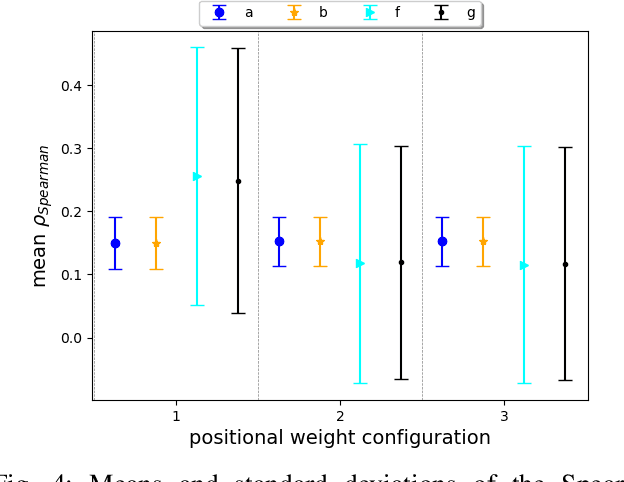
As autonomous vehicle technology advances, the precise assessment of safety in complex traffic scenarios becomes crucial, especially in mixed-vehicle environments where human perception of safety must be taken into account. This paper presents a framework designed for assessing traffic safety in multi-vehicle situations, facilitating the simultaneous utilization of diverse objective safety metrics. Additionally, it allows the integration of subjective perception of safety by adjusting model parameters. The framework was applied to evaluate various model configurations in car-following scenarios on a highway, utilizing naturalistic driving datasets. The evaluation of the model showed an outstanding performance, particularly when integrating multiple objective safety measures. Furthermore, the performance was significantly enhanced when considering all surrounding vehicles.
Leveraging GNSS and Onboard Visual Data from Consumer Vehicles for Robust Road Network Estimation
Aug 03, 2024Maps are essential for diverse applications, such as vehicle navigation and autonomous robotics. Both require spatial models for effective route planning and localization. This paper addresses the challenge of road graph construction for autonomous vehicles. Despite recent advances, creating a road graph remains labor-intensive and has yet to achieve full automation. The goal of this paper is to generate such graphs automatically and accurately. Modern cars are equipped with onboard sensors used for today's advanced driver assistance systems like lane keeping. We propose using global navigation satellite system (GNSS) traces and basic image data acquired from these standard sensors in consumer vehicles to estimate road-level maps with minimal effort. We exploit the spatial information in the data by framing the problem as a road centerline semantic segmentation task using a convolutional neural network. We also utilize the data's time series nature to refine the neural network's output by using map matching. We implemented and evaluated our method using a fleet of real consumer vehicles, only using the deployed onboard sensors. Our evaluation demonstrates that our approach not only matches existing methods on simpler road configurations but also significantly outperforms them on more complex road geometries and topologies. This work received the 2023 Woven by Toyota Invention Award.
Automating Traffic Model Enhancement with AI Research Agent
Sep 25, 2024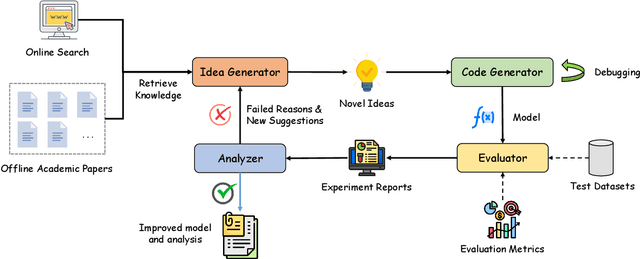

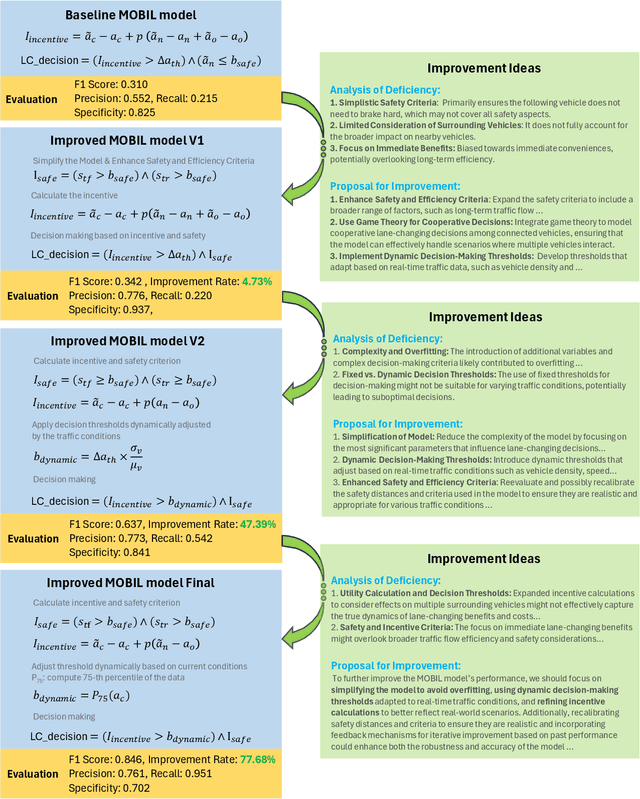
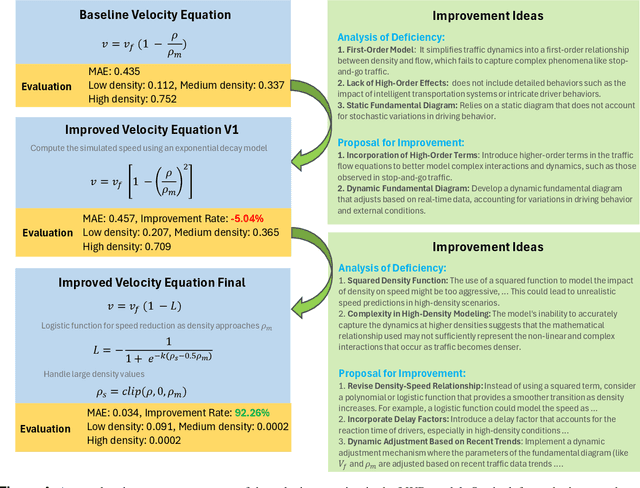
Developing efficient traffic models is essential for optimizing transportation systems, yet current approaches remain time-intensive and susceptible to human errors due to their reliance on manual processes. Traditional workflows involve exhaustive literature reviews, formula optimization, and iterative testing, leading to inefficiencies in research. In response, we introduce the Traffic Research Agent (TR-Agent), an AI-driven system designed to autonomously develop and refine traffic models through an iterative, closed-loop process. Specifically, we divide the research pipeline into four key stages: idea generation, theory formulation, theory evaluation, and iterative optimization; and construct TR-Agent with four corresponding modules: Idea Generator, Code Generator, Evaluator, and Analyzer. Working in synergy, these modules retrieve knowledge from external resources, generate novel ideas, implement and debug models, and finally assess them on the evaluation datasets. Furthermore, the system continuously refines these models based on iterative feedback, enhancing research efficiency and model performance. Experimental results demonstrate that TR-Agent achieves significant performance improvements across multiple traffic models, including the Intelligent Driver Model (IDM) for car following, the MOBIL lane-changing model, and the Lighthill-Whitham-Richards (LWR) traffic flow model. Additionally, TR-Agent provides detailed explanations for its optimizations, allowing researchers to verify and build upon its improvements easily. This flexibility makes the framework a powerful tool for researchers in transportation and beyond. To further support research and collaboration, we have open-sourced both the code and data used in our experiments, facilitating broader access and enabling continued advancements in the field.