 Add to Chrome
 Add to Firefox
 Add to Edge
Video Forensics
Papers and Code
Face2Parts: Exploring Coarse-to-Fine Inter-Regional Facial Dependencies for Generalized Deepfake Detection
Mar 27, 2026
Multimedia data, particularly images and videos, is integral to various applications, including surveillance, visual interaction, biometrics, evidence gathering, and advertising. However, amateur or skilled counterfeiters can simulate them to create deepfakes, often for slanderous motives. To address this challenge, several forensic methods have been developed to ensure the authenticity of the content. The effectiveness of these methods depends on their focus, with challenges arising from the diverse nature of manipulations. In this article, we analyze existing forensic methods and observe that each method has unique strengths in detecting deepfake traces by focusing on specific facial regions, such as the frame, face, lips, eyes, or nose. Considering these insights, we propose a novel hybrid approach called Face2Parts based on hierarchical feature representation ($HFR$) that takes advantage of coarse-to-fine information to improve deepfake detection. The proposed method involves extracting features from the frame, face, and key facial regions (i.e., lips, eyes, and nose) separately to explore the coarse-to-fine relationships. This approach enables us to capture inter-dependencies among facial regions using a channel-attention mechanism and deep triplet learning. We evaluated the proposed method on benchmark deepfake datasets in both intra-, inter-dataset, and inter-manipulation settings. The proposed method achieves an average AUC of 98.42\% on FF++, 79.80\% on CDF1, 85.34\% on CDF2, 89.41\% on DFD, 84.07\% on DFDC, 95.62\% on DTIM, 80.76\% on PDD, and 100\% on WLDR, respectively. The results demonstrate that our approach generalizes effectively and achieves promising performance to outperform the existing methods.

ForeSea: AI Forensic Search with Multi-modal Queries for Video Surveillance
Mar 24, 2026Despite decades of work, surveillance still struggles to find specific targets across long, multi-camera video. Prior methods -- tracking pipelines, CLIP based models, and VideoRAG -- require heavy manual filtering, capture only shallow attributes, and fail at temporal reasoning. Real-world searches are inherently multimodal (e.g., "When does this person join the fight?" with the person's image), yet this setting remains underexplored. Also, there are no proper benchmarks to evaluate those setting - asking video with multimodal queries. To address this gap, we introduce ForeSeaQA, a new benchmark specifically designed for video QA with image-and-text queries and timestamped annotations of key events. The dataset consists of long-horizon surveillance footage paired with diverse multimodal questions, enabling systematic evaluation of retrieval, temporal grounding, and multimodal reasoning in realistic forensic conditions. Not limited to this benchmark, we propose ForeSea, an AI forensic search system with a 3-stage, plug-and-play pipeline. (1) A tracking module filters irrelevant footage; (2) a multimodal embedding module indexes the remaining clips; and (3) during inference, the system retrieves top-K candidate clips for a Video Large Language Model (VideoLLM) to answer queries and localize events. On ForeSeaQA, ForeSea improves accuracy by 3.5% and temporal IoU by 11.0 over prior VideoRAG models. To our knowledge, ForeSeaQA is the first benchmark to support complex multimodal queries with precise temporal grounding, and ForeSea is the first VideoRAG system built to excel in this setting.
ForensicZip: More Tokens are Better but Not Necessary in Forensic Vision-Language Models
Mar 12, 2026Multimodal Large Language Models (MLLMs) enable interpretable multimedia forensics by generating textual rationales for forgery detection. However, processing dense visual sequences incurs high computational costs, particularly for high-resolution images and videos. Visual token pruning is a practical acceleration strategy, yet existing methods are largely semantic-driven, retaining salient objects while discarding background regions where manipulation traces such as high-frequency anomalies and temporal jitters often reside. To address this issue, we introduce ForensicZip, a training-free framework that reformulates token compression from a forgery-driven perspective. ForensicZip models temporal token evolution as a Birth-Death Optimal Transport problem with a slack dummy node, quantifying physical discontinuities indicating transient generative artifacts. The forensic scoring further integrates transport-based novelty with high-frequency priors to separate forensic evidence from semantic content under large-ratio compression. Experiments on deepfake and AIGC benchmarks show that at 10\% token retention, ForensicZip achieves $2.97\times$ speedup and over 90\% FLOPs reduction while maintaining state-of-the-art detection performance.
When Detectors Forget Forensics: Blocking Semantic Shortcuts for Generalizable AI-Generated Image Detection
Mar 10, 2026AI-generated image detection has become increasingly important with the rapid advancement of generative AI. However, detectors built on Vision Foundation Models (VFMs, \emph{e.g.}, CLIP) often struggle to generalize to images created using unseen generation pipelines. We identify, for the first time, a key failure mechanism, termed \emph{semantic fallback}, where VFM-based detectors rely on dominant pre-trained semantic priors (such as identity) rather than forgery-specific traces under distribution shifts. To address this issue, we propose \textbf{Geometric Semantic Decoupling (GSD)}, a parameter-free module that explicitly removes semantic components from learned representations by leveraging a frozen VFM as a semantic guide with a trainable VFM as an artifact detector. GSD estimates semantic directions from batch-wise statistics and projects them out via a geometric constraint, forcing the artifact detector to rely on semantic-invariant forensic evidence. Extensive experiments demonstrate that our method consistently outperforms state-of-the-art approaches, achieving 94.4\% video-level AUC (+\textbf{1.2\%}) in cross-dataset evaluation, improving robustness to unseen manipulations (+\textbf{3.0\%} on DF40), and generalizing beyond faces to the detection of synthetic images of general scenes, including UniversalFakeDetect (+\textbf{0.9\%}) and GenImage (+\textbf{1.7\%}).
DeformTrace: A Deformable State Space Model with Relay Tokens for Temporal Forgery Localization
Mar 05, 2026Temporal Forgery Localization (TFL) aims to precisely identify manipulated segments in video and audio, offering strong interpretability for security and forensics. While recent State Space Models (SSMs) show promise in precise temporal reasoning, their use in TFL is hindered by ambiguous boundaries, sparse forgeries, and limited long-range modeling. We propose DeformTrace, which enhances SSMs with deformable dynamics and relay mechanisms to address these challenges. Specifically, Deformable Self-SSM (DS-SSM) introduces dynamic receptive fields into SSMs for precise temporal localization. To further enhance its capacity for temporal reasoning and mitigate long-range decay, a Relay Token Mechanism is integrated into DS-SSM. Besides, Deformable Cross-SSM (DC-SSM) partitions the global state space into query-specific subspaces, reducing non-forgery information accumulation and boosting sensitivity to sparse forgeries. These components are integrated into a hybrid architecture that combines the global modeling of Transformers with the efficiency of SSMs. Extensive experiments show that DeformTrace achieves state-of-the-art performance with fewer parameters, faster inference, and stronger robustness.
GEM-TFL: Bridging Weak and Full Supervision for Forgery Localization through EM-Guided Decomposition and Temporal Refinement
Mar 05, 2026Temporal Forgery Localization (TFL) aims to precisely identify manipulated segments within videos or audio streams, providing interpretable evidence for multimedia forensics and security. While most existing TFL methods rely on dense frame-level labels in a fully supervised manner, Weakly Supervised TFL (WS-TFL) reduces labeling cost by learning only from binary video-level labels. However, current WS-TFL approaches suffer from mismatched training and inference objectives, limited supervision from binary labels, gradient blockage caused by non-differentiable top-k aggregation, and the absence of explicit modeling of inter-proposal relationships. To address these issues, we propose GEM-TFL (Graph-based EM-powered Temporal Forgery Localization), a two-phase classification-regression framework that effectively bridges the supervision gap between training and inference. Built upon this foundation, (1) we enhance weak supervision by reformulating binary labels into multi-dimensional latent attributes through an EM-based optimization process; (2) we introduce a training-free temporal consistency refinement that realigns frame-level predictions for smoother temporal dynamics; and (3) we design a graph-based proposal refinement module that models temporal-semantic relationships among proposals for globally consistent confidence estimation. Extensive experiments on benchmark datasets demonstrate that GEM-TFL achieves more accurate and robust temporal forgery localization, substantially narrowing the gap with fully supervised methods.
Beyond Static Artifacts: A Forensic Benchmark for Video Deepfake Reasoning in Vision Language Models
Feb 25, 2026Current Vision-Language Models (VLMs) for deepfake detection excel at identifying spatial artifacts but overlook a critical dimension: temporal inconsistencies in video forgeries. Adapting VLMs to reason about these dynamic cues remains a distinct challenge. To bridge this gap, we propose Forensic Answer-Questioning (FAQ), a large-scale benchmark that formulates temporal deepfake analysis as a multiple-choice task. FAQ introduces a three-level hierarchy to progressively evaluate and equip VLMs with forensic capabilities: (1) Facial Perception, testing the ability to identify static visual artifacts; (2) Temporal Deepfake Grounding, requiring the localization of dynamic forgery artifacts across frames; and (3) Forensic Reasoning, challenging models to synthesize evidence for final authenticity verdicts. We evaluate a range of VLMs on FAQ and generate a corresponding instruction-tuning set, FAQ-IT. Extensive experiments show that models fine-tuned on FAQ-IT achieve advanced performance on both in-domain and cross-dataset detection benchmarks. Ablation studies further validate the impact of our key design choices, confirming that FAQ is the driving force behind the temporal reasoning capabilities of these VLMs.
Deepfake Forensics Adapter: A Dual-Stream Network for Generalizable Deepfake Detection
Mar 02, 2026The rapid advancement of deepfake generation techniques poses significant threats to public safety and causes societal harm through the creation of highly realistic synthetic facial media. While existing detection methods demonstrate limitations in generalizing to emerging forgery patterns, this paper presents Deepfake Forensics Adapter (DFA), a novel dual-stream framework that synergizes vision-language foundation models with targeted forensics analysis. Our approach integrates a pre-trained CLIP model with three core components to achieve specialized deepfake detection by leveraging the powerful general capabilities of CLIP without changing CLIP parameters: 1) A Global Feature Adapter is used to identify global inconsistencies in image content that may indicate forgery, 2) A Local Anomaly Stream enhances the model's ability to perceive local facial forgery cues by explicitly leveraging facial structure priors, and 3) An Interactive Fusion Classifier promotes deep interaction and fusion between global and local features using a transformer encoder. Extensive evaluations of frame-level and video-level benchmarks demonstrate the superior generalization capabilities of DFA, particularly achieving state-of-the-art performance in the challenging DFDC dataset with frame-level AUC/EER of 0.816/0.256 and video-level AUC/EER of 0.836/0.251, representing a 4.8% video AUC improvement over previous methods. Our framework not only demonstrates state-of-the-art performance, but also points out a feasible and effective direction for developing a robust deepfake detection system with enhanced generalization capabilities against the evolving deepfake threats. Our code is available at https://github.com/Liao330/DFA.git
ForeSpeed: A real-world video dataset of CCTV cameras with different settings for vehicle speed estimation
Dec 22, 2025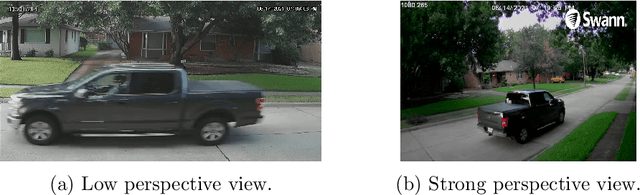
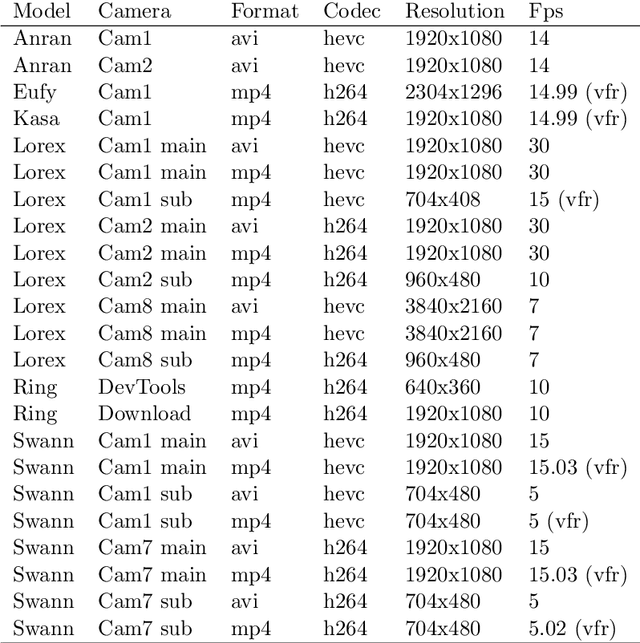
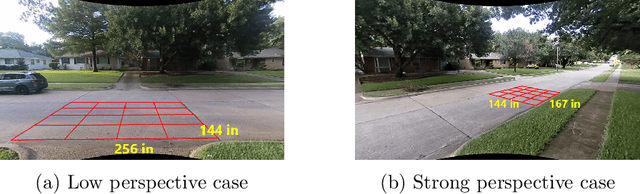
The need to estimate the speed of road vehicles has become increasingly important in the field of video forensics, particularly with the widespread deployment of CCTV cameras worldwide. Despite the development of various approaches, the accuracy of forensic speed estimation from real-world footage remains highly dependent on several factors, including camera specifications, acquisition methods, spatial and temporal resolution, compression methods, and scene perspective, which can significantly influence performance. In this paper, we introduce ForeSpeed, a comprehensive dataset designed to support the evaluation of speed estimation techniques in real-world scenarios using CCTV footage. The dataset includes recordings of a vehicle traveling at known speeds, captured by three digital and three analog cameras from two distinct perspectives. Real-world road metrics are provided to enable the restoration of the scene geometry. Videos were stored with multiple compression factors and settings, to simulate real world scenarios in which export procedures are not always performed according to forensic standards. Overall, ForeSpeed, includes a collection of 322 videos. As a case study, we employed the ForeSpeed dataset to benchmark a speed estimation algorithm available in a commercial product (Amped FIVE). Results demonstrate that while the method reliably estimates average speed across various conditions, its uncertainty range significantly increases when the scene involves strong perspective distortion. The ForeSpeed dataset is publicly available to the forensic community, with the aim of facilitating the evaluation of current methodologies and inspiring the development of new, robust solutions tailored to collision investigation and forensic incident analysis.
SAGA: Source Attribution of Generative AI Videos
Nov 16, 2025The proliferation of generative AI has led to hyper-realistic synthetic videos, escalating misuse risks and outstripping binary real/fake detectors. We introduce SAGA (Source Attribution of Generative AI videos), the first comprehensive framework to address the urgent need for AI-generated video source attribution at a large scale. Unlike traditional detection, SAGA identifies the specific generative model used. It uniquely provides multi-granular attribution across five levels: authenticity, generation task (e.g., T2V/I2V), model version, development team, and the precise generator, offering far richer forensic insights. Our novel video transformer architecture, leveraging features from a robust vision foundation model, effectively captures spatio-temporal artifacts. Critically, we introduce a data-efficient pretrain-and-attribute strategy, enabling SAGA to achieve state-of-the-art attribution using only 0.5\% of source-labeled data per class, matching fully supervised performance. Furthermore, we propose Temporal Attention Signatures (T-Sigs), a novel interpretability method that visualizes learned temporal differences, offering the first explanation for why different video generators are distinguishable. Extensive experiments on public datasets, including cross-domain scenarios, demonstrate that SAGA sets a new benchmark for synthetic video provenance, providing crucial, interpretable insights for forensic and regulatory applications.