 Add to Chrome
 Add to Firefox
 Add to Edge
Sarcasm Detection
Papers and Code
GDCNet: Generative Discrepancy Comparison Network for Multimodal Sarcasm Detection
Jan 28, 2026
Multimodal sarcasm detection (MSD) aims to identify sarcasm within image-text pairs by modeling semantic incongruities across modalities. Existing methods often exploit cross-modal embedding misalignment to detect inconsistency but struggle when visual and textual content are loosely related or semantically indirect. While recent approaches leverage large language models (LLMs) to generate sarcastic cues, the inherent diversity and subjectivity of these generations often introduce noise. To address these limitations, we propose the Generative Discrepancy Comparison Network (GDCNet). This framework captures cross-modal conflicts by utilizing descriptive, factually grounded image captions generated by Multimodal LLMs (MLLMs) as stable semantic anchors. Specifically, GDCNet computes semantic and sentiment discrepancies between the generated objective description and the original text, alongside measuring visual-textual fidelity. These discrepancy features are then fused with visual and textual representations via a gated module to adaptively balance modality contributions. Extensive experiments on MSD benchmarks demonstrate GDCNet's superior accuracy and robustness, establishing a new state-of-the-art on the MMSD2.0 benchmark.

MuVaC: AVariational Causal Framework for Multimodal Sarcasm Understanding in Dialogues
Jan 28, 2026The prevalence of sarcasm in multimodal dialogues on the social platforms presents a crucial yet challenging task for understanding the true intent behind online content. Comprehensive sarcasm analysis requires two key aspects: Multimodal Sarcasm Detection (MSD) and Multimodal Sarcasm Explanation (MuSE). Intuitively, the act of detection is the result of the reasoning process that explains the sarcasm. Current research predominantly focuses on addressing either MSD or MuSE as a single task. Even though some recent work has attempted to integrate these tasks, their inherent causal dependency is often overlooked. To bridge this gap, we propose MuVaC, a variational causal inference framework that mimics human cognitive mechanisms for understanding sarcasm, enabling robust multimodal feature learning to jointly optimize MSD and MuSE. Specifically, we first model MSD and MuSE from the perspective of structural causal models, establishing variational causal pathways to define the objectives for joint optimization. Next, we design an alignment-then-fusion approach to integrate multimodal features, providing robust fusion representations for sarcasm detection and explanation generation. Finally, we enhance the reasoning trustworthiness by ensuring consistency between detection results and explanations. Experimental results demonstrate the superiority of MuVaC in public datasets, offering a new perspective for understanding multimodal sarcasm.
RAM-SD: Retrieval-Augmented Multi-agent framework for Sarcasm Detection
Jan 14, 2026Sarcasm detection remains a significant challenge due to its reliance on nuanced contextual understanding, world knowledge, and multi-faceted linguistic cues that vary substantially across different sarcastic expressions. Existing approaches, from fine-tuned transformers to large language models, apply a uniform reasoning strategy to all inputs, struggling to address the diverse analytical demands of sarcasm. These demands range from modeling contextual expectation violations to requiring external knowledge grounding or recognizing specific rhetorical patterns. To address this limitation, we introduce RAM-SD, a Retrieval-Augmented Multi-Agent framework for Sarcasm Detection. The framework operates through four stages: (1) contextual retrieval grounds the query in both sarcastic and non-sarcastic exemplars; (2) a meta-planner classifies the sarcasm type and selects an optimal reasoning plan from a predefined set; (3) an ensemble of specialized agents performs complementary, multi-view analysis; and (4) an integrator synthesizes these analyses into a final, interpretable judgment with a natural language explanation. Evaluated on four standard benchmarks, RAM-SD achieves a state-of-the-art Macro-F1 of 77.74%, outperforming the strong GPT-4o+CoC baseline by 7.01 points. Our framework not only sets a new performance benchmark but also provides transparent and interpretable reasoning traces, illuminating the cognitive processes behind sarcasm comprehension.
GRCF: Two-Stage Groupwise Ranking and Calibration Framework for Multimodal Sentiment Analysis
Jan 14, 2026Most Multimodal Sentiment Analysis research has focused on point-wise regression. While straightforward, this approach is sensitive to label noise and neglects whether one sample is more positive than another, resulting in unstable predictions and poor correlation alignment. Pairwise ordinal learning frameworks emerged to address this gap, capturing relative order by learning from comparisons. Yet, they introduce two new trade-offs: First, they assign uniform importance to all comparisons, failing to adaptively focus on hard-to-rank samples. Second, they employ static ranking margins, which fail to reflect the varying semantic distances between sentiment groups. To address this, we propose a Two-Stage Group-wise Ranking and Calibration Framework (GRCF) that adapts the philosophy of Group Relative Policy Optimization (GRPO). Our framework resolves these trade-offs by simultaneously preserving relative ordinal structure, ensuring absolute score calibration, and adaptively focusing on difficult samples. Specifically, Stage 1 introduces a GRPO-inspired Advantage-Weighted Dynamic Margin Ranking Loss to build a fine-grained ordinal structure. Stage 2 then employs an MAE-driven objective to align prediction magnitudes. To validate its generalizability, we extend GRCF to classification tasks, including multimodal humor detection and sarcasm detection. GRCF achieves state-of-the-art performance on core regression benchmarks, while also showing strong generalizability in classification tasks.
World model inspired sarcasm reasoning with large language model agents
Dec 30, 2025Sarcasm understanding is a challenging problem in natural language processing, as it requires capturing the discrepancy between the surface meaning of an utterance and the speaker's intentions as well as the surrounding social context. Although recent advances in deep learning and Large Language Models (LLMs) have substantially improved performance, most existing approaches still rely on black-box predictions of a single model, making it difficult to structurally explain the cognitive factors underlying sarcasm. Moreover, while sarcasm often emerges as a mismatch between semantic evaluation and normative expectations or intentions, frameworks that explicitly decompose and model these components remain limited. In this work, we reformulate sarcasm understanding as a world model inspired reasoning process and propose World Model inspired SArcasm Reasoning (WM-SAR), which decomposes literal meaning, context, normative expectation, and intention into specialized LLM-based agents. The discrepancy between literal evaluation and normative expectation is explicitly quantified as a deterministic inconsistency score, and together with an intention score, these signals are integrated by a lightweight Logistic Regression model to infer the final sarcasm probability. This design leverages the reasoning capability of LLMs while maintaining an interpretable numerical decision structure. Experiments on representative sarcasm detection benchmarks show that WM-SAR consistently outperforms existing deep learning and LLM-based methods. Ablation studies and case analyses further demonstrate that integrating semantic inconsistency and intention reasoning is essential for effective sarcasm detection, achieving both strong performance and high interpretability.
Classification of Hope in Textual Data using Transformer-Based Models
Nov 17, 2025This paper presents a transformer-based approach for classifying hope expressions in text. We developed and compared three architectures (BERT, GPT-2, and DeBERTa) for both binary classification (Hope vs. Not Hope) and multiclass categorization (five hope-related categories). Our initial BERT implementation achieved 83.65% binary and 74.87% multiclass accuracy. In the extended comparison, BERT demonstrated superior performance (84.49% binary, 72.03% multiclass accuracy) while requiring significantly fewer computational resources (443s vs. 704s training time) than newer architectures. GPT-2 showed lowest overall accuracy (79.34% binary, 71.29% multiclass), while DeBERTa achieved moderate results (80.70% binary, 71.56% multiclass) but at substantially higher computational cost (947s for multiclass training). Error analysis revealed architecture-specific strengths in detecting nuanced hope expressions, with GPT-2 excelling at sarcasm detection (92.46% recall). This study provides a framework for computational analysis of hope, with applications in mental health and social media analysis, while demonstrating that architectural suitability may outweigh model size for specialized emotion detection tasks.
The One Where They Brain-Tune for Social Cognition: Multi-Modal Brain-Tuning on Friends
Nov 11, 2025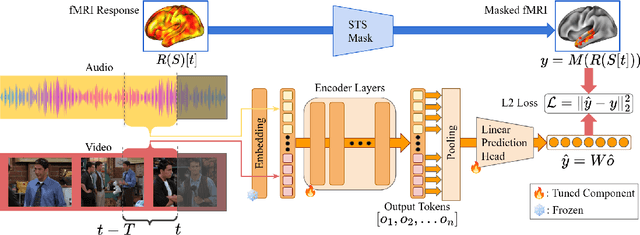
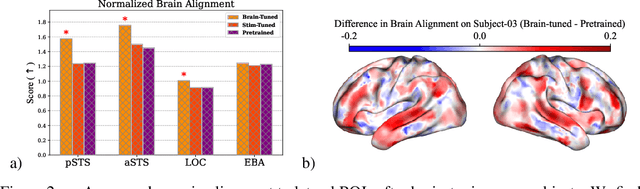
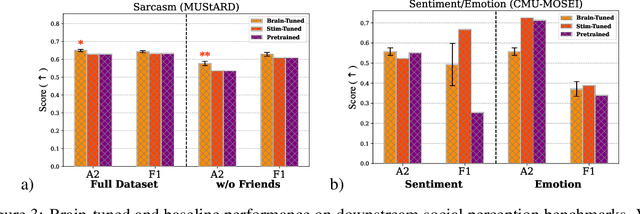
Recent studies on audio models show brain-tuning - fine-tuning models to better predict corresponding fMRI activity - improves brain alignment and increases performance on downstream semantic and audio tasks. We extend this approach to a multimodal audio-video model to enhance social cognition, targeting the Superior Temporal Sulcus (STS), a key region for social processing, while subjects watch Friends. We find significant increases in brain alignment to the STS and an adjacent ROI, as well as improvements to a social cognition task related to the training data - sarcasm detection in sitcoms. In summary, our study extends brain-tuning to the multi-modal domain, demonstrating improvements to a downstream task after tuning to a relevant functional region.
Making Machines Sound Sarcastic: LLM-Enhanced and Retrieval-Guided Sarcastic Speech Synthesis
Oct 08, 2025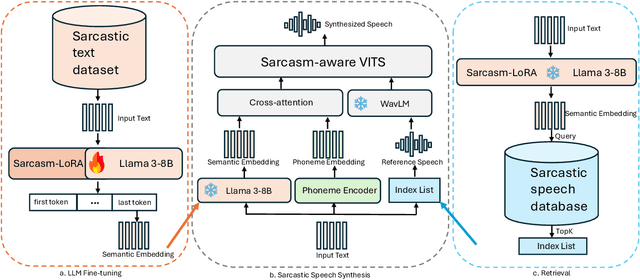
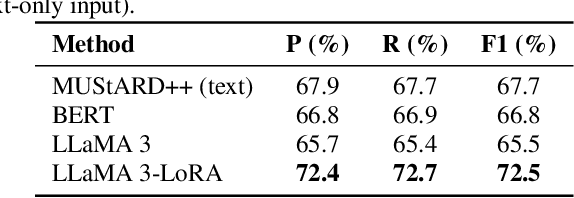
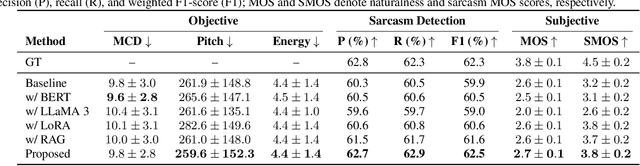
Sarcasm is a subtle form of non-literal language that poses significant challenges for speech synthesis due to its reliance on nuanced semantic, contextual, and prosodic cues. While existing speech synthesis research has focused primarily on broad emotional categories, sarcasm remains largely unexplored. In this paper, we propose a Large Language Model (LLM)-enhanced Retrieval-Augmented framework for sarcasm-aware speech synthesis. Our approach combines (1) semantic embeddings from a LoRA-fine-tuned LLaMA 3, which capture pragmatic incongruity and discourse-level cues of sarcasm, and (2) prosodic exemplars retrieved via a Retrieval Augmented Generation (RAG) module, which provide expressive reference patterns of sarcastic delivery. Integrated within a VITS backbone, this dual conditioning enables more natural and contextually appropriate sarcastic speech. Experiments demonstrate that our method outperforms baselines in both objective measures and subjective evaluations, yielding improvements in speech naturalness, sarcastic expressivity, and downstream sarcasm detection.
Causality Guided Representation Learning for Cross-Style Hate Speech Detection
Oct 09, 2025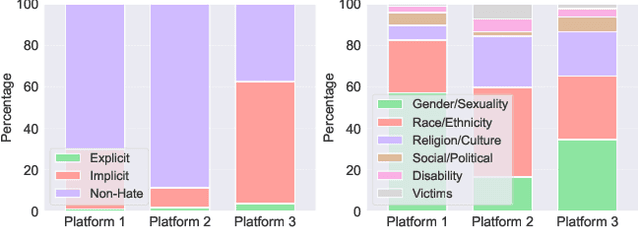
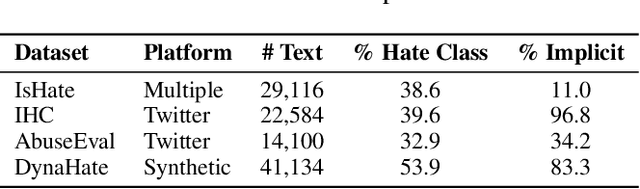
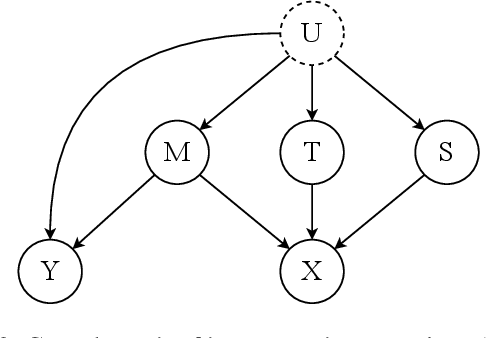
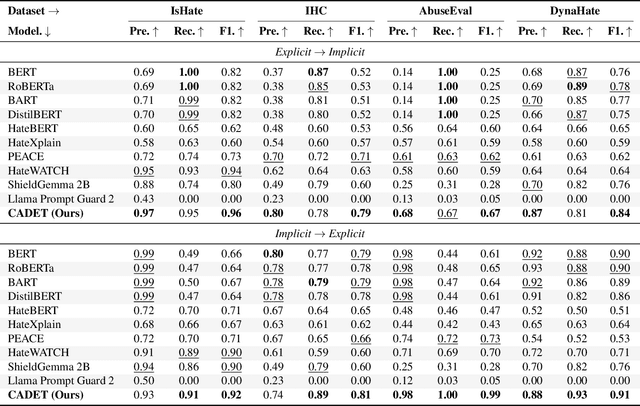
The proliferation of online hate speech poses a significant threat to the harmony of the web. While explicit hate is easily recognized through overt slurs, implicit hate speech is often conveyed through sarcasm, irony, stereotypes, or coded language -- making it harder to detect. Existing hate speech detection models, which predominantly rely on surface-level linguistic cues, fail to generalize effectively across diverse stylistic variations. Moreover, hate speech spread on different platforms often targets distinct groups and adopts unique styles, potentially inducing spurious correlations between them and labels, further challenging current detection approaches. Motivated by these observations, we hypothesize that the generation of hate speech can be modeled as a causal graph involving key factors: contextual environment, creator motivation, target, and style. Guided by this graph, we propose CADET, a causal representation learning framework that disentangles hate speech into interpretable latent factors and then controls confounders, thereby isolating genuine hate intent from superficial linguistic cues. Furthermore, CADET allows counterfactual reasoning by intervening on style within the latent space, naturally guiding the model to robustly identify hate speech in varying forms. CADET demonstrates superior performance in comprehensive experiments, highlighting the potential of causal priors in advancing generalizable hate speech detection.
Beyond Spurious Signals: Debiasing Multimodal Large Language Models via Counterfactual Inference and Adaptive Expert Routing
Sep 18, 2025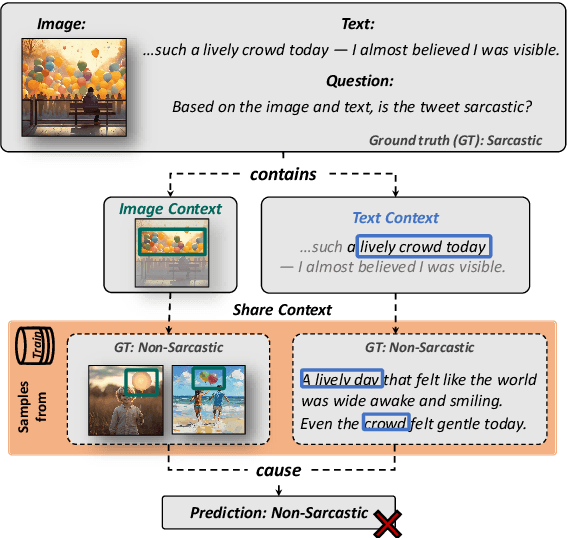
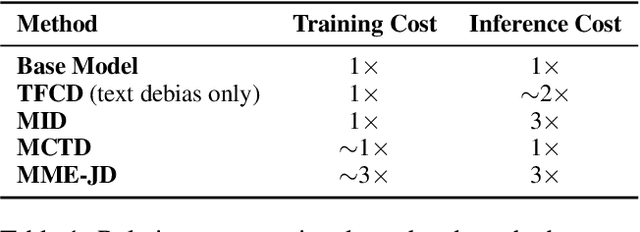
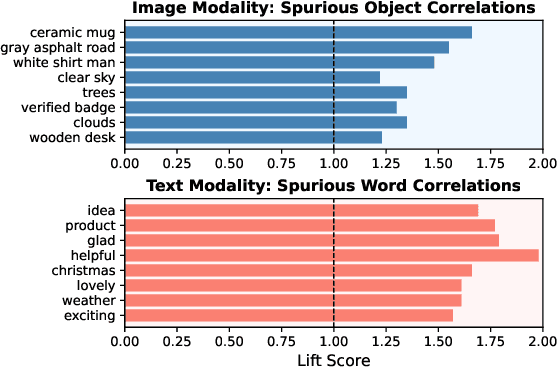
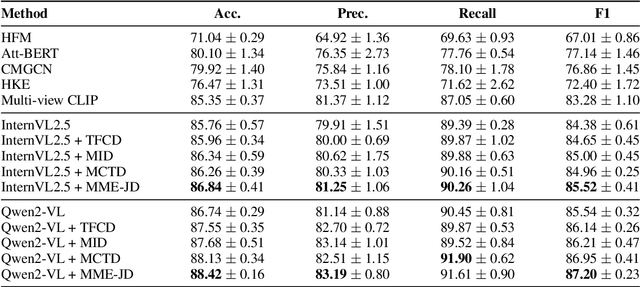
Multimodal Large Language Models (MLLMs) have shown substantial capabilities in integrating visual and textual information, yet frequently rely on spurious correlations, undermining their robustness and generalization in complex multimodal reasoning tasks. This paper addresses the critical challenge of superficial correlation bias in MLLMs through a novel causal mediation-based debiasing framework. Specially, we distinguishing core semantics from spurious textual and visual contexts via counterfactual examples to activate training-stage debiasing and employ a Mixture-of-Experts (MoE) architecture with dynamic routing to selectively engages modality-specific debiasing experts. Empirical evaluation on multimodal sarcasm detection and sentiment analysis tasks demonstrates that our framework significantly surpasses unimodal debiasing strategies and existing state-of-the-art models.