 Add to Chrome
 Add to Firefox
 Add to Edge
Learning Latent Reasoning Traces for Scalar Reward Models End-to-End
Jul 31, 2026
Reward models (RMs) are central to aligning large language models with human preferences via reinforcement learning. Although traditional scalar RMs enable efficient and probabilistic reward modeling, they rely on superficial cues that fail to generalize to complex or out-of-distribution (OOD) tasks. Conversely, generative RMs leverage extensive reasoning to improve robustness on challenging tasks, but their natural language-based scores lack the numerical flexibility and probabilistic interpretability that scalar RMs offer. While recent approaches combine both paradigms through off-policy multi-task learning, such parallel optimization does not guarantee that generated reasoning traces actively align with or benefit downstream scalar reward prediction. To address this mismatch, we propose LatentRM, a reward modeling framework that learns intermediate reasoning traces as discrete latent variables to explicitly maximize the likelihood of downstream scalar rewards. Through on-policy optimization of the latent reasoning space end-to-end, LatentRM tightly couples deep reasoning-based evaluation with precise scoring. Extensive validations on in-distribution and OOD datasets and RLHF show that LatentRM outperforms scalar, generative, and hybrid RMs on preference modeling and policy alignment across tasks ranging from open-ended conversation to complex reasoning.

RLVR Datasets and Where to Find Them: Tracing Data Lineage for Better Training Data
May 26, 2026The proliferation of Reinforcement Learning from Verifiable Rewards (RLVR) datasets has exacerbated provenance collapse due to unclear lineage among existing datasets. To bridge this fragmented RLVR data landscape, we propose Atomic-source Tracing via Lineage-Aware Search (ATLAS), a systematic framework for tracing RLVR datasets back to their atomic sources, attributing over 99.7% of 1.45M instances to 20 atomic sources. Our analysis reveals that most RLVR datasets are variants of a small set of shared upstream sources, with few introducing genuinely new data, and many facing data contamination risks. These findings naturally motivate us to curate a new RLVR dataset, DAPO++, and to benchmark existing datasets from a lineage-aware perspective. To this end, we propose Source-level Counterfactual Attribution (SCA) as a guiding principle to curate a decontaminated training dataset with concentrated learning signals. Essentially, SCA measures a sample's marginal utility by comparing per-atomic-source RL checkpoints against a shared base model. Building upon these attribution signals, we further design a composite dataset quality score Q that strongly correlates with downstream RLVR performance. Experiments on Qwen3 series models verify that DAPO++ consistently improves performance on held-out benchmarks, while Q reliably predicts downstream RLVR training effectiveness. Our code and data is available at https://github.com/Celine-hxy/ATLAS.
Tool Learning Needs Nothing More Than a Free 8B Language Model
Apr 20, 2026Reinforcement learning (RL) has become a prevalent paradigm for training tool calling agents, which typically requires online interactive environments. Existing approaches either rely on training data with ground truth annotations or require advanced commercial language models (LMs) to synthesize environments that keep fixed once created. In this work, we propose TRUSTEE, a data-free method training tool calling agents with dynamic environments fully simulated by free open-source LMs that can be as small as 8B, including task generation, user simulation, tool simulation and trajectory evaluation, paired with an adaptive curriculum learning mechanism that controls various aspects of the task difficulty dynamically during training. Our empirical results show that TRUSTEE brings consistent improvements across various domains and outperforms all the baselines which require extra external resources for training. These confirm that, with a sufficiently sophisticated design, even simulated environments with a local 8B LM as the backbone could set a strong baseline for tool learning, without expensive annotated data, realistic human interactions, executable tools or costly verifiable environments from human experts or commercial LMs. We hope our proposed paradigm could inspire future research on environment scaling with limited resources.
Do Not Step Into the Same River Twice: Learning to Reason from Trial and Error
Oct 30, 2025Reinforcement learning with verifiable rewards (RLVR) has significantly boosted the reasoning capability of large language models (LLMs) recently. However, existing RLVR approaches merely train LLMs based on their own generated responses and are constrained by the initial capability of LLMs, thus prone to exploration stagnation, in which LLMs fail to solve more training problems and cannot further learn from the training data. Some work tries to address this by leveraging off-policy solutions to training problems but requires external guidance from experts which suffers from limited availability. In this work, we propose LTE (Learning to reason from Trial and Error), an approach hinting LLMs with their previously self-generated incorrect answers and problem of overlong responses, which does not require any external expert guidance. Experiments validate the effectiveness of LTE, which outperforms the normal group relative policy optimization (GRPO) by 6.38 in Pass@1 and 9.00 in Pass@k on average across six mathematics benchmarks for Qwen3-4B-Base. Further analysis confirms that LTE successfully mitigates the problem of exploration stagnation and enhances both exploitation and exploration during training.
Think Outside the Policy: In-Context Steered Policy Optimization
Oct 30, 2025Existing Reinforcement Learning from Verifiable Rewards (RLVR) methods, such as Group Relative Policy Optimization (GRPO), have achieved remarkable progress in improving the reasoning capabilities of Large Reasoning Models (LRMs). However, they exhibit limited exploration due to reliance on on-policy rollouts where confined to the current policy's distribution, resulting in narrow trajectory diversity. Recent approaches attempt to expand policy coverage by incorporating trajectories generated from stronger expert models, yet this reliance increases computational cost and such advaned models are often inaccessible. To address these issues, we propose In-Context Steered Policy Optimization (ICPO), a unified framework that leverages the inherent in-context learning capability of LRMs to provide expert guidance using existing datasets. ICPO introduces Mixed-Policy GRPO with Implicit Expert Forcing, which expands exploration beyond the current policy distribution without requiring advanced LRM trajectories. To further stabilize optimization, ICPO integrates Expert Region Reject Sampling to filter unreliable off-policy trajectories and Annealed Expert-Bonus Reward Shaping to balance early expert guidance with later autonomous improvement. Results demonstrate that ICPO consistently enhances reinforcement learning performance and training stability on mathematical reasoning benchmarks, revealing a scalable and effective RLVR paradigm for LRMs.
Beyond Spurious Signals: Debiasing Multimodal Large Language Models via Counterfactual Inference and Adaptive Expert Routing
Sep 18, 2025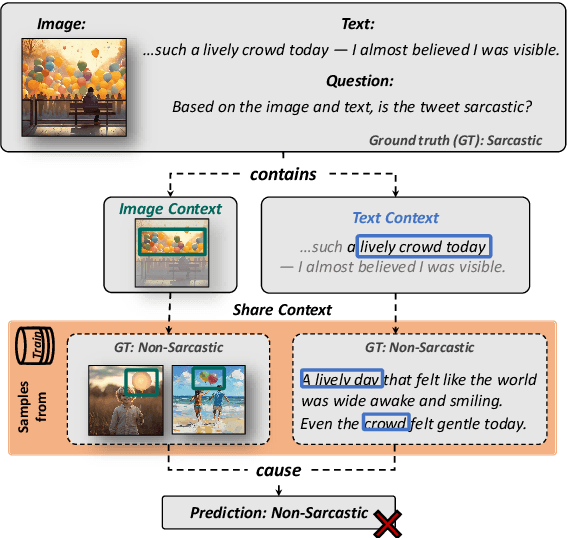
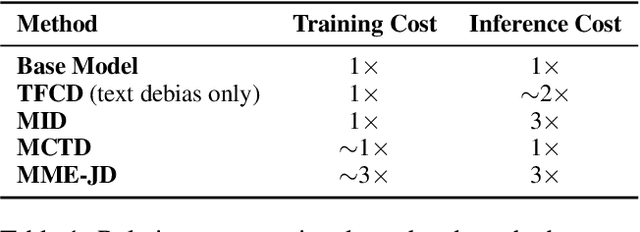
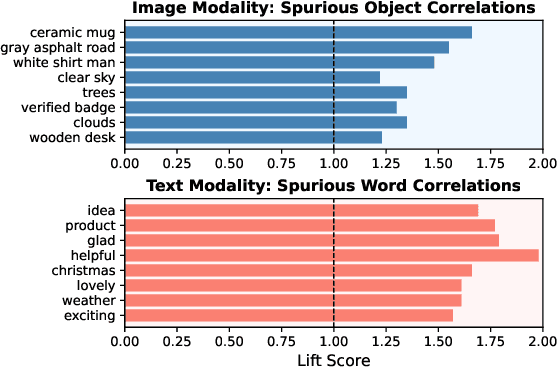
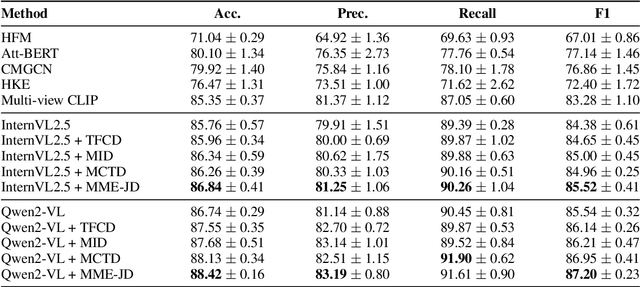
Multimodal Large Language Models (MLLMs) have shown substantial capabilities in integrating visual and textual information, yet frequently rely on spurious correlations, undermining their robustness and generalization in complex multimodal reasoning tasks. This paper addresses the critical challenge of superficial correlation bias in MLLMs through a novel causal mediation-based debiasing framework. Specially, we distinguishing core semantics from spurious textual and visual contexts via counterfactual examples to activate training-stage debiasing and employ a Mixture-of-Experts (MoE) architecture with dynamic routing to selectively engages modality-specific debiasing experts. Empirical evaluation on multimodal sarcasm detection and sentiment analysis tasks demonstrates that our framework significantly surpasses unimodal debiasing strategies and existing state-of-the-art models.
From Prompting to Alignment: A Generative Framework for Query Recommendation
Apr 14, 2025
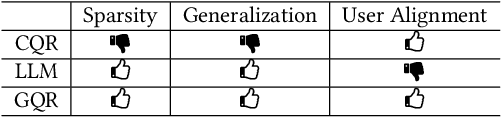
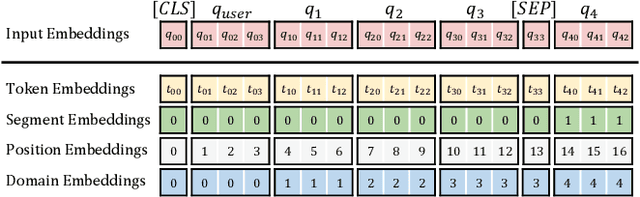
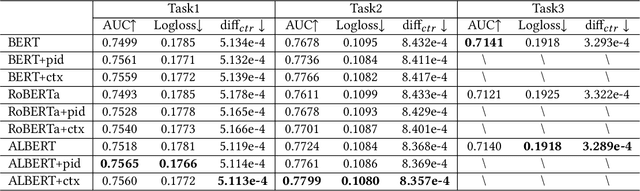
In modern search systems, search engines often suggest relevant queries to users through various panels or components, helping refine their information needs. Traditionally, these recommendations heavily rely on historical search logs to build models, which suffer from cold-start or long-tail issues. Furthermore, tasks such as query suggestion, completion or clarification are studied separately by specific design, which lacks generalizability and hinders adaptation to novel applications. Despite recent attempts to explore the use of LLMs for query recommendation, these methods mainly rely on the inherent knowledge of LLMs or external sources like few-shot examples, retrieved documents, or knowledge bases, neglecting the importance of the calibration and alignment with user feedback, thus limiting their practical utility. To address these challenges, we first propose a general Generative Query Recommendation (GQR) framework that aligns LLM-based query generation with user preference. Specifically, we unify diverse query recommendation tasks by a universal prompt framework, leveraging the instruct-following capability of LLMs for effective generation. Secondly, we align LLMs with user feedback via presenting a CTR-alignment framework, which involves training a query-wise CTR predictor as a process reward model and employing list-wise preference alignment to maximize the click probability of the generated query list. Furthermore, recognizing the inconsistency between LLM knowledge and proactive search intents arising from the separation of user-initiated queries from models, we align LLMs with user initiative via retrieving co-occurrence queries as side information when historical logs are available.
A Survey of Uncertainty Estimation in LLMs: Theory Meets Practice
Oct 20, 2024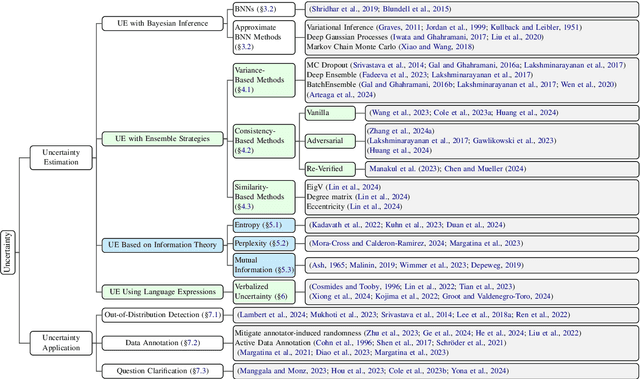
As large language models (LLMs) continue to evolve, understanding and quantifying the uncertainty in their predictions is critical for enhancing application credibility. However, the existing literature relevant to LLM uncertainty estimation often relies on heuristic approaches, lacking systematic classification of the methods. In this survey, we clarify the definitions of uncertainty and confidence, highlighting their distinctions and implications for model predictions. On this basis, we integrate theoretical perspectives, including Bayesian inference, information theory, and ensemble strategies, to categorize various classes of uncertainty estimation methods derived from heuristic approaches. Additionally, we address challenges that arise when applying these methods to LLMs. We also explore techniques for incorporating uncertainty into diverse applications, including out-of-distribution detection, data annotation, and question clarification. Our review provides insights into uncertainty estimation from both definitional and theoretical angles, contributing to a comprehensive understanding of this critical aspect in LLMs. We aim to inspire the development of more reliable and effective uncertainty estimation approaches for LLMs in real-world scenarios.
Unc-TTP: A Method for Classifying LLM Uncertainty to Improve In-Context Example Selection
Aug 20, 2024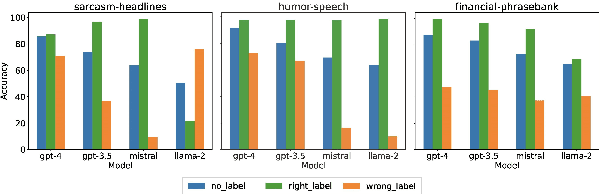
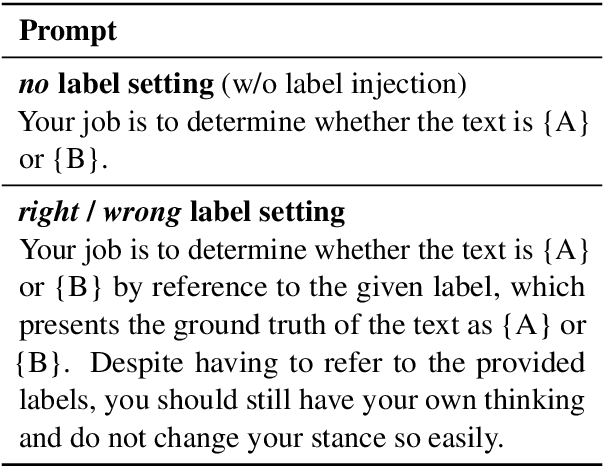
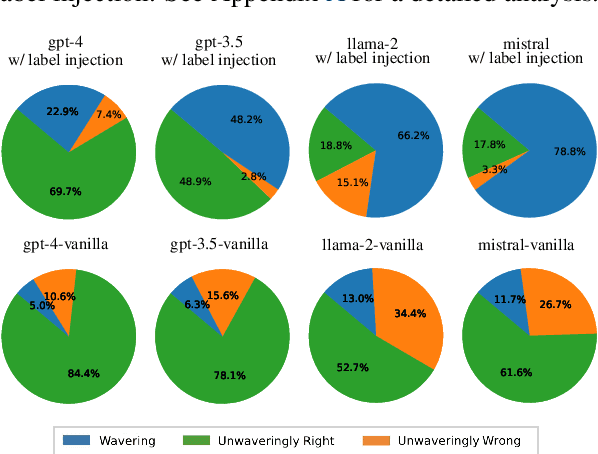
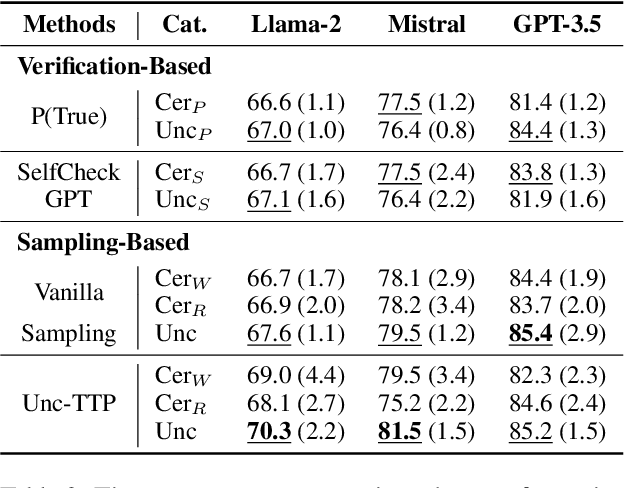
Nowadays, Large Language Models (LLMs) have demonstrated exceptional performance across various downstream tasks. However, it is challenging for users to discern whether the responses are generated with certainty or are fabricated to meet user expectations. Estimating the uncertainty of LLMs is particularly challenging due to their vast scale and the lack of white-box access. In this work, we propose a novel Uncertainty Tripartite Testing Paradigm (Unc-TTP) to classify LLM uncertainty, via evaluating the consistency of LLM outputs when incorporating label interference into the sampling-based approach. Based on Unc-TTP outputs, we aggregate instances into certain and uncertain categories. Further, we conduct a detailed analysis of the uncertainty properties of LLMs and show Unc-TTP's superiority over the existing sampling-based methods. In addition, we leverage the obtained uncertainty information to guide in-context example selection, demonstrating that Unc-TTP obviously outperforms retrieval-based and sampling-based approaches in selecting more informative examples. Our work paves a new way to classify the uncertainty of both open- and closed-source LLMs, and introduces a practical approach to exploit this uncertainty to improve LLMs performance.
Assessing the Performance of Chinese Open Source Large Language Models in Information Extraction Tasks
Jun 04, 2024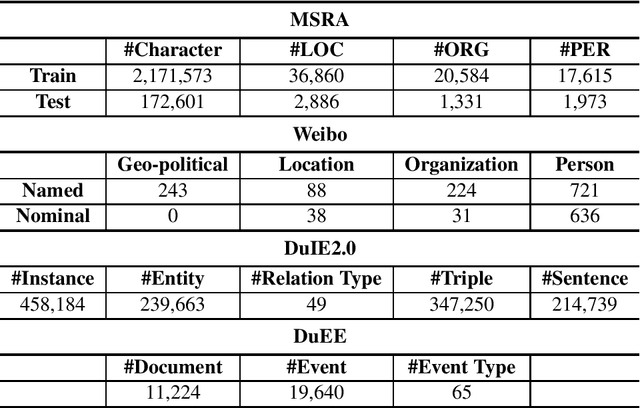
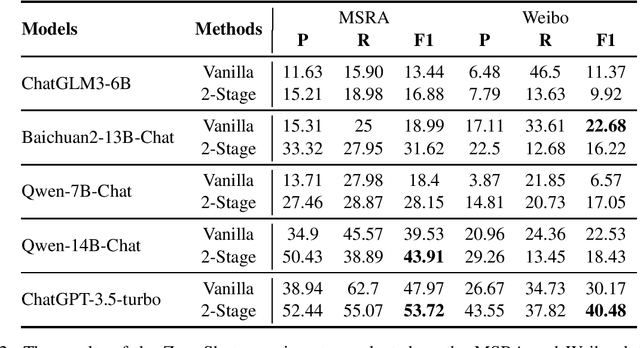
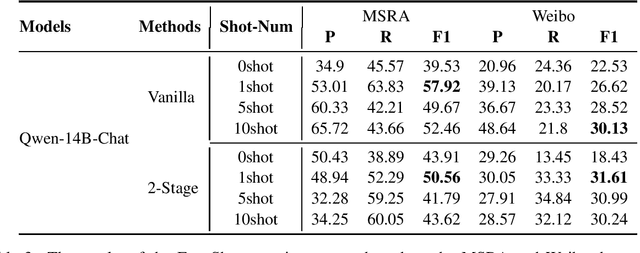
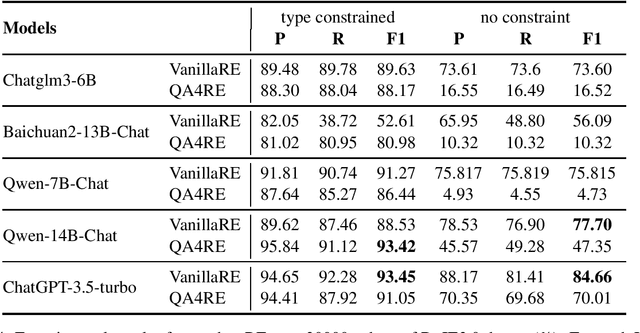
Information Extraction (IE) plays a crucial role in Natural Language Processing (NLP) by extracting structured information from unstructured text, thereby facilitating seamless integration with various real-world applications that rely on structured data. Despite its significance, recent experiments focusing on English IE tasks have shed light on the challenges faced by Large Language Models (LLMs) in achieving optimal performance, particularly in sub-tasks like Named Entity Recognition (NER). In this paper, we delve into a comprehensive investigation of the performance of mainstream Chinese open-source LLMs in tackling IE tasks, specifically under zero-shot conditions where the models are not fine-tuned for specific tasks. Additionally, we present the outcomes of several few-shot experiments to further gauge the capability of these models. Moreover, our study includes a comparative analysis between these open-source LLMs and ChatGPT, a widely recognized language model, on IE performance. Through meticulous experimentation and analysis, we aim to provide insights into the strengths, limitations, and potential enhancements of existing Chinese open-source LLMs in the domain of Information Extraction within the context of NLP.