 Add to Chrome
 Add to Firefox
 Add to Edge
Open Set Action Recognition
Papers and Code
MGCA-Net: Multi-Grained Category-Aware Network for Open-Vocabulary Temporal Action Localization
Nov 17, 2025
Open-Vocabulary Temporal Action Localization (OV-TAL) aims to recognize and localize instances of any desired action categories in videos without explicitly curating training data for all categories. Existing methods mostly recognize action categories at a single granularity, which degrades the recognition accuracy of both base and novel action categories. To address these issues, we propose a Multi-Grained Category-Aware Network (MGCA-Net) comprising a localizer, an action presence predictor, a conventional classifier, and a coarse-to-fine classifier. Specifically, the localizer localizes category-agnostic action proposals. For these action proposals, the action presence predictor estimates the probability that they belong to an action instance. At the same time, the conventional classifier predicts the probability of each action proposal over base action categories at the snippet granularity. Novel action categories are recognized by the coarse-to-fine classifier, which first identifies action presence at the video granularity. Finally, it assigns each action proposal to one category from the coarse categories at the proposal granularity. Through coarse-to-fine category awareness for novel actions and the conventional classifier's awareness of base actions, multi-grained category awareness is achieved, effectively enhancing localization performance. Comprehensive evaluations on the THUMOS'14 and ActivityNet-1.3 benchmarks demonstrate that our method achieves state-of-the-art performance. Furthermore, our MGCA-Net achieves state-of-the-art results under the Zero-Shot Temporal Action Localization setting.

ThaiOCRBench: A Task-Diverse Benchmark for Vision-Language Understanding in Thai
Nov 06, 2025We present ThaiOCRBench, the first comprehensive benchmark for evaluating vision-language models (VLMs) on Thai text-rich visual understanding tasks. Despite recent progress in multimodal modeling, existing benchmarks predominantly focus on high-resource languages, leaving Thai underrepresented, especially in tasks requiring document structure understanding. ThaiOCRBench addresses this gap by offering a diverse, human-annotated dataset comprising 2,808 samples across 13 task categories. We evaluate a wide range of state-of-the-art VLMs in a zero-shot setting, spanning both proprietary and open-source systems. Results show a significant performance gap, with proprietary models (e.g., Gemini 2.5 Pro) outperforming open-source counterparts. Notably, fine-grained text recognition and handwritten content extraction exhibit the steepest performance drops among open-source models. Through detailed error analysis, we identify key challenges such as language bias, structural mismatch, and hallucinated content. ThaiOCRBench provides a standardized framework for assessing VLMs in low-resource, script-complex settings, and provides actionable insights for improving Thai-language document understanding.
What Can We Learn from Harry Potter? An Exploratory Study of Visual Representation Learning from Atypical Videos
Aug 29, 2025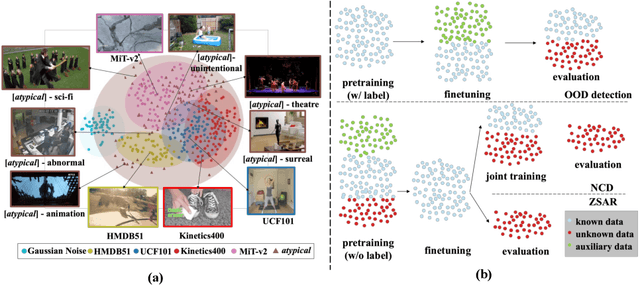
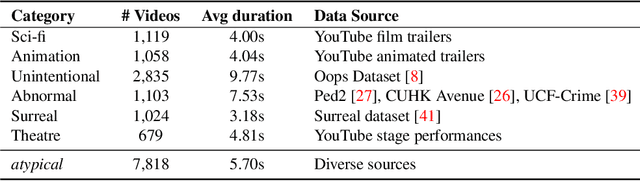
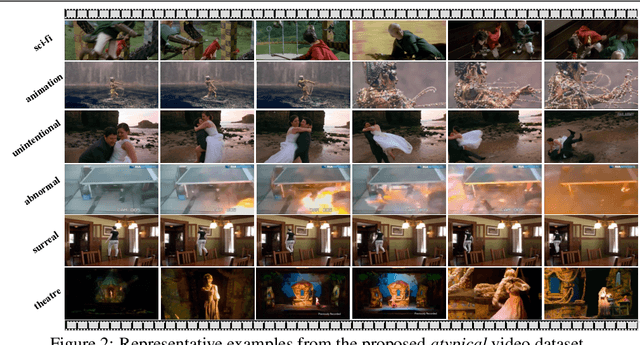
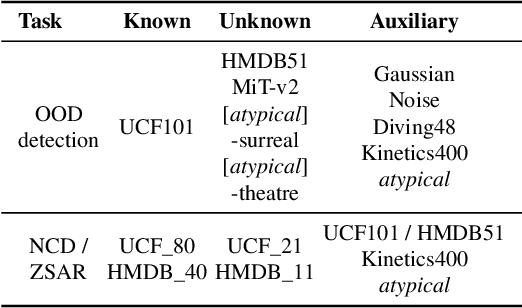
Humans usually show exceptional generalisation and discovery ability in the open world, when being shown uncommon new concepts. Whereas most existing studies in the literature focus on common typical data from closed sets, open-world novel discovery is under-explored in videos. In this paper, we are interested in asking: \textit{What if atypical unusual videos are exposed in the learning process?} To this end, we collect a new video dataset consisting of various types of unusual atypical data (\eg sci-fi, animation, \etc). To study how such atypical data may benefit open-world learning, we feed them into the model training process for representation learning. Focusing on three key tasks in open-world learning: out-of-distribution (OOD) detection, novel category discovery (NCD), and zero-shot action recognition (ZSAR), we found that even straightforward learning approaches with atypical data consistently improve performance across various settings. Furthermore, we found that increasing the categorical diversity of the atypical samples further boosts OOD detection performance. Additionally, in the NCD task, using a smaller yet more semantically diverse set of atypical samples leads to better performance compared to using a larger but more typical dataset. In the ZSAR setting, the semantic diversity of atypical videos helps the model generalise better to unseen action classes. These observations in our extensive experimental evaluations reveal the benefits of atypical videos for visual representation learning in the open world, together with the newly proposed dataset, encouraging further studies in this direction.
Looking Beyond the Obvious: A Survey on Abstract Concept Recognition for Video Understanding
Aug 28, 2025The automatic understanding of video content is advancing rapidly. Empowered by deeper neural networks and large datasets, machines are increasingly capable of understanding what is concretely visible in video frames, whether it be objects, actions, events, or scenes. In comparison, humans retain a unique ability to also look beyond concrete entities and recognize abstract concepts like justice, freedom, and togetherness. Abstract concept recognition forms a crucial open challenge in video understanding, where reasoning on multiple semantic levels based on contextual information is key. In this paper, we argue that the recent advances in foundation models make for an ideal setting to address abstract concept understanding in videos. Automated understanding of high-level abstract concepts is imperative as it enables models to be more aligned with human reasoning and values. In this survey, we study different tasks and datasets used to understand abstract concepts in video content. We observe that, periodically and over a long period, researchers have attempted to solve these tasks, making the best use of the tools available at their disposal. We advocate that drawing on decades of community experience will help us shed light on this important open grand challenge and avoid ``re-inventing the wheel'' as we start revisiting it in the era of multi-modal foundation models.
Medical Image De-Identification Benchmark Challenge
Jul 31, 2025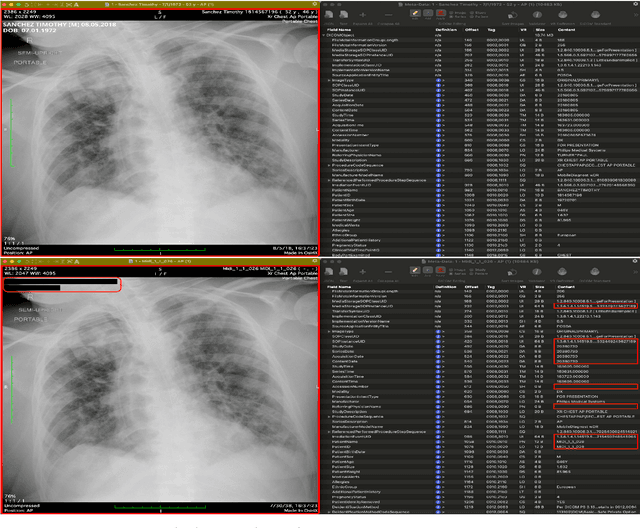
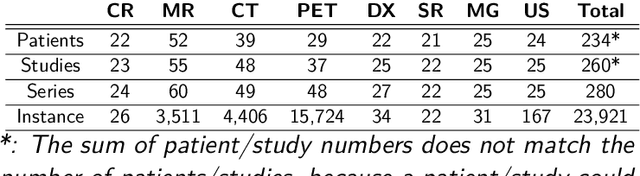
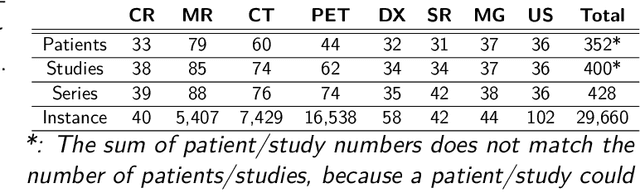
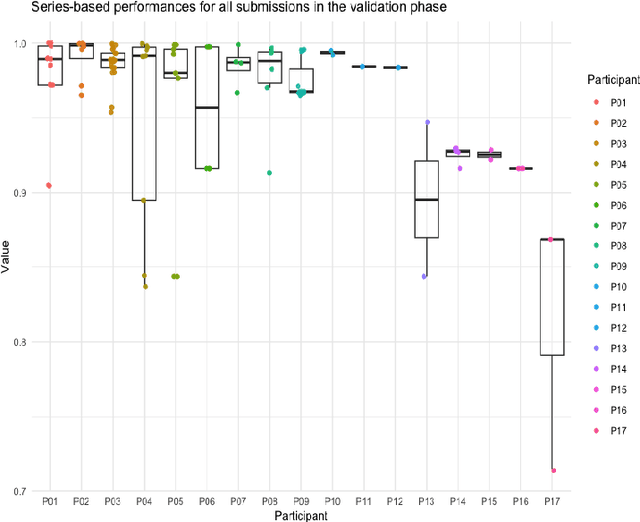
The de-identification (deID) of protected health information (PHI) and personally identifiable information (PII) is a fundamental requirement for sharing medical images, particularly through public repositories, to ensure compliance with patient privacy laws. In addition, preservation of non-PHI metadata to inform and enable downstream development of imaging artificial intelligence (AI) is an important consideration in biomedical research. The goal of MIDI-B was to provide a standardized platform for benchmarking of DICOM image deID tools based on a set of rules conformant to the HIPAA Safe Harbor regulation, the DICOM Attribute Confidentiality Profiles, and best practices in preservation of research-critical metadata, as defined by The Cancer Imaging Archive (TCIA). The challenge employed a large, diverse, multi-center, and multi-modality set of real de-identified radiology images with synthetic PHI/PII inserted. The MIDI-B Challenge consisted of three phases: training, validation, and test. Eighty individuals registered for the challenge. In the training phase, we encouraged participants to tune their algorithms using their in-house or public data. The validation and test phases utilized the DICOM images containing synthetic identifiers (of 216 and 322 subjects, respectively). Ten teams successfully completed the test phase of the challenge. To measure success of a rule-based approach to image deID, scores were computed as the percentage of correct actions from the total number of required actions. The scores ranged from 97.91% to 99.93%. Participants employed a variety of open-source and proprietary tools with customized configurations, large language models, and optical character recognition (OCR). In this paper we provide a comprehensive report on the MIDI-B Challenge's design, implementation, results, and lessons learned.
Face-LLaVA: Facial Expression and Attribute Understanding through Instruction Tuning
Apr 09, 2025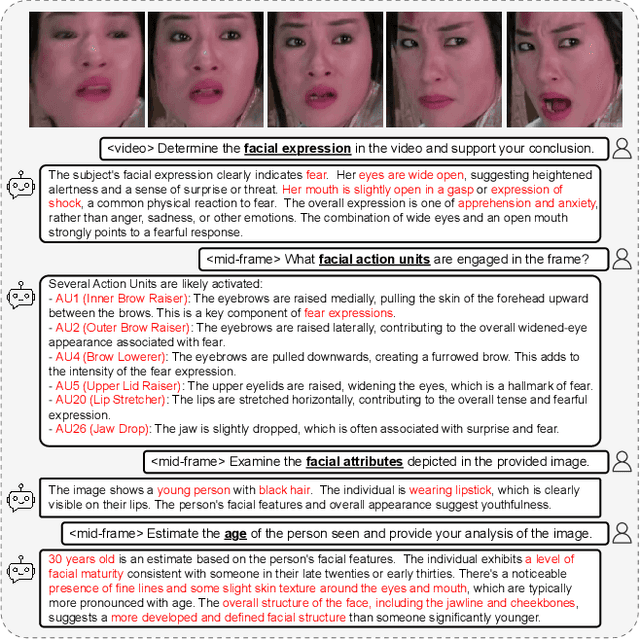
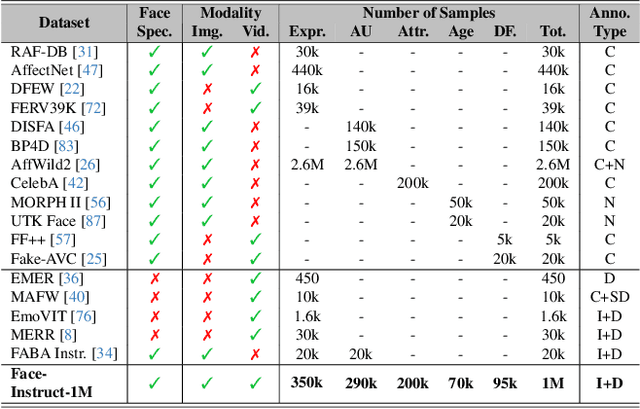
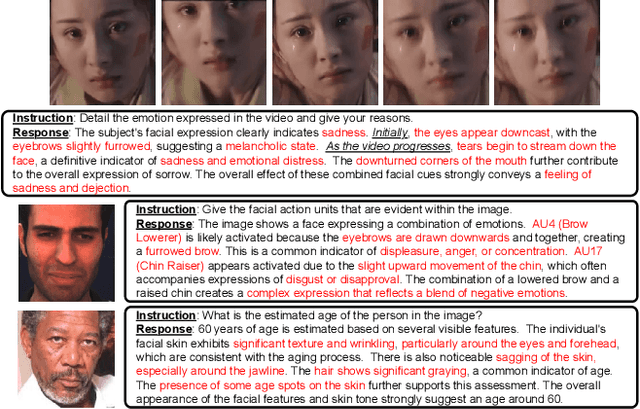
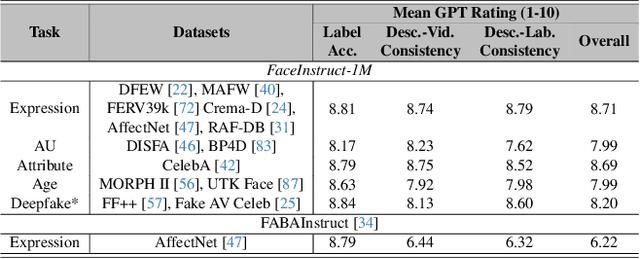
The human face plays a central role in social communication, necessitating the use of performant computer vision tools for human-centered applications. We propose Face-LLaVA, a multimodal large language model for face-centered, in-context learning, including facial expression and attribute recognition. Additionally, Face-LLaVA is able to generate natural language descriptions that can be used for reasoning. Leveraging existing visual databases, we first developed FaceInstruct-1M, a face-centered database for instruction tuning MLLMs for face processing. We then developed a novel face-specific visual encoder powered by Face-Region Guided Cross-Attention that integrates face geometry with local visual features. We evaluated the proposed method across nine different datasets and five different face processing tasks, including facial expression recognition, action unit detection, facial attribute detection, age estimation and deepfake detection. Face-LLaVA achieves superior results compared to existing open-source MLLMs and competitive performance compared to commercial solutions. Our model output also receives a higher reasoning rating by GPT under a zero-shot setting across all the tasks. Both our dataset and model wil be released at https://face-llava.github.io to support future advancements in social AI and foundational vision-language research.
ForcePose: A Deep Learning Approach for Force Calculation Based on Action Recognition Using MediaPipe Pose Estimation Combined with Object Detection
Mar 28, 2025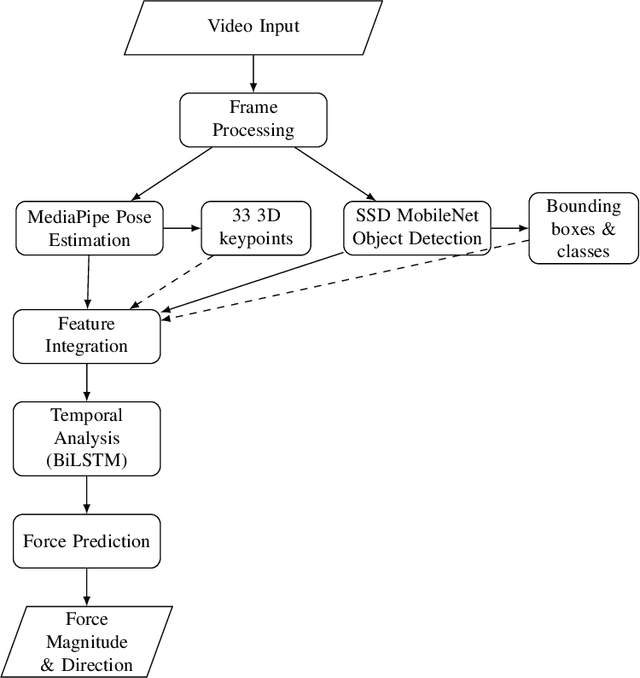
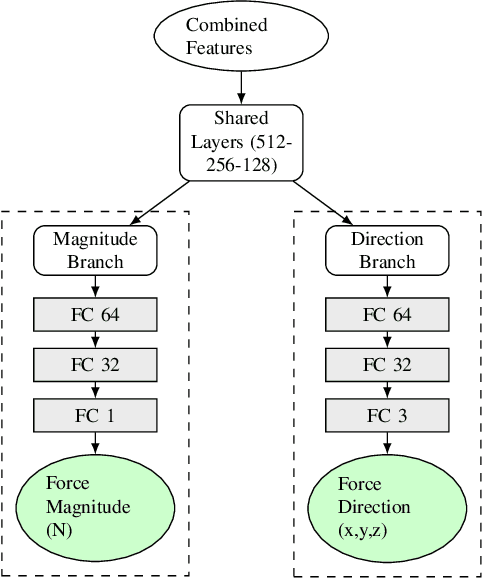
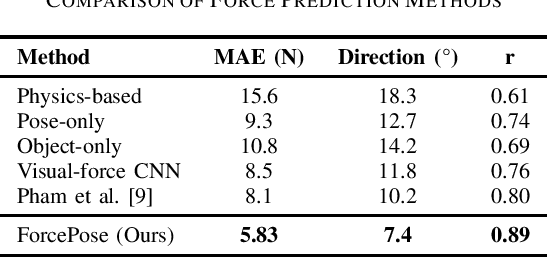
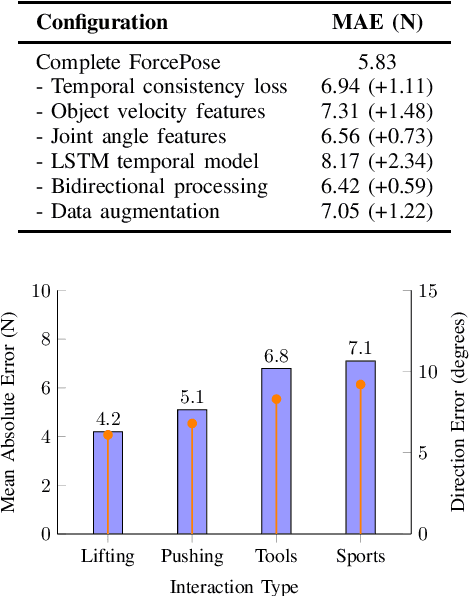
Force estimation in human-object interactions is crucial for various fields like ergonomics, physical therapy, and sports science. Traditional methods depend on specialized equipment such as force plates and sensors, which makes accurate assessments both expensive and restricted to laboratory settings. In this paper, we introduce ForcePose, a novel deep learning framework that estimates applied forces by combining human pose estimation with object detection. Our approach leverages MediaPipe for skeletal tracking and SSD MobileNet for object recognition to create a unified representation of human-object interaction. We've developed a specialized neural network that processes both spatial and temporal features to predict force magnitude and direction without needing any physical sensors. After training on our dataset of 850 annotated videos with corresponding force measurements, our model achieves a mean absolute error of 5.83 N in force magnitude and 7.4 degrees in force direction. When compared to existing computer vision approaches, our method performs 27.5% better while still offering real-time performance on standard computing hardware. ForcePose opens up new possibilities for force analysis in diverse real-world scenarios where traditional measurement tools are impractical or intrusive. This paper discusses our methodology, the dataset creation process, evaluation metrics, and potential applications across rehabilitation, ergonomics assessment, and athletic performance analysis.
Recognize Any Surgical Object: Unleashing the Power of Weakly-Supervised Data
Jan 25, 2025
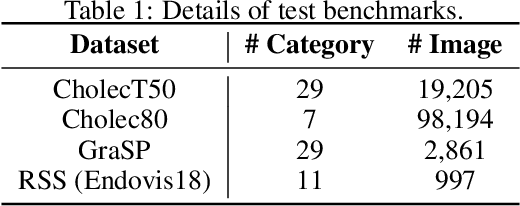

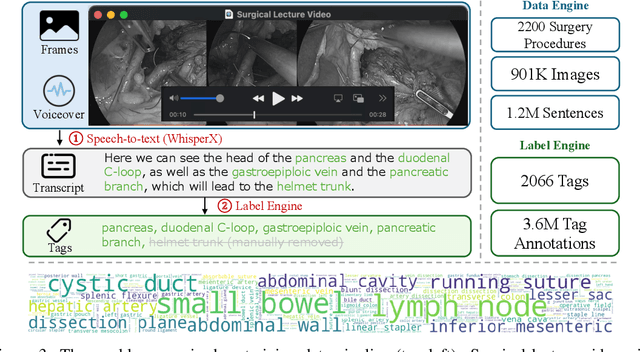
We present RASO, a foundation model designed to Recognize Any Surgical Object, offering robust open-set recognition capabilities across a broad range of surgical procedures and object classes, in both surgical images and videos. RASO leverages a novel weakly-supervised learning framework that generates tag-image-text pairs automatically from large-scale unannotated surgical lecture videos, significantly reducing the need for manual annotations. Our scalable data generation pipeline gatherers to 2,200 surgical procedures and produces 3.6 million tag annotations across 2,066 unique surgical tags. Our experiments show that RASO achieves improvements of 2.9 mAP, 4.5 mAP, 10.6 mAP, and 7.2 mAP on four standard surgical benchmarks respectively in zero-shot settings, and surpasses state-of-the-art models in supervised surgical action recognition tasks. We will open-source our code, model, and dataset to facilitate further research.
JARVIS-VLA: Post-Training Large-Scale Vision Language Models to Play Visual Games with Keyboards and Mouse
Mar 20, 2025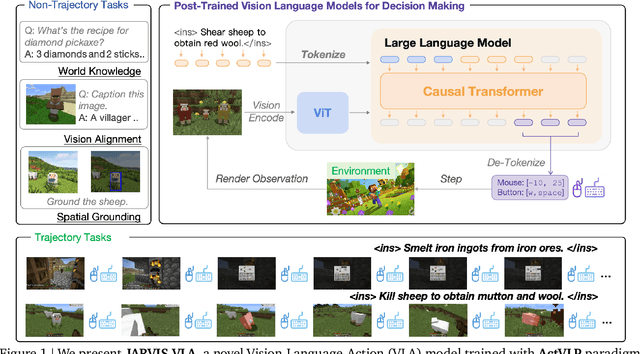
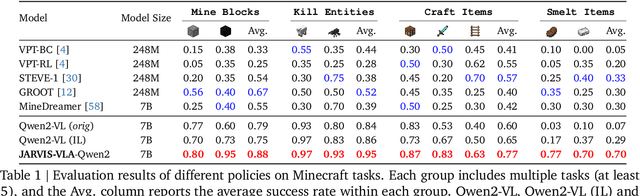
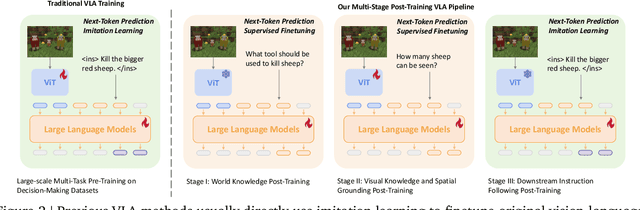
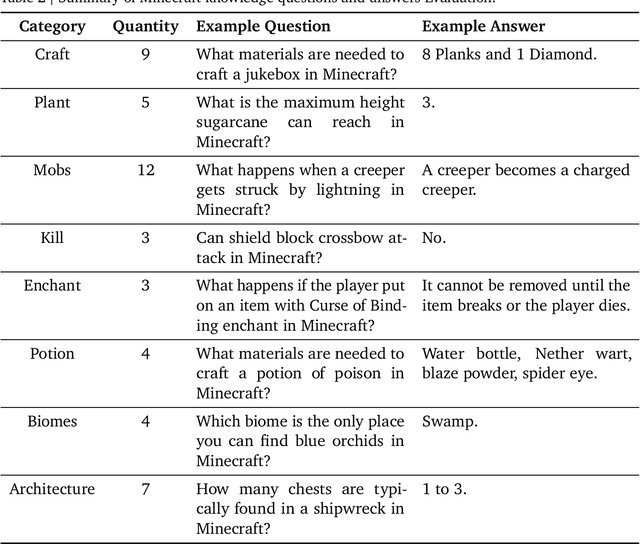
Recently, action-based decision-making in open-world environments has gained significant attention. Visual Language Action (VLA) models, pretrained on large-scale web datasets, have shown promise in decision-making tasks. However, previous work has primarily focused on action post-training, often neglecting enhancements to the foundational model itself. In response, we introduce a novel approach, Act from Visual Language Post-Training, which refines Visual Language Models (VLMs) through visual and linguistic guidance in a self-supervised manner. This enhancement improves the models' capabilities in world knowledge, visual recognition, and spatial grounding in open-world environments. Following the above post-training paradigms, we obtain the first VLA models in Minecraft that can follow human instructions on over 1k different atomic tasks, including crafting, smelting, cooking, mining, and killing. Our experiments demonstrate that post-training on non-trajectory tasks leads to a significant 40% improvement over the best agent baseline on a diverse set of atomic tasks. Furthermore, we demonstrate that our approach surpasses traditional imitation learning-based policies in Minecraft, achieving state-of-the-art performance. We have open-sourced the code, models, and datasets to foster further research. The project page can be found in https://craftjarvis.github.io/JarvisVLA.
From Motion Signals to Insights: A Unified Framework for Student Behavior Analysis and Feedback in Physical Education Classes
Mar 09, 2025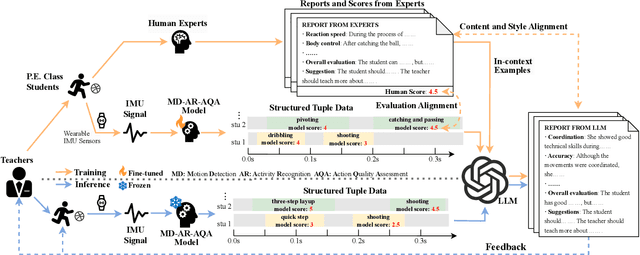
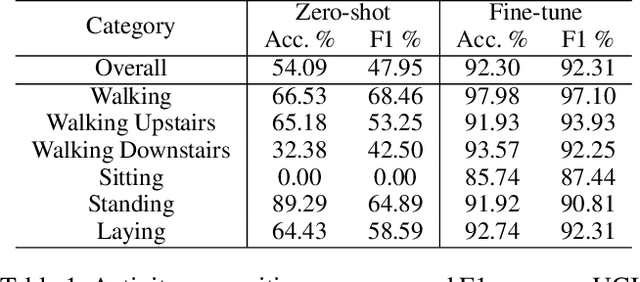
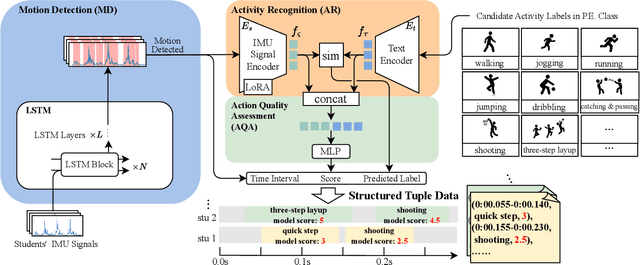
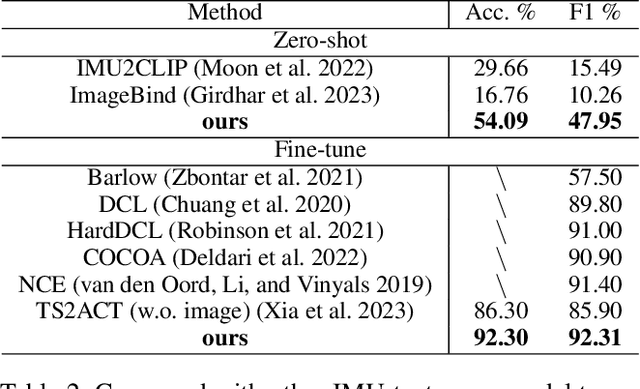
Analyzing student behavior in educational scenarios is crucial for enhancing teaching quality and student engagement. Existing AI-based models often rely on classroom video footage to identify and analyze student behavior. While these video-based methods can partially capture and analyze student actions, they struggle to accurately track each student's actions in physical education classes, which take place in outdoor, open spaces with diverse activities, and are challenging to generalize to the specialized technical movements involved in these settings. Furthermore, current methods typically lack the ability to integrate specialized pedagogical knowledge, limiting their ability to provide in-depth insights into student behavior and offer feedback for optimizing instructional design. To address these limitations, we propose a unified end-to-end framework that leverages human activity recognition technologies based on motion signals, combined with advanced large language models, to conduct more detailed analyses and feedback of student behavior in physical education classes. Our framework begins with the teacher's instructional designs and the motion signals from students during physical education sessions, ultimately generating automated reports with teaching insights and suggestions for improving both learning and class instructions. This solution provides a motion signal-based approach for analyzing student behavior and optimizing instructional design tailored to physical education classes. Experimental results demonstrate that our framework can accurately identify student behaviors and produce meaningful pedagogical insights.