 Add to Chrome
 Add to Firefox
 Add to Edge
Edit2TikZ: A Comprehensive and Challenging Benchmark for Scientific Figure Editing with TikZ
Aug 13, 2026
Although multimodal large language models (MLLMs) have shown substantial potential in visual understanding and graphic code generation, editing scientific figures through code presents a greater challenge: a model must jointly recover visual structure, ground the requested change, generate compilable code, and preserve all unrelated content. While existing TikZ benchmarks mainly focus on figure reconstruction and generation, few systematically evaluate instruction-guided scientific figure editing with compilable code. We introduce Edit2TikZ, a comprehensive benchmark for scientific figure editing tasks, featuring 1,548 diverse and high-quality samples. Edit2TikZ combines real-world and controlled synthetic edit cases, supports both textual and visual localization request, and contains multi-step editing, each with step-level annotations. We further construct a human-aligned evaluation framework to measure whether a requested edit is completed while irrelevant content is preserved. Utilizing Edit2TikZ, we evaluate 14 mainstream MLLMs and find that current systems remain unreliable: on average, proprietary models achieve a compilation success rate of merely 75% and remain limited in both figure restoration and edit correctness, while compact models below 9B struggle further with instruction following and complete figure generation. Therefore, we build a mixed training set TikZEditMix and adopt reconstruction-then-editing curriculum learning for compact models. On Qwen3.5-4B, this training improves the compilation success rate from 45.35% to 83.40% and yields an average improvement of 18.7 points across our proposed evaluation metrics. The code and data will be released at https://github.com/Solunny/Edit2TikZ.

Contrastive On-Policy Distillation
Jul 21, 2026On-policy Distillation (OPD) supervises a student model on trajectories sampled from its own policy by minimizing the divergence between the output distributions of the teacher and student at each token position, thereby providing dense token-level supervision. Although existing OPD methods have demonstrated strong performance in improving the reasoning ability of student models, their objectives fundamentally rely on token-level distribution matching. Consequently, they lack an explicit signal for comparing a token's relative compatibility across reasoning modes and thus do not directly model preferences between these modes. To address this limitation, we propose COPD, a contrastive OPD framework. Specifically, for each token generated by the student model, a frozen teacher model scores the same student state under two contrasting instructions that elicit light and heavy reasoning. The difference between the resulting log probabilities serves as a token-level advantage signal to guide the OPD update. Rather than merely imitating a single teacher distribution, COPD directly encourages the student model to learn more concise and efficient reasoning strategies. We conduct experiments on nine multimodal benchmarks covering both reasoning and understanding tasks. The results show that COPD substantially reduces reasoning length without compromising model performance and consistently improves efficiency across different tasks and model scales. Furthermore, the contrastive formulation can be seamlessly integrated into the On-policy Self-distillation (OPSD) framework, where self-contrastive supervision is constructed without an additional teacher model, thereby enabling the model to distill itself toward lightweight reasoning.
Pooled Leaderboards Hide System-Specific Winners: A Reporting-Protocol Audit of Offline Root-Cause Analysis Benchmarks
Jun 28, 2026Offline root-cause-analysis (RCA) benchmarks commonly rank methods by a single pooled top-1 accuracy across multiple subsystems, and engineers often read the pooled winner as a recommendation for their own subsystem. We audit that reading on three public RCA benchmark families -- OpenRCA, RCAEval, and PetShop -- covering 11 subsystems and 778 matched scoring units. To keep pairwise comparisons on identical cases, the main analysis retains four methods or comparators with complete coverage: BARO, a CD-1min adapter, max-$|Z|$, and per-service alert-count. All six pairwise comparisons show subsystem-level effects of both signs, every random-effects 95\% prediction interval crosses zero, and case-level interaction tests reject exchangeability in 5 of 6 pairs. Leave-one-system-out selection picks the lower-scoring method on up to 5 of 11 held-out subsystems, with regret reaching 24.8 pp on RCAEval / Sock-Shop. We release a 320-line audit module; given a matched RCA benchmark score table, it recomputes the same per-subsystem stability checks alongside pooled scores.
MMGist: A Comprehensive Multimodal Benchmark for 2027
Jun 25, 2026We conduct a systematic study of 18 widely used vision-language benchmarks and identify three major issues: 1) many items do not rely on visual cues and therefore fail to effectively measure multimodal understanding; 2) many items are already close to performance saturation for current LVLMs, which limits their discriminative power; 3) a small number of anomalous items affect the reliability of evaluation results. To this end, we propose MMGist, a curated benchmark that covers seven capability dimensions and contains 7,262 items. MMGist is constructed through a three-stage pipeline, which sequentially combines text-ablation filtering, cross-model saturation filtering, and anomaly detection filtering. We conduct extensive experiments on 27 leading LVLMs and compare MMGist with the raw pool of 23,250 items. The results show that MMGist preserves model rankings with high fidelity, with Spearman $ρ= 0.98$, while reducing evaluation items by 69\% and improving cross-model discrimination by 78\%. Further results indicate that Visual Logic remains a systematic weakness of current LVLMs, while knowledge-intensive dimensions such as Expert Knowledge dimensions remain important factors for distinguishing closed-source models from open-source models. These findings suggest that high-quality evaluation should prioritize visual dependency, discriminative power, and reliability, rather than simply pursuing benchmark scale.
Ling and Ring 2.6 Technical Report: Efficient and Instant Agentic Intelligence at Trillion-Parameter Scale
Jun 13, 2026Efficient and scalable agentic intelligence requires models that can deliver both low-latency responses and strong reasoning capabilities while remaining practical to train, serve, and deploy. In this report, we present Ling-2.6 and Ring-2.6, a family of models designed to address this challenge at scale. Ling-2.6 is optimized for instant response generation and high capability per output token, whereas Ring-2.6 is tailored for deeper reasoning and more advanced agentic workflows. Instead of training from scratch, we upgrade the Ling-2.0 base model through architectural migration pre-training and large-scale post-training. This upgrade is guided by a unified co-design of model architecture, optimization objectives, serving systems, and agent training environments, enabling improvements in both model capability and deployment efficiency. At the architectural level, we introduce a hybrid linear attention design that integrates Lightning Attention with MLA, improving the efficiency of long-context training and decoding. To further enhance token efficiency, we optimize capability per output token through Evolutionary Chain-of-Thought, Linguistic Unit Policy Optimization, bidirectional preference alignment, and shortest-correct-response distillation. For agentic capabilities, we propose KPop, a reinforcement learning framework designed to support stable training of Ring-2.6-1T on large-scale environment-grounded data. KPop improves training efficiency through asynchronous scheduling across coding, search, tool use, and workflow execution, enabling scalable learning from complex agent-environment interactions. Together, Ling-2.6 and Ring-2.6 provide a practical pathway toward efficient, scalable, and open agentic systems. We open-source all checkpoints in the 2.6 family to support further research and development in practical agentic intelligence.
ExFusion: Efficient Transformer Training via Multi-Experts Fusion
Mar 30, 2026Mixture-of-Experts (MoE) models substantially improve performance by increasing the capacity of dense architectures. However, directly training MoE models requires considerable computational resources and introduces extra overhead in parameter storage and deployment. Therefore, it is critical to develop an approach that leverages the multi-expert capability of MoE to enhance performance while incurring minimal additional cost. To this end, we propose a novel pre-training approach, termed ExFusion, which improves the efficiency of Transformer training through multi-expert fusion. Specifically, during the initialization phase, ExFusion upcycles the feed-forward network (FFN) of the Transformer into a multi-expert configuration, where each expert is assigned a weight for later parameter fusion. During training, these weights allow multiple experts to be fused into a single unified expert equivalent to the original FFN, which is subsequently used for forward computation. As a result, ExFusion introduces multi-expert characteristics into the training process while incurring only marginal computational cost compared to standard dense training. After training, the learned weights are used to integrate multi-experts into a single unified expert, thereby eliminating additional overhead in storage and deployment. Extensive experiments on a variety of computer vision and natural language processing tasks demonstrate the effectiveness of the proposed method.
OnlineMate: An LLM-Based Multi-Agent Companion System for Cognitive Support in Online Learning
Sep 18, 2025In online learning environments, students often lack personalized peer interactions, which play a crucial role in supporting cognitive development and learning engagement. Although previous studies have utilized large language models (LLMs) to simulate interactive dynamic learning environments for students, these interactions remain limited to conversational exchanges, lacking insights and adaptations to the learners' individualized learning and cognitive states. As a result, students' interest in discussions with AI learning companions is low, and they struggle to gain inspiration from such interactions. To address this challenge, we propose OnlineMate, a multi-agent learning companion system driven by LLMs that integrates the Theory of Mind (ToM). OnlineMate is capable of simulating peer-like agent roles, adapting to learners' cognitive states during collaborative discussions, and inferring their psychological states, such as misunderstandings, confusion, or motivation. By incorporating Theory of Mind capabilities, the system can dynamically adjust its interaction strategies to support the development of higher-order thinking and cognition. Experimental results in simulated learning scenarios demonstrate that OnlineMate effectively fosters deep learning and discussions while enhancing cognitive engagement in online educational settings.
Wisdom of the Crowd: Reinforcement Learning from Coevolutionary Collective Feedback
Aug 17, 2025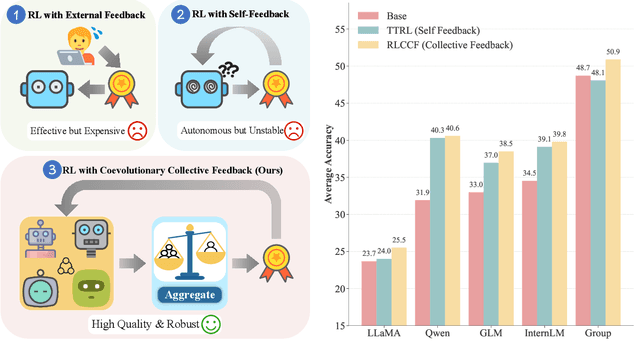
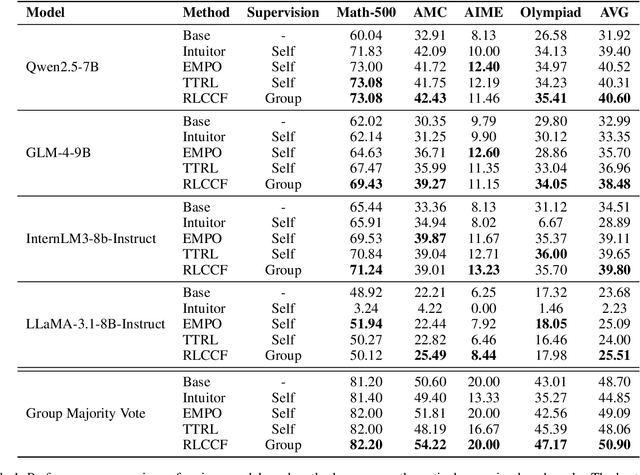
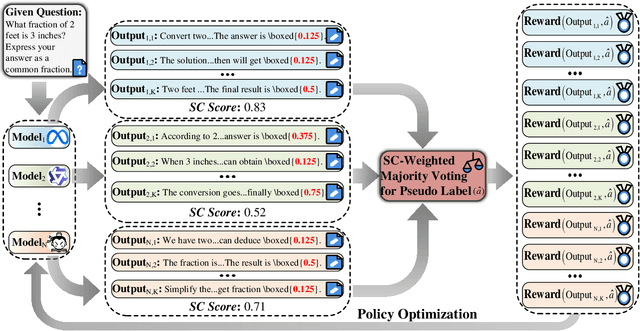
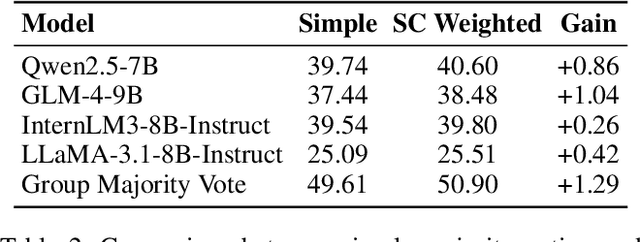
Reinforcement learning (RL) has significantly enhanced the reasoning capabilities of large language models (LLMs), but its reliance on expensive human-labeled data or complex reward models severely limits scalability. While existing self-feedback methods aim to address this problem, they are constrained by the capabilities of a single model, which can lead to overconfidence in incorrect answers, reward hacking, and even training collapse. To this end, we propose Reinforcement Learning from Coevolutionary Collective Feedback (RLCCF), a novel RL framework that enables multi-model collaborative evolution without external supervision. Specifically, RLCCF optimizes the ability of a model collective by maximizing its Collective Consistency (CC), which jointly trains a diverse ensemble of LLMs and provides reward signals by voting on collective outputs. Moreover, each model's vote is weighted by its Self-Consistency (SC) score, ensuring that more confident models contribute more to the collective decision. Benefiting from the diverse output distributions and complementary abilities of multiple LLMs, RLCCF enables the model collective to continuously enhance its reasoning ability through coevolution. Experiments on four mainstream open-source LLMs across four mathematical reasoning benchmarks demonstrate that our framework yields significant performance gains, achieving an average relative improvement of 16.72\% in accuracy. Notably, RLCCF not only improves the performance of individual models but also enhances the group's majority-voting accuracy by 4.51\%, demonstrating its ability to extend the collective capability boundary of the model collective.
EIAD: Explainable Industrial Anomaly Detection Via Multi-Modal Large Language Models
Mar 18, 2025Industrial Anomaly Detection (IAD) is critical to ensure product quality during manufacturing. Although existing zero-shot defect segmentation and detection methods have shown effectiveness, they cannot provide detailed descriptions of the defects. Furthermore, the application of large multi-modal models in IAD remains in its infancy, facing challenges in balancing question-answering (QA) performance and mask-based grounding capabilities, often owing to overfitting during the fine-tuning process. To address these challenges, we propose a novel approach that introduces a dedicated multi-modal defect localization module to decouple the dialog functionality from the core feature extraction. This decoupling is achieved through independent optimization objectives and tailored learning strategies. Additionally, we contribute to the first multi-modal industrial anomaly detection training dataset, named Defect Detection Question Answering (DDQA), encompassing a wide range of defect types and industrial scenarios. Unlike conventional datasets that rely on GPT-generated data, DDQA ensures authenticity and reliability and offers a robust foundation for model training. Experimental results demonstrate that our proposed method, Explainable Industrial Anomaly Detection Assistant (EIAD), achieves outstanding performance in defect detection and localization tasks. It not only significantly enhances accuracy but also improves interpretability. These advancements highlight the potential of EIAD for practical applications in industrial settings.
ReviewAgents: Bridging the Gap Between Human and AI-Generated Paper Reviews
Mar 11, 2025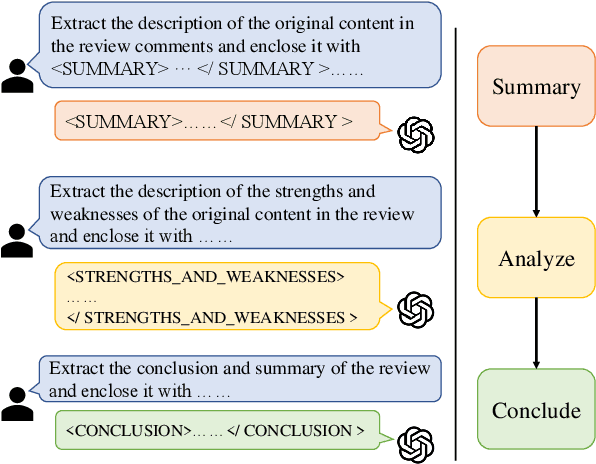
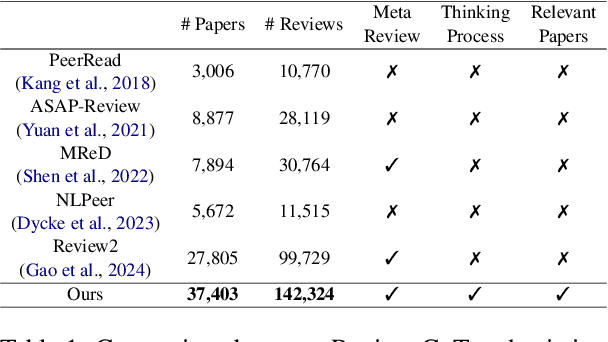
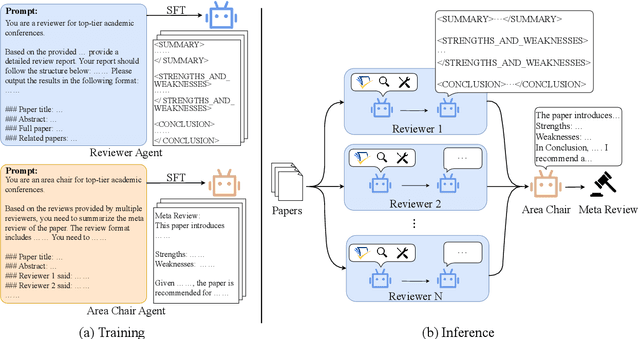
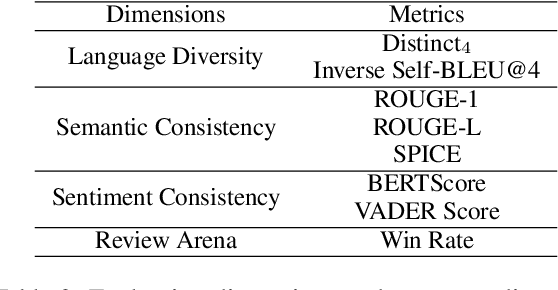
Academic paper review is a critical yet time-consuming task within the research community. With the increasing volume of academic publications, automating the review process has become a significant challenge. The primary issue lies in generating comprehensive, accurate, and reasoning-consistent review comments that align with human reviewers' judgments. In this paper, we address this challenge by proposing ReviewAgents, a framework that leverages large language models (LLMs) to generate academic paper reviews. We first introduce a novel dataset, Review-CoT, consisting of 142k review comments, designed for training LLM agents. This dataset emulates the structured reasoning process of human reviewers-summarizing the paper, referencing relevant works, identifying strengths and weaknesses, and generating a review conclusion. Building upon this, we train LLM reviewer agents capable of structured reasoning using a relevant-paper-aware training method. Furthermore, we construct ReviewAgents, a multi-role, multi-LLM agent review framework, to enhance the review comment generation process. Additionally, we propose ReviewBench, a benchmark for evaluating the review comments generated by LLMs. Our experimental results on ReviewBench demonstrate that while existing LLMs exhibit a certain degree of potential for automating the review process, there remains a gap when compared to human-generated reviews. Moreover, our ReviewAgents framework further narrows this gap, outperforming advanced LLMs in generating review comments.