 Add to Chrome
 Add to Firefox
 Add to Edge
Fin
Papers and Code
Agentar-Fin-OCR
Mar 11, 2026
In this paper, we propose Agentar-Fin-OCR, a document parsing system tailored to financial-domain documents, transforming ultra-long financial PDFs into semantically consistent, highly accurate, structured outputs with auditing-grade provenance. To address finance-specific challenges such as complex layouts, cross-page structural discontinuities, and cell-level referencing capability, Agentar-Fin-OCR combines (1) a Cross-page Contents Consolidation algorithm to restore continuity across pages and a Document-level Heading Hierarchy Reconstruction (DHR) module to build a globally consistent Table of Contents (TOC) tree for structure-aware retrieval, and (2) a difficulty-adaptive curriculum learning training strategy for table parsing, together with a CellBBoxRegressor module that uses structural anchor tokens to localize table cells from decoder hidden states without external detectors. Experiments demonstrate that our model shows high performance on the table parsing metrics of OmniDocBench. To enable realistic evaluation in the financial vertical, we further introduce FinDocBench, a benchmark that includes six financial document categories with expert-verified annotations and evaluation metrics including Table of Contents edit-distance-based similarity (TocEDS), cross-page concatenated TEDS, and Table Cell Intersection over Union (C-IoU). We evaluate a wide range of state-of-the-art models on FinDocBench to assess their capabilities and remaining limitations on financial documents. Overall, Agentar-Fin-OCR and FinDocBench provide a practical foundation for reliable downstream financial document applications.

Data-Driven Control of a Magnetically Actuated Fish-Like Robot
Mar 05, 2026Magnetically actuated fish-like robots offer promising solutions for underwater exploration due to their miniaturization and agility; however, precise control remains a significant challenge because of nonlinear fluid dynamics, flexible fin hysteresis, and the variable-duration control steps inherent to the actuation mechanism. This paper proposes a comprehensive data-driven control framework to address these complexities without relying on analytical modeling. Our methodology comprises three core components: 1) developing a forward dynamics model (FDM) using a neural network trained on real-world experimental data to capture state transitions under varying time steps; 2) integrating this FDM into a gradient-based model predictive control (G-MPC) architecture to optimize control inputs for path following; and 3) applying imitation learning to approximate the G-MPC policy, thereby reducing the computational cost for real-time implementation. We validate the approach through simulations utilizing the identified dynamics model. The results demonstrate that the G-MPC framework achieves accurate path convergence with minimal root mean square error (RMSE), and the imitation learning controller (ILC) effectively replicates this performance. This study highlights the potential of data-driven control strategies for the precise navigation of miniature, fish-like soft robots.
* Author's version of the paper presented at AROB-ISBC 2026
Design, Modeling and Direction Control of a Wire-Driven Robotic Fish Based on a 2-DoF Crank-Slider Mechanism
Mar 03, 2026Robotic fish have attracted growing attention in recent years owing to their biomimetic design and potential applications in environmental monitoring and biological surveys. Among robotic fish employing the Body-Caudal Fin (BCF) locomotion pattern, motor-driven actuation is widely adopted. Some approaches utilize multiple servo motors to achieve precise body curvature control, while others employ a brushless motor to drive the tail via wire or rod, enabling higher oscillation and swimming speeds. However, the former approaches typically result in limited swimming speed, whereas the latter suffer from poor maneuverability, with few capable of smooth turning. To address this trade-off, we develop a wire-driven robotic fish equipped with a 2-degree-of-freedom (DoF) crank-slider mechanism that decouples propulsion from steering, enabling both high swimming speed and agile maneuvering. In this paper, we first present the design of the robotic fish, including the elastic skeleton, waterproof structure, and the actuation mechanism that realizes the decoupling. We then establish the actuation modeling and body dynamics to analyze the locomotion behavior. Furthermore, we propose a combined feedforward-feedback control strategy to achieve independent regulation of propulsion and steering. Finally, we validate the feasibility of the design, modeling, and control through a series of prototype experiments, demonstrating swimming, turning, and directional control.
Grasp Synthesis Matching From Rigid To Soft Robot Grippers Using Conditional Flow Matching
Feb 19, 2026A representation gap exists between grasp synthesis for rigid and soft grippers. Anygrasp [1] and many other grasp synthesis methods are designed for rigid parallel grippers, and adapting them to soft grippers often fails to capture their unique compliant behaviors, resulting in data-intensive and inaccurate models. To bridge this gap, this paper proposes a novel framework to map grasp poses from a rigid gripper model to a soft Fin-ray gripper. We utilize Conditional Flow Matching (CFM), a generative model, to learn this complex transformation. Our methodology includes a data collection pipeline to generate paired rigid-soft grasp poses. A U-Net autoencoder conditions the CFM model on the object's geometry from a depth image, allowing it to learn a continuous mapping from an initial Anygrasp pose to a stable Fin-ray gripper pose. We validate our approach on a 7-DOF robot, demonstrating that our CFM-generated poses achieve a higher overall success rate for seen and unseen objects (34% and 46% respectively) compared to the baseline rigid poses (6% and 25% respectively) when executed by the soft gripper. The model shows significant improvements, particularly for cylindrical (50% and 100% success for seen and unseen objects) and spherical objects (25% and 31% success for seen and unseen objects), and successfully generalizes to unseen objects. This work presents CFM as a data-efficient and effective method for transferring grasp strategies, offering a scalable methodology for other soft robotic systems.
A Soft Wrist with Anisotropic and Selectable Stiffness for Robust Robot Learning in Contact-rich Manipulation
Feb 16, 2026Contact-rich manipulation tasks in unstructured environments pose significant robustness challenges for robot learning, where unexpected collisions can cause damage and hinder policy acquisition. Existing soft end-effectors face fundamental limitations: they either provide a limited deformation range, lack directional stiffness control, or require complex actuation systems that compromise practicality. This study introduces CLAW (Compliant Leaf-spring Anisotropic soft Wrist), a novel soft wrist mechanism that addresses these limitations through a simple yet effective design using two orthogonal leaf springs and rotary joints with a locking mechanism. CLAW provides large 6-degree-of-freedom deformation (40mm lateral, 20mm vertical), anisotropic stiffness that is tunable across three distinct modes, while maintaining lightweight construction (330g) at low cost ($550). Experimental evaluations using imitation learning demonstrate that CLAW achieves 76% success rate in benchmark peg-insertion tasks, outperforming both the Fin Ray gripper (43%) and rigid gripper alternatives (36%). CLAW successfully handles diverse contact-rich scenarios, including precision assembly with tight tolerances and delicate object manipulation, demonstrating its potential to enable robust robot learning in contact-rich domains. Project page: https://project-page-manager.github.io/CLAW/
Biomimetic Mantaray robot toward the underwater autonomous -- Experimental verification of swimming and diving by flapping motion -
Feb 11, 2026This study presents the development and experimental verification of a biomimetic manta ray robot for underwater autonomous exploration. Inspired by manta rays, the robot uses flapping motion for propulsion to minimize seabed disturbance and enhance efficiency compared to traditional screw propulsion. The robot features pectoral fins driven by servo motors and a streamlined control box to reduce fluid resistance. The control system, powered by a Raspberry Pi 3B, includes an IMU and pressure sensor for real-time monitoring and control. Experiments in a pool assessed the robot's swimming and diving capabilities. Results show stable swimming and diving motions with PD control. The robot is suitable for applications in environments like aquariums and fish nurseries, requiring minimal disturbance and efficient maneuverability. Our findings demonstrate the potential of bio-inspired robotic designs to improve ecological monitoring and underwater exploration.
Fin-RATE: A Real-world Financial Analytics and Tracking Evaluation Benchmark for LLMs on SEC Filings
Feb 07, 2026With increasing deployment of Large Language Models (LLMs) in the finance domain, LLMs are increasingly expected to parse complex regulatory disclosures. However, existing benchmarks often focus on isolated details, failing to reflect the complexity of professional analysis that requires synthesizing information across multiple documents, reporting periods, and corporate entities. They do not distinguish whether errors stem from retrieval failures, generation flaws, finance-specific reasoning mistakes, or misunderstanding of the query or context. This makes it difficult to pinpoint performance bottlenecks. To bridge these gaps, we introduce Fin-RATE, a benchmark built on U.S. Securities and Exchange Commission (SEC) filings and mirror financial analyst workflows through three pathways: detail-oriented reasoning within individual disclosures, cross-entity comparison under shared topics, and longitudinal tracking of the same firm across reporting periods. We benchmark 17 leading LLMs, spanning open-source, closed-source, and finance-specialized models, under both ground-truth context and retrieval-augmented settings. Results show substantial performance degradation, with accuracy dropping by 18.60% and 14.35% as tasks shift from single-document reasoning to longitudinal and cross-entity analysis. This is driven by rising comparison hallucinations, time and entity mismatches, and mirrored by declines in reasoning and factuality--limitations that prior benchmarks have yet to formally categorize or quantify.
Gust Estimation and Rejection with a Disturbance Observer for Proprioceptive Underwater Soft Morphing Wings
Feb 04, 2026Unmanned underwater vehicles are increasingly employed for maintenance and surveying tasks at sea, but their operation in shallow waters is often hindered by hydrodynamic disturbances such as waves, currents, and turbulence. These unsteady flows can induce rapid changes in direction and speed, compromising vehicle stability and manoeuvrability. Marine organisms contend with such conditions by combining proprioceptive feedback with flexible fins and tails to reject disturbances. Inspired by this strategy, we propose soft morphing wings endowed with proprioceptive sensing to mitigate environmental perturbations. The wing's continuous deformation provides a natural means to infer dynamic disturbances: sudden changes in camber directly reflect variations in the oncoming flow. By interpreting this proprioceptive signal, a disturbance observer can reconstruct flow parameters in real time. To enable this, we develop and experimentally validate a dynamic model of a hydraulically actuated soft wing with controllable camber. We then show that curvature-based sensing allows accurate estimation of disturbances in the angle of attack. Finally, we demonstrate that a controller leveraging these proprioceptive estimates can reject disturbances in the lift response of the soft wing. By combining proprioceptive sensing with a disturbance observer, this technique mirrors biological strategies and provides a pathway for soft underwater vehicles to maintain stability in hazardous environments.
Predefined-time One-Shot Cooperative Estimation, Guidance, and Control for Simultaneous Target Interception
Jan 12, 2026This work develops a unified nonlinear estimation-guidance-control framework for cooperative simultaneous interception of a stationary target under a heterogeneous sensing topology, where sensing capabilities are non-uniform across interceptors. Specifically, only a subset of agents is instrumented with onboard seekers (informed/seeker-equipped agents), whereas the rest of them (seeker-less agents) acquire the information about the target indirectly via the informed agents and execute a distributed cooperative guidance for simultaneous target interception. To address the resulting partial observability, a predefined-time distributed observer is leveraged, guaranteeing convergence of the target state estimates for seeker-less agents through information exchange with seeker-equipped neighbors over a directed communication graph. Thereafter, an improved time-to-go estimate accounting for wide launch envelopes is utilized to design the distributed cooperative guidance commands. This estimate is coupled with a predefined-time consensus protocol, ensuring consensus in the agents' time-to-go values. The temporal upper bounds within which both observer error and time-to-go consensus error converge to zero can be prescribed as design parameters. Furthermore, the cooperative guidance commands are realized by means of an autopilot, wherein the interceptor is steered by canard actuation. The corresponding fin deflection commands are generated using a predefined-time convergent sliding mode control law. This enables the autopilot to precisely track the commanded lateral acceleration within a design-specified time, while maintaining non-singularity of the overall design. Theoretical guarantees are supported by numerical simulations across diverse engagement geometries, verifying the estimation accuracy, the cooperative interception performance, and the autopilot response using the proposed scheme.
FIN-bench-v2: A Unified and Robust Benchmark Suite for Evaluating Finnish Large Language Models
Dec 15, 2025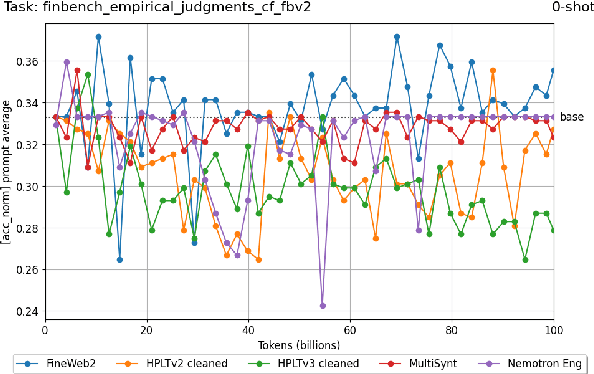
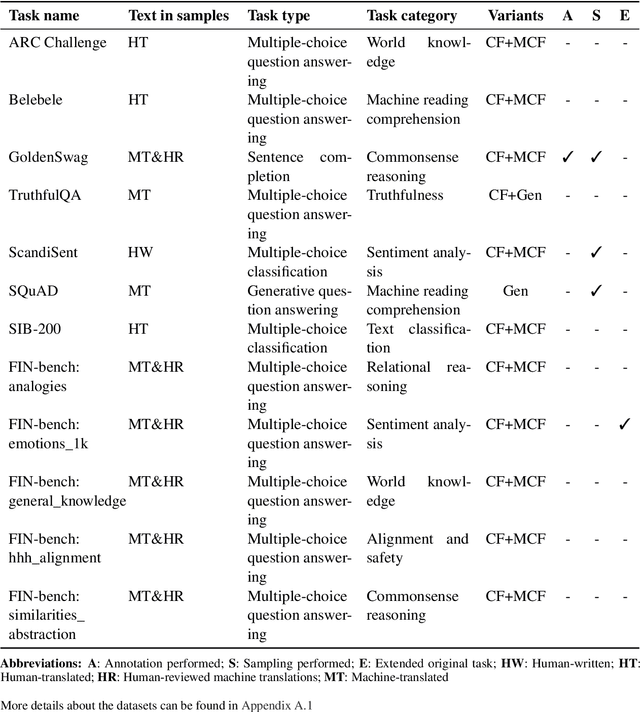
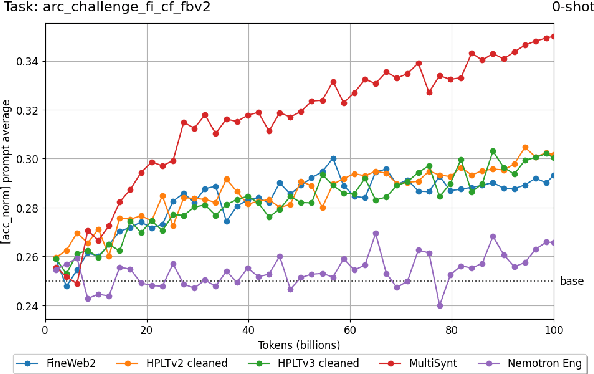
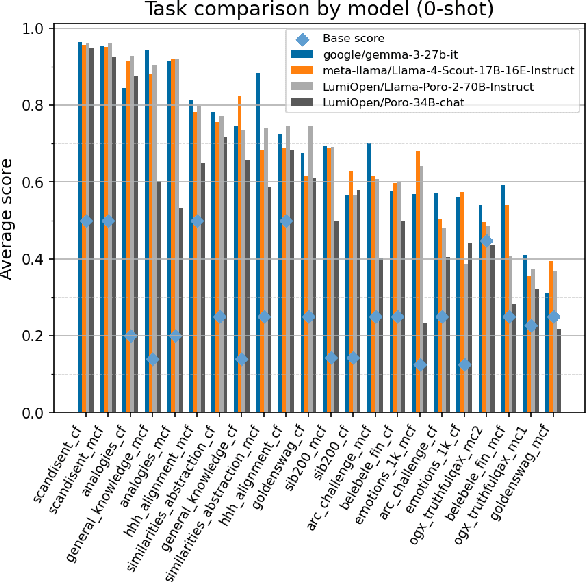
We introduce FIN-bench-v2, a unified benchmark suite for evaluating large language models in Finnish. FIN-bench-v2 consolidates Finnish versions of widely used benchmarks together with an updated and expanded version of the original FIN-bench into a single, consistently formatted collection, covering multiple-choice and generative tasks across reading comprehension, commonsense reasoning, sentiment analysis, world knowledge, and alignment. All datasets are converted to HuggingFace Datasets, which include both cloze and multiple-choice prompt formulations with five variants per task, and we incorporate human annotation or review for machine-translated resources such as GoldenSwag and XED. To select robust tasks, we pretrain a set of 2.15B-parameter decoder-only models and use their learning curves to compute monotonicity, signal-to-noise, non-random performance, and model ordering consistency, retaining only tasks that satisfy all criteria. We further evaluate a set of larger instruction-tuned models to characterize performance across tasks and prompt formulations. All datasets, prompts, and evaluation configurations are publicly available via our fork of the Language Model Evaluation Harness at https://github.com/LumiOpen/lm-evaluation-harness. Supplementary resources are released in a separate repository at https://github.com/TurkuNLP/FIN-bench-v2.