 Add to Chrome
 Add to Firefox
 Add to Edge
SAM2-PATH: A better segment anything model for semantic segmentation in digital pathology
Aug 07, 2024
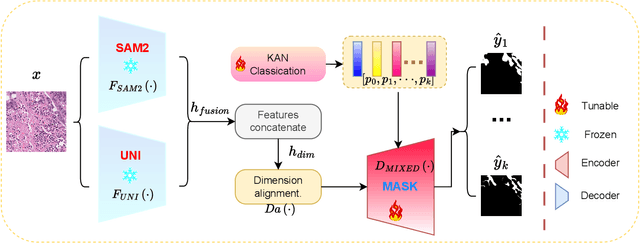
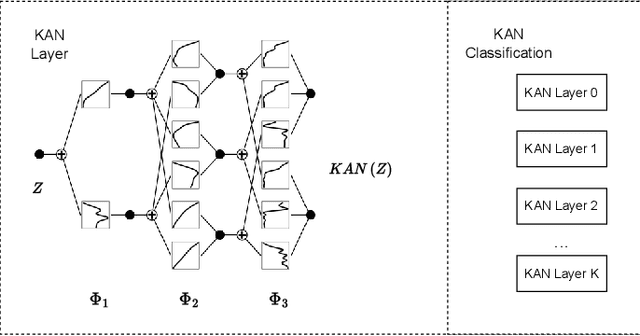
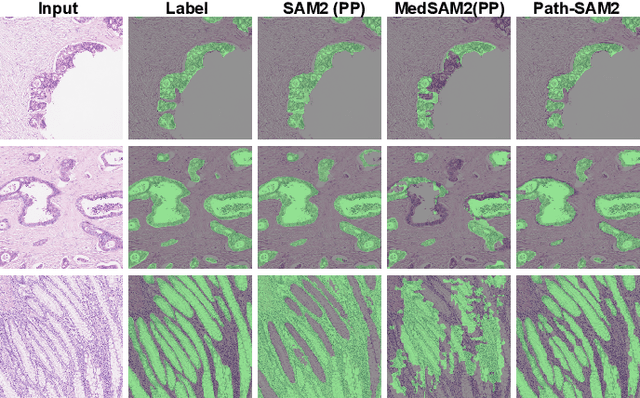
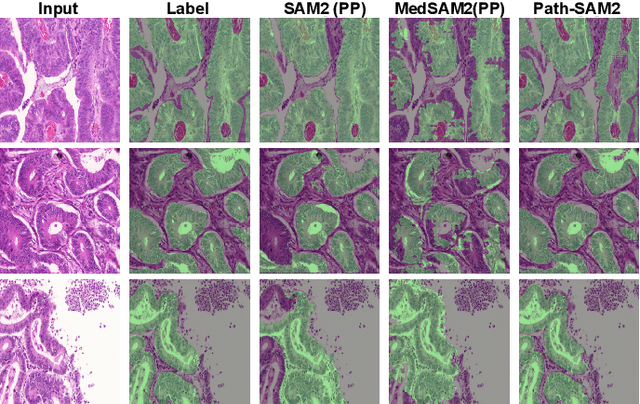
The semantic segmentation task in pathology plays an indispensable role in assisting physicians in determining the condition of tissue lesions. Foundation models, such as the SAM (Segment Anything Model) and SAM2, exhibit exceptional performance in instance segmentation within everyday natural scenes. SAM-PATH has also achieved impressive results in semantic segmentation within the field of pathology. However, in computational pathology, the models mentioned above still have the following limitations. The pre-trained encoder models suffer from a scarcity of pathology image data; SAM and SAM2 are not suitable for semantic segmentation. In this paper, we have designed a trainable Kolmogorov-Arnold Networks(KAN) classification module within the SAM2 workflow, and we have introduced the largest pretrained vision encoder for histopathology (UNI) to date. Our proposed framework, SAM2-PATH, augments SAM2's capability to perform semantic segmentation in digital pathology autonomously, eliminating the need for human provided input prompts. The experimental results demonstrate that, after fine-tuning the KAN classification module and decoder, Our dataset has achieved competitive results on publicly available pathology data. The code has been open-sourced and can be found at the following address: https://github.com/simzhangbest/SAM2PATH.

Large Language Model Enhanced Knowledge Representation Learning: A Survey
Jul 01, 2024
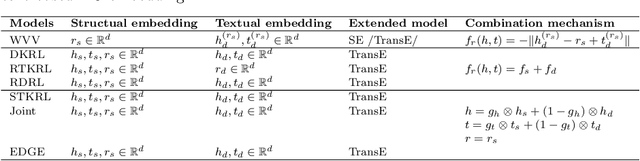
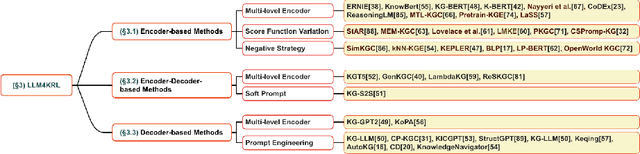
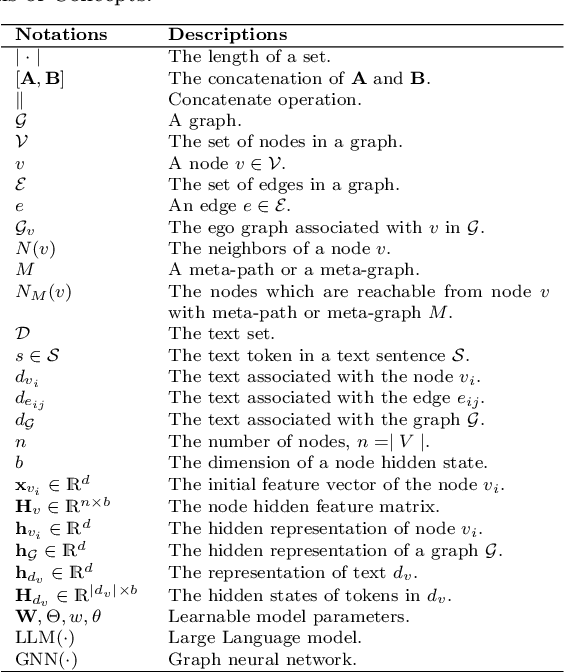
The integration of Large Language Models (LLMs) with Knowledge Representation Learning (KRL) signifies a pivotal advancement in the field of artificial intelligence, enhancing the ability to capture and utilize complex knowledge structures. This synergy leverages the advanced linguistic and contextual understanding capabilities of LLMs to improve the accuracy, adaptability, and efficacy of KRL, thereby expanding its applications and potential. Despite the increasing volume of research focused on embedding LLMs within the domain of knowledge representation, a thorough review that examines the fundamental components and processes of these enhanced models is conspicuously absent. Our survey addresses this by categorizing these models based on three distinct Transformer architectures, and by analyzing experimental data from various KRL downstream tasks to evaluate the strengths and weaknesses of each approach. Finally, we identify and explore potential future research directions in this emerging yet underexplored domain, proposing pathways for continued progress.
Combinatorial Optimization with Automated Graph Neural Networks
Jun 05, 2024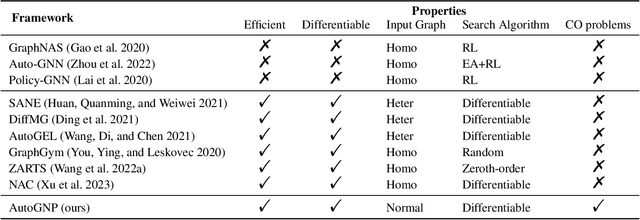


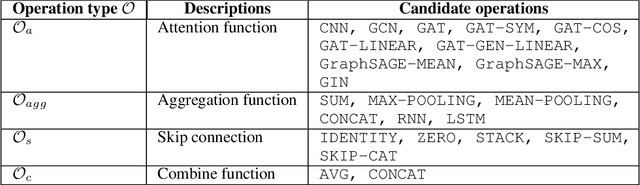
In recent years, graph neural networks (GNNs) have become increasingly popular for solving NP-hard combinatorial optimization (CO) problems, such as maximum cut and maximum independent set. The core idea behind these methods is to represent a CO problem as a graph and then use GNNs to learn the node/graph embedding with combinatorial information. Although these methods have achieved promising results, given a specific CO problem, the design of GNN architectures still requires heavy manual work with domain knowledge. Existing automated GNNs are mostly focused on traditional graph learning problems, which is inapplicable to solving NP-hard CO problems. To this end, we present a new class of \textbf{AUTO}mated \textbf{G}NNs for solving \textbf{NP}-hard problems, namely \textbf{AutoGNP}. We represent CO problems by GNNs and focus on two specific problems, i.e., mixed integer linear programming and quadratic unconstrained binary optimization. The idea of AutoGNP is to use graph neural architecture search algorithms to automatically find the best GNNs for a given NP-hard combinatorial optimization problem. Compared with existing graph neural architecture search algorithms, AutoGNP utilizes two-hop operators in the architecture search space. Moreover, AutoGNP utilizes simulated annealing and a strict early stopping policy to avoid local optimal solutions. Empirical results on benchmark combinatorial problems demonstrate the superiority of our proposed model.
Decision-focused Graph Neural Networks for Combinatorial Optimization
Jun 05, 2024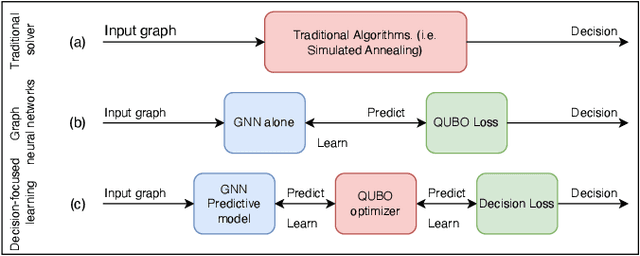
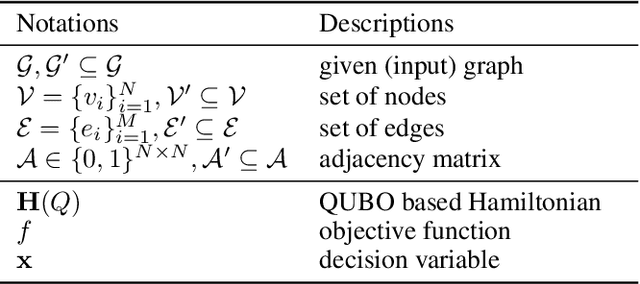
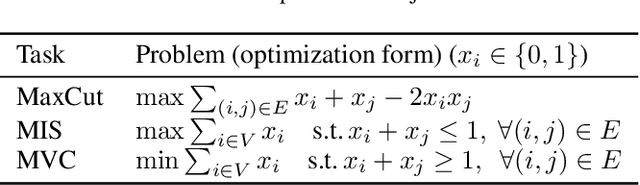
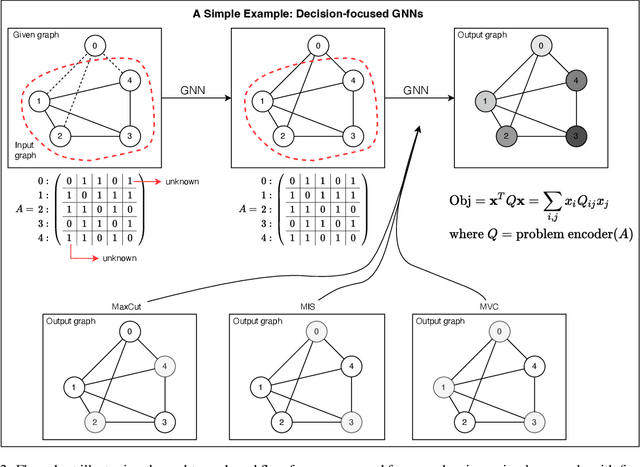
In recent years, there has been notable interest in investigating combinatorial optimization (CO) problems by neural-based framework. An emerging strategy to tackle these challenging problems involves the adoption of graph neural networks (GNNs) as an alternative to traditional algorithms, a subject that has attracted considerable attention. Despite the growing popularity of GNNs and traditional algorithm solvers in the realm of CO, there is limited research on their integrated use and the correlation between them within an end-to-end framework. The primary focus of our work is to formulate a more efficient and precise framework for CO by employing decision-focused learning on graphs. Additionally, we introduce a decision-focused framework that utilizes GNNs to address CO problems with auxiliary support. To realize an end-to-end approach, we have designed two cascaded modules: (a) an unsupervised trained graph predictive model, and (b) a solver for quadratic binary unconstrained optimization. Empirical evaluations are conducted on various classical tasks, including maximum cut, maximum independent set, and minimum vertex cover. The experimental results on classical CO problems (i.e. MaxCut, MIS, and MVC) demonstrate the superiority of our method over both the standalone GNN approach and classical methods.
Collaborate to Adapt: Source-Free Graph Domain Adaptation via Bi-directional Adaptation
Mar 03, 2024Unsupervised Graph Domain Adaptation (UGDA) has emerged as a practical solution to transfer knowledge from a label-rich source graph to a completely unlabelled target graph. However, most methods require a labelled source graph to provide supervision signals, which might not be accessible in the real-world settings due to regulations and privacy concerns. In this paper, we explore the scenario of source-free unsupervised graph domain adaptation, which tries to address the domain adaptation problem without accessing the labelled source graph. Specifically, we present a novel paradigm called GraphCTA, which performs model adaptation and graph adaptation collaboratively through a series of procedures: (1) conduct model adaptation based on node's neighborhood predictions in target graph considering both local and global information; (2) perform graph adaptation by updating graph structure and node attributes via neighborhood contrastive learning; and (3) the updated graph serves as an input to facilitate the subsequent iteration of model adaptation, thereby establishing a collaborative loop between model adaptation and graph adaptation. Comprehensive experiments are conducted on various public datasets. The experimental results demonstrate that our proposed model outperforms recent source-free baselines by large margins.
HyCubE: Efficient Knowledge Hypergraph 3D Circular Convolutional Embedding
Feb 14, 2024Existing knowledge hypergraph embedding methods mainly focused on improving model performance, but their model structures are becoming more complex and redundant. Furthermore, due to the inherent complex semantic knowledge, the computation of knowledge hypergraph embedding models is often very expensive, leading to low efficiency. In this paper, we propose a feature interaction and extraction-enhanced 3D circular convolutional embedding model, HyCubE, which designs a novel 3D circular convolutional neural network and introduces the alternate mask stack strategy to achieve efficient n-ary knowledge hypergraph embedding. By adaptively adjusting the 3D circular convolution kernel size and uniformly embedding the entity position information, HyCubE improves the model performance with fewer parameters and reaches a better trade-off between model performance and efficiency. In addition, we use 1-N multilinear scoring based on the entity mask mechanism to further accelerate the model training efficiency. Finally, extensive experimental results on all datasets demonstrate that HyCubE consistently outperforms state-of-the-art baselines, with an average improvement of 4.08%-10.77% and a maximum improvement of 21.16% across all metrics. Commendably, HyCubE speeds up by an average of 7.55x and reduces memory usage by an average of 77.02% compared to the latest state-of-the-art baselines.
ConvD: Attention Enhanced Dynamic Convolutional Embeddings for Knowledge Graph Completion
Dec 11, 2023
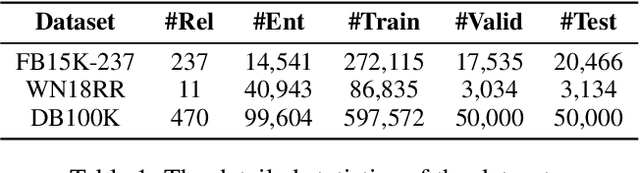

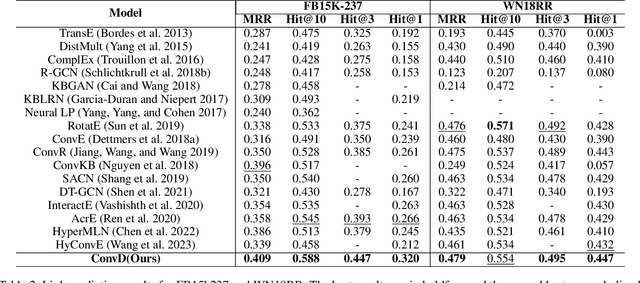
Knowledge graphs generally suffer from incompleteness, which can be alleviated by completing the missing information. Deep knowledge convolutional embedding models based on neural networks are currently popular methods for knowledge graph completion. However, most existing methods use external convolution kernels and traditional plain convolution processes, which limits the feature interaction capability of the model. In this paper, we propose a novel dynamic convolutional embedding model ConvD for knowledge graph completion, which directly reshapes the relation embeddings into multiple internal convolution kernels to improve the external convolution kernels of the traditional convolutional embedding model. The internal convolution kernels can effectively augment the feature interaction between the relation embeddings and entity embeddings, thus enhancing the model embedding performance. Moreover, we design a priori knowledge-optimized attention mechanism, which can assign different contribution weight coefficients to multiple relation convolution kernels for dynamic convolution to improve the expressiveness of the model further. Extensive experiments on various datasets show that our proposed model consistently outperforms the state-of-the-art baseline methods, with average improvements ranging from 11.30\% to 16.92\% across all model evaluation metrics. Ablation experiments verify the effectiveness of each component module of the ConvD model.
Reinforcement Neighborhood Selection for Unsupervised Graph Anomaly Detection
Dec 09, 2023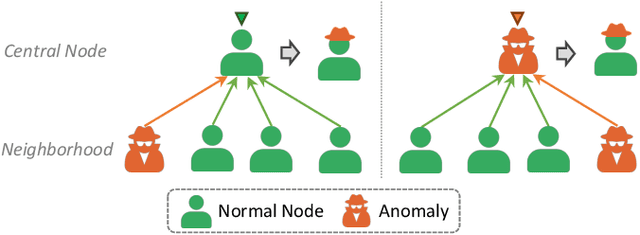
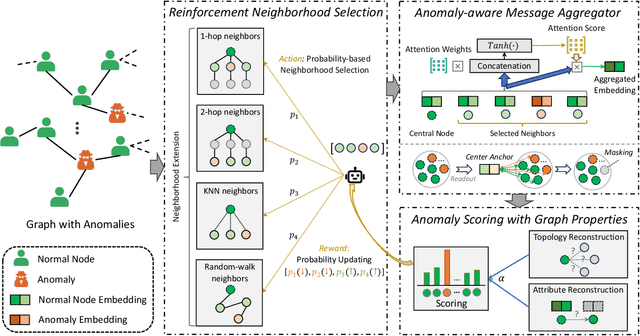
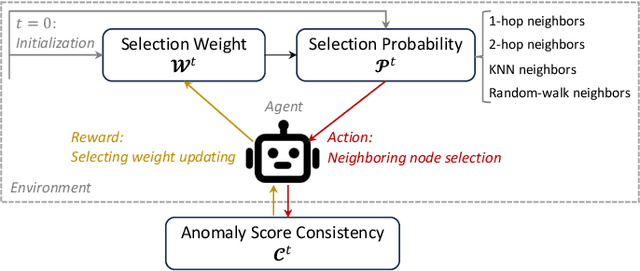
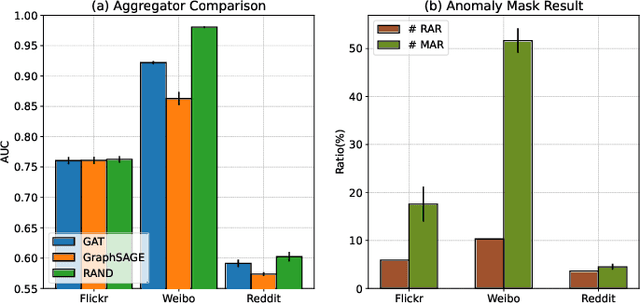
Unsupervised graph anomaly detection is crucial for various practical applications as it aims to identify anomalies in a graph that exhibit rare patterns deviating significantly from the majority of nodes. Recent advancements have utilized Graph Neural Networks (GNNs) to learn high-quality node representations for anomaly detection by aggregating information from neighborhoods. However, the presence of anomalies may render the observed neighborhood unreliable and result in misleading information aggregation for node representation learning. Selecting the proper neighborhood is critical for graph anomaly detection but also challenging due to the absence of anomaly-oriented guidance and the interdependence with representation learning. To address these issues, we utilize the advantages of reinforcement learning in adaptively learning in complex environments and propose a novel method that incorporates Reinforcement neighborhood selection for unsupervised graph ANomaly Detection (RAND). RAND begins by enriching the candidate neighbor pool of the given central node with multiple types of indirect neighbors. Next, RAND designs a tailored reinforcement anomaly evaluation module to assess the reliability and reward of considering the given neighbor. Finally, RAND selects the most reliable subset of neighbors based on these rewards and introduces an anomaly-aware aggregator to amplify messages from reliable neighbors while diminishing messages from unreliable ones. Extensive experiments on both three synthetic and two real-world datasets demonstrate that RAND outperforms the state-of-the-art methods.
An empirical study of next-basket recommendations
Dec 05, 2023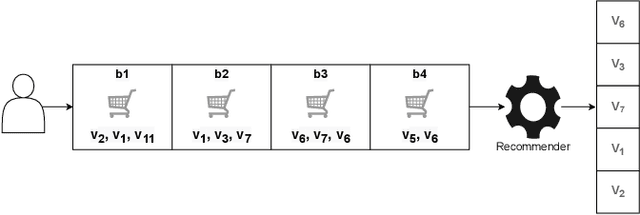
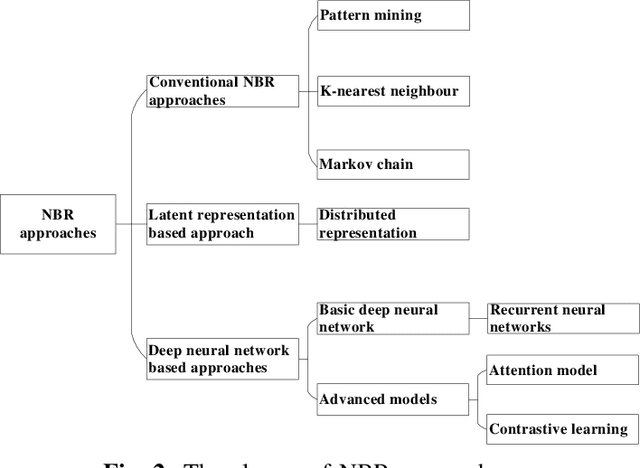
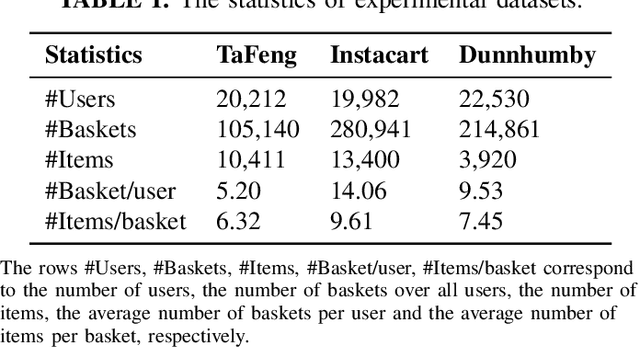
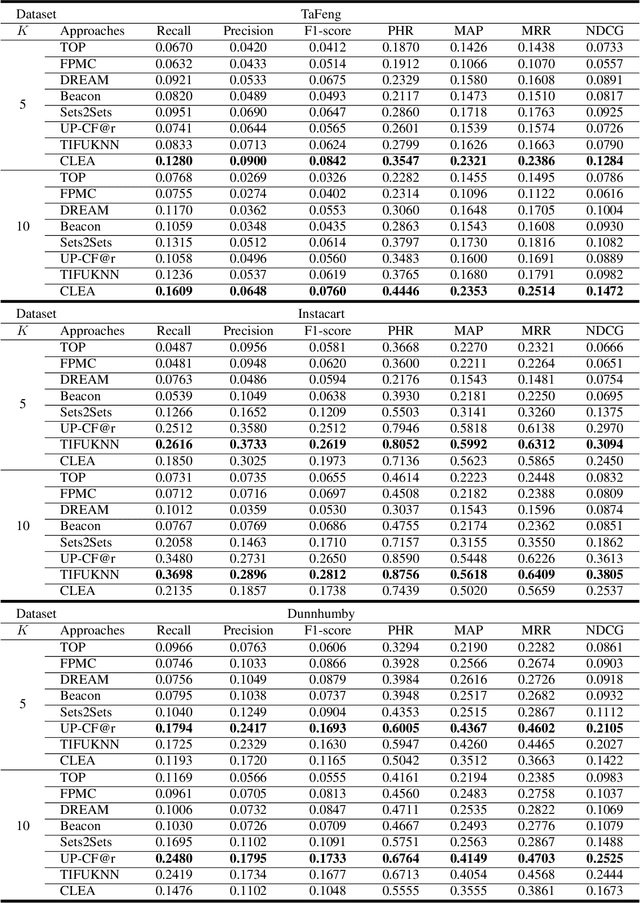
Next Basket Recommender Systems (NBRs) function to recommend the subsequent shopping baskets for users through the modeling of their preferences derived from purchase history, typically manifested as a sequence of historical baskets. Given their widespread applicability in the E-commerce industry, investigations into NBRs have garnered increased attention in recent years. Despite the proliferation of diverse NBR methodologies, a substantial challenge lies in the absence of a systematic and unified evaluation framework across these methodologies. Various studies frequently appraise NBR approaches using disparate datasets and diverse experimental settings, impeding a fair and effective comparative assessment of methodological performance. To bridge this gap, this study undertakes a systematic empirical inquiry into NBRs, reviewing seminal works within the domain and scrutinizing their respective merits and drawbacks. Subsequently, we implement designated NBR algorithms on uniform datasets, employing consistent experimental configurations, and assess their performances via identical metrics. This methodological rigor establishes a cohesive framework for the impartial evaluation of diverse NBR approaches. It is anticipated that this study will furnish a robust foundation and serve as a pivotal reference for forthcoming research endeavors in this dynamic field.
CPDG: A Contrastive Pre-Training Method for Dynamic Graph Neural Networks
Jul 24, 2023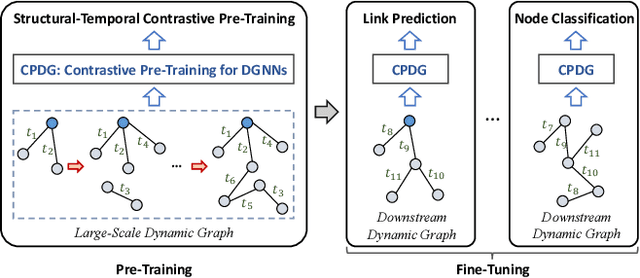
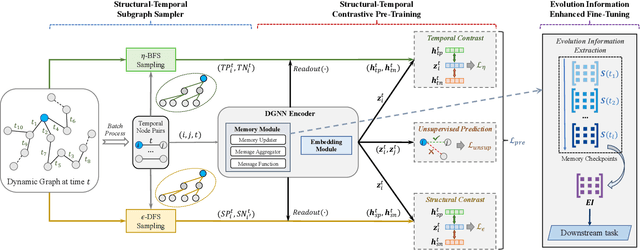
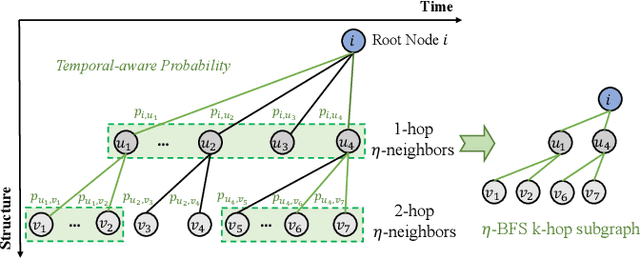
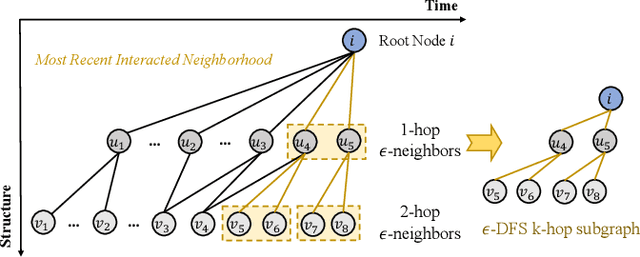
Dynamic graph data mining has gained popularity in recent years due to the rich information contained in dynamic graphs and their widespread use in the real world. Despite the advances in dynamic graph neural networks (DGNNs), the rich information and diverse downstream tasks have posed significant difficulties for the practical application of DGNNs in industrial scenarios. To this end, in this paper, we propose to address them by pre-training and present the Contrastive Pre-Training Method for Dynamic Graph Neural Networks (CPDG). CPDG tackles the challenges of pre-training for DGNNs, including generalization capability and long-short term modeling capability, through a flexible structural-temporal subgraph sampler along with structural-temporal contrastive pre-training schemes. Extensive experiments conducted on both large-scale research and industrial dynamic graph datasets show that CPDG outperforms existing methods in dynamic graph pre-training for various downstream tasks under three transfer settings.