 Add to Chrome
 Add to Firefox
 Add to Edge
FoMoVLA: Bridging Visual Foresight and Motion Guidance for Vision-Language-Action Models
Jul 16, 2026
Vision-Language-Action (VLA) models have achieved impressive results in visuomotor policy learning, yet remain fundamentally reactive, mapping current observations and language to actions without explicit forward prediction of world dynamics. Existing visual foresight methods predict future visual states but lack explicit motion guidance: they show where to go but not how to get there. We argue that future feature prediction and sparse point tracking are naturally complementary: the former provides the goal state, while the latter captures the continuous motion path toward it. We propose FoMoVLA, a framework that augments VLA representations with explicit spatio-temporal supervision by jointly learning future feature foresight and sparse 2D point tracking, enhancing the continuous action policy. FoMoVLA introduces compact foresight tokens to decode future feature states, decodes sparse temporal 2D point trajectories to model compact geometric motion, and couples both through a lightweight future-conditioned cross-attention module that enables consistent reasoning between anticipated states and point dynamics. Extensive experiments on LIBERO, RoboCasa GR-1 Tabletop, and LIBERO-Plus demonstrate state-of-the-art performance and strong zero-shot generalization. Project page is available at https://liauto-research.github.io/FoMoVLA.

Yuvion LLM: An Adversarially-Aware Large Language Model for Content And AI Safety
Jun 26, 2026As large language models are increasingly deployed in real-world systems, safety failures can still lead to harmful outputs and dangerous misuse. We argue that the essence of safety is adversarial: many failures arise not from natural inputs alone, but from strategic attempts to evade model policies and safeguards. However, existing general-purpose model development largely overlook this adversarial nature, and often remain insufficient for realistic safety scenarios involving planning, tool use, and multi-step reasoning, causing measured safety performance to overestimate real deployment robustness. To address this gap, we present Yuvion LLM, a large language model built for adversarially robust content safety and broader AI safety. Yuvion LLM treats adversarial robustness and agentic capability as first-class objectives. Its pipeline combines adversarially aware data construction, knowledge-enhanced continued pretraining, and policy-grounded multi-task safety post-training, including risk-aware supervised fine-tuning and reinforcement learning-based policy optimization, together with safety-aware agentic reinforcement learning for tool use and multi-step reasoning in complex safety scenarios. We further introduce the Yuvion LLM RiskEval (YLRE), a collection of 93 benchmarks across four evaluation categories, covering diverse open and internal evaluations with a focus on safety, adversarial robustness, and real-world capability requirements. Across these evaluations, Yuvion LLM demonstrates clear advantages on safety-focused benchmarks and particularly strong robustness under adversarial conditions, while maintaining solid overall capability. Notably, Yuvion-8B outperforms most state-of-the-art baselines, including substantially larger models such as GPT-5.4 and Qwen3-MAX, on several safety tasks.
Yuvion VL: A Multimodal Foundation Model for Adversarial Content and AI Safety
Jun 23, 2026General-purpose models often struggle to reliably identify and understand real-world multimodal risks, largely due to the inherent multimodal adversarial nature of content and AI safety. We present Yuvion VL, a family of multimodal large language models purpose-built for content and AI safety, with both instruction-tuned and reasoning-oriented variants. Yuvion VL addresses this gap by treating safety as an inherently adversarial and multimodal problem and designing the entire pipeline around adversarial robustness. For data construction, we develop an automated pipeline integrating adversarial-aware data synthesis with multi-stage quality control, producing large-scale, high-quality multimodal samples augmented with domain knowledge and reasoning annotations. For training, we adopt a three-stage pipeline that includes continued pretraining for risk-concept cross-modal alignment, instruct post-training for production-grade safety tasks, and reasoning post-training for enhanced interpretability and performance in complex tasks. We further introduce Confuse-then-Contrast Fine-Tuning, a contrastive framework that mines model-specific confusions and constructs multi-image contrastive groups to enforce explicit discrimination of fine-grained visual-semantic elements, enabling the model to distinguish between visually similar cases with different safety implications in adversarial safety tasks. To support rigorous evaluation, we further introduce Yuvion VL RiskEval (YVRE), a collection of benchmarks covering diverse open and internal evaluations, with a focus on content and AI safety, adversarial robustness, and real-world capability requirements. Experiments show that Yuvion VL-32B achieves industry-leading safety performance, surpassing comparably sized open-source models and best closed-source commercial models, while maintaining comparable general capabilities.
AEANet: Affinity Enhanced Attentional Networks for Arbitrary Style Transfer
Sep 24, 2024

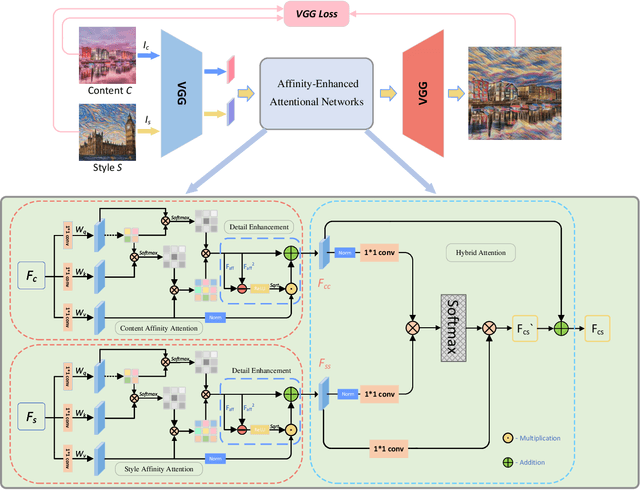

Arbitrary artistic style transfer is a research area that combines rational academic study with emotive artistic creation. It aims to create a new image from a content image according to a target artistic style, maintaining the content's textural structural information while incorporating the artistic characteristics of the style image. However, existing style transfer methods often significantly damage the texture lines of the content image during the style transformation. To address these issues, we propose affinity-enhanced attentional network, which include the content affinity-enhanced attention (CAEA) module, the style affinity-enhanced attention (SAEA) module, and the hybrid attention (HA) module. The CAEA and SAEA modules first use attention to enhance content and style representations, followed by a detail enhanced (DE) module to reinforce detail features. The hybrid attention module adjusts the style feature distribution based on the content feature distribution. We also introduce the local dissimilarity loss based on affinity attention, which better preserves the affinity with content and style images. Experiments demonstrate that our work achieves better results in arbitrary style transfer than other state-of-the-art methods.
A Cluster-Based Statistical Channel Model for Integrated Sensing and Communication Channels
Mar 01, 2024


The emerging 6G network envisions integrated sensing and communication (ISAC) as a promising solution to meet growing demand for native perception ability. To optimize and evaluate ISAC systems and techniques, it is crucial to have an accurate and realistic wireless channel model. However, some important features of ISAC channels have not been well characterized, for example, most existing ISAC channel models consider communication channels and sensing channels independently, whereas ignoring correlation under the consistent environment. Moreover, sensing channels have not been well modeled in the existing standard-level channel models. Therefore, in order to better model ISAC channel, a cluster-based statistical channel model is proposed in this paper, which is based on measurements conducted at 28 GHz. In the proposed model, a new framework based on 3GPP standard is proposed, which includes communication clusters and sensing clusters. Clustering and tracking algorithms are used to extract and analyze ISAC channel characteristics. Furthermore, some special sensing cluster structures such as shared sensing cluster, newborn sensing cluster, etc., are defined to model correlation and difference between communication and sensing channels. Finally, accuracy of the proposed model is validated based on measurements and simulations.
Probabilistic K-means Clustering via Nonlinear Programming
Jan 10, 2020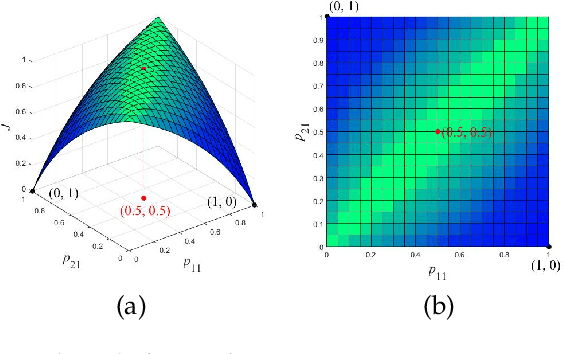
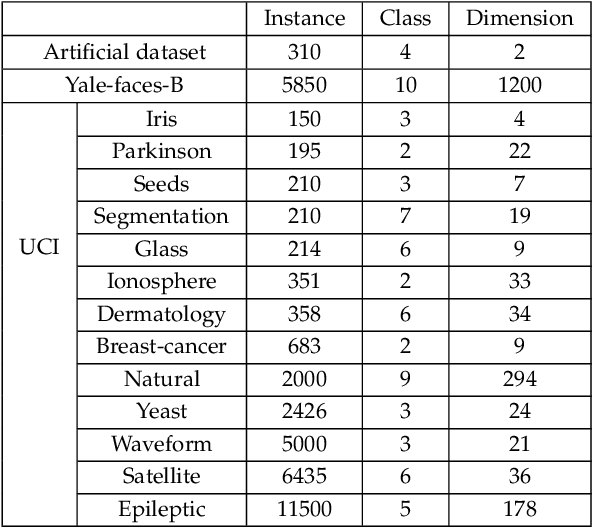
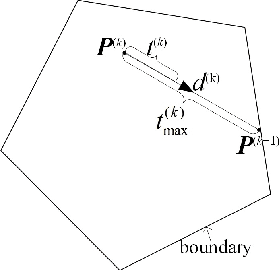

K-means is a classical clustering algorithm with wide applications. However, soft K-means, or fuzzy c-means at m=1, remains unsolved since 1981. To address this challenging open problem, we propose a novel clustering model, i.e. Probabilistic K-Means (PKM), which is also a nonlinear programming model constrained on linear equalities and linear inequalities. In theory, we can solve the model by active gradient projection, while inefficiently. Thus, we further propose maximum-step active gradient projection and fast maximum-step active gradient projection to solve it more efficiently. By experiments, we evaluate the performance of PKM and how well the proposed methods solve it in five aspects: initialization robustness, clustering performance, descending stability, iteration number, and convergence speed.
OICSR: Out-In-Channel Sparsity Regularization for Compact Deep Neural Networks
Jun 06, 2019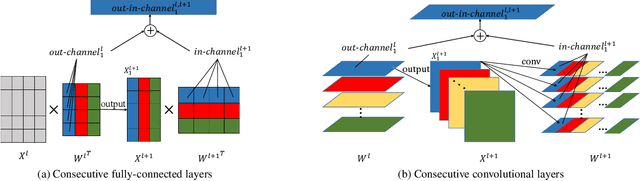
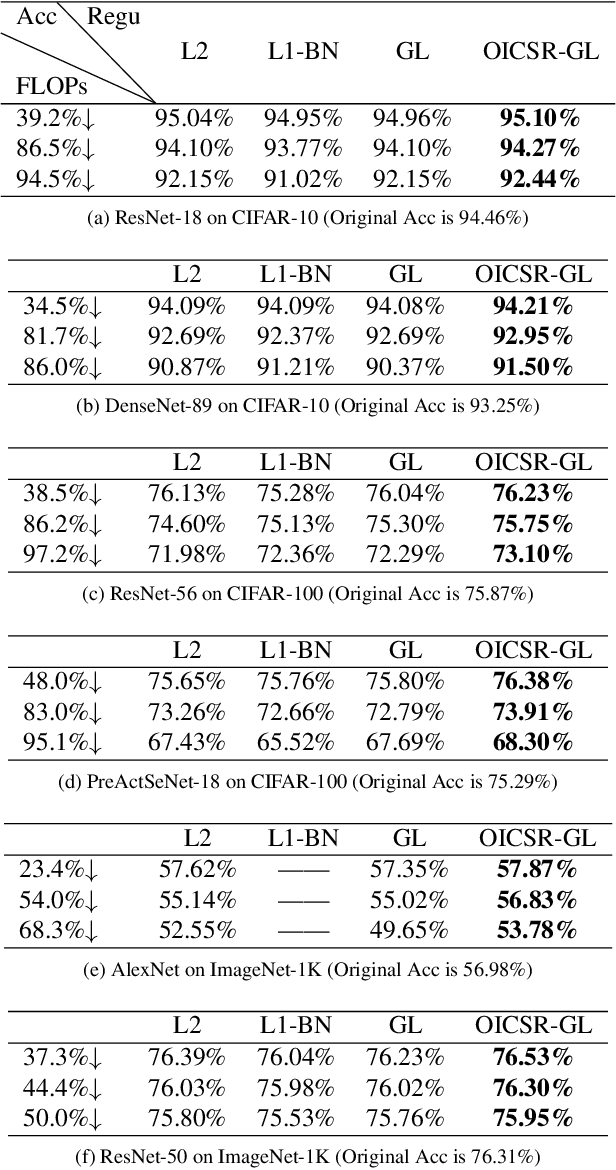

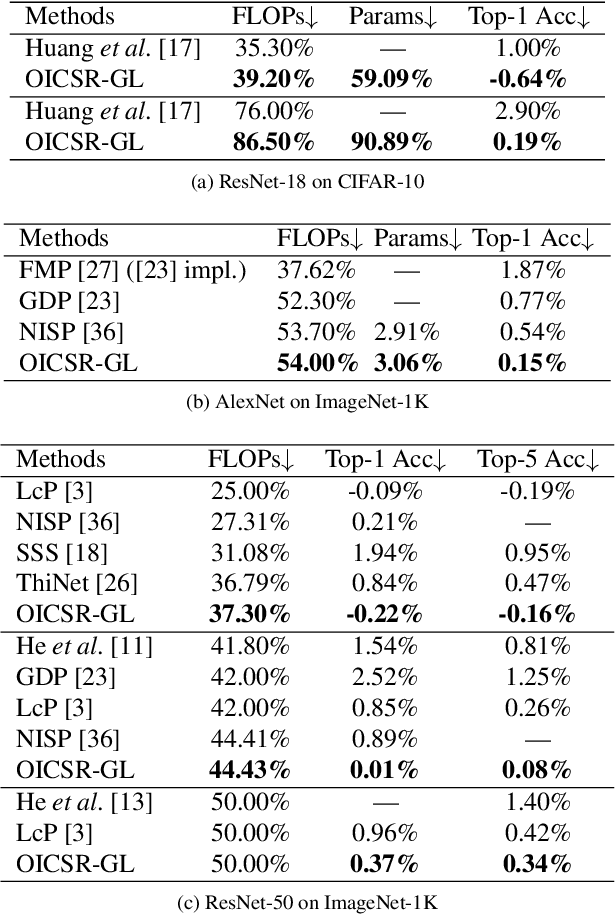
Channel pruning can significantly accelerate and compress deep neural networks. Many channel pruning works utilize structured sparsity regularization to zero out all the weights in some channels and automatically obtain structure-sparse network in training stage. However, these methods apply structured sparsity regularization on each layer separately where the correlations between consecutive layers are omitted. In this paper, we first combine one out-channel in current layer and the corresponding in-channel in next layer as a regularization group, namely out-in-channel. Our proposed Out-In-Channel Sparsity Regularization (OICSR) considers correlations between successive layers to further retain predictive power of the compact network. Training with OICSR thoroughly transfers discriminative features into a fraction of out-in-channels. Correspondingly, OICSR measures channel importance based on statistics computed from two consecutive layers, not individual layer. Finally, a global greedy pruning algorithm is designed to remove redundant out-in-channels in an iterative way. Our method is comprehensively evaluated with various CNN architectures including CifarNet, AlexNet, ResNet, DenseNet and PreActSeNet on CIFAR-10, CIFAR-100 and ImageNet-1K datasets. Notably, on ImageNet-1K, we reduce 37.2% FLOPs on ResNet-50 while outperforming the original model by 0.22% top-1 accuracy.
A Capsule-unified Framework of Deep Neural Networks for Graphical Programming
Mar 13, 2019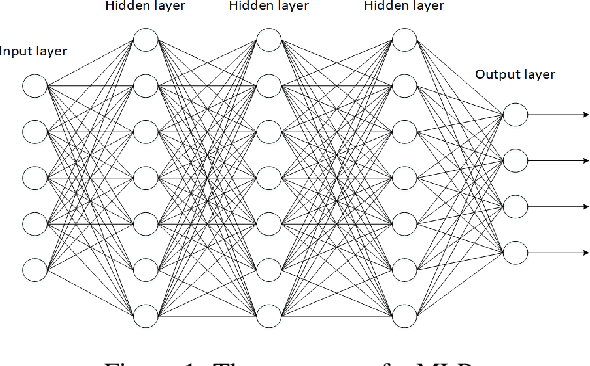
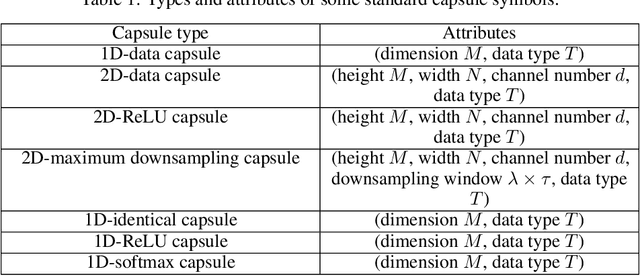
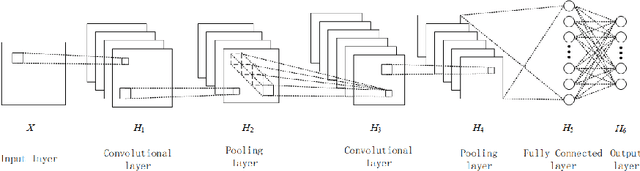
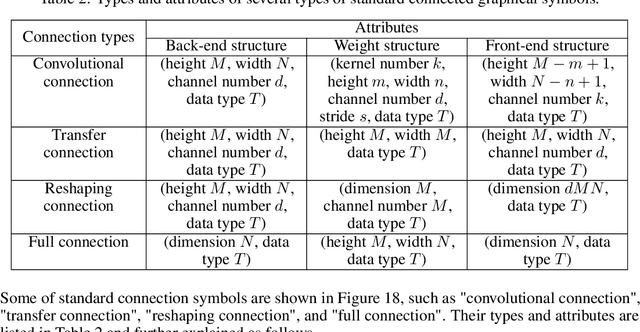
Recently, the growth of deep learning has produced a large number of deep neural networks. How to describe these networks unifiedly is becoming an important issue. We first formalize neural networks in a mathematical definition, give their directed graph representations, and prove a generation theorem about the induced networks of connected directed acyclic graphs. Then, using the concept of capsule to extend neural networks, we set up a capsule-unified framework for deep learning, including a mathematical definition of capsules, an induced model for capsule networks and a universal backpropagation algorithm for training them. Finally, we discuss potential applications of the framework to graphical programming with standard graphical symbols of capsules, neurons, and connections.
Theory of Cognitive Relativity: A Promising Paradigm for True AI
Dec 01, 2018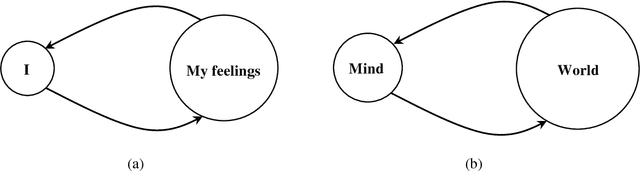
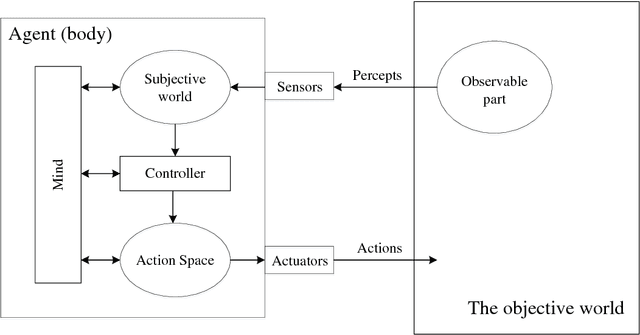


The rise of deep learning has brought artificial intelligence (AI) to the forefront. The ultimate goal of AI is to realize a machine with human mind and consciousness, but existing achievements mainly simulate intelligent behavior on computer platforms. These achievements all belong to weak AI rather than strong AI. How to achieve strong AI is not known yet in the field of intelligence science. Currently, this field is calling for a new paradigm, especially Theory of Cognitive Relativity (TCR). The TCR aims to summarize a simple and elegant set of first principles about the nature of intelligence, at least including the Principle of World's Relativity and the Principle of Symbol's Relativity. The Principle of World's Relativity states that the subjective world an intelligent agent can observe is strongly constrained by the way it perceives the objective world. The Principle of Symbol's Relativity states that an intelligent agent can use any physical symbol system to describe what it observes in its subjective world. The two principles are derived from scientific facts and life experience. Thought experiments show that they are important to understand high-level intelligence and necessary to establish a scientific theory of mind and consciousness. Other than brain-like intelligence, it indeed advocates a promising change in direction to realize true AI, i.e. strong AI with artificial consciousness, particularly different from humans' and animals'. Furthermore, a TCR creed has been presented and extended to reveal the secrets of consciousness and to guide realization of conscious machines. In the sense that true AI could be diversely implemented in a brain-different way, the TCR would probably drive an intelligence revolution in combination with some other first principles.
A Unified Framework of Deep Neural Networks by Capsules
May 10, 2018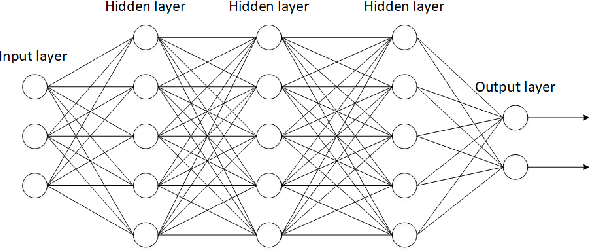
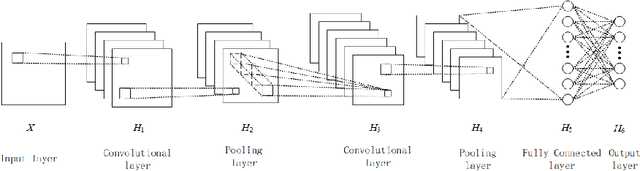


With the growth of deep learning, how to describe deep neural networks unifiedly is becoming an important issue. We first formalize neural networks mathematically with their directed graph representations, and prove a generation theorem about the induced networks of connected directed acyclic graphs. Then, we set up a unified framework for deep learning with capsule networks. This capsule framework could simplify the description of existing deep neural networks, and provide a theoretical basis of graphic designing and programming techniques for deep learning models, thus would be of great significance to the advancement of deep learning.