 Add to Chrome
 Add to Firefox
 Add to Edge
Compositional Text-to-Image Generation Via Region-aware Bimodal Direct Preference Optimization
May 27, 2026
Despite the rapid progress of text-to-image (T2I) models, generating images that accurately reflect complex compositional prompts (covering attribute bindings, object relationships, counting) still remains challenging. To address this, we propose BiDPO, a framework to enhance T2I model's capability of compositional text-to-image generation. We begin by introducing an carefully designed pipeline to construct a large-scale preference dataset, BiComp, with strictly quality control. Then, we extend Diffusion DPO to jointly optimize image and text preferences, which is shown to greatly effective in improving the models to follow complex text prompt in generation. To further enhance the models for fine-grained alignment, we employ a region-level guidance method to focus on regions relevant to compositional concepts. Experimental results demonstrate that our BiDPO substantially improves compositional fidelity, consistently outperforming prior methods across multiple benchmarks. Our approach highlights the potential of preference-based fine-tuning for complex text-to-image tasks, offering a flexible and scalable alternative to existing techniques.

Channel-wise Vector Quantization
May 25, 2026We present Channel-wise Vector Quantization (CVQ), a novel image tokenization paradigm that replaces patch-wise tokens with channel-wise tokens. Unlike conventional vector quantization, which assigns a discrete token to each patch feature vector, CVQ quantizes each channel of the feature map. This formulation represents an image as discrete levels of visual details, rather than as a grid of spatial patches. Based on CVQ, we introduce a new visual autoregressive framework with "next-channel prediction". Instead of rendering images patch by patch in raster order, our Channel-wise Autoregressive (CAR) model predicts image channels sequentially, producing progressively enriched visual details. Specifically, it first sketches global structure and then refines fine-grained attributes, akin to a human artist's workflow. Empirically, we show that: (1) CVQ achieves 100% codebook utilization with a 16K+ codebook size without any bells and whistles, and substantially improves reconstruction quality over conventional VQ; and (2) CAR attains a DPG score of 86.7 and a GenEval score of 0.79, demonstrating strong effectiveness for text-to-image generation.
DecQ: Detail-Condensing Queries for Enhanced Reconstruction and Generation in Representation Autoencoders
May 21, 2026Representation Autoencoders (RAEs) leverage frozen vision foundation models (VFMs) as tokenizer encoders, providing robust high-level representations that facilitate fast convergence and high-quality generation in latent diffusion models. However, freezing the VFM inherently constrains its spatial reconstruction capacity, limiting fine-grained generation and image editing; in contrast, incorporating reconstruction-oriented signals via fine-tuning disrupts the pretrained semantic space and degrades generative fidelity. To address this trade-off, we propose DecQ, a simple yet effective framework for RAEs. Specifically, DecQ introduces lightweight detail-condensing queries that extract fine-grained information from intermediate VFM features through condenser modules. These queries are incorporated into the decoder to support reconstruction and are jointly generated with patch tokens during generative modeling. By aggregating information from both shallow and deep layers, DecQ effectively mitigates the reconstruction--generation trade-off, improving both reconstruction quality and generative performance. Our experiments demonstrate that: (1) with only 8 additional queries and 3.9% extra computation, DecQ improves reconstruction over the frozen DINOv2-based RAE, increasing PSNR from 19.13 dB to 22.76 dB; and (2) for generative modeling, DecQ achieves 3.3$\times$ faster convergence than RAE, attaining an FID of 1.41 without guidance and 1.05 with guidance.
DPC-VQA: Decoupling Quality Perception and Residual Calibration for Video Quality Assessment
Apr 14, 2026Recent multimodal large language models (MLLMs) have shown promising performance on video quality assessment (VQA) tasks. However, adapting them to new scenarios remains expensive due to large-scale retraining and costly mean opinion score (MOS) annotations. In this paper, we argue that a pretrained MLLM already provides a useful perceptual prior for VQA, and that the main challenge is to efficiently calibrate this prior to the target MOS space. Based on this insight, we propose DPC-VQA, a decoupling perception and calibration framework for video quality assessment. Specifically, DPC-VQA uses a frozen MLLM to provide a base quality estimate and perceptual prior, and employs a lightweight calibration branch to predict a residual correction for target-scenario adaptation. This design avoids costly end-to-end retraining while maintaining reliable performance with lower training and data costs. Extensive experiments on both user-generated content (UGC) and AI-generated content (AIGC) benchmarks show that DPC-VQA achieves competitive performance against representative baselines, while using less than 2% of the trainable parameters of conventional MLLM-based VQA methods and remaining effective with only 20\% of MOS labels. The code will be released upon publication.
FlexServe: A Fast and Secure LLM Serving System for Mobile Devices with Flexible Resource Isolation
Mar 10, 2026Device-side Large Language Models (LLMs) have witnessed explosive growth, offering higher privacy and availability compared to cloud-side LLMs. During LLM inference, both model weights and user data are valuable, and attackers may even compromise the OS kernel to steal them. ARM TrustZone is the de facto hardware-based isolation technology on mobile devices, used to protect sensitive applications from a compromised OS. However, protecting LLM inference with TrustZone incurs significant overhead due to its inflexible isolation of memory and the NPU. To address these challenges, this paper introduces FlexServe, a fast and secure LLM serving system for mobile devices. It first introduces a Flexible Resource Isolation mechanism to construct Flexible Secure Memory (Flex-Mem) and Flexible Secure NPU (Flex-NPU). Both memory pages and the NPU can be efficiently switched between unprotected and protected modes. Based on these mechanisms, FlexServe designs a fast and secure LLM inference framework within TrustZone's secure world. The LLM-Aware Memory Management and Secure Inference Pipeline are introduced to accelerate inference. A Multi-Model Scheduler is proposed to optimize multi-model workflows. We implement a prototype of FlexServe and compare it with two TrustZone-based strawman designs. The results show that FlexServe achieves an average $10.05\times$ speedup in Time to First Token (TTFT) compared to the strawman, and an average $2.44\times$ TTFT speedup compared to an optimized strawman with pipeline and secure NPU enabled. For multi-model agent workflows, the end-to-end speedup is up to $24.30\times$ and $4.05\times$ compared to the strawman and optimized strawman, respectively.
ELIQ: A Label-Free Framework for Quality Assessment of Evolving AI-Generated Images
Feb 03, 2026Generative text-to-image models are advancing at an unprecedented pace, continuously shifting the perceptual quality ceiling and rendering previously collected labels unreliable for newer generations. To address this, we present ELIQ, a Label-free Framework for Quality Assessment of Evolving AI-generated Images. Specifically, ELIQ focuses on visual quality and prompt-image alignment, automatically constructs positive and aspect-specific negative pairs to cover both conventional distortions and AIGC-specific distortion modes, enabling transferable supervision without human annotations. Building on these pairs, ELIQ adapts a pre-trained multimodal model into a quality-aware critic via instruction tuning and predicts two-dimensional quality using lightweight gated fusion and a Quality Query Transformer. Experiments across multiple benchmarks demonstrate that ELIQ consistently outperforms existing label-free methods, generalizes from AI-generated content (AIGC) to user-generated content (UGC) scenarios without modification, and paves the way for scalable and label-free quality assessment under continuously evolving generative models. The code will be released upon publication.
Decoupling Perception and Calibration: Label-Efficient Image Quality Assessment Framework
Jan 28, 2026Recent multimodal large language models (MLLMs) have demonstrated strong capabilities in image quality assessment (IQA) tasks. However, adapting such large-scale models is computationally expensive and still relies on substantial Mean Opinion Score (MOS) annotations. We argue that for MLLM-based IQA, the core bottleneck lies not in the quality perception capacity of MLLMs, but in MOS scale calibration. Therefore, we propose LEAF, a Label-Efficient Image Quality Assessment Framework that distills perceptual quality priors from an MLLM teacher into a lightweight student regressor, enabling MOS calibration with minimal human supervision. Specifically, the teacher conducts dense supervision through point-wise judgments and pair-wise preferences, with an estimate of decision reliability. Guided by these signals, the student learns the teacher's quality perception patterns through joint distillation and is calibrated on a small MOS subset to align with human annotations. Experiments on both user-generated and AI-generated IQA benchmarks demonstrate that our method significantly reduces the need for human annotations while maintaining strong MOS-aligned correlations, making lightweight IQA practical under limited annotation budgets.
HCFT: Hierarchical Convolutional Fusion Transformer for EEG Decoding
Jan 18, 2026Electroencephalography (EEG) decoding requires models that can effectively extract and integrate complex temporal, spectral, and spatial features from multichannel signals. To address this challenge, we propose a lightweight and generalizable decoding framework named Hierarchical Convolutional Fusion Transformer (HCFT), which combines dual-branch convolutional encoders and hierarchical Transformer blocks for multi-scale EEG representation learning. Specifically, the model first captures local temporal and spatiotemporal dynamics through time-domain and time-space convolutional branches, and then aligns these features via a cross-attention mechanism that enables interaction between branches at each stage. Subsequently, a hierarchical Transformer fusion structure is employed to encode global dependencies across all feature stages, while a customized Dynamic Tanh normalization module is introduced to replace traditional Layer Normalization in order to enhance training stability and reduce redundancy. Extensive experiments are conducted on two representative benchmark datasets, BCI Competition IV-2b and CHB-MIT, covering both event-related cross-subject classification and continuous seizure prediction tasks. Results show that HCFT achieves 80.83% average accuracy and a Cohen's kappa of 0.6165 on BCI IV-2b, as well as 99.10% sensitivity, 0.0236 false positives per hour, and 98.82% specificity on CHB-MIT, consistently outperforming over ten state-of-the-art baseline methods. Ablation studies confirm that each core component of the proposed framework contributes significantly to the overall decoding performance, demonstrating HCFT's effectiveness in capturing EEG dynamics and its potential for real-world BCI applications.
Unison: A Fully Automatic, Task-Universal, and Low-Cost Framework for Unified Understanding and Generation
Dec 08, 2025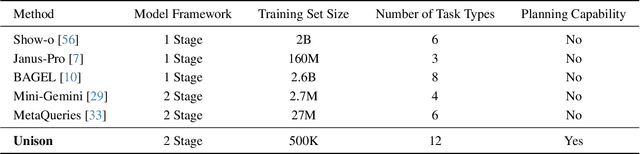
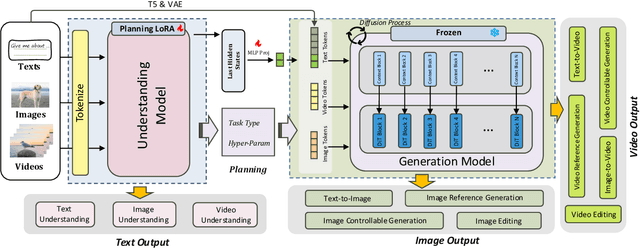
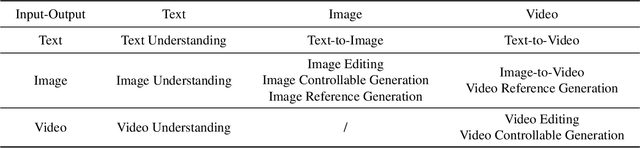
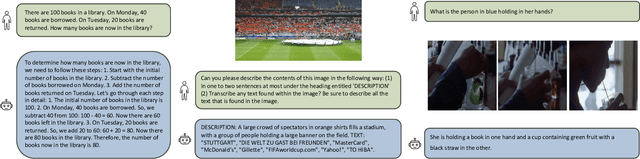
Unified understanding and generation is a highly appealing research direction in multimodal learning. There exist two approaches: one trains a transformer via an auto-regressive paradigm, and the other adopts a two-stage scheme connecting pre-trained understanding and generative models for alignment fine-tuning. The former demands massive data and computing resources unaffordable for ordinary researchers. Though the latter requires a lower training cost, existing works often suffer from limited task coverage or poor generation quality. Both approaches lack the ability to parse input meta-information (such as task type, image resolution, video duration, etc.) and require manual parameter configuration that is tedious and non-intelligent. In this paper, we propose Unison which adopts the two-stage scheme while preserving the capabilities of the pre-trained models well. With an extremely low training cost, we cover a variety of multimodal understanding tasks, including text, image, and video understanding, as well as diverse generation tasks, such as text-to-visual content generation, editing, controllable generation, and IP-based reference generation. We also equip our model with the ability to automatically parse user intentions, determine the target task type, and accurately extract the meta-information required for the corresponding task. This enables full automation of various multimodal tasks without human intervention. Experiments demonstrate that, under a low-cost setting of only 500k training samples and 50 GPU hours, our model can accurately and automatically identify tasks and extract relevant parameters, and achieve superior performance across a variety of understanding and generation tasks.
In-depth Analysis on Caching and Pre-fetching in Mixture of Experts Offloading
Nov 08, 2025In today's landscape, Mixture of Experts (MoE) is a crucial architecture that has been used by many of the most advanced models. One of the major challenges of MoE models is that they usually require much more memory than their dense counterparts due to their unique architecture, and hence are harder to deploy in environments with limited GPU memory, such as edge devices. MoE offloading is a promising technique proposed to overcome this challenge, especially if it is enhanced with caching and pre-fetching, but prior work stopped at suboptimal caching algorithm and offered limited insights. In this work, we study MoE offloading in depth and make the following contributions: 1. We analyze the expert activation and LRU caching behavior in detail and provide traces. 2. We propose LFU caching optimization based on our analysis and obtain strong improvements from LRU. 3. We implement and experiment speculative expert pre-fetching, providing detailed trace showing its huge potential . 4. In addition, our study extensively covers the behavior of the MoE architecture itself, offering information on the characteristic of the gating network and experts. This can inspire future work on the interpretation of MoE models and the development of pruning techniques for MoE architecture with minimal performance loss.