 Add to Chrome
 Add to Firefox
 Add to Edge
MoE Pathfinder: Trajectory-driven Expert Pruning
Dec 20, 2025
Mixture-of-experts (MoE) architectures used in large language models (LLMs) achieve state-of-the-art performance across diverse tasks yet face practical challenges such as deployment complexity and low activation efficiency. Expert pruning has thus emerged as a promising solution to reduce computational overhead and simplify the deployment of MoE models. However, existing expert pruning approaches conventionally rely on local importance metrics and often apply uniform layer-wise pruning, leveraging only partial evaluation signals and overlooking the heterogeneous contributions of experts across layers. To address these limitations, we propose an expert pruning approach based on the trajectory of activated experts across layers, which treats MoE as a weighted computation graph and casts expert selection as a global optimal path planning problem. Within this framework, we integrate complementary importance signals from reconstruction error, routing probabilities, and activation strength at the trajectory level, which naturally yields non-uniform expert retention across layers. Experiments show that our approach achieves superior pruning performance on nearly all tasks compared with most existing approaches.

From Experience to Strategy: Empowering LLM Agents with Trainable Graph Memory
Nov 11, 2025Large Language Models (LLMs) based agents have demonstrated remarkable potential in autonomous task-solving across complex, open-ended environments. A promising approach for improving the reasoning capabilities of LLM agents is to better utilize prior experiences in guiding current decisions. However, LLMs acquire experience either through implicit memory via training, which suffers from catastrophic forgetting and limited interpretability, or explicit memory via prompting, which lacks adaptability. In this paper, we introduce a novel agent-centric, trainable, multi-layered graph memory framework and evaluate how context memory enhances the ability of LLMs to utilize parametric information. The graph abstracts raw agent trajectories into structured decision paths in a state machine and further distills them into high-level, human-interpretable strategic meta-cognition. In order to make memory adaptable, we propose a reinforcement-based weight optimization procedure that estimates the empirical utility of each meta-cognition based on reward feedback from downstream tasks. These optimized strategies are then dynamically integrated into the LLM agent's training loop through meta-cognitive prompting. Empirically, the learnable graph memory delivers robust generalization, improves LLM agents' strategic reasoning performance, and provides consistent benefits during Reinforcement Learning (RL) training.
Frustratingly Easy Task-aware Pruning for Large Language Models
Oct 26, 2025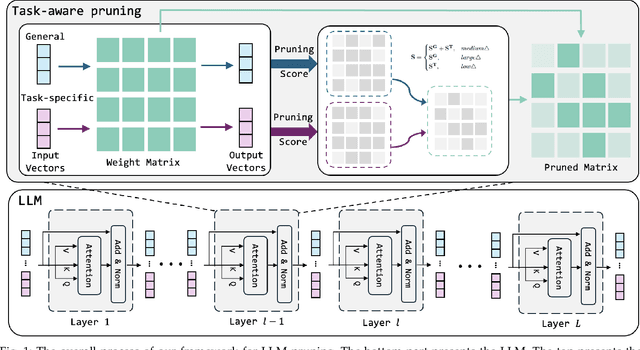
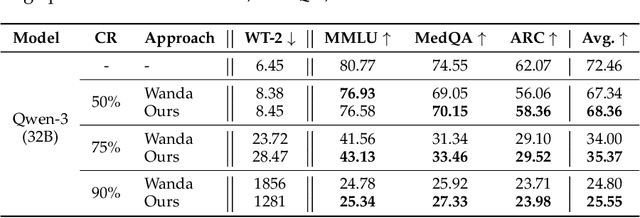
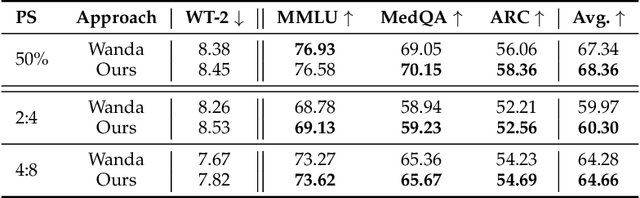
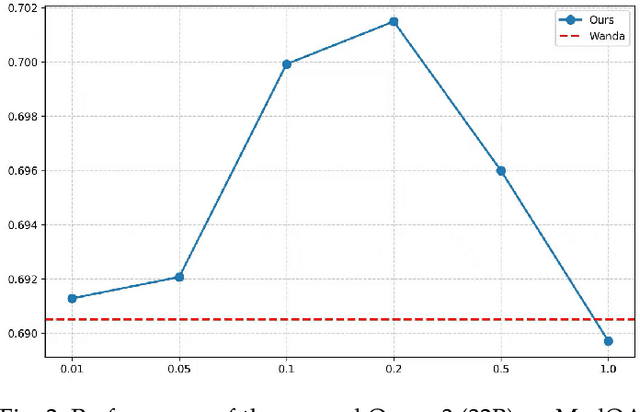
Pruning provides a practical solution to reduce the resources required to run large language models (LLMs) to benefit from their effective capabilities as well as control their cost for training and inference. Research on LLM pruning often ranks the importance of LLM parameters using their magnitudes and calibration-data activations and removes (or masks) the less important ones, accordingly reducing LLMs' size. However, these approaches primarily focus on preserving the LLM's ability to generate fluent sentences, while neglecting performance on specific domains and tasks. In this paper, we propose a simple yet effective pruning approach for LLMs that preserves task-specific capabilities while shrinking their parameter space. We first analyze how conventional pruning minimizes loss perturbation under general-domain calibration and extend this formulation by incorporating task-specific feature distributions into the importance computation of existing pruning algorithms. Thus, our framework computes separate importance scores using both general and task-specific calibration data, partitions parameters into shared and exclusive groups based on activation-norm differences, and then fuses their scores to guide the pruning process. This design enables our method to integrate seamlessly with various foundation pruning techniques and preserve the LLM's specialized abilities under compression. Experiments on widely used benchmarks demonstrate that our approach is effective and consistently outperforms the baselines with identical pruning ratios and different settings.
A Semantic Segmentation Algorithm for Pleural Effusion Based on DBIF-AUNet
Aug 08, 2025Pleural effusion semantic segmentation can significantly enhance the accuracy and timeliness of clinical diagnosis and treatment by precisely identifying disease severity and lesion areas. Currently, semantic segmentation of pleural effusion CT images faces multiple challenges. These include similar gray levels between effusion and surrounding tissues, blurred edges, and variable morphology. Existing methods often struggle with diverse image variations and complex edges, primarily because direct feature concatenation causes semantic gaps. To address these challenges, we propose the Dual-Branch Interactive Fusion Attention model (DBIF-AUNet). This model constructs a densely nested skip-connection network and innovatively refines the Dual-Domain Feature Disentanglement module (DDFD). The DDFD module orthogonally decouples the functions of dual-domain modules to achieve multi-scale feature complementarity and enhance characteristics at different levels. Concurrently, we design a Branch Interaction Attention Fusion module (BIAF) that works synergistically with the DDFD. This module dynamically weights and fuses global, local, and frequency band features, thereby improving segmentation robustness. Furthermore, we implement a nested deep supervision mechanism with hierarchical adaptive hybrid loss to effectively address class imbalance. Through validation on 1,622 pleural effusion CT images from Southwest Hospital, DBIF-AUNet achieved IoU and Dice scores of 80.1% and 89.0% respectively. These results outperform state-of-the-art medical image segmentation models U-Net++ and Swin-UNet by 5.7%/2.7% and 2.2%/1.5% respectively, demonstrating significant optimization in segmentation accuracy for complex pleural effusion CT images.
Recurrent Visual Feature Extraction and Stereo Attentions for CT Report Generation
Jun 24, 2025Generating reports for computed tomography (CT) images is a challenging task, while similar to existing studies for medical image report generation, yet has its unique characteristics, such as spatial encoding of multiple images, alignment between image volume and texts, etc. Existing solutions typically use general 2D or 3D image processing techniques to extract features from a CT volume, where they firstly compress the volume and then divide the compressed CT slices into patches for visual encoding. These approaches do not explicitly account for the transformations among CT slices, nor do they effectively integrate multi-level image features, particularly those containing specific organ lesions, to instruct CT report generation (CTRG). In considering the strong correlation among consecutive slices in CT scans, in this paper, we propose a large language model (LLM) based CTRG method with recurrent visual feature extraction and stereo attentions for hierarchical feature modeling. Specifically, we use a vision Transformer to recurrently process each slice in a CT volume, and employ a set of attentions over the encoded slices from different perspectives to selectively obtain important visual information and align them with textual features, so as to better instruct an LLM for CTRG. Experiment results and further analysis on the benchmark M3D-Cap dataset show that our method outperforms strong baseline models and achieves state-of-the-art results, demonstrating its validity and effectiveness.
Large Language Models Enhanced by Plug and Play Syntactic Knowledge for Aspect-based Sentiment Analysis
Jun 15, 2025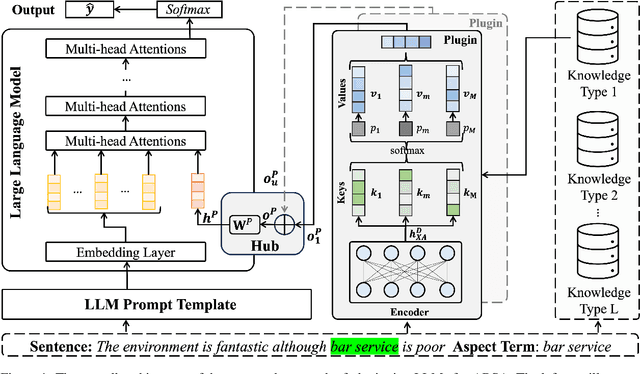
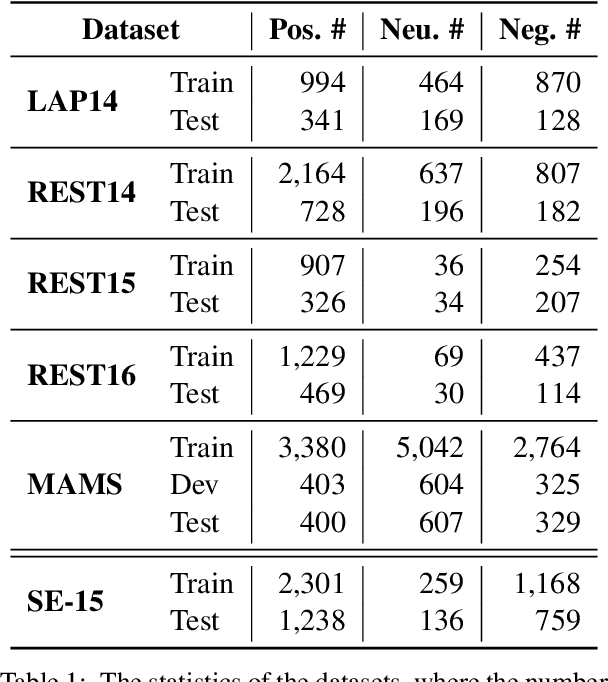
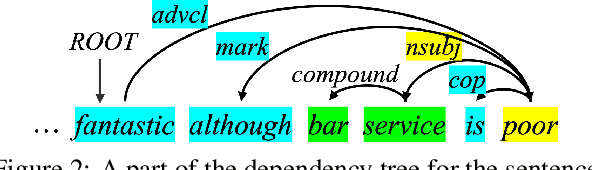
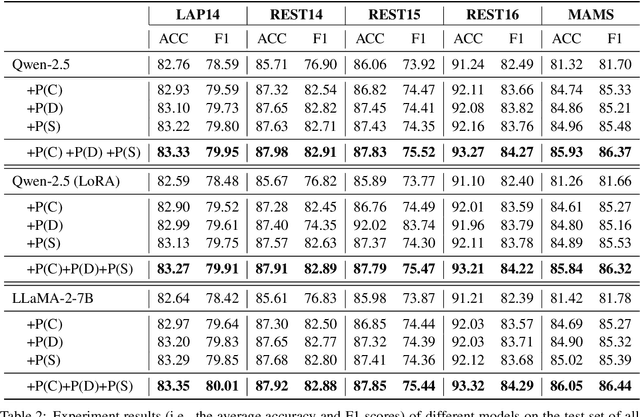
Aspect-based sentiment analysis (ABSA) generally requires a deep understanding of the contextual information, including the words associated with the aspect terms and their syntactic dependencies. Most existing studies employ advanced encoders (e.g., pre-trained models) to capture such context, especially large language models (LLMs). However, training these encoders is resource-intensive, and in many cases, the available data is insufficient for necessary fine-tuning. Therefore it is challenging for learning LLMs within such restricted environments and computation efficiency requirement. As a result, it motivates the exploration of plug-and-play methods that adapt LLMs to ABSA with minimal effort. In this paper, we propose an approach that integrates extendable components capable of incorporating various types of syntactic knowledge, such as constituent syntax, word dependencies, and combinatory categorial grammar (CCG). Specifically, we propose a memory module that records syntactic information and is incorporated into LLMs to instruct the prediction of sentiment polarities. Importantly, this encoder acts as a versatile, detachable plugin that is trained independently of the LLM. We conduct experiments on benchmark datasets, which show that our approach outperforms strong baselines and previous approaches, thus demonstrates its effectiveness.
Representation Decomposition for Learning Similarity and Contrastness Across Modalities for Affective Computing
Jun 08, 2025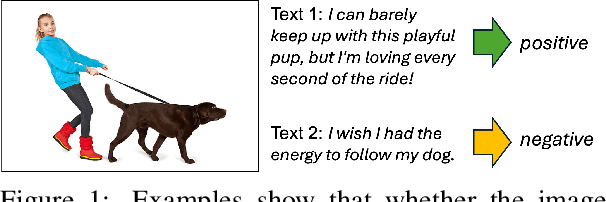
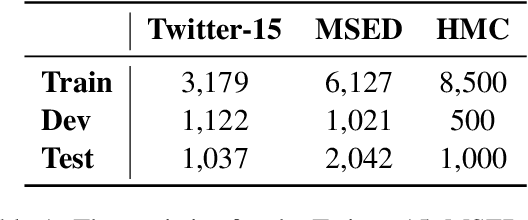
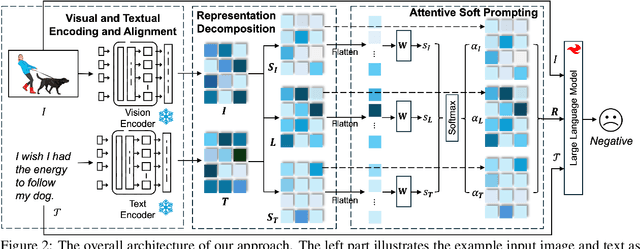
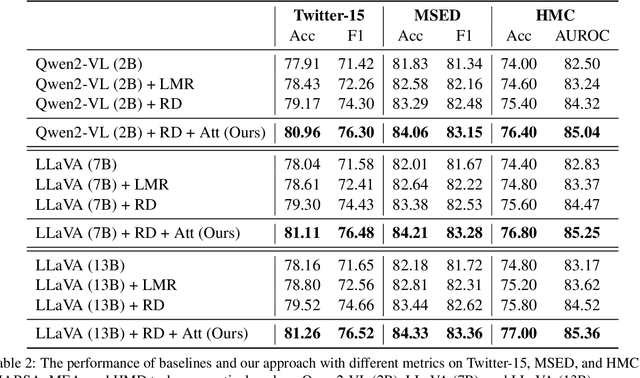
Multi-modal affective computing aims to automatically recognize and interpret human attitudes from diverse data sources such as images and text, thereby enhancing human-computer interaction and emotion understanding. Existing approaches typically rely on unimodal analysis or straightforward fusion of cross-modal information that fail to capture complex and conflicting evidence presented across different modalities. In this paper, we propose a novel LLM-based approach for affective computing that explicitly deconstructs visual and textual representations into shared (modality-invariant) and modality-specific components. Specifically, our approach firstly encodes and aligns input modalities using pre-trained multi-modal encoders, then employs a representation decomposition framework to separate common emotional content from unique cues, and finally integrates these decomposed signals via an attention mechanism to form a dynamic soft prompt for a multi-modal LLM. Extensive experiments on three representative tasks for affective computing, namely, multi-modal aspect-based sentiment analysis, multi-modal emotion analysis, and hateful meme detection, demonstrate the effectiveness of our approach, which consistently outperforms strong baselines and state-of-the-art models.
ForceVLA: Enhancing VLA Models with a Force-aware MoE for Contact-rich Manipulation
May 28, 2025Vision-Language-Action (VLA) models have advanced general-purpose robotic manipulation by leveraging pretrained visual and linguistic representations. However, they struggle with contact-rich tasks that require fine-grained control involving force, especially under visual occlusion or dynamic uncertainty. To address these limitations, we propose \textbf{ForceVLA}, a novel end-to-end manipulation framework that treats external force sensing as a first-class modality within VLA systems. ForceVLA introduces \textbf{FVLMoE}, a force-aware Mixture-of-Experts fusion module that dynamically integrates pretrained visual-language embeddings with real-time 6-axis force feedback during action decoding. This enables context-aware routing across modality-specific experts, enhancing the robot's ability to adapt to subtle contact dynamics. We also introduce \textbf{ForceVLA-Data}, a new dataset comprising synchronized vision, proprioception, and force-torque signals across five contact-rich manipulation tasks. ForceVLA improves average task success by 23.2\% over strong $\pi_0$-based baselines, achieving up to 80\% success in tasks such as plug insertion. Our approach highlights the importance of multimodal integration for dexterous manipulation and sets a new benchmark for physically intelligent robotic control. Code and data will be released at https://sites.google.com/view/forcevla2025.
DNAZEN: Enhanced Gene Sequence Representations via Mixed Granularities of Coding Units
May 04, 2025Genome modeling conventionally treats gene sequence as a language, reflecting its structured motifs and long-range dependencies analogous to linguistic units and organization principles such as words and syntax. Recent studies utilize advanced neural networks, ranging from convolutional and recurrent models to Transformer-based models, to capture contextual information of gene sequence, with the primary goal of obtaining effective gene sequence representations and thus enhance the models' understanding of various running gene samples. However, these approaches often directly apply language modeling techniques to gene sequences and do not fully consider the intrinsic information organization in them, where they do not consider how units at different granularities contribute to representation. In this paper, we propose DNAZEN, an enhanced genomic representation framework designed to learn from various granularities in gene sequences, including small polymers and G-grams that are combinations of several contiguous polymers. Specifically, we extract the G-grams from large-scale genomic corpora through an unsupervised approach to construct the G-gram vocabulary, which is used to provide G-grams in the learning process of DNA sequences through dynamically matching from running gene samples. A Transformer-based G-gram encoder is also proposed and the matched G-grams are fed into it to compute their representations and integrated into the encoder for basic unit (E4BU), which is responsible for encoding small units and maintaining the learning and inference process. To further enhance the learning process, we propose whole G-gram masking to train DNAZEN, where the model largely favors the selection of each entire G-gram to mask rather than an ordinary masking mechanism performed on basic units. Experiments on benchmark datasets demonstrate the effectiveness of DNAZEN on various downstream tasks.
Multimodal Conditioned Diffusive Time Series Forecasting
Apr 28, 2025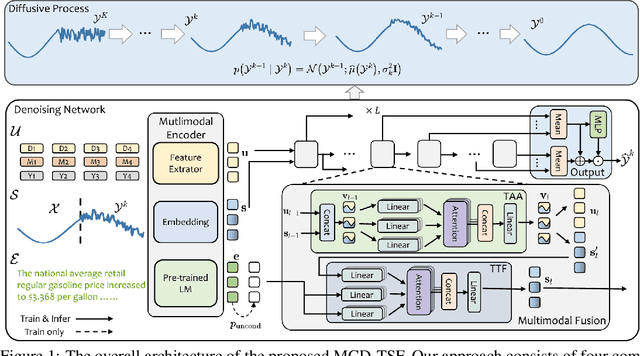

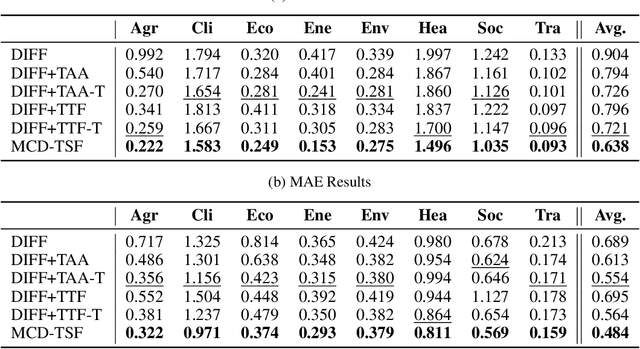
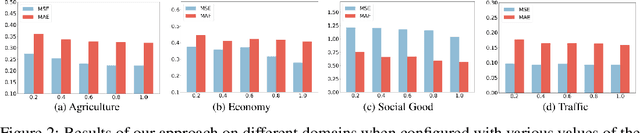
Diffusion models achieve remarkable success in processing images and text, and have been extended to special domains such as time series forecasting (TSF). Existing diffusion-based approaches for TSF primarily focus on modeling single-modality numerical sequences, overlooking the rich multimodal information in time series data. To effectively leverage such information for prediction, we propose a multimodal conditioned diffusion model for TSF, namely, MCD-TSF, to jointly utilize timestamps and texts as extra guidance for time series modeling, especially for forecasting. Specifically, Timestamps are combined with time series to establish temporal and semantic correlations among different data points when aggregating information along the temporal dimension. Texts serve as supplementary descriptions of time series' history, and adaptively aligned with data points as well as dynamically controlled in a classifier-free manner. Extensive experiments on real-world benchmark datasets across eight domains demonstrate that the proposed MCD-TSF model achieves state-of-the-art performance.