 Add to Chrome
 Add to Firefox
 Add to Edge
Gradient-Guided Reward Optimization for Inference-time Alignment
Jun 08, 2026
Ensuring the reliability of Large Language Models (LLMs) under distribution drift requires inference-time adaptation. While inference-time alignment methods such as Best-of-$N$ and rejection sampling are widely used, they frame the task as a sampling-intensive, reward-guided search, leading to two key limitations: their performance is bounded by the base model's generation quality, and their reliance on imperfect reward models makes them vulnerable to reward hacking. To address these challenges, we introduce Gradient-Guided Reward Optimization (GGRO), a lightweight inference-time method that performs targeted, minimal intervention during decoding via gradient guidance. Specifically, GGRO monitors token-level entropy to identify high-uncertainty regions indicative of drift or misalignment. Upon detection, it responds by injecting nudging tokens, generated using gradient signals from an off-the-shelf reward model, to steer the generation trajectory rather than merely re-ranking samples. Experiments show that GGRO consistently improves inference-time alignment across safety, helpfulness, and reasoning benchmarks. It also increases coverage of high-quality responses and robustness to reward hacking, with minimal computational overhead. Code is available at https://github.com/lhk2004/GGRO.

Understanding LLMs' Cross-Lingual Context Retrieval: How Good It Is And Where It Comes From
Apr 15, 2025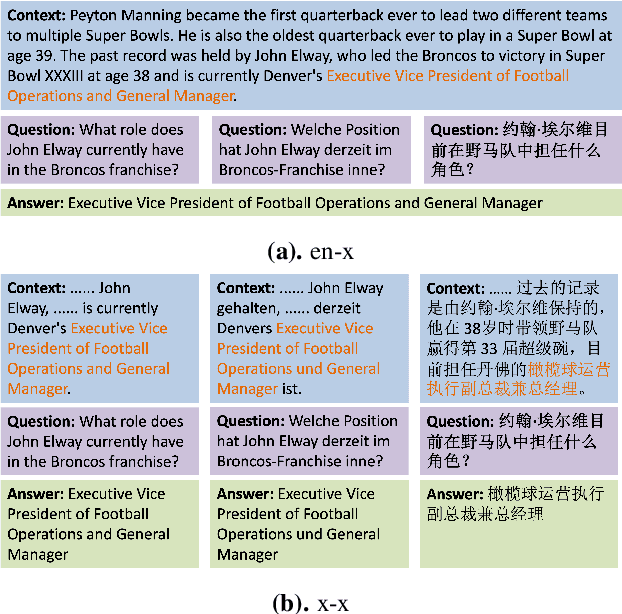
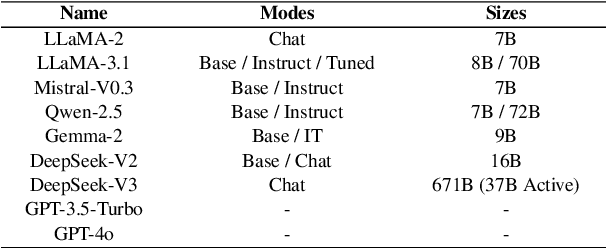
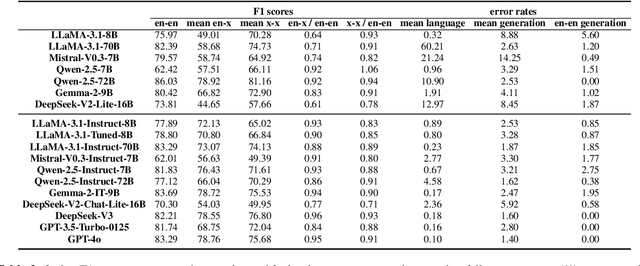
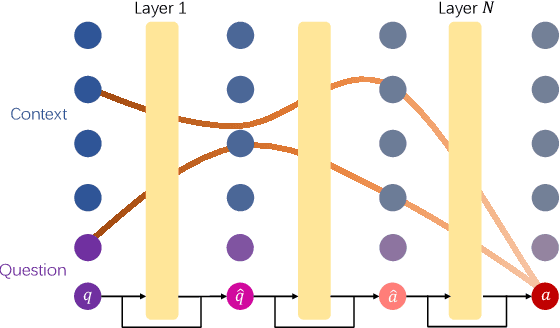
The ability of cross-lingual context retrieval is a fundamental aspect of cross-lingual alignment of large language models (LLMs), where the model extracts context information in one language based on requests in another language. Despite its importance in real-life applications, this ability has not been adequately investigated for state-of-the-art models. In this paper, we evaluate the cross-lingual context retrieval ability of over 40 LLMs across 12 languages to understand the source of this ability, using cross-lingual machine reading comprehension (xMRC) as a representative scenario. Our results show that several small, post-trained open LLMs show strong cross-lingual context retrieval ability, comparable to closed-source LLMs such as GPT-4o, and their estimated oracle performances greatly improve after post-training. Our interpretability analysis shows that the cross-lingual context retrieval process can be divided into two main phases: question encoding and answer retrieval, which are formed in pre-training and post-training, respectively. The phasing stability correlates with xMRC performance, and the xMRC bottleneck lies at the last model layers in the second phase, where the effect of post-training can be evidently observed. Our results also indicate that larger-scale pretraining cannot improve the xMRC performance. Instead, larger LLMs need further multilingual post-training to fully unlock their cross-lingual context retrieval potential. Our code and is available at https://github.com/NJUNLP/Cross-Lingual-Context-Retrieval