 Add to Chrome
 Add to Firefox
 Add to Edge
Large Language Model based Multi-Agents: A Survey of Progress and Challenges
Jan 21, 2024
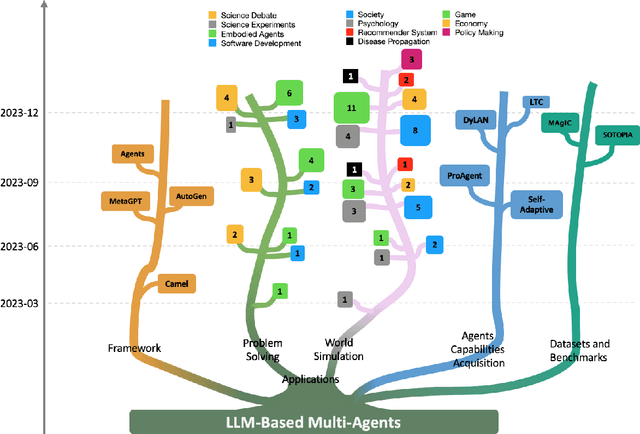

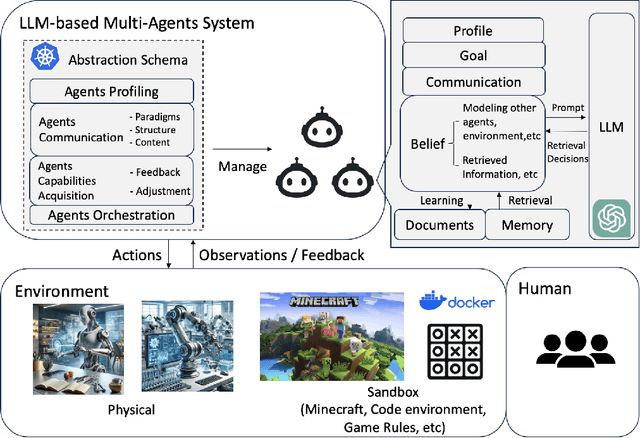
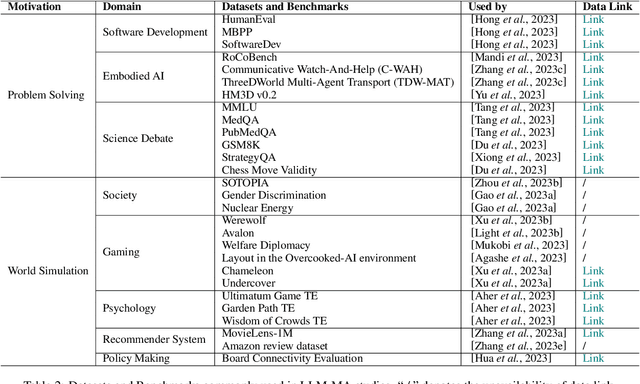
Large Language Models (LLMs) have achieved remarkable success across a wide array of tasks. Due to the impressive planning and reasoning abilities of LLMs, they have been used as autonomous agents to do many tasks automatically. Recently, based on the development of using one LLM as a single planning or decision-making agent, LLM-based multi-agent systems have achieved considerable progress in complex problem-solving and world simulation. To provide the community with an overview of this dynamic field, we present this survey to offer an in-depth discussion on the essential aspects of multi-agent systems based on LLMs, as well as the challenges. Our goal is for readers to gain substantial insights on the following questions: What domains and environments do LLM-based multi-agents simulate? How are these agents profiled and how do they communicate? What mechanisms contribute to the growth of agents' capacities? For those interested in delving into this field of study, we also summarize the commonly used datasets or benchmarks for them to have convenient access. To keep researchers updated on the latest studies, we maintain an open-source GitHub repository, dedicated to outlining the research on LLM-based multi-agent systems.

Modeling non-uniform uncertainty in Reaction Prediction via Boosting and Dropout
Oct 07, 2023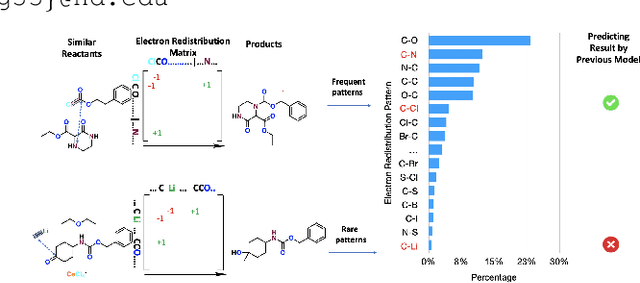
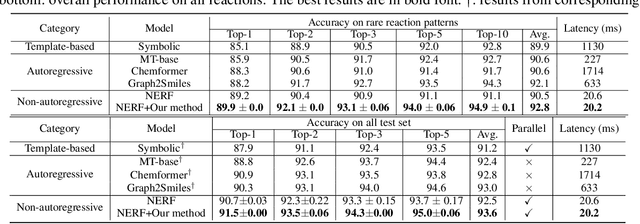

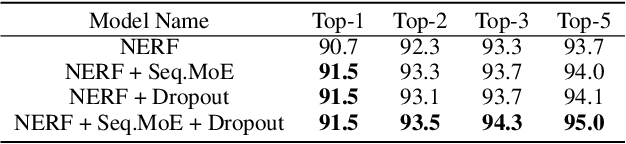
Reaction prediction has been recognized as a critical task in synthetic chemistry, where the goal is to predict the outcome of a reaction based on the given reactants. With the widespread adoption of generative models, the Variational Autoencoder(VAE) framework has typically been employed to tackle challenges in reaction prediction, where the reactants are encoded as a condition for the decoder, which then generates the product. Despite effectiveness, these conditional VAE (CVAE) models still fail to adequately account for the inherent uncertainty in reaction prediction, which primarily stems from the stochastic reaction process. The principal limitations are twofold. Firstly, in these CVAE models, the prior is independent of the reactants, leading to a default wide and assumed uniform distribution variance of the generated product. Secondly, reactants with analogous molecular representations are presumed to undergo similar electronic transition processes, thereby producing similar products. This hinders the ability to model diverse reaction mechanisms effectively. Since the variance in outcomes is inherently non-uniform, we are thus motivated to develop a framework that generates reaction products with non-uniform uncertainty. Firstly, we eliminate the latent variable in previous CVAE models to mitigate uncontrol-label noise. Instead, we introduce randomness into product generation via boosting to ensemble diverse models and cover the range of potential outcomes, and through dropout to secure models with minor variations. Additionally, we design a ranking method to union the predictions from boosting and dropout, prioritizing the most plausible products. Experimental results on the largest reaction prediction benchmark USPTO-MIT show the superior performance of our proposed method in modeling the non-uniform uncertainty compared to baselines.
MinT: Boosting Generalization in Mathematical Reasoning via Multi-View Fine-Tuning
Jul 16, 2023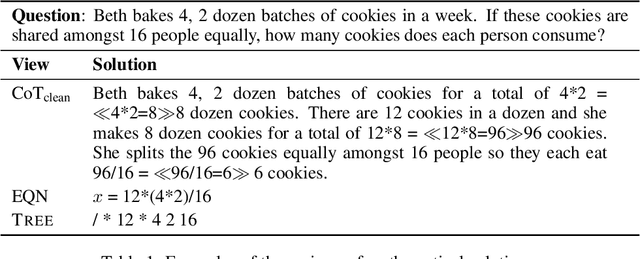
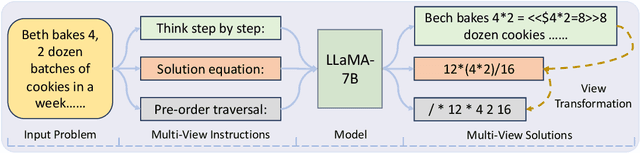

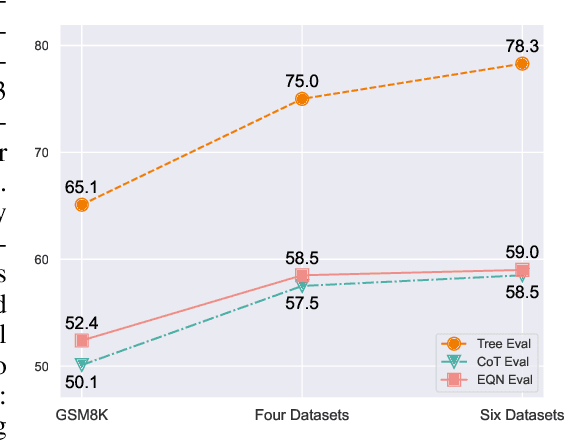
Reasoning in mathematical domains remains a significant challenge for relatively small language models (LMs). Many current methods focus on specializing LMs in mathematical reasoning and rely heavily on knowledge distillation from powerful but inefficient large LMs (LLMs). In this work, we explore a new direction that avoids over-reliance on LLM teachers, introducing a multi-view fine-tuning method that efficiently exploits existing mathematical problem datasets with diverse annotation styles. Our approach uniquely considers the various annotation formats as different "views" and leverages them in training the model. By postpending distinct instructions to input questions, models can learn to generate solutions in diverse formats in a flexible manner. Experimental results show that our strategy enables a LLaMA-7B model to outperform prior approaches that utilize knowledge distillation, as well as carefully established baselines. Additionally, the proposed method grants the models promising generalization ability across various views and datasets, and the capability to learn from inaccurate or incomplete noisy data. We hope our multi-view training paradigm could inspire future studies in other machine reasoning domains.
Improving the Robustness of Summarization Systems with Dual Augmentation
Jun 01, 2023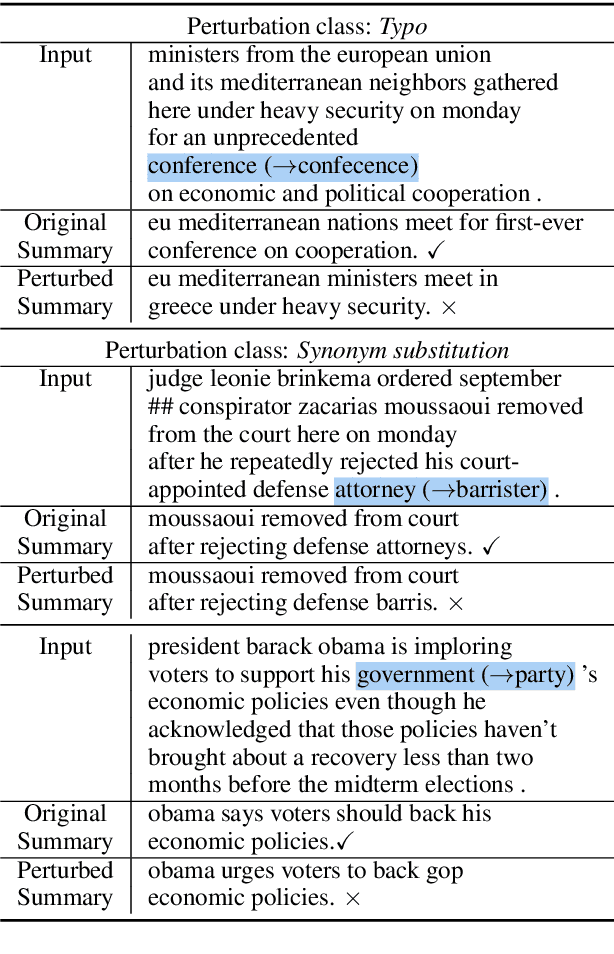
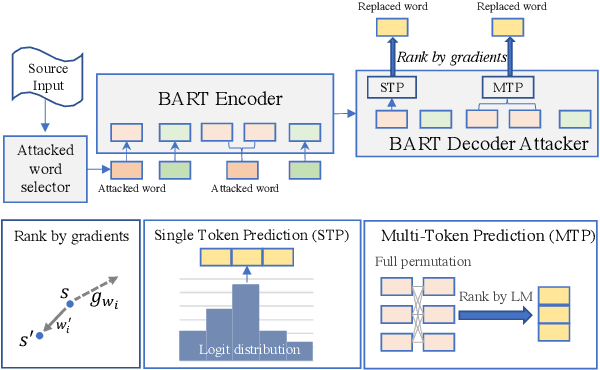
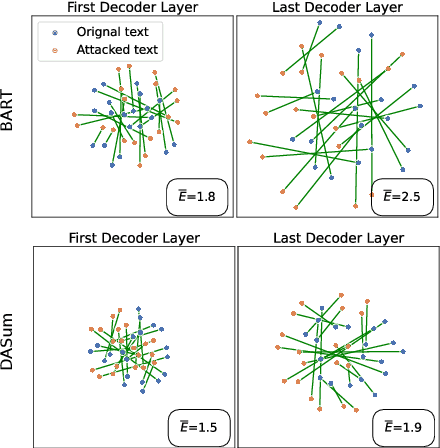
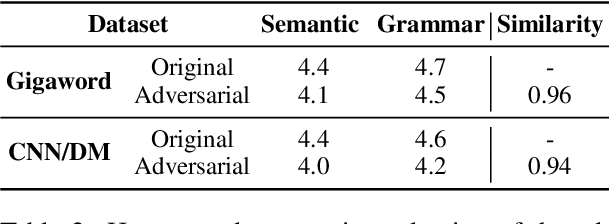
A robust summarization system should be able to capture the gist of the document, regardless of the specific word choices or noise in the input. In this work, we first explore the summarization models' robustness against perturbations including word-level synonym substitution and noise. To create semantic-consistent substitutes, we propose a SummAttacker, which is an efficient approach to generating adversarial samples based on language models. Experimental results show that state-of-the-art summarization models have a significant decrease in performance on adversarial and noisy test sets. Next, we analyze the vulnerability of the summarization systems and explore improving the robustness by data augmentation. Specifically, the first brittleness factor we found is the poor understanding of infrequent words in the input. Correspondingly, we feed the encoder with more diverse cases created by SummAttacker in the input space. The other factor is in the latent space, where the attacked inputs bring more variations to the hidden states. Hence, we construct adversarial decoder input and devise manifold softmixing operation in hidden space to introduce more diversity. Experimental results on Gigaword and CNN/DM datasets demonstrate that our approach achieves significant improvements over strong baselines and exhibits higher robustness on noisy, attacked, and clean datasets.
What indeed can GPT models do in chemistry? A comprehensive benchmark on eight tasks
May 27, 2023
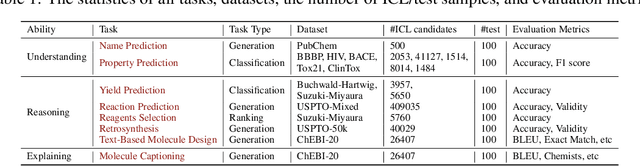
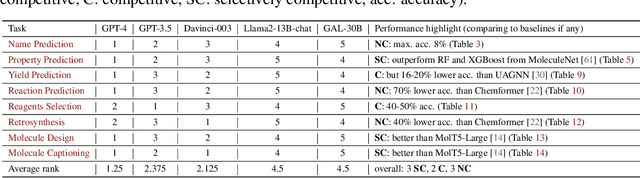
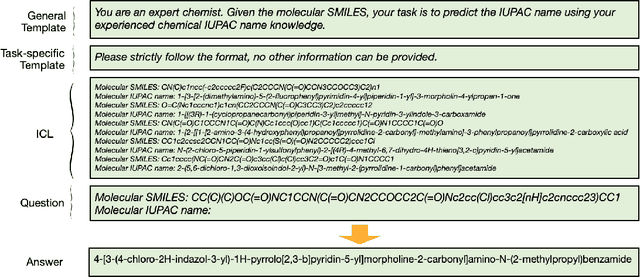
Large Language Models (LLMs) with strong abilities in natural language processing tasks have emerged and have been rapidly applied in various kinds of areas such as science, finance and software engineering. However, the capability of LLMs to advance the field of chemistry remains unclear. In this paper,we establish a comprehensive benchmark containing 8 practical chemistry tasks, including 1) name prediction, 2) property prediction, 3) yield prediction, 4) reaction prediction, 5) retrosynthesis (prediction of reactants from products), 6)text-based molecule design, 7) molecule captioning, and 8) reagent selection. Our analysis draws on widely recognized datasets including BBBP, Tox21, PubChem, USPTO, and ChEBI, facilitating a broad exploration of the capacities of LLMs within the context of practical chemistry. Three GPT models (GPT-4, GPT-3.5,and Davinci-003) are evaluated for each chemistry task in zero-shot and few-shot in-context learning settings with carefully selected demonstration examples and specially crafted prompts. The key results of our investigation are 1) GPT-4 outperforms the other two models among the three evaluated; 2) GPT models exhibit less competitive performance in tasks demanding precise understanding of molecular SMILES representation, such as reaction prediction and retrosynthesis;3) GPT models demonstrate strong capabilities in text-related explanation tasks such as molecule captioning; and 4) GPT models exhibit comparable or better performance to classical machine learning models when applied to chemical problems that can be transformed into classification or ranking tasks, such as property prediction, and yield prediction.
Let GPT be a Math Tutor: Teaching Math Word Problem Solvers with Customized Exercise Generation
May 22, 2023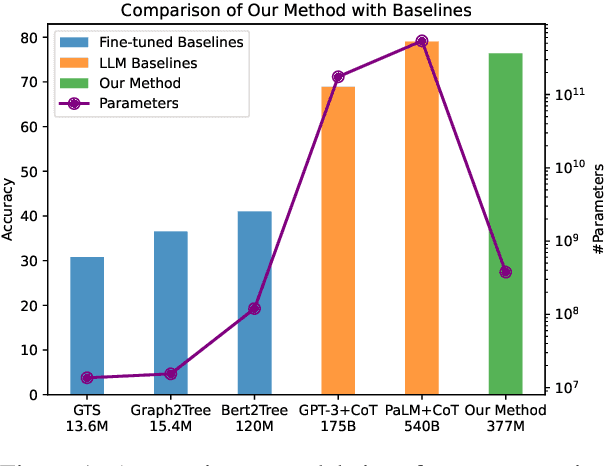
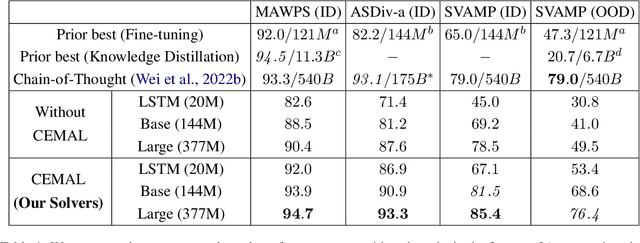
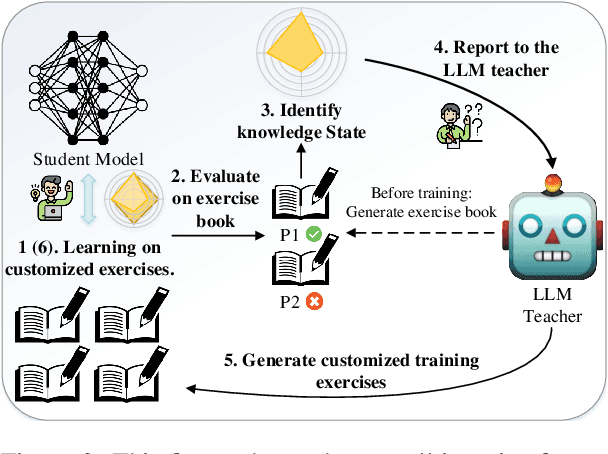
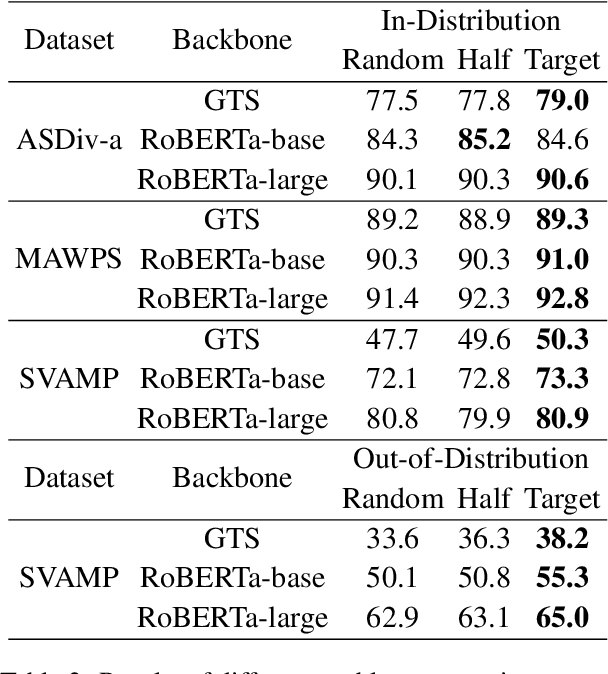
In this paper, we present a novel approach for distilling math word problem solving capabilities from large language models (LLMs) into smaller, more efficient student models. Our approach is designed to consider the student model's weaknesses and foster a tailored learning experience by generating targeted exercises aligned with educational science principles, such as knowledge tracing and personalized learning. Concretely, we let GPT-3 be a math tutor and run two steps iteratively: 1) assessing the student model's current learning status on a GPT-generated exercise book, and 2) improving the student model by training it with tailored exercise samples generated by GPT-3. Experimental results reveal that our approach outperforms LLMs (e.g., GPT-3 and PaLM) in accuracy across three distinct benchmarks while employing significantly fewer parameters. Furthermore, we provide a comprehensive analysis of the various components within our methodology to substantiate their efficacy.
A Topic-aware Summarization Framework with Different Modal Side Information
May 19, 2023
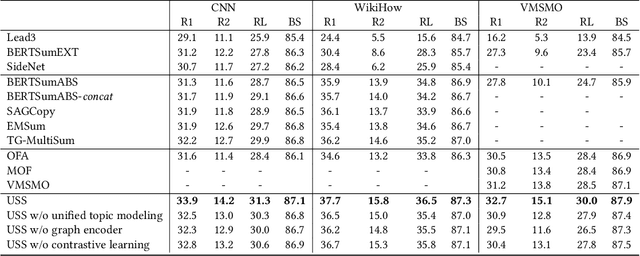
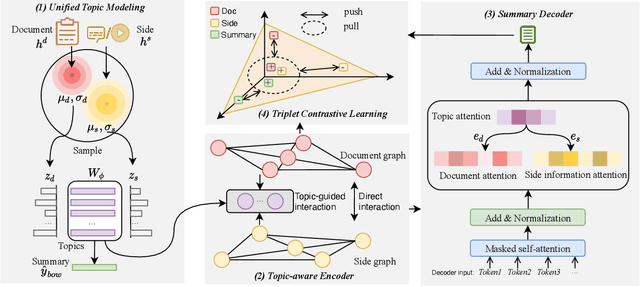
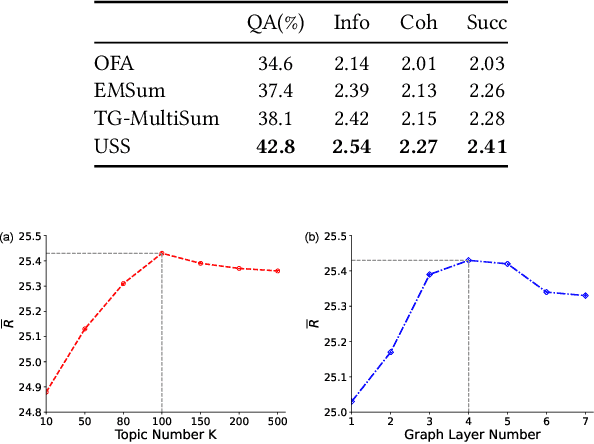
Automatic summarization plays an important role in the exponential document growth on the Web. On content websites such as CNN.com and WikiHow.com, there often exist various kinds of side information along with the main document for attention attraction and easier understanding, such as videos, images, and queries. Such information can be used for better summarization, as they often explicitly or implicitly mention the essence of the article. However, most of the existing side-aware summarization methods are designed to incorporate either single-modal or multi-modal side information, and cannot effectively adapt to each other. In this paper, we propose a general summarization framework, which can flexibly incorporate various modalities of side information. The main challenges in designing a flexible summarization model with side information include: (1) the side information can be in textual or visual format, and the model needs to align and unify it with the document into the same semantic space, (2) the side inputs can contain information from various aspects, and the model should recognize the aspects useful for summarization. To address these two challenges, we first propose a unified topic encoder, which jointly discovers latent topics from the document and various kinds of side information. The learned topics flexibly bridge and guide the information flow between multiple inputs in a graph encoder through a topic-aware interaction. We secondly propose a triplet contrastive learning mechanism to align the single-modal or multi-modal information into a unified semantic space, where the summary quality is enhanced by better understanding the document and side information. Results show that our model significantly surpasses strong baselines on three public single-modal or multi-modal benchmark summarization datasets.
LogicRec: Recommendation with Users' Logical Requirements
Apr 23, 2023


Users may demand recommendations with highly personalized requirements involving logical operations, e.g., the intersection of two requirements, where such requirements naturally form structured logical queries on knowledge graphs (KGs). To date, existing recommender systems lack the capability to tackle users' complex logical requirements. In this work, we formulate the problem of recommendation with users' logical requirements (LogicRec) and construct benchmark datasets for LogicRec. Furthermore, we propose an initial solution for LogicRec based on logical requirement retrieval and user preference retrieval, where we face two challenges. First, KGs are incomplete in nature. Therefore, there are always missing true facts, which entails that the answers to logical requirements can not be completely found in KGs. In this case, item selection based on the answers to logical queries is not applicable. We thus resort to logical query embedding (LQE) to jointly infer missing facts and retrieve items based on logical requirements. Second, answer sets are under-exploited. Existing LQE methods can only deal with query-answer pairs, where queries in our case are the intersected user preferences and logical requirements. However, the logical requirements and user preferences have different answer sets, offering us richer knowledge about the requirements and preferences by providing requirement-item and preference-item pairs. Thus, we design a multi-task knowledge-sharing mechanism to exploit these answer sets collectively. Extensive experimental results demonstrate the significance of the LogicRec task and the effectiveness of our proposed method.
Learning towards Selective Data Augmentation for Dialogue Generation
Mar 17, 2023As it is cumbersome and expensive to acquire a huge amount of data for training neural dialog models, data augmentation is proposed to effectively utilize existing training samples. However, current data augmentation techniques on the dialog generation task mostly augment all cases in the training dataset without considering the intrinsic attributes between different cases. We argue that not all cases are beneficial for augmentation task, and the cases suitable for augmentation should obey the following two attributes: (1) low-quality (the dialog model cannot generate a high-quality response for the case), (2) representative (the case should represent the property of the whole dataset). Herein, we explore this idea by proposing a Selective Data Augmentation framework (SDA) for the response generation task. SDA employs a dual adversarial network to select the lowest quality and most representative data points for augmentation in one stage. Extensive experiments conducted on two publicly available datasets, i.e., DailyDialog and OpenSubtitles, show that our framework can improve the response generation performance with respect to various metrics.
Knowledge Distillation on Graphs: A Survey
Feb 01, 2023Graph Neural Networks (GNNs) have attracted tremendous attention by demonstrating their capability to handle graph data. However, they are difficult to be deployed in resource-limited devices due to model sizes and scalability constraints imposed by the multi-hop data dependency. In addition, real-world graphs usually possess complex structural information and features. Therefore, to improve the applicability of GNNs and fully encode the complicated topological information, knowledge distillation on graphs (KDG) has been introduced to build a smaller yet effective model and exploit more knowledge from data, leading to model compression and performance improvement. Recently, KDG has achieved considerable progress with many studies proposed. In this survey, we systematically review these works. Specifically, we first introduce KDG challenges and bases, then categorize and summarize existing works of KDG by answering the following three questions: 1) what to distillate, 2) who to whom, and 3) how to distillate. Finally, we share our thoughts on future research directions.