 Add to Chrome
 Add to Firefox
 Add to Edge
CLOVA: A Closed-Loop Visual Assistant with Tool Usage and Update
Dec 18, 2023
Leveraging large language models (LLMs) to integrate off-the-shelf tools (e.g., visual models and image processing functions) is a promising research direction to build powerful visual assistants for solving diverse visual tasks. However, the learning capability is rarely explored in existing methods, as they freeze the used tools after deployment, thereby limiting the generalization to new environments requiring specific knowledge. In this paper, we propose CLOVA, a Closed-LOop Visual Assistant to address this limitation, which encompasses inference, reflection, and learning phases in a closed-loop framework. During inference, LLMs generate programs and execute corresponding tools to accomplish given tasks. The reflection phase introduces a multimodal global-local reflection scheme to analyze whether and which tool needs to be updated based on environmental feedback. Lastly, the learning phase uses three flexible manners to collect training data in real-time and introduces a novel prompt tuning scheme to update the tools, enabling CLOVA to efficiently learn specific knowledge for new environments without human involvement. Experiments show that CLOVA outperforms tool-usage methods by 5% in visual question answering and multiple-image reasoning tasks, by 10% in knowledge tagging tasks, and by 20% in image editing tasks, highlighting the significance of the learning capability for general visual assistants.

On the Robustness of Question Rewriting Systems to Questions of Varying Hardness
Nov 12, 2023
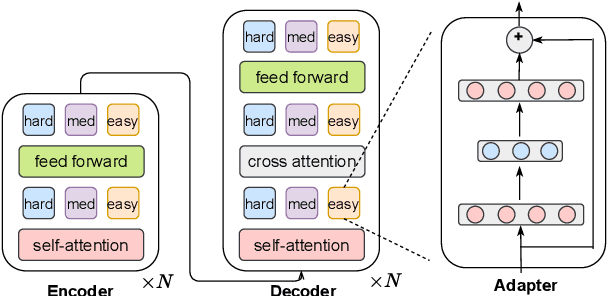


In conversational question answering (CQA), the task of question rewriting~(QR) in context aims to rewrite a context-dependent question into an equivalent self-contained question that gives the same answer. In this paper, we are interested in the robustness of a QR system to questions varying in rewriting hardness or difficulty. Since there is a lack of questions classified based on their rewriting hardness, we first propose a heuristic method to automatically classify questions into subsets of varying hardness, by measuring the discrepancy between a question and its rewrite. To find out what makes questions hard or easy for rewriting, we then conduct a human evaluation to annotate the rewriting hardness of questions. Finally, to enhance the robustness of QR systems to questions of varying hardness, we propose a novel learning framework for QR that first trains a QR model independently on each subset of questions of a certain level of hardness, then combines these QR models as one joint model for inference. Experimental results on two datasets show that our framework improves the overall performance compared to the baselines.
Get the Ball Rolling: Alerting Autonomous Robots When to Help to Close the Healthcare Loop
Nov 05, 2023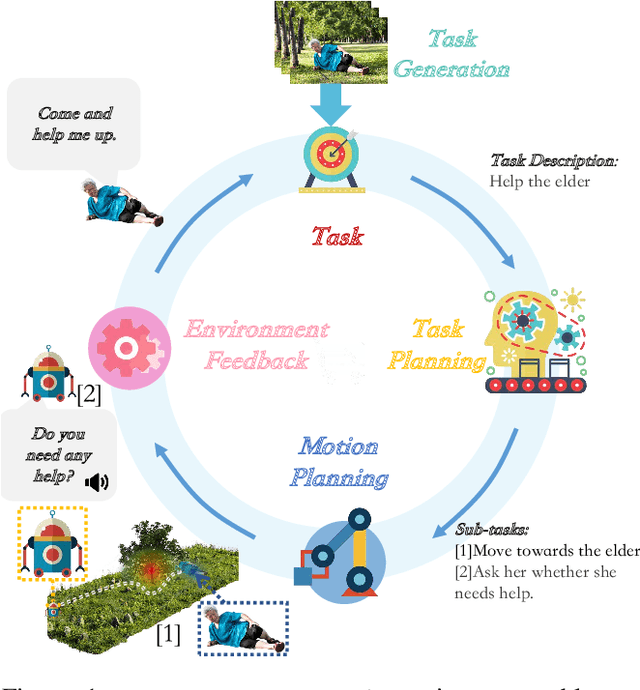
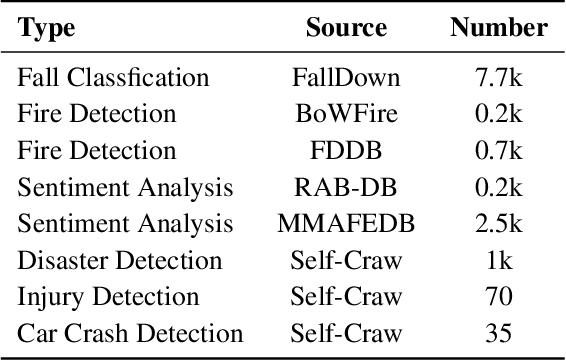
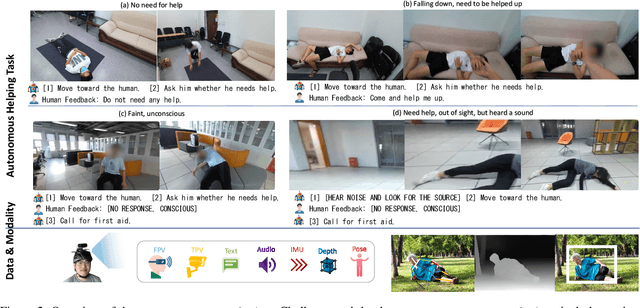
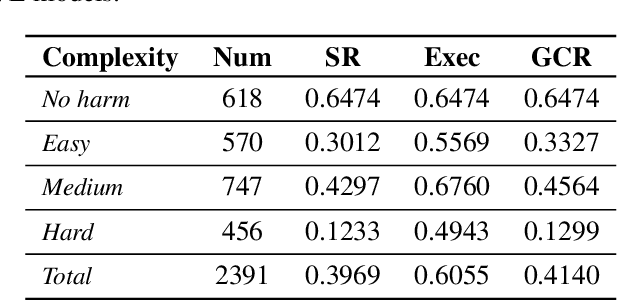
To facilitate the advancement of research in healthcare robots without human intervention or commands, we introduce the Autonomous Helping Challenge, along with a crowd-sourcing large-scale dataset. The goal is to create healthcare robots that possess the ability to determine when assistance is necessary, generate useful sub-tasks to aid in planning, carry out these plans through a physical robot, and receive feedback from the environment in order to generate new tasks and continue the process. Besides the general challenge in open-ended scenarios, Autonomous Helping focuses on three specific challenges: autonomous task generation, the gap between the current scene and static commonsense, and the gap between language instruction and the real world. Additionally, we propose Helpy, a potential approach to close the healthcare loop in the learning-free setting.
A Quality-based Syntactic Template Retriever for Syntactically-controlled Paraphrase Generation
Oct 20, 2023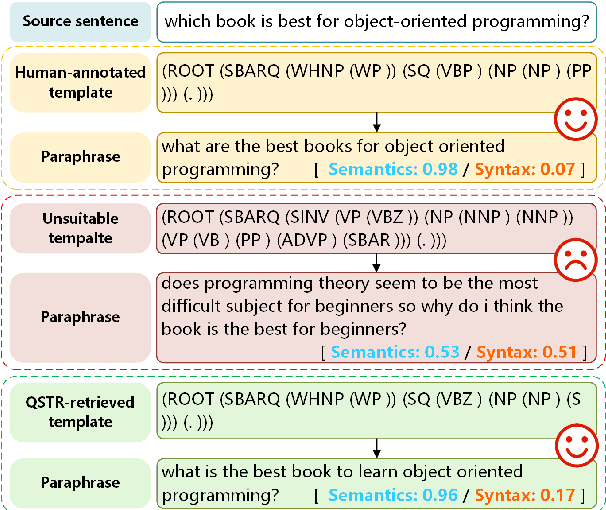
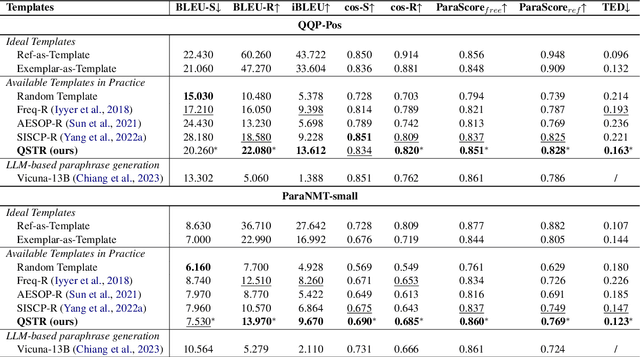
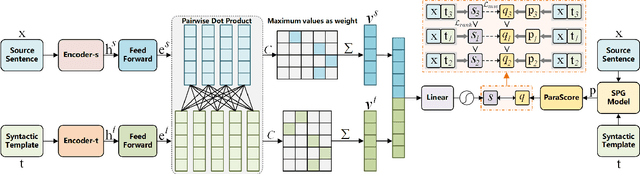
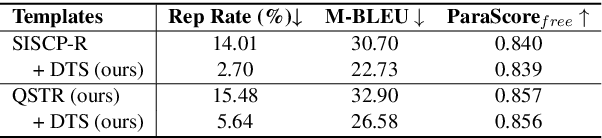
Existing syntactically-controlled paraphrase generation (SPG) models perform promisingly with human-annotated or well-chosen syntactic templates. However, the difficulty of obtaining such templates actually hinders the practical application of SPG models. For one thing, the prohibitive cost makes it unfeasible to manually design decent templates for every source sentence. For another, the templates automatically retrieved by current heuristic methods are usually unreliable for SPG models to generate qualified paraphrases. To escape this dilemma, we propose a novel Quality-based Syntactic Template Retriever (QSTR) to retrieve templates based on the quality of the to-be-generated paraphrases. Furthermore, for situations requiring multiple paraphrases for each source sentence, we design a Diverse Templates Search (DTS) algorithm, which can enhance the diversity between paraphrases without sacrificing quality. Experiments demonstrate that QSTR can significantly surpass existing retrieval methods in generating high-quality paraphrases and even perform comparably with human-annotated templates in terms of reference-free metrics. Additionally, human evaluation and the performance on downstream tasks using our generated paraphrases for data augmentation showcase the potential of our QSTR and DTS algorithm in practical scenarios.
MMICL: Empowering Vision-language Model with Multi-Modal In-Context Learning
Oct 02, 2023Since the resurgence of deep learning, vision-language models (VLMs) enhanced by large language models (LLMs) have grown exponentially in popularity. However, while LLMs can utilize extensive background knowledge and task information with in-context learning, most VLMs still struggle with understanding complex multi-modal prompts with multiple images, making VLMs less effective in downstream vision-language tasks. In this paper, we address the limitation above by 1) introducing MMICL, a new approach to allow the VLM to deal with multi-modal inputs efficiently; 2) proposing a novel context scheme to augment the in-context learning ability of the VLM; 3) constructing the Multi-modal In-Context Learning (MIC) dataset, designed to enhance the VLM's ability to understand complex multi-modal prompts. Our experiments confirm that MMICL achieves new state-of-the-art zero-shot performance on a wide range of general vision-language tasks, especially for complex benchmarks, including MME and MMBench. Our analysis demonstrates that MMICL effectively tackles the challenge of complex multi-modal prompt understanding and emerges the impressive ICL ability. Furthermore, we observe that MMICL successfully alleviates language bias in VLMs, a common issue for VLMs that often leads to hallucination when faced with extensive textual context.
CollabKG: A Learnable Human-Machine-Cooperative Information Extraction Toolkit for (Event) Knowledge Graph Construction
Jul 03, 2023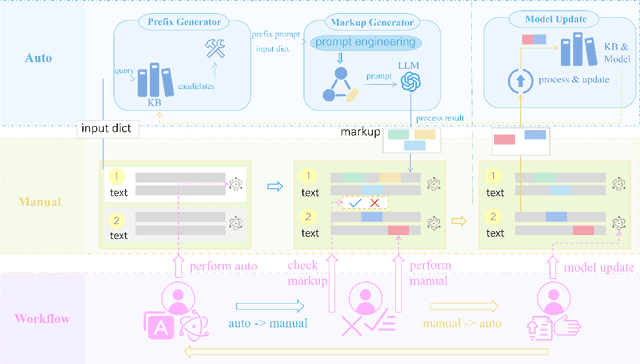
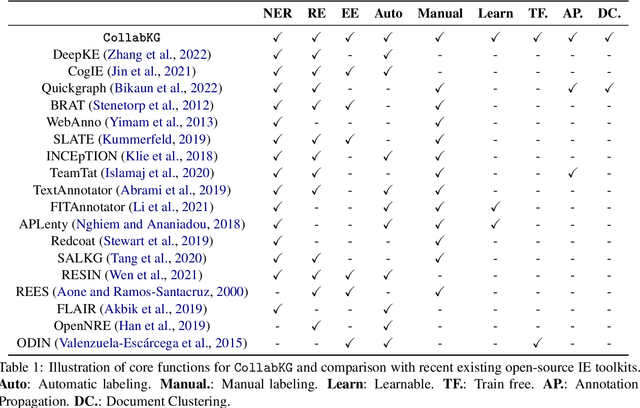
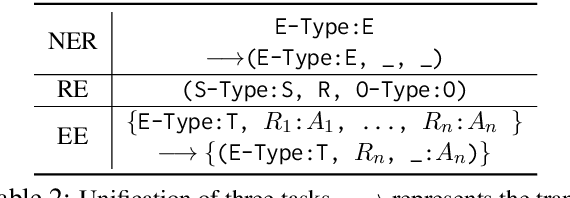
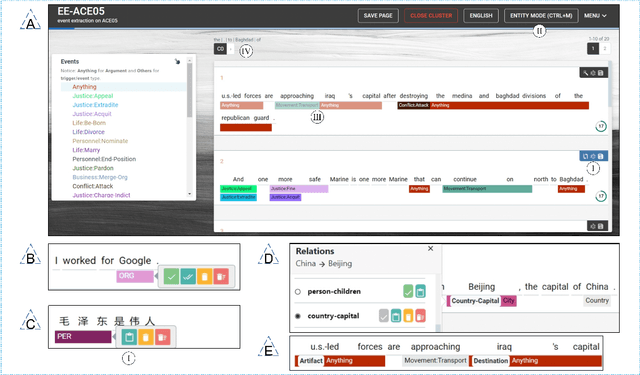
In order to construct or extend entity-centric and event-centric knowledge graphs (KG and EKG), the information extraction (IE) annotation toolkit is essential. However, existing IE toolkits have several non-trivial problems, such as not supporting multi-tasks, not supporting automatic updates. In this work, we present CollabKG, a learnable human-machine-cooperative IE toolkit for KG and EKG construction. Specifically, for the multi-task issue, CollabKG unifies different IE subtasks, including named entity recognition (NER), entity-relation triple extraction (RE), and event extraction (EE), and supports both KG and EKG. Then, combining advanced prompting-based IE technology, the human-machine-cooperation mechanism with LLMs as the assistant machine is presented which can provide a lower cost as well as a higher performance. Lastly, owing to the two-way interaction between the human and machine, CollabKG with learning ability allows self-renewal. Besides, CollabKG has several appealing features (e.g., customization, training-free, propagation, etc.) that make the system powerful, easy-to-use, and high-productivity. We holistically compare our toolkit with other existing tools on these features. Human evaluation quantitatively illustrates that CollabKG significantly improves annotation quality, efficiency, and stability simultaneously.
Human-in-the-Loop through Chain-of-Thought
Jun 23, 2023While the emergence of powerful language models along with Chain-of-thought prompting has made automation more and more omnipresent, it sometimes demonstrates its weakness in long-term or multi-step logical reasoning. For example, users don't always get desirable answers for complex mathematical problems without human involvement. Against this background, we present the Manual Correction System (MCS) -- a human-in-the-loop system enhanced by Chain-of-Thought prompting, which explores how manual correction of sub-logics in rationales can improve LLM's reasoning performance. Moving one step forward, considering a system with human-in-the-loop involves more than having humans improve performance but also controlling the cost. Therefore, we post a Cost-utility Analysis Model for Human-in-the-Loop systems (CAMLOP) based on classical economics theory to analyze, quantify and balance the utility and the corresponding cost. We conduct experiments of MCS and CAMLOP with twelve datasets. A significant advantage w.r.t cost and utility proves its superiority over strong baselines.
Enhance Reasoning Ability of Visual-Language Models via Large Language Models
May 22, 2023Pre-trained visual language models (VLM) have shown excellent performance in image caption tasks. However, it sometimes shows insufficient reasoning ability. In contrast, large language models (LLMs) emerge with powerful reasoning capabilities. Therefore, we propose a method called TReE, which transfers the reasoning ability of a large language model to a visual language model in zero-shot scenarios. TReE contains three stages: observation, thinking, and re-thinking. Observation stage indicates that VLM obtains the overall information of the relative image. Thinking stage combines the image information and task description as the prompt of the LLM, inference with the rationals. Re-Thinking stage learns from rationale and then inference the final result through VLM.
Towards Understanding and Improving Knowledge Distillation for Neural Machine Translation
May 14, 2023

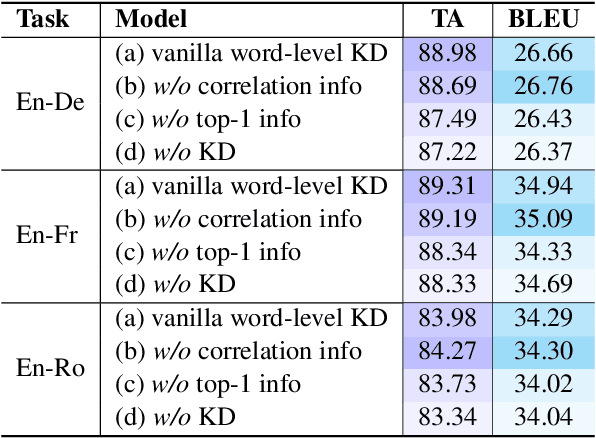
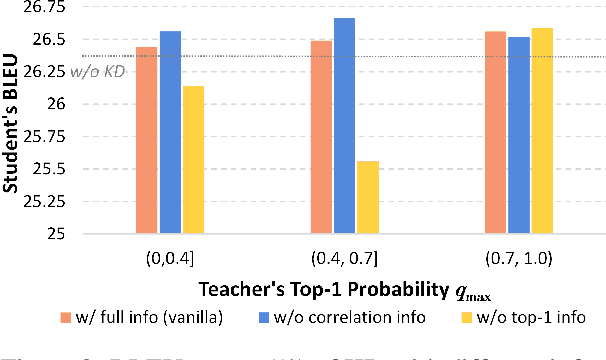
Knowledge distillation (KD) is a promising technique for model compression in neural machine translation. However, where the knowledge hides in KD is still not clear, which may hinder the development of KD. In this work, we first unravel this mystery from an empirical perspective and show that the knowledge comes from the top-1 predictions of teachers, which also helps us build a potential connection between word- and sequence-level KD. Further, we point out two inherent issues in vanilla word-level KD based on this finding. Firstly, the current objective of KD spreads its focus to whole distributions to learn the knowledge, yet lacks special treatment on the most crucial top-1 information. Secondly, the knowledge is largely covered by the golden information due to the fact that most top-1 predictions of teachers overlap with ground-truth tokens, which further restricts the potential of KD. To address these issues, we propose a novel method named \textbf{T}op-1 \textbf{I}nformation \textbf{E}nhanced \textbf{K}nowledge \textbf{D}istillation (TIE-KD). Specifically, we design a hierarchical ranking loss to enforce the learning of the top-1 information from the teacher. Additionally, we develop an iterative KD procedure to infuse more additional knowledge by distilling on the data without ground-truth targets. Experiments on WMT'14 English-German, WMT'14 English-French and WMT'16 English-Romanian demonstrate that our method can respectively boost Transformer$_{base}$ students by +1.04, +0.60 and +1.11 BLEU scores and significantly outperform the vanilla word-level KD baseline. Besides, our method shows higher generalizability on different teacher-student capacity gaps than existing KD techniques.
Zero-Shot Information Extraction via Chatting with ChatGPT
Feb 20, 2023Zero-shot information extraction (IE) aims to build IE systems from the unannotated text. It is challenging due to involving little human intervention. Challenging but worthwhile, zero-shot IE reduces the time and effort that data labeling takes. Recent efforts on large language models (LLMs, e.g., GPT-3, ChatGPT) show promising performance on zero-shot settings, thus inspiring us to explore prompt-based methods. In this work, we ask whether strong IE models can be constructed by directly prompting LLMs. Specifically, we transform the zero-shot IE task into a multi-turn question-answering problem with a two-stage framework (ChatIE). With the power of ChatGPT, we extensively evaluate our framework on three IE tasks: entity-relation triple extract, named entity recognition, and event extraction. Empirical results on six datasets across two languages show that ChatIE achieves impressive performance and even surpasses some full-shot models on several datasets (e.g., NYT11-HRL). We believe that our work could shed light on building IE models with limited resources.