 Add to Chrome
 Add to Firefox
 Add to Edge
Local Violation Certification for Linear Predict-Then-Optimize Pipelines
Aug 05, 2026
Data-driven decision pipelines combining predictive machine learning models with downstream optimization software are increasingly used to make high-stakes operational decisions. Certifying the safety, fairness, and reliability of these decisions is essential, yet traditional scenario generation methods rely on repeated random testing, which becomes computationally prohibitive when failure events are rare and offers little insight into why failures occur. We present a framework for local violation certification designed specifically for linear decision pipelines under input uncertainty. We mathematically demonstrate that standard sampling methods fail efficiently for rare violations, motivating a direct structural approach. By analyzing the fixed decision boundary of a deployed pipeline, we show that the local risk of failure can be calculated directly in closed form using a single optimization solve. Furthermore, we introduce an exact sampling procedure and closed-form risk statistics that provide feature-level attributions (identifying which input characteristics contribute most to potential non-compliance) without requiring repetitive random trials or complex sampling algorithms. We demonstrate our approach on an economic power dispatch system subject to emissions regulations, delivering precise, auditable risk assessments at a fraction of the traditional computational cost.

Human and AI collaboration for pulmonary nodule segmentation
Jun 21, 2026Medical expert annotators are scarce, and blind reliance on artificial intelligence (AI) can be misleading, motivating approaches in which humans, particularly junior medical trainees or even non-medical personnel, collaborate with AI to achieve robust medical segmentation. Although the Segment Anything Model (SAM) shows promise for general-purpose image segmentation, its performance in human-AI collaboration for specialized medical tasks has not been thoroughly evaluated. Here we present Hi-Seg, a human-in-the-loop segmentation framework for pulmonary nodules built on SAM. Humans iteratively refine prompts through trial-and-error learning and semantic reasoning, progressively guiding SAM toward higher-quality masks. Using chest CT scans from 1,179 patients across 12 centers, we conducted the first large-scale external validation of collaborative human-SAM segmentation. Across all annotator groups, Hi-Seg achieved a mean Dice score of almost 85%, outperforming five state-of-the-art deep learning models by 10-22% and 13 SAM variants by 1-29%. Hi-Seg improved segmentation accuracy while reducing annotation time for medical annotators, and briefly trained non-medical annotators achieved performance comparable to that of the junior medical student. These findings suggest that human-in-the-loop segmentation can reduce clinician workload, enable scalable crowdsourced annotation, and transform clinical workflows by facilitating the safe and efficient integration of foundation models into routine clinical practice.
UNIEGO: Proxies as Mediators for Unified Egocentric Video Representation Learning
Jun 18, 2026Egocentric video understanding is inherently limited by the narrow perspective of wearable cameras: a single viewpoint, a single modality, a single model cannot capture the full richness of human action. We argue that a truly expressive egocentric representation must subsume complementary knowledge across viewpoints, modalities, and foundation model representations, yet remain deployable from egocentric video alone. To this end, we introduce a hierarchical multi-teacher distillation framework that produces UNIEGO, a unified egocentric encoder trained with nine teachers spanning ego-exo viewpoints, RGB, depth, and skeleton modalities, and four foundation models. Rather than distilling directly from heterogeneous teachers whose incompatible architectures and feature geometries induce conflicting gradients, our framework interposes a layer of representation-specific Proxy models that translate diverse teacher knowledge into a homogeneous egocentric space. A second distillation stage, Selective Proxy Distillation (SPD), then adaptively selects, for each training sample, the subset of proxies that are both correct and confident, distilling exclusively from reliable supervision and suppressing erroneous signals. SPD is further stabilized by initializing UNIEGO as a learned convex combination of proxy parameters, placing the unified model in a well-conditioned region of the loss landscape before distillation begins. UNIEGO achieves state-of-the-art performance across three egocentric video understanding tasks - action recognition, video retrieval, and action segmentation on three challenging ego-exo benchmarks, outperforming naive multi-teacher distillation baselines and demonstrating that structured, proxy-mediated knowledge transfer yields richer and more discriminative egocentric representations.
Learning An Interpretable Risk Scoring System for Maximizing Decision Net Benefit
Apr 05, 2026Risk scoring systems are widely used in high-stakes domains to assist decision-making. However, existing approaches often focus on optimizing predictive accuracy or likelihood-based criteria, which may not align with the main goal of maximizing utility. In this paper, we propose a novel risk scoring system that directly optimizes net benefit over a range of decision thresholds. The model is formulated as a sparse integer linear programming problem which enables the construction of a transparent scoring system with integer coefficients, and hence, facilitates interpretation and practical application. We also establish fundamental relationships among net benefit, discrimination, and calibration. Our analysis proves that optimizing net benefit also guarantees conventional performance measures. We thoroughly evaluated our method on multiple public datasets as well as on a real-world clinical dataset. This computational study demonstrated that our interpretable method can effectively achieve high net benefit while maintaining competitive discrimination and calibration performance.
Alleviating Hyperparameter-Tuning Burden in SVM Classifiers for Pulmonary Nodules Diagnosis with Multi-Task Bayesian Optimization
Nov 09, 2024In the field of non-invasive medical imaging, radiomic features are utilized to measure tumor characteristics. However, these features can be affected by the techniques used to discretize the images, ultimately impacting the accuracy of diagnosis. To investigate the influence of various image discretization methods on diagnosis, it is common practice to evaluate multiple discretization strategies individually. This approach often leads to redundant and time-consuming tasks such as training predictive models and fine-tuning hyperparameters separately. This study examines the feasibility of employing multi-task Bayesian optimization to accelerate the hyperparameters search for classifying benign and malignant pulmonary nodules using RBF SVM. Our findings suggest that multi-task Bayesian optimization significantly accelerates the search for hyperparameters in comparison to a single-task approach. To the best of our knowledge, this is the first investigation to utilize multi-task Bayesian optimization in a critical medical context.
Artificial Intelligence-Enhanced Couinaud Segmentation for Precision Liver Cancer Therapy
Nov 05, 2024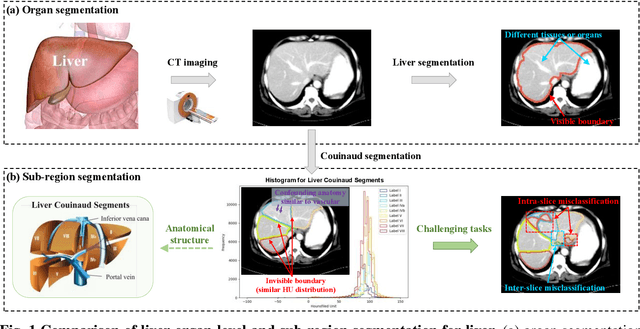

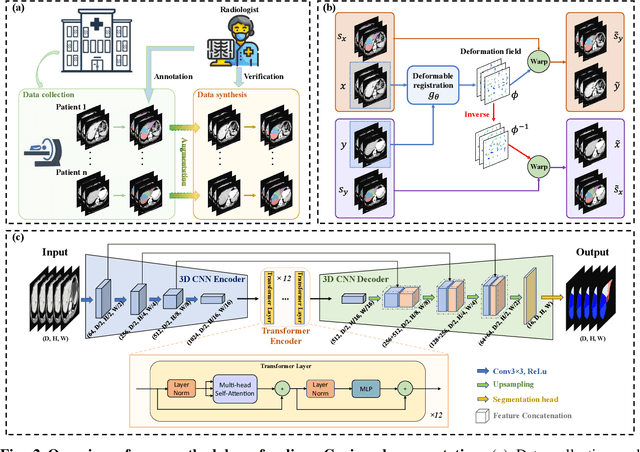
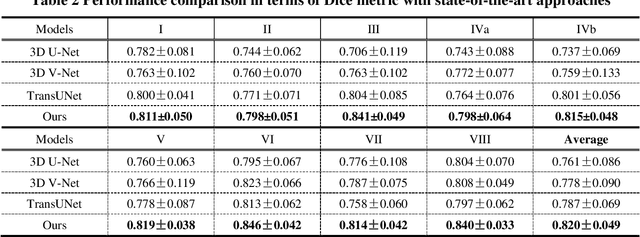
Precision therapy for liver cancer necessitates accurately delineating liver sub-regions to protect healthy tissue while targeting tumors, which is essential for reducing recurrence and improving survival rates. However, the segmentation of hepatic segments, known as Couinaud segmentation, is challenging due to indistinct sub-region boundaries and the need for extensive annotated datasets. This study introduces LiverFormer, a novel Couinaud segmentation model that effectively integrates global context with low-level local features based on a 3D hybrid CNN-Transformer architecture. Additionally, a registration-based data augmentation strategy is equipped to enhance the segmentation performance with limited labeled data. Evaluated on CT images from 123 patients, LiverFormer demonstrated high accuracy and strong concordance with expert annotations across various metrics, allowing for enhanced treatment planning for surgery and radiation therapy. It has great potential to reduces complications and minimizes potential damages to surrounding tissue, leading to improved outcomes for patients undergoing complex liver cancer treatments.
TauAD: MRI-free Tau Anomaly Detection in PET Imaging via Conditioned Diffusion Models
May 21, 2024


The emergence of tau PET imaging over the last decade has enabled Alzheimer's disease (AD) researchers to examine tau pathology in vivo and more effectively characterize the disease trajectories of AD. Current tau PET analysis methods, however, typically perform inferences on large cortical ROIs and are limited in the detection of localized tau pathology that varies across subjects. Furthermore, a high-resolution MRI is required to carry out conventional tau PET analysis, which is not commonly acquired in clinical practices and may not be acquired for many elderly patients with dementia due to strong motion artifacts, claustrophobia, or certain metal implants. In this work, we propose a novel conditional diffusion model to perform MRI-free anomaly detection from tau PET imaging data. By including individualized conditions and two complementary loss maps from pseudo-healthy and pseudo-unhealthy reconstructions, our model computes an anomaly map across the entire brain area that allows simply training a support vector machine (SVM) for classifying disease severity. We train our model on ADNI subjects (n=534) and evaluate its performance on a separate dataset from the preclinical subjects of the A4 clinical trial (n=447). We demonstrate that our method outperforms baseline generative models and the conventional Z-score-based method in anomaly localization without mis-detecting off-target bindings in sub-cortical and out-of-brain areas. By classifying the A4 subjects according to their anomaly map using the SVM trained on ADNI data, we show that our method can successfully group preclinical subjects with significantly different cognitive functions, which further demonstrates the effectiveness of our method in capturing biologically relevant anomaly in tau PET imaging.
Evolving the pulmonary nodules diagnosis from classical approaches to deep learning aided decision support: three decades development course and future prospect
Jan 23, 2019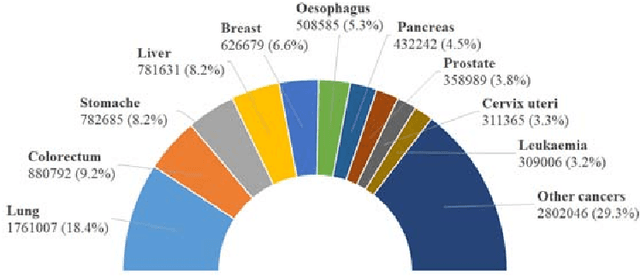
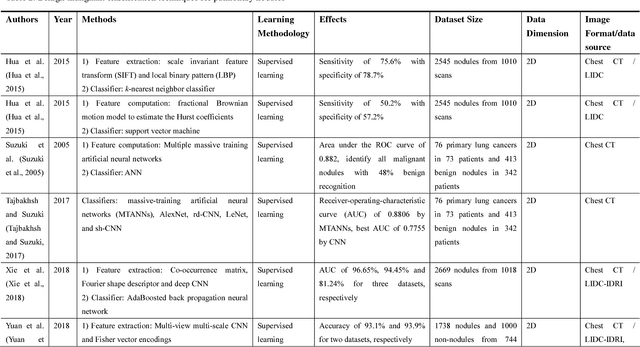
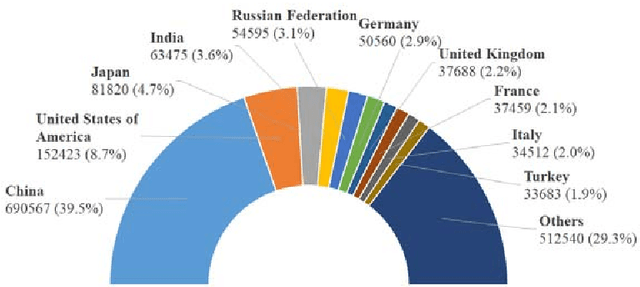
Lung cancer is the commonest cause of cancer deaths worldwide, and its mortality can be reduced significantly by performing early diagnosis and screening. Since the 1960s, driven by the pressing needs to accurately and effectively interpret the massive volume of chest images generated daily, computer-assisted diagnosis of pulmonary nodule has opened up new opportunities to relax the limitation from physicians subjectivity, experiences and fatigue. It has been witnessed that significant and remarkable advances have been achieved since the 1980s, and consistent endeavors have been exerted to deal with the grand challenges on how to accurately detect the pulmonary nodules with high sensitivity at low false-positives rate as well as on how to precisely differentiate between benign and malignant nodules. The main goal of this investigation is to provide a comprehensive state-of-the-art review of the computer-assisted nodules detection and benign-malignant classification techniques developed over three decades, which have evolved from the complicated ad hoc analysis pipeline of conventional approaches to the simplified seamlessly integrated deep learning techniques. This review also identifies challenges and highlights opportunities for future work in learning models, learning algorithms and enhancement schemes for bridging current state to future prospect and satisfying future demand. As far as the authors know, it is the first review of the literature of the past thirty years development in computer-assisted diagnosis of lung nodules. We acknowledge the value of potential multidisciplinary researches that will make the computer-assisted diagnosis of pulmonary nodules enter into the main stream of clinical medicine, and raise the state-of-the-art clinical applications as well as increase both welfares of physicians and patients.