 Add to Chrome
 Add to Firefox
 Add to Edge
Matrix Profile for Anomaly Detection on Multidimensional Time Series
Sep 14, 2024
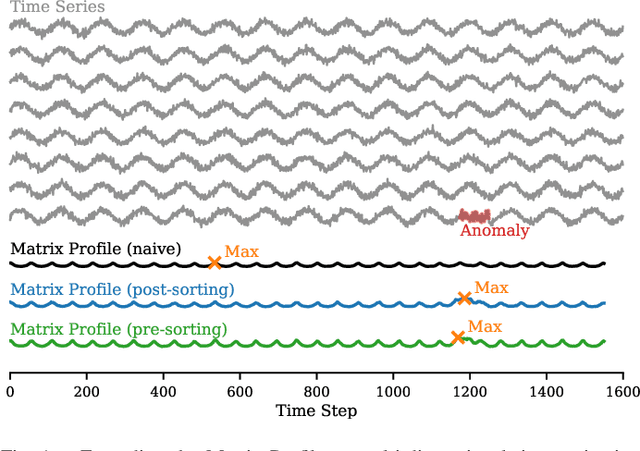
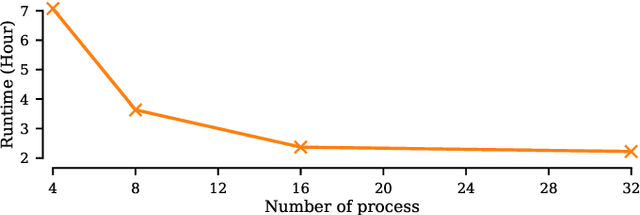

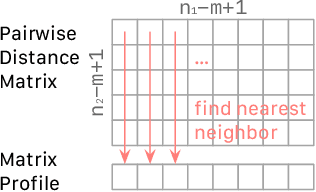
The Matrix Profile (MP), a versatile tool for time series data mining, has been shown effective in time series anomaly detection (TSAD). This paper delves into the problem of anomaly detection in multidimensional time series, a common occurrence in real-world applications. For instance, in a manufacturing factory, multiple sensors installed across the site collect time-varying data for analysis. The Matrix Profile, named for its role in profiling the matrix storing pairwise distance between subsequences of univariate time series, becomes complex in multidimensional scenarios. If the input univariate time series has n subsequences, the pairwise distance matrix is a n x n matrix. In a multidimensional time series with d dimensions, the pairwise distance information must be stored in a n x n x d tensor. In this paper, we first analyze different strategies for condensing this tensor into a profile vector. We then investigate the potential of extending the MP to efficiently find k-nearest neighbors for anomaly detection. Finally, we benchmark the multidimensional MP against 19 baseline methods on 119 multidimensional TSAD datasets. The experiments covers three learning setups: unsupervised, supervised, and semi-supervised. MP is the only method that consistently delivers high performance across all setups.

E2LLM: Encoder Elongated Large Language Models for Long-Context Understanding and Reasoning
Sep 10, 2024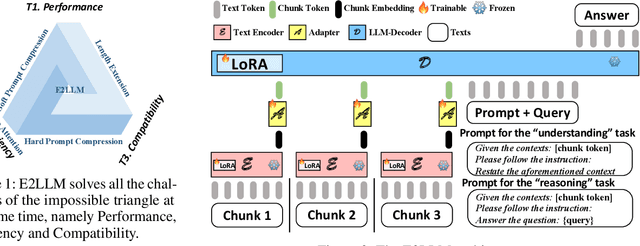

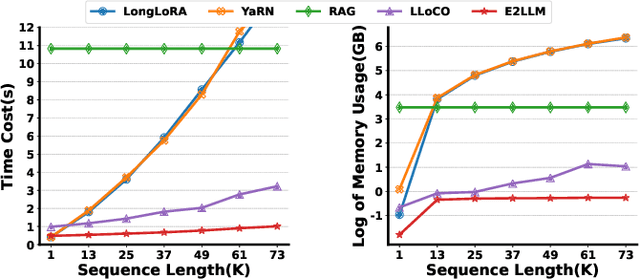
In the realm of Large Language Models (LLMs), the ability to process long contexts is increasingly crucial for tasks such as multi-round dialogues, code generation, and document summarization. This paper addresses the challenges of enhancing the long-context performance, reducing computational complexity, and leveraging pretrained models collectively termed the "impossible triangle." We introduce E2LLM (Encoder Elongated Large Language Models), a novel approach that effectively navigates this paradox. The method involves splitting long contexts into chunks, compressing each into embedding vectors via a pretrained text encoder, and utilizing an adapter to align these representations with a decoder-only LLM. Two training objectives, focusing on reconstruction of the encoder output and long-context instruction fine-tuning, are employed to facilitate the understanding of soft prompts by the LLM. Experimental results demonstrate that E2LLM achieves superior performance in long-context scenarios while balancing efficiency, performance, and compatibility with pretrained models. Our framework thus represents a significant advancement in the field, contributing to effective long-text modeling.
LSVOS Challenge Report: Large-scale Complex and Long Video Object Segmentation
Sep 09, 2024


Despite the promising performance of current video segmentation models on existing benchmarks, these models still struggle with complex scenes. In this paper, we introduce the 6th Large-scale Video Object Segmentation (LSVOS) challenge in conjunction with ECCV 2024 workshop. This year's challenge includes two tasks: Video Object Segmentation (VOS) and Referring Video Object Segmentation (RVOS). In this year, we replace the classic YouTube-VOS and YouTube-RVOS benchmark with latest datasets MOSE, LVOS, and MeViS to assess VOS under more challenging complex environments. This year's challenge attracted 129 registered teams from more than 20 institutes across over 8 countries. This report include the challenge and dataset introduction, and the methods used by top 7 teams in two tracks. More details can be found in our homepage https://lsvos.github.io/.
Preserving Individuality while Following the Crowd: Understanding the Role of User Taste and Crowd Wisdom in Online Product Rating Prediction
Sep 06, 2024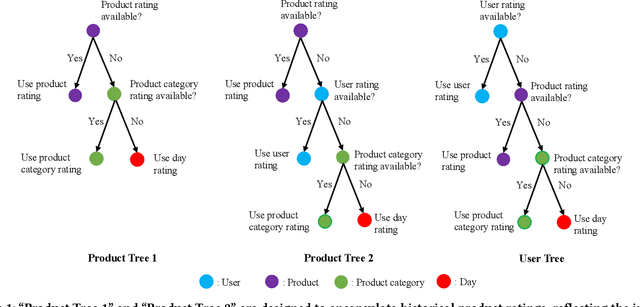
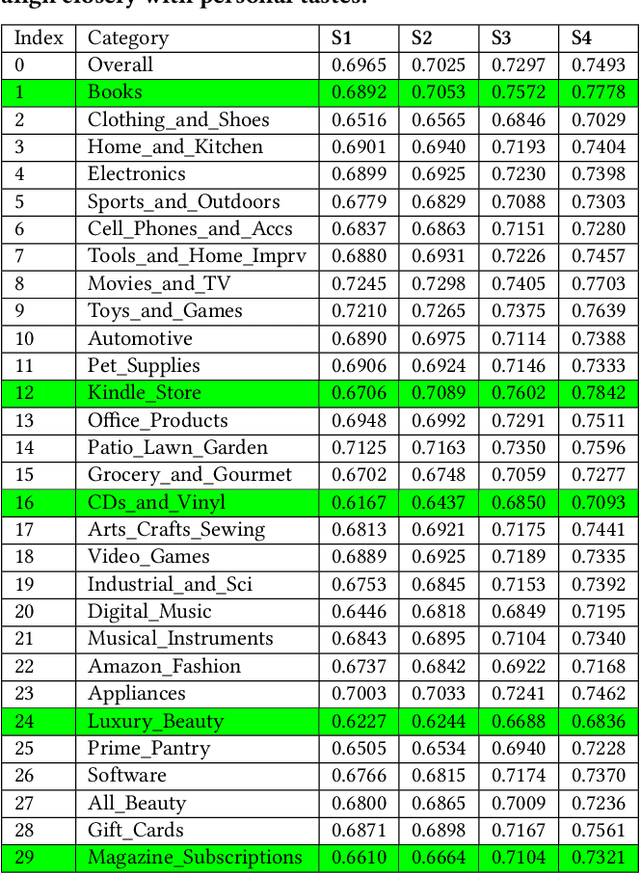
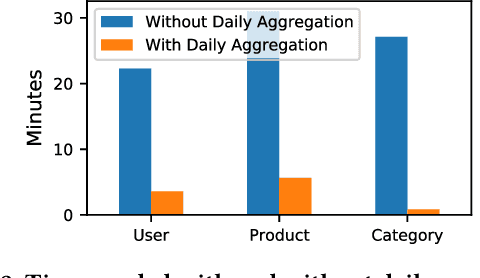
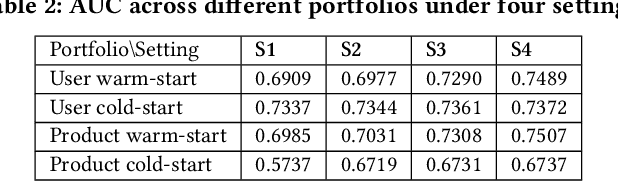
Numerous algorithms have been developed for online product rating prediction, but the specific influence of user and product information in determining the final prediction score remains largely unexplored. Existing research often relies on narrowly defined data settings, which overlooks real-world challenges such as the cold-start problem, cross-category information utilization, and scalability and deployment issues. To delve deeper into these aspects, and particularly to uncover the roles of individual user taste and collective wisdom, we propose a unique and practical approach that emphasizes historical ratings at both the user and product levels, encapsulated using a continuously updated dynamic tree representation. This representation effectively captures the temporal dynamics of users and products, leverages user information across product categories, and provides a natural solution to the cold-start problem. Furthermore, we have developed an efficient data processing strategy that makes this approach highly scalable and easily deployable. Comprehensive experiments in real industry settings demonstrate the effectiveness of our approach. Notably, our findings reveal that individual taste dominates over collective wisdom in online product rating prediction, a perspective that contrasts with the commonly observed wisdom of the crowd phenomenon in other domains. This dominance of individual user taste is consistent across various model types, including the boosting tree model, recurrent neural network (RNN), and transformer-based architectures. This observation holds true across the overall population, within individual product categories, and in cold-start scenarios. Our findings underscore the significance of individual user tastes in the context of online product rating prediction and the robustness of our approach across different model architectures.
Cycle Pixel Difference Network for Crisp Edge Detection
Sep 06, 2024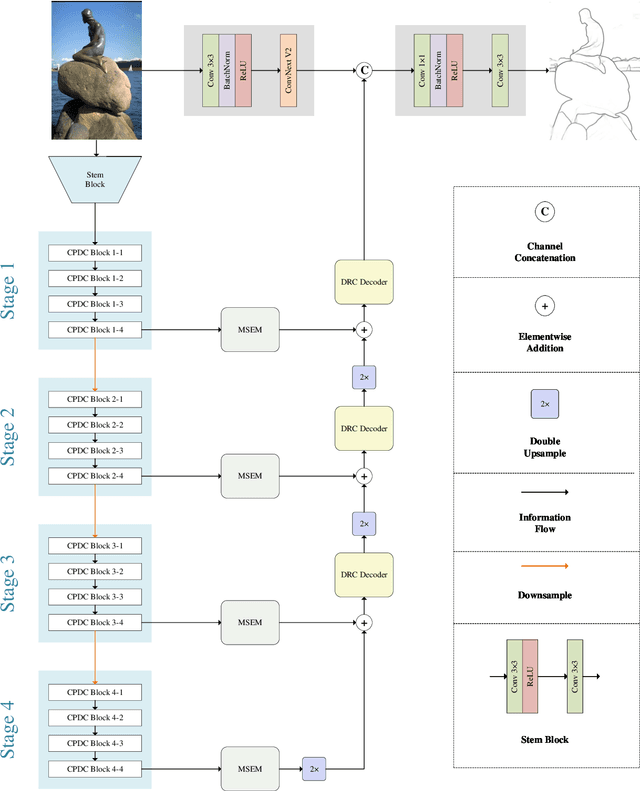
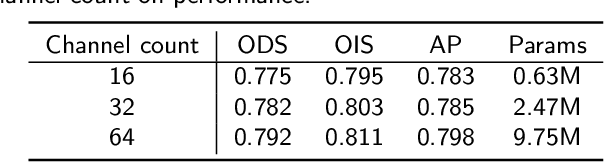
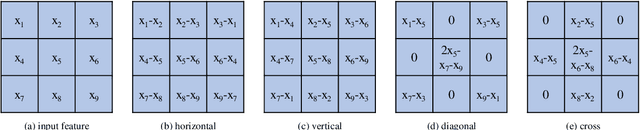

Edge detection, as a fundamental task in computer vision, has garnered increasing attention. The advent of deep learning has significantly advanced this field. However, recent deep learning-based methods which rely on large-scale pre-trained weights cannot be trained from scratch, with very limited research addressing this issue. This paper proposes a novel cycle pixel difference convolution (CPDC), which effectively integrates image gradient information with modern convolution operations. Based on the CPDC, we develop a U-shape encoder-decoder model named CPD-Net, which is a purely end-to-end network. Additionally, to address the issue of edge thickness produced by most existing methods, we construct a multi-scale information enhancement module (MSEM) to enhance the discriminative ability of the model, thereby generating crisp and clean contour maps. Comprehensive experiments conducted on three standard benchmarks demonstrate that our method achieves competitive performance on the BSDS500 dataset (ODS=0.813), NYUD-V2 (ODS=0.760), and BIPED dataset (ODS=0.898). Our approach provides a novel perspective for addressing these challenges in edge detection.
Interpreting and Improving Large Language Models in Arithmetic Calculation
Sep 03, 2024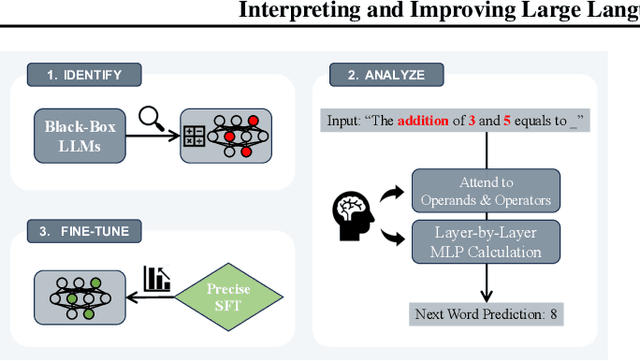
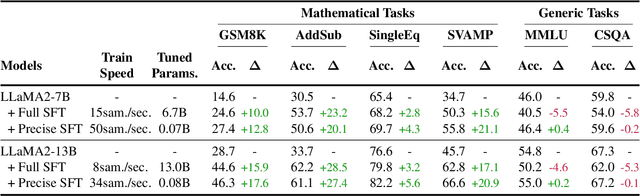
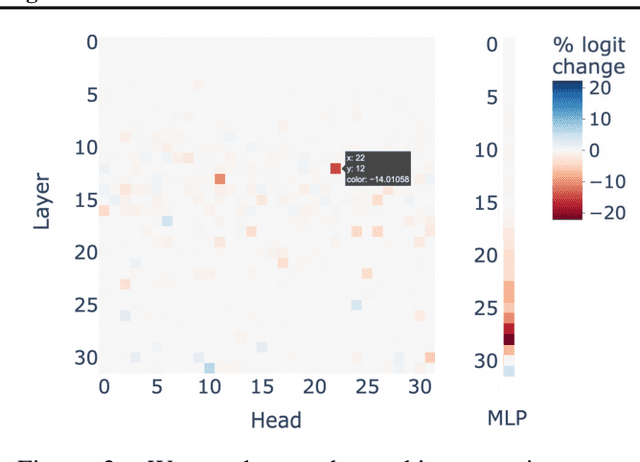
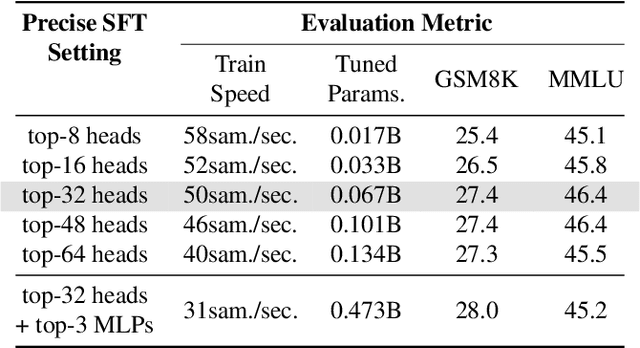
Large language models (LLMs) have demonstrated remarkable potential across numerous applications and have shown an emergent ability to tackle complex reasoning tasks, such as mathematical computations. However, even for the simplest arithmetic calculations, the intrinsic mechanisms behind LLMs remain mysterious, making it challenging to ensure reliability. In this work, we delve into uncovering a specific mechanism by which LLMs execute calculations. Through comprehensive experiments, we find that LLMs frequently involve a small fraction (< 5%) of attention heads, which play a pivotal role in focusing on operands and operators during calculation processes. Subsequently, the information from these operands is processed through multi-layer perceptrons (MLPs), progressively leading to the final solution. These pivotal heads/MLPs, though identified on a specific dataset, exhibit transferability across different datasets and even distinct tasks. This insight prompted us to investigate the potential benefits of selectively fine-tuning these essential heads/MLPs to boost the LLMs' computational performance. We empirically find that such precise tuning can yield notable enhancements on mathematical prowess, without compromising the performance on non-mathematical tasks. Our work serves as a preliminary exploration into the arithmetic calculation abilities inherent in LLMs, laying a solid foundation to reveal more intricate mathematical tasks.
MOOSS: Mask-Enhanced Temporal Contrastive Learning for Smooth State Evolution in Visual Reinforcement Learning
Sep 02, 2024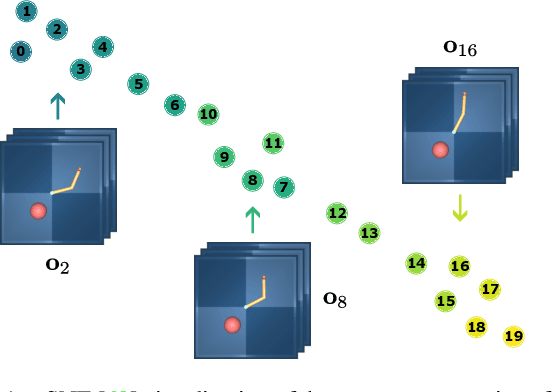
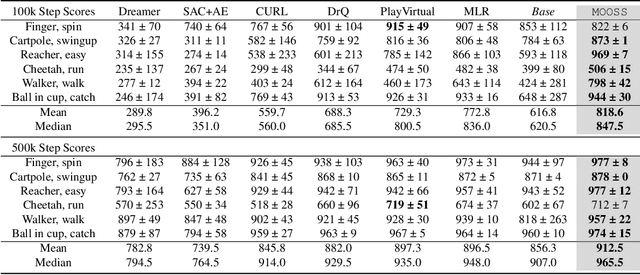
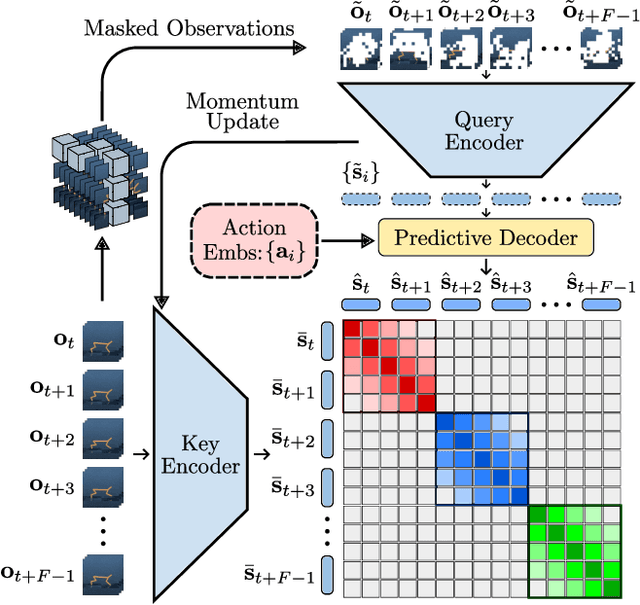

In visual Reinforcement Learning (RL), learning from pixel-based observations poses significant challenges on sample efficiency, primarily due to the complexity of extracting informative state representations from high-dimensional data. Previous methods such as contrastive-based approaches have made strides in improving sample efficiency but fall short in modeling the nuanced evolution of states. To address this, we introduce MOOSS, a novel framework that leverages a temporal contrastive objective with the help of graph-based spatial-temporal masking to explicitly model state evolution in visual RL. Specifically, we propose a self-supervised dual-component strategy that integrates (1) a graph construction of pixel-based observations for spatial-temporal masking, coupled with (2) a multi-level contrastive learning mechanism that enriches state representations by emphasizing temporal continuity and change of states. MOOSS advances the understanding of state dynamics by disrupting and learning from spatial-temporal correlations, which facilitates policy learning. Our comprehensive evaluation on multiple continuous and discrete control benchmarks shows that MOOSS outperforms previous state-of-the-art visual RL methods in terms of sample efficiency, demonstrating the effectiveness of our method. Our code is released at https://github.com/jsun57/MOOSS.
Are LLM-based Recommenders Already the Best? Simple Scaled Cross-entropy Unleashes the Potential of Traditional Sequential Recommenders
Aug 26, 2024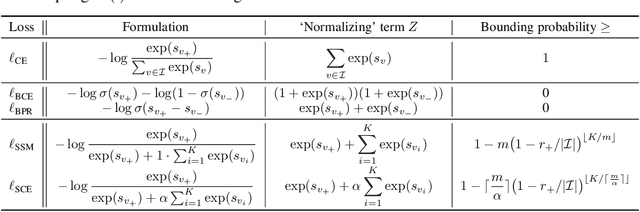
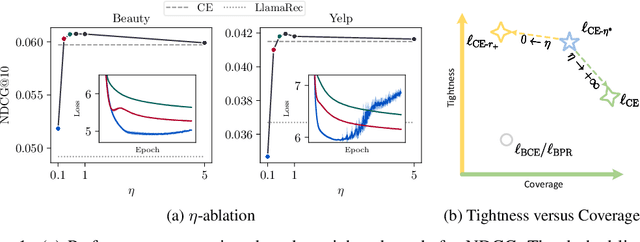
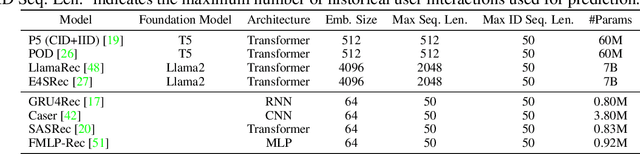
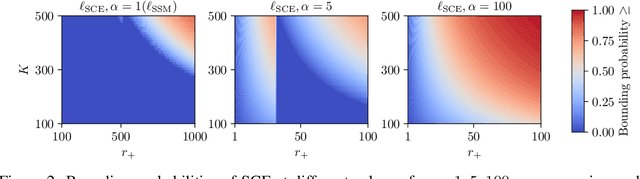
Large language models (LLMs) have been garnering increasing attention in the recommendation community. Some studies have observed that LLMs, when fine-tuned by the cross-entropy (CE) loss with a full softmax, could achieve `state-of-the-art' performance in sequential recommendation. However, most of the baselines used for comparison are trained using a pointwise/pairwise loss function. This inconsistent experimental setting leads to the underestimation of traditional methods and further fosters over-confidence in the ranking capability of LLMs. In this study, we provide theoretical justification for the superiority of the cross-entropy loss by demonstrating its two desirable properties: tightness and coverage. Furthermore, this study sheds light on additional novel insights: 1) Taking into account only the recommendation performance, CE is not yet optimal as it is not a quite tight bound in terms of some ranking metrics. 2) In scenarios that full softmax cannot be performed, an effective alternative is to scale up the sampled normalizing term. These findings then help unleash the potential of traditional recommendation models, allowing them to surpass LLM-based counterparts. Given the substantial computational burden, existing LLM-based methods are not as effective as claimed for sequential recommendation. We hope that these theoretical understandings in conjunction with the empirical results will facilitate an objective evaluation of LLM-based recommendation in the future.
When Diffusion MRI Meets Diffusion Model: A Novel Deep Generative Model for Diffusion MRI Generation
Aug 23, 2024
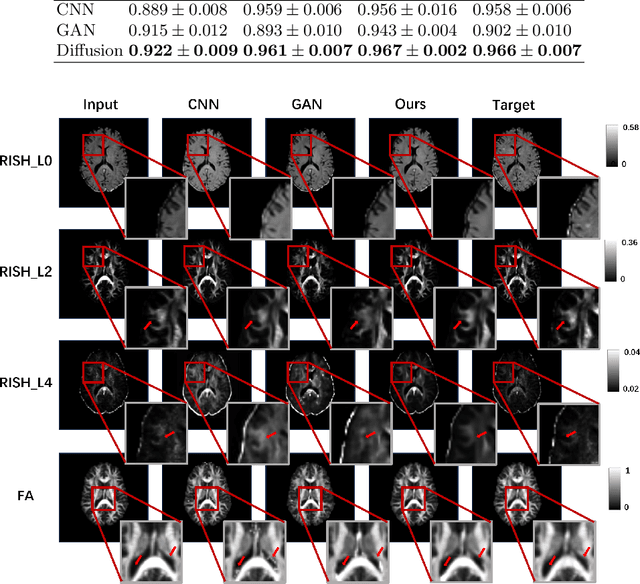
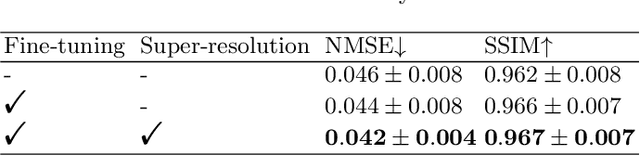
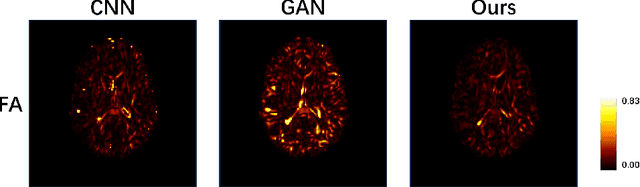
Diffusion MRI (dMRI) is an advanced imaging technique characterizing tissue microstructure and white matter structural connectivity of the human brain. The demand for high-quality dMRI data is growing, driven by the need for better resolution and improved tissue contrast. However, acquiring high-quality dMRI data is expensive and time-consuming. In this context, deep generative modeling emerges as a promising solution to enhance image quality while minimizing acquisition costs and scanning time. In this study, we propose a novel generative approach to perform dMRI generation using deep diffusion models. It can generate high dimension (4D) and high resolution data preserving the gradients information and brain structure. We demonstrated our method through an image mapping task aimed at enhancing the quality of dMRI images from 3T to 7T. Our approach demonstrates highly enhanced performance in generating dMRI images when compared to the current state-of-the-art (SOTA) methods. This achievement underscores a substantial progression in enhancing dMRI quality, highlighting the potential of our novel generative approach to revolutionize dMRI imaging standards.
Learning Instruction-Guided Manipulation Affordance via Large Models for Embodied Robotic Tasks
Aug 20, 2024


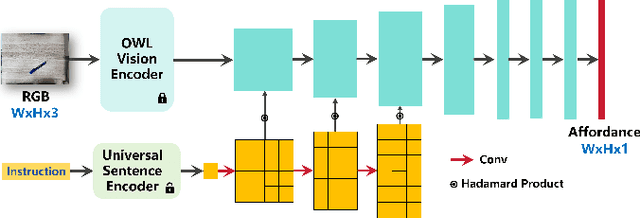
We study the task of language instruction-guided robotic manipulation, in which an embodied robot is supposed to manipulate the target objects based on the language instructions. In previous studies, the predicted manipulation regions of the target object typically do not change with specification from the language instructions, which means that the language perception and manipulation prediction are separate. However, in human behavioral patterns, the manipulation regions of the same object will change for different language instructions. In this paper, we propose Instruction-Guided Affordance Net (IGANet) for predicting affordance maps of instruction-guided robotic manipulation tasks by utilizing powerful priors from vision and language encoders pre-trained on large-scale datasets. We develop a Vison-Language-Models(VLMs)-based data augmentation pipeline, which can generate a large amount of data automatically for model training. Besides, with the help of Large-Language-Models(LLMs), actions can be effectively executed to finish the tasks defined by instructions. A series of real-world experiments revealed that our method can achieve better performance with generated data. Moreover, our model can generalize better to scenarios with unseen objects and language instructions.