 Add to Chrome
 Add to Firefox
 Add to Edge
Position Debiasing Fine-Tuning for Causal Perception in Long-Term Dialogue
Jun 04, 2024
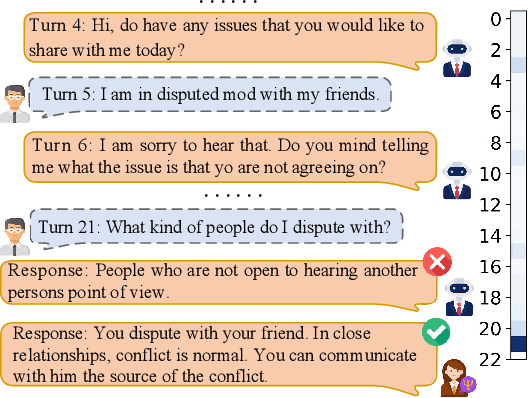
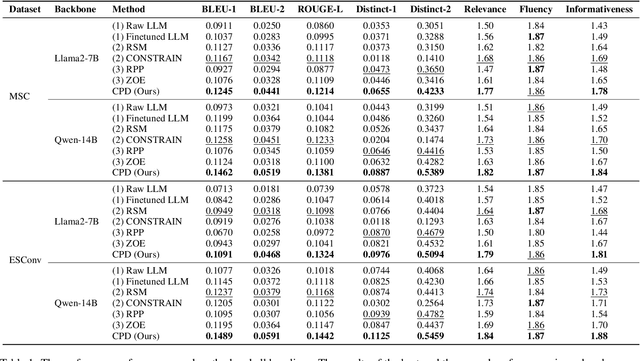
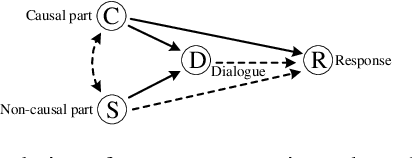
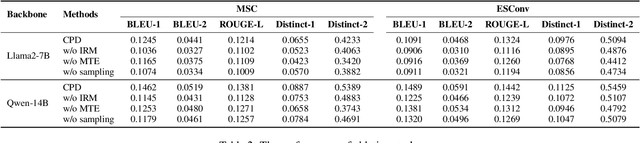
The core of the dialogue system is to generate relevant, informative, and human-like responses based on extensive dialogue history. Recently, dialogue generation domain has seen mainstream adoption of large language models (LLMs), due to its powerful capability in generating utterances. However, there is a natural deficiency for such models, that is, inherent position bias, which may lead them to pay more attention to the nearby utterances instead of causally relevant ones, resulting in generating irrelevant and generic responses in long-term dialogue. To alleviate such problem, in this paper, we propose a novel method, named Causal Perception long-term Dialogue framework (CPD), which employs perturbation-based causal variable discovery method to extract casually relevant utterances from the dialogue history and enhances model causal perception during fine-tuning. Specifically, a local-position awareness method is proposed in CPD for inter-sentence position correlation elimination, which helps models extract causally relevant utterances based on perturbations. Then, a casual-perception fine-tuning strategy is also proposed, to enhance the capability of discovering the causal invariant factors, by differently perturbing causally relevant and non-casually relevant ones for response generation. Experimental results on two datasets prove that our proposed method can effectively alleviate the position bias for multiple LLMs and achieve significant progress compared with existing baselines.

Personalized Topic Selection Model for Topic-Grounded Dialogue
Jun 04, 2024Recently, the topic-grounded dialogue (TGD) system has become increasingly popular as its powerful capability to actively guide users to accomplish specific tasks through topic-guided conversations. Most existing works utilize side information (\eg topics or personas) in isolation to enhance the topic selection ability. However, due to disregarding the noise within these auxiliary information sources and their mutual influence, current models tend to predict user-uninteresting and contextually irrelevant topics. To build user-engaging and coherent dialogue agent, we propose a \textbf{P}ersonalized topic s\textbf{E}lection model for \textbf{T}opic-grounded \textbf{D}ialogue, named \textbf{PETD}, which takes account of the interaction of side information to selectively aggregate such information for more accurately predicting subsequent topics. Specifically, we evaluate the correlation between global topics and personas and selectively incorporate the global topics aligned with user personas. Furthermore, we propose a contrastive learning based persona selector to filter out irrelevant personas under the constraint of lacking pertinent persona annotations. Throughout the selection and generation, diverse relevant side information is considered. Extensive experiments demonstrate that our proposed method can generate engaging and diverse responses, outperforming state-of-the-art baselines across various evaluation metrics.
Improving Pseudo Labels with Global-Local Denoising Framework for Cross-lingual Named Entity Recognition
Jun 03, 2024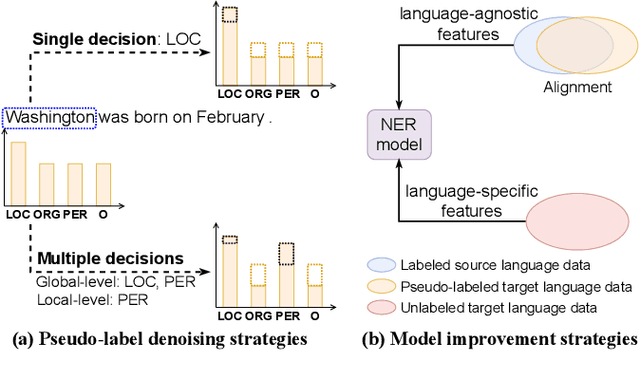
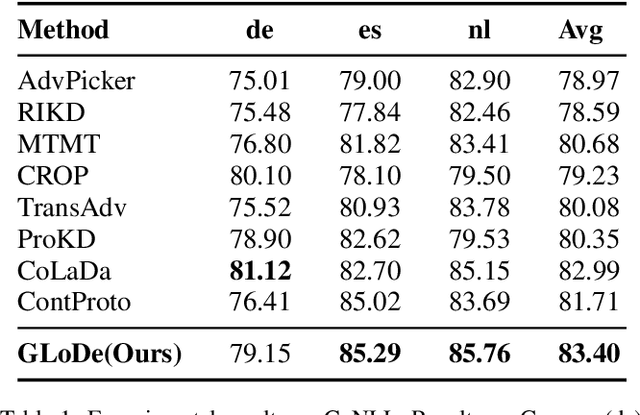
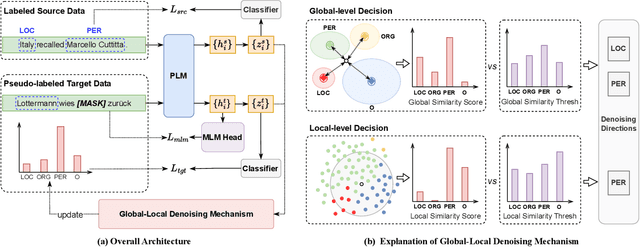
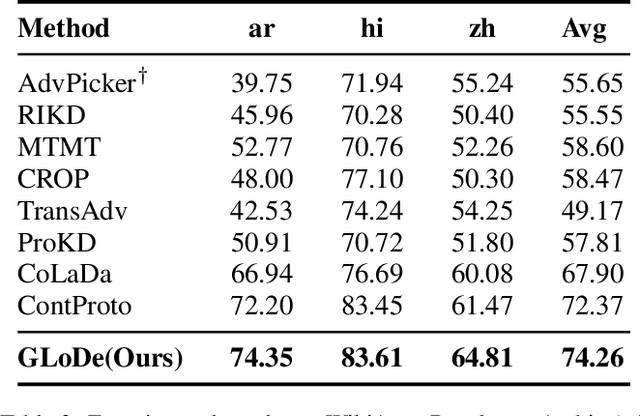
Cross-lingual named entity recognition (NER) aims to train an NER model for the target language leveraging only labeled source language data and unlabeled target language data. Prior approaches either perform label projection on translated source language data or employ a source model to assign pseudo labels for target language data and train a target model on these pseudo-labeled data to generalize to the target language. However, these automatic labeling procedures inevitably introduce noisy labels, thus leading to a performance drop. In this paper, we propose a Global-Local Denoising framework (GLoDe) for cross-lingual NER. Specifically, GLoDe introduces a progressive denoising strategy to rectify incorrect pseudo labels by leveraging both global and local distribution information in the semantic space. The refined pseudo-labeled target language data significantly improves the model's generalization ability. Moreover, previous methods only consider improving the model with language-agnostic features, however, we argue that target language-specific features are also important and should never be ignored. To this end, we employ a simple auxiliary task to achieve this goal. Experimental results on two benchmark datasets with six target languages demonstrate that our proposed GLoDe significantly outperforms current state-of-the-art methods.
Harnessing Business and Media Insights with Large Language Models
Jun 02, 2024

This paper introduces Fortune Analytics Language Model (FALM). FALM empowers users with direct access to comprehensive business analysis, including market trends, company performance metrics, and expert insights. Unlike generic LLMs, FALM leverages a curated knowledge base built from professional journalism, enabling it to deliver precise and in-depth answers to intricate business questions. Users can further leverage natural language queries to directly visualize financial data, generating insightful charts and graphs to understand trends across diverse business sectors clearly. FALM fosters user trust and ensures output accuracy through three novel methods: 1) Time-aware reasoning guarantees accurate event registration and prioritizes recent updates. 2) Thematic trend analysis explicitly examines topic evolution over time, providing insights into emerging business landscapes. 3) Content referencing and task decomposition enhance answer fidelity and data visualization accuracy. We conduct both automated and human evaluations, demonstrating FALM's significant performance improvements over baseline methods while prioritizing responsible AI practices. These benchmarks establish FALM as a cutting-edge LLM in the business and media domains, with exceptional accuracy and trustworthiness.
Knowledge Enhanced Multi-intent Transformer Network for Recommendation
May 31, 2024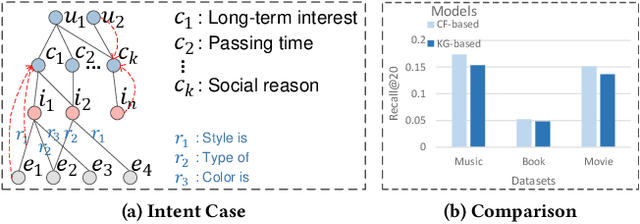
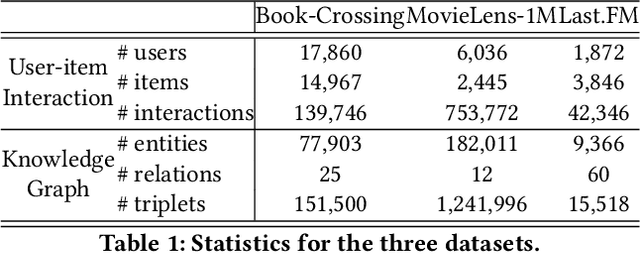
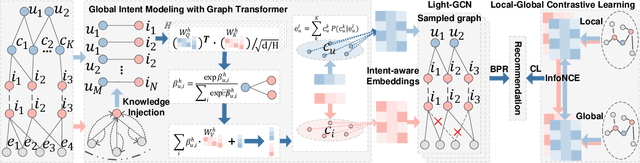
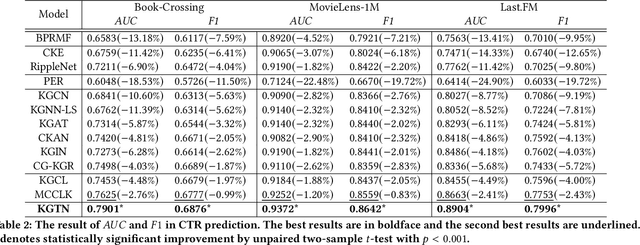
Incorporating Knowledge Graphs into Recommendation has attracted growing attention in industry, due to the great potential of KG in providing abundant supplementary information and interpretability for the underlying models. However, simply integrating KG into recommendation usually brings in negative feedback in industry, due to the ignorance of the following two factors: i) users' multiple intents, which involve diverse nodes in KG. For example, in e-commerce scenarios, users may exhibit preferences for specific styles, brands, or colors. ii) knowledge noise, which is a prevalent issue in Knowledge Enhanced Recommendation (KGR) and even more severe in industry scenarios. The irrelevant knowledge properties of items may result in inferior model performance compared to approaches that do not incorporate knowledge. To tackle these challenges, we propose a novel approach named Knowledge Enhanced Multi-intent Transformer Network for Recommendation (KGTN), comprising two primary modules: Global Intents Modeling with Graph Transformer, and Knowledge Contrastive Denoising under Intents. Specifically, Global Intents with Graph Transformer focuses on capturing learnable user intents, by incorporating global signals from user-item-relation-entity interactions with a graph transformer, meanwhile learning intent-aware user/item representations. Knowledge Contrastive Denoising under Intents is dedicated to learning precise and robust representations. It leverages intent-aware representations to sample relevant knowledge, and proposes a local-global contrastive mechanism to enhance noise-irrelevant representation learning. Extensive experiments conducted on benchmark datasets show the superior performance of our proposed method over the state-of-the-arts. And online A/B testing results on Alibaba large-scale industrial recommendation platform also indicate the real-scenario effectiveness of KGTN.
Large Language Models-guided Dynamic Adaptation for Temporal Knowledge Graph Reasoning
May 23, 2024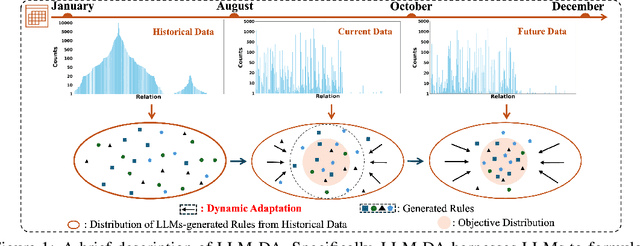
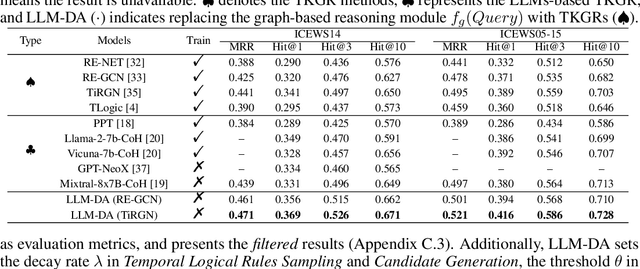
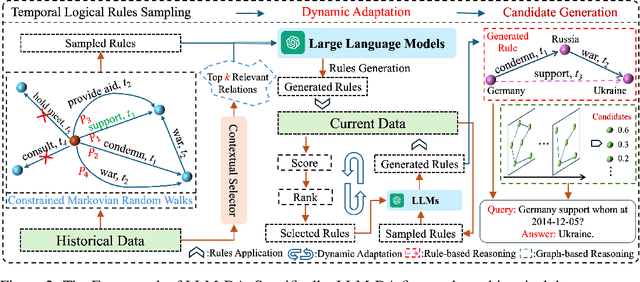

Temporal Knowledge Graph Reasoning (TKGR) is the process of utilizing temporal information to capture complex relations within a Temporal Knowledge Graph (TKG) to infer new knowledge. Conventional methods in TKGR typically depend on deep learning algorithms or temporal logical rules. However, deep learning-based TKGRs often lack interpretability, whereas rule-based TKGRs struggle to effectively learn temporal rules that capture temporal patterns. Recently, Large Language Models (LLMs) have demonstrated extensive knowledge and remarkable proficiency in temporal reasoning. Consequently, the employment of LLMs for Temporal Knowledge Graph Reasoning (TKGR) has sparked increasing interest among researchers. Nonetheless, LLMs are known to function as black boxes, making it challenging to comprehend their reasoning process. Additionally, due to the resource-intensive nature of fine-tuning, promptly updating LLMs to integrate evolving knowledge within TKGs for reasoning is impractical. To address these challenges, in this paper, we propose a Large Language Models-guided Dynamic Adaptation (LLM-DA) method for reasoning on TKGs. Specifically, LLM-DA harnesses the capabilities of LLMs to analyze historical data and extract temporal logical rules. These rules unveil temporal patterns and facilitate interpretable reasoning. To account for the evolving nature of TKGs, a dynamic adaptation strategy is proposed to update the LLM-generated rules with the latest events. This ensures that the extracted rules always incorporate the most recent knowledge and better generalize to the predictions on future events. Experimental results show that without the need of fine-tuning, LLM-DA significantly improves the accuracy of reasoning over several common datasets, providing a robust framework for TKGR tasks.
GinAR: An End-To-End Multivariate Time Series Forecasting Model Suitable for Variable Missing
May 18, 2024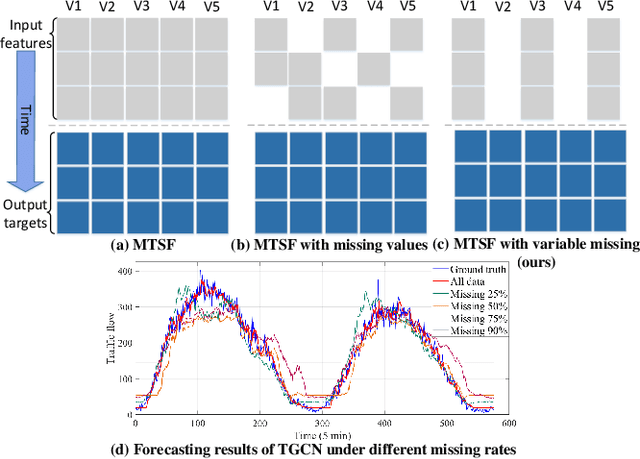
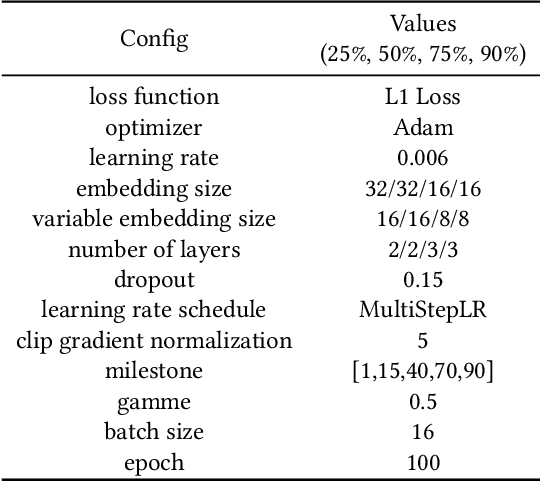
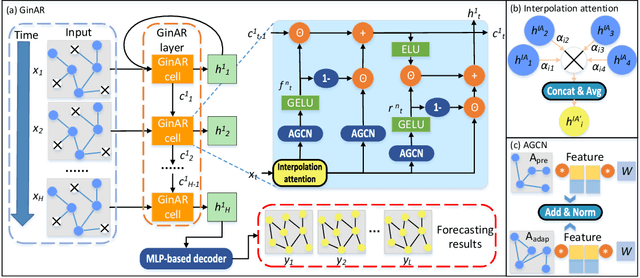
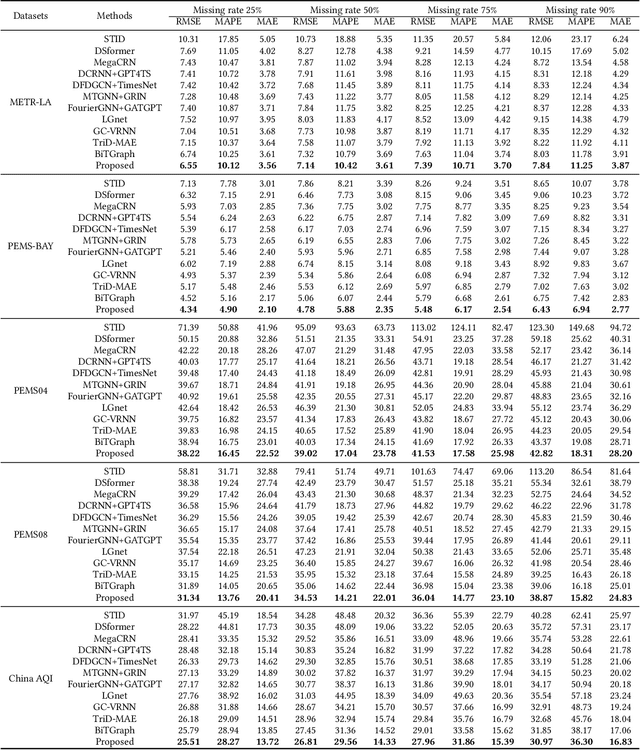
Multivariate time series forecasting (MTSF) is crucial for decision-making to precisely forecast the future values/trends, based on the complex relationships identified from historical observations of multiple sequences. Recently, Spatial-Temporal Graph Neural Networks (STGNNs) have gradually become the theme of MTSF model as their powerful capability in mining spatial-temporal dependencies, but almost of them heavily rely on the assumption of historical data integrity. In reality, due to factors such as data collector failures and time-consuming repairment, it is extremely challenging to collect the whole historical observations without missing any variable. In this case, STGNNs can only utilize a subset of normal variables and easily suffer from the incorrect spatial-temporal dependency modeling issue, resulting in the degradation of their forecasting performance. To address the problem, in this paper, we propose a novel Graph Interpolation Attention Recursive Network (named GinAR) to precisely model the spatial-temporal dependencies over the limited collected data for forecasting. In GinAR, it consists of two key components, that is, interpolation attention and adaptive graph convolution to take place of the fully connected layer of simple recursive units, and thus are capable of recovering all missing variables and reconstructing the correct spatial-temporal dependencies for recursively modeling of multivariate time series data, respectively. Extensive experiments conducted on five real-world datasets demonstrate that GinAR outperforms 11 SOTA baselines, and even when 90% of variables are missing, it can still accurately predict the future values of all variables.
A Comprehensive Survey on Self-Supervised Learning for Recommendation
Apr 07, 2024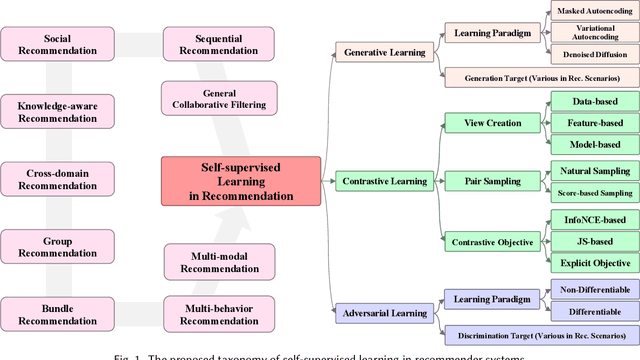
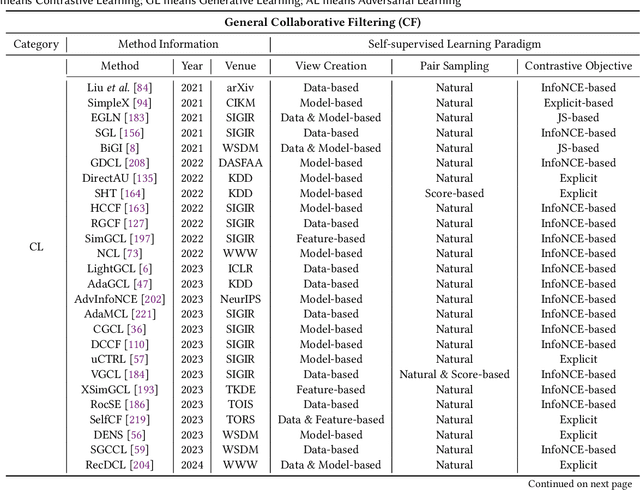

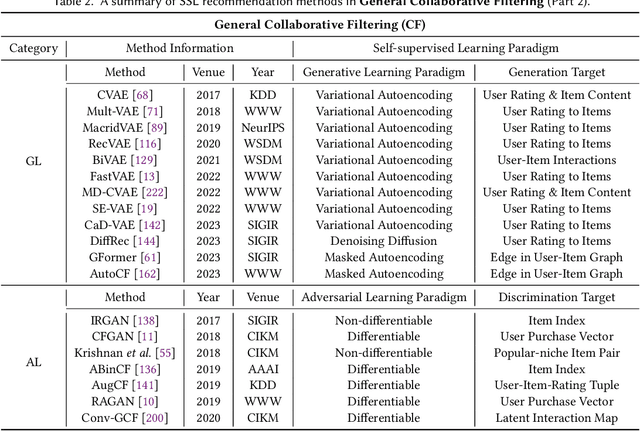
Recommender systems play a crucial role in tackling the challenge of information overload by delivering personalized recommendations based on individual user preferences. Deep learning techniques, such as RNNs, GNNs, and Transformer architectures, have significantly propelled the advancement of recommender systems by enhancing their comprehension of user behaviors and preferences. However, supervised learning methods encounter challenges in real-life scenarios due to data sparsity, resulting in limitations in their ability to learn representations effectively. To address this, self-supervised learning (SSL) techniques have emerged as a solution, leveraging inherent data structures to generate supervision signals without relying solely on labeled data. By leveraging unlabeled data and extracting meaningful representations, recommender systems utilizing SSL can make accurate predictions and recommendations even when confronted with data sparsity. In this paper, we provide a comprehensive review of self-supervised learning frameworks designed for recommender systems, encompassing a thorough analysis of over 170 papers. We conduct an exploration of nine distinct scenarios, enabling a comprehensive understanding of SSL-enhanced recommenders in different contexts. For each domain, we elaborate on different self-supervised learning paradigms, namely contrastive learning, generative learning, and adversarial learning, so as to present technical details of how SSL enhances recommender systems in various contexts. We consistently maintain the related open-source materials at https://github.com/HKUDS/Awesome-SSLRec-Papers.
AdaptSFL: Adaptive Split Federated Learning in Resource-constrained Edge Networks
Mar 19, 2024


The increasing complexity of deep neural networks poses significant barriers to democratizing them to resource-limited edge devices. To address this challenge, split federated learning (SFL) has emerged as a promising solution by of floading the primary training workload to a server via model partitioning while enabling parallel training among edge devices. However, although system optimization substantially influences the performance of SFL under resource-constrained systems, the problem remains largely uncharted. In this paper, we provide a convergence analysis of SFL which quantifies the impact of model splitting (MS) and client-side model aggregation (MA) on the learning performance, serving as a theoretical foundation. Then, we propose AdaptSFL, a novel resource-adaptive SFL framework, to expedite SFL under resource-constrained edge computing systems. Specifically, AdaptSFL adaptively controls client-side MA and MS to balance communication-computing latency and training convergence. Extensive simulations across various datasets validate that our proposed AdaptSFL framework takes considerably less time to achieve a target accuracy than benchmarks, demonstrating the effectiveness of the proposed strategies.
Reinforcement Learning with Token-level Feedback for Controllable Text Generation
Mar 18, 2024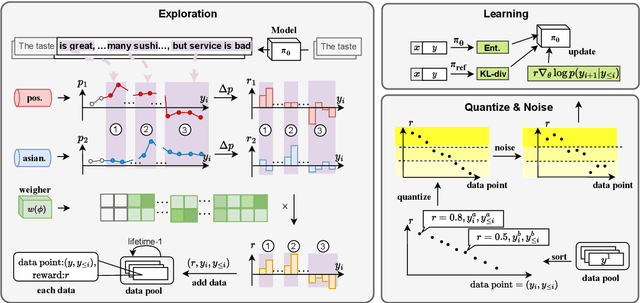
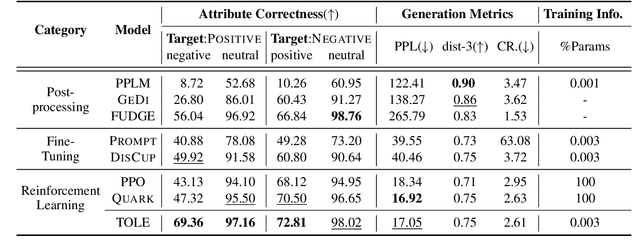
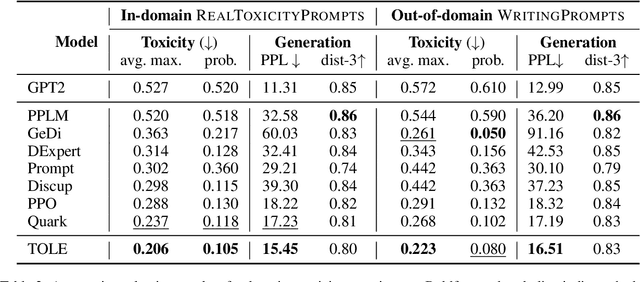
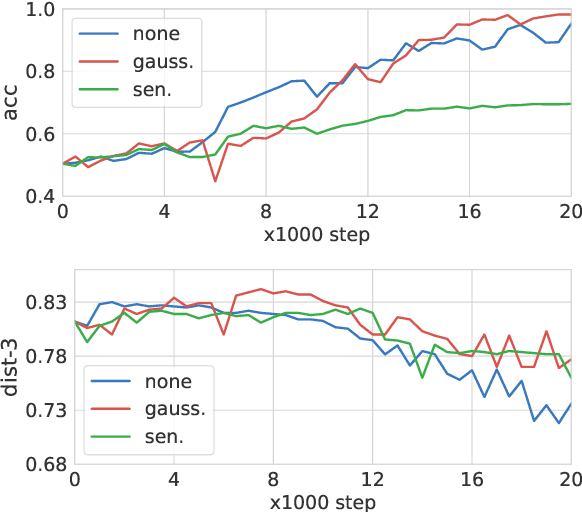
To meet the requirements of real-world applications, it is essential to control generations of large language models (LLMs). Prior research has tried to introduce reinforcement learning (RL) into controllable text generation while most existing methods suffer from overfitting issues (finetuning-based methods) or semantic collapse (post-processing methods). However, current RL methods are generally guided by coarse-grained (sentence/paragraph-level) feedback, which may lead to suboptimal performance owing to semantic twists or progressions within sentences. To tackle that, we propose a novel reinforcement learning algorithm named TOLE which formulates TOken-LEvel rewards for controllable text generation, and employs a "first-quantize-then-noise" paradigm to enhance the robustness of the RL algorithm.Furthermore, TOLE can be flexibly extended to multiple constraints with little computational expense. Experimental results show that our algorithm can achieve superior performance on both single-attribute and multi-attribute control tasks. We have released our codes at https://github.com/WindyLee0822/CTG