 Add to Chrome
 Add to Firefox
 Add to Edge
Enhancing Imbalanced Electrocardiogram Classification: A Novel Approach Integrating Data Augmentation through Wavelet Transform and Interclass Fusion
Jan 14, 2026
Imbalanced electrocardiogram (ECG) data hampers the efficacy and resilience of algorithms in the automated processing and interpretation of cardiovascular diagnostic information, which in turn impedes deep learning-based ECG classification. Notably, certain cardiac conditions that are infrequently encountered are disproportionately underrepresented in these datasets. Although algorithmic generation and oversampling of specific ECG signal types can mitigate class skew, there is a lack of consensus regarding the effectiveness of such techniques in ECG classification. Furthermore, the methodologies and scenarios of ECG acquisition introduce noise, further complicating the processing of ECG data. This paper presents a significantly enhanced ECG classifier that simultaneously addresses both class imbalance and noise-related challenges in ECG analysis, as observed in the CPSC 2018 dataset. Specifically, we propose the application of feature fusion based on the wavelet transform, with a focus on wavelet transform-based interclass fusion, to generate the training feature library and the test set feature library. Subsequently, the original training and test data are amalgamated with their respective feature databases, resulting in more balanced training and test datasets. Employing this approach, our ECG model achieves recognition accuracies of up to 99%, 98%, 97%, 98%, 96%, 92%, and 93% for Normal, AF, I-AVB, LBBB, RBBB, PAC, PVC, STD, and STE, respectively. Furthermore, the average recognition accuracy for these categories ranges between 92\% and 98\%. Notably, our proposed data fusion methodology surpasses any known algorithms in terms of ECG classification accuracy in the CPSC 2018 dataset.

Spectral Complex Autoencoder Pruning: A Fidelity-Guided Criterion for Extreme Structured Channel Compression
Jan 14, 2026We propose Spectral Complex Autoencoder Pruning (SCAP), a reconstruction-based criterion that measures functional redundancy at the level of individual output channels. For each convolutional layer, we construct a complex interaction field by pairing the full multi-channel input activation as the real part with a single output-channel activation (spatially aligned and broadcast across input channels) as the imaginary part. We transform this complex field to the frequency domain and train a low-capacity autoencoder to reconstruct normalized spectra. Channels whose spectra are reconstructed with high fidelity are interpreted as lying close to a low-dimensional manifold captured by the autoencoder and are therefore more compressible; conversely, channels with low fidelity are retained as they encode information that cannot be compactly represented by the learned manifold. This yields an importance score (optionally fused with the filter L1 norm) that supports simple threshold-based pruning and produces a structurally consistent pruned network. On VGG16 trained on CIFAR-10, at a fixed threshold of 0.6, we obtain 90.11% FLOP reduction and 96.30% parameter reduction with an absolute Top-1 accuracy drop of 1.67% from a 93.44% baseline after fine-tuning, demonstrating that spectral reconstruction fidelity of complex interaction fields is an effective proxy for channel-level redundancy under aggressive compression.
Time Travel Engine: A Shared Latent Chronological Manifold Enables Historical Navigation in Large Language Models
Jan 10, 2026Time functions as a fundamental dimension of human cognition, yet the mechanisms by which Large Language Models (LLMs) encode chronological progression remain opaque. We demonstrate that temporal information in their latent space is organized not as discrete clusters but as a continuous, traversable geometry. We introduce the Time Travel Engine (TTE), an interpretability-driven framework that projects diachronic linguistic patterns onto a shared chronological manifold. Unlike surface-level prompting, TTE directly modulates latent representations to induce coherent stylistic, lexical, and conceptual shifts aligned with target eras. By parameterizing diachronic evolution as a continuous manifold within the residual stream, TTE enables fluid navigation through period-specific "zeitgeists" while restricting access to future knowledge. Furthermore, experiments across diverse architectures reveal topological isomorphism between the temporal subspaces of Chinese and English-indicating that distinct languages share a universal geometric logic of historical evolution. These findings bridge historical linguistics with mechanistic interpretability, offering a novel paradigm for controlling temporal reasoning in neural networks.
Sparse Convex Biclustering
Jan 05, 2026Biclustering is an essential unsupervised machine learning technique for simultaneously clustering rows and columns of a data matrix, with widespread applications in genomics, transcriptomics, and other high-dimensional omics data. Despite its importance, existing biclustering methods struggle to meet the demands of modern large-scale datasets. The challenges stem from the accumulation of noise in high-dimensional features, the limitations of non-convex optimization formulations, and the computational complexity of identifying meaningful biclusters. These issues often result in reduced accuracy and stability as the size of the dataset increases. To overcome these challenges, we propose Sparse Convex Biclustering (SpaCoBi), a novel method that penalizes noise during the biclustering process to improve both accuracy and robustness. By adopting a convex optimization framework and introducing a stability-based tuning criterion, SpaCoBi achieves an optimal balance between cluster fidelity and sparsity. Comprehensive numerical studies, including simulations and an application to mouse olfactory bulb data, demonstrate that SpaCoBi significantly outperforms state-of-the-art methods in accuracy. These results highlight SpaCoBi as a robust and efficient solution for biclustering in high-dimensional and large-scale datasets.
Adversarial Instance Generation and Robust Training for Neural Combinatorial Optimization with Multiple Objectives
Jan 04, 2026Deep reinforcement learning (DRL) has shown great promise in addressing multi-objective combinatorial optimization problems (MOCOPs). Nevertheless, the robustness of these learning-based solvers has remained insufficiently explored, especially across diverse and complex problem distributions. In this paper, we propose a unified robustness-oriented framework for preference-conditioned DRL solvers for MOCOPs. Within this framework, we develop a preference-based adversarial attack to generate hard instances that expose solver weaknesses, and quantify the attack impact by the resulting degradation on Pareto-front quality. We further introduce a defense strategy that integrates hardness-aware preference selection into adversarial training to reduce overfitting to restricted preference regions and improve out-of-distribution performance. The experimental results on multi-objective traveling salesman problem (MOTSP), multi-objective capacitated vehicle routing problem (MOCVRP), and multi-objective knapsack problem (MOKP) verify that our attack method successfully learns hard instances for different solvers. Furthermore, our defense method significantly strengthens the robustness and generalizability of neural solvers, delivering superior performance on hard or out-of-distribution instances.
One-Shot Structured Pruning of Quantum Neural Networks via $q$-Group Engineering and Quantum Geometric Metrics
Dec 30, 2025Quantum neural networks (QNNs) suffer from severe gate-level redundancy, which hinders their deployment on noisy intermediate-scale quantum (NISQ) devices. In this work, we propose q-iPrune, a one-shot structured pruning framework grounded in the algebraic structure of $q$-deformed groups and task-conditioned quantum geometry. Unlike prior heuristic or gradient-based pruning methods, q-iPrune formulates redundancy directly at the gate level. Each gate is compared within an algebraically consistent subgroup using a task-conditioned $q$-overlap distance, which measures functional similarity through state overlaps on a task-relevant ensemble. A gate is removed only when its replacement by a subgroup representative provably induces a bounded deviation on all task observables. We establish three rigorous theoretical guarantees. First, we prove completeness of redundancy pruning: no gate that violates the prescribed similarity threshold is removed. Second, we show that the pruned circuit is functionally equivalent up to an explicit, task-conditioned error bound, with a closed-form dependence on the redundancy tolerance and the number of replaced gates. Third, we prove that the pruning procedure is computationally feasible, requiring only polynomial-time comparisons and avoiding exponential enumeration over the Hilbert space. To adapt pruning decisions to hardware imperfections, we introduce a noise-calibrated deformation parameter $λ$ that modulates the $q$-geometry and redundancy tolerance. Experiments on standard quantum machine learning benchmarks demonstrate that q-iPrune achieves substantial gate reduction while maintaining bounded task performance degradation, consistent with our theoretical guarantees.
Direction Finding with Sparse Arrays Based on Variable Window Size Spatial Smoothing
Dec 26, 2025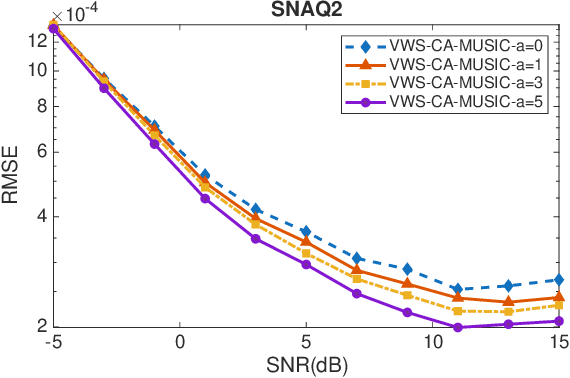
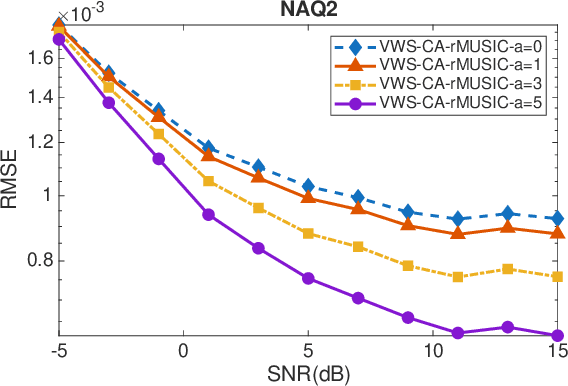
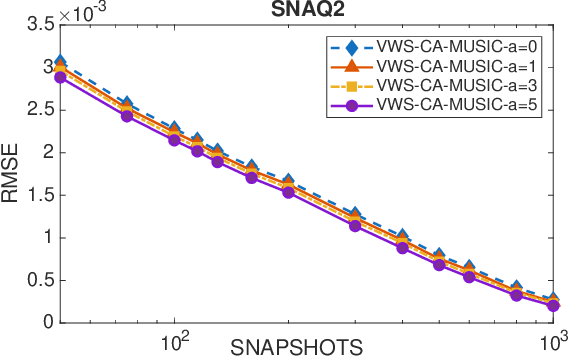
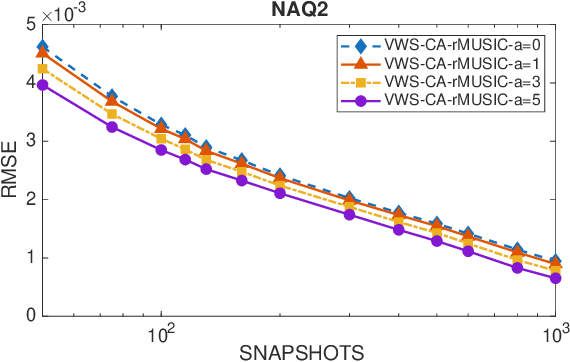
In this work, we introduce a variable window size (VWS) spatial smoothing framework that enhances coarray-based direction of arrival (DOA) estimation for sparse linear arrays. By compressing the smoothing aperture, the proposed VWS Coarray MUSIC (VWS-CA-MUSIC) and VWS Coarray root-MUSIC (VWS-CA-rMUSIC) algorithms replace part of the perturbed rank-one outer products in the smoothed coarray data with unperturbed low-rank additional terms, increasing the separation between signal and noise subspaces, while preserving the signal subspace span. We also derive the bounds that guarantees identifiability, by limiting the values that can be assumed by the compression parameter. Simulations with sparse geometries reveal significant performance improvements and complexity savings relative to the fixed-window coarray MUSIC method.
A Mechanistic Analysis of Transformers for Dynamical Systems
Dec 24, 2025Transformers are increasingly adopted for modeling and forecasting time-series, yet their internal mechanisms remain poorly understood from a dynamical systems perspective. In contrast to classical autoregressive and state-space models, which benefit from well-established theoretical foundations, Transformer architectures are typically treated as black boxes. This gap becomes particularly relevant as attention-based models are considered for general-purpose or zero-shot forecasting across diverse dynamical regimes. In this work, we do not propose a new forecasting model, but instead investigate the representational capabilities and limitations of single-layer Transformers when applied to dynamical data. Building on a dynamical systems perspective we interpret causal self-attention as a linear, history-dependent recurrence and analyze how it processes temporal information. Through a series of linear and nonlinear case studies, we identify distinct operational regimes. For linear systems, we show that the convexity constraint imposed by softmax attention fundamentally restricts the class of dynamics that can be represented, leading to oversmoothing in oscillatory settings. For nonlinear systems under partial observability, attention instead acts as an adaptive delay-embedding mechanism, enabling effective state reconstruction when sufficient temporal context and latent dimensionality are available. These results help bridge empirical observations with classical dynamical systems theory, providing insight into when and why Transformers succeed or fail as models of dynamical systems.
Learning-Assisted Multi-Operator Variable Neighborhood Search for Urban Cable Routing
Dec 22, 2025Urban underground cable construction is essential for enhancing the reliability of city power grids, yet its high construction costs make planning a worthwhile optimization task. In urban environments, road layouts tightly constrain cable routing. This, on the one hand, renders relation-only models (i.e., those without explicit routes) used in prior work overly simplistic, and on the other hand, dramatically enlarges the combinatorial search space, thereby imposing much higher demands on algorithm design. In this study, we formulate urban cable routing as a connectivity-path co-optimization problem and propose a learning-assisted multi-operator variable neighborhood search (L-MVNS) algorithm. The framework first introduces an auxiliary task to generate high-quality feasible initial solutions. A hybrid genetic search (HGS) and A* serve as the connectivity optimizer and the route-planning optimizer, respectively. Building on these, a multi-operator variable neighborhood search (MVNS) iteratively co-optimizes inter-substation connectivity and detailed routes via three complementary destruction operators, a modified A* repair operator, and an adaptive neighborhood-sizing mechanism. A multi-agent deep reinforcement learning module is further embedded to prioritize promising neighborhoods. We also construct a standardized and scalable benchmark suite for evaluation. Across these cases, comprehensive experiments demonstrate effectiveness and stability: relative to representative approaches, MVNS and L-MVNS reduce total construction cost by approximately 30-50%, with L-MVNS delivering additional gains on larger instances and consistently higher stability.
An Fluid Antenna Array-Enabled DOA Estimation Method: End-Fire Effect Suppression
Dec 22, 2025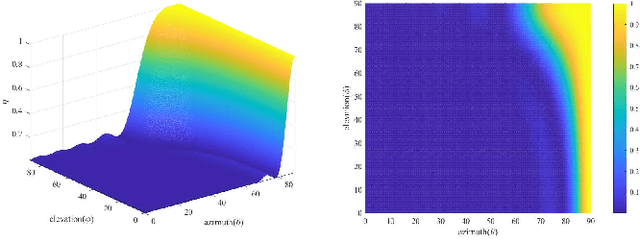
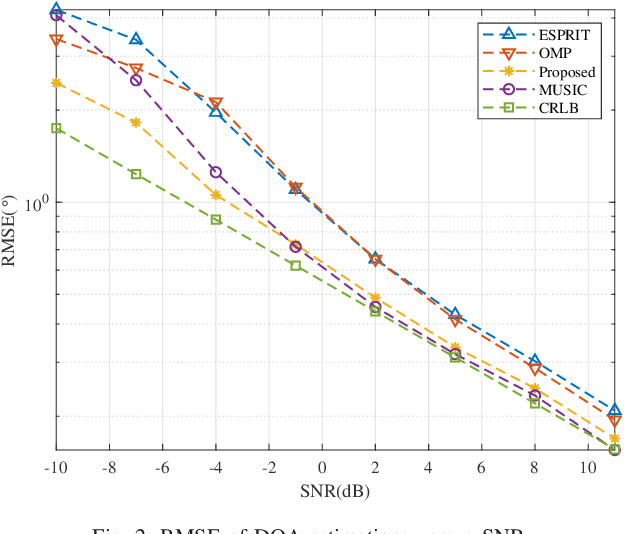
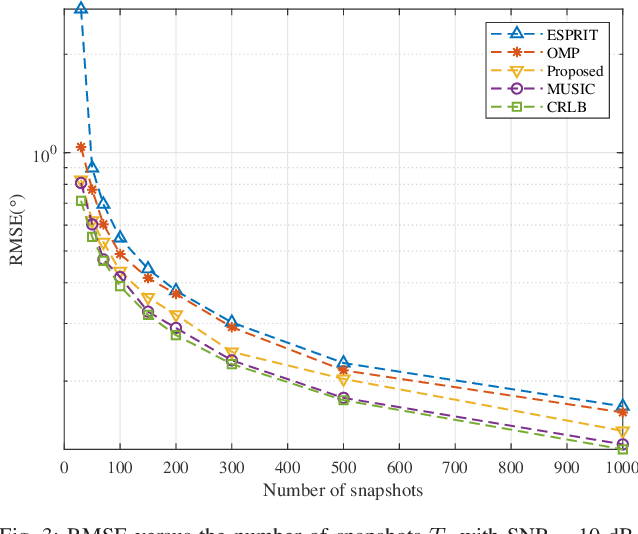
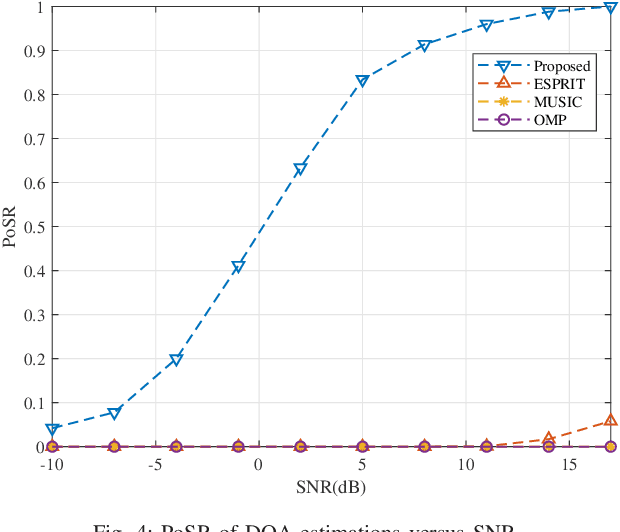
Direction of Arrival (DOA) estimation serves as a critical sensing technology poised to play a vital role in future intelligent and ubiquitous communication systems. Despite the development of numerous mature super-resolution algorithms, the inherent end-fire effect problem in fixed antenna arrays remains inadequately addressed. This work proposed a novel array architecture composed of fluid antennas. By exploiting the spatial reconfigurability of their positions to equivalently modulate the array steering vector and integrating it with the classical MUSIC algorithm, this approach achieved high-precision DOA estimation. Simulation results demonstrated that the proposed method delivers outstanding estimation performance even in highly challenging end-fire regions.