 Add to Chrome
 Add to Firefox
 Add to Edge
CTIFoundry: An Agent-Native Corpus Scaffold for Cyber Threat Intelligence
Aug 19, 2026
Cyber threat intelligence (CTI) is increasingly consumed not by human analysts but by LLM agents that compose multi-step investigations at query time. The harness side of this shift has matured rapidly (planning loops, tool protocols, context management), but the corpus side has not: threat reports and vulnerability databases are still packaged for retrieval-augmented generation, as opaque chunks behind an embedding index. We argue that this substrate, not model capability, is the bottleneck on agentic CTI investigation, and present CTIFoundry, an agent-native corpus scaffold. At build time, CTIFoundry materializes the latent structure of a CTI corpus: a deterministic ontology graph over four authoritative knowledge bases (CVE, CWE, CAPEC, ATT&CK) whose official cross-references become typed, traversable edges; a span-grounded report layer whose canonical, alias-resolved cross-vendor entities index provenance-carrying chunks; and hybrid dense+lexical retrieval surfaces. At query time this structure is exposed through seven typed tools and three procedural skills mounted on a stock open-source agent harness. On the public CTIConnect benchmark, swapping only the action surface lifts the identically-harnessed agent by +0.19 to +0.28 overall F1 across a four-model, two-provider panel: a small model on CTIFoundry surpasses a flagship on the flat substrate, and the gain is not bought with search effort, since on both Claude models the scaffolded agent is more accurate at roughly half the tool calls. An ablation attributes it: typed structure carries the larger share, procedural skills convert structure into discipline, and the two compose super-additively, because skills bind only to structure that exists.

The Second LoViF 2026 Challenge on Real-World All-in-One Image Restoration: Methods and Results
Jul 23, 2026This paper presents a review of the second LoViF Challenge on Real-World All-in-One Image Restoration. The challenge aims to advance unified image restoration under diverse real-world degradation conditions, including blur, low-light, haze, rain, and snow. It provides a common benchmark for evaluating the restoration accuracy, robustness, and generalization capability of models across multiple degradation categories within a unified framework. The competition attracted 158 registered participants, and 20 teams were included in the final ranking after their submitted results were successfully reproduced and verified. This report provides a comprehensive analysis of the submitted solutions and corresponding results, highlighting recent advances in real-world all-in-one image restoration. The summarized methods and empirical findings reveal effective design strategies and establish an updated benchmark for future research in real-world low-level vision.
Beyond Encoder Accumulation: Measuring Encoder Roles in Multi-Encoder VLMs
Jun 02, 2026As foundation models scale toward fusing more heterogeneous visual streams, understanding how diverse encoders interact under joint training becomes a prerequisite for principled design. Yet large vision-language models (LVLMs) currently lack the tools to do so, and parameter-efficient encoder configurations remain hard to identify before training. To re-examine encoder roles under joint training, on the 16-benchmark Cambrian-1 suite we retrain and evaluate all 31 non-empty subsets of five common vision encoders under a unified pipeline (~20k GPU-hours total), and report three findings. First, retraining each subset from scratch reveals encoder rankings that differ from those obtained by masking encoders on a fixed checkpoint, including which encoder ranks first overall. Second, we decompose each encoder's contribution into two axes, Capacity, the score an encoder reaches on its own, and Necessity, the drop when it is removed from the full pool. The two axes are not interchangeable. Pairing the two highest-Capacity encoders is suboptimal, while pairing a high-Capacity anchor with an adaptive complement matches the full five-encoder model. Adding further encoders beyond this pair yields only marginal gains. Third, at fixed parameter count, per-encoder pre-projector effective rank explains the residual score variation. The strongest pairs combine an anchor whose rank survives joint training with a complement whose rank expands under it, suggesting that higher-rank, less-collapsed projector inputs correspond to a more favorable optimization regime at the encoder-projector interface. Together, the Capacity-Necessity decomposition and the pre-projector rank analysis, along with comprehensive evaluation through retraining, expose a methodological gap in multi-encoder LVLM design, and offer concrete primitives for closing it.
TTPrint: Evidence-Grounded TTP Extraction via Diverge-then-Converge Verification
May 25, 2026Extracting MITRE ATT&CK techniques from cyber threat intelligence (CTI) reports is an open-set, multi-label problem requiring both high recall (not missing techniques) and high precision (not hallucinating unsupported ones). Existing methods--rule-based, supervised, and LLM-based--struggle to achieve both: rule-based and supervised approaches lack generalizability across diverse attack descriptions, while LLM-based approaches that couple candidate generation and validation within a single inference step suffer from limited recall and precision simultaneously. We propose TTPrint, which addresses this challenge through a diverge-then-converge design inspired by how human analysts work: first extracting broadly, then verifying rigorously. In the divergent phase, reports are decomposed into atomic behaviors and candidate techniques are proposed broadly. A deterministic span localization stage then anchors each candidate to a specific evidence window in the source text. A convergent verification stage retains only candidates supported by both the localized evidence and the authoritative MITRE definition. We contribute two evaluation resources--a cleaned TRAM benchmark (TRAM-Clean) and a new annotated dataset (TTPrint-Bench)--to address known annotation noise in existing benchmarks and elevate the task to document-level TTP extraction. On TRAM-Clean and TTPrint-Bench, TTPrint achieves 76.48% and 87.39% macro-F1 respectively, outperforming the leading baseline by 63.5% and 29.4%. A multi-backbone analysis across six LLMs and a threshold sensitivity study further demonstrate generalizability across model choices and provide practical guidance for parameter selection.
MHSA: A Lightweight Framework for Mitigating Hallucinations via Steered Attention in LVLMs
May 14, 2026Large vision-language models (LVLMs) have achieved remarkable performance across diverse multimodal tasks, yet they continue to suffer from hallucinations, generating content that is inconsistent with the visual input. Prior work DHCP (Detecting Hallucinations by Cross-modal Attention Pattern) has explored hallucination detection from the perspective of cross-modal attention, but does not address hallucination mitigation. In this paper, we propose MHSA (Mitigating Hallucinations via Steered Attention), a lightweight framework that mitigates hallucinations by learning to correct cross-modal attention patterns in LVLMs. MHSA trains a simple three-layer MLP generator to produce corrected attention, guided by supervisory signals from the DHCP discriminator and the LVLM itself. During inference, MHSA mitigates both discriminative and generative hallucinations across various datasets and LVLMs by simply replacing the original cross-modal attention with the corrected one, without modifying any LVLM parameters. By extending cross-modal attention mechanisms from hallucination detection to hallucination mitigation, MHSA offers a novel perspective on hallucination research in LVLMs and helps enhance their reliability.
Deep Context-Conditioned Anomaly Detection for Tabular Data
Sep 10, 2025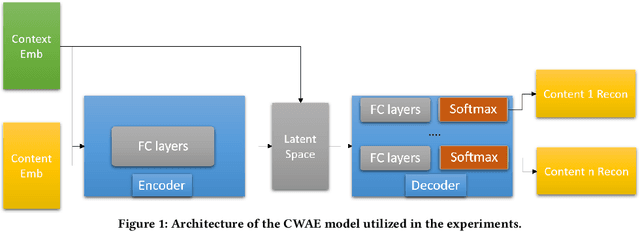
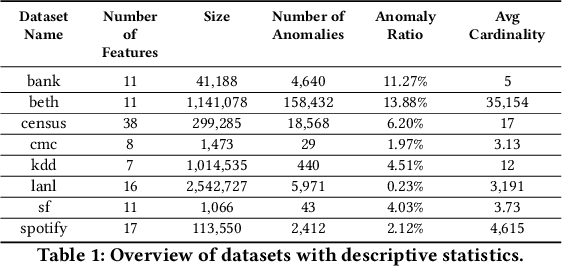
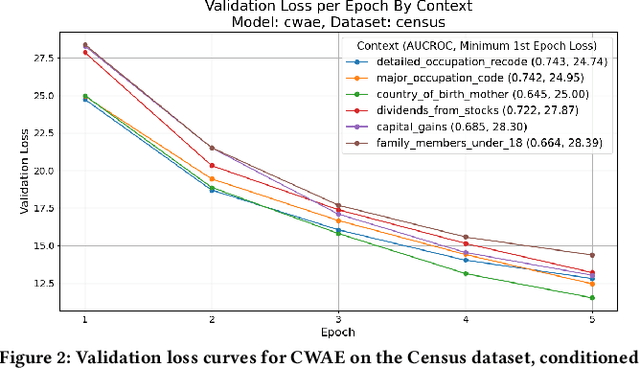
Anomaly detection is critical in domains such as cybersecurity and finance, especially when working with large-scale tabular data. Yet, unsupervised anomaly detection -- where no labeled anomalies are available -- remains a significant challenge. Although various deep learning methods have been proposed to model a dataset's joint distribution, real-world tabular data often contain heterogeneous contexts (e.g., different users), making globally rare events normal under certain contexts. Consequently, relying on a single global distribution can overlook these contextual nuances, degrading detection performance. In this paper, we present a context-conditional anomaly detection framework tailored for tabular datasets. Our approach automatically identifies context features and models the conditional data distribution using a simple deep autoencoder. Extensive experiments on multiple tabular benchmark datasets demonstrate that our method outperforms state-of-the-art approaches, underscoring the importance of context in accurately distinguishing anomalous from normal instances.
SIEVE: Effective Filtered Vector Search with Collection of Indexes
Jul 16, 2025Many real-world tasks such as recommending videos with the kids tag can be reduced to finding most similar vectors associated with hard predicates. This task, filtered vector search, is challenging as prior state-of-the-art graph-based (unfiltered) similarity search techniques quickly degenerate when hard constraints are considered. That is, effective graph-based filtered similarity search relies on sufficient connectivity for reaching the most similar items within just a few hops. To consider predicates, recent works propose modifying graph traversal to visit only the items that may satisfy predicates. However, they fail to offer the just-a-few-hops property for a wide range of predicates: they must restrict predicates significantly or lose efficiency if only a small fraction of items satisfy predicates. We propose an opposite approach: instead of constraining traversal, we build many indexes each serving different predicate forms. For effective construction, we devise a three-dimensional analytical model capturing relationships among index size, search time, and recall, with which we follow a workload-aware approach to pack as many useful indexes as possible into a collection. At query time, the analytical model is employed yet again to discern the one that offers the fastest search at a given recall. We show superior performance and support on datasets with varying selectivities and forms: our approach achieves up to 8.06x speedup while having as low as 1% build time versus other indexes, with less than 2.15x memory of a standard HNSW graph and modest knowledge of past workloads.
Qwen2.5-VL Technical Report
Feb 19, 2025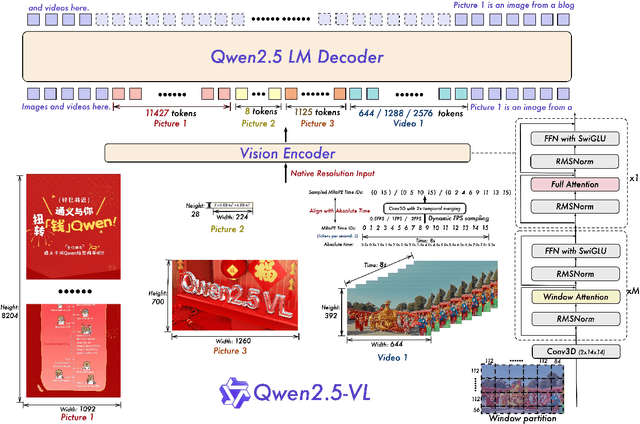
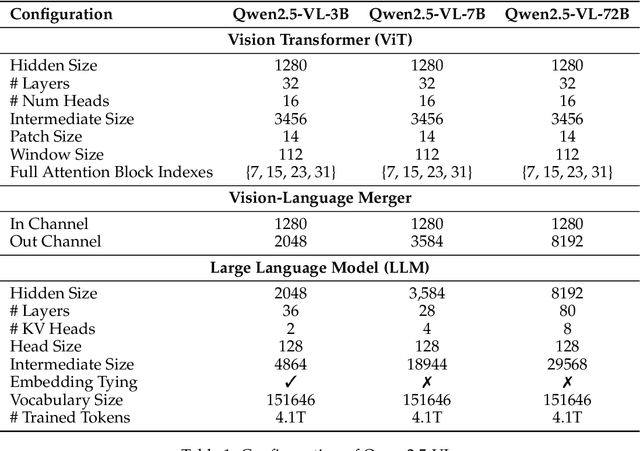
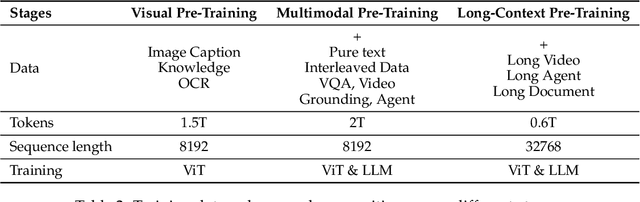
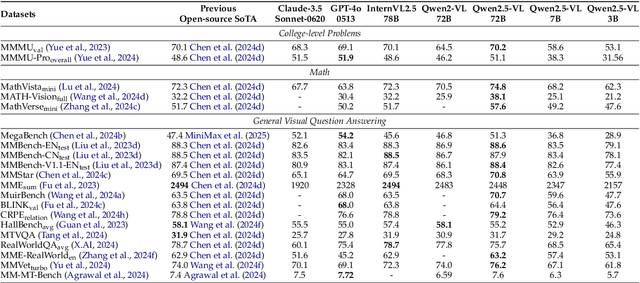
We introduce Qwen2.5-VL, the latest flagship model of Qwen vision-language series, which demonstrates significant advancements in both foundational capabilities and innovative functionalities. Qwen2.5-VL achieves a major leap forward in understanding and interacting with the world through enhanced visual recognition, precise object localization, robust document parsing, and long-video comprehension. A standout feature of Qwen2.5-VL is its ability to localize objects using bounding boxes or points accurately. It provides robust structured data extraction from invoices, forms, and tables, as well as detailed analysis of charts, diagrams, and layouts. To handle complex inputs, Qwen2.5-VL introduces dynamic resolution processing and absolute time encoding, enabling it to process images of varying sizes and videos of extended durations (up to hours) with second-level event localization. This allows the model to natively perceive spatial scales and temporal dynamics without relying on traditional normalization techniques. By training a native dynamic-resolution Vision Transformer (ViT) from scratch and incorporating Window Attention, we reduce computational overhead while maintaining native resolution. As a result, Qwen2.5-VL excels not only in static image and document understanding but also as an interactive visual agent capable of reasoning, tool usage, and task execution in real-world scenarios such as operating computers and mobile devices. Qwen2.5-VL is available in three sizes, addressing diverse use cases from edge AI to high-performance computing. The flagship Qwen2.5-VL-72B model matches state-of-the-art models like GPT-4o and Claude 3.5 Sonnet, particularly excelling in document and diagram understanding. Additionally, Qwen2.5-VL maintains robust linguistic performance, preserving the core language competencies of the Qwen2.5 LLM.
SteLLA: A Structured Grading System Using LLMs with RAG
Jan 15, 2025Large Language Models (LLMs) have shown strong general capabilities in many applications. However, how to make them reliable tools for some specific tasks such as automated short answer grading (ASAG) remains a challenge. We present SteLLA (Structured Grading System Using LLMs with RAG) in which a) Retrieval Augmented Generation (RAG) approach is used to empower LLMs specifically on the ASAG task by extracting structured information from the highly relevant and reliable external knowledge based on the instructor-provided reference answer and rubric, b) an LLM performs a structured and question-answering-based evaluation of student answers to provide analytical grades and feedback. A real-world dataset that contains students' answers in an exam was collected from a college-level Biology course. Experiments show that our proposed system can achieve substantial agreement with the human grader while providing break-down grades and feedback on all the knowledge points examined in the problem. A qualitative and error analysis of the feedback generated by GPT4 shows that GPT4 is good at capturing facts while may be prone to inferring too much implication from the given text in the grading task which provides insights into the usage of LLMs in the ASAG system.
TreeMatch: A Fully Unsupervised WSD System Using Dependency Knowledge on a Specific Domain
Jan 05, 2025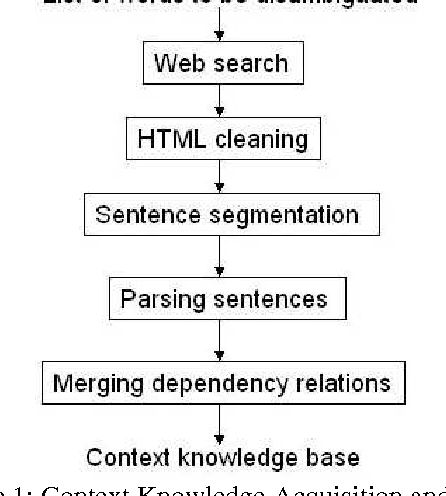
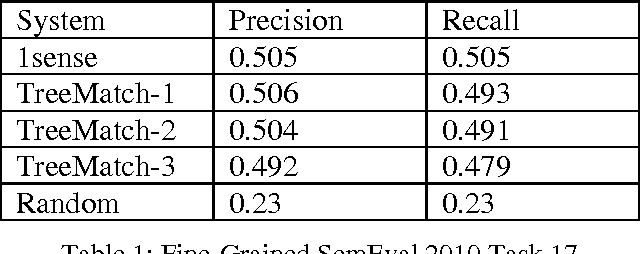
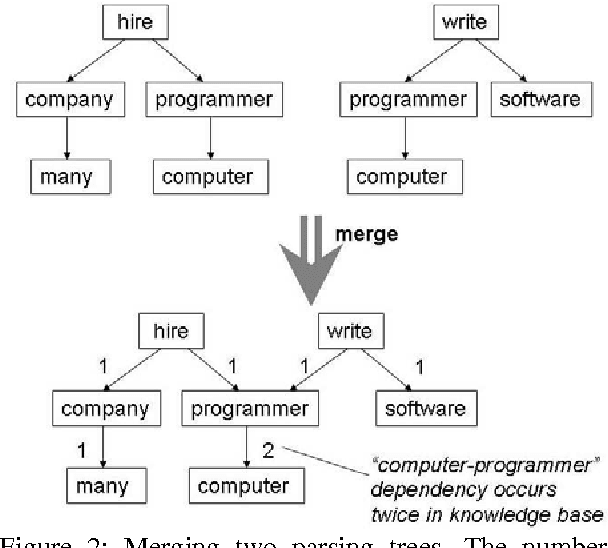
Word sense disambiguation (WSD) is one of the main challenges in Computational Linguistics. TreeMatch is a WSD system originally developed using data from SemEval 2007 Task 7 (Coarse-grained English All-words Task) that has been adapted for use in SemEval 2010 Task 17 (All-words Word Sense Disambiguation on a Specific Domain). The system is based on a fully unsupervised method using dependency knowledge drawn from a domain specific knowledge base that was built for this task. When evaluated on the task, the system precision performs above the Most Frequent Selection baseline.