 Add to Chrome
 Add to Firefox
 Add to Edge
Noise-Tolerant Hybrid Prototypical Learning with Noisy Web Data
Jan 05, 2025
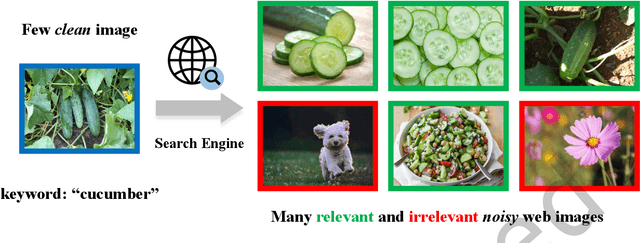
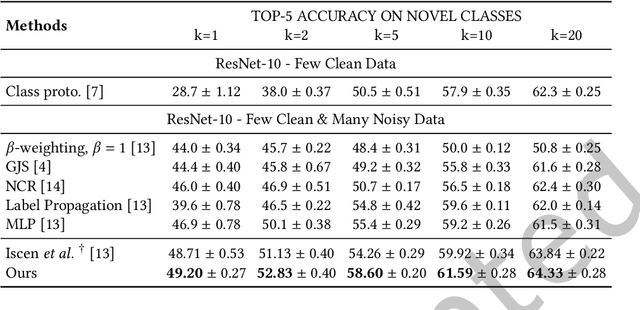
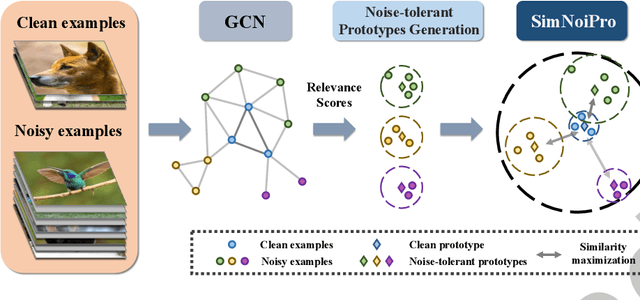
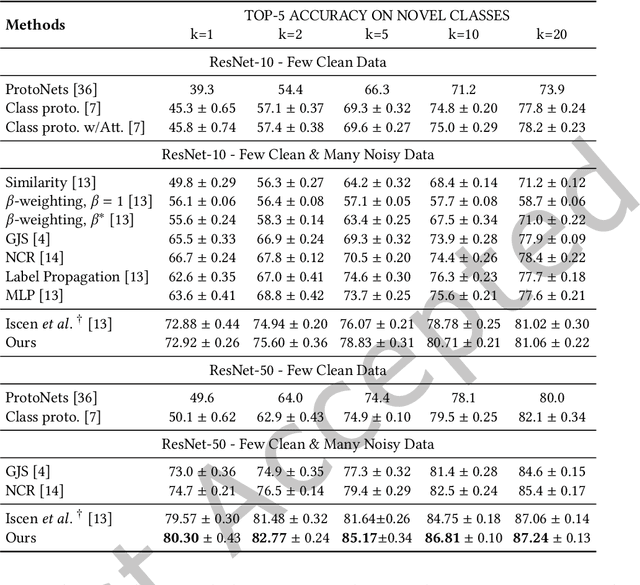
We focus on the challenging problem of learning an unbiased classifier from a large number of potentially relevant but noisily labeled web images given only a few clean labeled images. This problem is particularly practical because it reduces the expensive annotation costs by utilizing freely accessible web images with noisy labels. Typically, prototypes are representative images or features used to classify or identify other images. However, in the few clean and many noisy scenarios, the class prototype can be severely biased due to the presence of irrelevant noisy images. The resulting prototypes are less compact and discriminative, as previous methods do not take into account the diverse range of images in the noisy web image collections. On the other hand, the relation modeling between noisy and clean images is not learned for the class prototype generation in an end-to-end manner, which results in a suboptimal class prototype. In this article, we introduce a similarity maximization loss named SimNoiPro. Our SimNoiPro first generates noise-tolerant hybrid prototypes composed of clean and noise-tolerant prototypes and then pulls them closer to each other. Our approach considers the diversity of noisy images by explicit division and overcomes the optimization discrepancy issue. This enables better relation modeling between clean and noisy images and helps extract judicious information from the noisy image set. The evaluation results on two extended few-shot classification benchmarks confirm that our SimNoiPro outperforms prior methods in measuring image relations and cleaning noisy data.

Make Domain Shift a Catastrophic Forgetting Alleviator in Class-Incremental Learning
Dec 31, 2024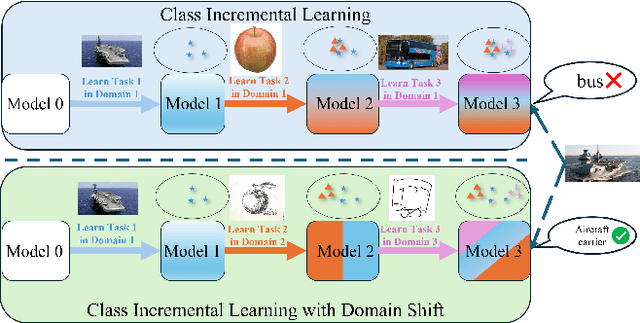
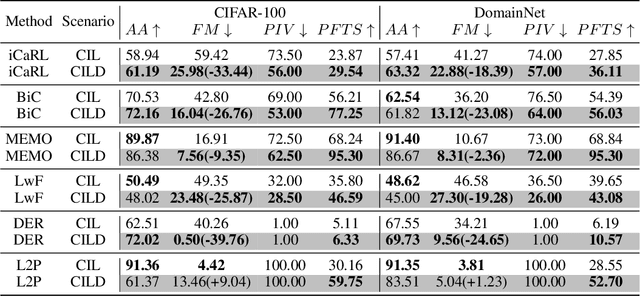
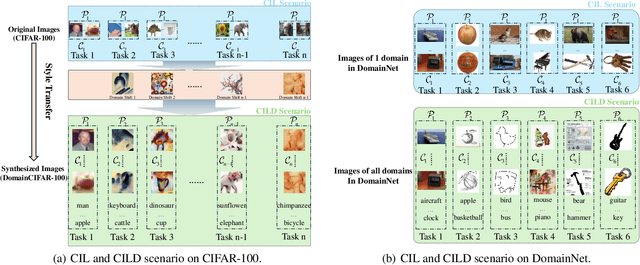
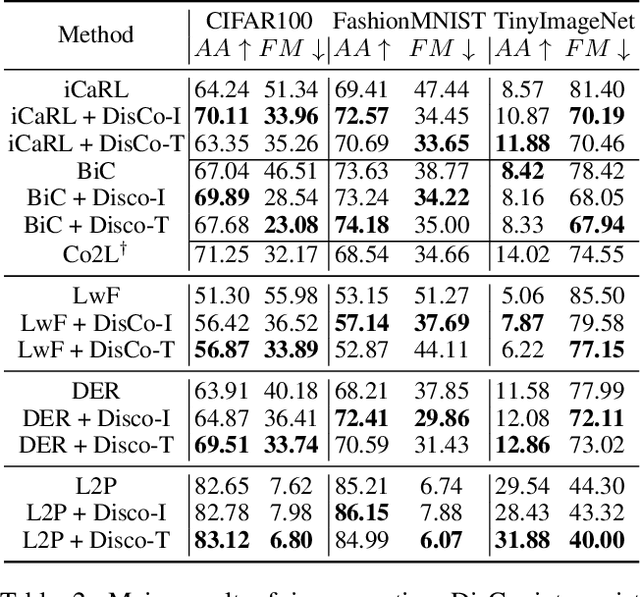
In the realm of class-incremental learning (CIL), alleviating the catastrophic forgetting problem is a pivotal challenge. This paper discovers a counter-intuitive observation: by incorporating domain shift into CIL tasks, the forgetting rate is significantly reduced. Our comprehensive studies demonstrate that incorporating domain shift leads to a clearer separation in the feature distribution across tasks and helps reduce parameter interference during the learning process. Inspired by this observation, we propose a simple yet effective method named DisCo to deal with CIL tasks. DisCo introduces a lightweight prototype pool that utilizes contrastive learning to promote distinct feature distributions for the current task relative to previous ones, effectively mitigating interference across tasks. DisCo can be easily integrated into existing state-of-the-art class-incremental learning methods. Experimental results show that incorporating our method into various CIL methods achieves substantial performance improvements, validating the benefits of our approach in enhancing class-incremental learning by separating feature representation and reducing interference. These findings illustrate that DisCo can serve as a robust fashion for future research in class-incremental learning.
OCRBench v2: An Improved Benchmark for Evaluating Large Multimodal Models on Visual Text Localization and Reasoning
Dec 31, 2024
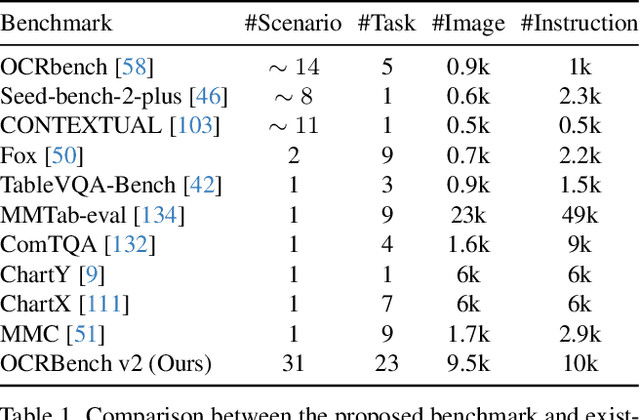
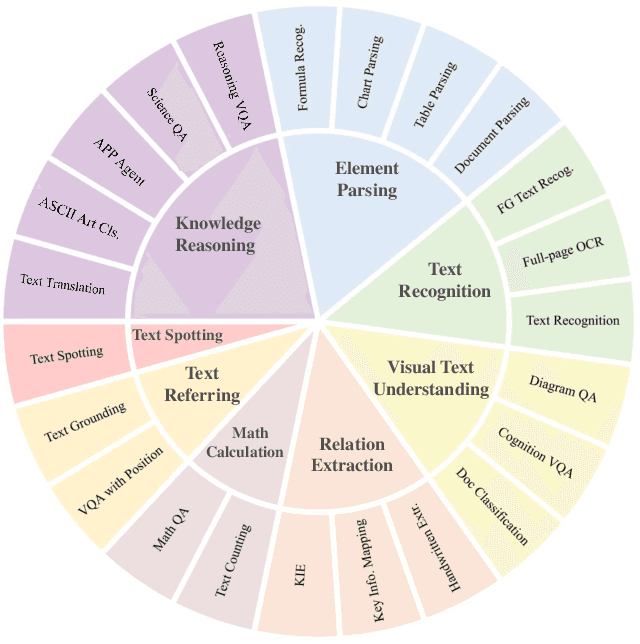
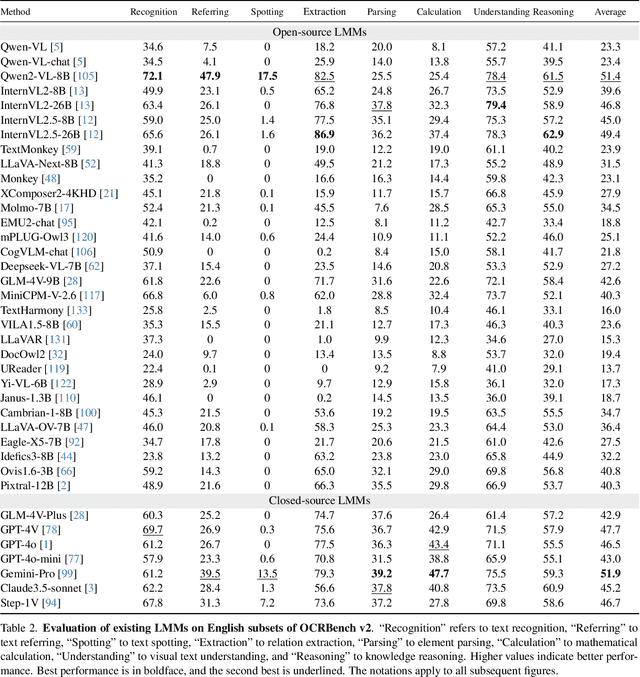
Scoring the Optical Character Recognition (OCR) capabilities of Large Multimodal Models (LMMs) has witnessed growing interest recently. Existing benchmarks have highlighted the impressive performance of LMMs in text recognition; however, their abilities on certain challenging tasks, such as text localization, handwritten content extraction, and logical reasoning, remain underexplored. To bridge this gap, we introduce OCRBench v2, a large-scale bilingual text-centric benchmark with currently the most comprehensive set of tasks (4x more tasks than the previous multi-scene benchmark OCRBench), the widest coverage of scenarios (31 diverse scenarios including street scene, receipt, formula, diagram, and so on), and thorough evaluation metrics, with a total of 10,000 human-verified question-answering pairs and a high proportion of difficult samples. After carefully benchmarking state-of-the-art LMMs on OCRBench v2, we find that 20 out of 22 LMMs score below 50 (100 in total) and suffer from five-type limitations, including less frequently encountered text recognition, fine-grained perception, layout perception, complex element parsing, and logical reasoning. The benchmark and evaluation scripts are available at https://github.com/Yuliang-liu/MultimodalOCR.
Do Current Video LLMs Have Strong OCR Abilities? A Preliminary Study
Dec 29, 2024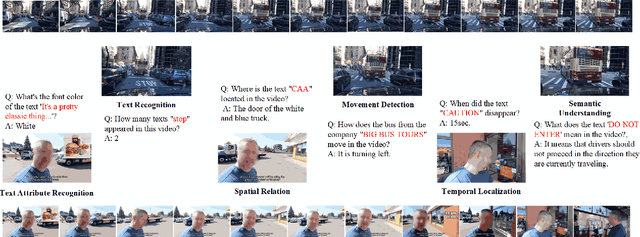
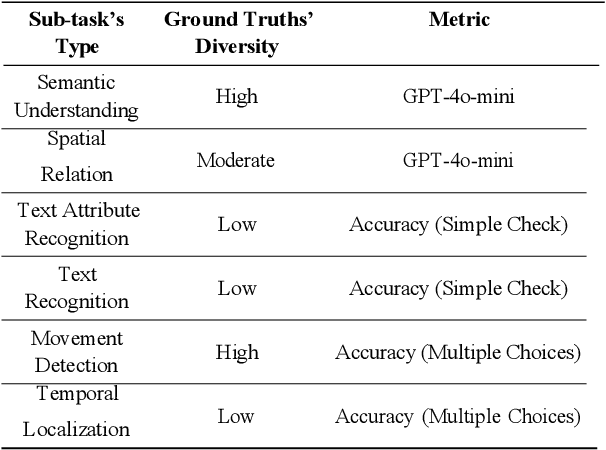
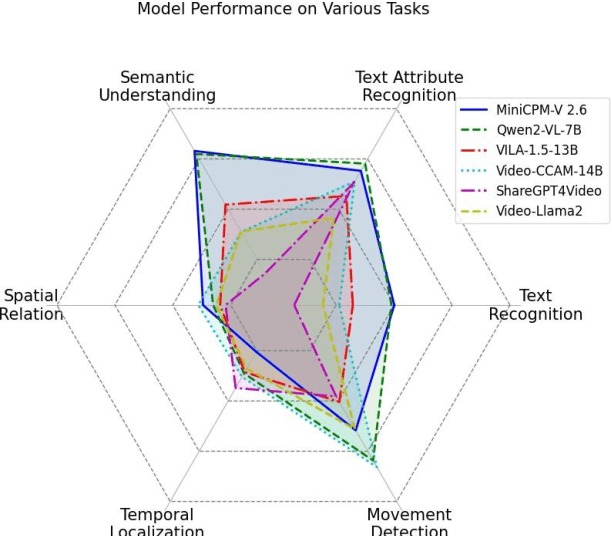
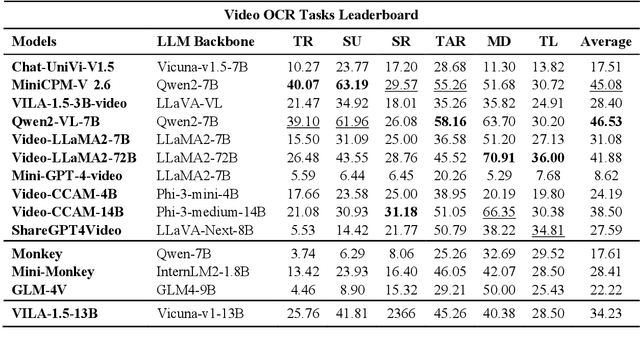
With the rise of multimodal large language models, accurately extracting and understanding textual information from video content, referred to as video based optical character recognition (Video OCR), has become a crucial capability. This paper introduces a novel benchmark designed to evaluate the video OCR performance of multi-modal models in videos. Comprising 1,028 videos and 2,961 question-answer pairs, this benchmark proposes several key challenges through 6 distinct subtasks: (1) Recognition of text content itself and its basic visual attributes, (2)Semantic and Spatial Comprehension of OCR objects in videos (3) Dynamic Motion detection and Temporal Localization. We developed this benchmark using a semi-automated approach that integrates the OCR ability of image LLMs with manual refinement, balancing efficiency, cost, and data quality. Our resource aims to help advance research in video LLMs and underscores the need for improving OCR ability for video LLMs. The benchmark will be released on https://github.com/YuHuiGao/FG-Bench.git.
UniAvatar: Taming Lifelike Audio-Driven Talking Head Generation with Comprehensive Motion and Lighting Control
Dec 26, 2024


Recently, animating portrait images using audio input is a popular task. Creating lifelike talking head videos requires flexible and natural movements, including facial and head dynamics, camera motion, realistic light and shadow effects. Existing methods struggle to offer comprehensive, multifaceted control over these aspects. In this work, we introduce UniAvatar, a designed method that provides extensive control over a wide range of motion and illumination conditions. Specifically, we use the FLAME model to render all motion information onto a single image, maintaining the integrity of 3D motion details while enabling fine-grained, pixel-level control. Beyond motion, this approach also allows for comprehensive global illumination control. We design independent modules to manage both 3D motion and illumination, permitting separate and combined control. Extensive experiments demonstrate that our method outperforms others in both broad-range motion control and lighting control. Additionally, to enhance the diversity of motion and environmental contexts in current datasets, we collect and plan to publicly release two datasets, DH-FaceDrasMvVid-100 and DH-FaceReliVid-200, which capture significant head movements during speech and various lighting scenarios.
A Tractable Approach for Queueing Analysis on Buffer-Aware Scheduling
Dec 25, 2024Low-latency communication has recently attracted considerable attention owing to its potential of enabling delay-sensitive services in next-generation industrial cyber-physical systems. To achieve target average or maximum delay given random arrivals and time-varying channels, buffer-aware scheduling is expected to play a vital role. Evaluating and optimizing buffer-aware scheduling relies on its queueing analysis, while existing tools are not sufficiently tractable. Particularly, Markov chain and Monte-Carlo based approaches are computationally intensive, while large deviation theory (LDT) and extreme value theory (EVT) fail in providing satisfactory accuracy in the small-queue-length (SQL) regime. To tackle these challenges, a tractable yet accurate queueing analysis is presented by judiciously bridging Markovian analysis for the computationally manageable SQL regime and LDT/EVT for large-queue-length (LQL) regime where approximation error diminishes asymptotically. Specifically, we leverage censored Markov chain augmentation to approximate the original one in the SQL regime, while a piecewise approach is conceived to apply LDT/EVT across various queue-length intervals with different scheduling parameters. Furthermore, we derive closed-form bounds on approximation errors, validating the rigor and accuracy of our approach. As a case study, the approach is applied to analytically analyze a Lyapunov-drift-based cross-layer scheduling for wireless transmissions. Numerical results demonstrate its potential in balancing accuracy and complexity.
Efficient Detection Framework Adaptation for Edge Computing: A Plug-and-play Neural Network Toolbox Enabling Edge Deployment
Dec 24, 2024Edge computing has emerged as a key paradigm for deploying deep learning-based object detection in time-sensitive scenarios. However, existing edge detection methods face challenges: 1) difficulty balancing detection precision with lightweight models, 2) limited adaptability of generalized deployment designs, and 3) insufficient real-world validation. To address these issues, we propose the Edge Detection Toolbox (ED-TOOLBOX), which utilizes generalizable plug-and-play components to adapt object detection models for edge environments. Specifically, we introduce a lightweight Reparameterized Dynamic Convolutional Network (Rep-DConvNet) featuring weighted multi-shape convolutional branches to enhance detection performance. Additionally, we design a Sparse Cross-Attention (SC-A) network with a localized-mapping-assisted self-attention mechanism, enabling a well-crafted joint module for adaptive feature transfer. For real-world applications, we incorporate an Efficient Head into the YOLO framework to accelerate edge model optimization. To demonstrate practical impact, we identify a gap in helmet detection -- overlooking band fastening, a critical safety factor -- and create the Helmet Band Detection Dataset (HBDD). Using ED-TOOLBOX-optimized models, we address this real-world task. Extensive experiments validate the effectiveness of ED-TOOLBOX, with edge detection models outperforming six state-of-the-art methods in visual surveillance simulations, achieving real-time and accurate performance. These results highlight ED-TOOLBOX as a superior solution for edge object detection.
Emerging Microelectronic Materials by Design: Navigating Combinatorial Design Space with Scarce and Dispersed Data
Dec 23, 2024
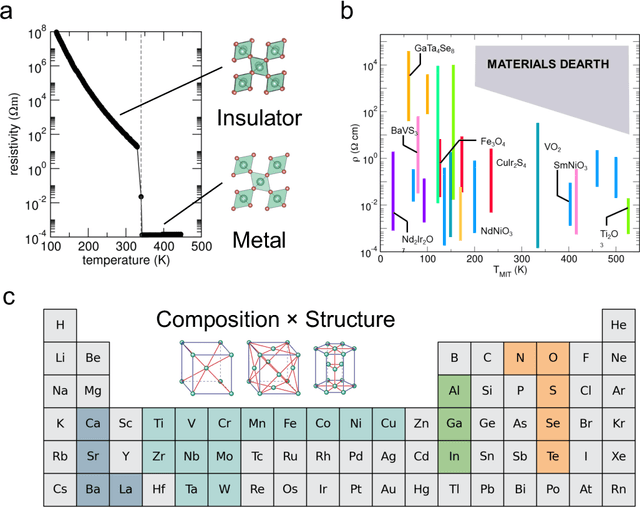
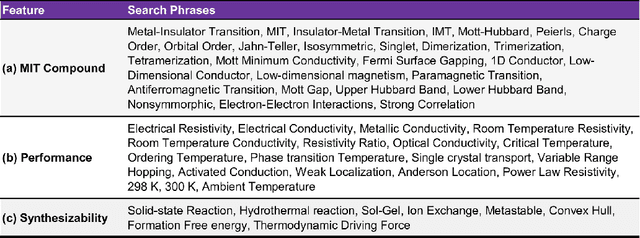
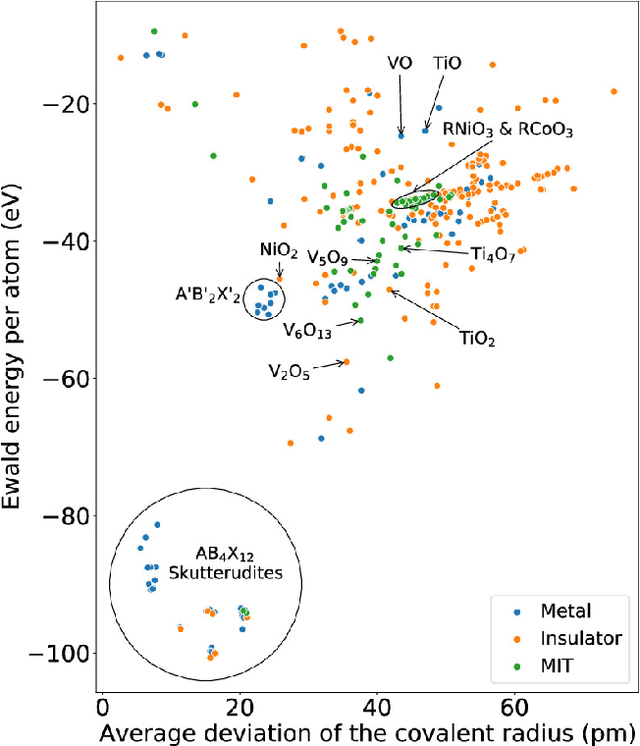
The increasing demands of sustainable energy, electronics, and biomedical applications call for next-generation functional materials with unprecedented properties. Of particular interest are emerging materials that display exceptional physical properties, making them promising candidates in energy-efficient microelectronic devices. As the conventional Edisonian approach becomes significantly outpaced by growing societal needs, emerging computational modeling and machine learning (ML) methods are employed for the rational design of materials. However, the complex physical mechanisms, cost of first-principles calculations, and the dispersity and scarcity of data pose challenges to both physics-based and data-driven materials modeling. Moreover, the combinatorial composition-structure design space is high-dimensional and often disjoint, making design optimization nontrivial. In this Account, we review a team effort toward establishing a framework that integrates data-driven and physics-based methods to address these challenges and accelerate materials design. We begin by presenting our integrated materials design framework and its three components in a general context. We then provide an example of applying this materials design framework to metal-insulator transition (MIT) materials, a specific type of emerging materials with practical importance in next-generation memory technologies. We identify multiple new materials which may display this property and propose pathways for their synthesis. Finally, we identify some outstanding challenges in data-driven materials design, such as materials data quality issues and property-performance mismatch. We seek to raise awareness of these overlooked issues hindering materials design, thus stimulating efforts toward developing methods to mitigate the gaps.
STKDRec: Spatial-Temporal Knowledge Distillation for Takeaway Recommendation
Dec 21, 2024The takeaway recommendation system is designed to recommend users' future takeaway purchases based on their historical purchase behaviors, thereby improving user satisfaction and increasing merchant sales. Existing methods focus on incorporating auxiliary information or leveraging knowledge graphs to alleviate the sparsity issue of user purchase sequence data. However, two main challenges limit the performance of these approaches: (1) how to capture dynamic user preferences on complex geospatial information and (2) how to efficiently integrate spatial-temporal knowledge from graphs and sequence data with low calculation costs. In this paper, we propose a novel spatial-temporal knowledge distillation for takeaway recommendation model (STKDRec) based on the two-stage training process. Specifically, during the first pre-training stage, a spatial-temporal knowledge graph (STKG) encoder is pre-trained to extract the high-order spatial-temporal and collaborative associations within the STKG. During the second STKD stage, a spatial-temporal Transformer is employed to comprehensively model dynamic user preferences on various types of fine-grained geospatial information from a sequence perspective. Furthermore, the STKD strategy is introduced to adaptively fuse the rich spatial-temporal knowledge from the pre-trained STKG encoder and the spatial-temporal transformer while reducing the cost of model training. Extensive experiments on three real-world datasets show that our STKDRec significantly outperforms the state-of-the-art baselines. Our code is available at:https://github.com/Zhaoshuyuan0246/STKDRec.
CognTKE: A Cognitive Temporal Knowledge Extrapolation Framework
Dec 21, 2024


Reasoning future unknowable facts on temporal knowledge graphs (TKGs) is a challenging task, holding significant academic and practical values for various fields. Existing studies exploring explainable reasoning concentrate on modeling comprehensible temporal paths relevant to the query. Yet, these path-based methods primarily focus on local temporal paths appearing in recent times, failing to capture the complex temporal paths in TKG and resulting in the loss of longer historical relations related to the query. Motivated by the Dual Process Theory in cognitive science, we propose a \textbf{Cogn}itive \textbf{T}emporal \textbf{K}nowledge \textbf{E}xtrapolation framework (CognTKE), which introduces a novel temporal cognitive relation directed graph (TCR-Digraph) and performs interpretable global shallow reasoning and local deep reasoning over the TCR-Digraph. Specifically, the proposed TCR-Digraph is constituted by retrieving significant local and global historical temporal relation paths associated with the query. In addition, CognTKE presents the global shallow reasoner and the local deep reasoner to perform global one-hop temporal relation reasoning (System 1) and local complex multi-hop path reasoning (System 2) over the TCR-Digraph, respectively. The experimental results on four benchmark datasets demonstrate that CognTKE achieves significant improvement in accuracy compared to the state-of-the-art baselines and delivers excellent zero-shot reasoning ability. \textit{The code is available at https://github.com/WeiChen3690/CognTKE}.