 Add to Chrome
 Add to Firefox
 Add to Edge
An Empirical Study of Instruction-tuning Large Language Models in Chinese
Oct 20, 2023
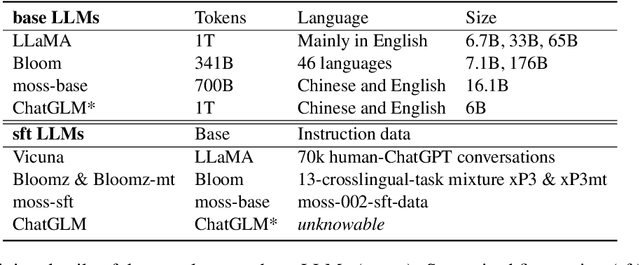

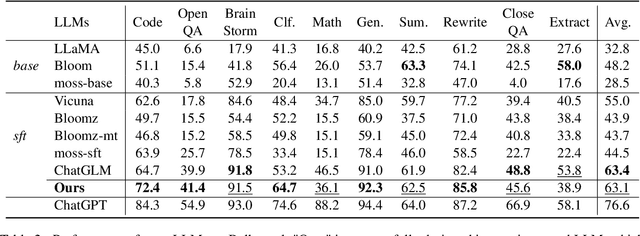
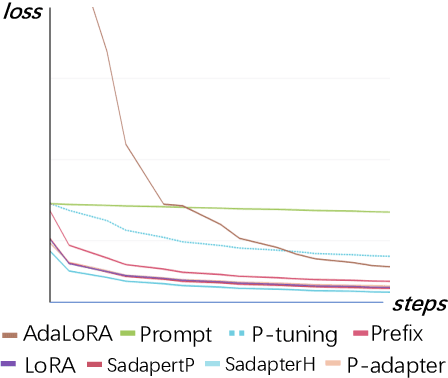
The success of ChatGPT validates the potential of large language models (LLMs) in artificial general intelligence (AGI). Subsequently, the release of LLMs has sparked the open-source community's interest in instruction-tuning, which is deemed to accelerate ChatGPT's replication process. However, research on instruction-tuning LLMs in Chinese, the world's most spoken language, is still in its early stages. Therefore, this paper makes an in-depth empirical study of instruction-tuning LLMs in Chinese, which can serve as a cookbook that provides valuable findings for effectively customizing LLMs that can better respond to Chinese instructions. Specifically, we systematically explore the impact of LLM bases, parameter-efficient methods, instruction data types, which are the three most important elements for instruction-tuning. Besides, we also conduct experiment to study the impact of other factors, e.g., chain-of-thought data and human-value alignment. We hope that this empirical study can make a modest contribution to the open Chinese version of ChatGPT. This paper will release a powerful Chinese LLMs that is comparable to ChatGLM. The code and data are available at https://github.com/PhoebusSi/Alpaca-CoT.

Adaptive Multi-NeRF: Exploit Efficient Parallelism in Adaptive Multiple Scale Neural Radiance Field Rendering
Oct 03, 2023Recent advances in Neural Radiance Fields (NeRF) have demonstrated significant potential for representing 3D scene appearances as implicit neural networks, enabling the synthesis of high-fidelity novel views. However, the lengthy training and rendering process hinders the widespread adoption of this promising technique for real-time rendering applications. To address this issue, we present an effective adaptive multi-NeRF method designed to accelerate the neural rendering process for large scenes with unbalanced workloads due to varying scene complexities. Our method adaptively subdivides scenes into axis-aligned bounding boxes using a tree hierarchy approach, assigning smaller NeRFs to different-sized subspaces based on the complexity of each scene portion. This ensures the underlying neural representation is specific to a particular part of the scene. We optimize scene subdivision by employing a guidance density grid, which balances representation capability for each Multilayer Perceptron (MLP). Consequently, samples generated by each ray can be sorted and collected for parallel inference, achieving a balanced workload suitable for small MLPs with consistent dimensions for regular and GPU-friendly computations. We aosl demonstrated an efficient NeRF sampling strategy that intrinsically adapts to increase parallelism, utilization, and reduce kernel calls, thereby achieving much higher GPU utilization and accelerating the rendering process.
M-OFDFT: Overcoming the Barrier of Orbital-Free Density Functional Theory for Molecular Systems Using Deep Learning
Sep 28, 2023Orbital-free density functional theory (OFDFT) is a quantum chemistry formulation that has a lower cost scaling than the prevailing Kohn-Sham DFT, which is increasingly desired for contemporary molecular research. However, its accuracy is limited by the kinetic energy density functional, which is notoriously hard to approximate for non-periodic molecular systems. In this work, we propose M-OFDFT, an OFDFT approach capable of solving molecular systems using a deep-learning functional model. We build the essential nonlocality into the model, which is made affordable by the concise density representation as expansion coefficients under an atomic basis. With techniques to address unconventional learning challenges therein, M-OFDFT achieves a comparable accuracy with Kohn-Sham DFT on a wide range of molecules untouched by OFDFT before. More attractively, M-OFDFT extrapolates well to molecules much larger than those in training, which unleashes the appealing scaling for studying large molecules including proteins, representing an advancement of the accuracy-efficiency trade-off frontier in quantum chemistry.
DropPos: Pre-Training Vision Transformers by Reconstructing Dropped Positions
Sep 22, 2023As it is empirically observed that Vision Transformers (ViTs) are quite insensitive to the order of input tokens, the need for an appropriate self-supervised pretext task that enhances the location awareness of ViTs is becoming evident. To address this, we present DropPos, a novel pretext task designed to reconstruct Dropped Positions. The formulation of DropPos is simple: we first drop a large random subset of positional embeddings and then the model classifies the actual position for each non-overlapping patch among all possible positions solely based on their visual appearance. To avoid trivial solutions, we increase the difficulty of this task by keeping only a subset of patches visible. Additionally, considering there may be different patches with similar visual appearances, we propose position smoothing and attentive reconstruction strategies to relax this classification problem, since it is not necessary to reconstruct their exact positions in these cases. Empirical evaluations of DropPos show strong capabilities. DropPos outperforms supervised pre-training and achieves competitive results compared with state-of-the-art self-supervised alternatives on a wide range of downstream benchmarks. This suggests that explicitly encouraging spatial reasoning abilities, as DropPos does, indeed contributes to the improved location awareness of ViTs. The code is publicly available at https://github.com/Haochen-Wang409/DropPos.
Wasserstein Generative Regression
Jun 27, 2023In this paper, we propose a new and unified approach for nonparametric regression and conditional distribution learning. Our approach simultaneously estimates a regression function and a conditional generator using a generative learning framework, where a conditional generator is a function that can generate samples from a conditional distribution. The main idea is to estimate a conditional generator that satisfies the constraint that it produces a good regression function estimator. We use deep neural networks to model the conditional generator. Our approach can handle problems with multivariate outcomes and covariates, and can be used to construct prediction intervals. We provide theoretical guarantees by deriving non-asymptotic error bounds and the distributional consistency of our approach under suitable assumptions. We also perform numerical experiments with simulated and real data to demonstrate the effectiveness and superiority of our approach over some existing approaches in various scenarios.
Fragment-based t-SMILES for de novo molecular generation
Jan 04, 2023At present, sequence-based and graph-based models are two of popular used molecular generative models. In this study, we introduce a general-purposed, fragment-based, hierarchical molecular representation named t-SMILES (tree-based SMILES) which describes molecules using a SMILES-type string obtained by doing breadth first search (BFS) on full binary molecular tree formed from fragmented molecular graph. The proposed t-SMILES combines the advantages of graph model paying more attention to molecular topology structure and language model possessing powerful learning ability. Experiments with feature tree rooted JTVAE and chemical reaction-based BRICS molecular decomposing algorithms using sequence-based autoregressive generation models on three popular molecule datasets including Zinc, QM9 and ChEMBL datasets indicate that t-SMILES based models significantly outperform previously proposed fragment-based models and being competitive with classical SMILES based and graph-based approaches. Most importantly, we proposed a new perspective for fragment based molecular designing. Hence, SOTA powerful sequence-based solutions could be easily applied for fragment based molecular tasks.
Semantics-Consistent Feature Search for Self-Supervised Visual Representation Learning
Dec 13, 2022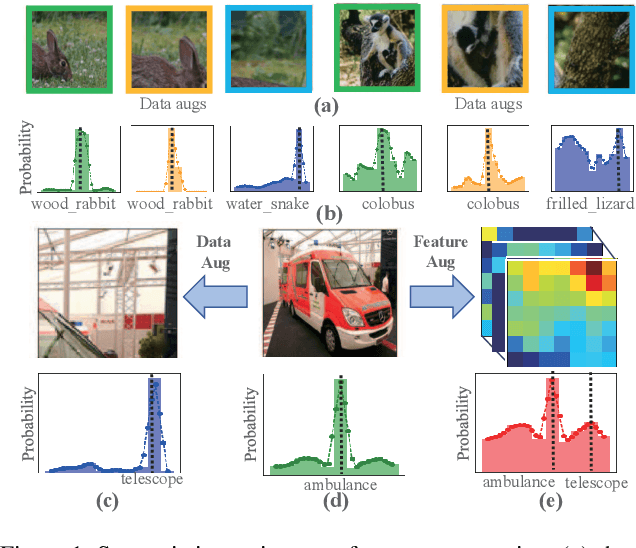
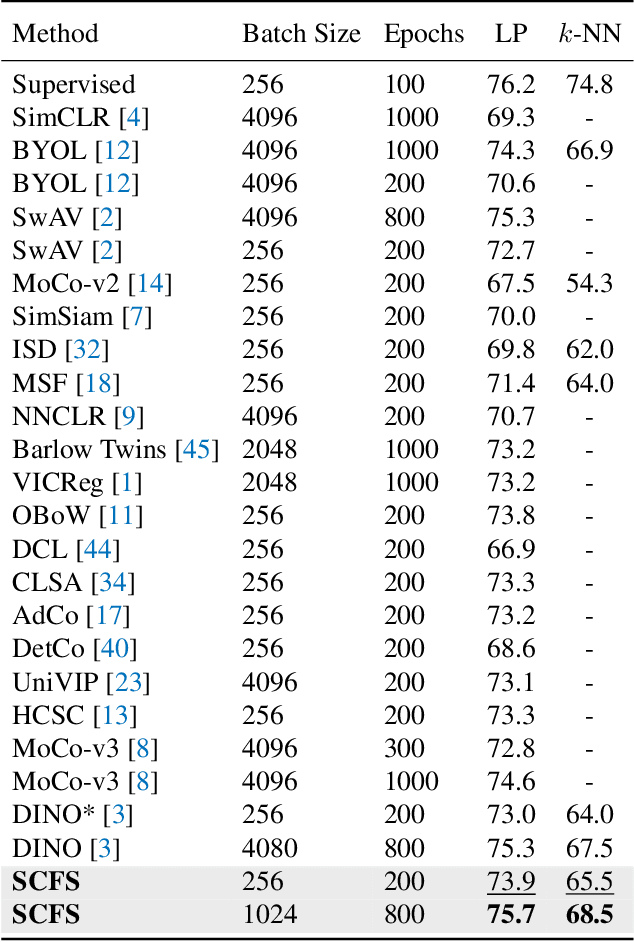
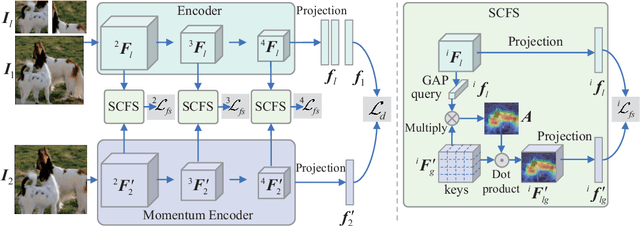
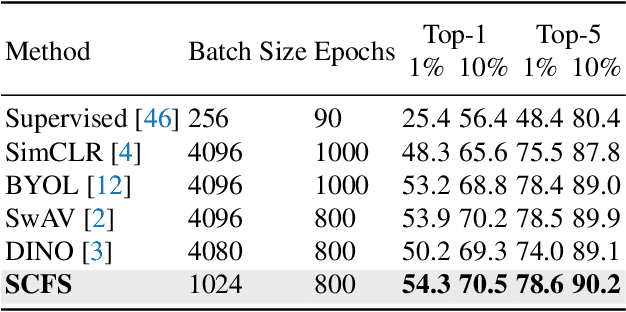
In contrastive self-supervised learning, the common way to learn discriminative representation is to pull different augmented "views" of the same image closer while pushing all other images further apart, which has been proven to be effective. However, it is unavoidable to construct undesirable views containing different semantic concepts during the augmentation procedure. It would damage the semantic consistency of representation to pull these augmentations closer in the feature space indiscriminately. In this study, we introduce feature-level augmentation and propose a novel semantics-consistent feature search (SCFS) method to mitigate this negative effect. The main idea of SCFS is to adaptively search semantics-consistent features to enhance the contrast between semantics-consistent regions in different augmentations. Thus, the trained model can learn to focus on meaningful object regions, improving the semantic representation ability. Extensive experiments conducted on different datasets and tasks demonstrate that SCFS effectively improves the performance of self-supervised learning and achieves state-of-the-art performance on different downstream tasks.
GPT-3-driven pedagogical agents for training children's curious question-asking skills
Dec 08, 2022Students' ability to ask curious questions is a crucial skill that improves their learning processes. To train this skill, previous research has used a conversational agent that propose specific cues to prompt children's curiosity during learning. Despite showing pedagogical efficiency, this method is still limited since it relies on generating the said prompts by hand for each educational resource, which can be a very long and costly process. In this context, we leverage the advances in the natural language processing field and explore using a large language model (GPT-3) to automate the generation of this agent's curiosity-prompting cues to help children ask more and deeper questions. We then used this study to investigate a different curiosity-prompting behavior for the agent. The study was conducted with 75 students aged between 9 and 10. They either interacted with a hand-crafted conversational agent that proposes "closed" manually-extracted cues leading to predefined questions, a GPT-3-driven one that proposes the same type of cues, or a GPT-3-driven one that proposes "open" cues that can lead to several possible questions. Results showed a similar question-asking performance between children who had the two "closed" agents, but a significantly better one for participants with the "open" agent. Our first results suggest the validity of using GPT-3 to facilitate the implementation of curiosity-stimulating learning technologies. In a second step, we also show that GPT-3 can be efficient in proposing the relevant open cues that leave children with more autonomy to express their curiosity.
An ensemble of VisNet, Transformer-M, and pretraining models for molecular property prediction in OGB Large-Scale Challenge @ NeurIPS 2022
Nov 23, 2022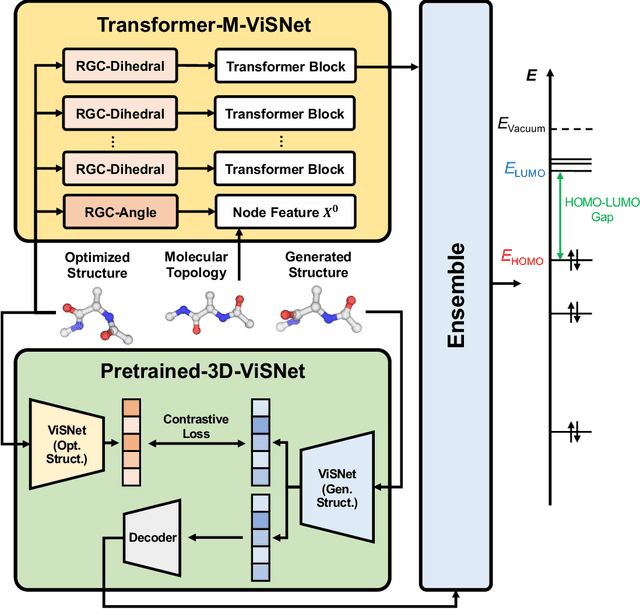
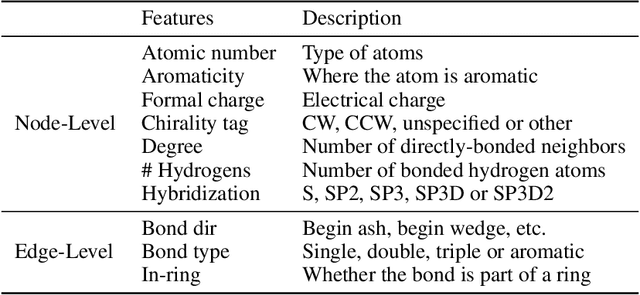
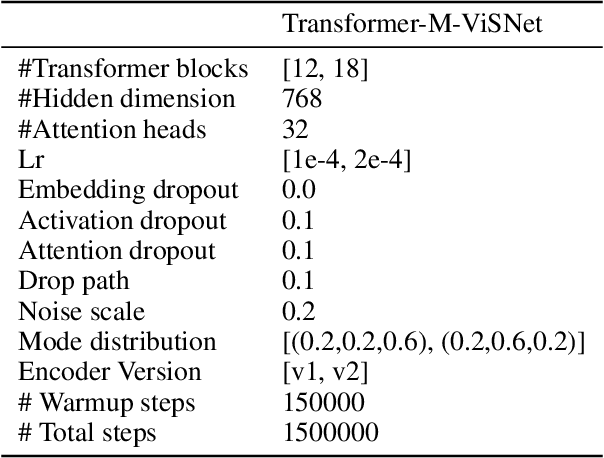
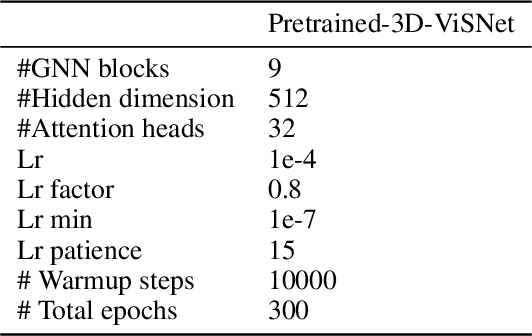
In the technical report, we provide our solution for OGB-LSC 2022 Graph Regression Task. The target of this task is to predict the quantum chemical property, HOMO-LUMO gap for a given molecule on PCQM4Mv2 dataset. In the competition, we designed two kinds of models: Transformer-M-ViSNet which is an geometry-enhanced graph neural network for fully connected molecular graphs and Pretrained-3D-ViSNet which is a pretrained ViSNet by distilling geomeotric information from optimized structures. With an ensemble of 22 models, ViSNet Team achieved the MAE of 0.0723 eV on the test-challenge set, dramatically reducing the error by 39.75% compared with the best method in the last year competition.
ProtoX: Explaining a Reinforcement Learning Agent via Prototyping
Nov 06, 2022While deep reinforcement learning has proven to be successful in solving control tasks, the "black-box" nature of an agent has received increasing concerns. We propose a prototype-based post-hoc policy explainer, ProtoX, that explains a blackbox agent by prototyping the agent's behaviors into scenarios, each represented by a prototypical state. When learning prototypes, ProtoX considers both visual similarity and scenario similarity. The latter is unique to the reinforcement learning context, since it explains why the same action is taken in visually different states. To teach ProtoX about visual similarity, we pre-train an encoder using contrastive learning via self-supervised learning to recognize states as similar if they occur close together in time and receive the same action from the black-box agent. We then add an isometry layer to allow ProtoX to adapt scenario similarity to the downstream task. ProtoX is trained via imitation learning using behavior cloning, and thus requires no access to the environment or agent. In addition to explanation fidelity, we design different prototype shaping terms in the objective function to encourage better interpretability. We conduct various experiments to test ProtoX. Results show that ProtoX achieved high fidelity to the original black-box agent while providing meaningful and understandable explanations.