 Add to Chrome
 Add to Firefox
 Add to Edge
Dynamically Allocating Evaluation Effort for Model Ranking
Aug 04, 2026
While human evaluation is the gold standard in many NLP tasks, it suffers from prohibitive costs and poor scalability. When identifying top-performing models, typical evaluation protocols waste effort by exhaustively evaluating all models on the entire benchmark, a safe but inefficient approach. In this work, we formalize multi-model human evaluation as a best-arm identification problem in a multi-armed bandit setup with correlated arms, where pulling an arm corresponds to human-evaluating a model. By sampling adaptively based on the intermediate model rankings obtained on the samples so far, we can focus the annotation budget on the most competitive models. We prove the optimality of the proposed algorithms and show that it improves discrimination between top-performing models. This makes evaluations faster, cheaper and more aligned with large-scale competition evaluation goals.

Contrastive ESA: Human Evaluation of Multiple Translations at Once
Jul 29, 2026Current human evaluation of machine translation typically assesses single outputs in isolation, a paradigm that suffers from high annotator noise and cost. We introduce Contrastive Error Span Annotation (cESA), a protocol that presents multiple translations of the source input (text, video, audio, image). In cESA, the annotator sees multiple translations of the same document, marks major and minor error spans, and then assigns a score from 0% to 100% on absolute scale. By allowing annotators to access the shared context across multiple outputs, cESA facilitates more consistent and efficient judgments. We validate cESA using a large-scale human evaluation of English->Japanese translations of 12 models, demonstrating reductions in annotation time and noise compared to standard pointwise evaluation. Unlike existing contrastive ranking methods, cESA yields absolute quality judgments that enable simple, interpretable non-parametric model rankings without the need for post-hoc corrections.
Tiny Aya: Bridging Scale and Multilingual Depth
Mar 12, 2026Tiny Aya redefines what a small multilingual language model can achieve. Trained on 70 languages and refined through region-aware posttraining, it delivers state-of-the-art in translation quality, strong multilingual understanding, and high-quality target-language generation, all with just 3.35B parameters. The release includes a pretrained foundation model, a globally balanced instruction-tuned variant, and three region-specialized models targeting languages from Africa, South Asia, Europe, Asia-Pacific, and West Asia. This report details the training strategy, data composition, and comprehensive evaluation framework behind Tiny Aya, and presents an alternative scaling path for multilingual AI: one centered on efficiency, balanced performance across languages, and practical deployment.
Unlocking Reasoning Capability on Machine Translation in Large Language Models
Feb 16, 2026Reasoning-oriented large language models (RLMs) achieve strong gains on tasks such as mathematics and coding by generating explicit intermediate reasoning. However, their impact on machine translation (MT) remains underexplored. We systematically evaluate several open- and closed-weights RLMs on the WMT24++ benchmark and find that enabling explicit reasoning consistently degrades translation quality across languages and models. Analysis reveals that MT reasoning traces are highly linear, lacking revision, self-correction and exploration of alternative translations, which limits their usefulness. Furthermore, injecting higher-quality reasoning traces from stronger models does not reliably improve weaker models' performance. To address this mismatch, we propose a structured reasoning framework tailored to translation, based on multi-step drafting, adequacy refinement, fluency improvement, and selective iterative revision. We curate a synthetic dataset of dynamic structured reasoning traces and post-train a large reasoning model on this data. Experiments show significant improvements over standard translation fine-tuning and injected generic reasoning baselines. Our findings demonstrate that reasoning must be task-structured to benefit MT.
Pearmut: Human Evaluation of Translation Made Trivial
Jan 06, 2026Human evaluation is the gold standard for multilingual NLP, but is often skipped in practice and substituted with automatic metrics, because it is notoriously complex and slow to set up with existing tools with substantial engineering and operational overhead. We introduce Pearmut, a lightweight yet feature-rich platform that makes end-to-end human evaluation as easy to run as automatic evaluation. Pearmut removes common entry barriers and provides support for evaluating multilingual tasks, with a particular focus on machine translation. The platform implements standard evaluation protocols, including DA, ESA, or MQM, but is also extensible to allow prototyping new protocols. It features document-level context, absolute and contrastive evaluation, attention checks, ESAAI pre-annotations and both static and active learning-based assignment strategies. Pearmut enables reliable human evaluation to become a practical, routine component of model development and diagnosis rather than an occasional effort.
Estimating Machine Translation Difficulty
Aug 13, 2025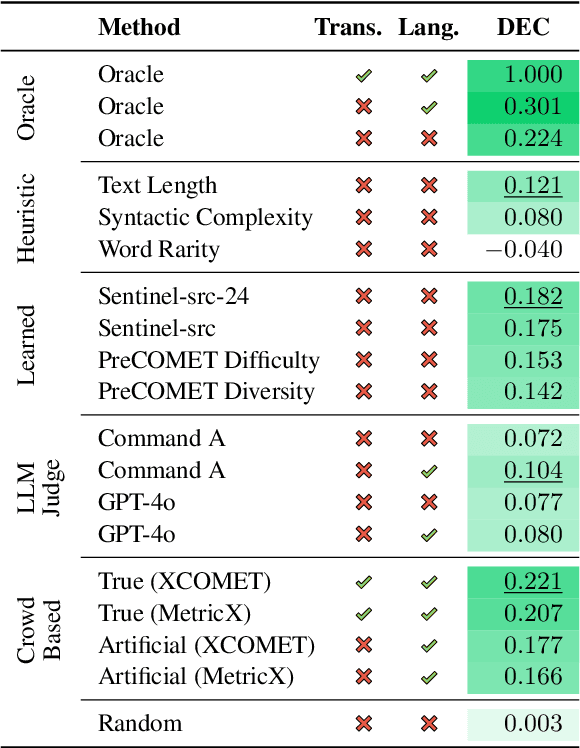
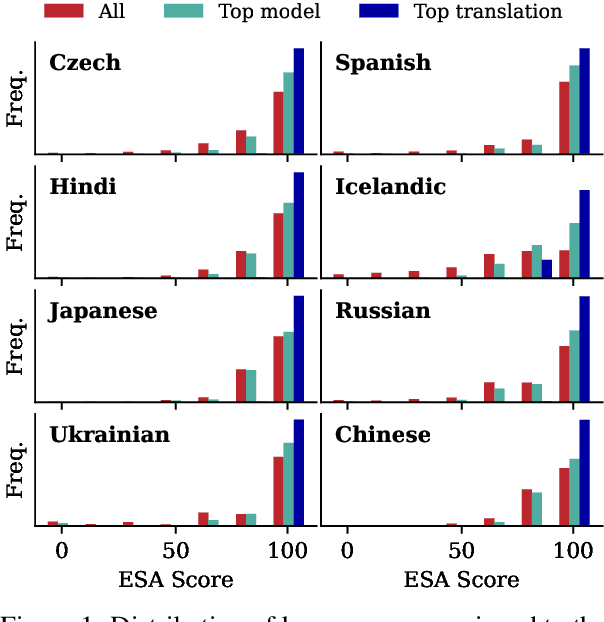
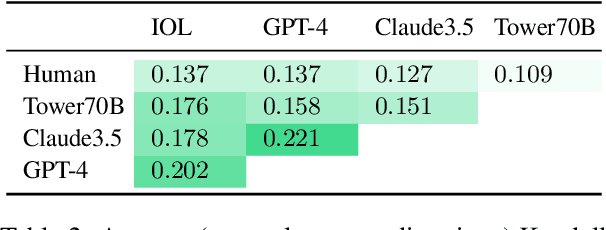
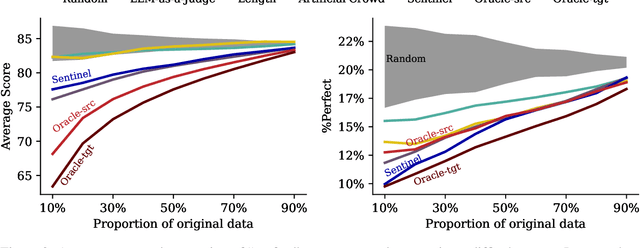
Machine translation quality has began achieving near-perfect translations in some setups. These high-quality outputs make it difficult to distinguish between state-of-the-art models and to identify areas for future improvement. Automatically identifying texts where machine translation systems struggle holds promise for developing more discriminative evaluations and guiding future research. We formalize the task of translation difficulty estimation, defining a text's difficulty based on the expected quality of its translations. We introduce a new metric to evaluate difficulty estimators and use it to assess both baselines and novel approaches. Finally, we demonstrate the practical utility of difficulty estimators by using them to construct more challenging machine translation benchmarks. Our results show that dedicated models (dubbed Sentinel-src) outperform both heuristic-based methods (e.g. word rarity or syntactic complexity) and LLM-as-a-judge approaches. We release two improved models for difficulty estimation, Sentinel-src-24 and Sentinel-src-25, which can be used to scan large collections of texts and select those most likely to challenge contemporary machine translation systems.
Command A: An Enterprise-Ready Large Language Model
Apr 01, 2025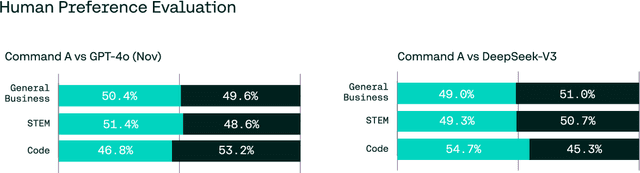
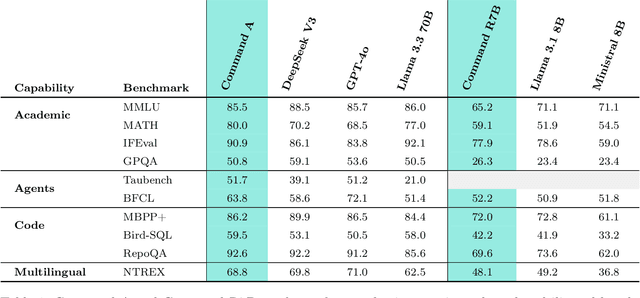
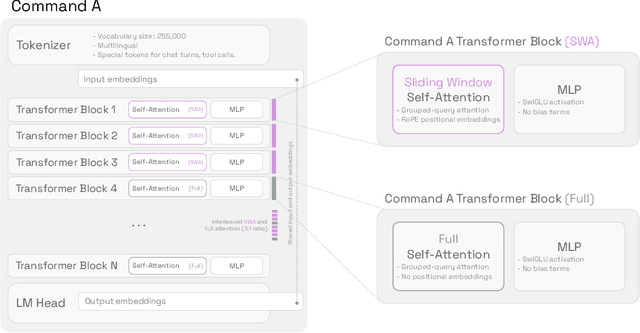
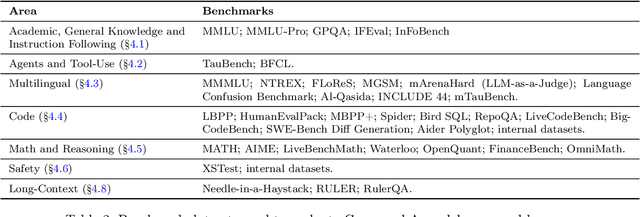
In this report we describe the development of Command A, a powerful large language model purpose-built to excel at real-world enterprise use cases. Command A is an agent-optimised and multilingual-capable model, with support for 23 languages of global business, and a novel hybrid architecture balancing efficiency with top of the range performance. It offers best-in-class Retrieval Augmented Generation (RAG) capabilities with grounding and tool use to automate sophisticated business processes. These abilities are achieved through a decentralised training approach, including self-refinement algorithms and model merging techniques. We also include results for Command R7B which shares capability and architectural similarities to Command A. Weights for both models have been released for research purposes. This technical report details our original training pipeline and presents an extensive evaluation of our models across a suite of enterprise-relevant tasks and public benchmarks, demonstrating excellent performance and efficiency.
Aya Expanse: Combining Research Breakthroughs for a New Multilingual Frontier
Dec 05, 2024


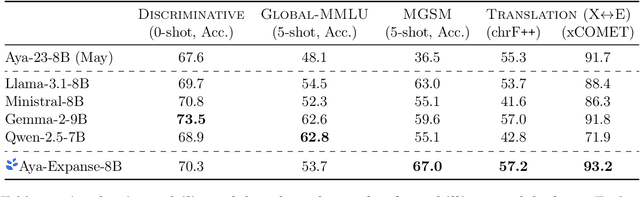
We introduce the Aya Expanse model family, a new generation of 8B and 32B parameter multilingual language models, aiming to address the critical challenge of developing highly performant multilingual models that match or surpass the capabilities of monolingual models. By leveraging several years of research at Cohere For AI and Cohere, including advancements in data arbitrage, multilingual preference training, and model merging, Aya Expanse sets a new state-of-the-art in multilingual performance. Our evaluations on the Arena-Hard-Auto dataset, translated into 23 languages, demonstrate that Aya Expanse 8B and 32B outperform leading open-weight models in their respective parameter classes, including Gemma 2, Qwen 2.5, and Llama 3.1, achieving up to a 76.6% win-rate. Notably, Aya Expanse 32B outperforms Llama 3.1 70B, a model with twice as many parameters, achieving a 54.0% win-rate. In this short technical report, we present extended evaluation results for the Aya Expanse model family and release their open-weights, together with a new multilingual evaluation dataset m-ArenaHard.
Preliminary WMT24 Ranking of General MT Systems and LLMs
Jul 29, 2024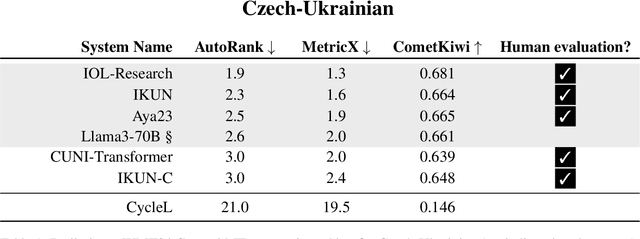
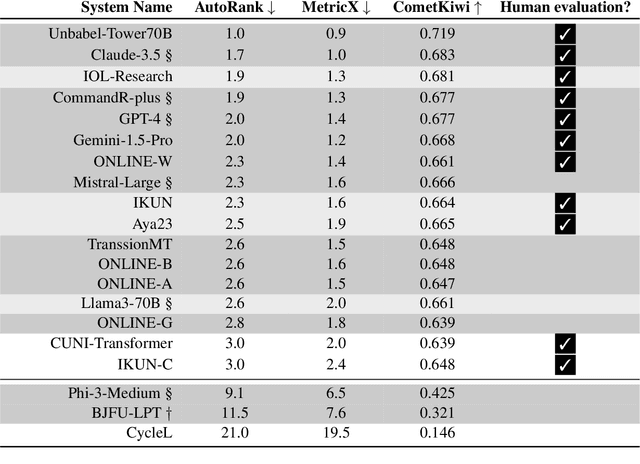
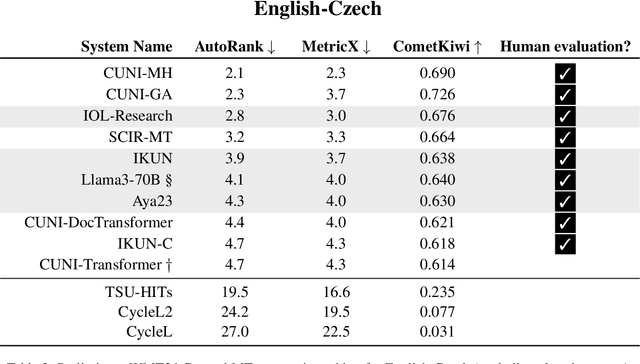
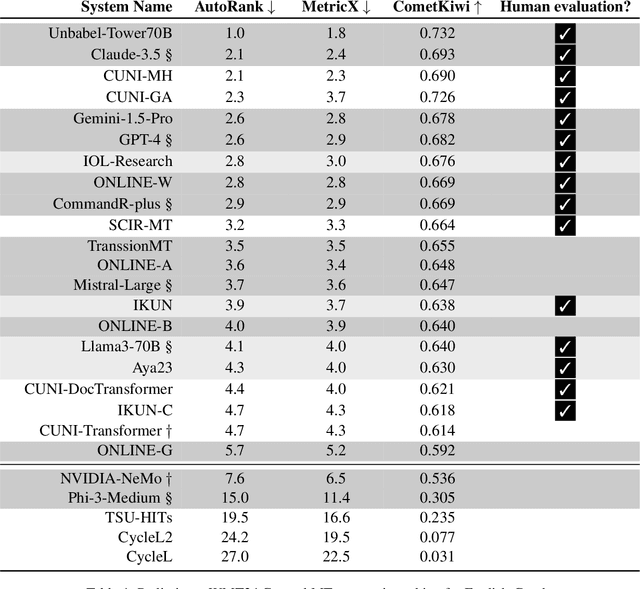
This is the preliminary ranking of WMT24 General MT systems based on automatic metrics. The official ranking will be a human evaluation, which is superior to the automatic ranking and supersedes it. The purpose of this report is not to interpret any findings but only provide preliminary results to the participants of the General MT task that may be useful during the writing of the system submission.
AI-Assisted Human Evaluation of Machine Translation
Jun 18, 2024
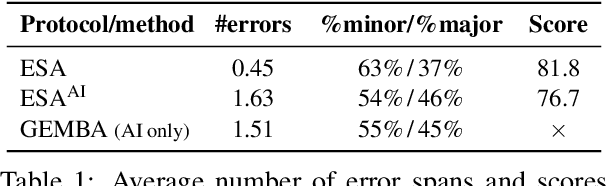
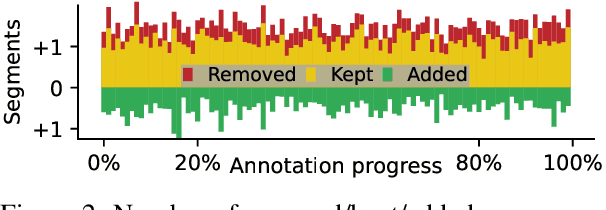
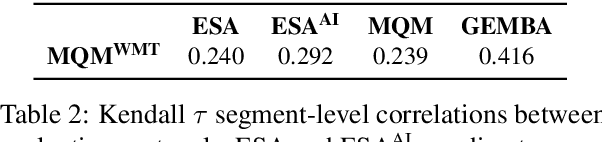
Annually, research teams spend large amounts of money to evaluate the quality of machine translation systems (WMT, inter alia). This is expensive because it requires detailed human labor. The recently proposed annotation protocol, Error Span Annotation (ESA), has annotators marking erroneous parts of the translation. In our work, we help the annotators by pre-filling the span annotations with automatic quality estimation. With AI assistance, we obtain more detailed annotations while cutting down the time per span annotation by half (71s/error span $\rightarrow$ 31s/error span). The biggest advantage of ESA$^\mathrm{AI}$ protocol is an accurate priming of annotators (pre-filled error spans) before they assign the final score as opposed to starting from scratch. In addition, the annotation budget can be reduced by up to 24% with filtering of examples that the AI deems to be very likely to be correct.