 Add to Chrome
 Add to Firefox
 Add to Edge
NovoBench: Benchmarking Deep Learning-based De Novo Peptide Sequencing Methods in Proteomics
Jun 16, 2024
Tandem mass spectrometry has played a pivotal role in advancing proteomics, enabling the high-throughput analysis of protein composition in biological tissues. Many deep learning methods have been developed for \emph{de novo} peptide sequencing task, i.e., predicting the peptide sequence for the observed mass spectrum. However, two key challenges seriously hinder the further advancement of this important task. Firstly, since there is no consensus for the evaluation datasets, the empirical results in different research papers are often not comparable, leading to unfair comparison. Secondly, the current methods are usually limited to amino acid-level or peptide-level precision and recall metrics. In this work, we present the first unified benchmark NovoBench for \emph{de novo} peptide sequencing, which comprises diverse mass spectrum data, integrated models, and comprehensive evaluation metrics. Recent impressive methods, including DeepNovo, PointNovo, Casanovo, InstaNovo, AdaNovo and $\pi$-HelixNovo are integrated into our framework. In addition to amino acid-level and peptide-level precision and recall, we evaluate the models' performance in terms of identifying post-tranlational modifications (PTMs), efficiency and robustness to peptide length, noise peaks and missing fragment ratio, which are important influencing factors while seldom be considered. Leveraging this benchmark, we conduct a large-scale study of current methods, report many insightful findings that open up new possibilities for future development. The benchmark will be open-sourced to facilitate future research and application.

Short-Long Convolutions Help Hardware-Efficient Linear Attention to Focus on Long Sequences
Jun 12, 2024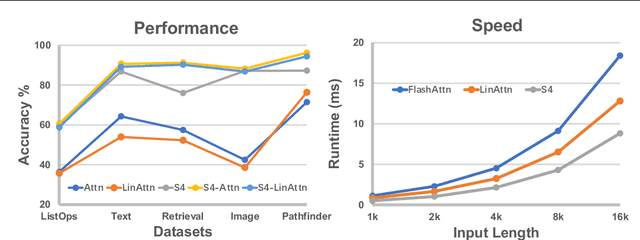

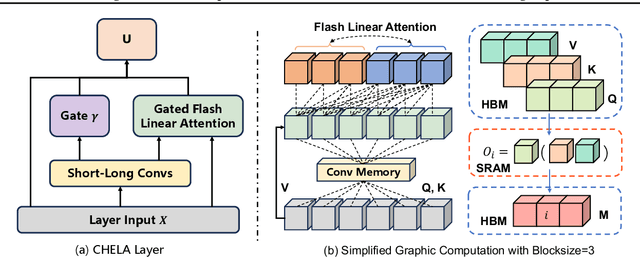
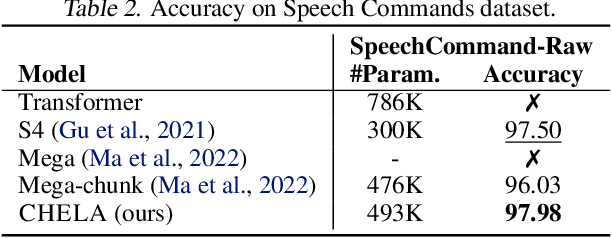
To mitigate the computational complexity in the self-attention mechanism on long sequences, linear attention utilizes computation tricks to achieve linear complexity, while state space models (SSMs) popularize a favorable practice of using non-data-dependent memory pattern, i.e., emphasize the near and neglect the distant, to processing sequences. Recent studies have shown the priorities by combining them as one. However, the efficiency of linear attention remains only at the theoretical level in a causal setting, and SSMs require various designed constraints to operate effectively on specific data. Therefore, in order to unveil the true power of the hybrid design, the following two issues need to be addressed: (1) hardware-efficient implementation for linear attention and (2) stabilization of SSMs. To achieve this, we leverage the thought of tiling and hierarchy to propose CHELA (short-long Convolutions with Hardware-Efficient Linear Attention), which replaces SSMs with short-long convolutions and implements linear attention in a divide-and-conquer manner. This approach enjoys global abstraction and data-dependent selection from stable SSM and linear attention while maintaining real linear complexity. Our comprehensive experiments on the Long Range Arena benchmark and language modeling tasks demonstrate the effectiveness of the proposed method.
Gentle-CLIP: Exploring Aligned Semantic In Low-Quality Multimodal Data With Soft Alignment
Jun 09, 2024Multimodal fusion breaks through the barriers between diverse modalities and has already yielded numerous impressive performances. However, in various specialized fields, it is struggling to obtain sufficient alignment data for the training process, which seriously limits the use of previously elegant models. Thus, semi-supervised learning attempts to achieve multimodal alignment with fewer matched pairs but traditional methods like pseudo-labeling are difficult to apply in domains with no label information. To address these problems, we transform semi-supervised multimodal alignment into a manifold matching problem and propose a new method based on CLIP, named Gentle-CLIP. Specifically, we design a novel semantic density distribution loss to explore implicit semantic alignment information from unpaired multimodal data by constraining the latent representation distribution with fine granularity, thus eliminating the need for numerous strictly matched pairs. Meanwhile, we introduce multi-kernel maximum mean discrepancy as well as self-supervised contrastive loss to pull separate modality distributions closer and enhance the stability of the representation distribution. In addition, the contrastive loss used in CLIP is employed on the supervised matched data to prevent negative optimization. Extensive experiments conducted on a range of tasks in various fields, including protein, remote sensing, and the general vision-language field, demonstrate the effectiveness of our proposed Gentle-CLIP.
Peer Review as A Multi-Turn and Long-Context Dialogue with Role-Based Interactions
Jun 09, 2024Large Language Models (LLMs) have demonstrated wide-ranging applications across various fields and have shown significant potential in the academic peer-review process. However, existing applications are primarily limited to static review generation based on submitted papers, which fail to capture the dynamic and iterative nature of real-world peer reviews. In this paper, we reformulate the peer-review process as a multi-turn, long-context dialogue, incorporating distinct roles for authors, reviewers, and decision makers. We construct a comprehensive dataset containing over 26,841 papers with 92,017 reviews collected from multiple sources, including the top-tier conference and prestigious journal. This dataset is meticulously designed to facilitate the applications of LLMs for multi-turn dialogues, effectively simulating the complete peer-review process. Furthermore, we propose a series of metrics to evaluate the performance of LLMs for each role under this reformulated peer-review setting, ensuring fair and comprehensive evaluations. We believe this work provides a promising perspective on enhancing the LLM-driven peer-review process by incorporating dynamic, role-based interactions. It aligns closely with the iterative and interactive nature of real-world academic peer review, offering a robust foundation for future research and development in this area. We open-source the dataset at https://github.com/chengtan9907/ReviewMT.
GenBench: A Benchmarking Suite for Systematic Evaluation of Genomic Foundation Models
Jun 01, 2024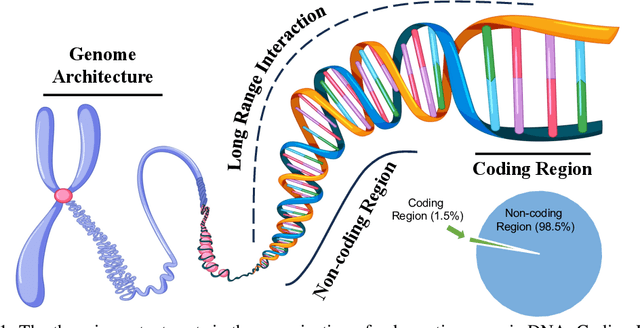
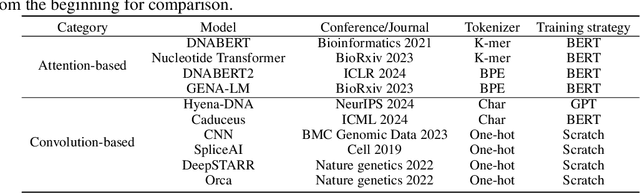
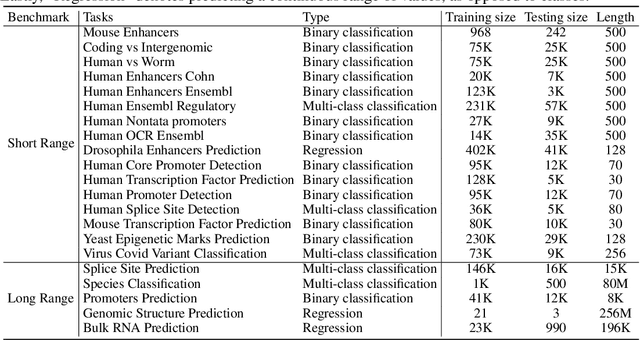
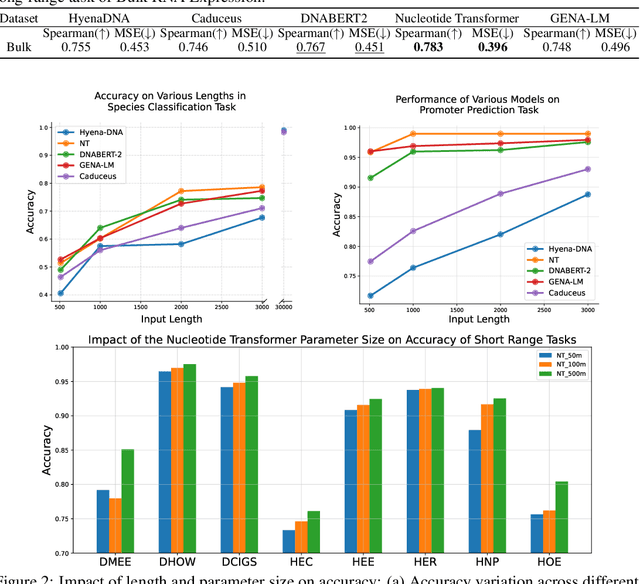
The Genomic Foundation Model (GFM) paradigm is expected to facilitate the extraction of generalizable representations from massive genomic data, thereby enabling their application across a spectrum of downstream applications. Despite advancements, a lack of evaluation framework makes it difficult to ensure equitable assessment due to experimental settings, model intricacy, benchmark datasets, and reproducibility challenges. In the absence of standardization, comparative analyses risk becoming biased and unreliable. To surmount this impasse, we introduce GenBench, a comprehensive benchmarking suite specifically tailored for evaluating the efficacy of Genomic Foundation Models. GenBench offers a modular and expandable framework that encapsulates a variety of state-of-the-art methodologies. Through systematic evaluations of datasets spanning diverse biological domains with a particular emphasis on both short-range and long-range genomic tasks, firstly including the three most important DNA tasks covering Coding Region, Non-Coding Region, Genome Structure, etc. Moreover, We provide a nuanced analysis of the interplay between model architecture and dataset characteristics on task-specific performance. Our findings reveal an interesting observation: independent of the number of parameters, the discernible difference in preference between the attention-based and convolution-based models on short- and long-range tasks may provide insights into the future design of GFM.
Retrieval Meets Reasoning: Even High-school Textbook Knowledge Benefits Multimodal Reasoning
May 31, 2024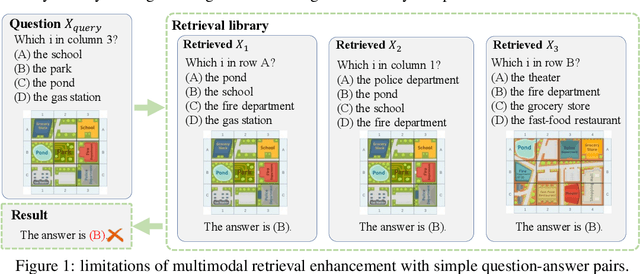

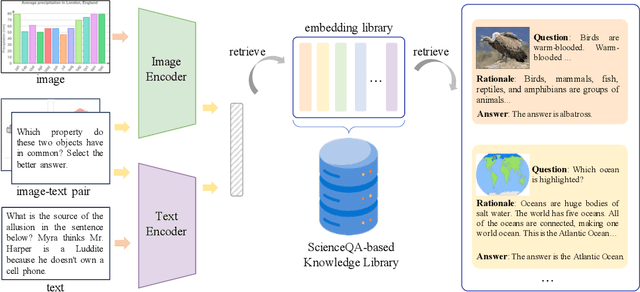
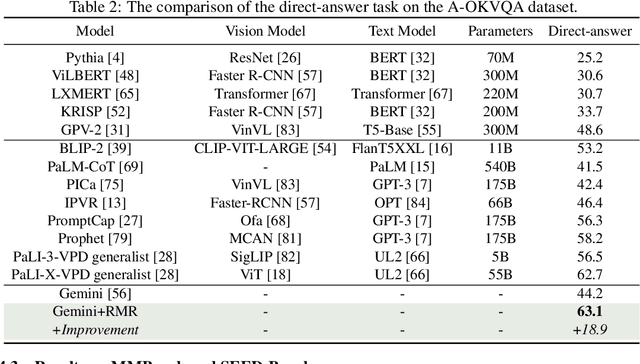
Large language models equipped with retrieval-augmented generation (RAG) represent a burgeoning field aimed at enhancing answering capabilities by leveraging external knowledge bases. Although the application of RAG with language-only models has been extensively explored, its adaptation into multimodal vision-language models remains nascent. Going beyond mere answer generation, the primary goal of multimodal RAG is to cultivate the models' ability to reason in response to relevant queries. To this end, we introduce a novel multimodal RAG framework named RMR (Retrieval Meets Reasoning). The RMR framework employs a bi-modal retrieval module to identify the most relevant question-answer pairs, which then serve as scaffolds for the multimodal reasoning process. This training-free approach not only encourages the model to engage deeply with the reasoning processes inherent in the retrieved content but also facilitates the generation of answers that are precise and richly interpretable. Surprisingly, utilizing solely the ScienceQA dataset, collected from elementary and high school science curricula, RMR significantly boosts the performance of various vision-language models across a spectrum of benchmark datasets, including A-OKVQA, MMBench, and SEED. These outcomes highlight the substantial potential of our multimodal retrieval and reasoning mechanism to improve the reasoning capabilities of vision-language models.
UniIF: Unified Molecule Inverse Folding
May 29, 2024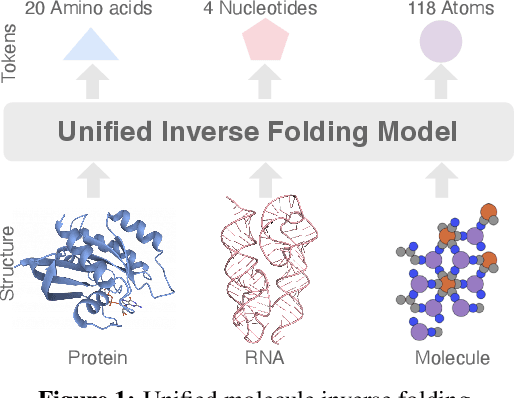
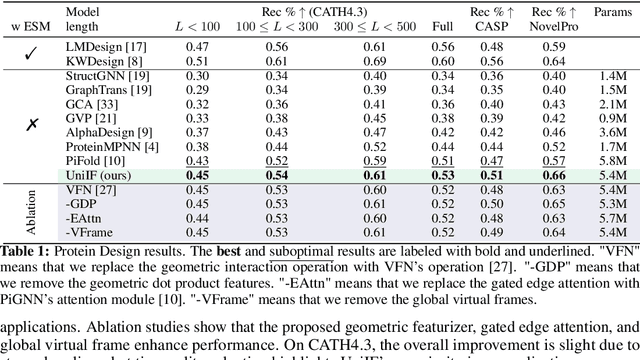
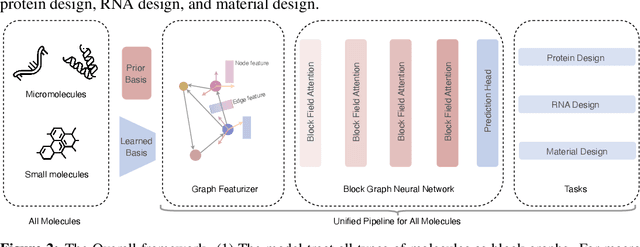
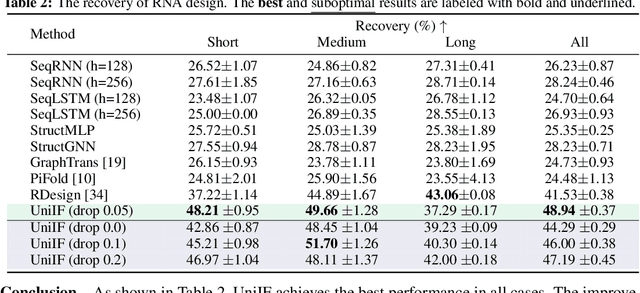
Molecule inverse folding has been a long-standing challenge in chemistry and biology, with the potential to revolutionize drug discovery and material science. Despite specified models have been proposed for different small- or macro-molecules, few have attempted to unify the learning process, resulting in redundant efforts. Complementary to recent advancements in molecular structure prediction, such as RoseTTAFold All-Atom and AlphaFold3, we propose the unified model UniIF for the inverse folding of all molecules. We do such unification in two levels: 1) Data-Level: We propose a unified block graph data form for all molecules, including the local frame building and geometric feature initialization. 2) Model-Level: We introduce a geometric block attention network, comprising a geometric interaction, interactive attention and virtual long-term dependency modules, to capture the 3D interactions of all molecules. Through comprehensive evaluations across various tasks such as protein design, RNA design, and material design, we demonstrate that our proposed method surpasses state-of-the-art methods on all tasks. UniIF offers a versatile and effective solution for general molecule inverse folding.
Learning to Predict Mutation Effects of Protein-Protein Interactions by Microenvironment-aware Hierarchical Prompt Learning
May 16, 2024
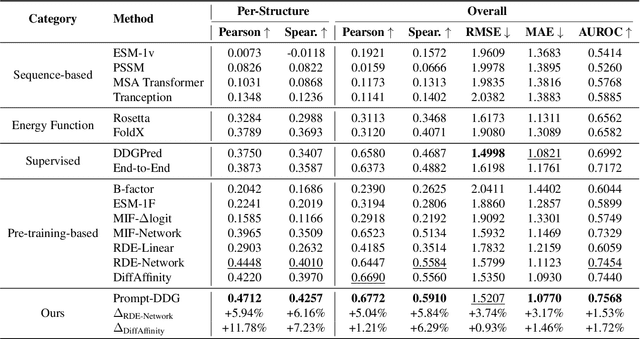
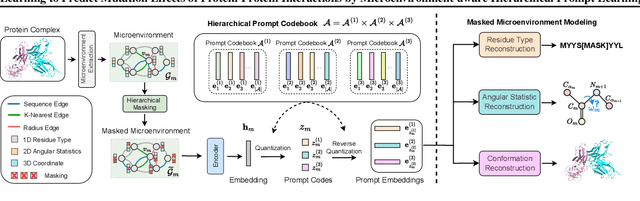
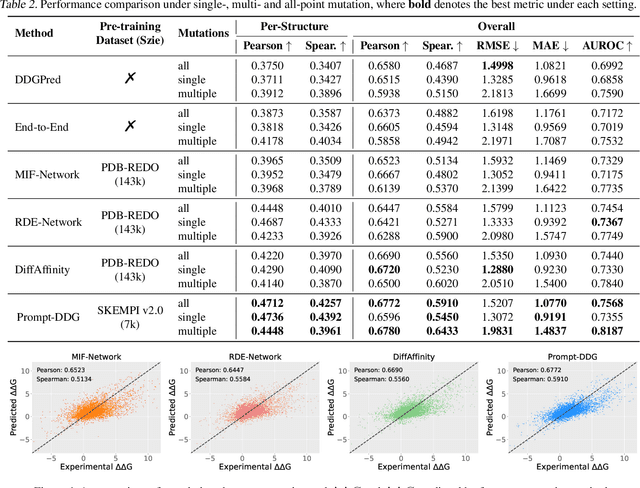
Protein-protein bindings play a key role in a variety of fundamental biological processes, and thus predicting the effects of amino acid mutations on protein-protein binding is crucial. To tackle the scarcity of annotated mutation data, pre-training with massive unlabeled data has emerged as a promising solution. However, this process faces a series of challenges: (1) complex higher-order dependencies among multiple (more than paired) structural scales have not yet been fully captured; (2) it is rarely explored how mutations alter the local conformation of the surrounding microenvironment; (3) pre-training is costly, both in data size and computational burden. In this paper, we first construct a hierarchical prompt codebook to record common microenvironmental patterns at different structural scales independently. Then, we develop a novel codebook pre-training task, namely masked microenvironment modeling, to model the joint distribution of each mutation with their residue types, angular statistics, and local conformational changes in the microenvironment. With the constructed prompt codebook, we encode the microenvironment around each mutation into multiple hierarchical prompts and combine them to flexibly provide information to wild-type and mutated protein complexes about their microenvironmental differences. Such a hierarchical prompt learning framework has demonstrated superior performance and training efficiency over state-of-the-art pre-training-based methods in mutation effect prediction and a case study of optimizing human antibodies against SARS-CoV-2.
VQDNA: Unleashing the Power of Vector Quantization for Multi-Species Genomic Sequence Modeling
May 13, 2024Similar to natural language models, pre-trained genome language models are proposed to capture the underlying intricacies within genomes with unsupervised sequence modeling. They have become essential tools for researchers and practitioners in biology. However, the \textit{hand-crafted} tokenization policies used in these models may not encode the most discriminative patterns from the limited vocabulary of genomic data. In this paper, we introduce VQDNA, a general-purpose framework that renovates genome tokenization from the perspective of genome vocabulary learning. By leveraging vector-quantized codebook as \textit{learnable} vocabulary, VQDNA can adaptively tokenize genomes into \textit{pattern-aware} embeddings in an end-to-end manner. To further push its limits, we propose Hierarchical Residual Quantization (HRQ), where varying scales of codebooks are designed in a hierarchy to enrich the genome vocabulary in a coarse-to-fine manner. Extensive experiments on 32 genome datasets demonstrate VQDNA's superiority and favorable parameter efficiency compared to existing genome language models. Notably, empirical analysis of SARS-CoV-2 mutations reveals the fine-grained pattern awareness and biological significance of learned HRQ vocabulary, highlighting its untapped potential for broader applications in genomics.
LongVQ: Long Sequence Modeling with Vector Quantization on Structured Memory
Apr 18, 2024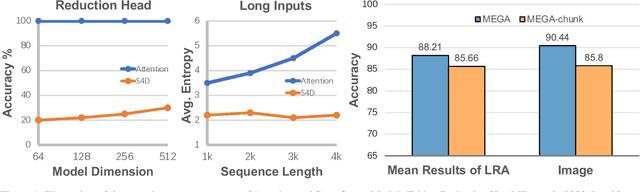
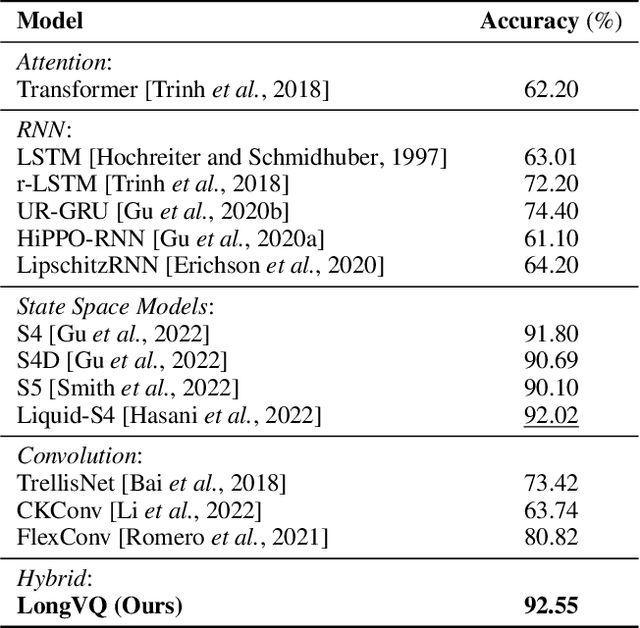
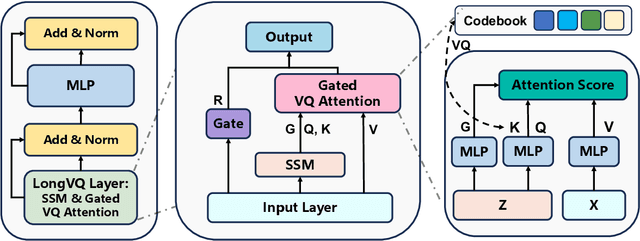
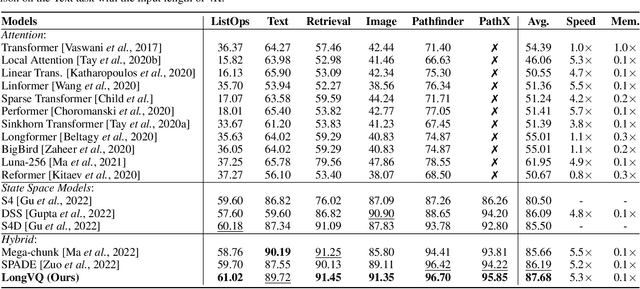
Transformer models have been successful in various sequence processing tasks, but the self-attention mechanism's computational cost limits its practicality for long sequences. Although there are existing attention variants that improve computational efficiency, they have a limited ability to abstract global information effectively based on their hand-crafted mixing strategies. On the other hand, state-space models (SSMs) are tailored for long sequences but cannot capture complicated local information. Therefore, the combination of them as a unified token mixer is a trend in recent long-sequence models. However, the linearized attention degrades performance significantly even when equipped with SSMs. To address the issue, we propose a new method called LongVQ. LongVQ uses the vector quantization (VQ) technique to compress the global abstraction as a length-fixed codebook, enabling the linear-time computation of the attention matrix. This technique effectively maintains dynamic global and local patterns, which helps to complement the lack of long-range dependency issues. Our experiments on the Long Range Arena benchmark, autoregressive language modeling, and image and speech classification demonstrate the effectiveness of LongVQ. Our model achieves significant improvements over other sequence models, including variants of Transformers, Convolutions, and recent State Space Models.