 Add to Chrome
 Add to Firefox
 Add to Edge
Analyzing Reasoning Consistency in Large Multimodal Models under Cross-Modal Conflicts
Jan 07, 2026
Large Multimodal Models (LMMs) have demonstrated impressive capabilities in video reasoning via Chain-of-Thought (CoT). However, the robustness of their reasoning chains remains questionable. In this paper, we identify a critical failure mode termed textual inertia, where once a textual hallucination occurs in the thinking process, models tend to blindly adhere to the erroneous text while neglecting conflicting visual evidence. To systematically investigate this, we propose the LogicGraph Perturbation Protocol that structurally injects perturbations into the reasoning chains of diverse LMMs spanning both native reasoning architectures and prompt-driven paradigms to evaluate their self-reflection capabilities. The results reveal that models successfully self-correct in less than 10% of cases and predominantly succumb to blind textual error propagation. To mitigate this, we introduce Active Visual-Context Refinement, a training-free inference paradigm which orchestrates an active visual re-grounding mechanism to enforce fine-grained verification coupled with an adaptive context refinement strategy to summarize and denoise the reasoning history. Experiments demonstrate that our approach significantly stifles hallucination propagation and enhances reasoning robustness.

AI Meets Brain: Memory Systems from Cognitive Neuroscience to Autonomous Agents
Dec 29, 2025Memory serves as the pivotal nexus bridging past and future, providing both humans and AI systems with invaluable concepts and experience to navigate complex tasks. Recent research on autonomous agents has increasingly focused on designing efficient memory workflows by drawing on cognitive neuroscience. However, constrained by interdisciplinary barriers, existing works struggle to assimilate the essence of human memory mechanisms. To bridge this gap, we systematically synthesizes interdisciplinary knowledge of memory, connecting insights from cognitive neuroscience with LLM-driven agents. Specifically, we first elucidate the definition and function of memory along a progressive trajectory from cognitive neuroscience through LLMs to agents. We then provide a comparative analysis of memory taxonomy, storage mechanisms, and the complete management lifecycle from both biological and artificial perspectives. Subsequently, we review the mainstream benchmarks for evaluating agent memory. Additionally, we explore memory security from dual perspectives of attack and defense. Finally, we envision future research directions, with a focus on multimodal memory systems and skill acquisition.
GLOW: Graph-Language Co-Reasoning for Agentic Workflow Performance Prediction
Dec 11, 2025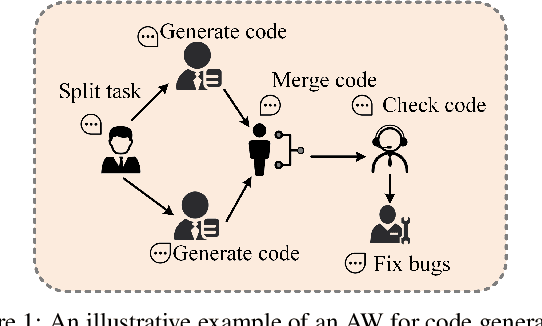
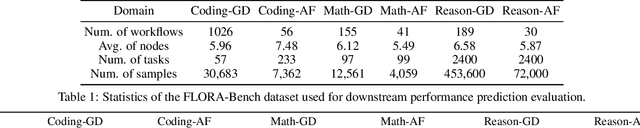
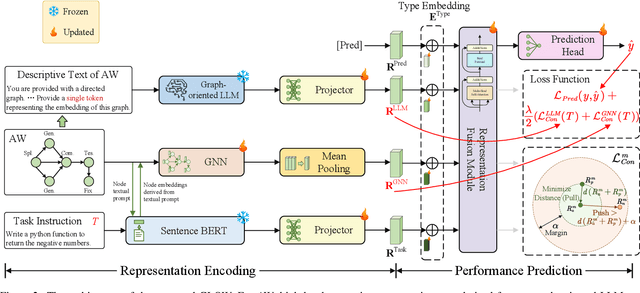
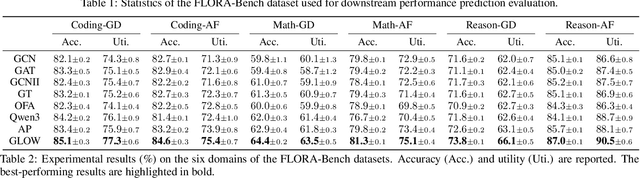
Agentic Workflows (AWs) have emerged as a promising paradigm for solving complex tasks. However, the scalability of automating their generation is severely constrained by the high cost and latency of execution-based evaluation. Existing AW performance prediction methods act as surrogates but fail to simultaneously capture the intricate topological dependencies and the deep semantic logic embedded in AWs. To address this limitation, we propose GLOW, a unified framework for AW performance prediction that combines the graph-structure modeling capabilities of GNNs with the reasoning power of LLMs. Specifically, we introduce a graph-oriented LLM, instruction-tuned on graph tasks, to extract topologically aware semantic features, which are fused with GNN-encoded structural representations. A contrastive alignment strategy further refines the latent space to distinguish high-quality AWs. Extensive experiments on FLORA-Bench show that GLOW outperforms state-of-the-art baselines in prediction accuracy and ranking utility.
MASim: Multilingual Agent-Based Simulation for Social Science
Dec 08, 2025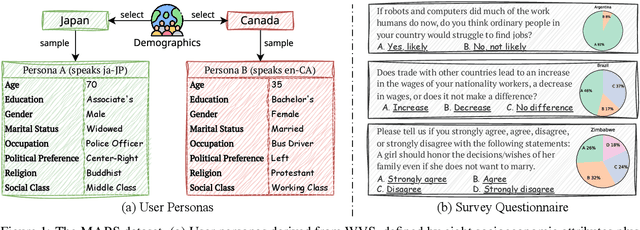
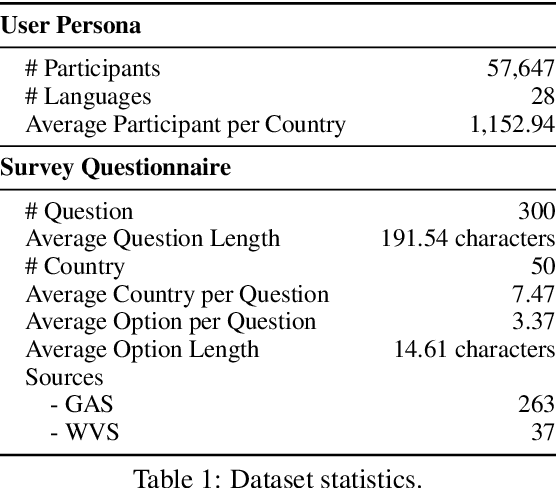
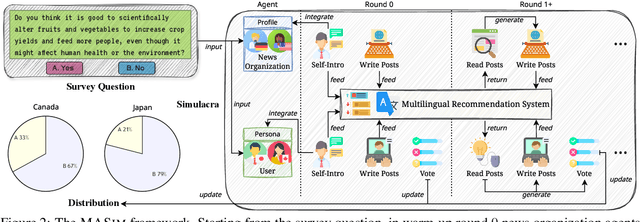
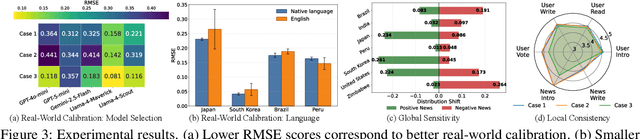
Multi-agent role-playing has recently shown promise for studying social behavior with language agents, but existing simulations are mostly monolingual and fail to model cross-lingual interaction, an essential property of real societies. We introduce MASim, the first multilingual agent-based simulation framework that supports multi-turn interaction among generative agents with diverse sociolinguistic profiles. MASim offers two key analyses: (i) global public opinion modeling, by simulating how attitudes toward open-domain hypotheses evolve across languages and cultures, and (ii) media influence and information diffusion, via autonomous news agents that dynamically generate content and shape user behavior. To instantiate simulations, we construct the MAPS benchmark, which combines survey questions and demographic personas drawn from global population distributions. Experiments on calibration, sensitivity, consistency, and cultural case studies show that MASim reproduces sociocultural phenomena and highlights the importance of multilingual simulation for scalable, controlled computational social science.
Calibrated Multimodal Representation Learning with Missing Modalities
Nov 15, 2025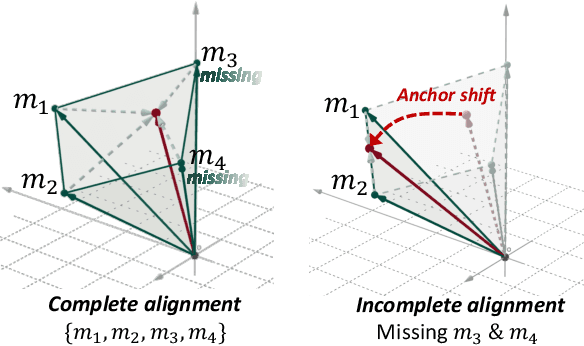
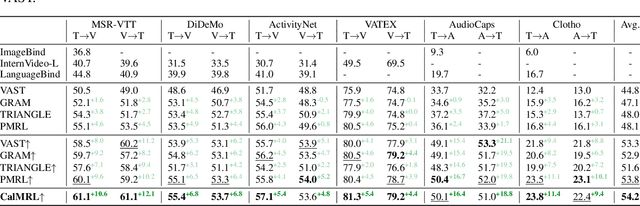
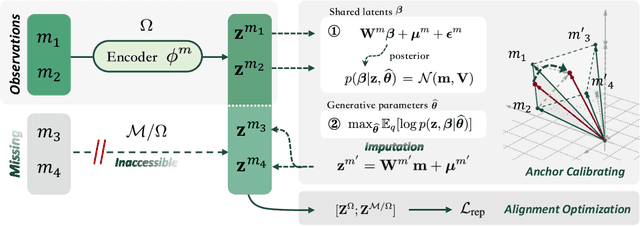
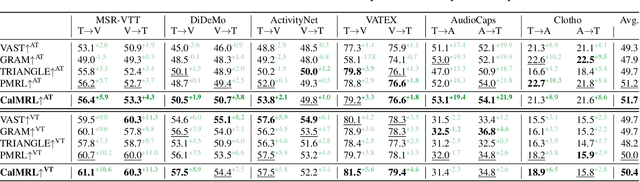
Multimodal representation learning harmonizes distinct modalities by aligning them into a unified latent space. Recent research generalizes traditional cross-modal alignment to produce enhanced multimodal synergy but requires all modalities to be present for a common instance, making it challenging to utilize prevalent datasets with missing modalities. We provide theoretical insights into this issue from an anchor shift perspective. Observed modalities are aligned with a local anchor that deviates from the optimal one when all modalities are present, resulting in an inevitable shift. To address this, we propose CalMRL for multimodal representation learning to calibrate incomplete alignments caused by missing modalities. Specifically, CalMRL leverages the priors and the inherent connections among modalities to model the imputation for the missing ones at the representation level. To resolve the optimization dilemma, we employ a bi-step learning method with the closed-form solution of the posterior distribution of shared latents. We validate its mitigation of anchor shift and convergence with theoretical guidance. By equipping the calibrated alignment with the existing advanced method, we offer new flexibility to absorb data with missing modalities, which is originally unattainable. Extensive experiments and comprehensive analyses demonstrate the superiority of CalMRL. Our code, model checkpoints, and evaluation raw data will be publicly available.
Reasoning with Confidence: Efficient Verification of LLM Reasoning Steps via Uncertainty Heads
Nov 11, 2025Solving complex tasks usually requires LLMs to generate long multi-step reasoning chains. Previous work has shown that verifying the correctness of individual reasoning steps can further improve the performance and efficiency of LLMs on such tasks and enhance solution interpretability. However, existing verification approaches, such as Process Reward Models (PRMs), are either computationally expensive, limited to specific domains, or require large-scale human or model-generated annotations. Thus, we propose a lightweight alternative for step-level reasoning verification based on data-driven uncertainty scores. We train transformer-based uncertainty quantification heads (UHeads) that use the internal states of a frozen LLM to estimate the uncertainty of its reasoning steps during generation. The approach is fully automatic: target labels are generated either by another larger LLM (e.g., DeepSeek R1) or in a self-supervised manner by the original model itself. UHeads are both effective and lightweight, containing less than 10M parameters. Across multiple domains, including mathematics, planning, and general knowledge question answering, they match or even surpass the performance of PRMs that are up to 810x larger. Our findings suggest that the internal states of LLMs encode their uncertainty and can serve as reliable signals for reasoning verification, offering a promising direction toward scalable and generalizable introspective LLMs.
Lightweight Time Series Data Valuation on Time Series Foundation Models via In-Context Finetuning
Nov 10, 2025Time series foundation models (TSFMs) have demonstrated increasing capabilities due to their extensive pretraining on large volumes of diverse time series data. Consequently, the quality of time series data is crucial to TSFM performance, rendering an accurate and efficient data valuation of time series for TSFMs indispensable. However, traditional data valuation methods, such as influence functions, face severe computational bottlenecks due to their poor scalability with growing TSFM model sizes and often fail to preserve temporal dependencies. In this paper, we propose LTSV, a Lightweight Time Series Valuation on TSFMS via in-context finetuning. Grounded in the theoretical evidence that in-context finetuning approximates the influence function, LTSV estimates a sample's contribution by measuring the change in context loss after in-context finetuning, leveraging the strong generalization capabilities of TSFMs to produce robust and transferable data valuations. To capture temporal dependencies, we introduce temporal block aggregation, which integrates per-block influence scores across overlapping time windows. Experiments across multiple time series datasets and models demonstrate that LTSV consistently provides reliable and strong valuation performance, while maintaining manageable computational requirements. Our results suggest that in-context finetuning on time series foundation models provides a practical and effective bridge between data attribution and model generalization in time series learning.
Nexus: Execution-Grounded Multi-Agent Test Oracle Synthesis
Oct 30, 2025Test oracle generation in non-regression testing is a longstanding challenge in software engineering, where the goal is to produce oracles that can accurately determine whether a function under test (FUT) behaves as intended for a given input. In this paper, we introduce Nexus, a novel multi-agent framework to address this challenge. Nexus generates test oracles by leveraging a diverse set of specialized agents that synthesize test oracles through a structured process of deliberation, validation, and iterative self-refinement. During the deliberation phase, a panel of four specialist agents, each embodying a distinct testing philosophy, collaboratively critiques and refines an initial set of test oracles. Then, in the validation phase, Nexus generates a plausible candidate implementation of the FUT and executes the proposed oracles against it in a secure sandbox. For any oracle that fails this execution-based check, Nexus activates an automated selfrefinement loop, using the specific runtime error to debug and correct the oracle before re-validation. Our extensive evaluation on seven diverse benchmarks demonstrates that Nexus consistently and substantially outperforms state-of-theart baselines. For instance, Nexus improves the test-level oracle accuracy on the LiveCodeBench from 46.30% to 57.73% for GPT-4.1-Mini. The improved accuracy also significantly enhances downstream tasks: the bug detection rate of GPT4.1-Mini generated test oracles on HumanEval increases from 90.91% to 95.45% for Nexus compared to baselines, and the success rate of automated program repair improves from 35.23% to 69.32%.
MCM-DPO: Multifaceted Cross-Modal Direct Preference Optimization for Alt-text Generation
Oct 01, 2025The alt-text generation task produces concise, context-relevant descriptions of images, enabling blind and low-vision users to access online images. Despite the capabilities of large vision-language models, alt-text generation performance remains limited due to noisy user annotations, inconsistent standards, and MLLMs' insensitivity to contextual information. Previous efforts to fine-tune MLLMs using supervised fine-tuning (SFT) have struggled, as SFT relies on accurate target annotations, which are often flawed in user-generated alt-text. To address this, we propose Multi-faceted Cross-modal Direct Preference Optimization (MCM-DPO), which improves alt-text generation by learning to identify better options in preference pairs without requiring precise annotations. MCM-DPO optimizes preferences across single, paired, and multi-preference dimensions, covering textual, visual, and cross-modal factors. In light of the scarcity of high-quality annotated and preference-labeled datasets for alt-text, we constructed two large-scale, high-quality datasets named TAlt and PAlt, sourced from Twitter and Pinterest. These datasets include 202k annotated alt-text samples and 18k preference pairs that cover diverse preference dimensions, aiming to support further research in this domain. Experimental results show that our proposed MCM-DPO method consistently outperforms both DPO and SFT, establishing a new state of the art in alt-text generation. We release the code and data here: https://github.com/LVUGAI/MCM-DPO
Uncovering Scaling Laws for Large Language Models via Inverse Problems
Sep 09, 2025Large Language Models (LLMs) are large-scale pretrained models that have achieved remarkable success across diverse domains. These successes have been driven by unprecedented complexity and scale in both data and computations. However, due to the high costs of training such models, brute-force trial-and-error approaches to improve LLMs are not feasible. Inspired by the success of inverse problems in uncovering fundamental scientific laws, this position paper advocates that inverse problems can also efficiently uncover scaling laws that guide the building of LLMs to achieve the desirable performance with significantly better cost-effectiveness.