 Add to Chrome
 Add to Firefox
 Add to Edge
SpEmoC: A Balanced Speaker-Segment Multimodal Emotion Benchmark
Jul 20, 2026
Understanding human emotions in spoken conversations is a key challenge in affective computing, with applications in empathetic AI, human computer interaction, and mental health monitoring. However, existing datasets vary in scale, emotion distribution, modality alignment, and data partitioning strategies, which can influence reliable cross-dataset generalization and minority-emotion modeling. We introduce SpEmoC a Speaking segment Emotion for Conversations comprising 306,544 raw clips from 3,100 English language movies and TV series. From these, 30,000 high quality, class balanced clips are curated, featuring synchronized visual, audio, and textual modalities annotated for seven emotions through a hybrid pipeline that integrates pretrained models with human validation. SpEmoC uses strict movie- and series-level splits to prevent content overlap between split sets, allowing more reliable evaluation of model generalization. The dataset also maintains a near-balanced distribution across seven emotions, including minority classes such as Fear and Disgust, which supports more balanced learning across categories. Extensive experiments, including in-domain benchmarking, cross-dataset transfer, low-data training, class-imbalance analysis, and modality transfer show that balanced data and careful splitting lead to more stable performance across emotions when models are evaluated on other datasets. These results highlight the importance of dataset design for robust and transferable multimodal emotion recognition.

LiteMatch: Lightweight Zero-Shot Stereo Matching via Cost Volume Stabilization
Jun 30, 2026Despite rapid progress in learning-based stereo matching, high accuracy is often achieved at the cost of heavy backbones and computationally intensive 3D cost volume processing, resulting in substantial memory and runtime overhead. More critically, these methods frequently struggle to generalize across domains, limiting their practical deployment. We present \textit{LiteMatch}, a lightweight stereo matching framework that achieves strong zero-shot generalization through cost volume stabilization-without expensive 3D convolutions. LiteMatch employs two complementary encoders: a Cross-View Correspondence Encoder (CVCE) to capture global cross-view interactions, and a High-Frequency Encoder (HFE) that enhances fine structural details via FFT-based frequency cues. To stabilize the cost volume, we introduce the \textit{Cost Volume Consistency Loss (CVC-Loss)}, a voxel-wise binary cross-entropy objective applied to softmax-normalized cost distributions. By encouraging sharp and unimodal disparity probabilities, CVC-Loss promotes stable cost distributions and enables rapid convergence. A lightweight refinement module further produces sharp full-resolution disparities with low-iteration updates, avoiding heavy recurrent refinement. With a flexible design ranging from 3.36M to 9.58M parameters, LiteMatch achieves exceptional zero-shot generalization, delivering competitive EPE and D1 performance across Scene Flow, KITTI, Middlebury, ETH3D, and DrivingStereo. Our results establish that lightweight architectures can indeed generalize across domains without sacrificing accuracy. \href{https://mdraqibkhan.github.io/Litematch}{\textcolor{blue}{Code}}
NTIRE 2025 Challenge on Image Super-Resolution ($\times$4): Methods and Results
Apr 20, 2025This paper presents the NTIRE 2025 image super-resolution ($\times$4) challenge, one of the associated competitions of the 10th NTIRE Workshop at CVPR 2025. The challenge aims to recover high-resolution (HR) images from low-resolution (LR) counterparts generated through bicubic downsampling with a $\times$4 scaling factor. The objective is to develop effective network designs or solutions that achieve state-of-the-art SR performance. To reflect the dual objectives of image SR research, the challenge includes two sub-tracks: (1) a restoration track, emphasizes pixel-wise accuracy and ranks submissions based on PSNR; (2) a perceptual track, focuses on visual realism and ranks results by a perceptual score. A total of 286 participants registered for the competition, with 25 teams submitting valid entries. This report summarizes the challenge design, datasets, evaluation protocol, the main results, and methods of each team. The challenge serves as a benchmark to advance the state of the art and foster progress in image SR.
The Tenth NTIRE 2025 Image Denoising Challenge Report
Apr 16, 2025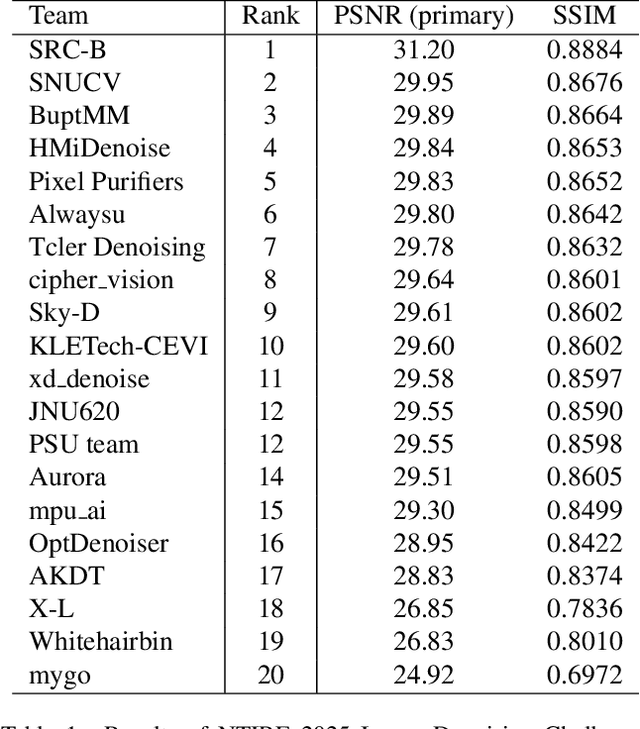
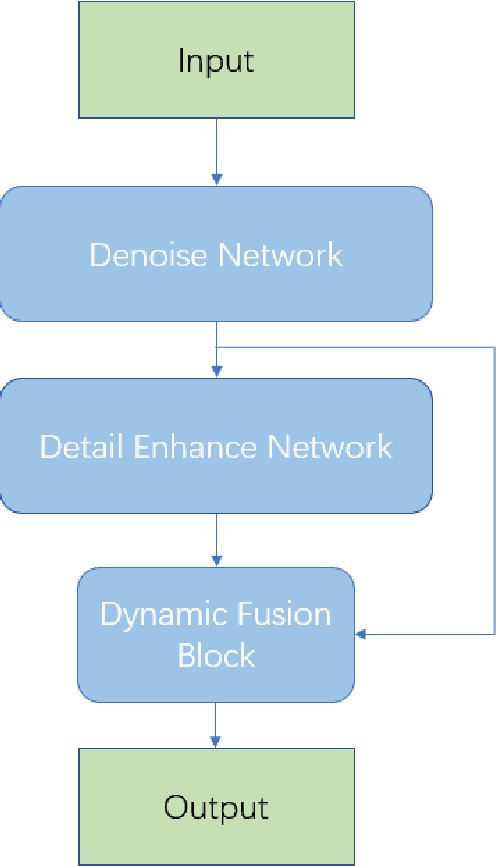
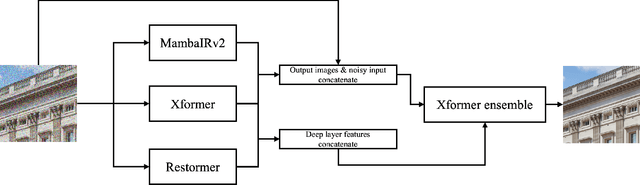
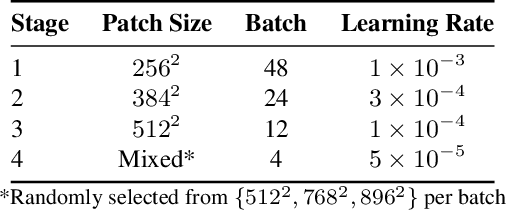
This paper presents an overview of the NTIRE 2025 Image Denoising Challenge ({\sigma} = 50), highlighting the proposed methodologies and corresponding results. The primary objective is to develop a network architecture capable of achieving high-quality denoising performance, quantitatively evaluated using PSNR, without constraints on computational complexity or model size. The task assumes independent additive white Gaussian noise (AWGN) with a fixed noise level of 50. A total of 290 participants registered for the challenge, with 20 teams successfully submitting valid results, providing insights into the current state-of-the-art in image denoising.
The Tenth NTIRE 2025 Efficient Super-Resolution Challenge Report
Apr 14, 2025This paper presents a comprehensive review of the NTIRE 2025 Challenge on Single-Image Efficient Super-Resolution (ESR). The challenge aimed to advance the development of deep models that optimize key computational metrics, i.e., runtime, parameters, and FLOPs, while achieving a PSNR of at least 26.90 dB on the $\operatorname{DIV2K\_LSDIR\_valid}$ dataset and 26.99 dB on the $\operatorname{DIV2K\_LSDIR\_test}$ dataset. A robust participation saw \textbf{244} registered entrants, with \textbf{43} teams submitting valid entries. This report meticulously analyzes these methods and results, emphasizing groundbreaking advancements in state-of-the-art single-image ESR techniques. The analysis highlights innovative approaches and establishes benchmarks for future research in the field.
Phaseformer: Phase-based Attention Mechanism for Underwater Image Restoration and Beyond
Dec 02, 2024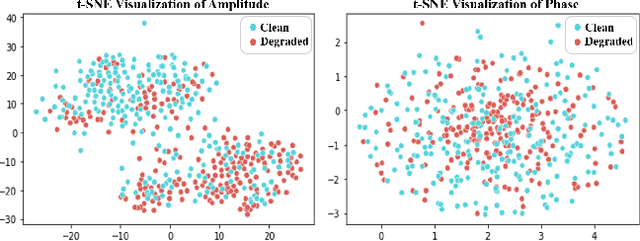
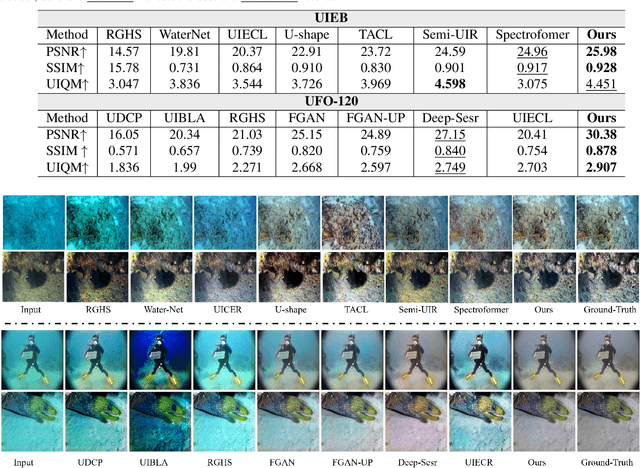
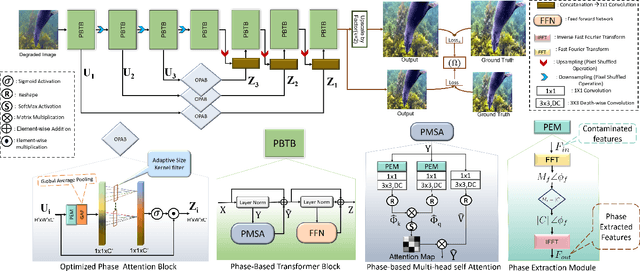
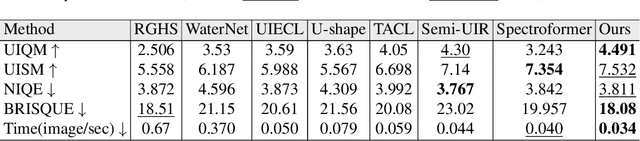
Quality degradation is observed in underwater images due to the effects of light refraction and absorption by water, leading to issues like color cast, haziness, and limited visibility. This degradation negatively affects the performance of autonomous underwater vehicles used in marine applications. To address these challenges, we propose a lightweight phase-based transformer network with 1.77M parameters for underwater image restoration (UIR). Our approach focuses on effectively extracting non-contaminated features using a phase-based self-attention mechanism. We also introduce an optimized phase attention block to restore structural information by propagating prominent attentive features from the input. We evaluate our method on both synthetic (UIEB, UFO-120) and real-world (UIEB, U45, UCCS, SQUID) underwater image datasets. Additionally, we demonstrate its effectiveness for low-light image enhancement using the LOL dataset. Through extensive ablation studies and comparative analysis, it is clear that the proposed approach outperforms existing state-of-the-art (SOTA) methods.
MIPI 2024 Challenge on Nighttime Flare Removal: Methods and Results
Apr 30, 2024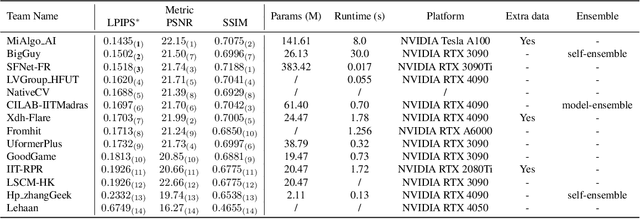
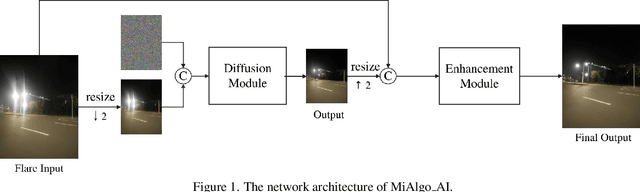
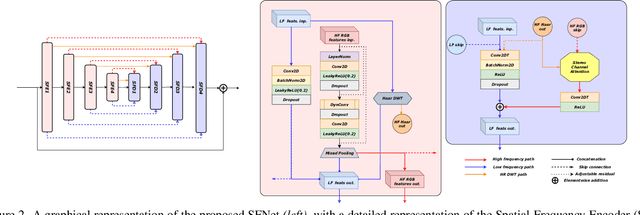

The increasing demand for computational photography and imaging on mobile platforms has led to the widespread development and integration of advanced image sensors with novel algorithms in camera systems. However, the scarcity of high-quality data for research and the rare opportunity for in-depth exchange of views from industry and academia constrain the development of mobile intelligent photography and imaging (MIPI). Building on the achievements of the previous MIPI Workshops held at ECCV 2022 and CVPR 2023, we introduce our third MIPI challenge including three tracks focusing on novel image sensors and imaging algorithms. In this paper, we summarize and review the Nighttime Flare Removal track on MIPI 2024. In total, 170 participants were successfully registered, and 14 teams submitted results in the final testing phase. The developed solutions in this challenge achieved state-of-the-art performance on Nighttime Flare Removal. More details of this challenge and the link to the dataset can be found at https://mipi-challenge.org/MIPI2024/.
Efficient Neural Architecture Search for Emotion Recognition
Mar 23, 2023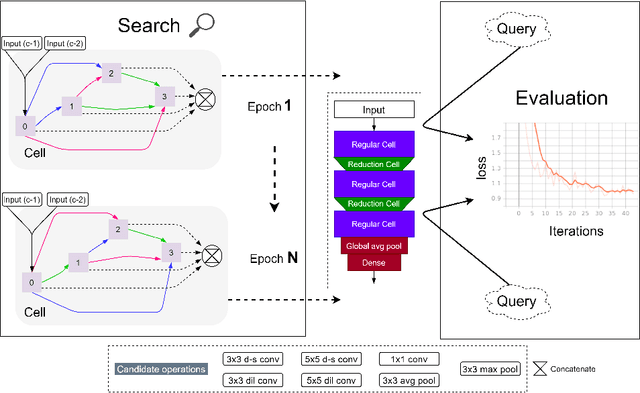
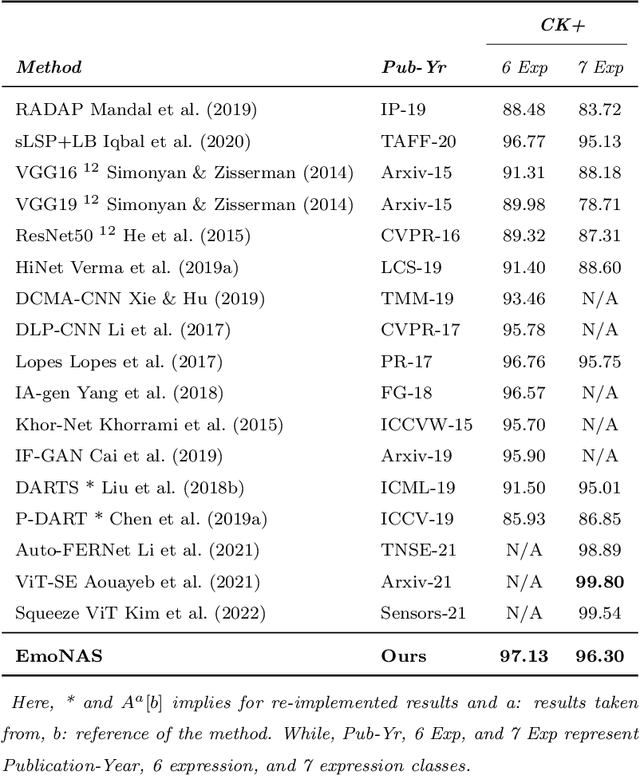
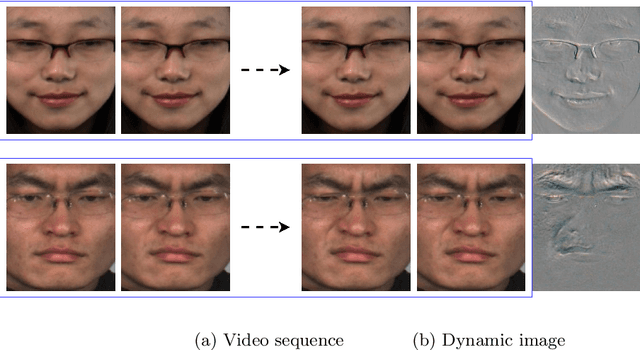
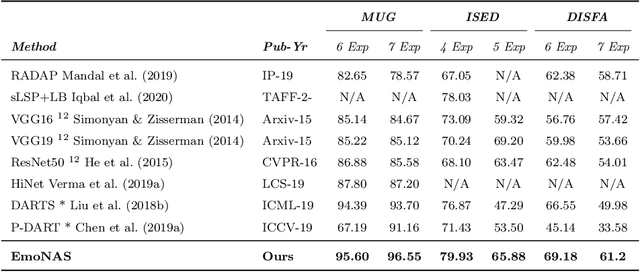
Automated human emotion recognition from facial expressions is a well-studied problem and still remains a very challenging task. Some efficient or accurate deep learning models have been presented in the literature. However, it is quite difficult to design a model that is both efficient and accurate at the same time. Moreover, identifying the minute feature variations in facial regions for both macro and micro-expressions requires expertise in network design. In this paper, we proposed to search for a highly efficient and robust neural architecture for both macro and micro-level facial expression recognition. To the best of our knowledge, this is the first attempt to design a NAS-based solution for both macro and micro-expression recognition. We produce lightweight models with a gradient-based architecture search algorithm. To maintain consistency between macro and micro-expressions, we utilize dynamic imaging and convert microexpression sequences into a single frame, preserving the spatiotemporal features in the facial regions. The EmoNAS has evaluated over 13 datasets (7 macro expression datasets: CK+, DISFA, MUG, ISED, OULU-VIS CASIA, FER2013, RAF-DB, and 6 micro-expression datasets: CASME-I, CASME-II, CAS(ME)2, SAMM, SMIC, MEGC2019 challenge). The proposed models outperform the existing state-of-the-art methods and perform very well in terms of speed and space complexity.
Deep Insights of Learning based Micro Expression Recognition: A Perspective on Promises, Challenges and Research Needs
Oct 10, 2022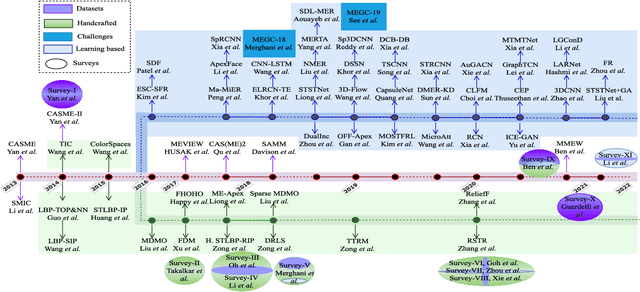
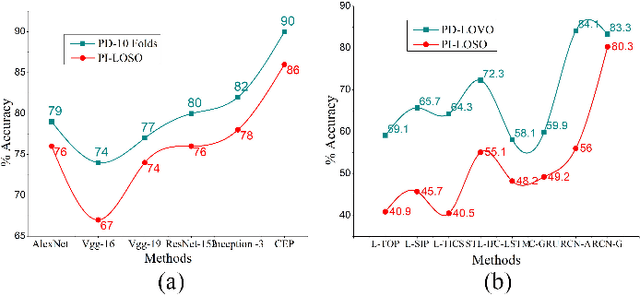
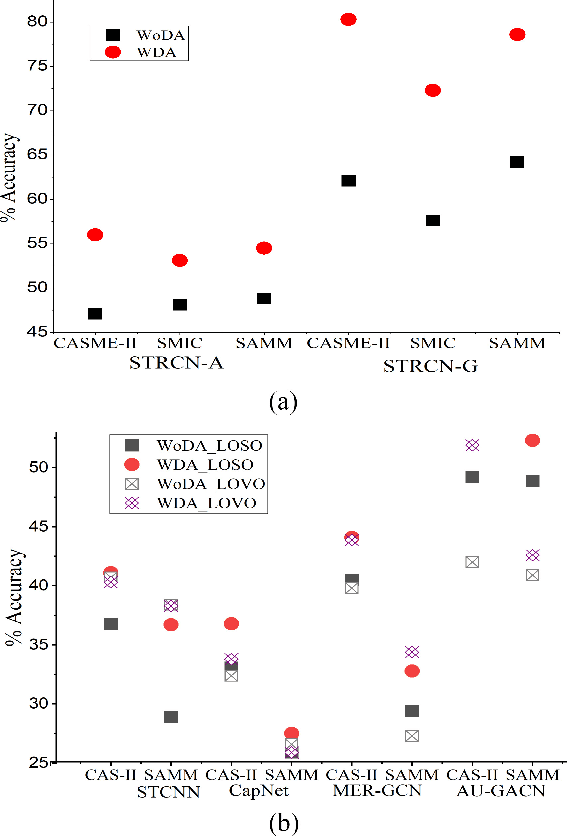
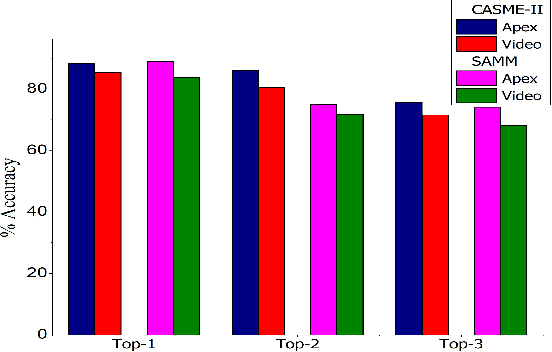
Micro expression recognition (MER) is a very challenging area of research due to its intrinsic nature and fine-grained changes. In the literature, the problem of MER has been solved through handcrafted/descriptor-based techniques. However, in recent times, deep learning (DL) based techniques have been adopted to gain higher performance for MER. Also, rich survey articles on MER are available by summarizing the datasets, experimental settings, conventional and deep learning methods. In contrast, these studies lack the ability to convey the impact of network design paradigms and experimental setting strategies for DL-based MER. Therefore, this paper aims to provide a deep insight into the DL-based MER frameworks with a perspective on promises in network model designing, experimental strategies, challenges, and research needs. Also, the detailed categorization of available MER frameworks is presented in various aspects of model design and technical characteristics. Moreover, an empirical analysis of the experimental and validation protocols adopted by MER methods is presented. The challenges mentioned earlier and network design strategies may assist the affective computing research community in forging ahead in MER research. Finally, we point out the future directions, research needs, and draw our conclusions.
RARITYNet: Rarity Guided Affective Emotion Learning Framework
May 17, 2022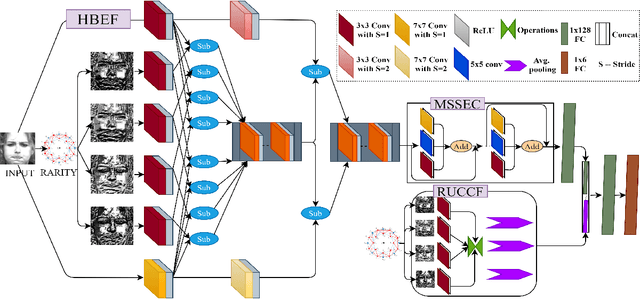
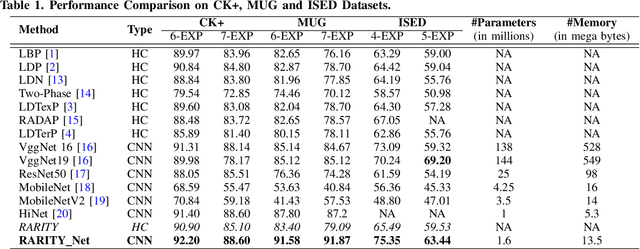
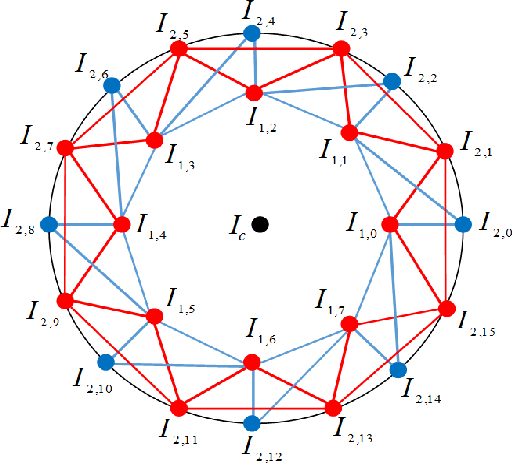
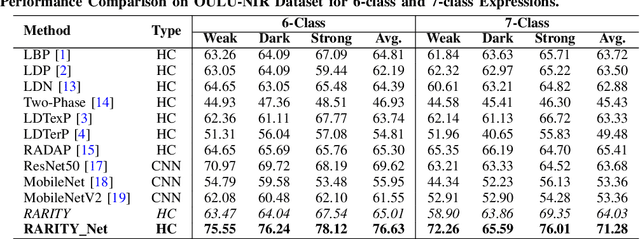
Inspired from the assets of handcrafted and deep learning approaches, we proposed a RARITYNet: RARITY guided affective emotion learning framework to learn the appearance features and identify the emotion class of facial expressions. The RARITYNet framework is designed by combining the shallow (RARITY) and deep (AffEmoNet) features to recognize the facial expressions from challenging images as spontaneous expressions, pose variations, ethnicity changes, and illumination conditions. The RARITY is proposed to encode the inter-radial transitional patterns in the local neighbourhood. The AffEmoNet: affective emotion learning network is proposed by incorporating three feature streams: high boost edge filtering (HBSEF) stream, to extract the edge information of highly affected facial expressive regions, multi-scale sophisticated edge cumulative (MSSEC) stream is to learns the sophisticated edge information from multi-receptive fields and RARITY uplift complementary context feature (RUCCF) stream refines the RARITY-encoded features and aid the MSSEC stream features to enrich the learning ability of RARITYNet.