 Add to Chrome
 Add to Firefox
 Add to Edge
A Dual-Band Reconfigurable Shared-Aperture Antenna Array With Independent Sub-6-GHz and Centimeter-Wave Beam Control
Jul 13, 2026
A planar dual-band reconfigurable shared-aperture antenna array is proposed for compact next-generation wireless front ends that require both sub-6-GHz and centimeter-wave (cm-wave) coverage. The array integrates a 2 by 2 sub-6-GHz microstrip dipole array and a 4 by 4 cm-wave stacked patch array within the same aperture, while providing independent beam control in the two bands without conventional T/R modules or beamforming networks. Slot-coupled feeding is employed to separate the radiating aperture from the reconfigurable RF feeding networks and DC bias circuits. PIN-diode-loaded split feeding rings first provide independent 1-bit phase reconfigurability for both bands. A compact reconfigurable $90^{\circ}$ phase shifter is then introduced as an additional phase-control stage, resulting in 2-bit phase control for sub-6 GHz elements and cm-wave subarrays. To reduce cross-band coupling in the compact shared aperture, a double-layer electromagnetic band-gap (EBG) structure is used to suppress cm-wave surface waves and higher-order sub-6-GHz modes excited by the cm-wave elements. A prototype is fabricated and measured. In the sub-6-GHz band, 11 reconfigurable radiation patterns are obtained, including two difference patterns and nine directional beams, with a peak broadside gain of 10.5 dBi. In the cm-wave band, two-dimensional beam scanning up to $\pm40^{\circ}$ is demonstrated with a peak gain of 14.6 dBi in both the E-plane and H-plane. These results show that the proposed architecture can combine dual-band shared-aperture integration and independent reconfigurable beam control in a compact antenna platform.

A 3D Formulation of the Extended Phaseless Rytov Approximation
Jun 05, 2026The extended Phaseless Rytov Approximation (xPRA) is a recently proposed device-free RF imaging technique that provides high-resolution reconstructions of the imaging region using only phaseless measurements, such as received signal strength (RSS). Because of its phaseless formulation, it can be implemented straightforwardly using existing wireless commu?nication infrastructure. It also outperforms well-known device?free phaseless RF imaging methods such as Radio Tomographic Imaging (RTI). The linear phaseless formulation used in xPRA(and RTI) makes these methods potentially useful for integrated sensing and communication (ISAC) systems in next generation wireless networks since they do not require wide bandwidths. However, so far, both xPRA and RTI have primarily been formulated in two dimensions (2D). This paper introduces a 3D extension of xPRA, which we call the extended three-dimensional phaseless Rytov approximation (x3DPRA). The novelty of our approach is that it preserves the straightforward implementation advantages of RTI and xPRA while enabling volumetric (3D) imaging. Simulation results show that x3DPRA provides good estimates of location and shape and can also reconstruct object material attenuation. We present the 3D formulation, validate it with a 2D model comparison, and report simulation results demonstrating its performance.
Stochastic Geometry Analysis of Uplink CUMA-Enabled Cellular Networks
May 22, 2026Uplink cellular networks are interference-dominated but interference channel state information (CSI) is rarely available at scale. The emerging fluid antenna system (FAS) concept, which provides additional spatial degrees of freedom through multi-port reconfiguration, offers a promising alternative to CSI-intensive multi-antenna processing. Building on this concept, compact ultra-massive arrays (CUMA) exploit large-scale port selection with low implementation complexity. In each uplink transmission, CUMA activates a subset of ports based on only the desired-link CSI and combines the selected ports via simple superposition, yielding coherent enhancement of the desired user signal, while inter-cell interference aggregates largely non-coherently due to the random superposition effect. Consequently, CUMA is well suited to multi-cell uplink scenarios where CSI is limited. In this paper, we analyze uplink CUMA in multi-cell cellular networks using a stochastic geometry framework. We derive a tight approximate expression for the signal-to-interference ratio (SIR) coverage probability, and further characterize the average user rate and cell sum-rate. The analysis quantifies how key design parameters impact performance and reveals the scaling behavior with network densification. Simulation results validate the accuracy of the derived expressions and show that uplink CUMA achieves competitive, and often superior, performance relative to conventional schemes under practical CSI constraints, highlighting its potential as a low-complexity, hardware-efficient uplink solution for future large-scale cellular networks.
Diffusion Fluid Antenna Systems for Resilient ISAC
May 22, 2026Most existing integrated sensing and communication (ISAC) studies focus on enabling a base station (BS) to support sensing and communication over shared resources through advanced waveform design and power allocation. In contrast, the object-side perspective remains underexplored. For example, an object may wish to remain difficult to detect for security reasons, while another object in close proximity may generate dominant reflections that confuse the BS and impair sensing reliability for the intended target. These challenges motivate the fluid antenna system (FAS) paradigm which introduces a reconfigurable spatial degree of freedom (DoF) that can reshape sensing signatures via port selection, beyond what waveform and power control alone can provide. In this paper, we devise diffusion FAS, a generative artificial intelligence (AI)-driven framework that exploits spatial agility to steer ISAC performance over the electromagnetic fading manifold. Instead of optimizing ISAC solely in the power domain, diffusion FAS casts ISAC as a \emph{dynamic spatial selection} problem in which antenna states (i.e., ports) are chosen to shape sensing signatures while maintaining communication objectives. To work under sparse measurements, we employ a conditional denoising diffusion probabilistic model (DDPM) to reconstruct the latent spatial correlation structure from a small set of observed ports, enabling efficient exploration of the reconfigurable aperture. We demonstrate two FAS-enabled ISAC modes: (1) \emph{generative spatial stealth}, which identifies localized deep fades to suppress a target's sensing visibility by up to two orders of magnitude, and (2) \emph{target isolation}, which synthesizes spatial nulls that reject interference from adjacent objects.
Fast Fluid Antenna Multiple Access
May 22, 2026Fast fluid antenna multiple access (FAMA) is an idea that promises to overcome severe interference in massive access scenarios by reconfiguring the antenna's position at the receiver side on a symbol-by-symbol basis, without the need of precoding nor any other interference mitigation techniques. However, this idea is commonly studied under a \emph{genie-aided} premise: each user terminal (UT) can probe \emph{all} fluid-antenna ports in every symbol instance and ideally knows the instantaneous signal-interference split for the received signals at all the ports. Such assumption is unrealistic since it implies impractical hardware and switching limits, pilot overhead, as well as an unknown ability to determine the signal-interference split. This paper revisits the fast FAMA communication problem and asks a key question: can a UT act \emph{as if} it had full per-port interference knowledge while observing only a small fraction of ports? To this end, we propose a \emph{copula-aided FAMA} framework that learns the joint dependence structure of the complex triplets $(r_k,h_k,I_k)$ across ports, where $r_k$, $h_k$ and $I_k$ denote, respectively, the received signal, the channel coefficient and the aggregate interference signal at the $k$-th port, and uses this learned model to infer unobserved channels and interference. Concretely, we devise an attention-copula time-series model that is trained under random partial-observation masks and evaluated under both rich and finite-scattering channel models. Simulation results indicate that the reconstruction normalized mean-square-error (NMSE) for $h$, $r$, and $I$ drops to the order of $10^{-4}$ once the number of observed ports, $M$, exceeds the spatial degrees of freedom (DoF).
SAR/ISAR Imaging in 6G Network
Apr 01, 2026Imaging is a crucial sensing function that finds wide applications in environmental reconstruction, autonomous driving, etc. However, the signal processing methods for existing radio imaging techniques, such as millimeter wave (mmWave) imaging, require high-resolution range estimation enabled by Gigahertz-level or even Terahertz-level bandwidth, and cannot be applied in 6G integrated sensing and communication (ISAC) network with Megahertz-level bandwidth. This paper proposes two novel high-resolution radio imaging schemes that can work on the 6G signals with limited bandwidth - bandwidth-independent synthetic aperture radar (BI-SAR), where the movable base station (BS) revolves along the static targets by 360 degrees; as well as bandwidth-independent inverse synthetic aperture radar (BI-ISAR), where the BS is static and the targets revolve along an axis by 360 degrees. Different from conventional SAR and ISAR counterparts that rely on range estimation, our proposed imaging schemes solely utilize Doppler information to perform imaging without any range information. The main technical challenge of our schemes lies in the anisotropic scattering functions over different directions, which hinder the coherent synthesis of the backscattered signals from all directions. We design an iterative adaptive approach-based Doppler association (IAA-DA) algorithm to tackle the above issue. Moreover, we also derive the imaging resolution to characterize the reconstruction quality. Real-world experiments are provided to show the feasibility and the effectiveness of our proposed 6G imaging schemes.
Optimizing Antenna Coding for Pixel Antenna Empowered SISO-OFDM Systems
Mar 18, 2026This work investigates antenna coding optimization to enhance the channel capacity of single-input single-output orthogonal frequency division multiplexing (SISO-OFDM) systems empowered by highly reconfigurable pixel antennas. We first introduce the model for pixel antenna empowered SISO-OFDM systems using a beamspace channel representation. We next formulate the problem to maximize the channel capacity through jointly optimizing antenna coding and the power allocation across subcarriers and solve it by Successive Exhaustive Boolean Optimization (SEBO) and water-filling (WF) algorithm. To reduce computational complexity, a codebook-based approach is also proposed for antenna coding optimization. Simulation results show that the channel capacity of SISO-OFDM system across all signal-to-noise-ratio (SNR) regions considered can be enhanced through leveraging pixel antennas as compared to using conventional antenna with fixed configuration. This result demonstrates the effectiveness of antenna coding technology empowered by pixel antenna in enhancing SISO-OFDM systems.
Antenna Coding Optimization for Pixel Antenna Empowered MIMO Wireless Power Transfer
Jan 12, 2026We investigate antenna coding utilizing pixel antennas as a new degree of freedom for enhancing multiple-input multiple-output (MIMO) wireless power transfer (WPT) systems. The objective is to enhance the output direct current (DC) power under RF combining and DC combining schemes by jointly exploiting gains from antenna coding, beamforming, and rectenna nonlinearity. We first propose the MIMO WPT system model with binary and continuous antenna coding using the beamspace channel model and formulate the joint antenna coding and beamforming optimization using a nonlinear rectenna model. We propose two efficient closed-form successive convex approximation algorithms to efficiently optimize the beamforming. To further reduce the computational complexity, we propose codebook-based antenna coding designs for output DC power maximization based on K-means clustering. Results show that the proposed pixel antenna empowered MIMO WPT system with binary antenna coding increases output DC power by more than 15 dB compared with conventional systems with fixed antenna configuration. With continuous antenna coding, the performance improves another 6 dB. Moreover, the proposed codebook design outperforms previous designs by up to 40% and shows good performance with reduced computational complexity. Overall, the significant improvement in output DC power verifies the potential of leveraging antenna coding utilizing pixel antennas to enhance WPT systems.
Antenna Coding Optimization Based on Pixel Antennas for MIMO Wireless Power Transfer with DC Combining
Dec 16, 2025This paper investigates antenna coding based on pixel antennas as a new degree of freedom for enhancing multiple-input multiple-output (MIMO) wireless power transfer (WPT) systems. Antenna coding is closely related to the Fluid Antenna System (FAS) concept and further generalizes the radiation pattern reconfigurability. We first introduce a beamspace channel model to demonstrate reconfigurable radiation patterns enabled by antenna coders. By jointly optimizing the antenna coding and transmit beamforming with perfect channel state information (CSI), we exploit gains from antenna coding, transmit beamforming, and rectenna nonlinearity to maximize the output DC power. We adopt an alternating optimization approach with the quasi-Newton method and Successive Exhaustive Boolean Optimization (SEBO) method with warm-start to handle the transmit beamforming design and antenna coding design respectively. Finally, simulation results show that the proposed MIMO WPT system with pixel antennas achieves up to 15 dB gain in average output DC power compared with a conventional system with fixed antenna configuration, highlighting the potential of pixel antennas for boosting the WPT efficiency.
Channel Estimation and Passive Beamforming for Pixel-based Reconfigurable Intelligent Surfaces with Non-Separable State Response
Oct 23, 2025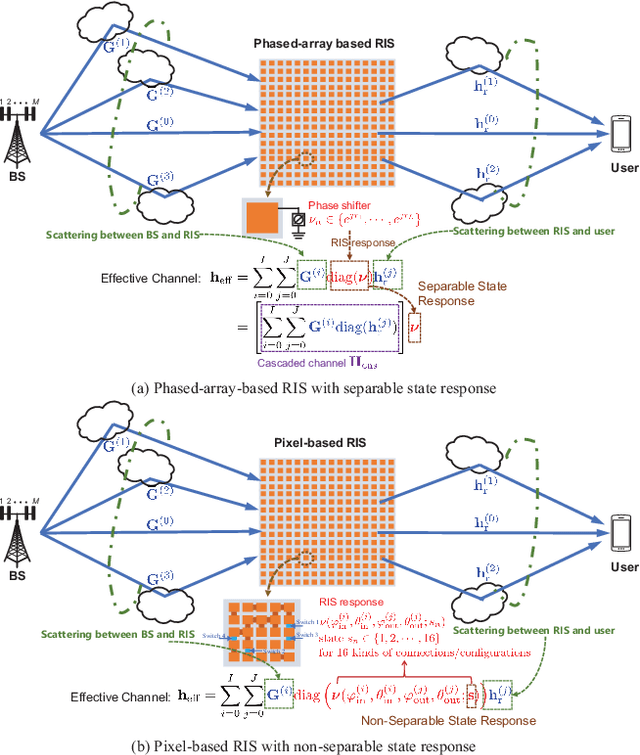
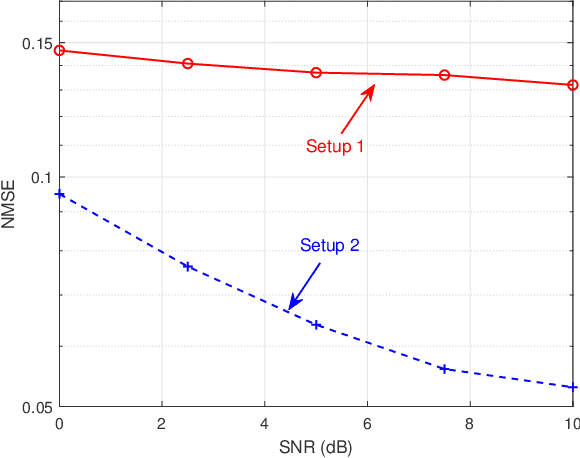
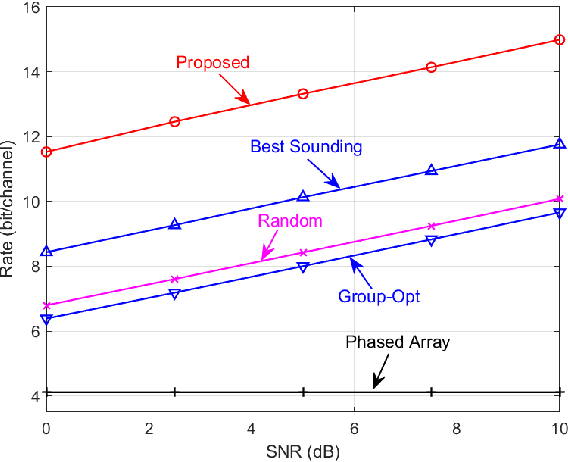
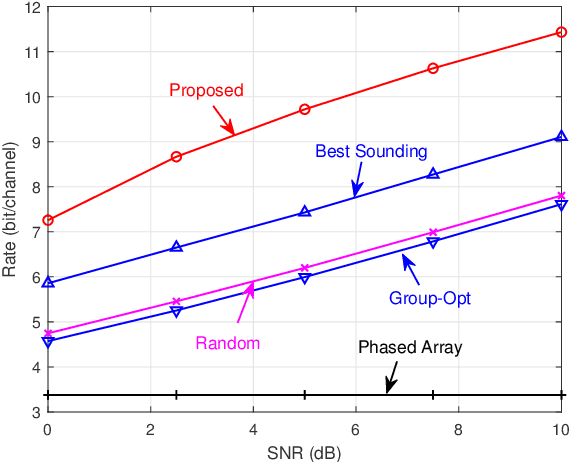
Pixel-based reconfigurable intelligent surfaces (RISs) employ a novel design to achieve high reflection gain at a lower hardware cost by eliminating the phase shifters used in traditional RIS. However, this design presents challenges for channel estimation and passive beamforming due to its non-separable state response, rendering existing solutions ineffective. To address this, we first approximate the non-separable RIS response functions using a kernel-based method and a deep neural network, achieving high accuracy while reducing computational and memory complexity. Next, we propose a simplified cascaded channel model that focuses on dominated scattering paths with limited unknown parameters, along with customized algorithms to estimate short-term and long-term parameters separately. Finally, we introduce a low-complexity passive beamforming algorithm to configure the discrete RIS state vector, maximizing the achievable rate. Our simulation results demonstrate that the proposed solution significantly outperforms various baselines across a wide SNR range.