 Add to Chrome
 Add to Firefox
 Add to Edge
LABO: LLM-Accelerated Bayesian Optimization through Broad Exploration and Selective Experimentation
May 21, 2026
The high cost and data scarcity in scientific exploration have motivated the use of large language models (LLMs) as knowledge-driven components in Bayesian optimization (BO). However, existing approaches typically embed LLMs directly into the sampling or surrogate modeling pipeline, without fully leveraging their significantly lower evaluation cost compared to real-world experiments. To address this limitation, we propose LLM-Accelerated Bayesian Optimization (LABO), a framework that combines LLM predictions with experimental observations within a single BO loop. LABO employs a gating criterion to dynamically balance the reliance on LLM predictions versus actual experiments. By leveraging inexpensive LLM evaluations to broadly explore the search space and reserving costly real experiments only for regions with high uncertainty, LABO achieves more sample-efficient optimization. We provide a theoretical analysis with a cumulative regret bound that formalizes this efficiency gain. Empirical results across diverse scientific tasks demonstrate that LABO consistently outperforms existing methods under identical experimental budgets. Our results suggest that LABO offers a practical and theoretically grounded approach for integrating LLMs into scientific discovery workflows.

Logit-Attention Divergence: Mitigating Position Bias in Multi-Image Retrieval via Attention-Guided Calibration
May 12, 2026Multimodal Large Language Models (MLLMs) have shown strong performance in multi-image cross-modal retrieval, yet suffer from severe position bias, where predictions are dominated by input order rather than semantic relevance. Through empirical analysis, we identify a phenomenon termed Logit-Attention Divergence, in which output logits are heavily biased while internal attention maps remain well-aligned with relevant visual evidence. This observation reveals a fundamental limitation of existing logit-level calibration methods such as PriDe. Based on this insight, we propose a training-free, attention-guided debiasing framework that leverages intrinsic attention signals for instance-level correction at inference time, requiring only a minimal calibration set with negligible computational overhead. Experiments on MS-COCO-based benchmarks show that our method substantially improves permutation invariance and achieves state-of-the-art performance, enhancing accuracy by over 40\% compared to baselines. Code is available at https://github.com/brightXian/LAD.
TINS: Test-time ID-prototype-separated Negative Semantics Learning for OOD Detection
May 11, 2026Vision-language models enable OOD detection by comparing image alignment with ID labels and negative semantics. Existing negative-label-based methods mainly rely on static negative labels constructed before inference, limiting their ability to cover diverse and evolving OOD concepts. Although test-time expansion provides a natural solution, naively learning negative semantics from potential OOD samples may introduce hard ID contamination. To address this issue, we propose a \textbf{T}est-time \textbf{I}D-prototype-separated \textbf{N}egative \textbf{S}emantics learning method, termed \textbf{TINS}. TINS learns sample-specific negative text embeddings via image-to-text modality inversion and introduces ID-prototype-separated regularization to keep them separated from ID semantics. To further stabilize negative semantics expansion, TINS employs group-wise aggregation scoring and a buffer update strategy. Extensive experiments across Four-OOD, OpenOOD, Temporal-shift, and Various ID settings show consistent improvements over strong baselines. Notably, on the Four-OOD benchmark with ImageNet-1K as ID, TINS reduces the average FPR95 from 14.04\% to 6.72\%. Our code is available at https://github.com/zxk1212/tins.
NMRTrans: Structure Elucidation from Experimental NMR Spectra via Set Transformers
Feb 10, 2026Nuclear Magnetic Resonance (NMR) spectroscopy is fundamental for molecular structure elucidation, yet interpreting spectra at scale remains time-consuming and highly expertise-dependent. While recent spectrum-as-language modeling and retrieval-based methods have shown promise, they rely heavily on large corpora of computed spectra and exhibit notable performance drops when applied to experimental measurements. To address these issues, we build NMRSpec, a large-scale corpus of experimental $^1$H and $^{13}$C spectra mined from chemical literature, and propose NMRTrans, which models spectra as unordered peak sets and aligns the model's inductive bias with the physical nature of NMR. To our best knowledge, NMRTrans is the first NMR Transformer trained solely on large-scale experimental spectra and achieves state-of-the-art performance on experimental benchmarks, improving Top-10 Accuracy over the strongest baseline by +17.82 points (61.15% vs. 43.33%), and underscoring the importance of experimental data and structure-aware architectures for reliable NMR structure elucidation.
Proximal Action Replacement for Behavior Cloning Actor-Critic in Offline Reinforcement Learning
Feb 07, 2026Offline reinforcement learning (RL) optimizes policies from a previously collected static dataset and is an important branch of RL. A popular and promising approach is to regularize actor-critic methods with behavior cloning (BC), which yields realistic policies and mitigates bias from out-of-distribution actions, but can impose an often-overlooked performance ceiling: when dataset actions are suboptimal, indiscriminate imitation structurally prevents the actor from fully exploiting high-value regions suggested by the critic, especially in later training when imitation is already dominant. We formally analyzed this limitation by investigating convergence properties of BC-regularized actor-critic optimization and verified it on a controlled continuous bandit task. To break this ceiling, we propose proximal action replacement (PAR), a plug-and-play training sample replacer that progressively replaces low-value actions with high-value actions generated by a stable actor, broadening the action exploration space while reducing the impact of low-value data. PAR is compatible with multiple BC regularization paradigms. Extensive experiments across offline RL benchmarks show that PAR consistently improves performance and approaches state-of-the-art when combined with the basic TD3+BC.
Learning Primitive Embodied World Models: Towards Scalable Robotic Learning
Aug 28, 2025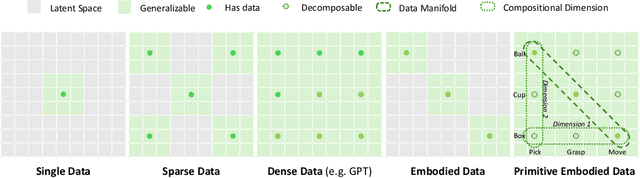

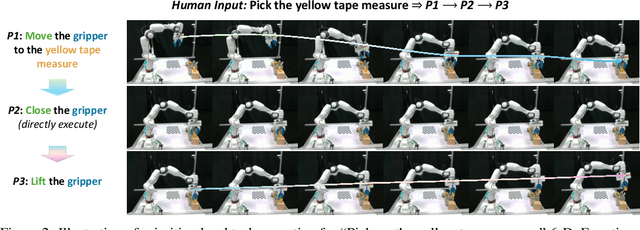
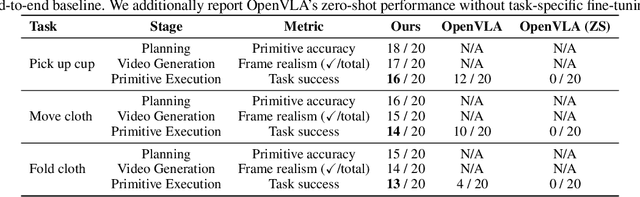
While video-generation-based embodied world models have gained increasing attention, their reliance on large-scale embodied interaction data remains a key bottleneck. The scarcity, difficulty of collection, and high dimensionality of embodied data fundamentally limit the alignment granularity between language and actions and exacerbate the challenge of long-horizon video generation--hindering generative models from achieving a "GPT moment" in the embodied domain. There is a naive observation: the diversity of embodied data far exceeds the relatively small space of possible primitive motions. Based on this insight, we propose a novel paradigm for world modeling--Primitive Embodied World Models (PEWM). By restricting video generation to fixed short horizons, our approach 1) enables fine-grained alignment between linguistic concepts and visual representations of robotic actions, 2) reduces learning complexity, 3) improves data efficiency in embodied data collection, and 4) decreases inference latency. By equipping with a modular Vision-Language Model (VLM) planner and a Start-Goal heatmap Guidance mechanism (SGG), PEWM further enables flexible closed-loop control and supports compositional generalization of primitive-level policies over extended, complex tasks. Our framework leverages the spatiotemporal vision priors in video models and the semantic awareness of VLMs to bridge the gap between fine-grained physical interaction and high-level reasoning, paving the way toward scalable, interpretable, and general-purpose embodied intelligence.
InfoBound: A Provable Information-Bounds Inspired Framework for Both OoD Generalization and OoD Detection
Apr 13, 2025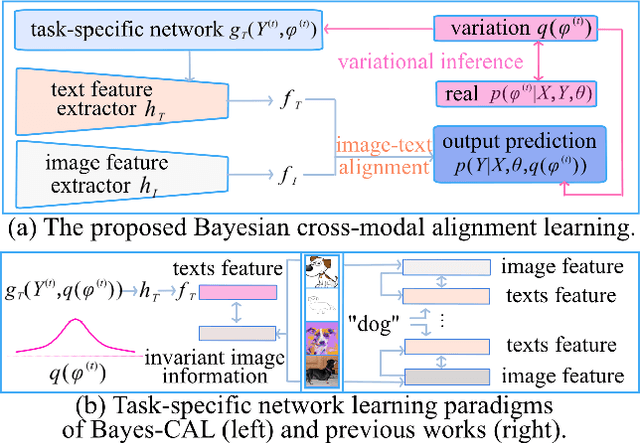
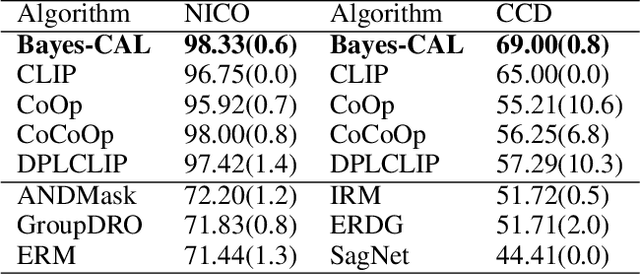
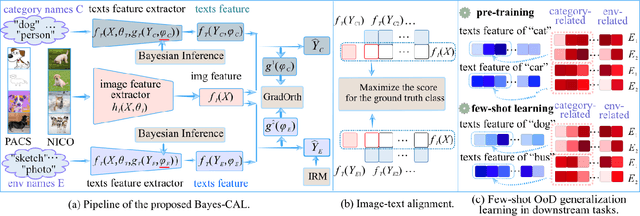
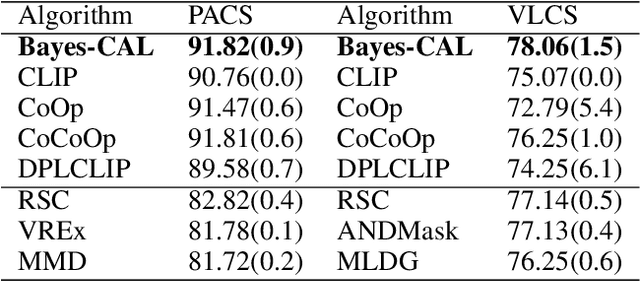
In real-world scenarios, distribution shifts give rise to the importance of two problems: out-of-distribution (OoD) generalization, which focuses on models' generalization ability against covariate shifts (i.e., the changes of environments), and OoD detection, which aims to be aware of semantic shifts (i.e., test-time unseen classes). Real-world testing environments often involve a combination of both covariate and semantic shifts. While numerous methods have been proposed to address these critical issues, only a few works tackled them simultaneously. Moreover, prior works often improve one problem but sacrifice the other. To overcome these limitations, we delve into boosting OoD detection and OoD generalization from the perspective of information theory, which can be easily applied to existing models and different tasks. Building upon the theoretical bounds for mutual information and conditional entropy, we provide a unified approach, composed of Mutual Information Minimization (MI-Min) and Conditional Entropy Maximizing (CE-Max). Extensive experiments and comprehensive evaluations on multi-label image classification and object detection have demonstrated the superiority of our method. It successfully mitigates trade-offs between the two challenges compared to competitive baselines.
Decision SpikeFormer: Spike-Driven Transformer for Decision Making
Apr 04, 2025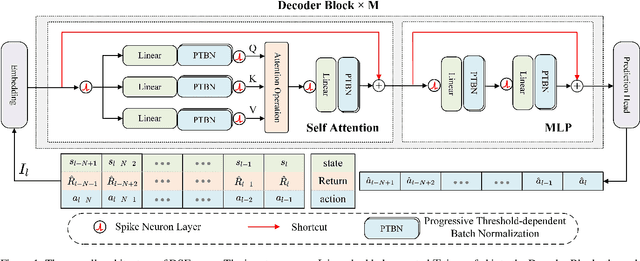
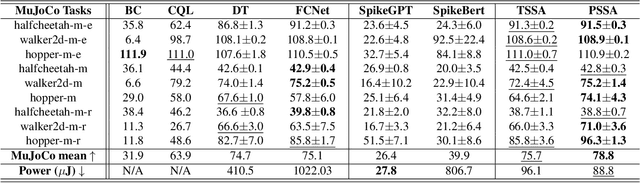
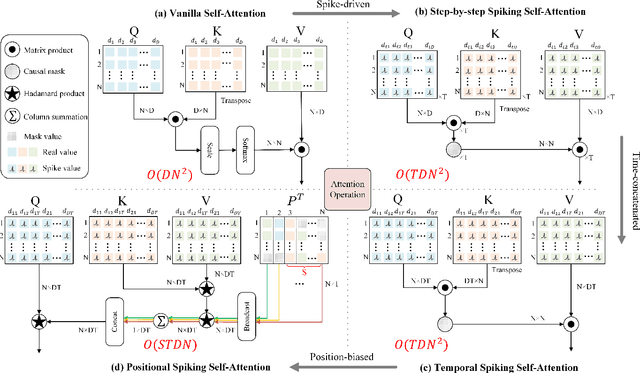
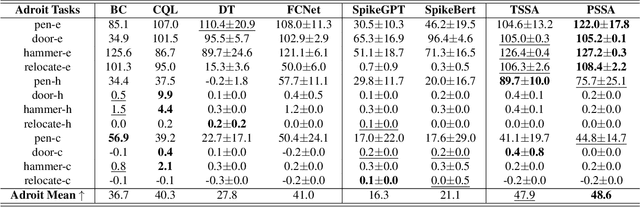
Offline reinforcement learning (RL) enables policy training solely on pre-collected data, avoiding direct environment interaction - a crucial benefit for energy-constrained embodied AI applications. Although Artificial Neural Networks (ANN)-based methods perform well in offline RL, their high computational and energy demands motivate exploration of more efficient alternatives. Spiking Neural Networks (SNNs) show promise for such tasks, given their low power consumption. In this work, we introduce DSFormer, the first spike-driven transformer model designed to tackle offline RL via sequence modeling. Unlike existing SNN transformers focused on spatial dimensions for vision tasks, we develop Temporal Spiking Self-Attention (TSSA) and Positional Spiking Self-Attention (PSSA) in DSFormer to capture the temporal and positional dependencies essential for sequence modeling in RL. Additionally, we propose Progressive Threshold-dependent Batch Normalization (PTBN), which combines the benefits of LayerNorm and BatchNorm to preserve temporal dependencies while maintaining the spiking nature of SNNs. Comprehensive results in the D4RL benchmark show DSFormer's superiority over both SNN and ANN counterparts, achieving 78.4% energy savings, highlighting DSFormer's advantages not only in energy efficiency but also in competitive performance. Code and models are public at https://wei-nijuan.github.io/DecisionSpikeFormer.
Visual Position Prompt for MLLM based Visual Grounding
Mar 19, 2025
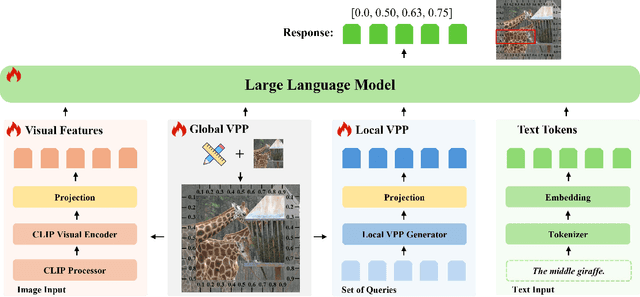
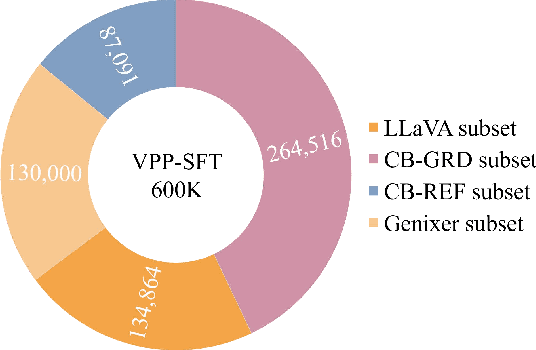
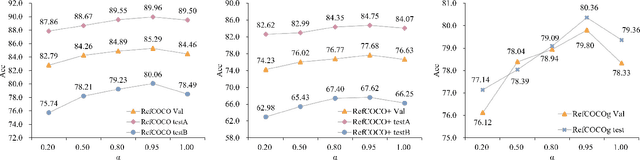
Although Multimodal Large Language Models (MLLMs) excel at various image-related tasks, they encounter challenges in precisely aligning coordinates with spatial information within images, particularly in position-aware tasks such as visual grounding. This limitation arises from two key factors. First, MLLMs lack explicit spatial references, making it difficult to associate textual descriptions with precise image locations. Second, their feature extraction processes prioritize global context over fine-grained spatial details, leading to weak localization capability. To address this issue, we introduce VPP-LLaVA, an MLLM equipped with Visual Position Prompt (VPP) to improve its grounding capability. VPP-LLaVA integrates two complementary mechanisms. The global VPP overlays learnable, axis-like embeddings onto the input image to provide structured spatial cues. The local VPP focuses on fine-grained localization by incorporating position-aware queries, which suggests probable object locations. We also introduce a VPP-SFT dataset with 0.6M samples, consolidating high-quality visual grounding data into a compact format for efficient model training. Training on this dataset with VPP enhances the model's performance, achieving state-of-the-art results on standard grounding benchmarks despite using fewer training samples compared to other MLLMs like MiniGPT-v2, which rely on much larger datasets ($\sim$21M samples). The code and VPP-SFT dataset will be available at https://github.com/WayneTomas/VPP-LLaVA upon acceptance.
OODD: Test-time Out-of-Distribution Detection with Dynamic Dictionary
Mar 13, 2025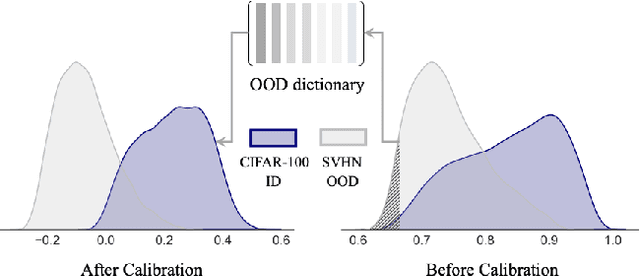
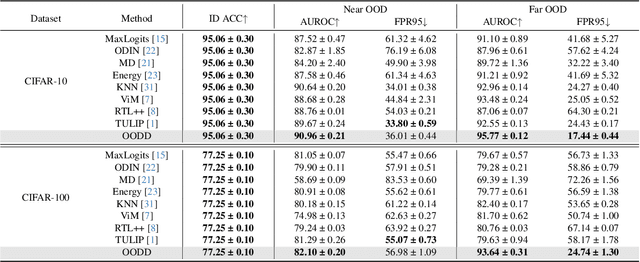
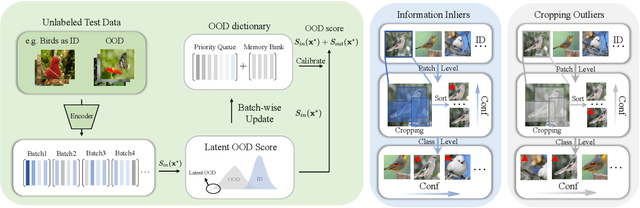
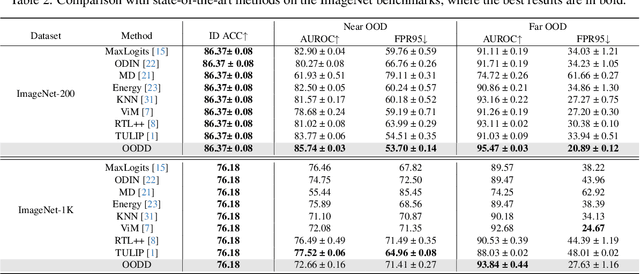
Out-of-distribution (OOD) detection remains challenging for deep learning models, particularly when test-time OOD samples differ significantly from training outliers. We propose OODD, a novel test-time OOD detection method that dynamically maintains and updates an OOD dictionary without fine-tuning. Our approach leverages a priority queue-based dictionary that accumulates representative OOD features during testing, combined with an informative inlier sampling strategy for in-distribution (ID) samples. To ensure stable performance during early testing, we propose a dual OOD stabilization mechanism that leverages strategically generated outliers derived from ID data. To our best knowledge, extensive experiments on the OpenOOD benchmark demonstrate that OODD significantly outperforms existing methods, achieving a 26.0% improvement in FPR95 on CIFAR-100 Far OOD detection compared to the state-of-the-art approach. Furthermore, we present an optimized variant of the KNN-based OOD detection framework that achieves a 3x speedup while maintaining detection performance.