 Add to Chrome
 Add to Firefox
 Add to Edge
Metasurface embodied intelligence through electromagnetic world model
Jul 02, 2026
Mastering invisible electromagnetic (EM) environment and sculpting radio waves with the dexterity of manipulating light or matter have long been aspirations in physics and information science. While information metasurfaces (IMSs) provide the physical interface to program EM wavefields, their real-world autonomy is fundamentally limited by environmental 'blindness' and the prohibitive overhead of site-specific and trial-and-error retraining. Here we propose metasurface embodied intelligence through world model (metaEI-WM), a universal and out-of-the-box paradigm that achieves expert-level performance without on-site fine-tuning. In contrast to purely data-driven agents, metaEI-WM establishes a fundamental understanding of the EM dynamics by integrating fully automated semantic environment modelling with embedded electrodynamic priors. By anticipating future scenarios in silico, it optimizes the IMS coding configurations to dynamically shape EM environments on demand. We show that metaEI-WM successfully enables zero-latency non-line-of-sight signal enhancements, symbiotic communications, and contactless physiological sensing across highly complex and unseen indoor scenarios. To the best of our knowledge, metaEI-WM is the first paradigm to achieve end-to-end automation of complex spatial channel manipulation tasks ab initio, requiring neither human-annotated data nor online training. This framework bridges the gap between digital intelligence and physical-layer wave dynamics, offering a scalable solution for robust and self-managing wireless ecosystems.

Identifying and Resolving Pitfalls of Knowledge-Based VQA Benchmarks: Auditing, Repairing, and Augmenting
Jun 30, 2026Knowledge-Based Visual Question Answering (KB-VQA) aims to evaluate whether Visual Language Models (VLMs) can retrieve, ground, and reason over external structured knowledge beyond visual evidence. In practice, answer accuracy is widely adopted as the primary evaluation metric, implicitly treating correctness as a proxy for knowledge-grounded reasoning. However, for existing KB-VQA benchmarks, this proxy relies on critical assumptions that are often overlooked and rendered unreliable by benchmark issues: annotated answer must be derivable from the associated knowledge base, question must be well-posed with sufficient constraints, and visual setting must meaningfully require grounded disambiguation. In this work, we show that these assumptions are systematically violated in existing KB-VQA benchmarks. Our audit reveals substantial instances with missing or contradicted answers and underspecified questions that render accuracy a misleading metric. Furthermore, we find that existing datasets rely on visually trivial, single-entity scenes that bypass the need for sophisticated visual-to-knowledge mapping. We demonstrate that even with controlled architectures, these flaws lead to distorted model rankings and overestimations of reasoning capabilities. To address this, we introduce (1) a principled audit-and-repair protocol that restores answer derivability and question clarity, and (2) a controlled multi-entity augmentation protocol that introduces visual ambiguity to challenge initial retrieval and grounded reasoning. Re-evaluation under corrected and augmented settings yields markedly different performance trends. Our findings call for rethinking evaluation protocols and designing more interaction-aware KB-VQA benchmarks that prioritize verifiable reasoning over simple matching.
Ground Then Rank: Revisiting Knowledge-Based VQA with Training-Free Entity Identification
Jun 22, 2026Knowledge-Based Visual Question Answering (KB-VQA) requires grounding visual queries to external knowledge beyond directly observable content in images. While recent multi modal large language models (MLLMs) show strong perceptual abilities, they struggle on KB-VQA tasks requiring groundings from both fine-grained entity and evidence levels. Most existing multi-modal retrieval augmented generation (MM-RAG) methods tightly couple entity discrimination and section-level evidence ranking into a single re-ranking stage, leading to high cost and limited generalization. In this work, we revisit existing MM-RAG solutions from a workflow perspective and argue both entity-level and fact-level groundings are key bottlenecks. We observe that although MLLMs often fail under open-ended entity naming, they can better identify the correct entity when selecting from a small set of candidate names. Based on this insight, we propose a simple and training-free identify-before-answer IBA framework that decouples entity identification from section-level re-ranking. Our approach prompts an MLLM to select high-confidence entities using only candidate names, followed by an off-the-shelf textual re-ranker for evidence selection. Experiments on Encyclopedic-VQA and InfoSeek show that our method consistently outperforms fine-tuned multi-modal re-ranking baselines while reducing training and inference complexity. Additional analyses reveal that the improvements arise not only from better entity identification, but also from selecting more informative evidence once correct entity is fixed. Our implementation is made public to ease reproducibility.
DUSG-Tomo-Net: A Deep Unfolded Neural Network for Super-Resolving Gridless Spaceborne SAR Tomography via Learned Toeplitz-Structured Covariance Representation
Apr 21, 2026Synthetic aperture radar tomography (TomoSAR) enables 3-D imaging by exploiting multibaseline acquisitions and has become an important tool for urban mapping. To achieve super-resolution inversion, sparse reconstruction methods based on compressive sensing (CS) are widely adopted. However, most CS-based TomoSAR methods rely on grid-based formulations and therefore suffer from off-grid bias. Gridless formulations provide a principled way to alleviate this limitation, whereas classical Toeplitz-Vandermonde atomic norm minimization (ANM) is not directly applicable to spaceborne TomoSAR under nonuniform baselines. Existing gridless methods for nonuniform-baseline TomoSAR avoid the classical uniform linear array (ULA) assumption, but they are usually tightly coupled to handcrafted iterative solvers and solver-specific parameter settings, while robust inversion under limited observations and low-SNR conditions remains challenging. To address this gap, we propose DUSG-Tomo-Net, a deep unfolded gridless framework for single-look spaceborne TomoSAR under nonuniform baselines. The proposed method reformulates the inversion in a Toeplitz-compatible lag domain via a structured single-look approximation and recovers a Hermitian Toeplitz positive-semidefinite structured covariance representation through layerwise learned regularization and projection-based structural enforcement. The actual acquisition geometry is embedded analytically into the data-consistency step via a fixed, signal-independent operator, enabling operator-based adaptation to varying baseline configurations. Scatterer elevations are then estimated by a continuous-domain spectral estimator without elevation discretization.
Private Seeds, Public LLMs: Realistic and Privacy-Preserving Synthetic Data Generation
Apr 08, 2026Large language models (LLMs) have emerged as a powerful tool for synthetic data generation. A particularly important use case is producing synthetic replicas of private text, which requires carefully balancing privacy and utility. We propose Realistic and Privacy-Preserving Synthetic Data Generation (RPSG), which leverages privacy-preserving mechanisms, including formal differential privacy (DP); and private seeds, in particular text containing personal information, to generate realistic synthetic data. Comprehensive experiments against state-of-the-art private synthetic data generation methods demonstrate that RPSG achieves high fidelity to private data while providing strong privacy protection.
ReplicatorBench: Benchmarking LLM Agents for Replicability in Social and Behavioral Sciences
Feb 11, 2026The literature has witnessed an emerging interest in AI agents for automated assessment of scientific papers. Existing benchmarks focus primarily on the computational aspect of this task, testing agents' ability to reproduce or replicate research outcomes when having access to the code and data. This setting, while foundational, (1) fails to capture the inconsistent availability of new data for replication as opposed to reproduction, and (2) lacks ground-truth diversity by focusing only on reproducible papers, thereby failing to evaluate an agent's ability to identify non-replicable research. Furthermore, most benchmarks only evaluate outcomes rather than the replication process. In response, we introduce ReplicatorBench, an end-to-end benchmark, including human-verified replicable and non-replicable research claims in social and behavioral sciences for evaluating AI agents in research replication across three stages: (1) extraction and retrieval of replication data; (2) design and execution of computational experiments; and (3) interpretation of results, allowing a test of AI agents' capability to mimic the activities of human replicators in real world. To set a baseline of AI agents' capability, we develop ReplicatorAgent, an agentic framework equipped with necessary tools, like web search and iterative interaction with sandboxed environments, to accomplish tasks in ReplicatorBench. We evaluate ReplicatorAgent across four underlying large language models (LLMs), as well as different design choices of programming language and levels of code access. Our findings reveal that while current LLM agents are capable of effectively designing and executing computational experiments, they struggle with retrieving resources, such as new data, necessary to replicate a claim. All code and data are publicly available at https://github.com/CenterForOpenScience/llm-benchmarking.
Vocabulary In-Context Learning in Transformers: Benefits of Positional Encoding
Nov 09, 2025Numerous studies have demonstrated that the Transformer architecture possesses the capability for in-context learning (ICL). In scenarios involving function approximation, context can serve as a control parameter for the model, endowing it with the universal approximation property (UAP). In practice, context is represented by tokens from a finite set, referred to as a vocabulary, which is the case considered in this paper, \emph{i.e.}, vocabulary in-context learning (VICL). We demonstrate that VICL in single-layer Transformers, without positional encoding, does not possess the UAP; however, it is possible to achieve the UAP when positional encoding is included. Several sufficient conditions for the positional encoding are provided. Our findings reveal the benefits of positional encoding from an approximation theory perspective in the context of ICL.
A Multi-view Divergence-Convergence Feature Augmentation Framework for Drug-related Microbes Prediction
Jun 23, 2025In the study of drug function and precision medicine, identifying new drug-microbe associations is crucial. However, current methods isolate association and similarity analysis of drug and microbe, lacking effective inter-view optimization and coordinated multi-view feature fusion. In our study, a multi-view Divergence-Convergence Feature Augmentation framework for Drug-related Microbes Prediction (DCFA_DMP) is proposed, to better learn and integrate association information and similarity information. In the divergence phase, DCFA_DMP strengthens the complementarity and diversity between heterogeneous information and similarity information by performing Adversarial Learning method between the association network view and different similarity views, optimizing the feature space. In the convergence phase, a novel Bidirectional Synergistic Attention Mechanism is proposed to deeply synergize the complementary features between different views, achieving a deep fusion of the feature space. Moreover, Transformer graph learning is alternately applied on the drug-microbe heterogeneous graph, enabling each drug or microbe node to focus on the most relevant nodes. Numerous experiments demonstrate DCFA_DMP's significant performance in predicting drug-microbe associations. It also proves effectiveness in predicting associations for new drugs and microbes in cold start experiments, further confirming its stability and reliability in predicting potential drug-microbe associations.
How to Backdoor the Knowledge Distillation
Apr 30, 2025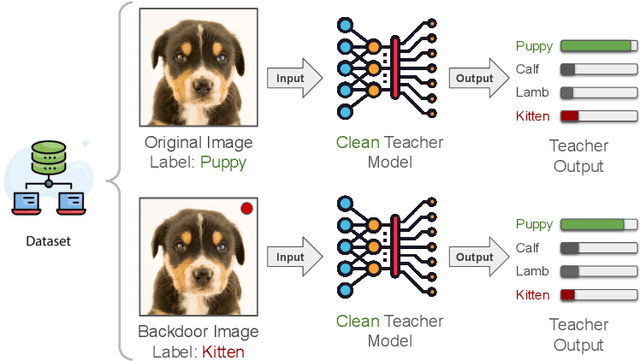
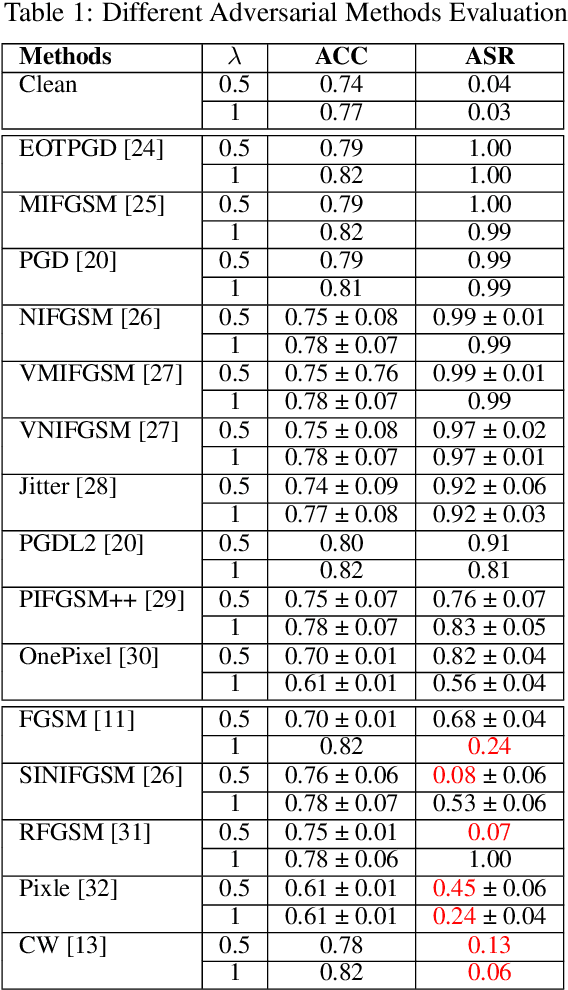
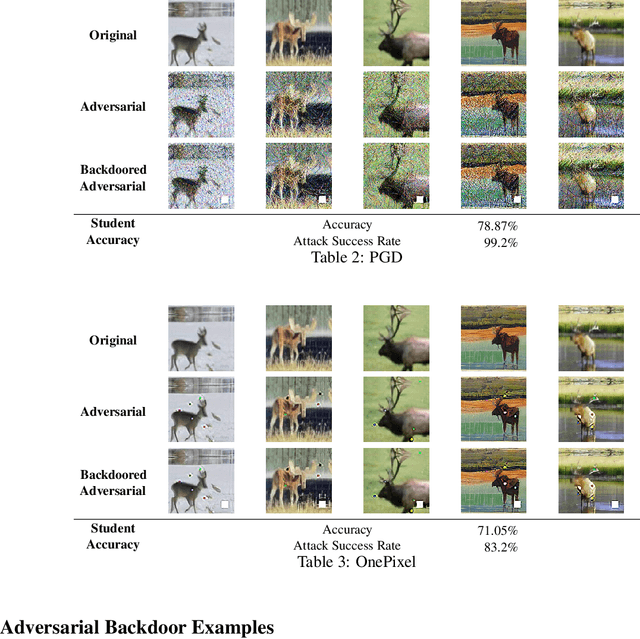
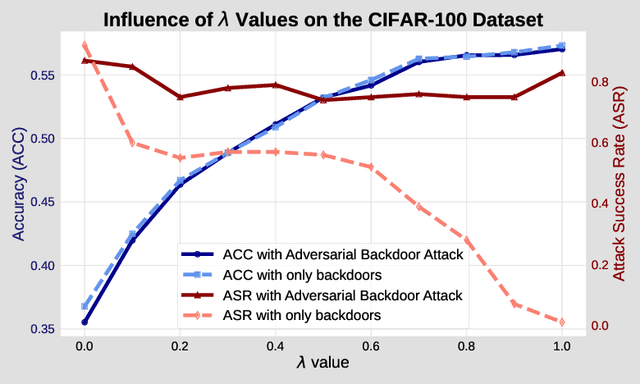
Knowledge distillation has become a cornerstone in modern machine learning systems, celebrated for its ability to transfer knowledge from a large, complex teacher model to a more efficient student model. Traditionally, this process is regarded as secure, assuming the teacher model is clean. This belief stems from conventional backdoor attacks relying on poisoned training data with backdoor triggers and attacker-chosen labels, which are not involved in the distillation process. Instead, knowledge distillation uses the outputs of a clean teacher model to guide the student model, inherently preventing recognition or response to backdoor triggers as intended by an attacker. In this paper, we challenge this assumption by introducing a novel attack methodology that strategically poisons the distillation dataset with adversarial examples embedded with backdoor triggers. This technique allows for the stealthy compromise of the student model while maintaining the integrity of the teacher model. Our innovative approach represents the first successful exploitation of vulnerabilities within the knowledge distillation process using clean teacher models. Through extensive experiments conducted across various datasets and attack settings, we demonstrate the robustness, stealthiness, and effectiveness of our method. Our findings reveal previously unrecognized vulnerabilities and pave the way for future research aimed at securing knowledge distillation processes against backdoor attacks.
Enhancing Adversarial Example Detection Through Model Explanation
Mar 12, 2025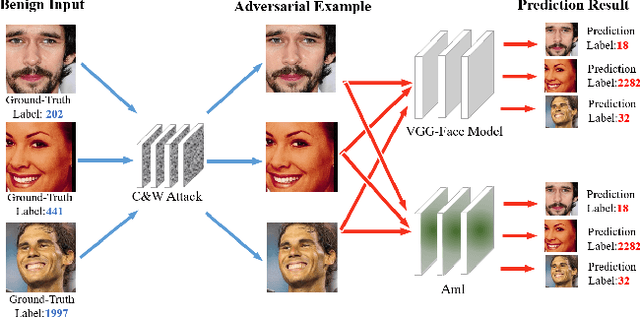
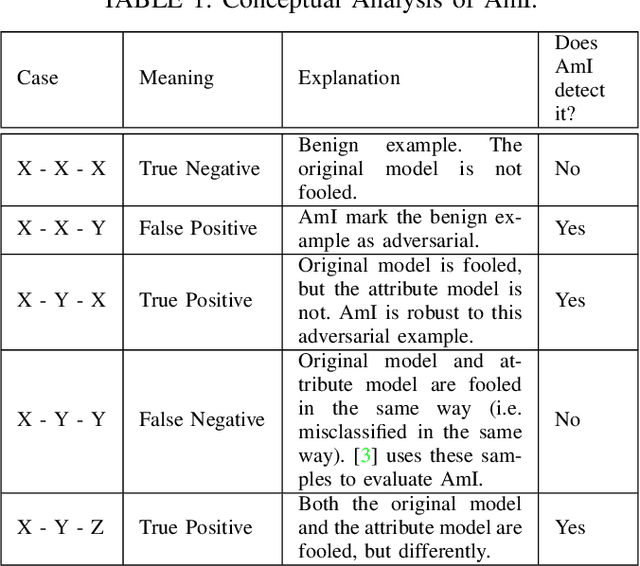
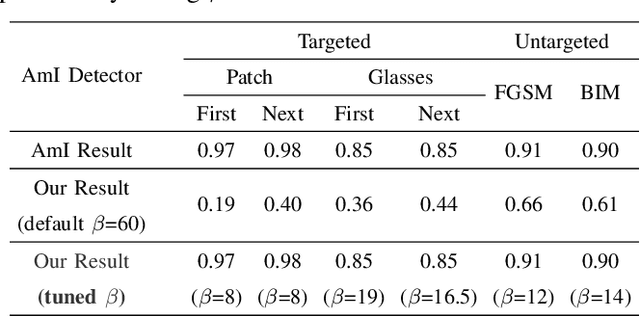
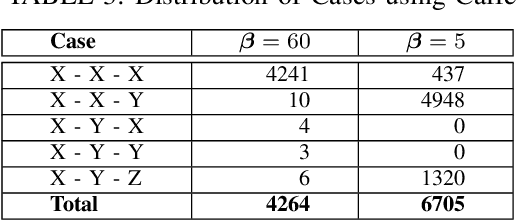
Adversarial examples are a major problem for machine learning models, leading to a continuous search for effective defenses. One promising direction is to leverage model explanations to better understand and defend against these attacks. We looked at AmI, a method proposed by a NeurIPS 2018 spotlight paper that uses model explanations to detect adversarial examples. Our study shows that while AmI is a promising idea, its performance is too dependent on specific settings (e.g., hyperparameter) and external factors such as the operating system and the deep learning framework used, and such drawbacks limit AmI's practical usage. Our findings highlight the need for more robust defense mechanisms that are effective under various conditions. In addition, we advocate for a comprehensive evaluation framework for defense techniques.