 Add to Chrome
 Add to Firefox
 Add to Edge
Transitional Grid Maps: Efficient Analytical Inference of Dynamic Environments under Limited Sensing
Jan 12, 2024
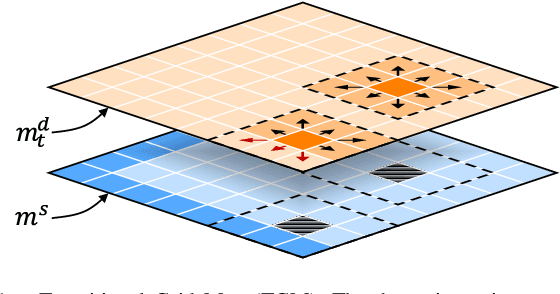
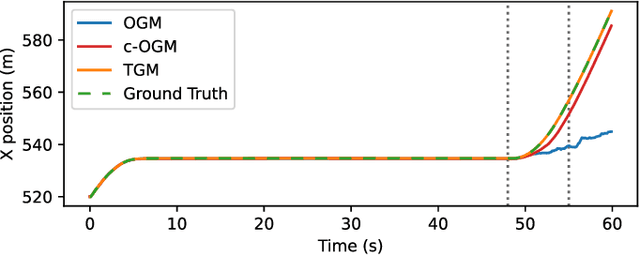
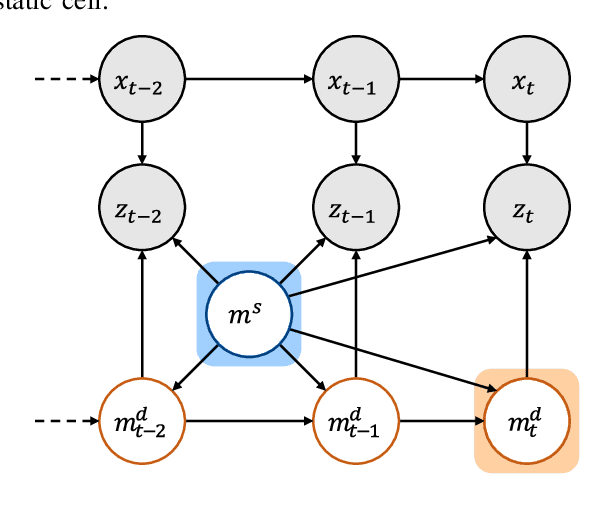
Autonomous agents rely on sensor data to construct representations of their environment, essential for predicting future events and planning their own actions. However, sensor measurements suffer from limited range, occlusions, and sensor noise. These challenges become more evident in dynamic environments, where efficiently inferring the state of the environment based on sensor readings from different times is still an open problem. This work focuses on inferring the state of the dynamic part of the environment, i.e., where dynamic objects might be, based on previous observations and constraints on their dynamics. We formalize the problem and introduce Transitional Grid Maps (TGMs), an efficient analytical solution. TGMs are based on a set of novel assumptions that hold in many practical scenarios. They significantly reduce the complexity of the problem, enabling continuous prediction and updating of the entire dynamic map based on the known static map (see Fig.1), differentiating them from other alternatives. We compare our approach with a state-of-the-art particle filter, obtaining more prudent predictions in occluded scenarios and on-par results on unoccluded tracking.

Fully Sparse Long Range 3D Object Detection Using Range Experts and Multimodal Virtual Points
Oct 07, 20233D object detection at long-range is crucial for ensuring the safety and efficiency of self-driving cars, allowing them to accurately perceive and react to objects, obstacles, and potential hazards from a distance. But most current state-of-the-art LiDAR based methods are limited by the sparsity of range sensors, which generates a form of domain gap between points closer to and farther away from the ego vehicle. Another related problem is the label imbalance for faraway objects, which inhibits the performance of Deep Neural Networks at long-range. Although image features could be beneficial for long-range detections, and some recently proposed multimodal methods incorporate image features, they do not scale well computationally at long ranges or are limited by depth estimation accuracy. To address the above limitations, we propose to combine two LiDAR based 3D detection networks, one specializing at near to mid-range objects, and one at long-range 3D detection. To train a detector at long range under a scarce label regime, we further propose to weigh the loss according to the labelled objects' distance from ego vehicle. To mitigate the LiDAR sparsity issue, we leverage Multimodal Virtual Points (MVP), an image based depth completion algorithm, to enrich our data with virtual points. Our method, combining two range experts trained with MVP, which we refer to as RangeFSD, achieves state-of-the-art performance on the Argoverse2 (AV2) dataset, with improvements at long range. The code will be released soon.
A Dynamic Points Removal Benchmark in Point Cloud Maps
Jul 14, 2023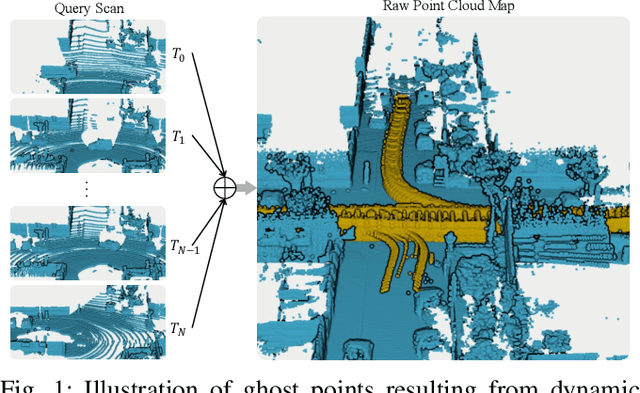
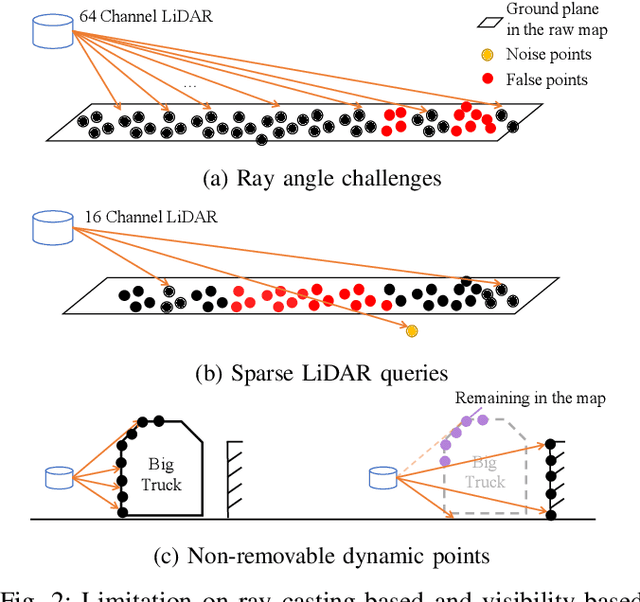
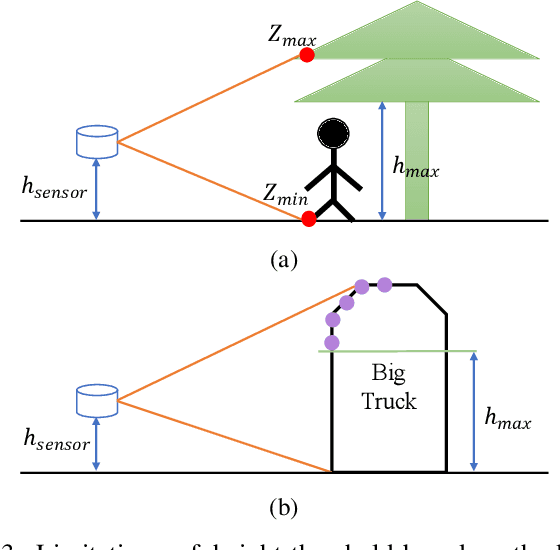
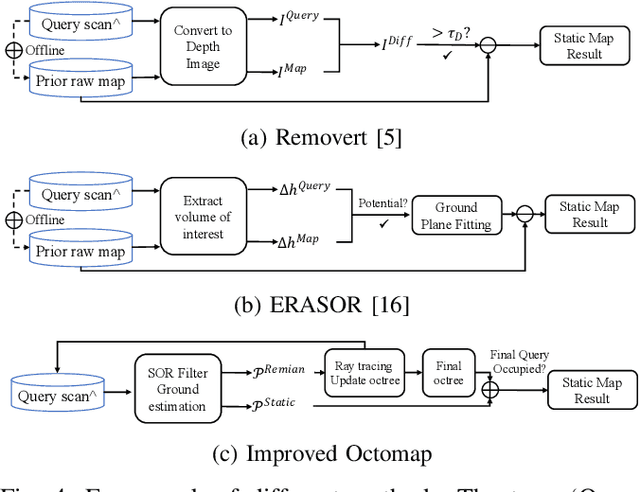
In the field of robotics, the point cloud has become an essential map representation. From the perspective of downstream tasks like localization and global path planning, points corresponding to dynamic objects will adversely affect their performance. Existing methods for removing dynamic points in point clouds often lack clarity in comparative evaluations and comprehensive analysis. Therefore, we propose an easy-to-extend unified benchmarking framework for evaluating techniques for removing dynamic points in maps. It includes refactored state-of-art methods and novel metrics to analyze the limitations of these approaches. This enables researchers to dive deep into the underlying reasons behind these limitations. The benchmark makes use of several datasets with different sensor types. All the code and datasets related to our study are publicly available for further development and utilization.
Happily Error After: Framework Development and User Study for Correcting Robot Perception Errors in Virtual Reality
Jun 26, 2023
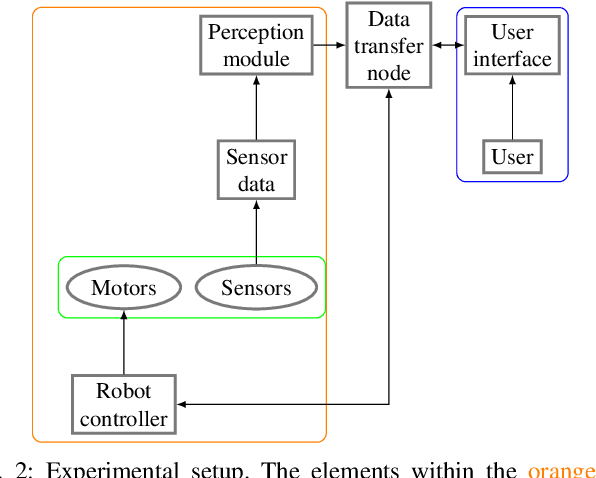
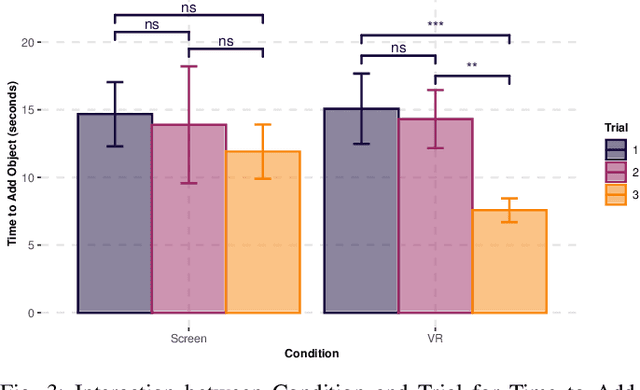

While we can see robots in more areas of our lives, they still make errors. One common cause of failure stems from the robot perception module when detecting objects. Allowing users to correct such errors can help improve the interaction and prevent the same errors in the future. Consequently, we investigate the effectiveness of a virtual reality (VR) framework for correcting perception errors of a Franka Panda robot. We conducted a user study with 56 participants who interacted with the robot using both VR and screen interfaces. Participants learned to collaborate with the robot faster in the VR interface compared to the screen interface. Additionally, participants found the VR interface more immersive, enjoyable, and expressed a preference for using it again. These findings suggest that VR interfaces may offer advantages over screen interfaces for human-robot interaction in erroneous environments.
Towards a Robust Sensor Fusion Step for 3D Object Detection on Corrupted Data
Jun 12, 2023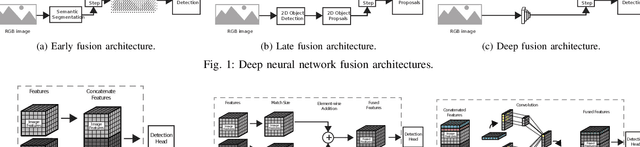
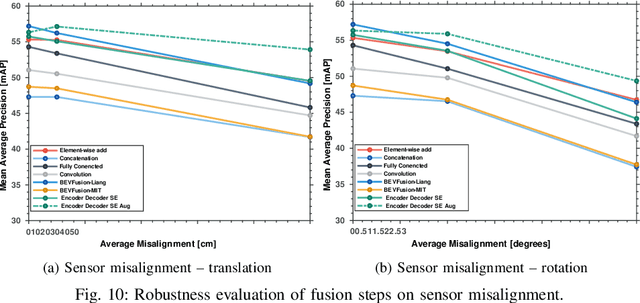
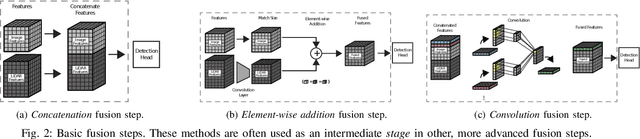
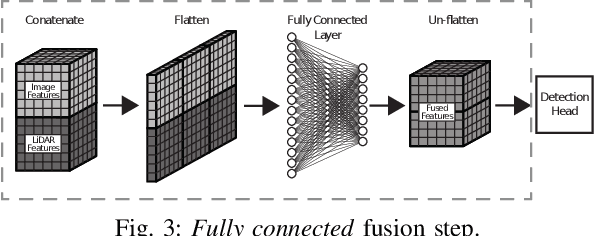
Multimodal sensor fusion methods for 3D object detection have been revolutionizing the autonomous driving research field. Nevertheless, most of these methods heavily rely on dense LiDAR data and accurately calibrated sensors which is often not the case in real-world scenarios. Data from LiDAR and cameras often come misaligned due to the miscalibration, decalibration, or different frequencies of the sensors. Additionally, some parts of the LiDAR data may be occluded and parts of the data may be missing due to hardware malfunction or weather conditions. This work presents a novel fusion step that addresses data corruptions and makes sensor fusion for 3D object detection more robust. Through extensive experiments, we demonstrate that our method performs on par with state-of-the-art approaches on normal data and outperforms them on misaligned data.
RGB-D-Based Categorical Object Pose and Shape Estimation: Methods, Datasets, and Evaluation
Jan 19, 2023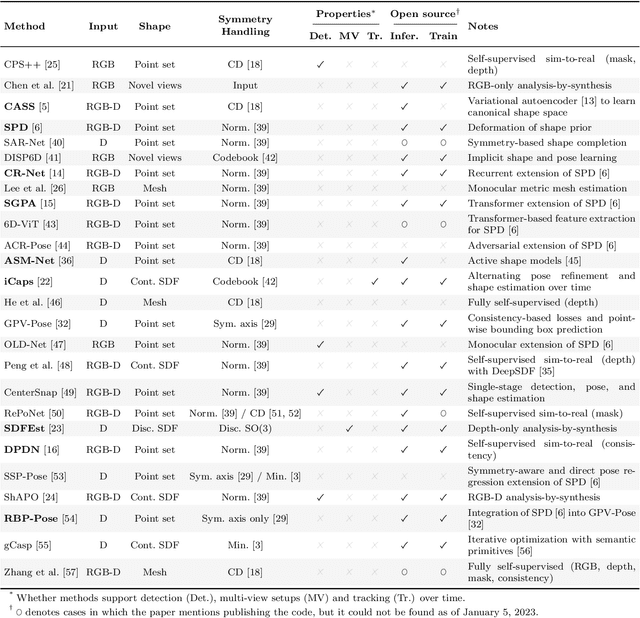
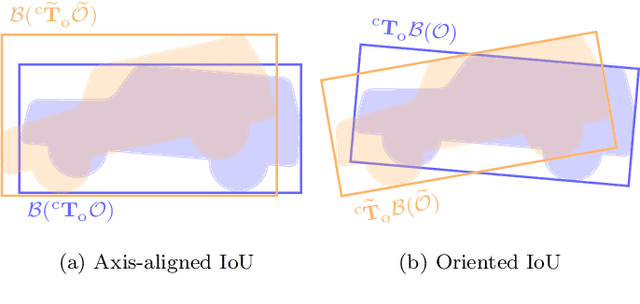
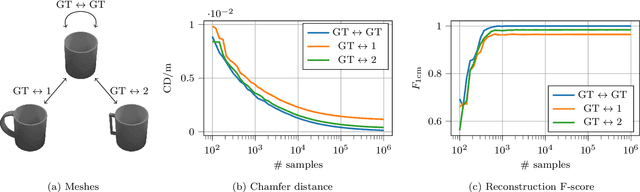
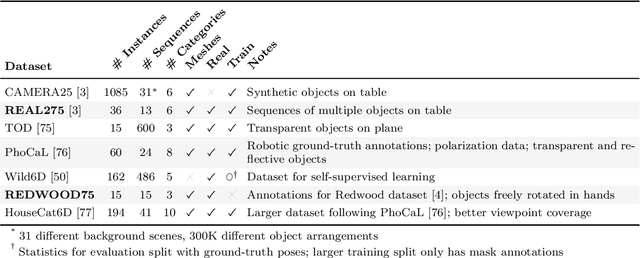
Recently, various methods for 6D pose and shape estimation of objects at a per-category level have been proposed. This work provides an overview of the field in terms of methods, datasets, and evaluation protocols. First, an overview of existing works and their commonalities and differences is provided. Second, we take a critical look at the predominant evaluation protocol, including metrics and datasets. Based on the findings, we propose a new set of metrics, contribute new annotations for the Redwood dataset, and evaluate state-of-the-art methods in a fair comparison. The results indicate that existing methods do not generalize well to unconstrained orientations and are actually heavily biased towards objects being upright. We provide an easy-to-use evaluation toolbox with well-defined metrics, methods, and dataset interfaces, which allows evaluation and comparison with various state-of-the-art approaches (https://github.com/roym899/pose_and_shape_evaluation).
What you see is what you get: A VR Framework for Correcting Robot Errors
Jan 17, 2023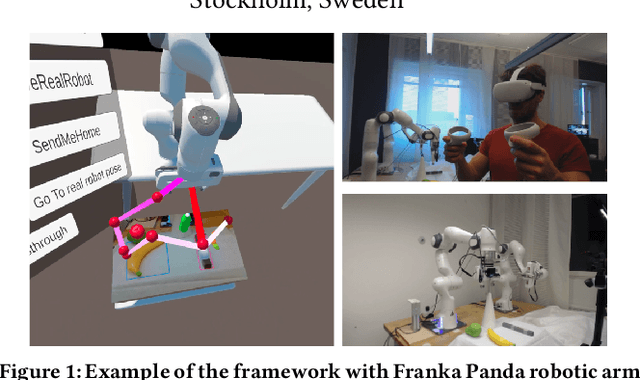


Many solutions tailored for intuitive visualization or teleoperation of virtual, augmented and mixed (VAM) reality systems are not robust to robot failures, such as the inability to detect and recognize objects in the environment or planning unsafe trajectories. In this paper, we present a novel virtual reality (VR) framework where users can (i) recognize when the robot has failed to detect a real-world object, (ii) correct the error in VR, (iii) modify proposed object trajectories and, (iv) implement behaviors on a real-world robot. Finally, we propose a user study aimed at testing the efficacy of our framework. Project materials can be found in the OSF repository.
A Probabilistic Framework for Visual Localization in Ambiguous Scenes
Jan 05, 2023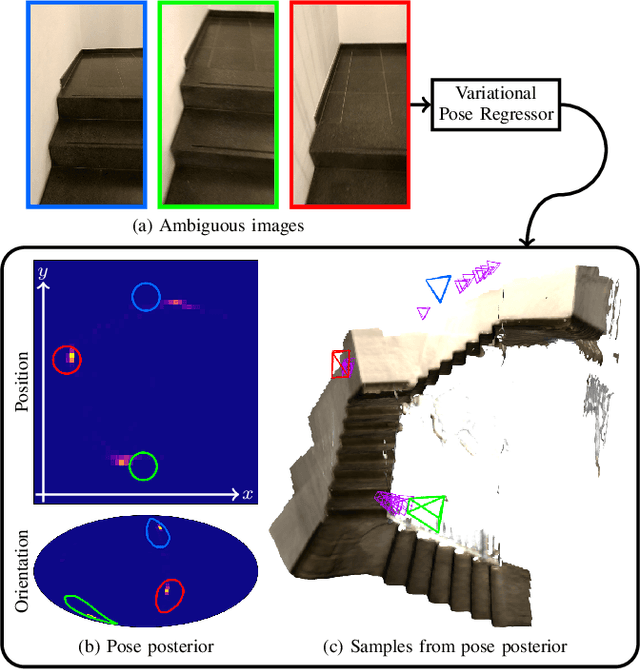
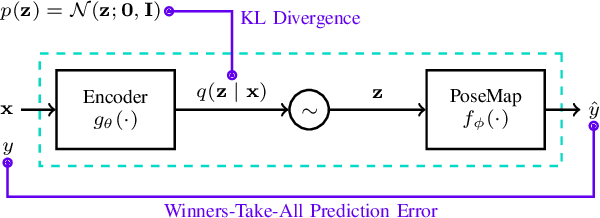

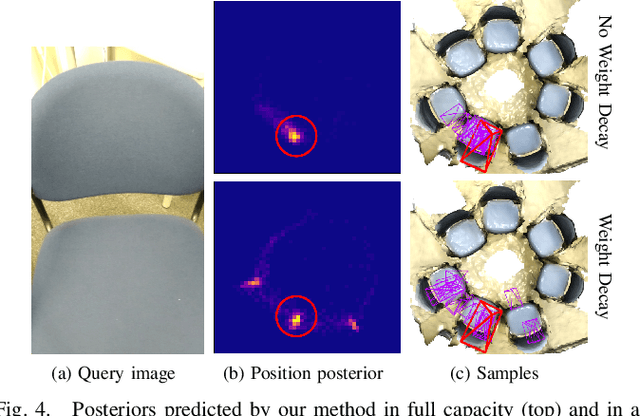
Visual localization allows autonomous robots to relocalize when losing track of their pose by matching their current observation with past ones. However, ambiguous scenes pose a challenge for such systems, as repetitive structures can be viewed from many distinct, equally likely camera poses, which means it is not sufficient to produce a single best pose hypothesis. In this work, we propose a probabilistic framework that for a given image predicts the arbitrarily shaped posterior distribution of its camera pose. We do this via a novel formulation of camera pose regression using variational inference, which allows sampling from the predicted distribution. Our method outperforms existing methods on localization in ambiguous scenes. Code and data will be released at https://github.com/efreidun/vapor.
SLICT: Multi-input Multi-scale Surfel-Based Lidar-Inertial Continuous-Time Odometry and Mapping
Nov 09, 2022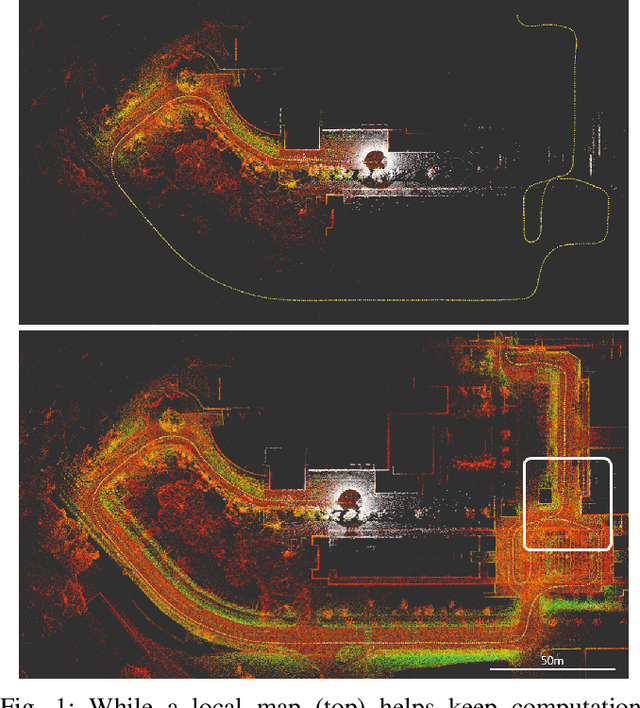
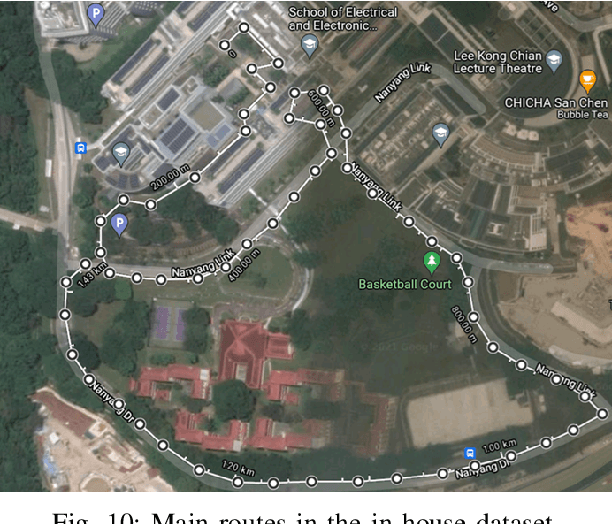
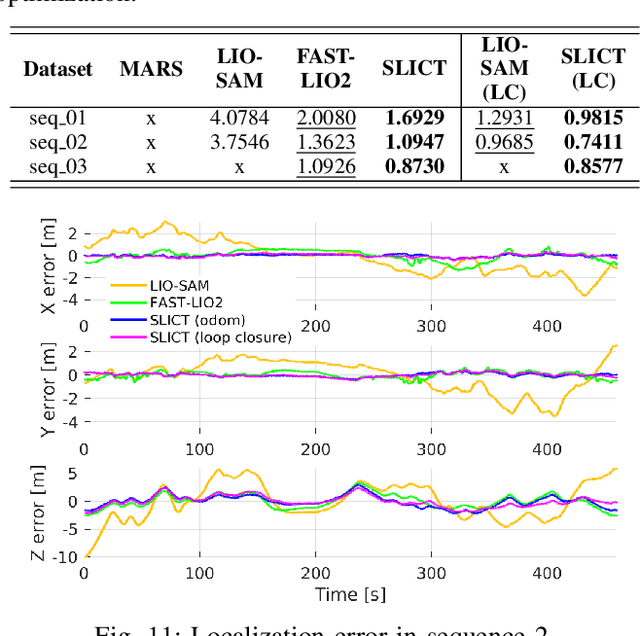
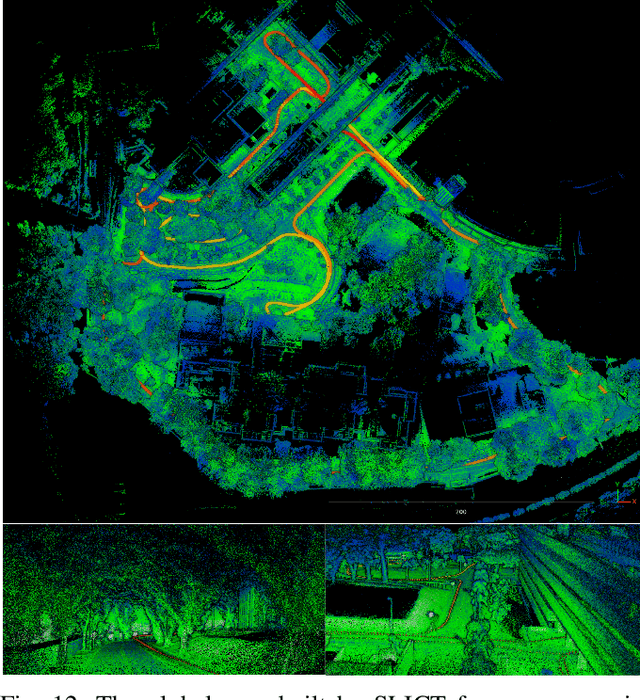
While feature association to a global map has significant benefits, to keep the computations from growing exponentially, most lidar-based odometry and mapping methods opt to associate features with local maps at one voxel scale. Taking advantage of the fact that surfels (surface elements) at different voxel scales can be organized in a tree-like structure, we propose an octree-based global map of multi-scale surfels that can be updated incrementally. This alleviates the need for recalculating, for example, a k-d tree of the whole map repeatedly. The system can also take input from a single or a number of sensors, reinforcing the robustness in degenerate cases. We also propose a point-to-surfel (PTS) association scheme, continuous-time optimization on PTS and IMU preintegration factors, along with loop closure and bundle adjustment, making a complete framework for Lidar-Inertial continuous-time odometry and mapping. Experiments on public and in-house datasets demonstrate the advantages of our system compared to other state-of-the-art methods. To benefit the community, we release the source code and dataset at https://github.com/brytsknguyen/slict.
Semantic 3D Grid Maps for Autonomous Driving
Nov 09, 2022Maps play a key role in rapidly developing area of autonomous driving. We survey the literature for different map representations and find that while the world is three-dimensional, it is common to rely on 2D map representations in order to meet real-time constraints. We believe that high levels of situation awareness require a 3D representation as well as the inclusion of semantic information. We demonstrate that our recently presented hierarchical 3D grid mapping framework UFOMap meets the real-time constraints. Furthermore, we show how it can be used to efficiently support more complex functions such as calculating the occluded parts of space and accumulating the output from a semantic segmentation network.