 Add to Chrome
 Add to Firefox
 Add to Edge
Evaluating $n$-Gram Novelty of Language Models Using Rusty-DAWG
Jun 18, 2024
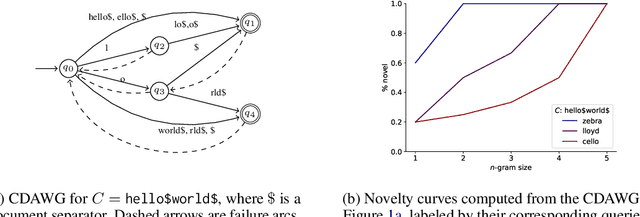
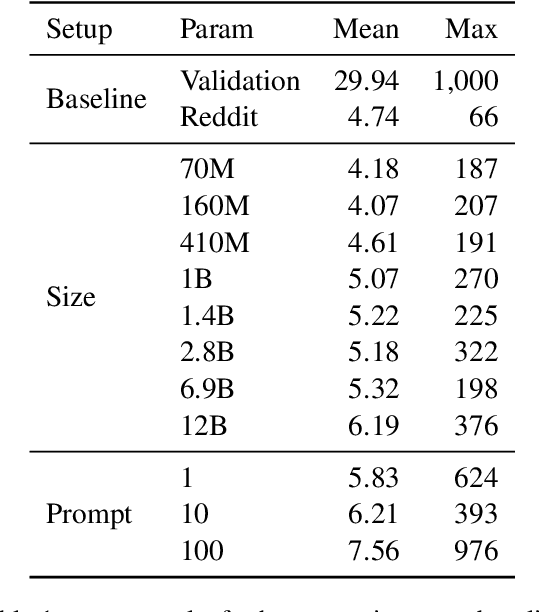
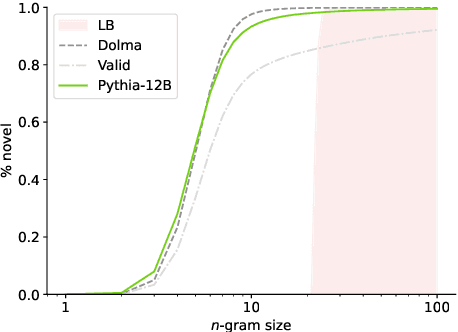
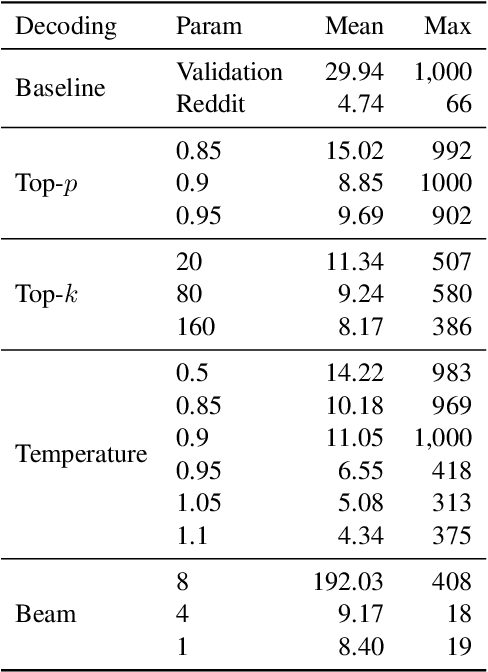
How novel are texts generated by language models (LMs) relative to their training corpora? In this work, we investigate the extent to which modern LMs generate $n$-grams from their training data, evaluating both (i) the probability LMs assign to complete training $n$-grams and (ii) $n$-novelty, the proportion of $n$-grams generated by an LM that did not appear in the training data (for arbitrarily large $n$). To enable arbitrary-length $n$-gram search over a corpus in constant time, we develop Rusty-DAWG, a novel search tool inspired by indexing of genomic data. We compare the novelty of LM-generated text to human-written text and explore factors that affect generation novelty, focusing on the Pythia models. We find that, for $n > 4$, LM-generated text is less novel than human-written text, though it is more novel for smaller $n$. Larger LMs and more constrained decoding strategies both decrease novelty. Finally, we show that LMs complete $n$-grams with lower loss if they are less frequent in the training data. Overall, our results reveal factors influencing the novelty of LM-generated text, and we release Rusty-DAWG to facilitate further pretraining data research.

Unpacking DPO and PPO: Disentangling Best Practices for Learning from Preference Feedback
Jun 13, 2024Learning from preference feedback has emerged as an essential step for improving the generation quality and performance of modern language models (LMs). Despite its widespread use, the way preference-based learning is applied varies wildly, with differing data, learning algorithms, and evaluations used, making disentangling the impact of each aspect difficult. In this work, we identify four core aspects of preference-based learning: preference data, learning algorithm, reward model, and policy training prompts, systematically investigate the impact of these components on downstream model performance, and suggest a recipe for strong learning for preference feedback. Our findings indicate that all aspects are important for performance, with better preference data leading to the largest improvements, followed by the choice of learning algorithm, the use of improved reward models, and finally the use of additional unlabeled prompts for policy training. Notably, PPO outperforms DPO by up to 2.5% in math and 1.2% in general domains. High-quality preference data leads to improvements of up to 8% in instruction following and truthfulness. Despite significant gains of up to 5% in mathematical evaluation when scaling up reward models, we surprisingly observe marginal improvements in other categories. We publicly release the code used for training (https://github.com/hamishivi/EasyLM) and evaluating (https://github.com/allenai/open-instruct) our models, along with the models and datasets themselves (https://huggingface.co/collections/allenai/tulu-v25-suite-66676520fd578080e126f618).
What Can Natural Language Processing Do for Peer Review?
May 10, 2024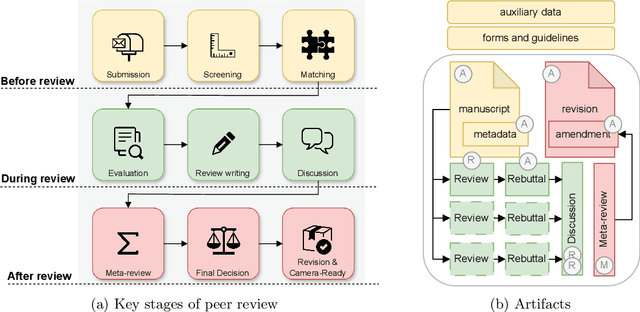
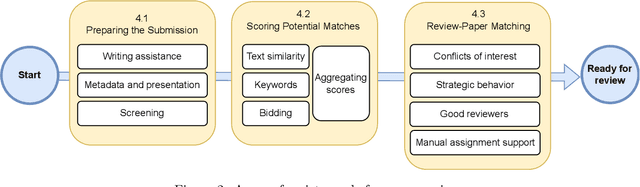

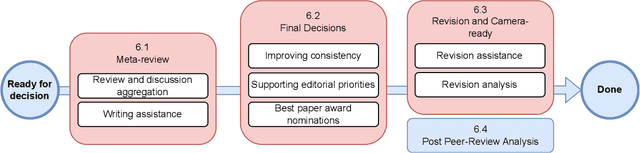
The number of scientific articles produced every year is growing rapidly. Providing quality control over them is crucial for scientists and, ultimately, for the public good. In modern science, this process is largely delegated to peer review -- a distributed procedure in which each submission is evaluated by several independent experts in the field. Peer review is widely used, yet it is hard, time-consuming, and prone to error. Since the artifacts involved in peer review -- manuscripts, reviews, discussions -- are largely text-based, Natural Language Processing has great potential to improve reviewing. As the emergence of large language models (LLMs) has enabled NLP assistance for many new tasks, the discussion on machine-assisted peer review is picking up the pace. Yet, where exactly is help needed, where can NLP help, and where should it stand aside? The goal of our paper is to provide a foundation for the future efforts in NLP for peer-reviewing assistance. We discuss peer review as a general process, exemplified by reviewing at AI conferences. We detail each step of the process from manuscript submission to camera-ready revision, and discuss the associated challenges and opportunities for NLP assistance, illustrated by existing work. We then turn to the big challenges in NLP for peer review as a whole, including data acquisition and licensing, operationalization and experimentation, and ethical issues. To help consolidate community efforts, we create a companion repository that aggregates key datasets pertaining to peer review. Finally, we issue a detailed call for action for the scientific community, NLP and AI researchers, policymakers, and funding bodies to help bring the research in NLP for peer review forward. We hope that our work will help set the agenda for research in machine-assisted scientific quality control in the age of AI, within the NLP community and beyond.
Learning Syntax Without Planting Trees: Understanding When and Why Transformers Generalize Hierarchically
Apr 25, 2024Transformers trained on natural language data have been shown to learn its hierarchical structure and generalize to sentences with unseen syntactic structures without explicitly encoding any structural bias. In this work, we investigate sources of inductive bias in transformer models and their training that could cause such generalization behavior to emerge. We extensively experiment with transformer models trained on multiple synthetic datasets and with different training objectives and show that while other objectives e.g. sequence-to-sequence modeling, prefix language modeling, often failed to lead to hierarchical generalization, models trained with the language modeling objective consistently learned to generalize hierarchically. We then conduct pruning experiments to study how transformers trained with the language modeling objective encode hierarchical structure. When pruned, we find joint existence of subnetworks within the model with different generalization behaviors (subnetworks corresponding to hierarchical structure and linear order). Finally, we take a Bayesian perspective to further uncover transformers' preference for hierarchical generalization: We establish a correlation between whether transformers generalize hierarchically on a dataset and whether the simplest explanation of that dataset is provided by a hierarchical grammar compared to regular grammars exhibiting linear generalization.
BLINK: Multimodal Large Language Models Can See but Not Perceive
Apr 18, 2024
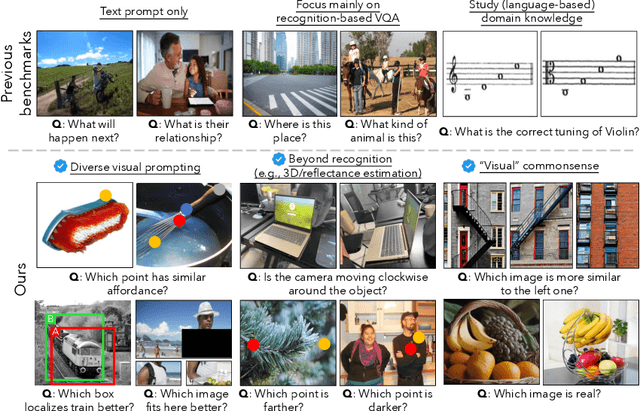
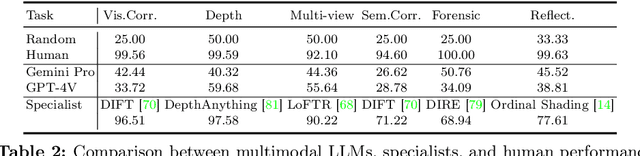
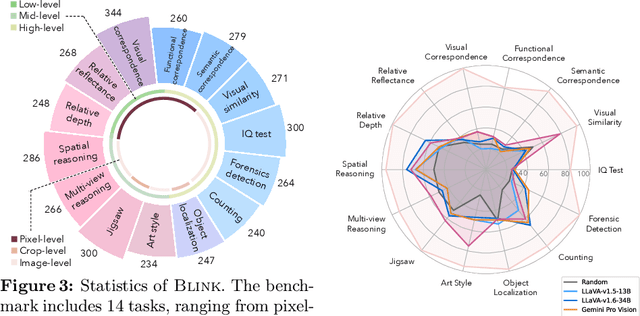
We introduce Blink, a new benchmark for multimodal language models (LLMs) that focuses on core visual perception abilities not found in other evaluations. Most of the Blink tasks can be solved by humans "within a blink" (e.g., relative depth estimation, visual correspondence, forensics detection, and multi-view reasoning). However, we find these perception-demanding tasks cast significant challenges for current multimodal LLMs because they resist mediation through natural language. Blink reformats 14 classic computer vision tasks into 3,807 multiple-choice questions, paired with single or multiple images and visual prompting. While humans get 95.70% accuracy on average, Blink is surprisingly challenging for existing multimodal LLMs: even the best-performing GPT-4V and Gemini achieve accuracies of 51.26% and 45.72%, only 13.17% and 7.63% higher than random guessing, indicating that such perception abilities have not "emerged" yet in recent multimodal LLMs. Our analysis also highlights that specialist CV models could solve these problems much better, suggesting potential pathways for future improvements. We believe Blink will stimulate the community to help multimodal LLMs catch up with human-level visual perception.
A Taxonomy of Ambiguity Types for NLP
Mar 21, 2024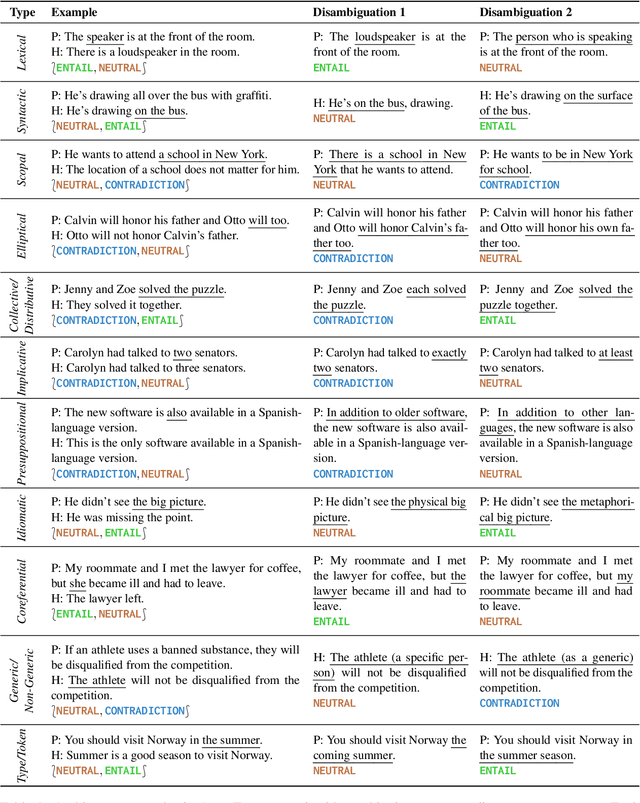
Ambiguity is an critical component of language that allows for more effective communication between speakers, but is often ignored in NLP. Recent work suggests that NLP systems may struggle to grasp certain elements of human language understanding because they may not handle ambiguities at the level that humans naturally do in communication. Additionally, different types of ambiguity may serve different purposes and require different approaches for resolution, and we aim to investigate how language models' abilities vary across types. We propose a taxonomy of ambiguity types as seen in English to facilitate NLP analysis. Our taxonomy can help make meaningful splits in language ambiguity data, allowing for more fine-grained assessments of both datasets and model performance.
RewardBench: Evaluating Reward Models for Language Modeling
Mar 20, 2024Reward models (RMs) are at the crux of successful RLHF to align pretrained models to human preferences, yet there has been relatively little study that focuses on evaluation of those reward models. Evaluating reward models presents an opportunity to understand the opaque technologies used for alignment of language models and which values are embedded in them. To date, very few descriptors of capabilities, training methods, or open-source reward models exist. In this paper, we present RewardBench, a benchmark dataset and code-base for evaluation, to enhance scientific understanding of reward models. The RewardBench dataset is a collection of prompt-win-lose trios spanning chat, reasoning, and safety, to benchmark how reward models perform on challenging, structured and out-of-distribution queries. We created specific comparison datasets for RMs that have subtle, but verifiable reasons (e.g. bugs, incorrect facts) why one answer should be preferred to another. On the RewardBench leaderboard, we evaluate reward models trained with a variety of methods, such as the direct MLE training of classifiers and the implicit reward modeling of Direct Preference Optimization (DPO), and on a spectrum of datasets. We present many findings on propensity for refusals, reasoning limitations, and instruction following shortcomings of various reward models towards a better understanding of the RLHF process.
Third-Party Language Model Performance Prediction from Instruction
Mar 19, 2024Language model-based instruction-following systems have lately shown increasing performance on many benchmark tasks, demonstrating the capability of adapting to a broad variety of instructions. However, such systems are often not designed to be transparent about their limitations; a user may easily prompt a model with an instruction without any idea of whether the responses should be expected to be accurate, or if the system is even capable of performing the task. We propose a third party performance prediction framework, where a separate model is trained to predict the metric resulting from evaluating an instruction-following system on a task while assuming access only to its inputs and outputs at inference time. We perform this analysis with a variety of both open and closed instruction-following models as well as multiple performance predictors, and examine the effect of various factors such as model size, number of training tasks, and prompt format. Our findings indicate that third-party performance prediction is very challenging, and much work remains in developing predictors that can automatically reveal the limitations of modern instruction-following natural language processing systems.
Encode Once and Decode in Parallel: Efficient Transformer Decoding
Mar 19, 2024


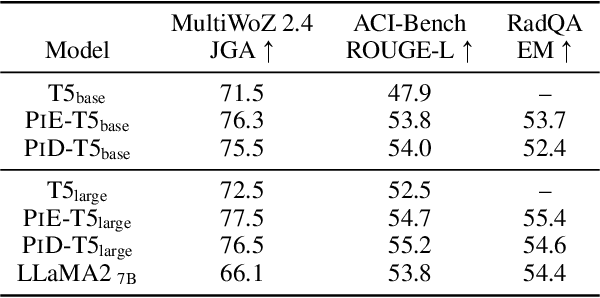
Transformer-based NLP models are powerful but have high computational costs that limit deployment scenarios. Finetuned encoder-decoder models are popular in specialized domains and can outperform larger more generalized decoder-only models, such as GPT-4. We introduce a new configuration for encoder-decoder models that improves efficiency on structured output and question-answering tasks where multiple outputs are required of a single input. Our method, prompt-in-decoder (PiD), encodes the input once and decodes output in parallel, boosting both training and inference efficiency by avoiding duplicate input encoding, thereby reducing the decoder's memory footprint. We achieve computation reduction that roughly scales with the number of subtasks, gaining up to 4.6x speed-up over state-of-the-art models for dialogue state tracking, summarization, and question-answering tasks with comparable or better performance. We release our training/inference code and checkpoints.
Set the Clock: Temporal Alignment of Pretrained Language Models
Feb 26, 2024Language models (LMs) are trained on web text originating from many points in time and, in general, without any explicit temporal grounding. This work investigates the temporal chaos of pretrained LMs and explores various methods to align their internal knowledge to a target time, which we call "temporal alignment." To do this, we first automatically construct a dataset containing 20K time-sensitive questions and their answers for each year from 2000 to 2023. Based on this dataset, we empirically show that pretrained LMs (e.g., LLaMa2), despite having a recent pretraining cutoff (e.g., 2022), mostly answer questions using earlier knowledge (e.g., in 2019). We then develop several methods, from prompting to finetuning, to align LMs to use their most recent knowledge when answering questions, and investigate various factors in this alignment. Our experiments show that aligning LLaMa2 to the year 2022 can boost its performance by up to 62% relatively as measured by that year, even without mentioning time information explicitly, indicating the possibility of aligning models' internal sense of time after pretraining. Finally, we find that alignment to a historical time is also possible, with up to 2.8$\times$ the performance of the unaligned LM in 2010 if finetuning models to that year. These findings hint at the sophistication of LMs' internal knowledge organization and the necessity of tuning them properly.