 Add to Chrome
 Add to Firefox
 Add to Edge
DFSC: Error-Controlled Differentiable Mittag-Leffler Propagation for Fractional Scientific Machine Learning
Jul 31, 2026
Fractional scientific machine learning requires numerical operators that can be differentiated, batched, accelerated, and composed with neural networks. When the dominant linear fractional evolution is known through a Mittag-Leffler propagator, repeatedly reconstructing that response with a history solver or relearning it from data is unnecessary. We present DFSC, a PyTorch environment organized around the Mittag-Leffler Spectral Layer (MLSL). The layer separates known fractional propagation from data-driven corrections, so neural modules learn only unresolved dynamics while fractional orders and residual-network parameters are optimized jointly. Its adaptive algorithm increases special-function truncation depth or Lanczos dimension until successive differentiable evaluations satisfy a requested tolerance. In the negative-real alternating-series regime, DFSC additionally returns a certified first-omitted-term bound; outside that regime it explicitly labels estimates as empirical. DFSC supports dense, sparse, matrix-free, self-adjoint, generalized, and controlled complex operator paths; trainable fractional orders; direct inverse problems; residual neural composition; and CPU/GPU execution. The certified series bound covers all 59 eligible reference cases, with median bound/error effectivity 1.246 for resolved errors. Reusing a prepared batched Lanczos basis gives identical fixed-path values and reduces repeated-query time by 4.61--7.11 times on CPU and 13.07--16.22 times on an RTX 5070, excluding one-time preparation. A 27-case inverse matrix finds full-rank local curvature throughout, while remaining explicitly model-conditional. External solver and mixed real-data results support DFSC as an error-aware optional primitive for matched fractional structure, rather than a general replacement for fractional solvers or neural models.

A Physics-Chemistry-Informed Neural Network (PCINN) for Real-Time Spatial-ALD Coverage Prediction and Reliable Kinetics Inversion
Jul 31, 2026Spatial atomic layer deposition (SALD) is a leading atmospheric-pressure, high-throughput route to industrial ALD, but design and control are limited by the cost of predicting surface coverage: high-fidelity CFD is far too slow for operating-window scans, while analytic models miss transport modulation such as the gas curtain. We present a physics-chemistry-informed neural network (PCINN), a hybrid surrogate with CFD-level accuracy at real-time speed: a query returns coverage in about 7 ms, roughly 5x10^4 times faster than a CFD solve, reaching a test R^2_log = 0.998 (leave-one-out R^2_raw = 0.974) from only 30 training cases spanning four orders of magnitude in coverage. The architecture is not a black box: a small network learns only the operating-condition to near-wall concentration closure, while the known surface kinetics is a hard-coded, trainable chemistry layer integrated along the substrate trajectory. This single-scalar bottleneck keeps it accurate under sparse data, interpretable and invertible. We add a full identifiability analysis (Fisher information, profile likelihood). The adsorption energy E_ads and desorption rate k_des are robustly identifiable; k_ads is not separately identifiable at a single temperature (only k_ads*c_wall is). Across four temperatures the prefactor nu and E_ads bind along a weakly identifiable degeneracy valley of slope 0.065 eV/decade, derived analytically as k_B T_eff ln(10) and turned into a reliability diagnostic: a seven-chemistry mismatch matrix shows it is invariant under any single-Arrhenius mismatch and shifts only when a second thermally activated process appears, so a slope departure flags unmodelled site heterogeneity. Data come from simulation with known ground truth inverted by the same kinetic form, so the study verifies pipeline self-consistency and the identifiability boundary, not real parameters.
An Automated Framework for Extracting Reachable Attack Chains from Cyber Threat Intelligence Reports
Jul 22, 2026Cyber Threat Intelligence (CTI) reports richly describe real-world attack processes, but their unstructured narratives cannot be directly used for automated attack-path reasoning. Existing CTI extraction methods focus on indicators, entities, or TTP labels without modeling the execution conditions and resulting states of each attack step, so the extracted knowledge supports neither state matching nor reachability analysis across multi-stage attack chains. This paper proposes an automated framework that extracts reachable attack chains by modeling each attack step as an attack unit of preconditions, an attack behavior, and postconditions. A multi-stage pipeline assisted by large language models (LLMs) extracts attack behavior skeletons, recovers their preconditions and postconditions, normalizes them into predefined predicates, and repairs broken dependencies; the resulting units are compiled into Datalog-style rules for attack-goal reachability reasoning. On a dataset of 20 CTI reports containing 334 human-validated annotated steps, our framework achieves higher annotated-step coverage than representative CTI extraction systems in recovering attack behaviors. Moreover, by explicitly generating preconditions and postconditions, it produces attack units that are more complete and consistent than those generated by end-to-end LLM baselines. On the extracted chains, Datalog inference reaches the specified attack goal in 19 of 20 reports, while backward search yields 34 attack paths under the generated rules. The source code and experimental artifacts are available in an anonymized repository. .
HVR-Met: A Hypothesis-Verification-Replaning Agentic System for Extreme Weather Diagnosis
Mar 01, 2026While deep learning-based weather forecasting paradigms have made significant strides, addressing extreme weather diagnostics remains a formidable challenge. This gap exists primarily because the diagnostic process demands sophisticated multi-step logical reasoning, dynamic tool invocation, and expert-level prior judgment. Although agents possess inherent advantages in task decomposition and autonomous execution, current architectures are still hampered by critical bottlenecks: inadequate expert knowledge integration, a lack of professional-grade iterative reasoning loops, and the absence of fine-grained validation and evaluation systems for complex workflows under extreme conditions. To this end, we propose HVR-Met, a multi-agent meteorological diagnostic system characterized by the deep integration of expert knowledge. Its central innovation is the ``Hypothesis-Verification-Replanning'' closed-loop mechanism, which facilitates sophisticated iterative reasoning for anomalous meteorological signals during extreme weather events. To bridge gaps within existing evaluation frameworks, we further introduce a novel benchmark focused on atomic-level subtasks. Experimental evidence demonstrates that the system excels in complex diagnostic scenarios.
Reliability-aware Execution Gating for Near-field and Off-axis Vision-guided Robotic Alignment
Feb 09, 2026Vision-guided robotic systems are increasingly deployed in precision alignment tasks that require reliable execution under near-field and off-axis configurations. While recent advances in pose estimation have significantly improved numerical accuracy, practical robotic systems still suffer from frequent execution failures even when pose estimates appear accurate. This gap suggests that pose accuracy alone is insufficient to guarantee execution-level reliability. In this paper, we reveal that such failures arise from a deterministic geometric error amplification mechanism, in which small pose estimation errors are magnified through system structure and motion execution, leading to unstable or failed alignment. Rather than modifying pose estimation algorithms, we propose a Reliability-aware Execution Gating mechanism that operates at the execution level. The proposed approach evaluates geometric consistency and configuration risk before execution, and selectively rejects or scales high-risk pose updates. We validate the proposed method on a real UR5 robotic platform performing single-step visual alignment tasks under varying camera-target distances and off-axis configurations. Experimental results demonstrate that the proposed execution gating significantly improves task success rates, reduces execution variance, and suppresses tail-risk behavior, while leaving average pose accuracy largely unchanged. Importantly, the proposed mechanism is estimator-agnostic and can be readily integrated with both classical geometry-based and learning-based pose estimation pipelines. These results highlight the importance of execution-level reliability modeling and provide a practical solution for improving robustness in near-field vision-guided robotic systems.
Research on a Camera Position Measurement Method based on a Parallel Perspective Error Transfer Model
Feb 08, 2026Camera pose estimation from sparse correspondences is a fundamental problem in geometric computer vision and remains particularly challenging in near-field scenarios, where strong perspective effects and heterogeneous measurement noise can significantly degrade the stability of analytic PnP solutions. In this paper, we present a geometric error propagation framework for camera pose estimation based on a parallel perspective approximation. By explicitly modeling how image measurement errors propagate through perspective geometry, we derive an error transfer model that characterizes the relationship between feature point distribution, camera depth, and pose estimation uncertainty. Building on this analysis, we develop a pose estimation method that leverages parallel perspective initialization and error-aware weighting within a Gauss-Newton optimization scheme, leading to improved robustness in proximity operations. Extensive experiments on both synthetic data and real-world images, covering diverse conditions such as strong illumination, surgical lighting, and underwater low-light environments, demonstrate that the proposed approach achieves accuracy and robustness comparable to state-of-the-art analytic and iterative PnP methods, while maintaining high computational efficiency. These results highlight the importance of explicit geometric error modeling for reliable camera pose estimation in challenging near-field settings.
System-Level Error Propagation and Tail-Risk Amplification in Reference-Based Robotic Navigation
Feb 08, 2026Image guided robotic navigation systems often rely on reference based geometric perception pipelines, where accurate spatial mapping is established through multi stage estimation processes. In biplanar X ray guided navigation, such pipelines are widely used due to their real time capability and geometric interpretability. However, navigation reliability can be constrained by an overlooked system level failure mechanism in which installation induced structural perturbations introduced at the perception stage are progressively amplified along the perception reconstruction execution chain and dominate execution level error and tail risk behavior. This paper investigates this mechanism from a system level perspective and presents a unified error propagation modeling framework that characterizes how installation induced structural perturbations propagate and couple with pixel level observation noise through biplanar imaging, projection matrix estimation, triangulation, and coordinate mapping. Using first order analytic uncertainty propagation and Monte Carlo simulations, we analyze dominant sensitivity channels and quantify worst case error behavior beyond mean accuracy metrics. The results show that rotational installation error is a primary driver of system level error amplification, while translational misalignment of comparable magnitude plays a secondary role under typical biplanar geometries. Real biplanar X ray bench top experiments further confirm that the predicted amplification trends persist under realistic imaging conditions. These findings reveal a broader structural limitation of reference based multi stage geometric perception pipelines and provide a framework for system level reliability analysis and risk aware design in safety critical robotic navigation systems.
Pre-train and Fine-tune: Recommenders as Large Models
Jan 24, 2025
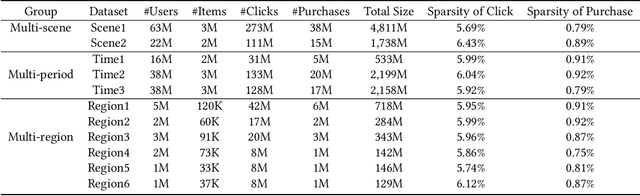
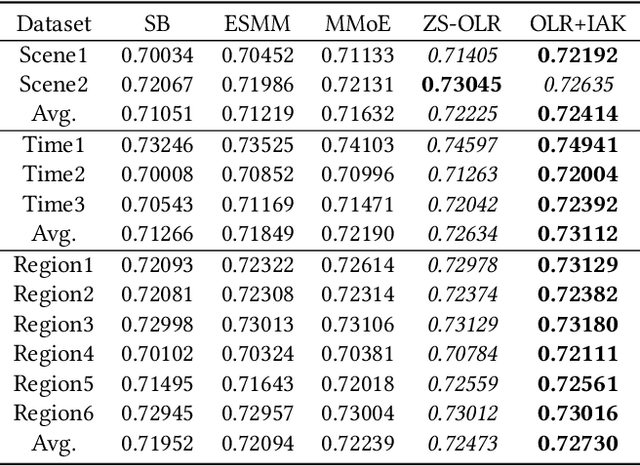
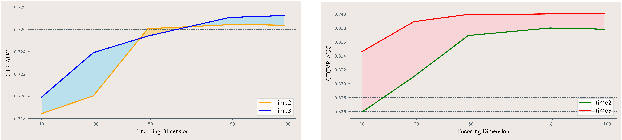
In reality, users have different interests in different periods, regions, scenes, etc. Such changes in interest are so drastic that they are difficult to be captured by recommenders. Existing multi-domain learning can alleviate this problem. However, the structure of the industrial recommendation system is complex, the amount of data is huge, and the training cost is extremely high, so it is difficult to modify the structure of the industrial recommender and re-train it. To fill this gap, we consider recommenders as large pre-trained models and fine-tune them. We first propose the theory of the information bottleneck for fine-tuning and present an explanation for the fine-tuning technique in recommenders. To tailor for recommendation, we design an information-aware adaptive kernel (IAK) technique to fine-tune the pre-trained recommender. Specifically, we define fine-tuning as two phases: knowledge compression and knowledge matching and let the training stage of IAK explicitly approximate these two phases. Our proposed approach designed from the essence of fine-tuning is well interpretable. Extensive online and offline experiments show the superiority of our proposed method. Besides, we also share unique and important lessons we learned when deploying the method in a large-scale online platform. We also present the potential issues of fine-tuning techniques in recommendation systems and the corresponding solutions. The recommender with IAK technique has been deployed on the homepage of a billion-scale online food platform for several months and has yielded considerable profits in our business.
CSPM: A Contrastive Spatiotemporal Preference Model for CTR Prediction in On-Demand Food Delivery Services
Aug 10, 2023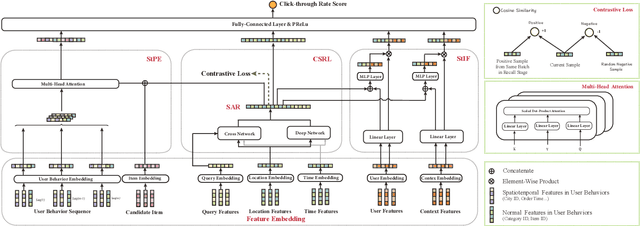
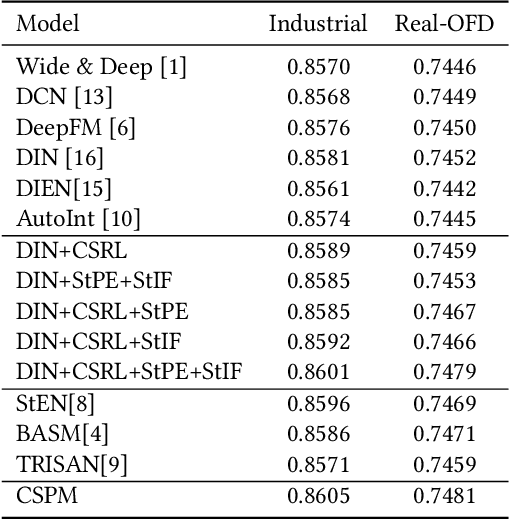
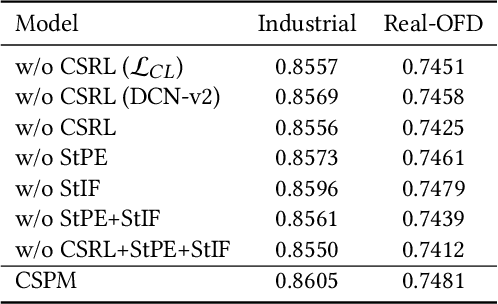
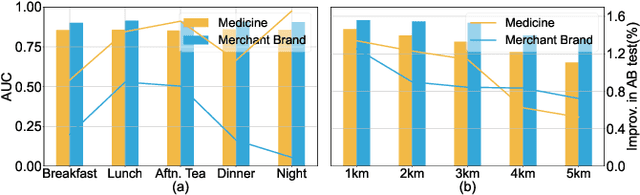
Click-through rate (CTR) prediction is a crucial task in the context of an online on-demand food delivery (OFD) platform for precisely estimating the probability of a user clicking on food items. Unlike universal e-commerce platforms such as Taobao and Amazon, user behaviors and interests on the OFD platform are more location and time-sensitive due to limited delivery ranges and regional commodity supplies. However, existing CTR prediction algorithms in OFD scenarios concentrate on capturing interest from historical behavior sequences, which fails to effectively model the complex spatiotemporal information within features, leading to poor performance. To address this challenge, this paper introduces the Contrastive Sres under different search states using three modules: contrastive spatiotemporal representation learning (CSRL), spatiotemporal preference extractor (StPE), and spatiotemporal information filter (StIF). CSRL utilizes a contrastive learning framework to generate a spatiotemporal activation representation (SAR) for the search action. StPE employs SAR to activate users' diverse preferences related to location and time from the historical behavior sequence field, using a multi-head attention mechanism. StIF incorporates SAR into a gating network to automatically capture important features with latent spatiotemporal effects. Extensive experiments conducted on two large-scale industrial datasets demonstrate the state-of-the-art performance of CSPM. Notably, CSPM has been successfully deployed in Alibaba's online OFD platform Ele.me, resulting in a significant 0.88% lift in CTR, which has substantial business implications.
Mobile Supply: The Last Piece of Jigsaw of Recommender System
Aug 09, 2023Recommendation system is a fundamental functionality of online platforms. With the development of computing power of mobile phones, some researchers have deployed recommendation algorithms on users' mobile devices to address the problems of data transmission delay and pagination trigger mechanism. However, the existing edge-side mobile rankings cannot completely solve the problem of pagination trigger mechanism. The mobile ranking can only sort the items on the current page, and the fixed set of candidate items limits the performance of the mobile ranking. Besides, after the user has viewed the items of interest to the user on the current page, the user refresh to get a new page of items. This will affect the user's immersive experience because the user is not satisfied with the left items on the current page. In order to address the problem of pagination trigger mechanism, we propose a completely new module in the pipeline of recommender system named Mobile Supply. The pipeline of recommender system is extended to "retrival->pre-ranking->ranking->re-ranking->Mobile Supply->mobile ranking". Specifically, we introduce the concept of list value and use point-wise paradigm to approximate list-wise estimation to calculate the maximum revenue that can be achieved by mobile ranking for the current page. We also design a new mobile ranking approach named device-aware mobile ranking considering the differences of mobile devices tailored to the new pipeline. Extensive offline and online experiments show the superiority of our proposed method and prove that Mobile Supply can further improve the performance of edge-side recommender system and user experience. Mobile Supply has been deployed on the homepage of a large-scale online food platform and has yielded considerable profits in our business.