 Add to Chrome
 Add to Firefox
 Add to Edge
PC-MIL: Decoupling Feature Resolution from Supervision Scale in Whole-Slide Learning
Apr 13, 2026
Whole-slide image (WSI) classification in computational pathology is commonly formulated as slide-level Multiple Instance Learning (MIL) with a single global bag representation. However, slide-level MIL is fundamentally underconstrained: optimizing only global labels encourages models to aggregate features without learning anatomically meaningful localization. This creates a mismatch between the scale of supervision and the scale of clinical reasoning. Clinicians assess tumor burden, focal lesions, and architectural patterns within millimeter-scale regions, whereas standard MIL is trained only to predict whether "somewhere in the slide there is cancer." As a result, the model's inductive bias effectively erases anatomical structure. We propose Progressive-Context MIL (PC-MIL), a framework that treats the spatial extent of supervision as a first-class design dimension. Rather than altering magnification, patch size, or introducing pixel-level segmentation, we decouple feature resolution from supervision scale. Using fixed 20x features, we vary MIL bag extent in millimeter units and anchor supervision at a clinically motivated 2mm scale to preserve comparable tumor burden and avoid confounding scale with lesion density. PC-MIL progressively mixes slide- and region-level supervision in controlled proportions, enabling explicit train-context x test-context analysis. On 1,476 prostate WSIs from five public datasets for binary cancer detection, we show that anatomical context is an independent axis of generalization in MIL, orthogonal to feature resolution: modest regional supervision improves cross-context performance, and balanced multi-context training stabilizes accuracy across slide and regional evaluation without sacrificing global performance. These results demonstrate that supervision extent shapes MIL inductive bias and support anatomically grounded WSI generalization.

SIMPLER: H&E-Informed Representation Learning for Structured Illumination Microscopy
Apr 11, 2026Structured Illumination Microscopy (SIM) enables rapid, high-contrast optical sectioning of fresh tissue without staining or physical sectioning, making it promising for intraoperative and point-of-care diagnostics. Recent foundation and large-scale self-supervised models in digital pathology have demonstrated strong performance on section-based modalities such as Hematoxylin and Eosin (H&E) and immunohistochemistry (IHC). However, these approaches are predominantly trained on thin tissue sections and do not explicitly address thick-tissue fluorescence modalities such as SIM. When transferred directly to SIM, performance is constrained by substantial modality shift, and naive fine-tuning often overfits to modality-specific appearance rather than underlying histological structure. We introduce SIMPLER (Structured Illumination Microscopy-Powered Learning for Embedding Representations), a cross-modality self-supervised pretraining framework that leverages H&E as a semantic anchor to learn reusable SIM representations. H&E encodes rich cellular and glandular structure aligned with established clinical annotations, while SIM provides rapid, nondestructive imaging of fresh tissue. During pretraining, SIM and H&E are progressively aligned through adversarial, contrastive, and reconstruction-based objectives, encouraging SIM embeddings to internalize histological structure from H&E without collapsing modality-specific characteristics. A single pretrained SIMPLER encoder transfers across multiple downstream tasks, including multiple instance learning and morphological clustering, consistently outperforming SIM models trained from scratch or H&E-only pretraining. Importantly, joint alignment enhances SIM performance without degrading H&E representations, demonstrating asymmetric enrichment rather
Towards Secure Retrieval-Augmented Generation: A Comprehensive Review of Threats, Defenses and Benchmarks
Mar 23, 2026Retrieval-Augmented Generation (RAG) significantly mitigates the hallucinations and domain knowledge deficiency in large language models by incorporating external knowledge bases. However, the multi-module architecture of RAG introduces complex system-level security vulnerabilities. Guided by the RAG workflow, this paper analyzes the underlying vulnerability mechanisms and systematically categorizes core threat vectors such as data poisoning, adversarial attacks, and membership inference attacks. Based on this threat assessment, we construct a taxonomy of RAG defense technologies from a dual perspective encompassing both input and output stages. The input-side analysis reviews data protection mechanisms including dynamic access control, homomorphic encryption retrieval, and adversarial pre-filtering. The output-side examination summarizes advanced leakage prevention techniques such as federated learning isolation, differential privacy perturbation, and lightweight data sanitization. To establish a unified benchmark for future experimental design, we consolidate authoritative test datasets, security standards, and evaluation frameworks. To the best of our knowledge, this paper presents the first end-to-end survey dedicated to the security of RAG systems. Distinct from existing literature that isolates specific vulnerabilities, we systematically map the entire pipeline-providing a unified analysis of threat models, defense mechanisms, and evaluation benchmarks. By enabling deep insights into potential risks, this work seeks to foster the development of highly robust and trustworthy next-generation RAG systems.
SketchJudge: A Diagnostic Benchmark for Grading Hand-drawn Diagrams with Multimodal Large Language Models
Jan 11, 2026While Multimodal Large Language Models (MLLMs) have achieved remarkable progress in visual understanding, they often struggle when faced with the unstructured and ambiguous nature of human-generated sketches. This limitation is particularly pronounced in the underexplored task of visual grading, where models should not only solve a problem but also diagnose errors in hand-drawn diagrams. Such diagnostic capabilities depend on complex structural, semantic, and metacognitive reasoning. To bridge this gap, we introduce SketchJudge, a novel benchmark tailored for evaluating MLLMs as graders of hand-drawn STEM diagrams. SketchJudge encompasses 1,015 hand-drawn student responses across four domains: geometry, physics, charts, and flowcharts, featuring diverse stylistic variations and distinct error types. Evaluations on SketchJudge demonstrate that even advanced MLLMs lag significantly behind humans, validating the benchmark's effectiveness in exposing the fragility of current vision-language alignment in symbolic and noisy contexts. All data, code, and evaluation scripts are publicly available at https://github.com/yuhangsu82/SketchJudge.
Fake-in-Facext: Towards Fine-Grained Explainable DeepFake Analysis
Oct 23, 2025The advancement of Multimodal Large Language Models (MLLMs) has bridged the gap between vision and language tasks, enabling the implementation of Explainable DeepFake Analysis (XDFA). However, current methods suffer from a lack of fine-grained awareness: the description of artifacts in data annotation is unreliable and coarse-grained, and the models fail to support the output of connections between textual forgery explanations and the visual evidence of artifacts, as well as the input of queries for arbitrary facial regions. As a result, their responses are not sufficiently grounded in Face Visual Context (Facext). To address this limitation, we propose the Fake-in-Facext (FiFa) framework, with contributions focusing on data annotation and model construction. We first define a Facial Image Concept Tree (FICT) to divide facial images into fine-grained regional concepts, thereby obtaining a more reliable data annotation pipeline, FiFa-Annotator, for forgery explanation. Based on this dedicated data annotation, we introduce a novel Artifact-Grounding Explanation (AGE) task, which generates textual forgery explanations interleaved with segmentation masks of manipulated artifacts. We propose a unified multi-task learning architecture, FiFa-MLLM, to simultaneously support abundant multimodal inputs and outputs for fine-grained Explainable DeepFake Analysis. With multiple auxiliary supervision tasks, FiFa-MLLM can outperform strong baselines on the AGE task and achieve SOTA performance on existing XDFA datasets. The code and data will be made open-source at https://github.com/lxq1000/Fake-in-Facext.
VisioMath: Benchmarking Figure-based Mathematical Reasoning in LMMs
Jun 07, 2025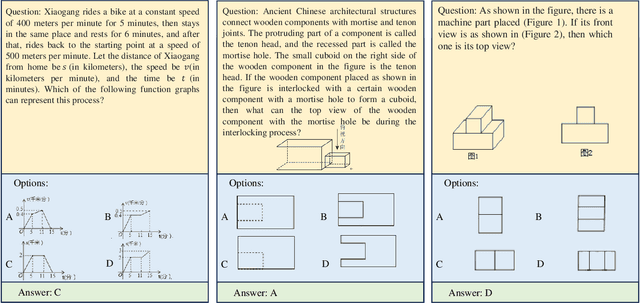
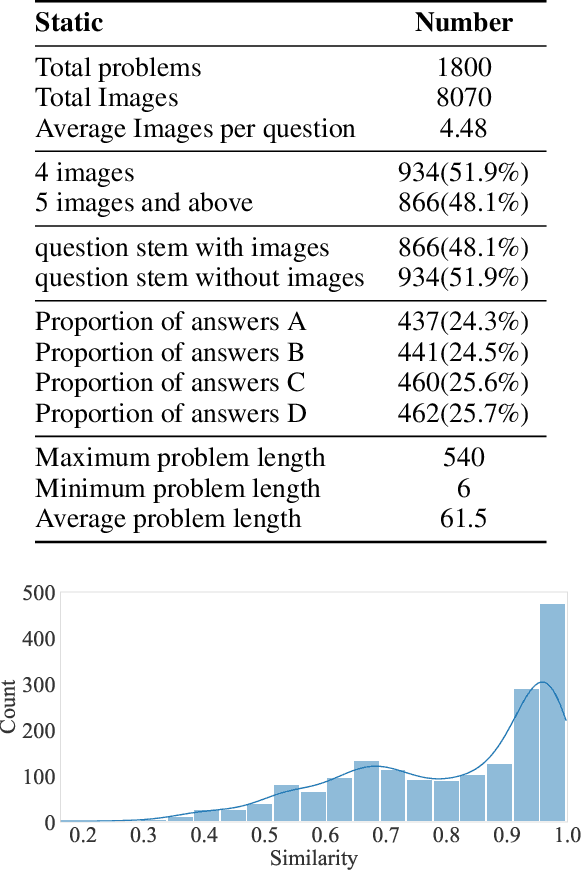
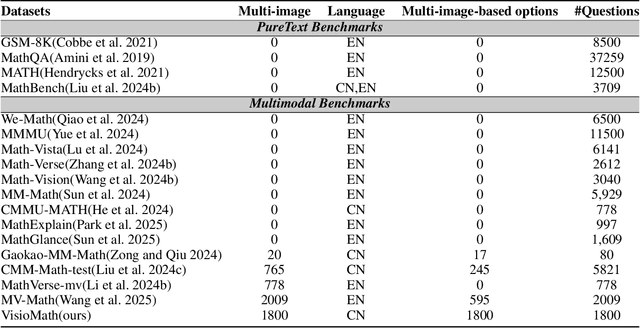
Large Multimodal Models (LMMs) have demonstrated remarkable problem-solving capabilities across various domains. However, their ability to perform mathematical reasoning when answer options are represented as images--an essential aspect of multi-image comprehension--remains underexplored. To bridge this gap, we introduce VisioMath, a benchmark designed to evaluate mathematical reasoning in multimodal contexts involving image-based answer choices. VisioMath comprises 8,070 images and 1,800 multiple-choice questions, where each answer option is an image, presenting unique challenges to existing LMMs. To the best of our knowledge, VisioMath is the first dataset specifically tailored for mathematical reasoning in image-based-option scenarios, where fine-grained distinctions between answer choices are critical for accurate problem-solving. We systematically evaluate state-of-the-art LMMs on VisioMath and find that even the most advanced models struggle with this task. Notably, GPT-4o achieves only 45.9% accuracy, underscoring the limitations of current models in reasoning over visually similar answer choices. By addressing a crucial gap in existing benchmarks, VisioMath establishes a rigorous testbed for future research, driving advancements in multimodal reasoning.
SMART: Self-Generating and Self-Validating Multi-Dimensional Assessment for LLMs' Mathematical Problem Solving
May 22, 2025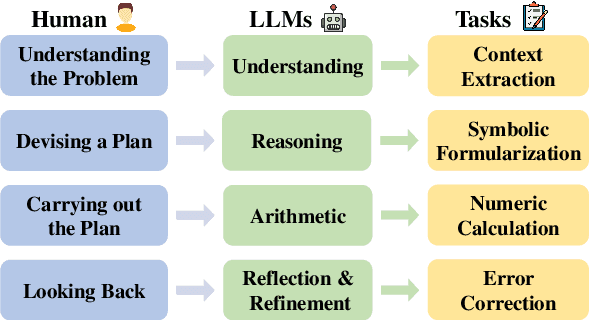
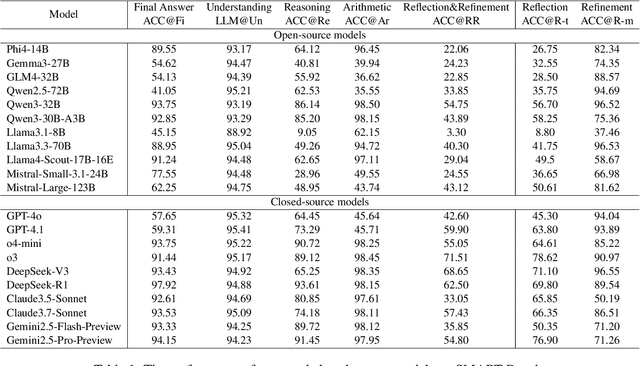
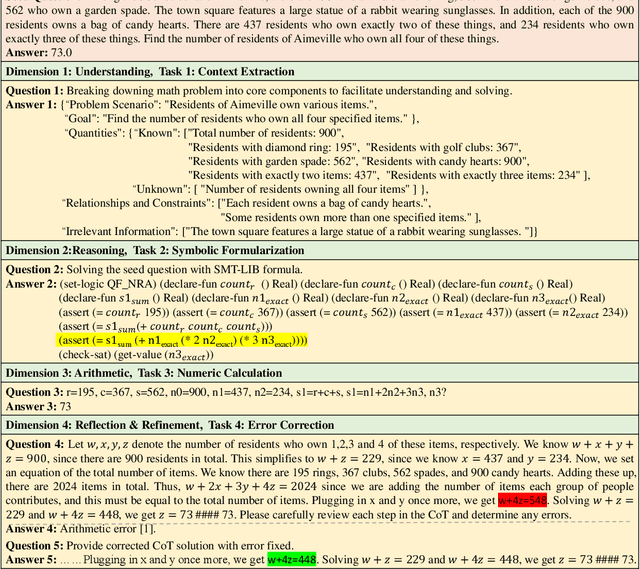
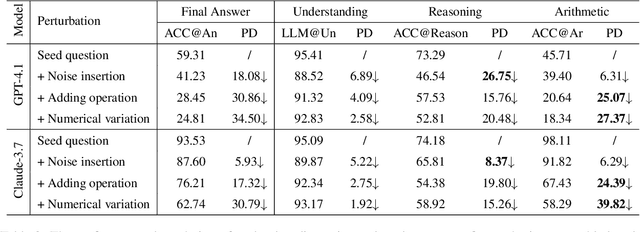
Large Language Models have achieved remarkable results on a variety of mathematical benchmarks. However, concerns remain as to whether these successes reflect genuine mathematical reasoning or superficial pattern recognition. Common evaluation metrics, such as final answer accuracy, fail to disentangle the underlying competencies involved, offering limited diagnostic value. To address these limitations, we introduce SMART: a Self-Generating and Self-Validating Multi-Dimensional Assessment Framework. SMART decomposes mathematical problem solving into four distinct dimensions: understanding, reasoning, arithmetic, and reflection \& refinement. Each dimension is evaluated independently through tailored tasks, enabling interpretable and fine-grained analysis of LLM behavior. Crucially, SMART integrates an automated self-generating and self-validating mechanism to produce and verify benchmark data, ensuring both scalability and reliability. We apply SMART to 21 state-of-the-art open- and closed-source LLMs, uncovering significant discrepancies in their abilities across different dimensions. Our findings demonstrate the inadequacy of final answer accuracy as a sole metric and motivate a new holistic metric to better capture true problem-solving capabilities. Code and benchmarks will be released upon acceptance.
Face-Human-Bench: A Comprehensive Benchmark of Face and Human Understanding for Multi-modal Assistants
Jan 05, 2025



Faces and humans are crucial elements in social interaction and are widely included in everyday photos and videos. Therefore, a deep understanding of faces and humans will enable multi-modal assistants to achieve improved response quality and broadened application scope. Currently, the multi-modal assistant community lacks a comprehensive and scientific evaluation of face and human understanding abilities. In this paper, we first propose a hierarchical ability taxonomy that includes three levels of abilities. Then, based on this taxonomy, we collect images and annotations from publicly available datasets in the face and human community and build a semi-automatic data pipeline to produce problems for the new benchmark. Finally, the obtained Face-Human-Bench comprises a development set with 900 problems and a test set with 1800 problems, supporting both English and Chinese. We conduct evaluations over 25 mainstream multi-modal large language models (MLLMs) with our Face-Human-Bench, focusing on the correlation between abilities, the impact of the relative position of targets on performance, and the impact of Chain of Thought (CoT) prompting on performance. Moreover, inspired by multi-modal agents, we also explore which abilities of MLLMs need to be supplemented by specialist models.
Unsupervised Attention Regularization Based Domain Adaptation for Oracle Character Recognition
Sep 24, 2024The study of oracle characters plays an important role in Chinese archaeology and philology. However, the difficulty of collecting and annotating real-world scanned oracle characters hinders the development of oracle character recognition. In this paper, we develop a novel unsupervised domain adaptation (UDA) method, i.e., unsupervised attention regularization net?work (UARN), to transfer recognition knowledge from labeled handprinted oracle characters to unlabeled scanned data. First, we experimentally prove that existing UDA methods are not always consistent with human priors and cannot achieve optimal performance on the target domain. For these oracle characters with flip-insensitivity and high inter-class similarity, model interpretations are not flip-consistent and class-separable. To tackle this challenge, we take into consideration visual perceptual plausibility when adapting. Specifically, our method enforces attention consistency between the original and flipped images to achieve the model robustness to flipping. Simultaneously, we constrain attention separability between the pseudo class and the most confusing class to improve the model discriminability. Extensive experiments demonstrate that UARN shows better interpretability and achieves state-of-the-art performance on Oracle-241 dataset, substantially outperforming the previously structure-texture separation network by 8.5%.
An Efficient Privacy-aware Split Learning Framework for Satellite Communications
Sep 13, 2024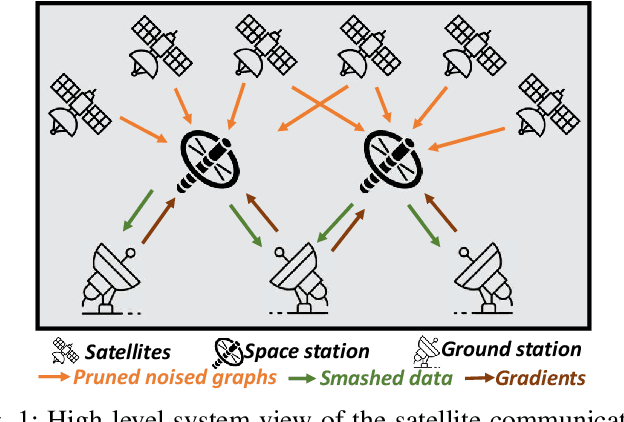
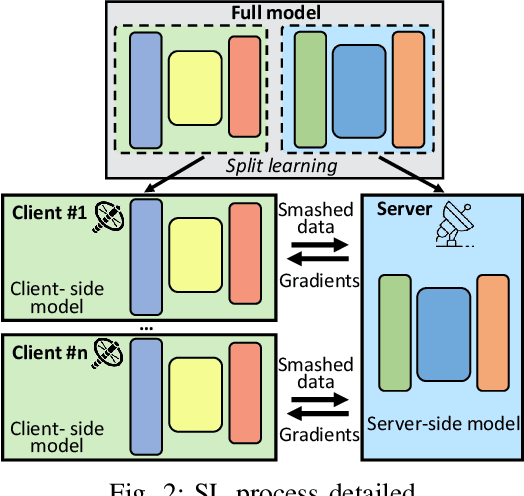

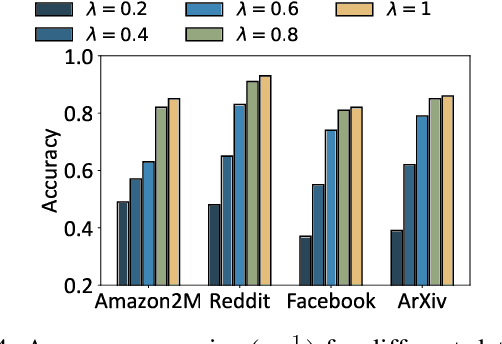
In the rapidly evolving domain of satellite communications, integrating advanced machine learning techniques, particularly split learning, is crucial for enhancing data processing and model training efficiency across satellites, space stations, and ground stations. Traditional ML approaches often face significant challenges within satellite networks due to constraints such as limited bandwidth and computational resources. To address this gap, we propose a novel framework for more efficient SL in satellite communications. Our approach, Dynamic Topology Informed Pruning, namely DTIP, combines differential privacy with graph and model pruning to optimize graph neural networks for distributed learning. DTIP strategically applies differential privacy to raw graph data and prunes GNNs, thereby optimizing both model size and communication load across network tiers. Extensive experiments across diverse datasets demonstrate DTIP's efficacy in enhancing privacy, accuracy, and computational efficiency. Specifically, on Amazon2M dataset, DTIP maintains an accuracy of 0.82 while achieving a 50% reduction in floating-point operations per second. Similarly, on ArXiv dataset, DTIP achieves an accuracy of 0.85 under comparable conditions. Our framework not only significantly improves the operational efficiency of satellite communications but also establishes a new benchmark in privacy-aware distributed learning, potentially revolutionizing data handling in space-based networks.