 Add to Chrome
 Add to Firefox
 Add to Edge
Cognitive Biases in Large Language Models for News Recommendation
Oct 03, 2024
Despite large language models (LLMs) increasingly becoming important components of news recommender systems, employing LLMs in such systems introduces new risks, such as the influence of cognitive biases in LLMs. Cognitive biases refer to systematic patterns of deviation from norms or rationality in the judgment process, which can result in inaccurate outputs from LLMs, thus threatening the reliability of news recommender systems. Specifically, LLM-based news recommender systems affected by cognitive biases could lead to the propagation of misinformation, reinforcement of stereotypes, and the formation of echo chambers. In this paper, we explore the potential impact of multiple cognitive biases on LLM-based news recommender systems, including anchoring bias, framing bias, status quo bias and group attribution bias. Furthermore, to facilitate future research at improving the reliability of LLM-based news recommender systems, we discuss strategies to mitigate these biases through data augmentation, prompt engineering and learning algorithms aspects.

Generative Retrieval Meets Multi-Graded Relevance
Sep 27, 2024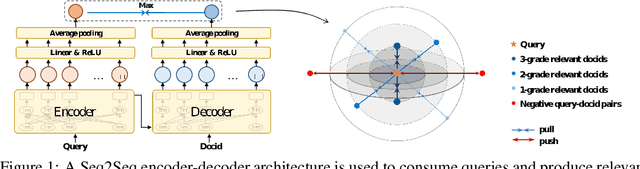
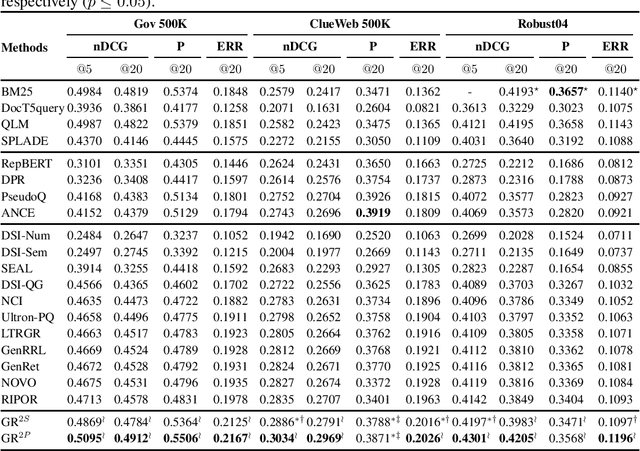
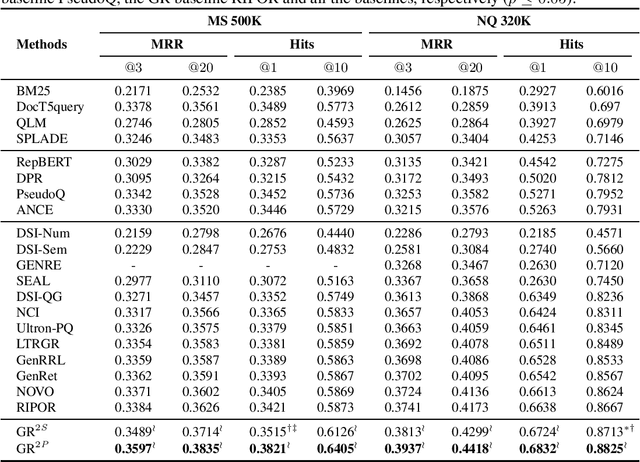
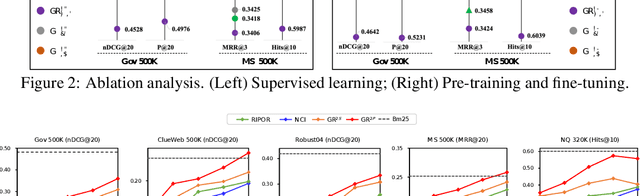
Generative retrieval represents a novel approach to information retrieval. It uses an encoder-decoder architecture to directly produce relevant document identifiers (docids) for queries. While this method offers benefits, current approaches are limited to scenarios with binary relevance data, overlooking the potential for documents to have multi-graded relevance. Extending generative retrieval to accommodate multi-graded relevance poses challenges, including the need to reconcile likelihood probabilities for docid pairs and the possibility of multiple relevant documents sharing the same identifier. To address these challenges, we introduce a framework called GRaded Generative Retrieval (GR$^2$). GR$^2$ focuses on two key components: ensuring relevant and distinct identifiers, and implementing multi-graded constrained contrastive training. First, we create identifiers that are both semantically relevant and sufficiently distinct to represent individual documents effectively. This is achieved by jointly optimizing the relevance and distinctness of docids through a combination of docid generation and autoencoder models. Second, we incorporate information about the relationship between relevance grades to guide the training process. We use a constrained contrastive training strategy to bring the representations of queries and the identifiers of their relevant documents closer together, based on their respective relevance grades. Extensive experiments on datasets with both multi-graded and binary relevance demonstrate the effectiveness of GR$^2$.
Proximal Ranking Policy Optimization for Practical Safety in Counterfactual Learning to Rank
Sep 15, 2024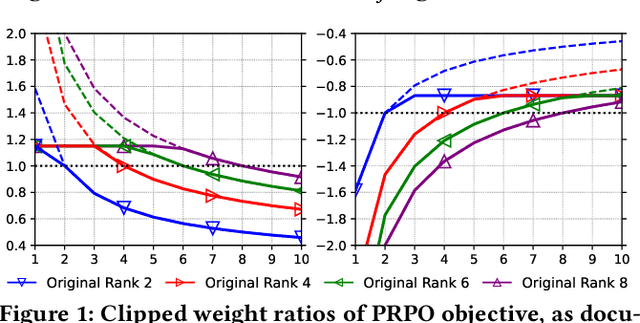
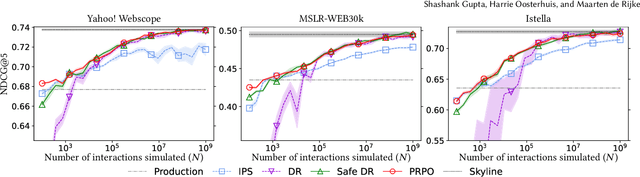
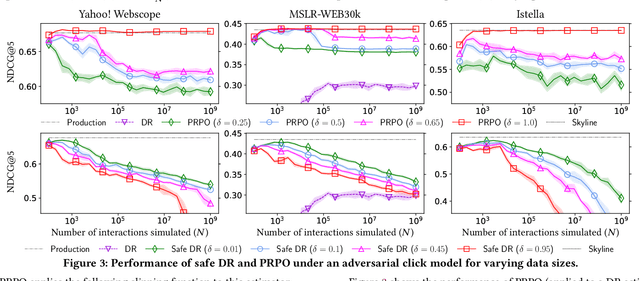
Counterfactual learning to rank (CLTR) can be risky and, in various circumstances, can produce sub-optimal models that hurt performance when deployed. Safe CLTR was introduced to mitigate these risks when using inverse propensity scoring to correct for position bias. However, the existing safety measure for CLTR is not applicable to state-of-the-art CLTR methods, cannot handle trust bias, and relies on specific assumptions about user behavior. We propose a novel approach, proximal ranking policy optimization (PRPO), that provides safety in deployment without assumptions about user behavior. PRPO removes incentives for learning ranking behavior that is too dissimilar to a safe ranking model. Thereby, PRPO imposes a limit on how much learned models can degrade performance metrics, without relying on any specific user assumptions. Our experiments show that PRPO provides higher performance than the existing safe inverse propensity scoring approach. PRPO always maintains safety, even in maximally adversarial situations. By avoiding assumptions, PRPO is the first method with unconditional safety in deployment that translates to robust safety for real-world applications.
Real World Conversational Entity Linking Requires More Than Zeroshots
Sep 02, 2024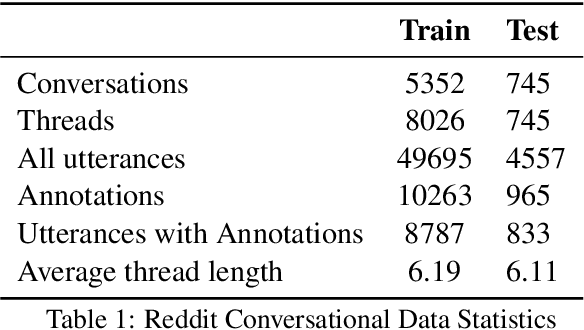
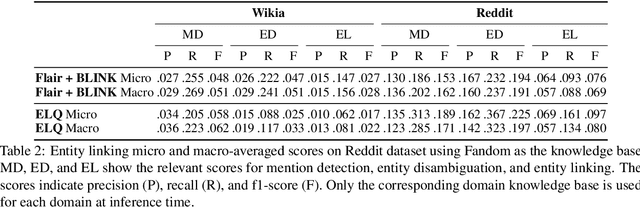
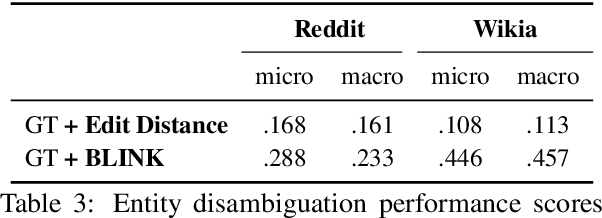
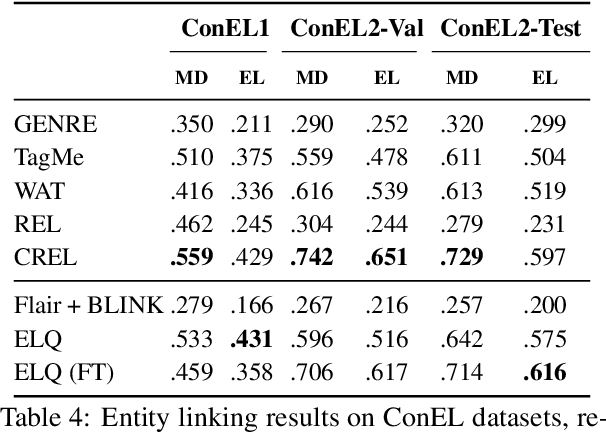
Entity linking (EL) in conversations faces notable challenges in practical applications, primarily due to the scarcity of entity-annotated conversational datasets and sparse knowledge bases (KB) containing domain-specific, long-tail entities. We designed targeted evaluation scenarios to measure the efficacy of EL models under resource constraints. Our evaluation employs two KBs: Fandom, exemplifying real-world EL complexities, and the widely used Wikipedia. First, we assess EL models' ability to generalize to a new unfamiliar KB using Fandom and a novel zero-shot conversational entity linking dataset that we curated based on Reddit discussions on Fandom entities. We then evaluate the adaptability of EL models to conversational settings without prior training. Our results indicate that current zero-shot EL models falter when introduced to new, domain-specific KBs without prior training, significantly dropping in performance. Our findings reveal that previous evaluation approaches fall short of capturing real-world complexities for zero-shot EL, highlighting the necessity for new approaches to design and assess conversational EL models to adapt to limited resources. The evaluation setup and the dataset proposed in this research are made publicly available.
Practical and Robust Safety Guarantees for Advanced Counterfactual Learning to Rank
Jul 29, 2024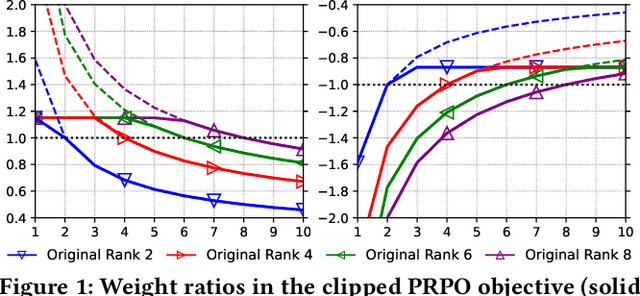
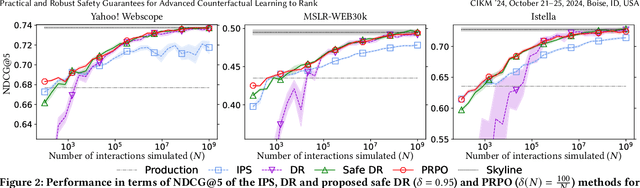
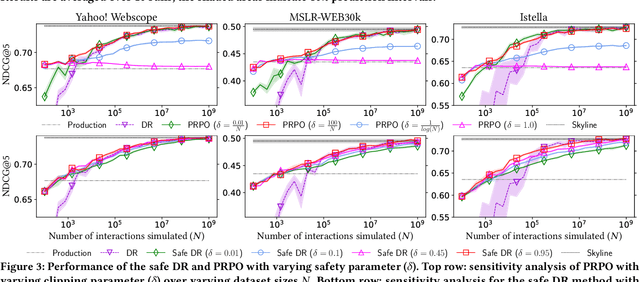
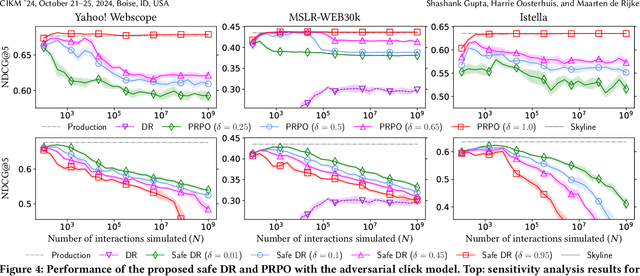
Counterfactual learning to rank (CLTR ) can be risky; various circumstances can cause it to produce sub-optimal models that hurt performance when deployed. Safe CLTR was introduced to mitigate these risks when using inverse propensity scoring to correct for position bias. However, the existing safety measure for CLTR is not applicable to state-of-the-art CLTR, it cannot handle trust bias, and its guarantees rely on specific assumptions about user behavior. Our contributions are two-fold. First, we generalize the existing safe CLTR approach to make it applicable to state-of-the-art doubly robust (DR) CLTR and trust bias. Second, we propose a novel approach, proximal ranking policy optimization (PRPO ), that provides safety in deployment without assumptions about user behavior. PRPO removes incentives for learning ranking behavior that is too dissimilar to a safe ranking model. Thereby, PRPO imposes a limit on how much learned models can degrade performance metrics, without relying on any specific user assumptions. Our experiments show that both our novel safe doubly robust method and PRPO provide higher performance than the existing safe inverse propensity scoring approach. However, when circumstances are unexpected, the safe doubly robust approach can become unsafe and bring detrimental performance. In contrast, PRPO always maintains safety, even in maximally adversarial situations. By avoiding assumptions, PRPO is the first method with unconditional safety in deployment that translates to robust safety for real-world applications.
Assessing Brittleness of Image-Text Retrieval Benchmarks from Vision-Language Models Perspective
Jul 25, 2024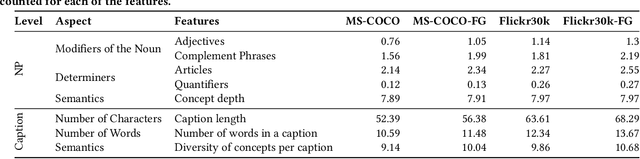
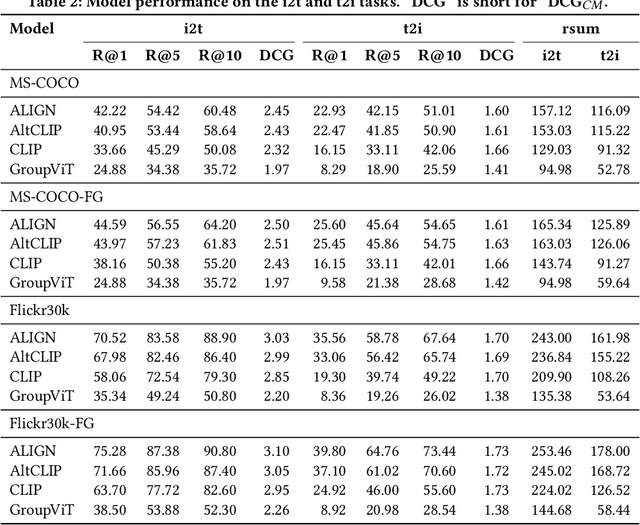
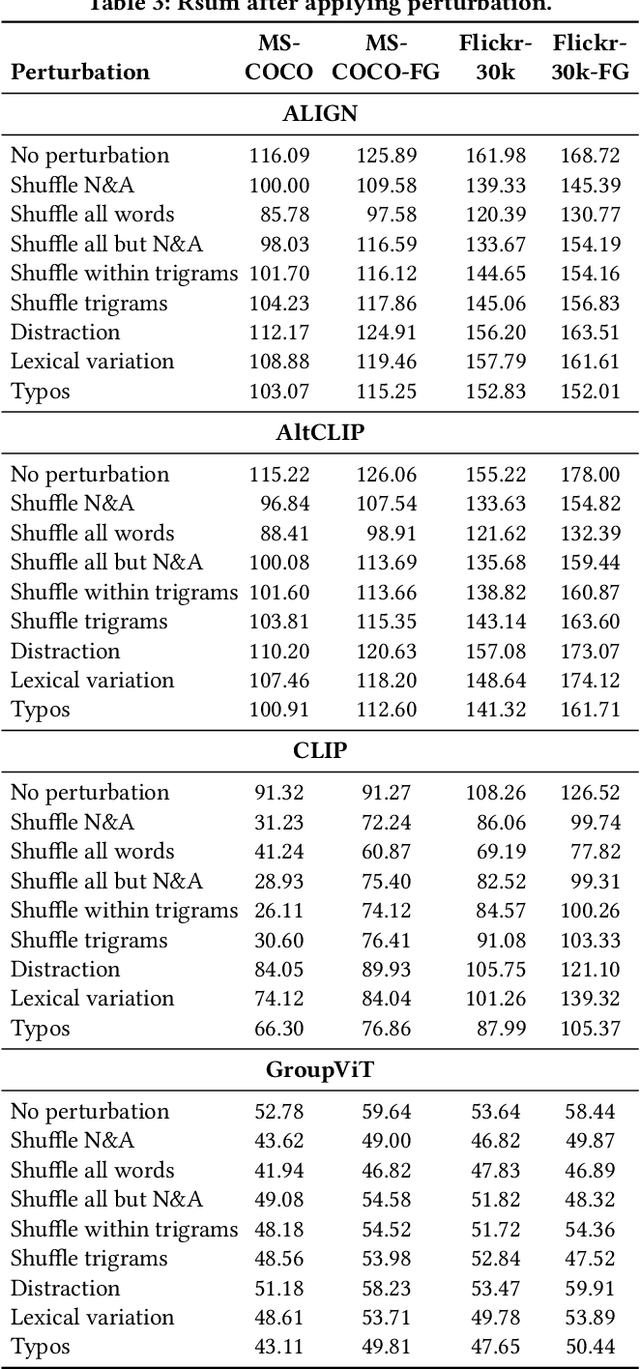

Image-text retrieval (ITR), an important task in information retrieval (IR), is driven by pretrained vision-language models (VLMs) that consistently achieve state-of-the-art performance. However, a significant challenge lies in the brittleness of existing ITR benchmarks. In standard datasets for the task, captions often provide broad summaries of scenes, neglecting detailed information about specific concepts. Additionally, the current evaluation setup assumes simplistic binary matches between images and texts and focuses on intra-modality rather than cross-modal relationships, which can lead to misinterpretations of model performance. Motivated by this gap, in this study, we focus on examining the brittleness of the ITR evaluation pipeline with a focus on concept granularity. We start by analyzing two common benchmarks, MS-COCO and Flickr30k, and compare them with their augmented versions, MS-COCO-FG and Flickr30k-FG, given a specified set of linguistic features capturing concept granularity. We discover that Flickr30k-FG and MS COCO-FG consistently achieve higher scores across all the selected features. To investigate the performance of VLMs on coarse and fine-grained datasets, we introduce a taxonomy of perturbations. We apply these perturbations to the selected datasets. We evaluate four state-of-the-art models - ALIGN, AltCLIP, CLIP, and GroupViT - on the standard and fine-grained datasets under zero-shot conditions, with and without the applied perturbations. The results demonstrate that although perturbations generally degrade model performance, the fine-grained datasets exhibit a smaller performance drop than their standard counterparts. Moreover, the relative performance drop across all setups is consistent across all models and datasets, indicating that the issue lies within the benchmarks. We conclude the paper by providing an agenda for improving ITR evaluation pipelines.
Bootstrapped Pre-training with Dynamic Identifier Prediction for Generative Retrieval
Jul 16, 2024
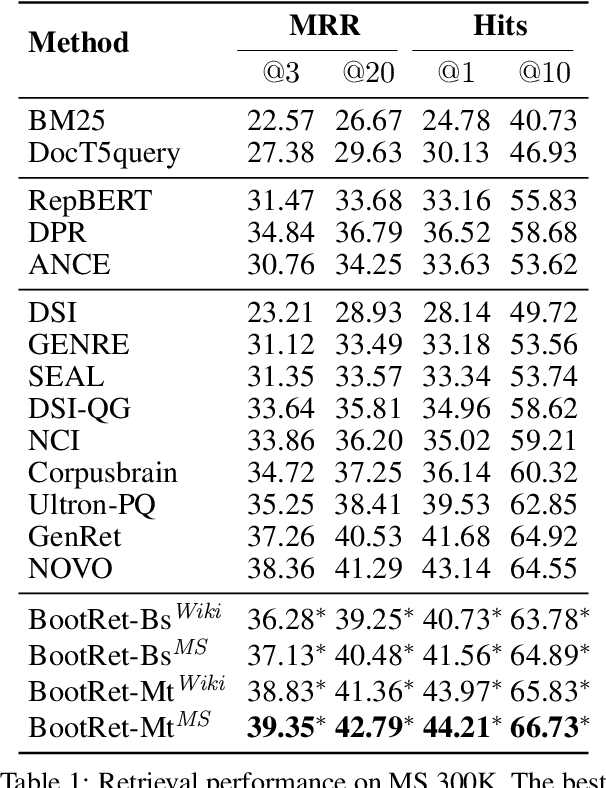
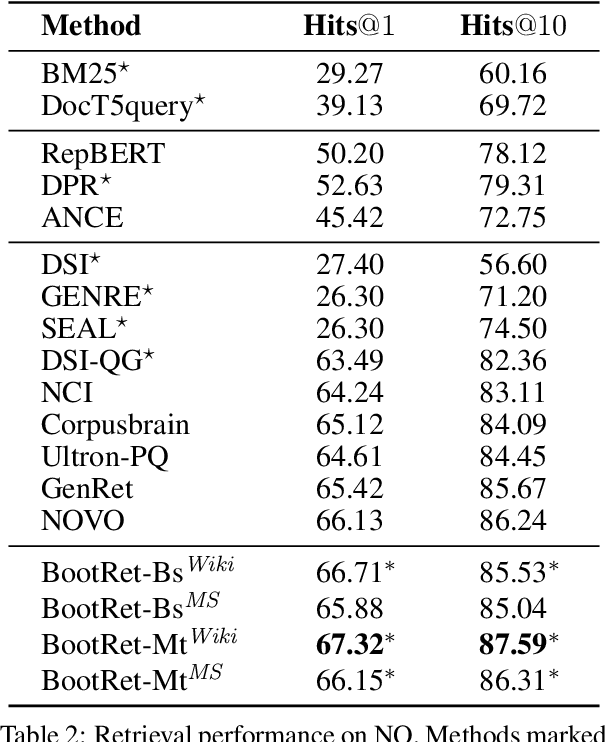
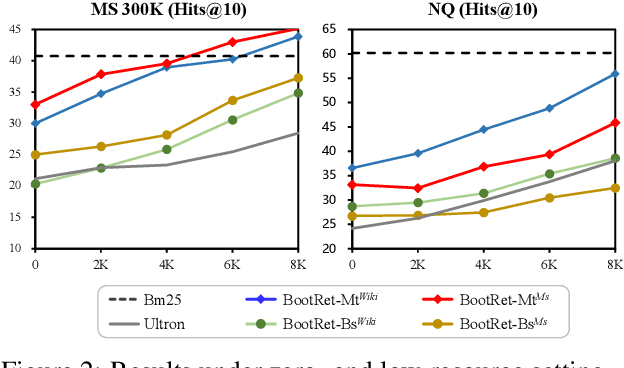
Generative retrieval uses differentiable search indexes to directly generate relevant document identifiers in response to a query. Recent studies have highlighted the potential of a strong generative retrieval model, trained with carefully crafted pre-training tasks, to enhance downstream retrieval tasks via fine-tuning. However, the full power of pre-training for generative retrieval remains underexploited due to its reliance on pre-defined static document identifiers, which may not align with evolving model parameters. In this work, we introduce BootRet, a bootstrapped pre-training method for generative retrieval that dynamically adjusts document identifiers during pre-training to accommodate the continuing memorization of the corpus. BootRet involves three key training phases: (i) initial identifier generation, (ii) pre-training via corpus indexing and relevance prediction tasks, and (iii) bootstrapping for identifier updates. To facilitate the pre-training phase, we further introduce noisy documents and pseudo-queries, generated by large language models, to resemble semantic connections in both indexing and retrieval tasks. Experimental results demonstrate that BootRet significantly outperforms existing pre-training generative retrieval baselines and performs well even in zero-shot settings.
Robust Neural Information Retrieval: An Adversarial and Out-of-distribution Perspective
Jul 09, 2024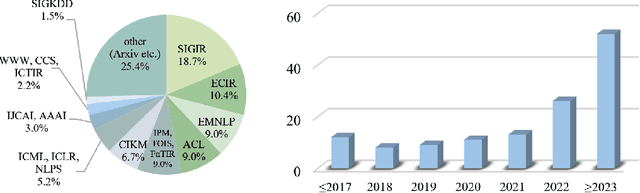
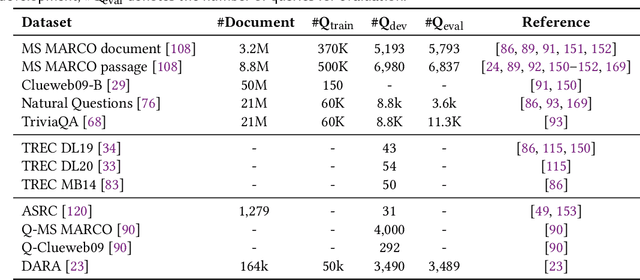
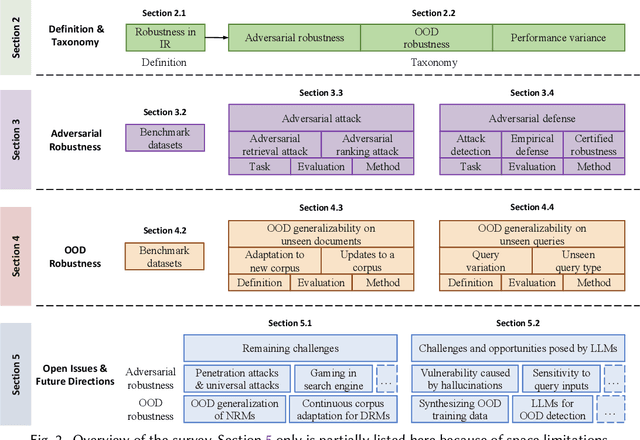
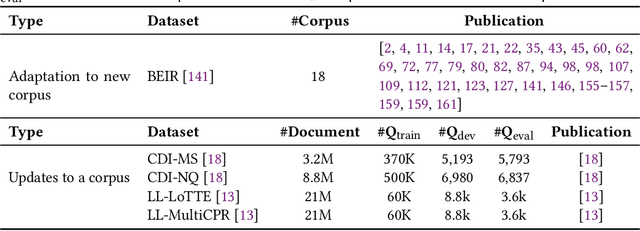
Recent advances in neural information retrieval (IR) models have significantly enhanced their effectiveness over various IR tasks. The robustness of these models, essential for ensuring their reliability in practice, has also garnered significant attention. With a wide array of research on robust IR being proposed, we believe it is the opportune moment to consolidate the current status, glean insights from existing methodologies, and lay the groundwork for future development. We view the robustness of IR to be a multifaceted concept, emphasizing its necessity against adversarial attacks, out-of-distribution (OOD) scenarios and performance variance. With a focus on adversarial and OOD robustness, we dissect robustness solutions for dense retrieval models (DRMs) and neural ranking models (NRMs), respectively, recognizing them as pivotal components of the neural IR pipeline. We provide an in-depth discussion of existing methods, datasets, and evaluation metrics, shedding light on challenges and future directions in the era of large language models. To the best of our knowledge, this is the first comprehensive survey on the robustness of neural IR models, and we will also be giving our first tutorial presentation at SIGIR 2024 \url{https://sigir2024-robust-information-retrieval.github.io}. Along with the organization of existing work, we introduce a Benchmark for robust IR (BestIR), a heterogeneous evaluation benchmark for robust neural information retrieval, which is publicly available at \url{https://github.com/Davion-Liu/BestIR}. We hope that this study provides useful clues for future research on the robustness of IR models and helps to develop trustworthy search engines \url{https://github.com/Davion-Liu/Awesome-Robustness-in-Information-Retrieval}.
The SIFo Benchmark: Investigating the Sequential Instruction Following Ability of Large Language Models
Jun 28, 2024


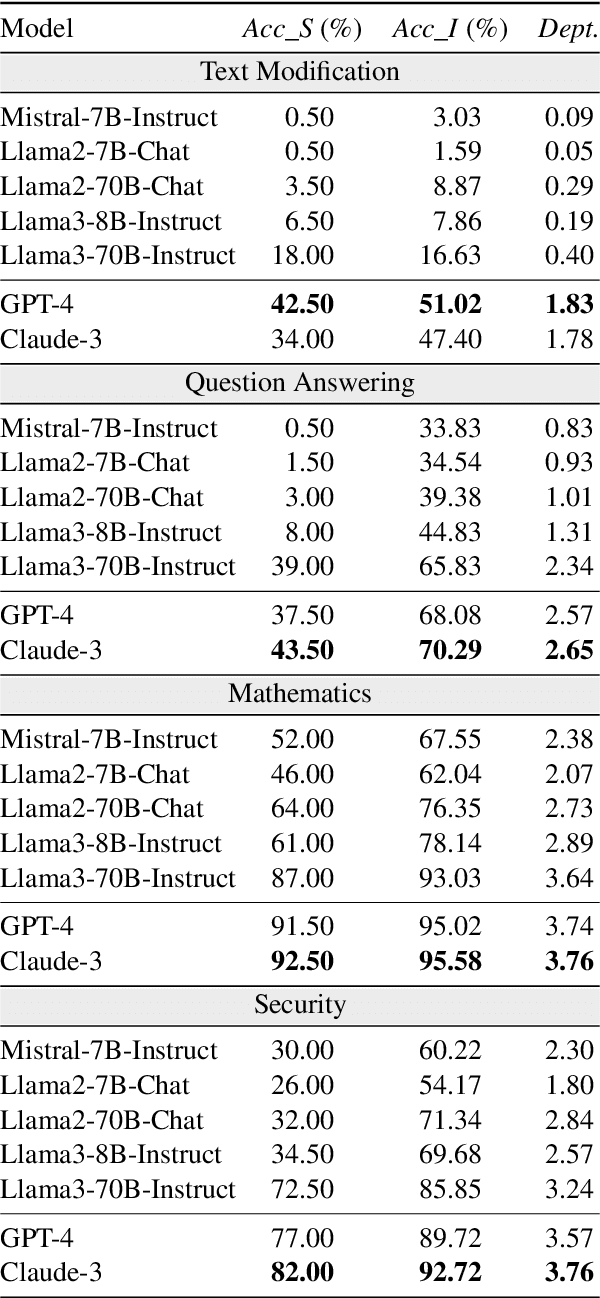
Following multiple instructions is a crucial ability for large language models (LLMs). Evaluating this ability comes with significant challenges: (i) limited coherence between multiple instructions, (ii) positional bias where the order of instructions affects model performance, and (iii) a lack of objectively verifiable tasks. To address these issues, we introduce a benchmark designed to evaluate models' abilities to follow multiple instructions through sequential instruction following (SIFo) tasks. In SIFo, the successful completion of multiple instructions is verifiable by examining only the final instruction. Our benchmark evaluates instruction following using four tasks (text modification, question answering, mathematics, and security rule following), each assessing different aspects of sequential instruction following. Our evaluation of popular LLMs, both closed-source and open-source, shows that more recent and larger models significantly outperform their older and smaller counterparts on the SIFo tasks, validating the benchmark's effectiveness. All models struggle with following sequences of instructions, hinting at an important lack of robustness of today's language models.
Robust Information Retrieval
Jun 13, 2024Beyond effectiveness, the robustness of an information retrieval (IR) system is increasingly attracting attention. When deployed, a critical technology such as IR should not only deliver strong performance on average but also have the ability to handle a variety of exceptional situations. In recent years, research into the robustness of IR has seen significant growth, with numerous researchers offering extensive analyses and proposing myriad strategies to address robustness challenges. In this tutorial, we first provide background information covering the basics and a taxonomy of robustness in IR. Then, we examine adversarial robustness and out-of-distribution (OOD) robustness within IR-specific contexts, extensively reviewing recent progress in methods to enhance robustness. The tutorial concludes with a discussion on the robustness of IR in the context of large language models (LLMs), highlighting ongoing challenges and promising directions for future research. This tutorial aims to generate broader attention to robustness issues in IR, facilitate an understanding of the relevant literature, and lower the barrier to entry for interested researchers and practitioners.